Why did God command wars in the Old Testament?

Deuteronomy 9:4-5
4 After the LORD your God has driven them out before you, do not say to yourself, “The LORD has brought me here to take possession of this land because of my righteousness.” No, it is on account of the wickedness of these nations that the LORD is going to drive them out before you.
5 It is not because of your righteousness or your integrity that you are going in to take possession of their land; but on account of the wickedness of these nations, the LORD your God will drive them out before you, to accomplish what he swore to your fathers, to Abraham, Isaac and Jacob.
New International Version (NIV)
The answer
God commanded particular Old Testament wars as His righteous judgment on persistent wickedness, to keep Israel from absorbing that wickedness, and to fulfill the land promise He had sworn to the patriarchs—not because Israel was morally superior. Deuteronomy 9:4-5 gives the explanation directly: the nations were driven out “because of the wickedness of these nations,” while Israel was explicitly forbidden to claim, “For my righteousness Yahweh has brought me in to possess this land.”
Judgment on real wickedness
The conquest was not arbitrary ethnic hostility. God identified the nations’ conduct as the reason for their removal. Leviticus 18:24-30 uses the same moral logic: the nations had defiled themselves through practices God condemned, and therefore He cast them out. Deuteronomy 18:9-14 likewise calls their practices “abominations” and forbids Israel to imitate them.
This means the warfare must be understood as God acting as judge, not as human beings deciding that another people was inferior or expendable. The authority and the stated reason belonged to God’s particular command in that historical setting.
Protection from idolatry
Israel was not entering a religiously neutral land. Deuteronomy 18:9-14 warns the people not to learn the abominations of the nations already there. Removing those nations was therefore also connected with preventing Israel from adopting their corrupt worship and practices. The danger was not merely military defeat but spiritual corruption and rebellion against God.
Faithfulness to God’s promise, not reward for Israel’s goodness
Deuteronomy 9:5 gives a second reason: God acted “that he may establish the word which Yahweh swore to your fathers, to Abraham, to Isaac, and to Jacob.” The conquest fulfilled God’s covenant promise.
The same verse rules out national self-righteousness: “Not for your righteousness or for the uprightness of your heart do you go in to possess their land.” Israel received the land through God’s faithfulness and purpose, not because the people had earned it.
What these commands do not authorize
These were specific acts undertaken at God’s command, not a permanent permission for Israel to fight whenever it wished. Scripture also records God forbidding war between His people in 2 Chronicles 11:4. Consequently, the conquest cannot honestly be turned into blanket authorization for modern religious violence or national aggression.
Nor does it provide grounds for boasting in military strength or cultural superiority. Deuteronomy 8:17 warns against the proud claim, “My power and the might of mine hand hath gotten me this wealth.” The same humility applies to every good thing received: 1 Corinthians 4:7 asks, “what hast thou that thou didst not receive?”
Judgment and grace
These passages take sin and judgment seriously while stripping away every pretence of human merit. The God who judged the nations also made clear that Israel could not stand before Him on the basis of its own righteousness. Salvation likewise rests on grace rather than achievement: 2 Timothy 1:9 says God saves and calls His people “not according to our works, but according to his own purpose and grace” in Christ Jesus. The fitting response is therefore humility, repentance, and trust in God’s grace in Christ, not confidence in nationality, power, or personal goodness.
Answered from Scripture · reviewed November 11, 2026
Scripture never attributes Old Testament warfare to nationalistic entitlement or unprovoked violence, but explicitly defines it as divine judgment executed against deeply entrenched wickedness. God appointed Israel as the instrument of His holy justice to purge abominable practices, protect His covenant people from spiritual ruin, and fulfill His ancient promises to the patriarchs. Understanding these commands requires grasping the absolute holiness of God, the severity of human sin, and the historical preservation of the lineage that would bring forth the Messiah.
Divine Retribution
War as God's Solemn Judgment on Entrenched Wickedness
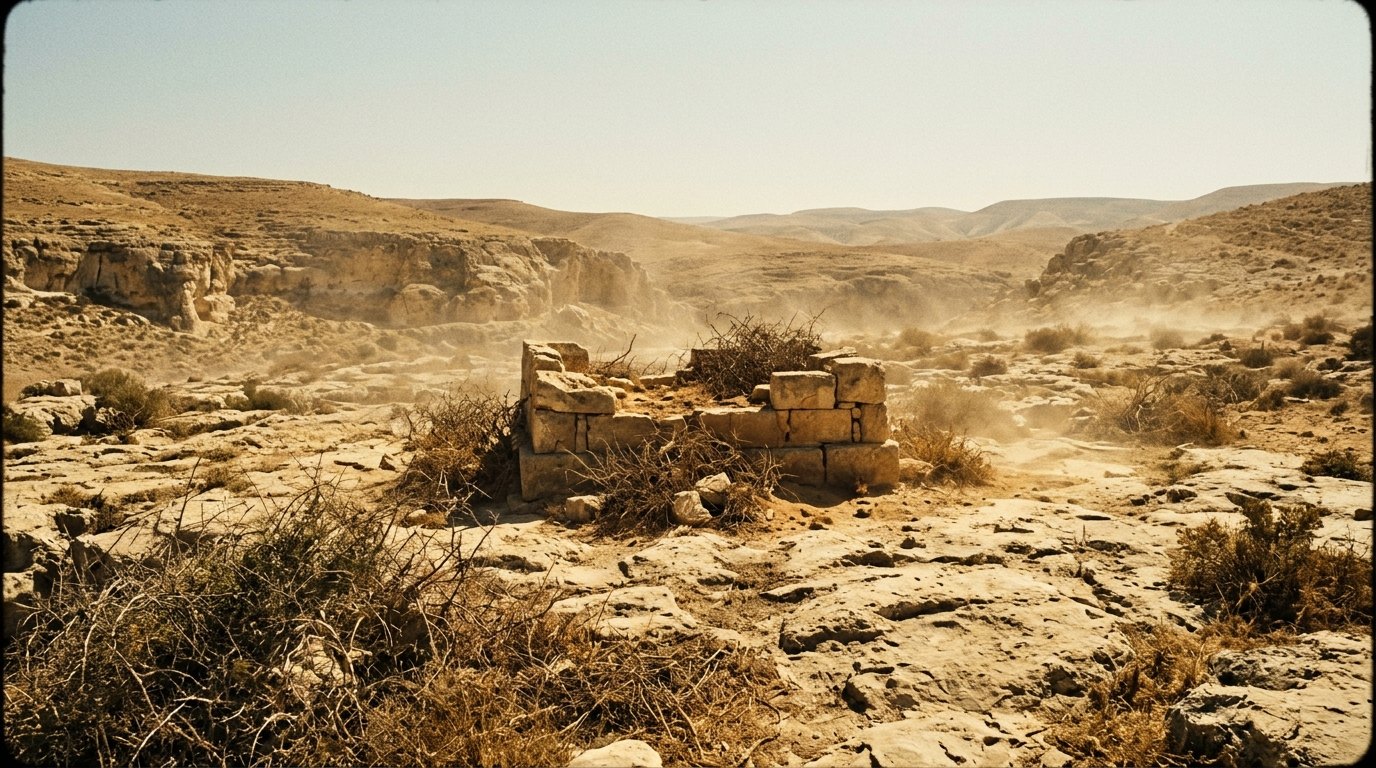
After the LORD your God has driven them out before you, do not say to yourself, “The LORD has brought me here to take possession of this land because of my righteousness.” No, it is on account of the wickedness of these nations that the LORD is going to drive them out before you. It is not because of your righteousness or your integrity that you are going in to take possession of their land; but on account of the wickedness of these nations, the LORD your God will drive them out before you, to accomplish what he swore to your fathers, to Abraham, Isaac and Jacob.
Deuteronomy 9:4-5 (NIV)
Moses explicitly refutes the idea that Israel earned the land, identifying the Canaanites' extreme wickedness as the true cause of their expulsion.
In Deuteronomy 9:4-5, Moses dismantles any illusion of moral superiority, warning Israel never to say that their own righteousness earned them the land. The warfare of the conquest was not imperial expansion or ethnic entitlement, but the formal execution of divine judicial sentence upon generations of unbridled depravity. Leviticus 18:24-30 catalogs the nature of this corruption, recording that the inhabitants defiled the soil through incest, bestiality, cultic prostitution, and rampant sexual perversion until the land literally vomited them out. Deuteronomy 18:9-14 explicitly names the abominations God would no longer tolerate, including the burning of infant children in the fire to Molech, alongside witchcraft, sorcery, necromancy, and demonic divination. Moses repeats the solemn rationale in Deuteronomy 9:4 and Deuteronomy 9:5: Yahweh drove these nations out solely on account of their entrenched wickedness and to confirm His holy oath. Leviticus 20:22-24 reinforces that holiness is non-negotiable before the Creator, warning that any culture abandoning moral restraint under the weight of such abominations brings down inevitable ruin. For this reason, Deuteronomy 20:16-18 commanded the complete destruction of these fortified pagan centers within the land of inheritance, expressly so that they could not teach Israel to commit the same detestable horrors against God.
| Passage | What it says |
|---|---|
| Leviticus 18:24-30 | God explains that the land itself vomited out its inhabitants because of sexual depravity, defilement, and detestable idolatrous practices. |
| Deuteronomy 18:9-14 | Israel is forbidden from imitating Canaanite abominations, including child sacrifice, divination, sorcery, witchcraft, and consultation with the dead. |
| Deuteronomy 9:4 | Israel is warned never to credit their own righteousness for dispossessing the nations, for Yahweh acts to punish Canaanite wickedness. |
| Deuteronomy 9:5 | Moses reiterates that Canaanite evil and God's ancient covenant oath are the sole grounds for giving Israel the land. |
| Leviticus 20:22-24 | God commands holiness and warns that the land vomits out inhabitants who commit abominations. |
| Deuteronomy 20:16-18 | Israel is commanded to utterly destroy Canaanite cities so they do not teach their detestable practices. |
Measuring Time
Centuries of Divine Patience and Measured Timing

In the fourth generation your descendants will come back here, for the sin of the Amorites has not yet reached its full measure.”
Genesis 15:16 (NIV)
God explains to Abraham that judgment will wait four centuries until the iniquity of the inhabitants reaches its full measure.
The divine decree against the Canaanite peoples was neither hasty nor sudden, but marked by breathtaking restraint. In Genesis 15:16, God revealed to Abraham that his descendants would not possess the land immediately, because the iniquity of the Amorites was not yet complete. The Lord allowed four entire centuries to pass while Israel endured bondage in Egypt, as detailed in Genesis 15:13-16, giving the inhabitants of Canaan generations to turn from their escalating atrocities. God never strikes impulsively; His judgment falls only when a culture reaches full moral apostasy after exhausting long-standing mercy. This patient posture mirrors the enduring character of God celebrated throughout Scripture. In 2 Peter 3:9, the apostle explains that the Lord is not slow concerning His promises, but is patient toward mankind, withholding final wrath because He desires that all should come to repentance. Romans 2:4-5 warns that contempt for the riches of God's kindness and forbearance does not signify divine indifference, but rather the tragic accumulation of stored-up wrath against the day of righteous revelation. Canaan's final overthrow was the deliberate, reluctant closing of a four-hundred-year window of unheeded divine patience.
| Passage | What it says |
|---|---|
| Genesis 15:13-16 | God reveals that Israel will dwell as strangers in Egypt until the Amorites' iniquity is complete. |
| 2 Peter 3:9 | Peter confirms that God's delay in executing final judgment stems from long-suffering patience desiring repentance, not slowness or neglect. |
| Romans 2:4-5 | Paul explains that God's patience is meant for repentance, but unrepentant hearts store up wrath. |
Covenant Faithfulness
Establishing the Ancient Promises Given to the Patriarchs

On that day the LORD made a covenant with Abram and said, “To your descendants I give this land, from the Wadi of Egypt to the great river, the Euphrates—
Genesis 15:18 (NIV)
God binds Himself by solemn covenant oath to grant this specific territory to Abraham's offspring.
The land promised to Israel was rooted in a sovereign, unalterable covenant initiated centuries before the conquest. In Genesis 15:18, God entered into a solemn covenant oath with Abram, binding Himself to grant territorial boundaries extending from the river of Egypt to the great river Euphrates. This pledge was first spoken in Genesis 12:7, when the Lord appeared to Abram upon his arrival at Shechem, declaring that this specific soil would be given to his seed. In Genesis 17:7-8, God confirmed that this covenant was an everlasting pact, promising the land of Canaan as an enduring inheritance to Abraham and his lineage throughout their generations. Joshua 21:43-45 marks the historical fulfillment of this oath, recording with precision that the Lord gave Israel all the land He swore to their fathers, so that not one good thing failed of all Yahweh had spoken. The corporate memory of Israel echoed this unshakable truth in Psalm 105:8-11, praising God for remembering His eternal covenant, His oath to Isaac, and His confirmed decree to Jacob that Canaan was their appointed portion. The military victories under Joshua were not acts of autonomous aggression, but the faithful hand of God fulfilling His own immutable word.
| Passage | What it says |
|---|---|
| Genesis 12:7 | Yahweh appears to Abram and makes the original territorial promise to his offspring upon his arrival in Canaan. |
| Genesis 15:18 | The Lord makes a formal covenant with Abram, assigning territorial boundaries from the river of Egypt to the Euphrates. |
| Joshua 21:43-45 | Scripture records that every good promise Yahweh made to the house of Israel came to pass without one failing. |
| Genesis 17:7-8 | God establishes an everlasting covenant with Abraham and gives the land of Canaan as an everlasting possession. |
| Psalms 105:8-11 | The psalmist recounts God's eternal covenant with Abraham, Isaac, and Jacob regarding the land of Canaan. |
Spiritual Sanctuary
Protecting a Holy Nation from Fatal Contamination

and when the LORD your God has delivered them over to you and you have defeated them, then you must destroy them totally. Make no treaty with them, and show them no mercy. Do not intermarry with them. Do not give your daughters to their sons or take their daughters for your sons, for they will turn your children away from following me to serve other gods, and the LORD’s anger will burn against you and will quickly destroy you.
Deuteronomy 7:2-4 (NIV)
Complete eradication of idolatrous ties was mandated to prevent Israel from being lured into pagan worship and apostasy.
God's strict military mandates served as a sanitary barrier designed to insulate His chosen people from lethal spiritual contamination. In Deuteronomy 7:2-4, God commanded Israel to make no treaties and show no mercy to the entrenched pagan altars, lest their children be seduced away from Yahweh into soul-destroying idolatry. Exodus 23:31-33 warned that tolerating false deities within their borders would become an inescapable snare, leading to spiritual adultery. God's purpose was clear in Deuteronomy 7:6: Israel was consecrated as a holy, treasured possession out of all peoples on earth, called to bear His righteous character and preserve the Messianic promise. Tragically, when Israel compromised, God's prophetic warnings proved exact. In Numbers 33:55-56, the Lord forewarned that any Canaanite enclaves permitted to remain would become barbs in their eyes and thorns in their sides. In Judges 2:1-3, the angel of the Lord rebuked the nation for failing to demolish pagan shrines, leaving them trapped in repeated cycles of oppression. Psalm 106:34-40 laments the bitter fruit of disobedience, recounting how Israel mingled with the nations, adopted their idolatry, and sacrificed their own sons and daughters to demons, awakening the holy fury of God against His heritage.
| Passage | What it says |
|---|---|
| Exodus 23:31-33 | God forbids making covenants with Canaan's gods or people lest they become an inescapable snare to Israel. |
| Deuteronomy 7:2-4 | Israel is commanded to make no covenant and show no mercy to idolatrous systems that turn sons away from Yahweh. |
| Deuteronomy 7:6 | Israel is set apart as a chosen, holy people belonging exclusively to Yahweh out of all the earth. |
| Judges 2:1-3 | When Israel failed to tear down pagan altars, the surviving inhabitants became thorns in their sides and snares to them. |
| Numbers 33:55-56 | God warns that remaining Canaanites will become barbs in Israel's eyes and thorns in their sides. |
| Psalms 106:34-40 | Israel failed to destroy the peoples, intermingled, adopted idolatrous abominations, and suffered God's wrath. |
Holy Devotion
The Absolute Demand of Strict Covenant Obedience
But Samuel replied: “Does the LORD delight in burnt offerings and sacrifices as much as in obeying the LORD? To obey is better than sacrifice, and to heed is better than the fat of rams. For rebellion is like the sin of divination, and arrogance like the evil of idolatry. Because you have rejected the word of the LORD, he has rejected you as king.”
1 Samuel 15:22-23 (NIV)
Samuel declares that obedience to God's command surpasses animal sacrifice, stripping the kingship from Saul for sparing what was devoted to destruction.
The prophet Samuel cuts to the absolute heart of biblical warfare in 1 Samuel 15:22-23, declaring that obedience is better than sacrifice, and that rebellion is as the sin of witchcraft. When God commands the total devotion of an adversary to judgment, human compromise is not mercy—it is treason. Generations earlier, in Exodus 17:14-16, the Lord swore eternal war against Amalek because they had ruthlessly ambushed the vulnerable stragglers of Israel in the wilderness. The sentence rested upon Amalek for centuries, awaiting execution by a faithful king.
When Saul was sent to carry out that long-delayed decree in 1 Samuel 15:2-3, he spared King Agag and kept the best of the livestock under the pious pretext of sacrifice. Saul treated holy devotion as an opportunity for personal prestige and pragmatic gain, forfeiting his crown because he refused to honor the Lord's absolute justice. This strict principle of total dedication appeared at the very start of the conquest. In Joshua 6:17-19, Jericho was set apart under the sacred ban; nothing was to be taken for personal enrichment, and all silver and gold belonged exclusively to the treasury of the Lord. The tragic defeat at Ai recorded in Joshua 7:10-12 proved the devastating weight of this standard: Israel fell because Achan broke covenant devotion by secretly taking devoted plunder. These biblical narratives demonstrate that Old Testament warfare was never a war of personal enrichment, empire building, or plunder, but a sober, sacred duty executed under divine judicial mandate.
| Passage | What it says |
|---|---|
| Exodus 17:14-16 | God commands the utter blotting out of the memory of Amalek due to their unprovoked attack on Israel's stragglers. |
| 1 Samuel 15:2-3 | The prophet Samuel charges Saul to execute God's long-delayed decree of destruction against the Amalekites. |
| 1 Samuel 15:22-23 | Samuel confronts Saul's partial obedience, declaring rebellion as the sin of witchcraft and presumption as idolatry. |
| Joshua 6:17-19 | Jericho is set apart under the ban as devoted to the Lord, warning against touching devoted things. |
| Joshua 7:10-12 | Israel fell at Ai because covenant devotion was violated when sacred devoted items were stolen. |
Universal Justice
God's Impartial Judgment upon Israel and the Nations
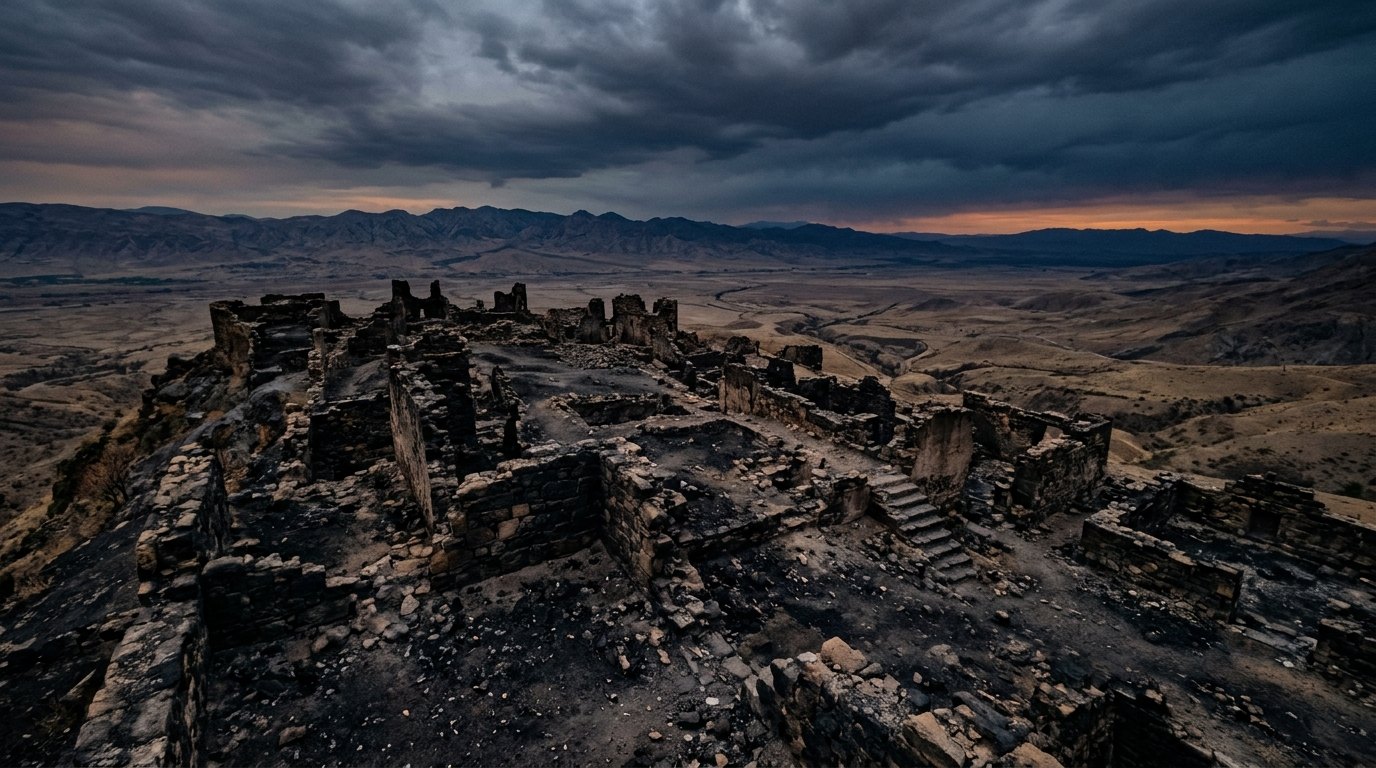
If you ever forget the LORD your God and follow other gods and worship and bow down to them, I testify against you today that you will surely be destroyed. Like the nations the LORD destroyed before you, so you will be destroyed for not obeying the LORDyour God.
Deuteronomy 8:19-20 (NIV)
Moses warns Israel that if they follow the idolatrous ways of Canaan, they will perish in the exact same manner.
Moses warned Israel with unflinching clarity in Deuteronomy 8:19-20 that if they ever forgot the Lord and walked after other gods, they would perish just like the nations God was driving out before them. Divine warfare in the Old Testament was never driven by ethnic favoritism; the land belonged to Yahweh, and His moral standard was thoroughly impartial. Moses reiterated this sobering truth in Deuteronomy 8:17-20, stripping away any delusion that Israel's own righteousness had secured their inheritance.
The historical record bears out this exact warning with terrifying consistency. Centuries after the conquest, the northern kingdom of Israel was crushed and deported by the Assyrian empire, a catastrophe explained in 2 Kings 17:7-18 as divine recompense because Israel had adopted the very same occult rites and abominations of the Canaanites. Later, the southern kingdom met an identical fate when Jerusalem was besieged, burned, and carried away captive into Babylon in 2 Kings 25:1-11 for unrepentant idolatry and covenant betrayal. This judgment was explicitly foretold in the covenant warnings of Leviticus 26:14-39, where God promised the sword, famine, and exile to His own covenant people should they treat His statutes with contempt. The prophet reinforces this unwavering equity in Amos 3:2, where the Lord warns Israel that because they alone were uniquely known among all the families of the earth, He would hold them accountable for all their iniquities. God's sword was not nationalistic; it was holy, falling equally on any people steeped in unrepentant evil.
| Passage | What it says |
|---|---|
| Deuteronomy 8:17-20 | Israel is warned against self-exaltation, being assured that imitation of the destroyed nations will bring their own destruction. |
| 2 Kings 17:7-18 | The northern kingdom of Israel is conquered and exiled by Assyria because they adopted the very abominations of the Canaanites. |
| 2 Kings 25:1-11 | Judah suffers conquest, devastation, and exile to Babylon for persisting in the sins and idolatries of the land. |
| Leviticus 26:14-39 | God outlines severe judgments including sword and exile if Israel violates His covenant commandments. |
| Amos 3:2 | God declares that because Israel alone was chosen among all earth's families, He will punish all their iniquities. |
The Greater Triumph
From Temporal Conquest to Christ's Ultimate Victory

When you were dead in your sins and in the uncircumcision of your flesh, God made you alive with Christ. He forgave us all our sins, having canceled the charge of our legal indebtedness, which stood against us and condemned us; he has taken it away, nailing it to the cross. And having disarmed the powers and authorities, he made a public spectacle of them, triumphing over them by the cross.
Colossians 2:13-15 (NIV)
Christ decisively disarmed the spiritual rulers and authorities at the cross, fulfilling what physical warfare merely foreshadowed.
The physical campaigns of Israel served as earthly shadow to the cosmic warfare accomplished by Jesus Christ. In Colossians 2:13-15, the Apostle Paul declares that Christ disarmed the spiritual rulers and authorities, triumphing over them openly at the cross. What ancient Israel accomplished locally with iron and sword against earthly tyrants, Christ accomplished definitively and cosmically against sin, Satan, and death.
This progression from earthly shadow to spiritual reality unfolds throughout Scripture. When Joshua conquered the southern confederation in Joshua 10:24-25, he commanded his captains to place their feet upon the necks of the defeated kings as a physical sign of complete triumph. That earthly victory pointed directly to the messianic expectation of 1 Corinthians 15:25-27 and Hebrews 10:12-13, where Christ sits exalted until all His enemies are placed under His feet. Consequently, the warfare of the believer is transformed: Ephesians 6:10-13 instructs the church that our struggle is not against flesh and blood, but against spiritual powers of darkness, fought with spiritual armor and the sword of the Spirit. Furthermore, in Romans 5:6-8, the gospel reveals an astounding reversal: while temporal conquest destroyed God's stubborn enemies, Christ demonstrated God's radical love by dying for the ungodly, reconciling enemies into sons. As Hebrews 4:8-11 explains, Joshua's conquest could never provide the ultimate rest of God's people; it merely pointed ahead to the eternal Sabbath rest inaugurated by Christ. This redemptive arch concludes in Revelation 19:11-16, when Christ returns in blazing righteousness to judge the nations and banish wickedness forever.
| Passage | What it says | Fulfilled |
|---|---|---|
| Joshua 10:24-25 | Joshua commands his commanders to put their feet on the necks of defeated kings as a sign of God's complete triumph. | 1 Corinthians 15:25-27, Hebrews 10:12-13 |
| Colossians 2:13-15 | Christ cancels our debt through His cross and triumphs over demonic powers, disarming cosmic rulers openly. | Colossians 2:15 |
| Ephesians 6:10-13 | The Christian warfare is redefined not against flesh and blood, but against spiritual forces of wickedness in heavenly places. | Ephesians 6:10-18 |
| Romans 5:6-8 | Rather than destroying His enemies, God demonstrates His love by sending Christ to die for the ungodly. | Romans 5:6-10 |
| Hebrews 4:8-11 | Joshua's temporal land conquest pointed forward to the true, eternal Sabbath rest entered through Christ. | |
| Revelation 19:11-16 | Christ returns as the King of kings to execute holy, righteous judgment and wage final war upon wickedness. |
Boundaries and Mercy
Mercy Offered to the Repentant and Boundaries in Battle

and said to them, “I know that the LORD has given you this land and that a great fear of you has fallen on us, so that all who live in this country are melting in fear because of you. We have heard how the LORD dried up the water of the Red Sea for you when you came out of Egypt, and what you did to Sihon and Og, the two kings of the Amorites east of the Jordan, whom you completely destroyed. When we heard of it, our hearts melted in fear and everyone’s courage failed because of you, for the LORD your God is God in heaven above and on the earth below.
Joshua 2:9-11 (NIV)
It shows that God's judgments accommodated genuine repentance and faith even from among the condemned Canaanites.
Even in the midst of solemn decrees of judgment, God's mercy remained readily accessible to anyone who turned to Him in genuine faith. In Joshua 2:9-11, Rahab the Canaanite prostitute confessed that the Lord your God, He is God in heaven above and on earth beneath. Though she belonged to a city slated for total destruction, her heart melted at the works of Yahweh, and her confession of faith became an immediate shelter of salvation.
God's laws of warfare reflected this deliberate restraint and mercy. In Deuteronomy 20:10-15, God instructed Israel to offer terms of peace before laying siege to any distant city outside the land of Canaan, demonstrating that indiscriminate slaughter was strictly forbidden. Even within the land under the ban, repentance was never barred. Rahab begged for the lives of her family in Joshua 2:9-13, hanging a scarlet cord out her window as a sign of covenant deliverance. When the walls of Jericho collapsed, Joshua honored her plea in Joshua 6:25, sparing Rahab and her entire household and incorporating her permanently into the covenant community of Israel. Her redemption was so complete that Hebrews 11:31 enshrines her in the hall of faith, celebrating that by faith she did not perish with those who were disobedient. Rahab was not merely spared from physical warfare; she was grafted into the messianic genealogy of Christ Himself. The Old Testament battles were never racial or arbitrary; they fell upon stubborn wickedness, yet parted like the sea whenever a repentant heart cried out for mercy.
| Passage | What it says |
|---|---|
| Deuteronomy 20:10-15 | God requires Israel to offer terms of peace before attacking cities beyond the immediate land. |
| Joshua 2:9-13 | Rahab the Canaanite hears of God's power, confesses faith in Yahweh, and is spared from destruction. |
| Joshua 6:25 | Joshua spares Rahab and her entire household because she hid the messengers, grafting her into Israel. |
| Hebrews 11:31 | Rahab is commended by faith for not perishing with the disobedient after welcoming the spies. |
The Divine Warrior
The Lord of Hosts Commands the Battle
Now when Joshua was near Jericho, he looked up and saw a man standing in front of him with a drawn sword in his hand. Joshua went up to him and asked, “Are you for us or for our enemies?” “Neither,” he replied, “but as commander of the army of the LORD I have now come.” Then Joshua fell facedown to the ground in reverence, and asked him, “What message does my Lord have for his servant?” The commander of the LORD’s army replied, “Take off your sandals, for the place where you are standing is holy.” And Joshua did so.
Joshua 5:13-15 (NIV)
The heavenly Commander reveals that the conquest is not Israel's nationalist project but God's holy warfare.
Before Israel ever drew a sword against the fortified walls of Jericho, Joshua encountered a man standing opposite him with a drawn sword in hand (Joshua 5:13-15). When asked whether he stood for Israel or for their adversaries, the figure responded with an unequivocal 'Neither,' revealing himself as the Commander of the Lord's army. Joshua immediately fell prostrate, instructed to remove his sandals because the ground had become holy. This crucial encounter demonstrates that the conquest was never an ethnic or national campaign, but the arrival of the sovereign Creator executing divine justice upon the earth.
From the very beginning of the exodus, Israel was taught that deliverance and righteous judgment belong wholly to God. When trapped against the Red Sea with Pharaoh's chariots bearing down upon them, Moses proclaimed to the terrified congregation that the Lord would fight for them while they had only to keep silent (Exodus 14:14). Victory was not forged by human military prowess or strategic genius, but by the arm of God shattering the oppressor to redeem His chosen covenant people.
This exact conviction governed David when he stepped into the Valley of Elah to confront the Philistine champion (1 Samuel 17:45-47). Refusing royal armor, David declared that he approached in the name of the Lord of hosts, the God of the armies of Israel. He insisted that the entire assembly would witness that the Lord saves not with sword or spear, for the battle belongs to the Lord. Centuries later, when surrounded by a coalition of hostile armies, King Jehoshaphat received identical counsel through the prophet Jahaziel (2 Chronicles 20:15-17). The assembly was commanded not to fear, for the conflict was God's, and they were merely to stand firm to witness the salvation of the Lord. The Old Testament battles consistently unveil God as the supreme Judge and Deliverer, calling His people to holy obedience rather than self-reliance.
| Passage | What it says |
|---|---|
| Exodus 14:14 | Moses tells the people that the Lord will fight for them while they only need to remain still. |
| Joshua 5:13-15 | The Commander of the Lord's army appears to Joshua, establishing that the battle belongs to God alone. |
| 1 Samuel 17:45-47 | David confronts Goliath declaring that the battle is the Lord's, not won by sword or spear. |
| 2 Chronicles 20:15-17 | The Spirit of God assures Judah that the battle is God's, commanding them to stand firm and see His salvation. |
Where in the Bible
| Book | Passages |
|---|---|
| Genesis | 4 · Genesis 15:13-16, Genesis 12:7, Genesis 15:18, Genesis 17:7-8 |
| Exodus | 3 · Exodus 23:31-33, Exodus 17:14-16, Exodus 14:14 |
| Leviticus | 3 · Leviticus 18:24-30, Leviticus 20:22-24, Leviticus 26:14-39 |
| Numbers | 1 · Numbers 33:55-56 |
| Deuteronomy | 8 · Deuteronomy 18:9-14, Deuteronomy 9:4, Deuteronomy 9:5, Deuteronomy 20:16-18, Deuteronomy 7:2-4, Deuteronomy 7:6, Deuteronomy 8:17-20, Deuteronomy 20:10-15 |
| Joshua | 7 · Joshua 21:43-45, Joshua 6:17-19, Joshua 7:10-12, Joshua 10:24-25, Joshua 2:9-13, Joshua 6:25, Joshua 5:13-15 |
| Judges | 1 · Judges 2:1-3 |
| 1 Samuel | 3 · 1 Samuel 15:2-3, 1 Samuel 15:22-23, 1 Samuel 17:45-47 |
| 2 Kings | 2 · 2 Kings 17:7-18, 2 Kings 25:1-11 |
| 2 Chronicles | 1 · 2 Chronicles 20:15-17 |
| Psalms | 2 · Psalms 105:8-11, Psalms 106:34-40 |
| Amos | 1 · Amos 3:2 |
| Romans | 2 · Romans 2:4-5, Romans 5:6-8 |
| Ephesians | 1 · Ephesians 6:10-13 |
| Colossians | 1 · Colossians 2:13-15 |
| Hebrews | 2 · Hebrews 4:8-11, Hebrews 11:31 |
| 2 Peter | 1 · 2 Peter 3:9 |
| Revelation | 1 · Revelation 19:11-16 |
The story in order
- God promises land to Abram (c. 2000 BC) · Genesis 12:7 · Establishes the covenant basis for future conquest.
- Amorite iniquity is complete (c. 1450 BC) · Genesis 15:13-16 · God's patience has limits before judgment.
- Israel commanded to destroy Canaanites (c. 1400 BC) · Deuteronomy 20:16-18 · Judgment on entrenched wickedness to protect Israel.
- Joshua leads conquest of Canaan (c. 1400 BC) · Joshua 10:24-25 · Demonstrates God's complete triumph over enemies.
- Israel fails to drive out inhabitants (c. 1350 BC) · Judges 2:1-3 · Remaining peoples become snares to Israel.
- Saul disobeys God's command against Amalek (c. 1100 BC) · 1 Samuel 15:2-3 · Rebellion is equated with witchcraft and idolatry.
- Northern Israel exiled for abominations (c. 722 BC) · 2 Kings 17:7-18 · Judgment for adopting Canaanite practices.
- Judah exiled for persistent sin (c. 586 BC) · 2 Kings 25:1-11 · Consequence of covenant violation and idolatry.
- Christ cancels our debt and triumphs (AD 60) · Colossians 2:13-15 · Spiritual victory over demonic powers.
- Christian warfare against spiritual forces (AD 60) · Ephesians 6:10-13 · Focus shifts from physical to spiritual battle.
- Christ's ultimate victory and judgment (c. AD 95) · Revelation 19:11-16 · The ultimate righteous judgment on wickedness.
Consequences of Disobedience
| Israel's Failure | Resulting Snare | Divine Judgment | Passage |
|---|---|---|---|
| Did not drive out Canaanites. | Remaining inhabitants became thorns and snares. | Intermingled, adopted abominations, suffered wrath. | |
| Northern Kingdom adopted abominations. | Became like the nations they imitated. | Exiled by Assyria. | 2 Kings 17:7-18 |
| Judah persisted in sins and idolatries. | Repeated the cycle of disobedience. | Exiled to Babylon. | 2 Kings 25:1-11 |
Shadow and Fulfillment in Conquest
| Old Testament Event | Spiritual Reality | Christ's Victory | Passage |
|---|---|---|---|
| Joshua's temporal land conquest. | Points to a true, eternal Sabbath rest. | Entered through Christ. | |
| Christ cancels our debt through His cross. | Triumphs over demonic powers. | Disarms cosmic rulers openly. | Colossians 2:13-15 |
| Christian warfare against spiritual forces. | Not against flesh and blood. | Against wickedness in heavenly places. | Ephesians 6:10-13 |
Key words
- Abominations (tow'ebah, תּוֹעֵבָה)
- Detestable practices, especially idolatry and sexual immorality, provoking God's wrath. · Leviticus 18:24-30
- Holiness (qodesh, קֹדֶשׁ)
- Absolute purity and moral perfection demanded by God, separating His people from sin. · Leviticus 20:22-24
- Covenant (berit, בְּרִית)
- A solemn, binding agreement established by God, often with promises and conditions. · Genesis 15:18
- Devotion (under the ban) (ḥērem, חֵרֶם)
- Things or people set apart for God's complete destruction as judgment. · Joshua 6:17-19
- Divine Judgment (mishpat, מִשְׁפָּט)
- God's righteous sentence and execution of wrath against sin and wickedness. · Deuteronomy 9:4
- Patience (makrothymia, μακροθυμία)
- God's long-suffering forbearance, giving opportunity for repentance before judgment. · 2 Peter 3:9
The Old Testament wars bear solemn witness to the reality that a holy God cannot leave high-handed evil and idolatry unchecked forever. Rather than revealing a capricious deity, these sober texts declare God's astonishing patience, His unyielding justice, and His unfailing covenant faithfulness. At the cross, the full weight of divine wrath against human sin was borne by Christ Himself, inviting every nation to turn from destruction to eternal life.
44 passages, each cited once.
Scripture cited
- Deuteronomy 9:4-5
- Deuteronomy 8:17
- Deuteronomy 9:5
- Deuteronomy 18:9-14
- 2 Timothy 1:9
- Leviticus 18:24-30
- 1 Corinthians 4:7
- 2 Chronicles 11:1-4