Why did God send bears to maul the boys who mocked Elisha?
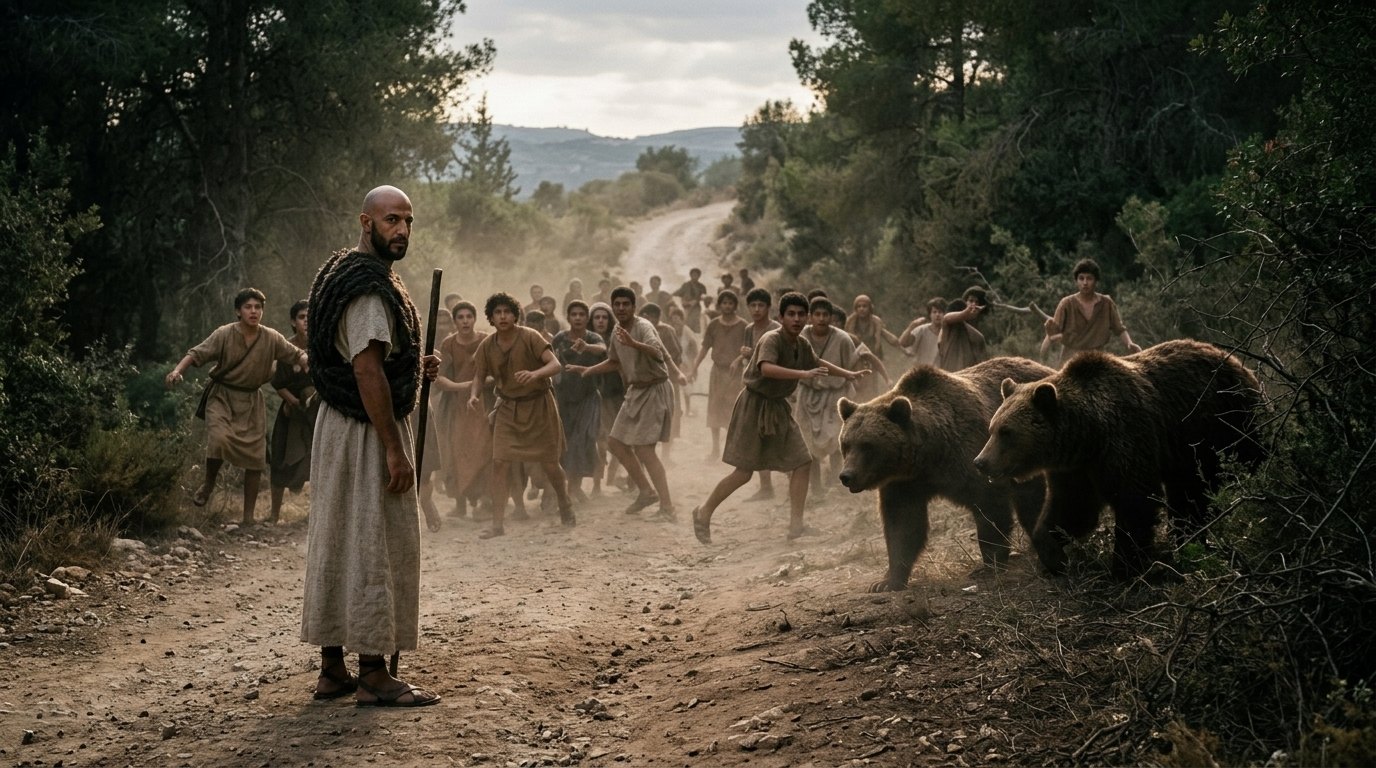
2 Kings 2:23-25
23 From there Elisha went up to Bethel. As he was walking along the road, some boys came out of the town and jeered at him. “Get out of here, baldy!” they said. “Get out of here, baldy!”
24 He turned around, looked at them and called down a curse on them in the name of the LORD. Then two bears came out of the woods and mauled forty-two of the boys.
25 And he went on to Mount Carmel and from there returned to Samaria.
New International Version (NIV)
The answer
God sent the bears in judgment on public contempt for His prophet and, through him, for God Himself. It was not petty revenge because Elisha was bald. Elisha had just been confirmed as Elijah’s successor, and the jeering occurred as he approached Bethel, a centre of idolatrous worship. This was a unique prophetic judgment, not an example authorizing personal revenge.
More than an insult about baldness
The setting identifies what was at stake. Immediately beforehand, Elijah had been taken up into heaven (2 Kings 2:11). God then divided the Jordan through Elisha, and the sons of the prophets recognized that Elijah’s spirit rested on him (2 Kings 2:14-15). At Jericho, God healed the harmful waters through Elisha’s ministry (2 Kings 2:19-22).
Against that background, the youths came out and repeatedly cried, “Go up, you baldy!” (2 Kings 2:23). At minimum, this was concerted public scorn for God’s prophet. Following so closely after Elijah’s ascent, “Go up” may also have derided that event and Elisha’s succession. Baldness supplied an insult; it was not the underlying issue.
The text also says that Elisha “cursed them in Yahweh’s name” before the bears came (2 Kings 2:24). That wording directs attention to God’s name and authority rather than presenting the incident as merely Elisha’s private quarrel.
Why Bethel matters
Bethel was not religiously neutral ground. Jeroboam had installed one of his golden calves there, appointed priests who were not Levites, and established worship devised from his own heart (1 Kings 12:28-33). Elisha therefore confronted scorn while representing Yahweh in a place closely associated with institutionalized false worship.
Scripture elsewhere describes the same deadly pattern: God compassionately sends His messengers, but people mock them, despise His words and scoff at His prophets until His wrath comes (2 Chronicles 36:15-16). The enduring principle is stated plainly in Galatians 6:7: God is not mocked. Treating His word and His messengers with contempt is serious because it expresses contempt for God and rejection of the mercy He offers through His word.
Their age—and the severity of the judgment
The Hebrew does not establish their precise ages. The noun naʿar has a broad range and is translated “young men” in Genesis 22:5, although the qualifying word in 2 Kings 2:23 marks these as younger people. Consequently, neither “tiny children” nor “a gang of adults” should be asserted as certain. Nor does the passage say that they intended to kill Elisha. What it explicitly records is a sizable company publicly mocking God’s prophet and forty-two of them being mauled.
The severity should not be softened, but neither should God be accused of cruelty. The same Lord declares that He takes no pleasure in the death of the wicked and urgently calls the wicked to turn and live (Ezekiel 33:11). His judgment is righteous; His warnings and calls to repentance are merciful.
This account gives no permission to retaliate against ridicule. Romans 12:19-21 forbids personal vengeance and commands overcoming evil with good. Christ Himself, when cursed, did not curse back but entrusted Himself to the righteous Judge (1 Peter 2:23). The warning against despising God’s word finally leads to the refuge God provides: Christ bore sins in His body on the tree so that those who have strayed may die to sin, live to righteousness and return to their Shepherd (1 Peter 2:24-25).
Answered from Scripture · reviewed November 12, 2026
The account of two bears mauling forty-two youths outside Bethel is often treated as petulant cruelty over physical baldness, but Scripture presents it as a solemn divine judgment against open rebellion. Elisha had just been consecrated to succeed Elijah, and the taunting mob represented the idolatrous culture of Bethel defying Yahweh's covenant authority. This event demonstrates that contempt directed at God's appointed messenger is ultimately an attack on the Lord Himself.
The Incident
Open contempt against Yahweh's newly appointed prophet
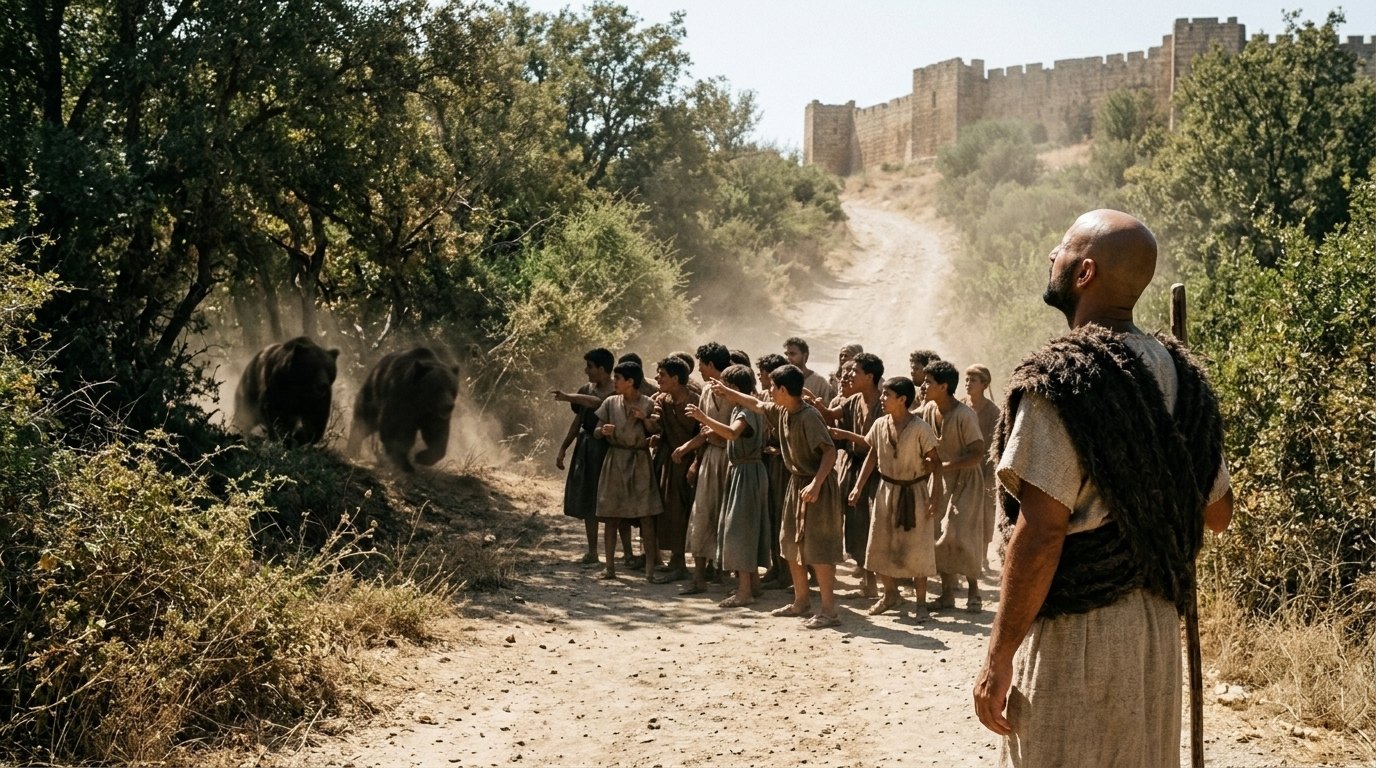
From there Elisha went up to Bethel. As he was walking along the road, some boys came out of the town and jeered at him. “Get out of here, baldy!” they said. “Get out of here, baldy!” He turned around, looked at them and called down a curse on them in the name of the LORD. Then two bears came out of the woods and mauled forty-two of the boys.
2 Kings 2:23-24 (NIV)
It shows that Elisha cursed the taunting mob specifically in Yahweh's name, triggering an act of divine judgment rather than personal revenge.
The sobering narrative turns on 2 Kings 2:23-24, where Elisha curses a derisive mob strictly in the name of Yahweh, evoking a direct divine response rather than personal retaliation. As Elisha ascended the road toward Bethel, a large crowd emerged from the city to taunt him relentlessly, shouting, 'Go up, baldhead! Go up, baldhead!' (2 Kings 2:23). This was no harmless schoolyard jest, but a deliberate challenge to God's prophet. The phrase 'go up' was a sarcastic demand for Elisha to mimic Elijah's recent ascension into heaven, effectively telling Yahweh's spokesman to vanish from the earth, while the taunt against his physical appearance was an insult of deep social and spiritual contempt.
English translations that render the mockers as 'little children' obscure the original language. In Hebrew, the phrase na'ar qatan often denotes young men of accountability rather than toddlers. Solomon famously used the exact same phrase of himself in 1 Kings 3:7 when acknowledging his youth and inexperience upon ascending Israel's throne, and Jonathan similarly employed a na'ar qatan to retrieve military arrows in 1 Samuel 20:35. This was an organized gang of adolescent or young adult men venturing out from an idolatrous city to intimidate the prophet of the Lord.
Elisha did not summon beasts by personal magical decree; instead, he invoked the righteous name of the Lord against their defiant hostility (2 Kings 2:24). Instantly, two female bears burst from the adjacent woodland and mauled forty-two of the instigators. Having witnessed the vindication of God's word, Elisha quietly continued onward to Mount Carmel and Samaria to pursue his long ministry (2 Kings 2:25).
| Passage | What it says |
|---|---|
| 2 Kings 2:23 | Youths emerge from Bethel and repeatedly jeer at Elisha, telling him to go up and mocking his baldness. |
| 2 Kings 2:24 | Elisha curses the scorners in Yahweh's name, and two female bears emerge from the woods and maul forty-two of them. |
| 2 Kings 2:25 | Elisha departs from the scene to Mount Carmel and then returns to Samaria to continue his prophetic ministry. |
| 1 Kings 3:7 | Solomon calls himself a 'little child' using the same Hebrew term (na'ar qatan) to describe his youth and inexperience as king. |
| 1 Samuel 20:35 | Jonathan takes a 'little boy' (na'ar qatan) to retrieve arrows, showing the term can indicate young men capable of serving. |
The Context
A succession confirmed by power and mercy

The company of the prophets from Jericho, who were watching, said, “The spirit of Elijah is resting on Elisha.” And they went to meet him and bowed to the ground before him.
2 Kings 2:15 (NIV)
It establishes that Elisha was openly certified before Israel as Elijah's true successor endowed with the Spirit of God.
This encounter immediately follows the formal establishment of Elisha's prophetic office, crystallized in 2 Kings 2:15 when the sons of the prophets witnessed his return and proclaimed, 'The spirit of Elijah rests on Elisha.' God had explicitly verified that the mantle had passed. Elijah had just been taken up into heaven alive by a whirlwind in a spectacular chariot and horses of fire (2 Kings 2:11). When Elisha took up Elijah's fallen cloak and struck the waters of the Jordan, crying out for the God of Elijah, the river miraculously parted before him (2 Kings 2:14). The prophetic guild bowed to the earth, recognizing that Yahweh was actively speaking through this new messenger.
Immediately after crossing the Jordan, Elisha's very first recorded miracle was an act of profound compassion toward a desperate population. In Jericho, the local spring was toxic, causing barrenness and death across the territory (2 Kings 2:19). Elisha cast salt into the water from a new bowl, declaring in Yahweh's name that the spring was healed, and the waters were permanently restored to life (2 Kings 2:20-22). Elisha did not begin his public ministry with an appetite for vengeance; his calling began with life-giving mercy toward those who sought the Lord. The tragedy outside Bethel cannot be divorced from this reality: God's genuine prophet carried abundant mercy for the humble, but solemn judgment awaited those who met his ministry with hardened scorn.
| Passage | What it says |
|---|---|
| 2 Kings 2:11 | Elijah is taken up into heaven by a whirlwind in a chariot and horses of fire. |
| 2 Kings 2:14 | Elisha strikes the Jordan waters with Elijah's mantle in Yahweh's name, and the river parts for him to cross. |
| 2 Kings 2:15 | The sons of the prophets recognize that the spirit of Elijah rests on Elisha and bow before him. |
| 2 Kings 2:19-22 | Elisha performs a miracle of mercy by casting salt into Jericho's spring, purifying the deadly waters. |
The Setting
Bethel's entrenched idolatry and rebellion
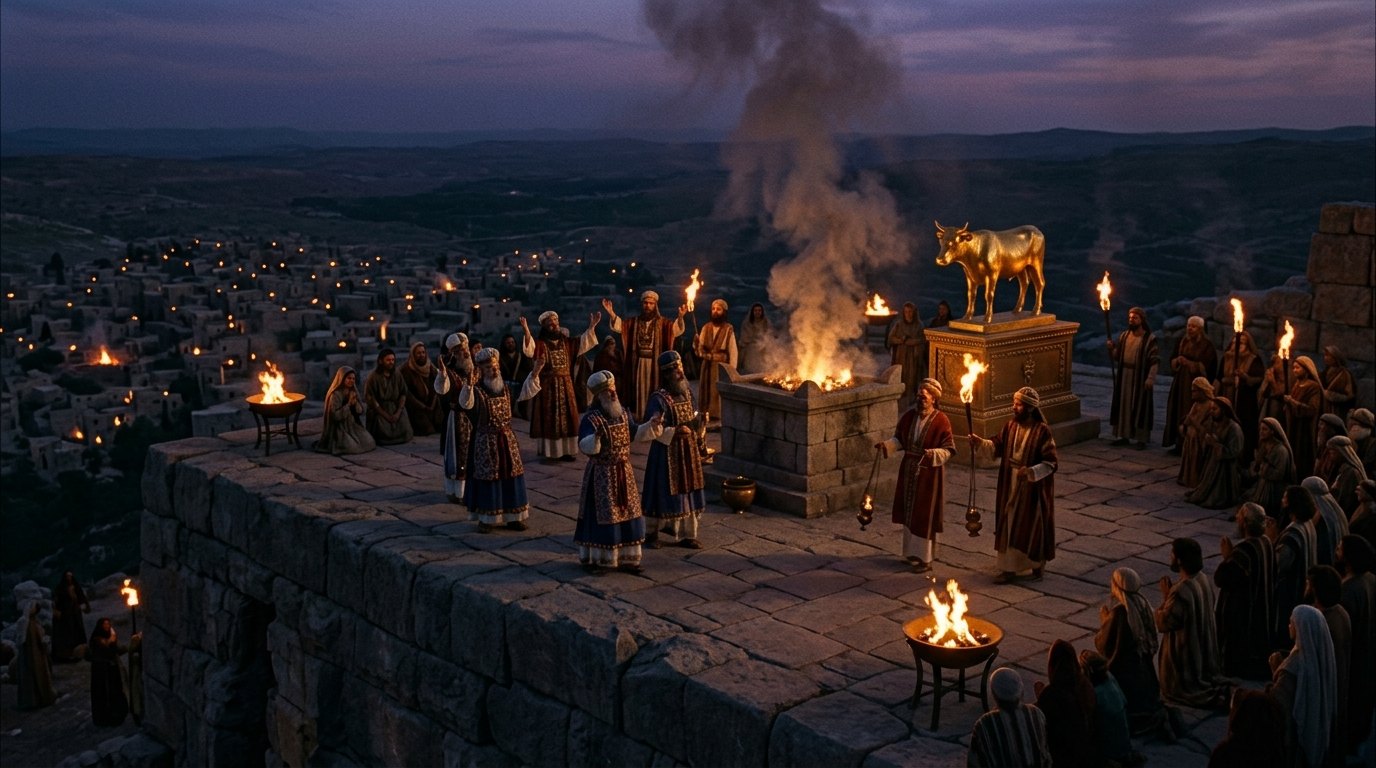
After seeking advice, the king made two golden calves. He said to the people, “It is too much for you to go up to Jerusalem. Here are your gods, Israel, who brought you up out of Egypt.” One he set up in Bethel, and the other in Dan. And this thing became a sin; the people came to worship the one at Bethel and went as far as Dan to worship the other.
1 Kings 12:28-30 (NIV)
It identifies Bethel as the official seat of Northern Israel's state-sponsored false worship and golden calf idolatry.
The location of this confrontation is pivotal: Bethel was the epicenter of apostasy in the northern kingdom, established as an idolatrous citadel in 1 Kings 12:28-30. When Jeroboam fractured the nation after Solomon's reign, he set up golden calves at Dan and Bethel to discourage the people from traveling south to the temple in Jerusalem. Jeroboam concocted a counterfeit religious system, ordaining non-Levitical priests and manufacturing holy feasts 'devised from his own heart' (1 Kings 12:31-33). Generations of northern Israelites had grown up in Bethel steeped in hostility toward Yahweh's authentic prophets.
God had previously warned Bethel of coming doom when an unnamed man of God cried against its altar, causing it to split as Jeroboam's hand withered (1 Kings 13:1-5). Yet the city hardened itself in systemic rebellion. The prophet Amos would later document how Amaziah, the corrupt chief priest of Bethel, boasted that the city was 'the king's sanctuary and the temple of the kingdom,' demanding that true prophets cease speaking there (Amos 7:10-13). Hosea famously referred to Bethel as 'Beth-aven'—meaning 'house of wickedness'—because of its brazen calf worship (Hosea 10:5), while Amos declared that Bethel would come to utter ruin (Amos 5:5). The gang confronting Elisha was the cultural fruit of Bethel's generational idolatry, instinctively rising up to oppose Yahweh's newly appointed prophet.
| Passage | What it says |
|---|---|
| 1 Kings 12:28-30 | Jeroboam erects golden calves at Dan and Bethel to draw Israel away from worshipping Yahweh in Jerusalem. |
| 1 Kings 12:31-33 | Jeroboam establishes an unauthorized priesthood and feasts devised from his own heart at the high place of Bethel. |
| 1 Kings 13:1-5 | A prophet from Judah cries out against Bethel's altar, pronouncing Yahweh's impending judgment on its idolatrous rites. |
| Amos 7:10-13 | Bethel is identified by its false priest Amaziah as the king's sanctuary and the temple of the kingdom. |
| Hosea 10:5 | Hosea condemns Bethel as Beth-aven, a house of wickedness and calf worship deserving of divine judgment. |
| Amos 5:5 | Amos warns Israel not to seek Bethel, for Bethel shall come to nothing because of its persistent idolatry. |
Covenant Warning
Wild beasts as the promised consequence of rebellion

“ ‘If you remain hostile toward me and refuse to listen to me, I will multiply your afflictions seven times over, as your sins deserve. I will send wild animals against you, and they will rob you of your children, destroy your cattle and make you so few in number that your roads will be deserted.
Leviticus 26:21-22 (NIV)
It shows that God explicitly promised to send wild beasts to rob unrepentant covenant breakers of their children.
The mauling by bears was not a sudden burst of petulance, but the specific fulfillment of the covenant sanctions recorded in Leviticus 26:21-22. God had warned Israel centuries before that if they walked contrary to Him, He would 'send wild beasts among you, which shall bereave you of your children, and destroy your cattle, and make you few in number.' Moses reiterated in Deuteronomy 28:15 that terrible curses would overtake an unrepentant covenant people who rejected Yahweh's voice. The northern tribes had abandoned the covenant; the beasts emerging from the woods demonstrated that God's ancient warnings remained active and absolute.
Scripture consistently shows that contempt for God's messengers incurs His severe judgment. Israel chronicled its own downfall by noting that they continually 'mocked the messengers of God, despised His words, and scoffed at His prophets, until the wrath of the Lord arose against His people, till there was no remedy' (2 Chronicles 36:15-16). Bethel had already seen lions exact divine judgment when a disobedient prophet was killed along its road (1 Kings 13:24), and another man who ignored a prophetic word met the same fate (1 Kings 20:36). Jeremiah later prophesied that beasts would tear those who multiply transgressions against God (Jeremiah 5:6). God is never mocked with impunity, as the apostle Paul reminds the church (Galatians 6:7-8). When the youths of Bethel assailed Elisha, they struck at Yahweh's authority, reaping the righteous covenant penalty written in the law.
| Passage | What it says |
|---|---|
| Leviticus 26:21-22 | God warns that if Israel walks contrary to Him, He will send wild beasts to bereave them of their children. |
| Deuteronomy 28:15 | Moses warns that curses will fall upon the covenant people if they refuse to obey Yahweh's voice. |
| 2 Chronicles 36:15-16 | Israel continually mocked God's messengers and scoffed at His prophets until His wrath arose without remedy. |
| Galatians 6:7-8 | Paul affirms that God is not mocked, for whatever one sows, that will he also reap. |
| 1 Kings 13:24 | A lion slays a disobedient prophet near Bethel, proving God's immediate judgment through beasts against contempt of His word. |
| 1 Kings 20:36 | A man who refuses to obey the prophet's word in God's name is slain by a lion. |
| Jeremiah 5:6 | Jeremiah proclaims that lions, wolves, and leopards will tear transgressors who multiply rebellions against God. |
Righteous Severity
God's holiness vindicated alongside His call to life
Say to them, ‘As surely as I live, declares the Sovereign LORD, I take no pleasure in the death of the wicked, but rather that they turn from their ways and live. Turn! Turn from your evil ways! Why will you die, people of Israel?’
Ezekiel 33:11 (NIV)
It proves that God takes no pleasure in the death of the wicked, but executes judgment when mercy is rejected.
The judgment outside Bethel is an unmistakable display of God's holy justice, yet it must be understood within the full counsel of His nature. In Ezekiel 33:11, the Lord declares with an oath that He takes no pleasure in the death of the wicked, but desires that the wicked turn from their way and live. God's holiness demands that rebellion be answered, yet His heart yearns for repentance; the tragedy of human rebellion is that sinners consistently despise the very patience meant to lead them to life.
Scripture forbids softening divine judgment into something comfortable. Paul commands in Romans 11:22 to consider both the kindness and the severity of God: severity toward those who fall in hardened rebellion, but kindness to those who continue in His goodness. When the mob taunted Elisha, they were not committing a harmless prank, but acting out the covenant defiance that characterized Bethel's golden-calf idolatry. As the author of Hebrews reminds us in Hebrews 10:28-31, anyone who rejected the law of Moses died without mercy, establishing an even weightier warning that falling into the hands of the living God without an advocate is terrifying.
This pattern continues unbroken into the New Covenant. In Luke 10:16, Jesus establishes the identical principle that governed Elisha's reception: whoever listens to His disciples listens to Him, and whoever rejects God's messengers rejects the Father who sent them. The gravity of mocking an authorized prophet is not personal wounded vanity, but treason against the Sovereign King. We see this holy boundary demonstrated decisively in Acts 5:1-11, where Ananias and Sapphira collapse dead for lying to the Holy Spirit, striking great fear upon the entire church. God's terrifying holiness vindicates His word, driving us to seek the refuge provided solely in Jesus Christ.
| Passage | What it says |
|---|---|
| Ezekiel 33:11 | Yahweh declares He takes no pleasure in the death of the wicked, calling them to turn and live. |
| Romans 11:22 | Paul calls believers to observe both the goodness and severity of God toward those who fall. |
| Hebrews 10:28-31 | Rejecting God's messengers brought death, warning how much worse it is to spurn the Son of God. |
| Luke 10:16 | Jesus warns that whoever rejects His messengers rejects Him, and whoever rejects Him rejects the Father who sent Him. |
| Acts 5:1-11 | Ananias and Sapphira fall dead instantly for lying to the Holy Spirit, demonstrating the severe holiness of God. |
Where in the Bible
| Book | Passages |
|---|---|
| Leviticus | 1 · Leviticus 26:21-22 |
| Deuteronomy | 1 · Deuteronomy 28:15 |
| 1 Samuel | 1 · 1 Samuel 20:35 |
| 1 Kings | 6 · 1 Kings 3:7, 1 Kings 12:28-30, 1 Kings 12:31-33, 1 Kings 13:1-5, 1 Kings 13:24, 1 Kings 20:36 |
| 2 Kings | 7 · 2 Kings 2:23, 2 Kings 2:24, 2 Kings 2:25, 2 Kings 2:11, 2 Kings 2:14, 2 Kings 2:15, 2 Kings 2:19-22 |
| 2 Chronicles | 1 · 2 Chronicles 36:15-16 |
| Jeremiah | 1 · Jeremiah 5:6 |
| Ezekiel | 1 · Ezekiel 33:11 |
| Hosea | 1 · Hosea 10:5 |
| Amos | 2 · Amos 7:10-13, Amos 5:5 |
| Luke | 1 · Luke 10:16 |
| Acts | 1 · Acts 5:1-11 |
| Romans | 1 · Romans 11:22 |
| Galatians | 1 · Galatians 6:7-8 |
| Hebrews | 1 · Hebrews 10:28-31 |
The story in order
- Creation and Fall (c. 4000 BC) · Genesis 1:27 · God made humanity male and female in His image.
- Covenant with Abraham (c. 2000 BC) · Genesis 12:1-3 · God establishes His covenant people.
- Exodus and Law (c. 1450 BC) · Leviticus 26:21-22 · Wild beasts are a promised consequence of rebellion.
- Division of the Kingdom (c. 931 BC) · 1 Kings 12:28-30 · Jeroboam sets up idolatry in Bethel.
- Elijah's Ministry (c. 900 BC) · 1 Kings 13:24 · A prophet is slain by a lion near Bethel.
- Elisha's Succession (c. 850 BC) · 2 Kings 2:23 · Youths mock Elisha, God's newly appointed prophet.
- Prophetic Warnings (c. 760 BC) · Amos 5:5 · Amos warns against seeking Bethel due to idolatry.
- Exile and Return (c. 586 BC) · 2 Chronicles 36:15-16 · Israel mocked God's messengers until His wrath arose.
- Jesus' Ministry (AD 30) · Luke 10:16 · Rejecting Jesus' messengers is rejecting Him.
- Apostolic Ministry (AD 33) · Acts 5:1-11 · Ananias and Sapphira die for lying to the Spirit.
- Paul's Teaching (c. AD 55) · Galatians 6:7-8 · Whatever one sows, that will he also reap.
- Hebrews Warning (c. AD 65) · Hebrews 10:28-31 · Rejecting God's messengers brought death.
Key words
- na'ar qatan (נַעַר קָטָן (na'ar qatan))
- A young boy or youth, indicating youth and inexperience, but capable of service. · 1 Kings 3:7
- Yahweh's name (שֵׁם יַהְוֶה (shem Yahweh))
- Invoking the authority and power of God. · 2 Kings 2:24
- idol (פֶּסֶל (pesel))
- An image or representation of a god used as an object of worship. · 1 Kings 12:28
- covenant (בְּרִית (berit))
- A solemn agreement or promise between God and His people. · Deuteronomy 28:15
- judgment (מִשְׁפָּט (mishpat))
- God's righteous decision and punishment against sin and rebellion. · Leviticus 26:21
This episode stands as an uncompromising warning that God is not mocked, nor will He permit His holy name and covenant word to be treated with open contempt. Yet the ultimate purpose of divine warnings is to drive sinners toward mercy, finding redemption not in self-justifying rebellion, but in Jesus Christ who bore the curse in our place.
27 passages, each cited once.
Scripture cited
- 2 Kings 2:1-25
- 1 Kings 12:25-33
- Ezekiel 33:11
- Romans 12:17-21
- Galatians 6:7-8
- 1 Peter 2:21-25
- 2 Chronicles 36:15-16