Why does God allow natural disasters?
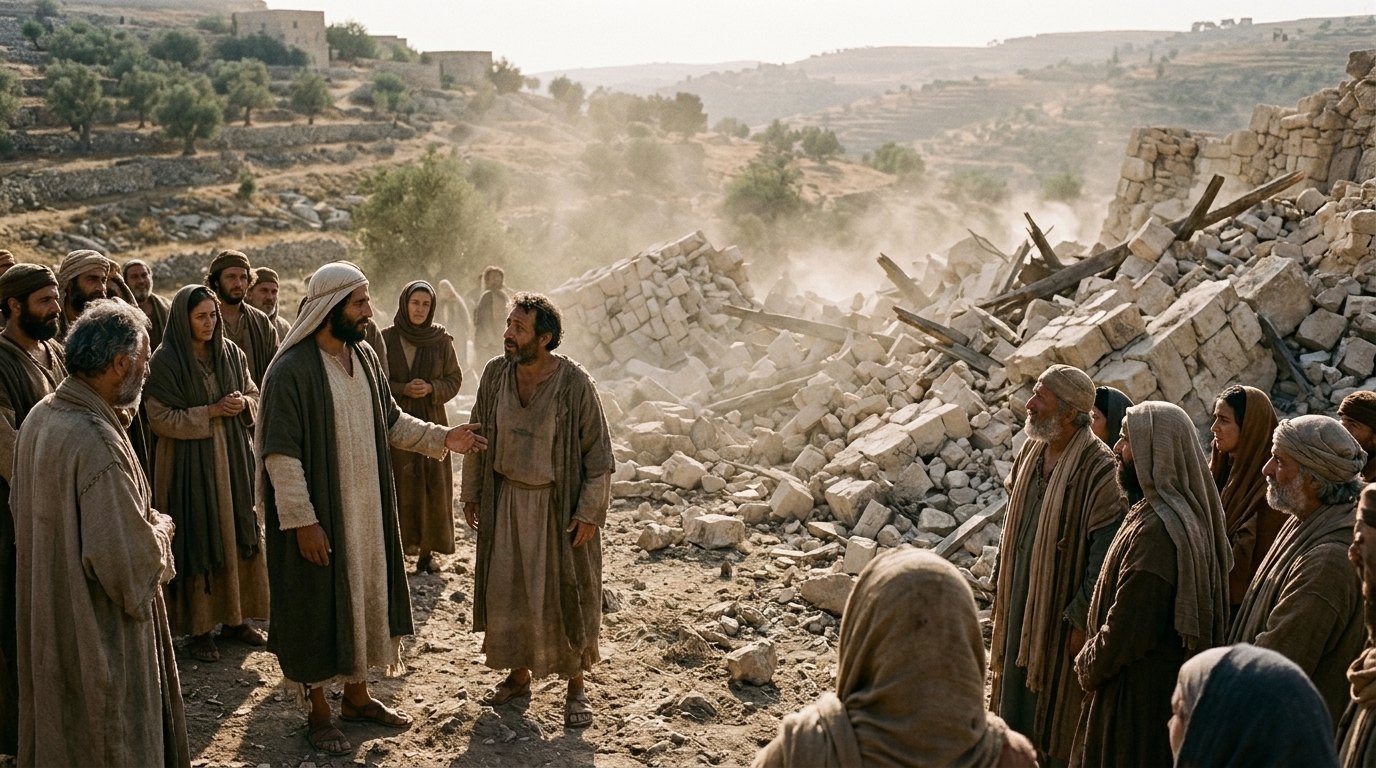
Luke 13:1-5
1 Now there were some present at that time who told Jesus about the Galileans whose blood Pilate had mixed with their sacrifices.
2 Jesus answered, “Do you think that these Galileans were worse sinners than all the other Galileans because they suffered this way?
3 I tell you, no! But unless you repent, you too will all perish.
4 Or those eighteen who died when the tower in Siloam fell on them—do you think they were more guilty than all the others living in Jerusalem?
5 I tell you, no! But unless you repent, you too will all perish.”
New International Version (NIV)
The answer
God allows natural disasters in a world that lies under the curse of sin and is awaiting renewal, not because disaster victims are necessarily being singled out for their sins. God remains sovereign and good, but He has not disclosed His particular purpose in every tragedy. Scripture reveals what can be known: creation groans under decay, every person needs to repent, God is patient and merciful, and He will finally end death and pain.
A creation under the curse
After Adam’s sin, God told him, “the ground is cursed for your sake” (Genesis 3:17). Romans 8:20-22 widens the picture to creation itself: it has been subjected to futility, held in “the bondage of decay,” and groaning in pain. Natural disasters belong to this present, groaning order rather than to the flawless renewal God has promised. This explains the condition of the world; it does not reveal God’s undisclosed reason for each individual event.
Suffering is not a guilt-meter
Jesus addressed both political violence and accidental disaster in Luke 13:1-5: Pilate’s killing of the Galileans and the tower of Siloam falling on eighteen people. He denied that either group was worse than others, then warned, “unless you repent, you will all perish in the same way” (Luke 13:5). His warning turns attention away from ranking the victims’ guilt and toward every hearer’s own need for repentance.
Jesus likewise rejected the attempt to trace a man’s blindness from birth to some specific sin committed by the man or his parents in John 9:1-3. Scripture records certain explicit acts of divine judgment, but observers have no warrant to declare a modern earthquake, storm, or fire God’s punishment on particular people.
God’s patience and comfort in the meantime
The delay of final judgment and renewal displays patience rather than indifference. The Lord “is patient with us, not wishing that anyone should perish, but that all should come to repentance” (2 Peter 3:9). Tragedy exposes life’s fragility and the urgency of being reconciled to God; it does not make suffering itself good.
God also meets suffering people with mercy. He is “the Father of mercies and God of all comfort” (2 Corinthians 1:3), and He comforts afflicted believers so that they can comfort others (2 Corinthians 1:4). The Christian response therefore includes grief with sufferers, practical aid, prayer, and compassionate presence—not detached speculation about what the victims must have done.
God’s final answer is renewal
Romans 8:21 promises that creation itself will be delivered from decay. Revelation 21:4 describes the completed renewal: “Death will be no more; neither will there be mourning, nor crying, nor pain any more.” The Christian hope is therefore not merely an explanation of suffering, but God’s certain promise to end it: “Behold, I am making all things new” (Revelation 21:5).
Answered from Scripture · reviewed November 12, 2026
Scripture cited
- Luke 13:1-5
- Romans 8:18-23
- Genesis 3:17-19
- John 9:1-3
- 2 Peter 3:8-9
- Revelation 21:1-5
- 2 Corinthians 1:3-4