Are there lost books of the Bible?

Luke 1:1-4
1 Many have undertaken to draw up an account of the things that have been fulfilled among us,
2 just as they were handed down to us by those who from the first were eyewitnesses and servants of the word.
3 With this in mind, since I myself have carefully investigated everything from the beginning, I too decided to write an orderly account for you, most excellent Theophilus,
4 so that you may know the certainty of the things you have been taught.
New International Version (NIV)
The answer
No inspired book of the Bible has been lost. Scripture mentions some writings that are no longer available, but being mentioned or quoted in the Bible does not make a writing Scripture. There is no missing inspired volume needed to complete God’s Word.
Writings mentioned in the Bible
- Ancient records: Numbers 21:14 cites “The Book of the Wars of Yahweh,” and Joshua 10:13 refers to the “book of Jashar.” These were records known to the original readers, but the verses do not identify them as God-breathed Scripture.
- Other accounts of Jesus’ ministry: Luke 1:1-4 says that many had undertaken to write narratives about Christ. Luke then explains his own careful investigation and orderly account. The existence of other narratives does not mean they were all inspired or intended for the Bible.
- Other apostolic correspondence: In 1 Corinthians 5:9, Paul mentions an earlier letter, and Colossians 4:16 refers to a letter associated with Laodicea. Not everything an apostle wrote was necessarily given as permanent Scripture for the whole church.
The New Testament itself distinguishes an exhaustive historical record from a sufficient written revelation. John 20:30-31 says that Jesus performed many signs not recorded in John’s Gospel, while the signs written there are sufficient to lead readers to believe that Jesus is the Christ and receive life in His name.
Why nothing inspired is missing
Scripture is God’s Word, not merely an ancient religious document. “Every Scripture is God-breathed” (2 Timothy 3:16). The surrounding verses say that the Scriptures make people wise for salvation through faith in Christ and equip those who belong to God completely for every good work (2 Timothy 3:15-17). They therefore provide what God intends for faith, salvation and obedient life.
Jesus also promised concerning His teaching, “my words will not pass away” (Matthew 24:35). God’s purpose for His Word is not frustrated by the disappearance of a document. Moreover, 2 Peter 3:15-16 already places Paul’s letters alongside “the other Scriptures,” showing that apostolic writings were being received as Scripture during the apostolic age itself.
Consequently, a newly discovered manuscript, an ancient book using a biblical character’s name, or a document mentioned in Scripture should not automatically be treated as a missing part of the Bible. Lost historical writings are not necessarily lost revelation.
Answered from Scripture · reviewed November 12, 2026
Scripture explicitly cites ancient annals, historical documents, and occasional letters that are no longer extant, yet not a single God-breathed book of the Bible has been lost. The Bible distinguishes between selective human records and the complete, providentially preserved body of inspired revelation. What God ordained for the salvation and instruction of His people has been kept inviolate across every generation.
Ancient Historical Chronicles
Citations of Extrabiblical Annals and Records
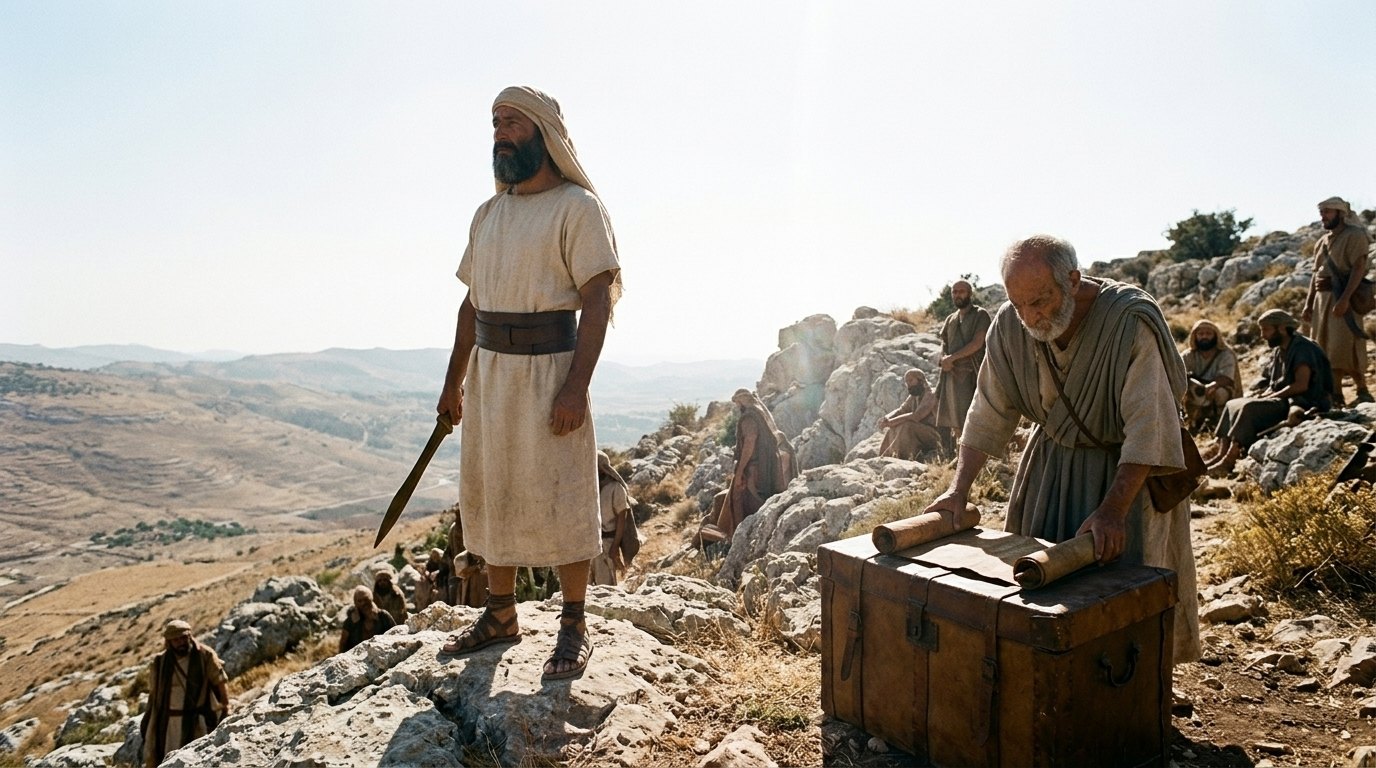
So the sun stood still, and the moon stopped, till the nation avenged itself on its enemies, as it is written in the Book of Jashar. The sun stopped in the middle of the sky and delayed going down about a full day.
Joshua 10:13 (NIV)
It shows Scripture referencing a well-known historical anthology, the Book of Jashar, as corroborating history rather than canonizing it as inspired Scripture.
In Joshua 10:13, the biblical author appeals to an outside written source to confirm an extraordinary historical event: "Is this not written in the Book of Jashar?" Scripture explicitly cites human records and national annals without conferring divine inspiration upon them. God’s authors lived in real historical settings and frequently pointed their contemporaries to well-known national archives for further historical data. In Numbers 21:14, Moses notes ancient territorial boundaries by quoting the Book of the Wars of Yahweh. Later, 2 Samuel 1:18 records David's funeral dirge for Saul and Jonathan, the Song of the Bow, as having been transcribed in the Book of Jashar.
This deliberate practice continues throughout the monarchical narratives. The writer of Kings directs readers who desire additional civic information to the book of the acts of Solomon (1 Kings 11:41), the chronicles of the kings of Israel (1 Kings 14:19), and the chronicles of the kings of Judah (1 Kings 14:29). Similarly, the Chronicler cites several court records compiled by faithful seers: the records of Samuel, Nathan, and Gad (1 Chronicles 29:29), the prophecy of Ahijah and the visions of Iddo (2 Chronicles 9:29; 2 Chronicles 12:15; 2 Chronicles 13:22), the annals of Jehu (2 Chronicles 20:34), civil records written by the prophet Isaiah (2 Chronicles 26:22), and the accounts of the seers regarding Manasseh (2 Chronicles 33:19).
These external volumes were selective state documents, royal memoirs, and public anthologies. An author citing a historical document does not equate that document with God-breathed Scripture. The Holy Spirit directed the biblical writers to reference existing records to demonstrate verifiable earthly history, while ensuring that the canon itself retained solely what God breathed out.
| Passage | What it says |
|---|---|
| Numbers 21:14 | Cites the Book of the Wars of Yahweh regarding geographic boundaries during Israel's wilderness journeys. |
| Joshua 10:13 | References the Book of Jashar recording the sun standing still during Joshua's battle at Gibeon. |
| 2 Samuel 1:18 | Notes that David's lament over Saul and Jonathan, the Song of the Bow, was written in the Book of Jashar. |
| 1 Kings 11:41 | Appeals to the book of the acts of Solomon for further historical details of his reign. |
| 1 Chronicles 29:29 | Cites the historical chronicles of Samuel the seer, Nathan the prophet, and Gad the seer regarding King David. |
| 2 Chronicles 9:29 | Directs readers to the history of Nathan the prophet, the prophecy of Ahijah, and the visions of Iddo the seer. |
| 2 Chronicles 12:15 | Refers to the records of Shemaiah the prophet and Iddo the seer concerning Rehoboam's genealogical accounts and wars. |
| 2 Chronicles 20:34 | Mentions the annals of Jehu the son of Hanani recorded in the book of the kings of Israel. |
| 1 Kings 14:19 | Refers to the chronicles of the kings of Israel for the remainder of Jeroboam's acts and wars. |
| 1 Kings 14:29 | Refers to the chronicles of the kings of Judah for the rest of Rehoboam's deeds. |
| 2 Chronicles 13:22 | Cites the story or commentary of the prophet Iddo for the rest of the acts of Abijah. |
| 2 Chronicles 26:22 | Notes that Isaiah the prophet wrote the rest of the acts of Uzziah, from first to last. |
| 2 Chronicles 33:19 | Mentions records of Manasseh's prayer and deeds written among the sayings of the seers (or Hozai). |
Apostolic Historical Context
Early Narratives and Occasional Letters
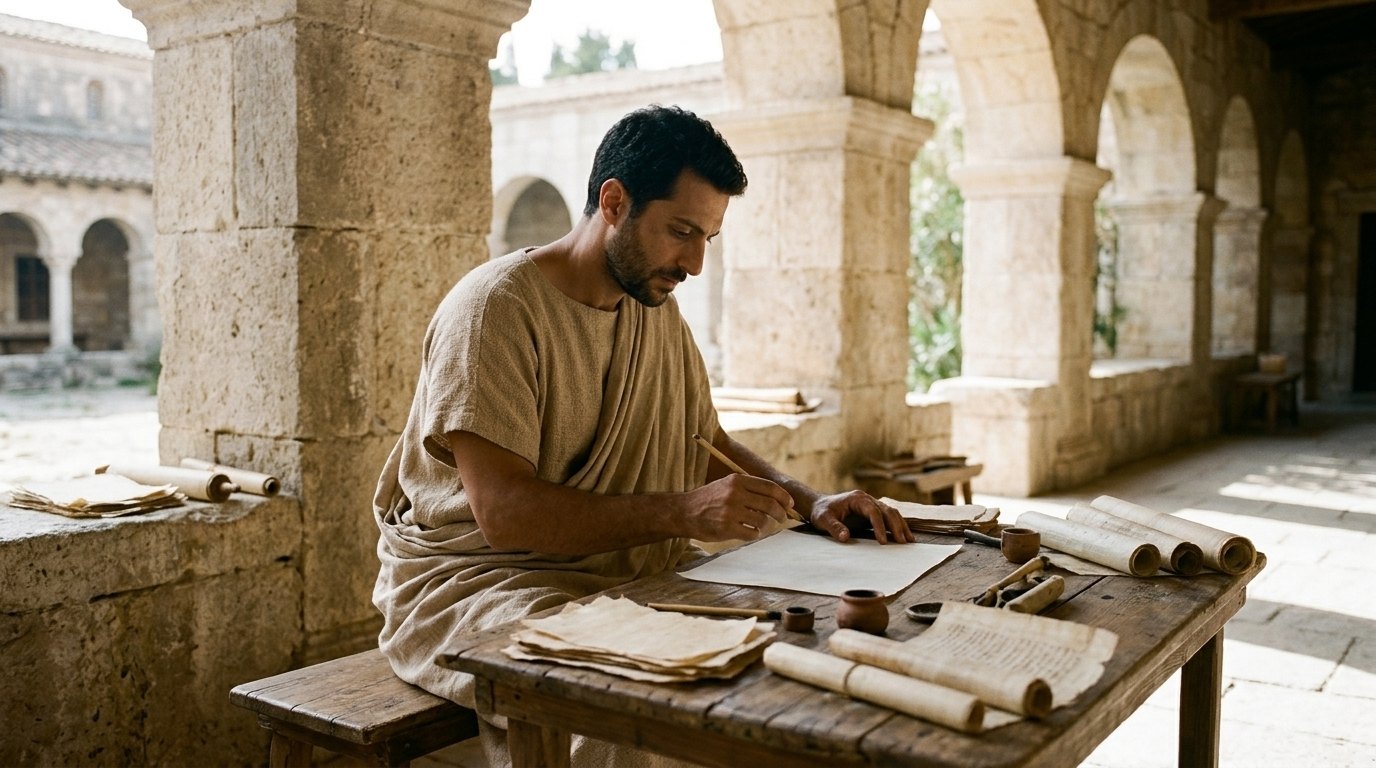
Many have undertaken to draw up an account of the things that have been fulfilled among us, just as they were handed down to us by those who from the first were eyewitnesses and servants of the word. With this in mind, since I myself have carefully investigated everything from the beginning, I too decided to write an orderly account for you, most excellent Theophilus, so that you may know the certainty of the things you have been taught.
Luke 1:1-4 (NIV)
Luke explicitly acknowledges earlier written attempts to narrate Christ's ministry before setting forth his own accurate, Spirit-guided, orderly account.
Luke opens his Gospel by stating plainly how his inspired history came to be written. In Luke 1:1–4, he acknowledges that "many have undertaken to compile a narrative" concerning the deeds accomplished in Christ, drawing upon the testimony of eyewitnesses (Luke 1:1–2). Luke himself conducted a rigorous, Spirit-guided investigation of these realities so that Theophilus could possess infallible certainty regarding the faith (Luke 1:3–4). Early narratives and historical drafts circulated naturally among believers, yet only the accounts inspired by the Holy Spirit were preserved for the universal church. Luke does not denounce these early writings as heretical; he simply demonstrates that divine inspiration led him to compose the definitive, orderly, and canonical account.
A similar reality appears in apostolic correspondence. In 1 Corinthians 5:9, Paul remarks, "I wrote to you in my letter not to associate with sexually immoral people," referencing a previous pastoral note sent to Corinth prior to 1 Corinthians. Likewise, in Colossians 4:16, Paul instructs the church in Colossae to exchange letters with the congregation in Laodicea, ensuring they also read "the letter from Laodicea."
A letter written by an apostle did not automatically constitute permanent Scripture for the canon of God. The apostles wrote ordinary personal and localized communications throughout their ministries. God, in His sovereign providence, gathered and preserved precisely those apostolic epistles intended to govern the faith and practice of all believers across all ages.
| Passage | What it says |
|---|---|
| Luke 1:1 | Observes that many had previously undertaken to compile narratives concerning the events fulfilled among them. |
| Luke 1:2 | States that eyewitnesses and original ministers of the word handed down the firsthand accounts. |
| Luke 1:3 | Affirms Luke's careful investigation of all things from the beginning to compose an orderly account for Theophilus. |
| Luke 1:4 | Explains the purpose: that the reader might know the undeniable certainty of the things taught. |
| 1 Corinthians 5:9 | Mentions a prior letter Paul wrote to the Corinthians warning them not to associate with sexually immoral people. |
| Colossians 4:16 | Instructs the Colossians to read the epistle from Laodicea after reading the letter sent to them. |
Sufficiency and Purpose
Scripture's Purpose Is Distinct from Exhaustive History

Jesus performed many other signs in the presence of his disciples, which are not recorded in this book. But these are written that you may believethat Jesus is the Messiah, the Son of God, and that by believing you may have life in his name.
John 20:30-31 (NIV)
The text directly declares that divine revelation was never designed to record every event, but to sufficiently establish saving faith.
John 20:30–31 establishes the foundational distinction between exhaustive documentation and inspired divine sufficiency. John writes that Jesus performed countless other miraculous signs "which are not written in this book; but these are written so that you may believe that Jesus is the Christ, the Son of God, and that by believing you may have life in his name." The Bible was never intended to serve as an exhaustive encyclopedic record of every event in human history, but as an infallible, sufficient revelation for saving faith. The absence of unrecorded details is not a defect or a loss of Scripture, but a deliberate feature of divine purpose.
John reiterates this reality at the conclusion of his Gospel: if every single action of Christ on earth were transcribed, "the world itself could not contain the books that would be written" (John 21:25). Similarly, Luke notes that his first treatise recorded all that Jesus "began to do and teach" until the day He was taken up into heaven (Acts 1:1), presenting a focused, Spirit-led narrative of redemptive inauguration rather than an infinite catalog.
God’s revelation provides everything necessary to behold the majesty of Jesus Christ and receive eternal life. As Peter affirms, the apostolic testimony did not rely on cleverly devised myths or missing secret knowledge, but rested on firsthand eyewitness observation of His glory (2 Peter 1:16). Scripture contains no missing chapters needed for salvation; the record God provided is complete, purposeful, and thoroughly sufficient to lead humanity to everlasting communion with Christ.
| Passage | What it says |
|---|---|
| John 20:30 | Affirms that Jesus performed many other signs in the presence of the disciples not written in this book. |
| John 20:31 | States these are written that you may believe Jesus is the Christ and have life through His name. |
| John 21:25 | Declares that the world could not contain the books if every single deed of Jesus were written down. |
| Acts 1:1 | Describes Luke's Gospel as an account of all that Jesus began to do and teach until His ascension. |
| 2 Peter 1:16 | Declares that the apostolic testimony was not based on fables, but on firsthand eyewitness observation of Christ's majesty. |
Inspiration and Preservation
God Breathes Out and Preserves His Word
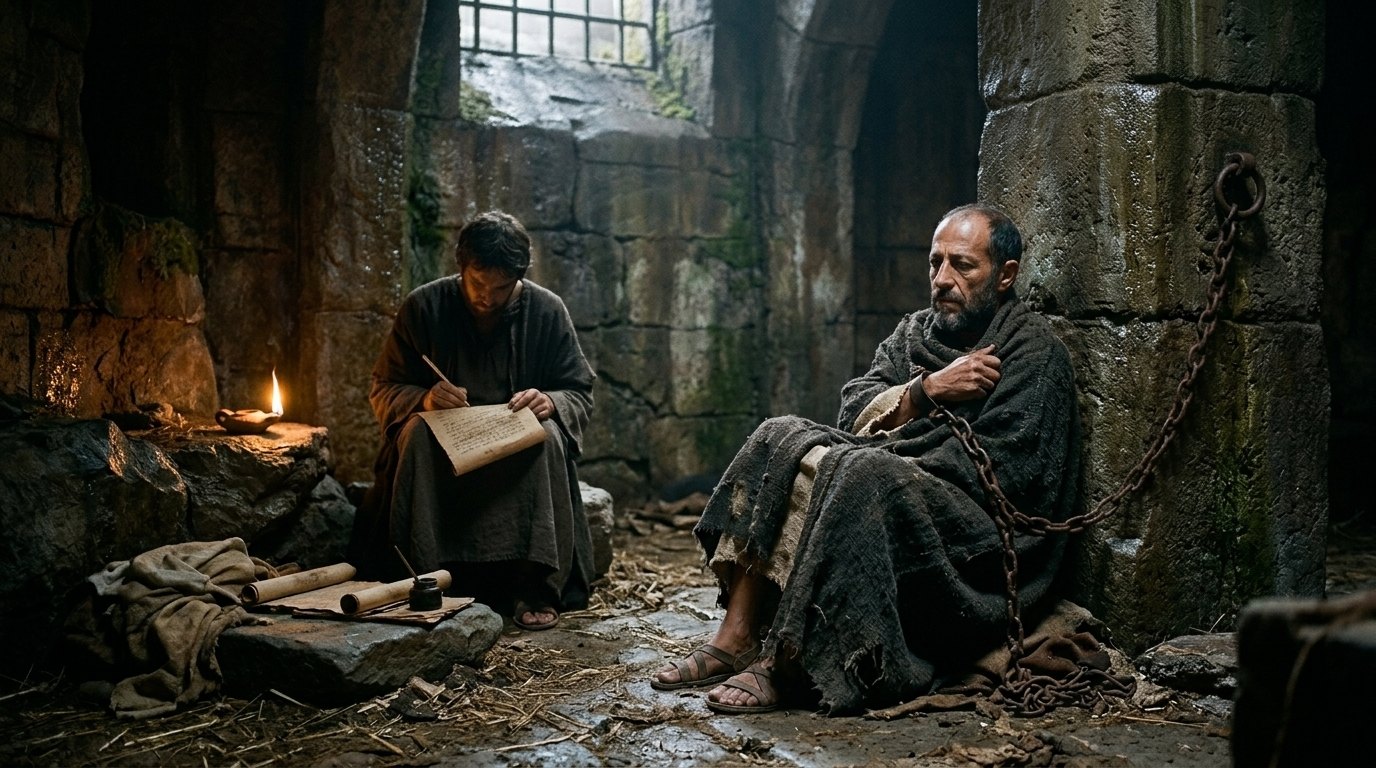
All Scripture is God-breathed and is useful for teaching, rebuking, correcting and training in righteousness, so that the servant of Godmay be thoroughly equipped for every good work.
2 Timothy 3:16-17 (NIV)
It defines the divine origin, completeness, and total sufficiency of Scripture to thoroughly equip the person of God for every good work.
In 2 Timothy 3:16–17, Scripture reveals its divine nature and utter sufficiency: "All Scripture is breathed out by God and profitable for teaching, for reproof, for correction, and for training in righteousness, that the man of God may be complete, equipped for every good work." These sacred writings possess divine efficacy because their ultimate author is God, making the believer wise unto salvation through faith in Christ (2 Timothy 3:15). Because God Himself breathed out His Word, His sovereign power actively preserves every single syllable He ordained for His church. Not one inspired book has fallen through the cracks of history or perished in the dust.
God repeatedly guarantees this supernatural preservation throughout redemptive history. The words of Yahweh are pure, refined like silver seven times, and preserved from this generation forever (Psalm 12:6–7). God’s word is forever settled in heaven (Psalm 119:89), and while the grass withers and the flower fades, His word stands forever (Isaiah 40:8). Jesus affirmed that not the smallest stroke of a Hebrew letter will perish from the Law until all is accomplished (Matthew 5:18), declaring with sovereign authority, "Heaven and earth will pass away, but my words will not pass away" (Matthew 24:35). The gospel proclaimed to believers is the enduring, incorruptible word of the Lord (1 Peter 1:25).
This divine preservation spans both Testaments. Peter recognized Paul's letters as belonging to the very category of "the other Scriptures" (2 Peter 3:15–16). The body of faith was "once for all delivered to the saints" (Jude 1:3). Because the canon represents God’s complete, guarded truth, Scripture closes with a terrifying warning against anyone who would dare add to or take away from the words of His revelation (Revelation 22:18–19). We hold in our hands today the exact, complete, and uncorrupted Word that God purposed for our eternal salvation.
| Passage | What it says |
|---|---|
| 2 Timothy 3:15 | Affirms the sacred writings are able to make one wise for salvation through faith in Christ Jesus. |
| 2 Timothy 3:16 | Declares that all Scripture is God-breathed and profitable for doctrine, reproof, correction, and training in righteousness. |
| 2 Timothy 3:17 | States that Scripture makes the man of God complete, fully equipped for every good work. |
| Matthew 24:35 | Jesus promises that heaven and earth will pass away, but His words will never pass away. |
| 1 Peter 1:25 | Proclaims that the word of the Lord endures forever, identifying it with the gospel preached to them. |
| 2 Peter 3:15 | Points to Paul's letters written according to the wisdom given to him. |
| 2 Peter 3:16 | Recognizes Paul's writings as Scripture by grouping them alongside the other inspired Old Testament Scriptures. |
| Psalms 12:6 | Describes the words of the LORD as pure words, like silver refined seven times. |
| Psalms 12:7 | Affirms the LORD's preservation and keeping of His words from generation to generation. |
| Psalms 119:89 | Declares that the word of the LORD is settled forever in the heavens. |
| Isaiah 40:8 | Proclaims that while the grass withers and the flower fades, God's word stands forever. |
| Matthew 5:18 | Guarantees that not a jot or tittle will pass from the Law until all is fulfilled. |
| Jude 1:3 | Exhorts believers to contend for the faith once for all delivered to the saints. |
| Revelation 22:18 | Solemnly warns against adding to the words of the prophecy of the book. |
| Revelation 22:19 | Solemnly warns against taking away from the words of the book of this prophecy. |
Where in the Bible
| Book | Passages |
|---|---|
| Numbers | 1 · Numbers 21:14 |
| Joshua | 1 · Joshua 10:13 |
| 2 Samuel | 1 · 2 Samuel 1:18 |
| 1 Kings | 3 · 1 Kings 11:41, 1 Kings 14:19, 1 Kings 14:29 |
| 1 Chronicles | 1 · 1 Chronicles 29:29 |
| 2 Chronicles | 6 · 2 Chronicles 9:29, 2 Chronicles 12:15, 2 Chronicles 20:34, 2 Chronicles 13:22, 2 Chronicles 26:22, 2 Chronicles 33:19 |
| Psalms | 3 · Psalms 12:6, Psalms 12:7, Psalms 119:89 |
| Isaiah | 1 · Isaiah 40:8 |
| Matthew | 2 · Matthew 24:35, Matthew 5:18 |
| Luke | 4 · Luke 1:1, Luke 1:2, Luke 1:3, Luke 1:4 |
| John | 3 · John 20:30, John 20:31, John 21:25 |
| Acts | 1 · Acts 1:1 |
| 1 Corinthians | 1 · 1 Corinthians 5:9 |
| Colossians | 1 · Colossians 4:16 |
| 2 Timothy | 3 · 2 Timothy 3:15, 2 Timothy 3:16, 2 Timothy 3:17 |
| 1 Peter | 1 · 1 Peter 1:25 |
| 2 Peter | 3 · 2 Peter 1:16, 2 Peter 3:15, 2 Peter 3:16 |
| Jude | 1 · Jude 1:3 |
| Revelation | 2 · Revelation 22:18, Revelation 22:19 |
The story in order
- Creation and Early History (c. 4000 BC) · Genesis 1:1 · The beginning of God's creation and interaction with humanity.
- Patriarchal Age (c. 2000 BC) · Genesis 12:1 · God's covenant promises to Abraham and his descendants.
- Exodus and Law (c. 1446 BC) · Exodus 12:1 · Israel's deliverance from Egypt and the giving of the Law.
- Wilderness Journeys (c. 1400 BC) · Numbers 21:14 · Citations of ancient annals regarding Israel's travels.
- Conquest of Canaan (c. 1380 BC) · Joshua 10:13 · Historical records like the Book of Jashar are referenced.
- United Monarchy (c. 1050 BC) · 1 Samuel 16:1 · David's reign and the chronicles of his time.
- Divided Monarchy (c. 930 BC) · 1 Kings 14:19 · References to chronicles of kings of Israel and Judah.
- Prophetic Ministry (c. 740 BC) · 2 Chronicles 26:22 · Prophets like Isaiah recorded historical acts.
- Babylonian Exile (c. 586 BC) · 2 Kings 25:1 · The destruction of Jerusalem and the temple.
- Return and Reconstruction (c. 538 BC) · Ezra 1:1 · The return of the exiles and rebuilding of the temple.
- Life of Christ (c. 4 BC - AD 30) · Luke 1:1 · Many undertook to compile narratives of Jesus' life.
- Apostolic Age (AD 30 - c. AD 100) · Acts 1:1 · Luke's account of Jesus' ministry and the early church.
- New Testament Letters (c. AD 55) · 1 Corinthians 5:9 · Apostolic letters, some referenced in other epistles.
Key words
- God-breathed (theopneustos (θεόπνευστος))
- Inspired by God; divinely breathed out. · 2 Timothy 3:16
- Sacred Writings (hierá grámmata (ἱερὰ γράμματα))
- Holy Scriptures, able to make one wise for salvation. · 2 Timothy 3:15
- Word of the Lord (logos Kyriou (λόγος Κυρίου))
- God's message, which endures forever. · 1 Peter 1:25
- Faith once for all delivered (pax pistis (παξ πίστις))
- The complete body of apostolic teaching, to be contended for. · Jude 1:3
- Pure words (imrôt YHWH (אִמְרֵי יְהוָה))
- The words of the LORD, refined and trustworthy. · Psalms 12:6
Believers need not fear that essential divine truths or missing volumes have vanished from the sacred canon. God has faithfully guarded His inspired Word so that what is written is entirely sufficient to bring us to saving faith in Jesus Christ and thoroughly equip us for every good work.
39 passages, each cited once.
Scripture cited
- Luke 1:1-4
- 1 Corinthians 5:9-11
- Colossians 4:16
- Numbers 21:14
- Joshua 10:12-14
- 2 Timothy 3:14-17
- John 20:30-31
- Matthew 24:35
- 2 Peter 3:15-16