Can a Christian believe in evolution?

Genesis 1:26-27
26 Then God said, “Let us make mankind in our image, in our likeness, so that they may rule over the fish in the sea and the birds in the sky, over the livestock and all the wild animals, and over all the creatures that move along the ground.”
27 So God created mankind in his own image, in the image of God he created them; male and female he created them.
New International Version (NIV)
The answer
No—if evolution means universal common descent, including humanity’s descent from prehuman ancestors, a Christian cannot accept it without contradicting Scripture. God directly created Adam and Eve, made humanity in His image, and teaches that sin and death entered through the real man Adam. Observed variation within living populations is a separate, much smaller claim and is not what Genesis denies.
God’s account of human origins
- Humanity was made in God’s image. In Genesis 1:26-27, God deliberately creates mankind in His image and gives mankind dominion over the other creatures. The account concludes, “male and female he created them.” Humanity is not presented as an animal that gradually acquired God’s image.
- Adam was formed directly by God. Genesis 2:7 says that God “formed man from the dust of the ground” and breathed life into him—not that Adam’s body descended from prehuman creatures.
- Eve was made directly from Adam. Genesis 2:21-22 records God taking one of Adam’s ribs and making the woman from it. Jesus grounded marriage in this creation history, saying that the Creator “from the beginning made them male and female” in Matthew 19:4-5.
Genesis 1 also repeatedly describes plants and animals as being “after their kind” in Genesis 1:11-12, Genesis 1:21, and Genesis 1:24-25. “Kind” is not a modern scientific classification, but this repeated language presents God’s ordered creation of distinct forms of life, not one original organism naturally developing into every later form.
Why Adam matters to the gospel
The New Testament treats Adam as a real man whose actions affect everyone. Romans 5:12 states that “sin entered into the world through one man, and death through sin.” Romans 5:18-19 then contrasts the condemnation brought through Adam’s trespass with the justification and righteousness brought through Jesus Christ’s obedience.
Likewise, 1 Corinthians 15:21-22 teaches that death came through man and that “in Adam all die,” while in Christ all will be made alive. First Corinthians 15:45 calls Adam “the first man” and Christ “the last Adam.” A symbolic Adam, a fall that never happened, or humanity produced through a long history of death does not fit this parallel. Human death entered through Adam’s sin; it was not God’s original means of producing Adam.
Does calling it “theistic evolution” solve the conflict?
Not if the underlying account still contradicts Genesis. Saying that God directed evolution does not reconcile human descent from prehuman creatures with God forming Adam from dust and Eve from Adam. Nor can Adam and the fall be treated as nonhistorical without conflicting with Romans 5 and 1 Corinthians 15. A genuine believer can hold mistaken ideas, but those ideas do not become biblical because a believer holds them.
Christians should study God’s world carefully and honestly, while distinguishing observable biological variation from claims about universal common descent. Hebrews 11:3 declares that “the universe has been framed by the word of God.” Scientific theories must be tested by God’s Word; God’s Word must not be rewritten to fit scientific theories.
Answered from Scripture · reviewed November 11, 2026
Scripture reveals that God created the heavens, the earth, and all living things by the power of His spoken word in a historical six-day creation. A Christian cannot embrace a naturalistic or evolutionary framework that replaces direct divine creation, denies distinct kinds, or treats mankind as the descendant of beasts rather than God's direct workmanship. Examining what the Bible teaches about creation, the origin of humanity, and the work of Christ demonstrates that faith rests upon the historical reality of Genesis.
Creation by the Word
God Spoke the Entire Universe into Existence
By faith we understand that the universe was formed at God’s command, so that what is seen was not made out of what was visible.
Hebrews 11:3 (NIV)
This verse establishes that the visible cosmos was framed directly by God's spoken command, not formed from pre-existing visible matter.
The testimony of Scripture begins not with an unguided natural process, but with the sovereign, unassisted voice of the living God. In Hebrews 11:3, the apostle anchors genuine saving faith in the understanding that the worlds were framed by the spoken word of God, ensuring that what is visible was not fabricated from pre-existing, observable matter. The Genesis narrative immediately declares this foundational reality in Genesis 1:1, affirming that in the beginning God created the heavens and the earth out of nothing. There was no vast sequence of random struggle, but rather an authoritative divine decree: Genesis 1:3 records that God simply commanded light into being, and it was so. The Psalms celebrate this majestic immediacy, observing in Psalms 33:6 that the heavens were made by the word of Yahweh and all their starry host by the breath of His mouth. Psalms 33:9 underscores this sovereign power by declaring that He spoke, and it was done; He commanded, and it stood fast. For this reason, Psalms 148:5 commands the entirety of the created realm to praise the name of Yahweh, for He issued the decree and they were created. The prophet Isaiah reinforces that the earth is not the product of chaotic, aimless accidents, noting in Isaiah 45:18 that the Lord created the heavens and formed the earth specifically to be inhabited. When the post-exilic community gathered under Ezra, they lifted their voices in Nehemiah 9:6, confessing that Yahweh alone made the heaven of heavens, the earth, the seas, and everything within them, actively preserving them all. Scripture permits no room for naturalistic explanations that dilute God's absolute, direct creative act.
| Passage | What it says |
|---|---|
| Genesis 1:1 | God created the heavens and the earth in the beginning, showing the universe had a definitive start by His direct will. |
| Genesis 1:3 | God commanded light to exist by His voice alone, demonstrating creation ex nihilo by divine fiat. |
| Psalms 33:6 | The heavens and their hosts were made instantaneously by the word of Yahweh and the breath of His mouth. |
| Psalms 33:9 | God spoke and creation came into being immediately; He commanded and it stood firm. |
| Psalms 148:5 | All created entities are commanded to praise Yahweh because He commanded and they were created. |
| Hebrews 11:3 | By faith we understand that the worlds were framed by God's word, so what is seen came from what is invisible. |
| Isaiah 45:18 | The LORD who created the heavens and formed the earth established it not in vain, but formed it to be inhabited. |
| Nehemiah 9:6 | The LORD alone made heaven, the heaven of heavens, earth, seas, and all within them, preserving them all. |
Distinct Kinds
God Fixed Boundaries Between Living Kinds

And God said, “Let the land produce living creatures according to their kinds: the livestock, the creatures that move along the ground, and the wild animals, each according to its kind.” And it was so.
Genesis 1:24 (NIV)
Scripture explicitly states that God produced each living creature to reproduce according to its own distinct kind.
The biblical doctrine of creation explicitly establishes fixed biological boundaries that preclude the transmutation of kinds required by evolutionary theory. In Genesis 1:24, God explicitly commanded the earth to bring forth living creatures according to their distinct kinds—livestock, creeping things, and beasts of the earth each after its own kind. From the initial ordering of the biosphere, Genesis 1:11 reveals that grass, herbs yielding seed, and fruit-bearing trees were created with their reproductive seed within themselves, calibrated strictly after their kind. Genesis 1:12 confirms that the earth obeyed this mandate, bringing forth vegetation that preserved its designated form from the start. When the waters and the skies were populated, Genesis 1:21 notes that God created great sea creatures, every moving creature that swarms in the waters, and every winged bird according to its kind. Repeating the principle for terrestrial life, Genesis 1:25 records that God fashioned the beasts of the earth and cattle according to their kind, pronouncing this distinct structure good. In the New Testament, the apostle Paul maintains this very distinction when refuting false notions about the resurrection, writing in 1 Corinthians 15:39 that not all flesh is the same flesh, but there is one kind of flesh for human beings, another for animals, another for fish, and another for birds. Scripture consistently teaches that God instituted stable, immutable boundaries between the kinds He fashioned.
| Passage | What it says |
|---|---|
| Genesis 1:11 | Vegetation and fruit-bearing trees were created with their seed within them to reproduce according to their kind. |
| Genesis 1:12 | The earth brought forth plant life yielding seed after its kind, establishing fixed biological boundaries. |
| Genesis 1:21 | God created great sea creatures, every living moving creature in the waters, and winged birds according to their kind. |
| Genesis 1:24 | God commanded the earth to bring forth living creatures, livestock, creeping things, and beasts after their kind. |
| Genesis 1:25 | God made beasts, cattle, and everything creeping on ground according to their kind, pronouncing them good. |
| 1 Corinthians 15:39 | Scripture teaches that flesh is not all the same: there is one flesh of men, another of beasts, fish, and birds. |
The Origin of Man
Adam Was Directly Formed from Dust
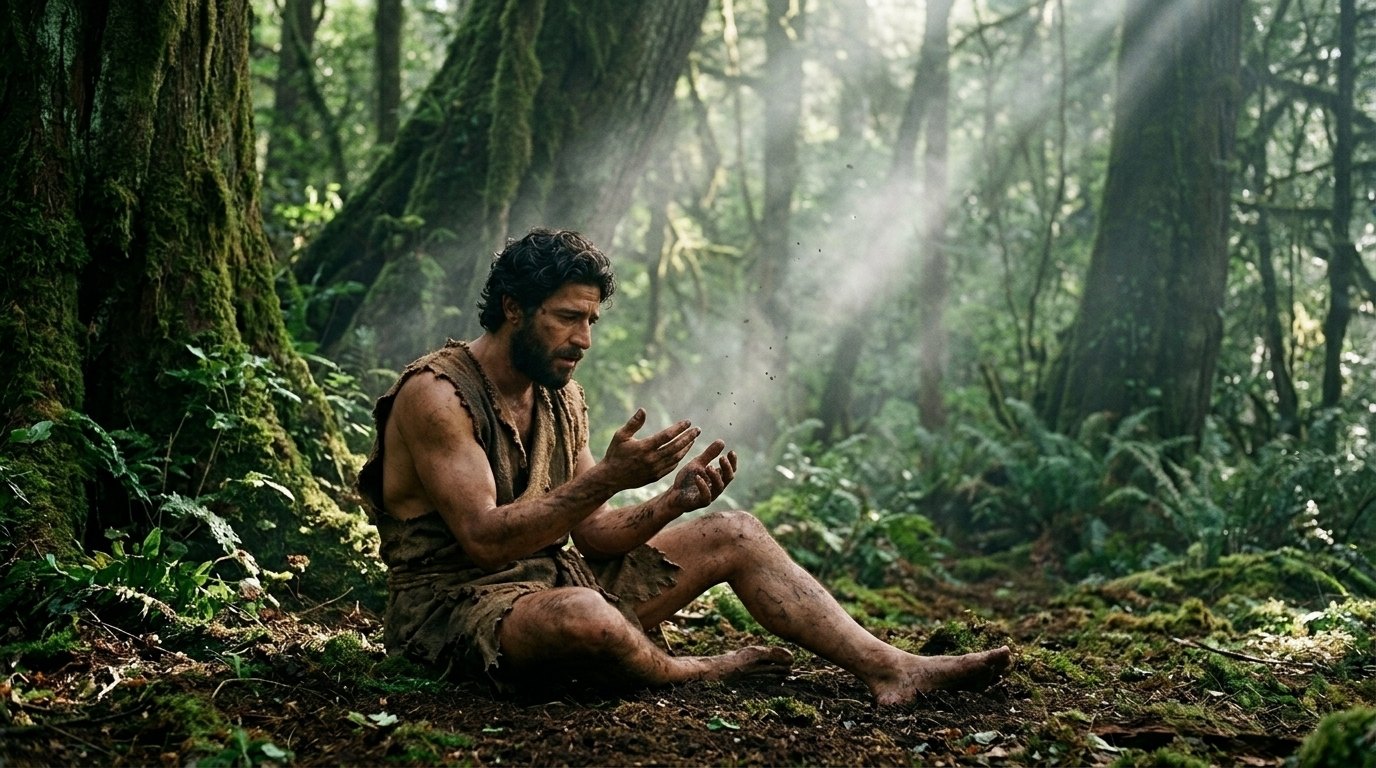
Then the LORD God formed a man from the dust of the ground and breathed into his nostrils the breath of life, and the man became a living being.
Genesis 2:7 (NIV)
Man's physical body was formed directly from the dust of the ground, refuting descent from pre-existing hominid ancestors.
Humanity's divine origin stands in direct contradiction to any notion that man descended from ape-like hominids through millions of years of predatory survival. In Genesis 2:7, Scripture records the precise and intimate historical event: Yahweh God formed man of the dust of the ground, and breathed into his nostrils the breath of life, making man a living soul. This followed the eternal counsel of Genesis 1:26, where God resolved to make man in His own image and likeness, investing mankind with dominion over all lesser creatures. Genesis 1:27 confirms this unique status, stating that God created man in His image, distinctly fashioning humanity from the very beginning as male and female. The origin of woman was equally miraculous: Genesis 2:21 describes God causing a deep sleep to fall upon Adam, taking one of his ribs, while Genesis 2:22 shows the Lord fashioning that rib into the woman and presenting her to the man. Confirming this historical reality, Genesis 5:1 records the written genealogy of Adam, made in the likeness of God, while Psalms 100:3 reminds the believer that it is Yahweh who made us, and not we ourselves. Adam affirmed this unbroken lineage in Genesis 3:20 by naming his wife Eve, the mother of all living. The Gospel of Luke preserves this historical truth in Luke 3:38, tracing the lineage of Jesus Christ directly back to Seth, the son of Adam, who was the direct son of God, not an animal. The apostle Paul confirms this universal origin in Acts 17:26, preaching that God made from one man every nation to dwell on the earth, and bases his doctrine of gender and authority in 1 Timothy 2:13 upon the literal order that Adam was formed first, then Eve.
| Passage | What it says |
|---|---|
| Genesis 1:26 | God resolved to make man in His own image and likeness, placing all creation under human dominion. |
| Genesis 1:27 | God created man in His image, distinctly designing humanity from the beginning as male and female. |
| Genesis 2:7 | Yahweh God formed man of the dust of the ground and breathed into his nostrils the breath of life. |
| Genesis 2:21 | God caused a deep sleep to fall upon Adam and took one of his ribs to make the woman. |
| Genesis 2:22 | The rib taken from the man was fashioned by Yahweh God into a woman and brought to him. |
| Genesis 5:1 | The written record of Adam's generation confirms that God created man in the likeness of God. |
| Psalms 100:3 | Yahweh is God who made us and not we ourselves; humanity is His people and the sheep of His pasture. |
| Genesis 3:20 | Adam called his wife's name Eve because she was the mother of all living human beings. |
| Luke 3:38 | The genealogy of Jesus traces back person by person to Seth, who was the son of Adam, the son of God. |
| Acts 17:26 | God made from one man every nation of mankind to live on all the face of the earth. |
| 1 Timothy 2:13 | Paul bases church order on historical creation sequence: Adam was formed first, then Eve. |
The Creation Week
Scripture Affirms a Six-Day Historical Creation
For in six days the LORD made the heavens and the earth, the sea, and all that is in them, but he rested on the seventh day. Therefore the LORD blessed the Sabbath day and made it holy.
Exodus 20:11 (NIV)
God bases the weekly Sabbath commandment directly on His literal work of creating heaven, earth, and sea in six days.
The timeline of creation in Scripture is consistently presented as a literal, historical week of six normal days, culminating in God's rest on the seventh. In Exodus 20:11, God Himself engraved on tablets of stone the explicit foundation for the weekly cycle: in six days the Lord made heaven and earth, the sea, and all that is in them, and rested the seventh day. This moral imperative derives entirely from the historical sequence detailed in Genesis. In Genesis 1:5, the first day is defined unambiguously by the boundary of evening and morning, establishing the normal day-night cycle by which biblical chronology is measured. This framework continues through the successive days until Genesis 1:31, when God looked upon all that He had made over the six days and pronounced it very good—a declaration impossible if the ground were already full of millions of years of fossilized agony, death, and disease. Following this exhaustive work, Genesis 2:2 states that on the seventh day God concluded His creative activity and rested from all the work that He had done. The Lord reiterated this historical foundation to Israel in Exodus 31:17, commanding the Sabbath as an enduring sign because in six days Yahweh made heaven and earth and was refreshed on the seventh. To insert vast epochs into the Genesis record is to contradict the plain, repeated testimony of the divine Lawgiver.
| Passage | What it says |
|---|---|
| Genesis 1:5 | God defined the first day by the sequence of evening and morning following the calling into being of light. |
| Genesis 1:31 | God completed all His creative work by the sixth day, beholding everything He made as very good. |
| Genesis 2:2 | On the seventh day God ended His work of creation and rested from all that He had made. |
| Exodus 20:11 | The Lord made heaven, earth, the sea, and all that is in them in six days and rested the seventh. |
| Exodus 31:17 | The Sabbath is an enduring sign because in six days Yahweh made heaven and earth, resting on the seventh. |
Sin and Death
Physical Death Entered Only After Adam Sinned
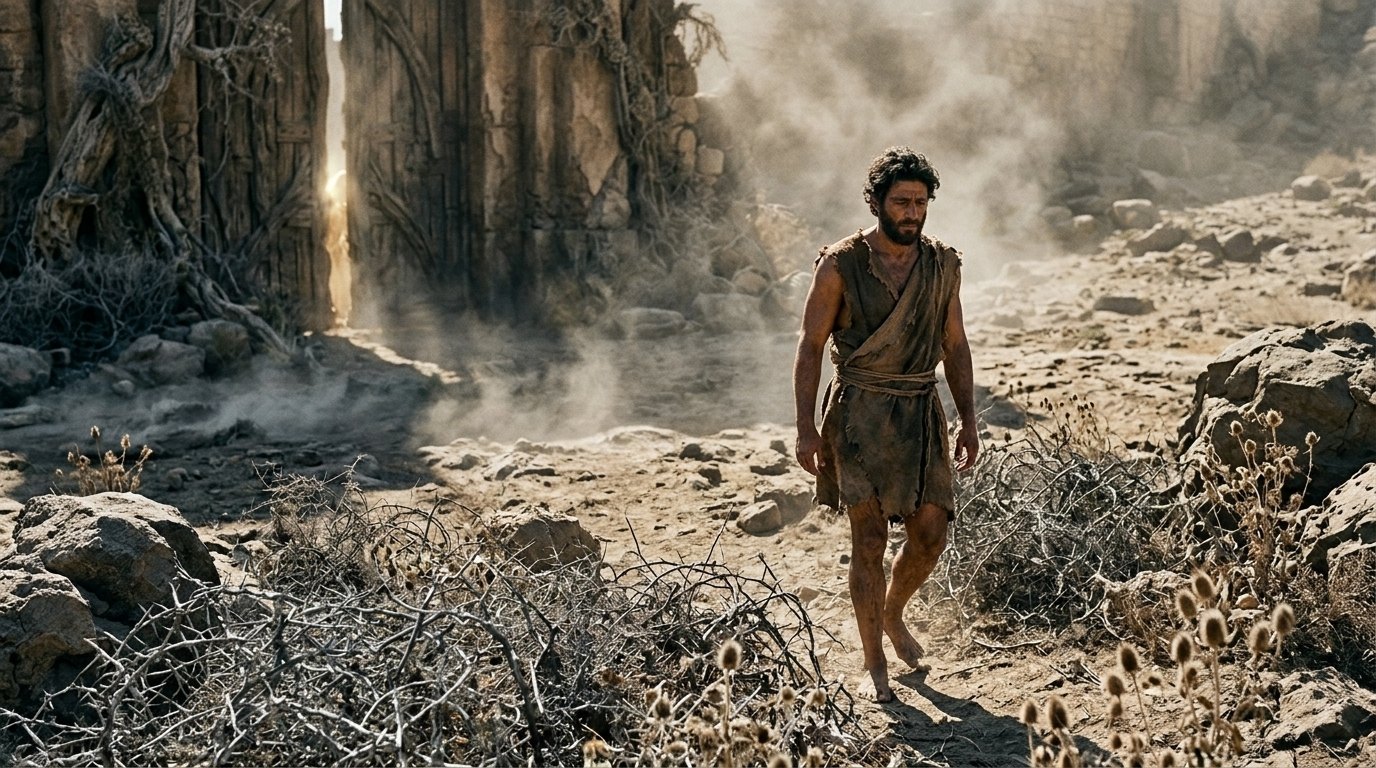
Therefore, just as sin entered the world through one man, and death through sin, and in this way death came to all people, because all sinned—
Romans 5:12 (NIV)
Sin entered through one man, and death came through sin, ruling out millions of years of death before Adam.
Paul states plainly in Romans 5:12 that death entered the world through one man's sin, establishing that physical human mortality and the groaning of creation followed Adam's historical transgression rather than preceding it. The original warning in Genesis 2:17 declared that disobedience would lead surely to death, a consequence realized when God cursed the ground with thorns and sorrow (Genesis 3:17) and pronounced that Adam would return to the dust from which he was taken (Genesis 3:19). If animal agony, predation, and millions of years of hominid mortality preceded humanity, death would be God's natural creative instrument rather than the judicial consequence of rebellion.
Scripture refutes this notion by explaining that the physical world was subjected to futility through divine judgment rather than original design (Romans 8:20). Today the whole creation groans and suffers in labor pains as it awaits the final redemption of believers from the curse (Romans 8:22). This biblical sequence is integral to the gospel itself: as death came through one man, the resurrection of the dead comes through one Man, Jesus Christ (1 Corinthians 15:21). The universal physical death of mankind rests upon our lineage in Adam just as bodily life is secured in Christ (1 Corinthians 15:22). For this reason, the Bible brands death as an unwelcome invader: the last enemy to be destroyed is death (1 Corinthians 15:26), an intrusion conquered by Christ rather than the method He utilized to fashion humanity.
| Passage | What it says |
|---|---|
| Genesis 2:17 | God warned that eating of the tree of the knowledge of good and evil would surely bring death. |
| Genesis 3:17 | The ground was cursed because of Adam's disobedience, bringing thorns, thistles, and sorrow into creation. |
| Genesis 3:19 | Physical mortality was decreed to Adam: from dust he was taken, and to dust he would return. |
| Romans 5:12 | Death entered the world through one man's sin, spreading to all men because all sinned. |
| Romans 8:20 | The creation was subjected to futility not by its own choice, but because of God's judicial curse. |
| Romans 8:22 | The whole creation groans and suffers the pains of childbirth together until now waiting for redemption. |
| 1 Corinthians 15:21 | Since death came by a man, the resurrection of the dead also came by a Man, Jesus Christ. |
| 1 Corinthians 15:22 | As in Adam all die, even so in Christ shall all be made alive, linking universal physical mortality to Adam's individual fall. |
| 1 Corinthians 15:26 | The last enemy that shall be destroyed is death, showing physical death is an intrusion rather than God's creative mechanism. |
Christ the Creator
The New Testament Confirms Literal Genesis History
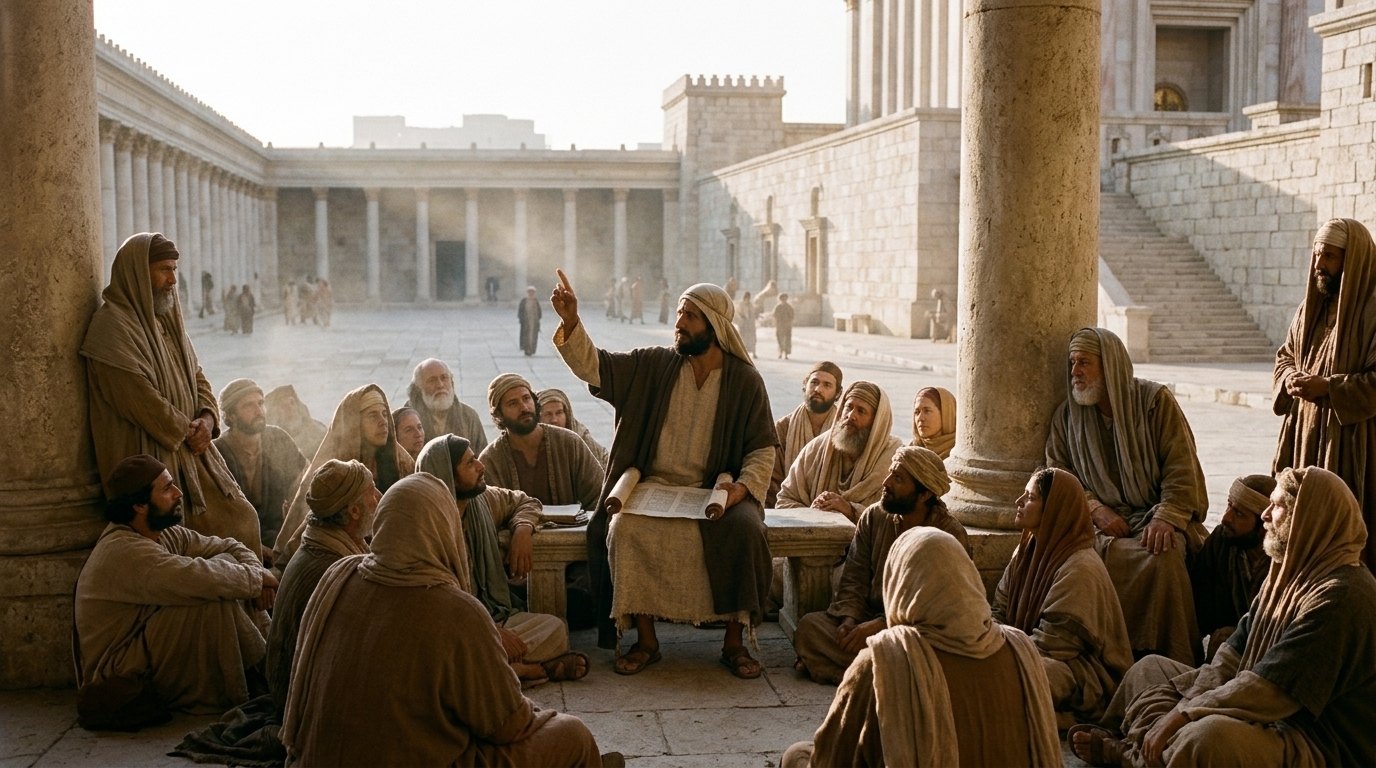
For in him all things were created: things in heaven and on earth, visible and invisible, whether thrones or powers or rulers or authorities; all things have been created through him and for him.
Colossians 1:16 (NIV)
Christ is revealed as the active Creator of all things visible and invisible in heaven and on earth.
The apostolic witness leaves no room for naturalistic origins, proclaiming that all things were created by the Son in heaven and on earth (Colossians 1:16). John's Gospel opens with the eternal Word who was with God and was God (John 1:1), asserting that through Him every created thing came into being, without exception (John 1:3). When addressing marriage, Jesus Christ cited Genesis as sober historical truth, stating that from the beginning of creation God made them male and female (Matthew 19:4; Mark 10:6). The Lord placed the creation of the first man and woman at the very beginning of the cosmos, not after billions of years of pre-human development.
Paul builds his entire theology of redemption on this literal foundation, contrasting the first man Adam who became a living soul with Christ, the last Adam, who became a life-giving spirit (1 Corinthians 15:45). Because the material realm displays His handiwork, His eternal power and divine nature are clearly seen in the things made, leaving unbelief without excuse (Romans 1:20). Peter explicitly warned that in the last days scoffers would assume natural uniformity, claiming all things continue unchanged from the start (2 Peter 3:4). In doing so, they deliberately overlook that the heavens and earth were brought forth by the direct word of God out of water (2 Peter 3:5), affirming that supernatural creation is the non-negotiable testimony of Scripture.
| Passage | What it says |
|---|---|
| John 1:1 | The Word was in the beginning with God and was God, existing prior to all created matter. |
| John 1:3 | All things were made through Him, and without Him was not anything made that has been made. |
| Matthew 19:4 | Jesus confirmed that the Creator made humanity male and female at the beginning of creation. |
| Mark 10:6 | Jesus affirmed that from the beginning of creation God made human beings male and female. |
| Colossians 1:16 | By the Son all things were created in heaven and earth, whether thrones, dominions, rulers, or authorities. |
| 1 Corinthians 15:45 | The first man, Adam, was made a living soul, while the last Adam, Christ, became a life-giving spirit. |
| Romans 1:20 | God's eternal power and divine nature are clearly seen through the things that are made, leaving all without excuse. |
| 2 Peter 3:4 | Scoffers argue that all things continue as they were from the beginning, deliberately overlooking God's direct creation and judgment by water. |
| 2 Peter 3:5 | By the word of God the heavens existed long ago and the earth was formed out of water and through water. |
Where in the Bible
| Book | Passages |
|---|---|
| Genesis | 20 · Genesis 1:1, Genesis 1:3, Genesis 1:11, Genesis 1:12, Genesis 1:21, Genesis 1:24, Genesis 1:25, Genesis 1:26, Genesis 1:27, Genesis 2:7, Genesis 2:21, Genesis 2:22, Genesis 5:1, Genesis 3:20, Genesis 1:5, Genesis 1:31, Genesis 2:2, Genesis 2:17, Genesis 3:17, Genesis 3:19 |
| Exodus | 2 · Exodus 20:11, Exodus 31:17 |
| Nehemiah | 1 · Nehemiah 9:6 |
| Psalms | 4 · Psalms 33:6, Psalms 33:9, Psalms 148:5, Psalms 100:3 |
| Isaiah | 1 · Isaiah 45:18 |
| Matthew | 1 · Matthew 19:4 |
| Mark | 1 · Mark 10:6 |
| Luke | 1 · Luke 3:38 |
| John | 2 · John 1:1, John 1:3 |
| Acts | 1 · Acts 17:26 |
| Romans | 4 · Romans 5:12, Romans 8:20, Romans 8:22, Romans 1:20 |
| 1 Corinthians | 5 · 1 Corinthians 15:39, 1 Corinthians 15:21, 1 Corinthians 15:22, 1 Corinthians 15:26, 1 Corinthians 15:45 |
| Colossians | 1 · Colossians 1:16 |
| 1 Timothy | 1 · 1 Timothy 2:13 |
| Hebrews | 1 · Hebrews 11:3 |
| 2 Peter | 2 · 2 Peter 3:4, 2 Peter 3:5 |
The story in order
- God speaks creation into being (c. 4004 BC) · Genesis 1:3 · Creation ex nihilo by divine fiat.
- God creates distinct kinds (c. 4004 BC) · Genesis 1:11 · Fixed biological boundaries established.
- God forms man in His image (c. 4004 BC) · Genesis 1:26 · Humanity made distinctly male and female.
- God forms Adam from dust (c. 4004 BC) · Genesis 2:7 · Man directly formed, given breath of life.
- God forms Eve from Adam's rib (c. 4004 BC) · Genesis 2:22 · Woman fashioned from man.
- God defines the six-day week (c. 1446 BC) · Exodus 20:11 · Creation week established as a pattern.
- Adam's sin brings death (c. 4004 BC) · Genesis 3:19 · Physical mortality decreed to Adam.
- Death spreads through Adam's sin (AD 60s) · Romans 5:12 · All humanity affected by Adam's fall.
- Creation groans under futility (AD 60s) · Romans 8:22 · Creation awaits redemption from curse.
- Christ the life-giving Spirit (AD 50s) · 1 Corinthians 15:45 · The last Adam brings resurrection life.
- Jesus affirms male and female (AD 30s) · Matthew 19:4 · Creator made them male and female from beginning.
- Scoffers deny creation and judgment (AD 60s) · 2 Peter 3:4 · Deliberate denial of God's creative acts.
Key words
- image of God (bə·mā·ḡen, בְּמַעֲמַד)
- Humanity's distinct likeness to God, reflecting His character and authority. · Genesis 1:26
- kind (mi·nē·hū, מִינֵהוּ)
- A fixed biological category established by God for reproduction. · Genesis 1:11
- ex nihilo (ex nihilo)
- Creation out of nothing, by God's spoken word alone. · Hebrews 11:3
- formed (yā·ṣār, יָצַר)
- Shaped or molded, specifically referring to God's direct formation of Adam and Eve. · Genesis 2:7
- death (mā·weṯ, מָוֶת)
- The consequence of sin, resulting in physical mortality and separation from God. · Genesis 3:19
Faith in Christ necessarily means standing upon the truth of His spoken and written Word from its opening chapter. By receiving Genesis as true history, believers honor God as their sovereign Creator, understand the true origin of sin and death, and rest in Christ as the Last Adam who brings eternal life.
48 passages, each cited once.
How the major Christian traditions read this
All Christian traditions confess that God alone is the Sovereign Creator of all things visible and invisible, and that humanity was specially created in His image and likeness (Genesis 1:26-27; Psalm 100:3).
Catholic
We confess God as the Creator of heaven and earth. The Magisterium teaches that faith and genuine scientific inquiry cannot ultimately contradict each other, since God is the author of all truth. Catholic teaching permits the hypothesis that the physical human body developed through natural biological processes, provided that God directly created the spiritual, immortal soul ex nihilo. Furthermore, we must uphold the real historical creation and fall of an original human pair, Adam and Eve, through whose transgression original sin passed to all humanity (Genesis 2:7; Romans 5:12). Total naturalistic evolution without divine origin is rejected.
Scripture: Genesis 1:26-27, Genesis 2:7, Romans 5:12
Orthodox
We praise the Holy Trinity as the Maker of all things visible and invisible. The Holy Fathers generally read the six days of Genesis as a supernatural, immediate act of divine ordering rather than an unguided, material mechanism. Orthodoxy insists that humanity was specially made by the hands of God in His image and given the breath of life, not merely elevated from beasts (Genesis 1:26; Genesis 2:7). While some contemporary thinkers allow for physical development guided by divine energies, we reject materialist reductionism and maintain the reality of the ancestral fall and the resulting corruption of creation (Romans 5:12).
Scripture: Genesis 1:26, Genesis 2:7, Romans 5:12
Lutheran
We stand firmly on the plain sense of Holy Scripture as the inerrant Word of God. Scripture teaches that God created the heavens, the earth, and every distinct kind in six days by the power of His speaking (Genesis 1:11, 24). Adam was formed immediately from the dust and Eve from his side (Genesis 2:7, 21-22). Confessional Lutheranism rejects human evolution because Christ and His apostles treat Adam as a real, singular man whose literal fall brought sin and physical death into the world (Romans 5:12; 1 Corinthians 15:21-22). To substitute millions of years of death contradicts the gospel promise.
Scripture: Genesis 1:24-25, Genesis 2:7, Romans 5:12, 1 Corinthians 15:21-22, Genesis 1:11
Reformed & Presbyterian
We revere the sovereign providence of God, who created all things out of nothing in the space of six days, and all very good. Scripture testifies that each living creature reproduces 'after its kind' and that God formed Adam directly as our covenant head (Genesis 1:25; Genesis 2:7). Historic Reformed confession holds that physical and spiritual death entered the world through the covenant transgression of the first man, Adam (Romans 5:18-19; 1 Corinthians 15:45). While some modern Presbyterian thinkers debate the literary nature of the creation days, common descent that denies a historical Adam directly undermines federal headship in Christ.
Scripture: Genesis 1:25, Genesis 2:7, Romans 5:18-19, 1 Corinthians 15:45
Anglican & Episcopal
We hold that Holy Scripture contains all things necessary to salvation (Article VI), while also valuing reason and tradition as instruments to comprehend God's revelation. Many Anglicans view the opening chapters of Genesis as theological poetry revealing God's majesty and sovereign purpose rather than a technical manual of biology or geology. Consequently, many faithful Anglicans accept evolutionary biology as an account of the physical means God used to bring forth life, while maintaining that humanity was endowed with God's spiritual image and remains accountable before Him (Genesis 1:27; Psalm 8:4-6). Others retain a traditional literal reading.
Scripture: Genesis 1:27, Psalms 8:4-6
Baptist
We submit fully to the authority of Scripture as our sole rule of faith and practice. God made all living creatures distinct after their kinds, and formed Adam directly from the dust and Eve from his rib (Genesis 1:24-27; Genesis 2:7, 21-22). Most Baptists strongly reject universal common descent and theistic evolution, recognizing that the gospel relies on a real, historical Adam through whose disobedience sin and death entered the world (Romans 5:12). Denying the literal creation account compromises biblical inerrancy, the direct creation of the image of God, and the parallel with Jesus Christ, the last Adam (1 Corinthians 15:45).
Scripture: Genesis 1:26-27, Genesis 2:7, Romans 5:12, 1 Corinthians 15:45, Genesis 1:24-27
Methodist & Wesleyan
We confess God as the loving Creator who sustains all that is. Wesleyans often interpret Genesis through the Wesleyan Quadrilateral of Scripture, tradition, reason, and experience. While Scripture clearly reveals that God made humanity in His image and that sin entered through human rebellion (Genesis 1:26-27; Romans 5:12), many Methodists believe that scientific descriptions of natural history and biological development do not inherently conflict with God's creative sovereignty. God could employ natural processes in bringing forth physical life, so long as we acknowledge His providential guidance, the unique spiritual dignity of humanity, and the moral reality of the Fall.
Scripture: Genesis 1:26-27, Romans 5:12
Pentecostal & Charismatic
We hold fast to the divine inspiration and literal truth of God's Word. Scripture records that God spoke creation into being by His miraculous power, forming humanity uniquely in His image (Genesis 1:26-27; Hebrews 11:3). Pentecostals predominantly reject macroevolution because it replaces the direct supernatural power of the Holy Spirit with gradual material causes. Death did not rule the world before man fell; rather, human death came as the direct consequence of Adam's sin (Romans 5:12). We embrace the historical truth of Genesis, upholding God's direct creation of Adam and Eve and Christ's redeeming power as the last Adam (1 Corinthians 15:45).
Scripture: Genesis 1:26-27, Romans 5:12, 1 Corinthians 15:45, Hebrews 11:3
Non-denominational & Evangelical
We receive the Bible as the inspired and inerrant revelation of God. Genesis plainly teaches that God created distinct kinds of animals and directly shaped Adam from dust and Eve from his side (Genesis 1:25; Genesis 2:7, 22). While recognizing microevolution as observable variation within kinds, most evangelical believers reject common descent. The New Testament gospel requires a real, historical Adam: death entered creation only through his sin, which Christ came to reverse (Romans 5:12; 1 Corinthians 15:21-22). Naturalistic or evolutionary timelines that place death before the Fall contradict the clear teaching of Scripture and the foundation of the cross.
Scripture: Genesis 1:25, Genesis 2:7, Romans 5:12, 1 Corinthians 15:21-22
Where they differ
Origin of the human body
- Catholic
- Allows biological development of the body, provided God directly creates the soul.
- Orthodox
- Emphasizes the direct, miraculous creation of man from dust by God.
- Lutheran
- Holds to direct, immediate physical creation of Adam and Eve from dust.
- Reformed & Presbyterian
- Maintains God immediately formed Adam from dust and Eve from his rib.
- Anglican & Episcopal
- Permits evolutionary biology as God's physical means of forming the human body.
- Baptist
- Rejects common descent; Adam was created directly from dust without prehuman ancestors.
- Methodist & Wesleyan
- Frequently accommodates physical evolution alongside God's special spiritual enduement of mankind.
- Pentecostal & Charismatic
- Affirms direct, supernatural creation of Adam without any prior animal ancestors.
- Non-denominational & Evangelical
- Insists on immediate formation of Adam from dust as an historical event.
Scripture: Genesis 1:26-27, Genesis 2:7, Matthew 19:4
Death before the Fall
- Catholic
- Distinguishes between animal death in nature and human death from Adam's sin.
- Orthodox
- Views physical corruption and death as entering creation via man's fall.
- Lutheran
- Rejects millions of years of creaturely death prior to Adam's sin.
- Reformed & Presbyterian
- Generally teaches death entered the world strictly through Adam's federal transgression.
- Anglican & Episcopal
- Generally views natural pre-human death as compatible with the Genesis theological narrative.
- Baptist
- Maintains that death, both human and cosmic, resulted solely from the Fall.
- Methodist & Wesleyan
- Commonly interprets Paul's doctrine of death as referring primarily to human spiritual mortality.
- Pentecostal & Charismatic
- Rejects widespread death prior to the Fall as contrary to Scripture.
- Non-denominational & Evangelical
- Holds that death entered the world through Adam, excluding evolutionary timescales.
Scripture: Genesis 3:17-19, Romans 5:12, 1 Corinthians 15:21-22
Your pastor can tell you where your church stands.
Scripture cited
- Genesis 1:26-27
- Matthew 19:4-6
- Romans 5:12-19
- Genesis 1:11-25
- Genesis 2:4-23
- 1 Corinthians 15:20-22
- 1 Corinthians 15:42-49
- Hebrews 11:3