What does 'Elohim' mean?

Genesis 1:1
1 In the beginning God created the heavens and the earth.
New International Version (NIV)
The answer
Elohim is the Hebrew word translated “God” in Genesis 1:1, where it refers to the one true God who created everything.
The word has a plural form and can mean “gods” in ordinary plural contexts. In Genesis 1:1, however, Elohim is paired with the singular Hebrew verb for “created.” The grammar therefore speaks of one God acting, not many gods: “In the beginning, God created the heavens and the earth” (Genesis 1:1).
The plural form does not mean that Israel worshipped several gods. When used of the supreme God, Elohim serves as a title of divine majesty and fullness; the surrounding words and context determine whether it should be translated “God” or “gods.”
Answered from Scripture · reviewed November 11, 2026
The Hebrew name 'Elohim' is Scripture's premier title for God in His sovereign majesty, supreme authority, and almighty creative power. Appearing thousands of times across the Old Testament, its plural form paired with singular verbs reveals the absolute fullness and grandeur of the one true Creator.
The Majestic Creator
God reveals His creative supremacy through Elohim

In the beginning God created the heavens and the earth.
Genesis 1:1 (NIV)
This opening declaration establishes Elohim as the sovereign Originator of the entire cosmos, using a plural noun with a singular verb.
When Scripture opens in Genesis 1:1, it introduces the Almighty with the majestic name Elohim, pairing this plural noun with the singular verb bara to reveal one singular God acting in boundless, sovereign fullness. Through this supreme title, God is unveiled not as a local deity or one power among many, but as the transcendent Creator who calls the universe into being out of nothing. The text displays this profound fullness further in Genesis 1:26, where Elohim deliberates, saying, "Let us make man in our image," before Genesis 1:27 immediately records in the singular that God created man in his own image, both male and female. This remarkable grammatical pattern underscores unified divine intentionality and infinite majesty.
As the narrative unfolds, Genesis 2:4 unites this title with the covenant name, presenting Yahweh Elohim as the personal Lord God who formed heaven and earth. Centuries later, Isaiah 45:18 affirms this absolute creative authority, declaring that the Elohim who fashioned the earth and formed it did not make it in vain, but is the LORD beside whom there is no other. In the post-exilic worship recorded in Nehemiah 9:6, the Levites proclaim that Elohim alone made heaven, the heaven of heavens, with all their host, continually preserving all life. Finally, when the Lord answers Job from the whirlwind in Job 38:4, asking where he was when Elohim laid the earth's foundations, the text leaves no doubt: Elohim is the unmatched Architect of reality, sovereign over all that exists.
| Passage | What it says |
|---|---|
| Genesis 1:1 | Declares that in the beginning, Elohim created the heavens and the earth out of nothing. |
| Genesis 1:26 | Records Elohim deliberating in plural majesty to create mankind in His own image and likeness. |
| Genesis 1:27 | Reiterates with singular verbs that Elohim created man in His image, both male and female. |
| Genesis 2:4 | Introduces the compound name Yahweh Elohim as the Lord God who shaped the heavens and earth. |
| Isaiah 45:18 | Affirms that Elohim who formed the earth is the LORD, beside whom there is no other. |
| Nehemiah 9:6 | Declares that Elohim alone made the heavens, earth, and seas, preserving all of creation. |
| Job 38:4 | Elohim questions Job regarding who laid the earth's foundations, highlighting His unmatched creative authority. |
Plurality and Sovereignty
The grammatical form expresses supreme fullness and unmatched majesty
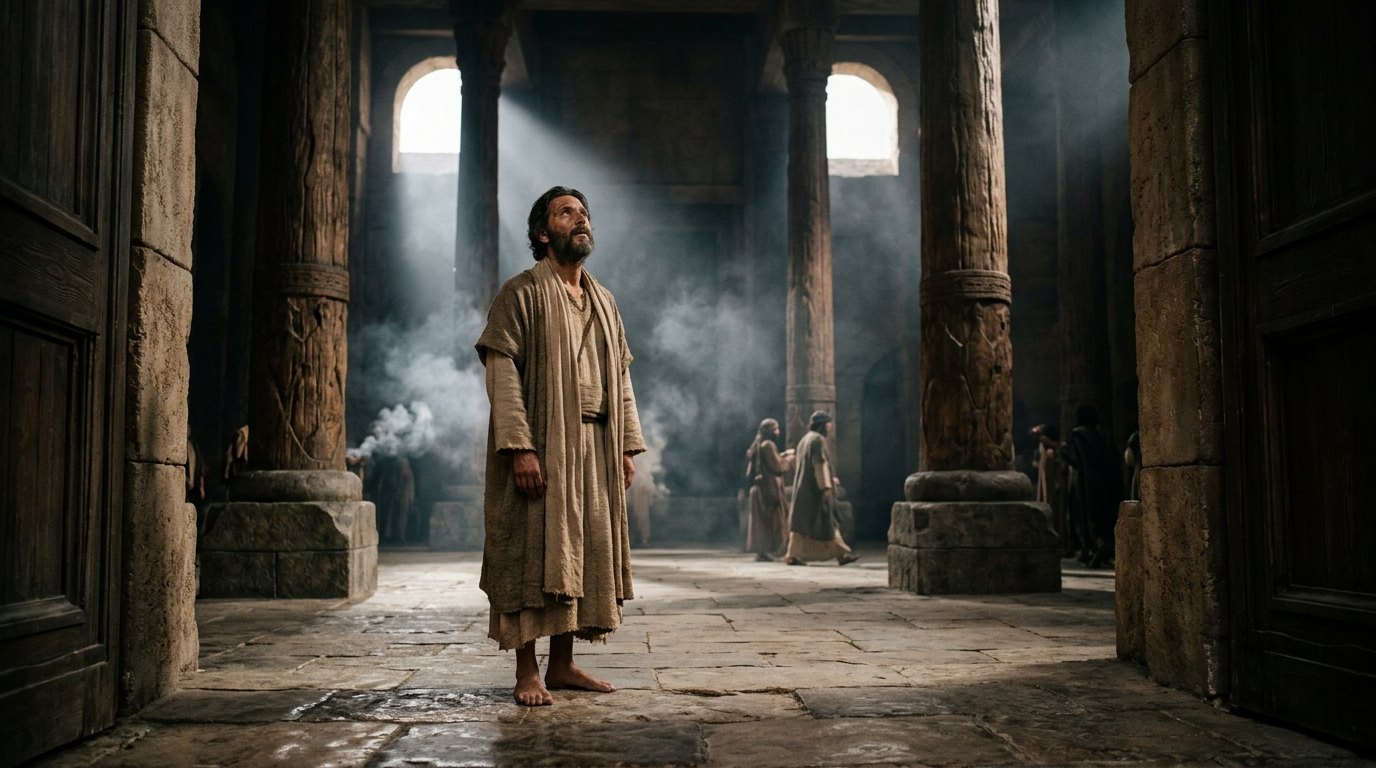
For the LORD your God is God of gods and Lord of lords, the great God, mighty and awesome, who shows no partiality and accepts no bribes.
Deuteronomy 10:17 (NIV)
Identifies the LORD as God of gods and Lord of lords, demonstrating Elohim's supreme elevation over all.
The grammatical plurality of Elohim serves primarily as an intensive plural of majesty, expressing absolute divine supremacy and fullness. This transcendent exaltation is articulated powerfully in Deuteronomy 10:17, which proclaims that Yahweh is the God of gods and Lord of lords, an awesome and impartial sovereign over every created realm. While Scripture occasionally uses the word elohim in a lower sense for created rulers or heavenly messengers—as in Psalm 82:1 and Psalm 82:6, where God judges amid human magistrates, or Psalm 8:5, where humanity is crowned lower than heavenly beings—these usages only accentuate the absolute gulf between the creature and the supreme Creator.
God can even appoint His human messenger to speak with divine authority, as when Exodus 7:1 notes that the LORD made Moses as elohim to Pharaoh, or Exodus 22:8, where civil authorities act as judges under divine law. Yet the supreme Elohim stands entirely in a class of His own. Scripture reflects this supreme majesty in divine council language: in Genesis 3:22, the Lord notes that man has become like one of us, in Genesis 11:7, Elohim descends to scatter rebellious Babel, and in Isaiah 6:8, the Lord asks, "Whom shall I send, and who will go for us?" In every instance, the plurality of majesty magnifies God's sovereign fullness, displaying an incomparable Ruler whose authority no earthly or heavenly power can rival.
| Passage | What it says |
|---|---|
| Deuteronomy 10:17 | Exalts Yahweh as the Elohim of elohim and Lord of lords, mighty and awesome. |
| Psalms 82:1 | Describes Elohim taking His place in the divine council and rendering judgment among rulers. |
| Psalms 82:6 | Refers to human judges or heavenly beings subordinate to the supreme authority of God. |
| Exodus 7:1 | States that the LORD appointed Moses as an elohim of divine authority before Pharaoh. |
| Psalms 8:5 | Speaks of humanity made a little lower than the heavenly beings or God Himself. |
| Genesis 3:22 | Elohim speaks using plural pronouns, noting that man has become like one of us. |
| Genesis 11:7 | Elohim commands, let us go down and confuse their language, displaying sovereign majesty over nations. |
| Isaiah 6:8 | The Lord speaks using both singular and plural pronouns, asking who will go for us. |
| Exodus 22:8 | Uses elohim in the sense of judges or authorities acting under divine appointment. |
Covenant and Monotheism
Elohim demands undivided worship as the only living God
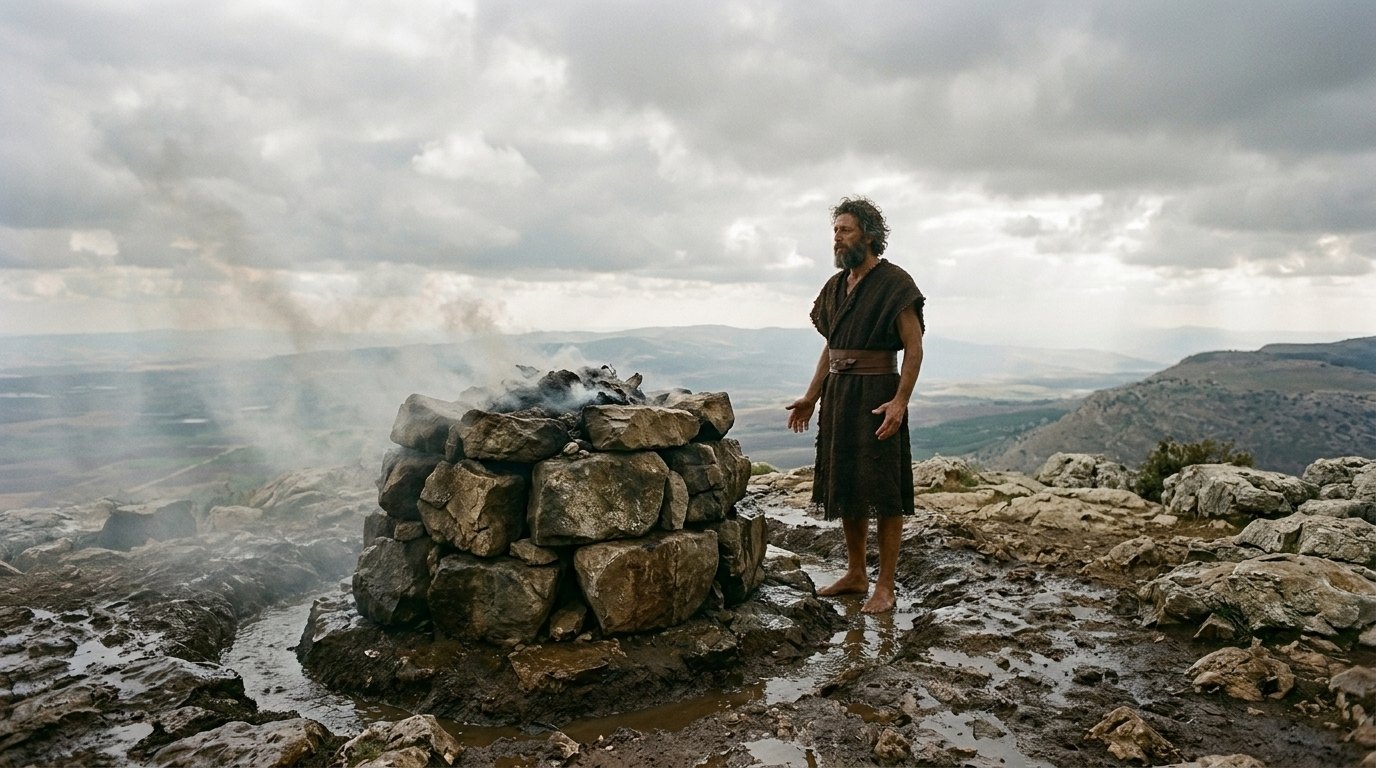
Hear, O Israel: The LORD our God, the LORD is one.
Deuteronomy 6:4 (NIV)
The Shema anchors monotheism by uniting Yahweh and Elohim as one indivisible LORD.
At the center of Israel's confession lies Deuteronomy 6:4, the Shema, which establishes that Yahweh our Elohim is one LORD, forever binding Israel's covenant Lord to the one true God of all the earth. This bedrock confession demands exclusive loyalty and wholehearted love. When God spoke to the assembly at Sinai in Exodus 20:2, He identified Himself as the LORD Elohim who rescued them from slavery, immediately establishing the foundational commandment in Exodus 20:3 that His people shall have no other elohim before Him. Elohim is not one god among rivals; He is the only living God, brooking no competition with lifeless idols.
This fierce covenant devotion runs throughout Israel's history. Joshua 24:19 solemnly reminds the nation that Elohim is a holy and jealous God who will not tolerate half-hearted devotion. On the slopes of Mount Carmel, when fire fell from heaven to consume the sacrifice, 1 Kings 18:39 records the people falling on their faces to shout, "The LORD, he is God!" Moses reiterated this truth repeatedly in the wilderness, declaring in Deuteronomy 4:35 that the Lord is Elohim and there is none beside Him, and charging the people in Deuteronomy 4:39 to lay it to heart that Yahweh is God in heaven above and on earth beneath. Finally, Isaiah 45:5 seals this eternal reality: the LORD alone is Elohim, and there is no savior apart from Him.
| Passage | What it says |
|---|---|
| Deuteronomy 6:4 | Commands Israel to hear that Yahweh their Elohim is one LORD. |
| Exodus 20:2 | Opens the Ten Commandments identifying the LORD Elohim who delivered Israel from bondage. |
| Exodus 20:3 | Forbids having any other gods or elohim before the face of the one true God. |
| Joshua 24:19 | Warns that Elohim is a holy and jealous God who demands absolute faithfulness. |
| 1 Kings 18:39 | Records the people at Mount Carmel crying out that Yahweh alone is the true Elohim. |
| Deuteronomy 4:35 | Affirms that the Lord is Elohim and there is none beside Him. |
| Deuteronomy 4:39 | Commands Israel to acknowledge that the Lord is Elohim in heaven and earth. |
| Isaiah 45:5 | Affirms that Yahweh is God and there is no other Elohim besides Him. |
Fulfilled in Christ
The New Testament reveals Christ as the divine Creator and Word

In the beginning was the Word, and the Word was with God, and the Word was God.
John 1:1 (NIV)
Identifies Jesus as the eternal Word who was with God and was God at the beginning.
The mystery and majesty of Elohim find their ultimate historical revelation in Jesus Christ, as the New Testament explicitly identifies the Son as the divine Word who created all things. In John 1:1, Scripture declares that in the beginning was the Word, and the Word was with God, and the Word was God, revealing that the plurality hinted at in Genesis is rooted in the eternal communion of the Father and the Son. When Genesis 1:3 records Elohim commanding light to shine, John 1:1-3 and 2 Corinthians 4:6 explain that this creative, illuminating Word is embodied in Christ, through whom the light of the knowledge of the glory of God shines into human hearts.
This typological fulfilment resounds through the apostolic witness. The ancient praise of Psalm 102:25, which honors God for laying the foundation of the earth, is applied directly to Jesus in Hebrews 1:10-12 as the unchanging Creator. Similarly, Psalm 45:6 salutes God's eternal throne, and Hebrews 1:8 fulfills this royal psalm by recording the Father addressing the Son: "Your throne, O God, is forever and ever." What Genesis 2:7 attributes to the life-giving power of Elohim, Colossians 1:16-17 reveals as the work of the Son, by whom and for whom all things were created and in whom all things hold together. Through the incarnation and exaltation of Christ, the majestic Creator Elohim is made fully known to His people.
| Passage | What it says | Fulfilled |
|---|---|---|
| Genesis 1:3 | Elohim speaks light into existence by His commanding divine word. | John 1:1-3, 2 Corinthians 4:6 |
| Psalms 102:25 | Attributes the laying of the earth's foundation to the sovereign work of God. | Hebrews 1:10-12 |
| Psalms 45:6 | Addresses the royal Davidic throne and declares God's reign to be forever. | Hebrews 1:8 |
| Genesis 2:7 | Elohim creates and sustains all living things through His active power. | Colossians 1:16-17, Hebrews 11:3 |
| John 1:1 | Names the Word as existing with God and being God from the beginning. | John 1:1 |
| John 1:3 | States that all things were made through the divine Word. | John 1:3 |
| Colossians 1:16 | Identifies the Son as the Creator of all things in heaven and on earth. | Colossians 1:16 |
| Hebrews 1:8 | Applies Psalm 45:6 directly to the Son, addressing Him as God on an eternal throne. | Hebrews 1:8 |
Where in the Bible
| Book | Passages |
|---|---|
| Genesis | 8 · Genesis 1:1, Genesis 1:26, Genesis 1:27, Genesis 2:4, Genesis 3:22, Genesis 11:7, Genesis 1:3, Genesis 2:7 |
| Exodus | 4 · Exodus 7:1, Exodus 22:8, Exodus 20:2, Exodus 20:3 |
| Deuteronomy | 4 · Deuteronomy 10:17, Deuteronomy 6:4, Deuteronomy 4:35, Deuteronomy 4:39 |
| Joshua | 1 · Joshua 24:19 |
| 1 Kings | 1 · 1 Kings 18:39 |
| Nehemiah | 1 · Nehemiah 9:6 |
| Job | 1 · Job 38:4 |
| Psalms | 5 · Psalms 82:1, Psalms 82:6, Psalms 8:5, Psalms 102:25, Psalms 45:6 |
| Isaiah | 3 · Isaiah 45:18, Isaiah 6:8, Isaiah 45:5 |
| John | 2 · John 1:1, John 1:3 |
| Colossians | 1 · Colossians 1:16 |
| Hebrews | 1 · Hebrews 1:8 |
The story in order
- Creation of the heavens and earth (c. 4000 BC) · Genesis 1:1 · Elohim reveals His supreme creative power.
- Creation of mankind in God's image (c. 4000 BC) · Genesis 1:26 · Elohim's plural majesty in creating humanity.
- God forms man and breathes life (c. 4000 BC) · Genesis 2:7 · Elohim sustains all living things.
- The LORD God forms the earth (c. 4000 BC) · Genesis 2:4 · Compound name Yahweh Elohim appears.
- The Fall and God's judgment (c. 4000 BC) · Genesis 3:22 · Elohim speaks with plural pronouns.
- God's command to confuse languages (c. 2300 BC) · Genesis 11:7 · Elohim displays sovereign majesty over nations.
- The LORD appoints Moses as elohim (c. 1450 BC) · Exodus 7:1 · Elohim in the sense of divine authority.
- The Ten Commandments given (c. 1450 BC) · Exodus 20:2 · LORD Elohim identifies Himself as deliverer.
- Israel commanded to worship one LORD (c. 1400 BC) · Deuteronomy 6:4 · Yahweh their Elohim is one LORD.
- Elohim takes His place in council (c. 1000 BC) · Psalms 82:1 · Elohim among divine beings, rendering judgment.
- Elijah at Mount Carmel (c. 850 BC) · 1 Kings 18:39 · People cry out that Yahweh is Elohim.
- Isaiah sees the Lord on His throne (c. 700 BC) · Isaiah 6:8 · The Lord speaks using singular and plural.
- The Word exists with God and is God (AD 30) · John 1:1 · Fulfills Elohim's role as Creator.
- The Son is Creator of all things (AD 60) · Colossians 1:16 · Christ's divine creative work.
Key words
- Elohim (אֱלֹהִים)
- God; a plural title for the supreme Creator, emphasizing majesty, power, and sovereignty. · Genesis 1:1
- Creator (בָּרָא (bara))
- The one who brings into existence; God as the originator of all things. · Genesis 1:1
- Sovereign (מֶלֶךְ (melekh))
- Possessing supreme or ultimate authority; ruling with absolute power. · Psalms 45:6
- Majesty (הוֹד (hod))
- Exalted dignity, grandeur, and splendor, especially of God. · Psalms 82:1
- Image and Likeness (צֶלֶם (tselem), דְּמוּת (demut))
- Representation; humanity created to reflect God's character and authority. · Genesis 1:26
- Monotheism (יָחִיד (yachid - unique, one))
- The belief that there is only one God. · Deuteronomy 6:4
Knowing God as Elohim anchors our faith in an all-powerful, sovereign Creator who governs the universe yet binds Himself to His people. When we speak to Elohim, we address the majestic Lord of heaven and earth who spoke creation into being and holds our lives in His hands.
32 passages, each cited once.
Scripture cited
- Genesis 1:1