Does God send people to hell for not hearing about Jesus?

Romans 2:12-16
12 All who sin apart from the law will also perish apart from the law, and all who sin under the law will be judged by the law.
13 For it is not those who hear the law who are righteous in God’s sight, but it is those who obey the law who will be declared righteous.
14 (Indeed, when Gentiles, who do not have the law, do by nature things required by the law, they are a law for themselves, even though they do not have the law.
15 They show that the requirements of the law are written on their hearts, their consciences also bearing witness, and their thoughts sometimes accusing them and at other times even defending them.)
16 This will take place on the day when God judges people’s secrets through Jesus Christ, as my gospel declares.
New International Version (NIV)
The answer
No one is sent to hell merely for never hearing about Jesus; people are condemned for their own sin. But never hearing the gospel does not make anyone innocent, and ignorance is not another way of salvation. Scripture holds both truths together: God judges every person justly, and salvation comes only through Jesus Christ.
Sin, not missing information, is the ground of condemnation
Paul says plainly, “For as many as have sinned without the law will also perish without the law” (Romans 2:12). Gentiles who never received Israel’s written law still possess a moral witness: God’s law is written on their hearts, and their consciences accuse or excuse their thoughts (Romans 2:14-15). God will judge even “the secrets of men” through Jesus Christ (Romans 2:16), so his judgment is neither arbitrary nor based on incomplete knowledge.
Creation also testifies to God’s eternal power and divine nature. Humanity suppresses that truth, fails to glorify God, and turns to idols, leaving people “without excuse” (Romans 1:18-23). The problem is therefore not simply an absence of evidence; it is the human rejection of God. Creation and conscience establish accountability, but they are not a saving substitute for the gospel.
No one is righteous enough to save himself
Scripture’s verdict encompasses everyone: “For all have sinned, and fall short of the glory of God” (Romans 3:23). No person is justified before God by works of the law (Romans 3:20). Consequently, someone cannot be accepted by God merely for being sincere, following conscience imperfectly, or doing the best he knew. Justification is God’s gift “through the redemption that is in Christ Jesus” (Romans 3:24), received through faith, not earned by moral performance.
Christ remains the only way
Jesus said, “I am the way, the truth, and the life. No one comes to the Father, except through me” (John 14:6). Acts 4:12 likewise declares that salvation exists in no one else. Scripture therefore gives no basis for saying that people who never hear are automatically saved, nor for inventing a path to God apart from Christ.
That exclusivity makes evangelism urgent. Although everyone who calls on the Lord will be saved, Paul asks how they can believe without hearing and hear without someone preaching; he concludes that faith comes through hearing God’s word (Romans 10:13-17). The church must therefore carry the gospel rather than presume that ignorance will save the unreached.
For the person who has heard, the necessary response is clear: confess Jesus as Lord and believe that God raised him from the dead (Romans 10:9). God’s purpose in sending his Son was salvation, and his promise stands: “For God so loved the world, that he gave his only born Son, that whoever believes in him should not perish, but have eternal life” (John 3:16).
Answered from Scripture · reviewed November 12, 2026
Scripture nowhere teaches that God condemns anyone merely for missing information or lacking opportunity. Humanity faces God's righteous judgment because all have rebelled against the truth they possessed through creation and conscience, leaving every soul accountable before a holy Judge. Because no one is innocent and salvation belongs exclusively to Jesus Christ, the plight of the unreached reveals our universal ruin and fuels the church's urgent missionary mandate.
Universal Rebellion
Creation leaves all mankind without an excuse

For since the creation of the world God’s invisible qualities—his eternal power and divine nature—have been clearly seen, being understood from what has been made, so that people are without excuse.
Romans 1:20 (NIV)
It establishes that God's invisible attributes are clearly perceived in the created order, rendering every human without a defense for rejecting Him.
The sobering declaration of Romans 1:20 reveals that creation leaves every human without excuse before God. Paul explains that God's invisible attributes, namely His eternal power and divine nature, are clearly perceived through the things He has made. This general revelation is neither dim nor ambiguous; it is continuous and universal. As the psalmist testifies, the heavens pour out speech day after day and night after night, declaring the glory of God to the very ends of the world without barrier of tongue or geography (Psalms 19:1; Psalms 19:2; Psalms 19:3; Psalms 19:4). The universal witness of the skies confronts every tribe and nation with the reality, splendor, and rightful claims of the sovereign Creator.
Yet rather than receiving this witness with adoration and gratitude, fallen humanity actively suppresses the truth in unrighteousness (Romans 1:18). What may be known about God has been manifested plainly to all people by God Himself (Romans 1:19). Despite possessing this clear knowledge of their Maker, mankind deliberately refused to glorify Him as God or offer thanksgiving (Romans 1:21). The catastrophic result was moral and spiritual decay: hearts were darkened, minds sank into futile speculation, and proud men made themselves fools by exchanging the incorruptible glory of God for idols made in the likeness of beasts and mortal men (Romans 1:22; Romans 1:23). Thus, God never condemns anyone for a lack of light, but for actively suppressing the abundant light they were given.
| Passage | What it says |
|---|---|
| Romans 1:18 | God's wrath is revealed from heaven against all ungodliness of men who suppress the truth in unrighteousness. |
| Romans 1:19 | What can be known about God is plain to humanity because God has shown it to them. |
| Romans 1:20 | God's eternal power and divine nature are clearly seen through creation, leaving everyone without excuse. |
| Romans 1:21 | Knowing God, mankind neither glorified Him nor gave thanks, but became futile in their thinking and darkened in heart. |
| Romans 1:22 | Professing to be wise, fallen humanity became fools in their rebellion. |
| Romans 1:23 | Mankind traded the glory of the incorruptible God for images resembling mortal man and created beasts. |
| Psalms 19:1 | The heavens continually declare the glory of God, and the expanse displays His handiwork. |
| Psalms 19:2 | Day after day and night after night, creation pours out speech and reveals knowledge of its Maker. |
| Psalms 19:3 | There is no speech or language where the voice of creation's testimony is not heard. |
| Psalms 19:4 | The message of creation has gone out through all the earth, reaching the ends of the world. |
Moral Accountability
Conscience convicts those without the written law
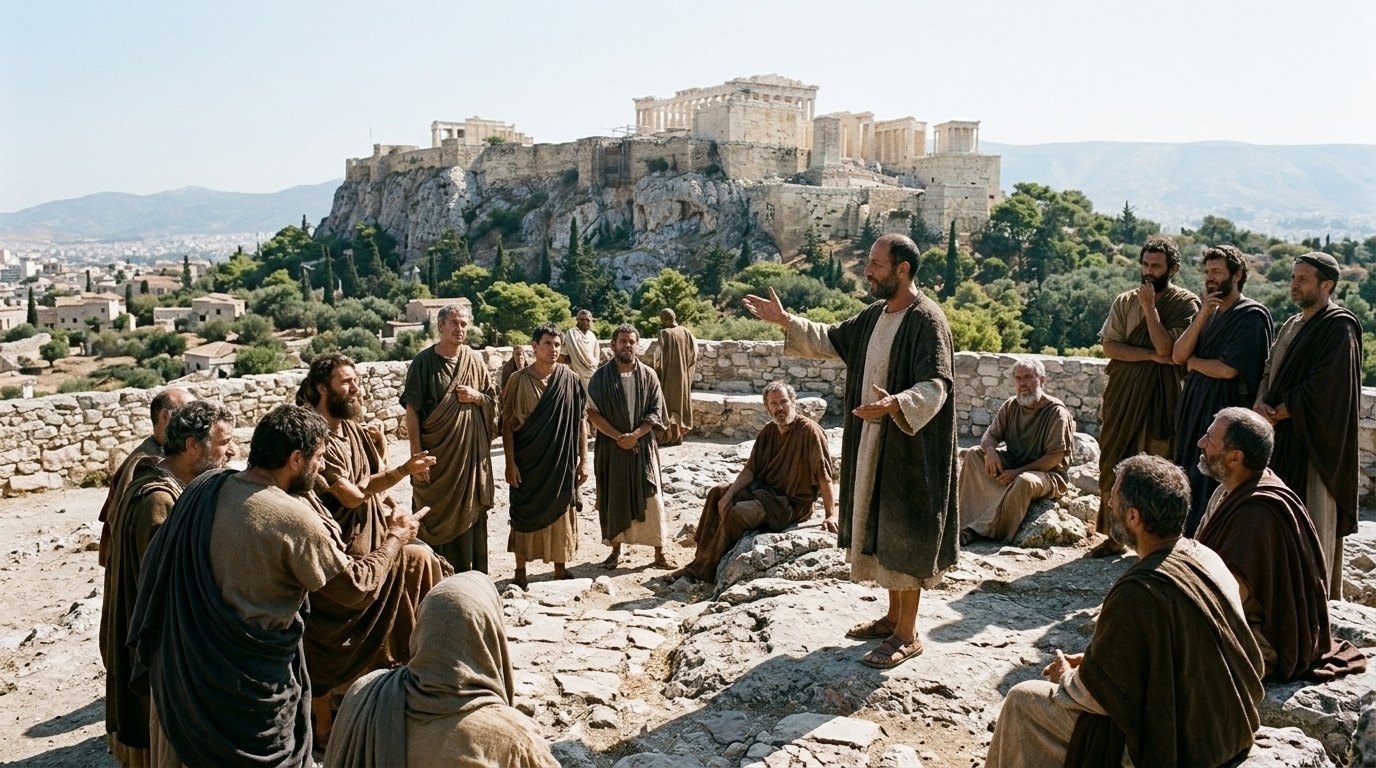
All who sin apart from the law will also perish apart from the law, and all who sin under the law will be judged by the law.
Romans 2:12 (NIV)
It defines the precise ground of judgment: people perish because of their sin against the light they had, not because of a law they never received.
The standard of divine justice is laid bare in Romans 2:12, showing that men perish according to the measure of light they rebelled against. God executes righteous judgment without the slightest partiality (Romans 2:11). Those who sinned without the written Mosaic law will not be evaluated by that specific code; they perish because they violated the innate law of God stamped upon their own nature. God does not demand what He has not given; merely hearing a written law justifies nobody, for only complete obedience could justify (Romans 2:13). Gentiles who never held the scrolls of Moses nevertheless possess the core demands of God's moral law written upon their hearts, proved whenever their conscience accuses or defends their actions (Romans 2:14; Romans 2:15).
This internal moral witness ensures that every human being operates under moral accountability. Although the written commandment sharpens the awareness of sin by forbidding covetousness explicitly (Romans 7:7), the conscience alone is sufficient to convict every transgressor of personal guilt. In the coming day of judgment, Christ Jesus will expose the secret thoughts and hidden intents of all men (Romans 2:16). While God bore patiently with past ages of ignorance, He now commands all people everywhere to repent in light of the appointed Day of Judgment through the resurrected Christ (Acts 17:30; Acts 17:31). As Jesus taught, punishment will be calibrated strictly according to light possessed, ensuring that the Judge of all the earth does absolute right (Luke 12:47; Luke 12:48).
| Passage | What it says |
|---|---|
| Romans 2:11 | God shows no partiality or favoritism in His righteous judgment of all humanity. |
| Romans 2:12 | All who sin without the law perish without the law, while all who sin under the law are judged by it. |
| Romans 2:13 | Merely hearing God's law does not justify; only doers of the law could be justified before God. |
| Romans 2:14 | Gentiles who lack the written law often do instinctively what the law requires, becoming a law to themselves. |
| Romans 2:15 | They demonstrate the law's demands written on their hearts, their consciences and thoughts accusing or excusing them. |
| Romans 2:16 | God will judge the hidden secrets of every person through Christ Jesus according to the gospel. |
| Romans 7:7 | The written law reveals sin, showing that coveting is forbidden even when the heart is reluctant to admit it. |
| Acts 17:30 | Having overlooked past times of ignorance, God now commands all people everywhere to repent. |
| Acts 17:31 | God has fixed a day on which He will judge the world in righteousness through the risen Christ. |
| Luke 12:47 | The servant who knew his master's will but did not prepare receives a severe beating. |
| Luke 12:48 | The servant who did not know his master's will receives a lighter punishment based on what he knew. |
Total Guilt
No sinner is justified by personal moral effort
for all have sinned and fall short of the glory of God,
Romans 3:23 (NIV)
It sweeps away any notion of human merit, proving that every individual has fallen short of God's holy standard.
The crushing verdict of Romans 3:23 shatters all self-righteous illusions: all have sinned and fall short of God's glory. There is no such category as an innocent unreached person anywhere on earth. As Scripture uniformly testifies, Jew and Gentile alike are locked under the bondage and penalty of sin (Romans 3:9). Drawing on the Old Testament, the apostle confirms that there is none righteous, no, not one; no one understands, and none seeks after the true God on their own (Romans 3:10; Romans 3:11). Every fallen human has turned aside from the holy path, corrupting their ways until none does genuine good according to God's standard (Romans 3:12).
Consequently, the voice of divine law acts to silence every excuse, holding the entire world accountable before God's judgment throne (Romans 3:19). Human effort and personal morality can never bridge this infinite chasm, for no flesh will ever be justified in His sight through works of the law (Romans 3:20). Trusting in personal virtue or legal obedience brings only condemnation, because anyone who fails to keep everything written in God's law remains under a curse (Galatians 3:10). True justification can never arise from human performance; it comes solely through faith in the crucified Christ, who alone bore the penalty sinners deserved (Galatians 2:16). The unreached are not condemned for an absent message, but for actual, pervasive guilt before a holy God.
| Passage | What it says |
|---|---|
| Romans 3:9 | Both Jews and Greeks are all under the power and condemnation of sin. |
| Romans 3:10 | Scripture declares that none is righteous before God, no, not even one. |
| Romans 3:11 | No one understands on their own, and no one naturally seeks after the true God. |
| Romans 3:12 | All have turned away and become worthless; no one does good according to God's standard. |
| Romans 3:19 | The law speaks so every mouth may be stopped and the entire world held accountable to God. |
| Romans 3:20 | No human being will be justified in God's sight by works of the law, which only expose sin. |
| Romans 3:23 | All have sinned and fall short of the glory of God. |
| Galatians 2:16 | A person is justified by faith in Jesus Christ and not by works of the law. |
| Galatians 3:10 | All who rely on works of the law are under a curse for not keeping everything written in it. |
One Mediator
Salvation is found in Jesus Christ alone

Jesus answered, “I am the way and the truth and the life. No one comes to the Father except through me.
John 14:6 (NIV)
Christ explicitly claims exclusive access to the Father, ruling out any alternate path of salvation apart from Him.
The uncompromised claim of Jesus in John 14:6 establishes that He is the exclusive and only path to the Father. Christ does not present Himself as one viable option among many religious teachers; He is the way, the truth, and the life, outside of whom no one comes to God. The early church heralded this exact truth without hesitation, proclaiming that there is salvation in no other name under heaven given among men (Acts 4:12). Scripture affirms that just as there is only one true God, there is likewise only one Mediator between God and mankind: the man Christ Jesus, who gave Himself as a ransom for all (1 Timothy 2:5).
God demonstrated His immense love by giving His only begotten Son, so that everyone who believes into Him should not perish but have everlasting life (John 3:16). Yet this glorious offer reveals humanity's perilous baseline: the unbeliever is not neutral, but stands condemned already because of sin and unbelief (John 3:18). Whoever has the Son possesses life, but whoever rejects the Son remains under the active, abiding wrath of a holy God (John 3:36; 1 John 5:11; 1 John 5:12). Sinners are justified freely through the redemption found in Christ Jesus, whom God publicly put forward as a propitiation by His shed blood (Romans 3:24; Romans 3:25). Because Christ is the solitary Savior for a ruined world, the church bears an urgent commission to carry His saving gospel to every nation.
| Passage | What it says |
|---|---|
| John 14:6 | Jesus declares Himself the way, the truth, and the life, with no access to the Father except through Him. |
| Acts 4:12 | There is salvation in no one else, for no other name under heaven is given for salvation. |
| 1 Timothy 2:5 | There is one God and one mediator between God and men, the man Christ Jesus. |
| John 3:16 | God loved the world by giving His only Son so that whoever believes in Him should not perish. |
| John 3:18 | Whoever believes in Christ is not condemned, but whoever does not believe stands condemned already. |
| John 3:36 | Whoever believes in the Son has eternal life, but whoever rejects Him remains under God's wrath. |
| Romans 3:24 | Sinners are justified freely by God's grace through the redemption that is in Christ Jesus. |
| Romans 3:25 | God put forward Christ as a propitiation by His blood, received through faith. |
| 1 John 5:11 | God has given us eternal life, and this life is uniquely in His Son. |
| 1 John 5:12 | Whoever has the Son has life, but whoever does not have the Son of God does not have life. |
The Great Commission
Hearing the gospel is necessary for saving faith
How, then, can they call on the one they have not believed in? And how can they believe in the one of whom they have not heard? And how can they hear without someone preaching to them?
Romans 10:14 (NIV)
It forms the logical necessity of missions: men cannot call on a Savior of whom they have never heard.
The heartbeat of Christian mission rests on the sober necessity articulated in Romans 10:14: how can anyone call on the Lord to be saved if they have never heard the message of Christ? Salvation requires specific, conscious belief. Paul writes that if you confess with your mouth that Jesus is Lord and believe in your heart that God raised Him from the dead, you will be saved (Romans 10:9), for everyone who calls on the name of the Lord will be saved (Romans 10:13). Yet calling presupposes believing, believing requires hearing, and hearing requires someone sent to preach (Romans 10:14-15). Therefore, faith comes from hearing, and hearing through the word of Christ (Romans 10:17).
This inescapable sequence explains why our Lord gave the Great Commission. Possessing all authority in heaven and on earth (Matthew 28:18), Christ commanded His disciples to go make disciples of all nations, baptizing and teaching them (Matthew 28:19-20). He promised the Holy Spirit's power so they would bear witness to the ends of the earth (Acts 1:8). Paul adapted his life and endured hardships to reach those outside the covenant of Israel (1 Corinthians 9:21). The necessity of hearing Christ's name is demonstrated in Cornelius: though devout, God-fearing, generous, and persistent in prayer (Acts 10:1-2), he was still lost without the explicit gospel. The angel commanded him to send for Peter precisely to hear "a message by which you will be saved, you and all your household" (Acts 11:14). General piety cannot save; the nations must hear the gospel.
| Passage | What it says |
|---|---|
| Romans 10:9 | Confessing with the mouth that Jesus is Lord and believing God raised Him brings salvation. |
| Romans 10:13 | Everyone who calls on the name of the Lord will be saved. |
| Romans 10:14 | Paul asks how people can call on Him without believing, and how they can believe without hearing. |
| Romans 10:15 | Preachers cannot proclaim the gospel unless sent, bearing good news with beautiful feet. |
| Romans 10:17 | Saving faith comes from hearing, and hearing comes through the word of Christ. |
| Matthew 28:18 | Jesus asserts that all authority in heaven and on earth has been granted to Him. |
| Matthew 28:19 | Christ commands His disciples to go and make disciples of all nations, baptizing them. |
| Matthew 28:20 | Believers are commanded to teach all Christ's commands, accompanied by His perpetual presence. |
| Acts 1:8 | The Holy Spirit empowers believers to be witnesses of Christ to the ends of the earth. |
| 1 Corinthians 9:21 | Paul accommodated himself to those outside the law to win them, remaining under Christ's law. |
| Acts 10:1 | Cornelius in Caesarea is introduced as a devout, God-fearing Gentile centurion who needed the gospel message. |
| Acts 10:2 | Cornelius gave alms and prayed continually, yet Peter was sent to proclaim Christ for salvation. |
| Acts 11:14 | Peter was directed to speak words by which Cornelius and his entire household would be saved. |
Perfect Justice
God judges all people in perfect righteousness according to their works
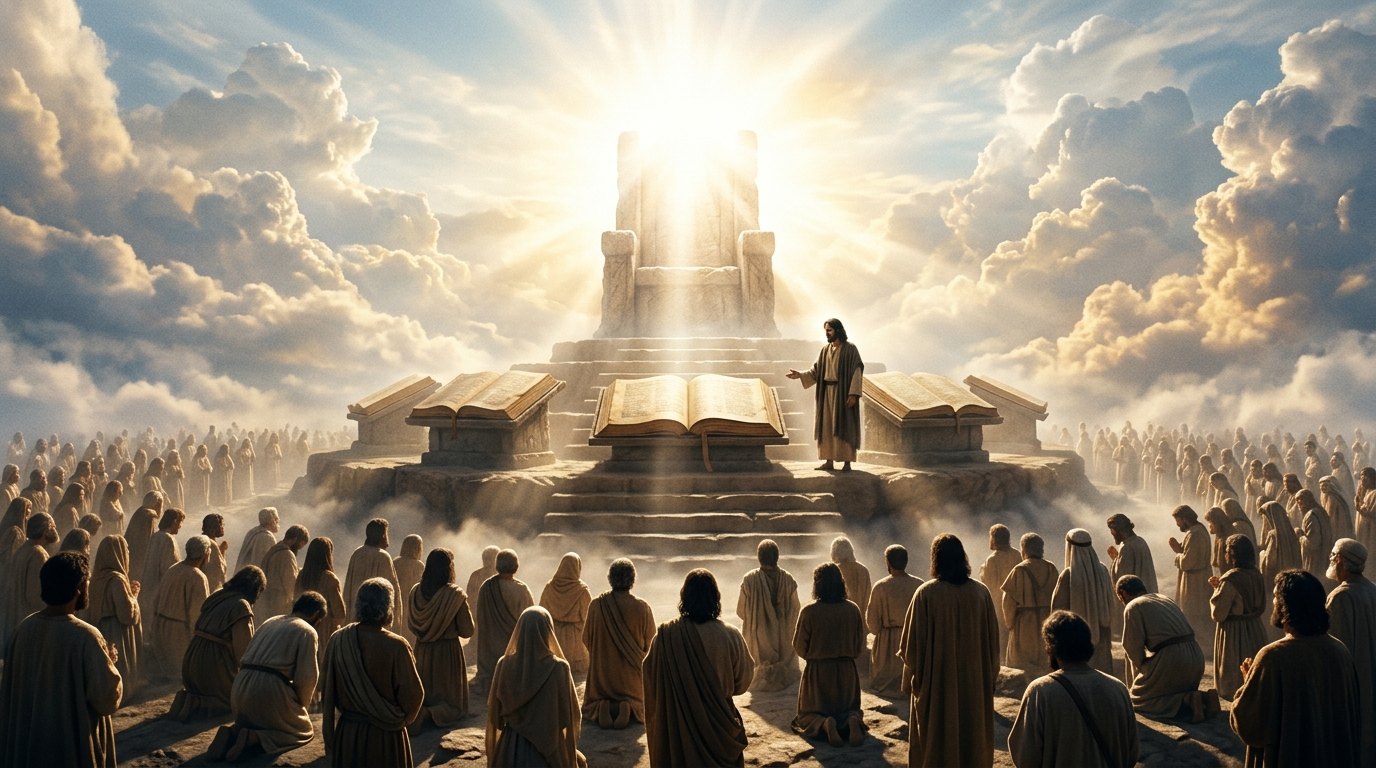
Far be it from you to do such a thing—to kill the righteous with the wicked, treating the righteous and the wicked alike. Far be it from you! Will not the Judge of all the earth do right?”
Genesis 18:25 (NIV)
It establishes the foundational truth that God's judgment is flawlessly just and never arbitrary.
The question of eternal destiny must always be anchored in God's character. In Genesis 18:25, Abraham appeals to the holy nature of the Creator, asking, "Shall not the Judge of all the earth do what is right?" God never acts unfairly, maliciously, or arbitrarily. He is the Rock, His work is perfect, and all His ways are justice—a God of faithfulness without iniquity, just and upright is He (Deuteronomy 32:4). When the Lord comes to judge the world, He will do so in absolute righteousness and His peoples in His faithfulness (Psalm 96:13).
Every soul will receive precisely what divine justice warrants. In John's vision of the final judgment, the dead, great and small, stand before the great white throne as the books are opened (Revelation 20:12). No one will be condemned for failing to respond to light they never received; rather, every person is judged strictly according to what they had done (Revelation 20:12-13). Hell is not populated by innocent victims yearning for mercy who were denied a chance, but by rebels who freely suppressed the truth and broke God's moral law. When God executes His sentence, every mouth will be stopped, and the universe will confess that the Judge of all the earth has acted in immaculate righteousness.
| Passage | What it says |
|---|---|
| Genesis 18:25 | Abraham declares that the Judge of all the earth will certainly do what is right and just. |
| Deuteronomy 32:4 | God is praised as the Rock whose work is perfect and whose ways are all pure justice. |
| Psalms 96:13 | The Lord comes to judge the entire earth in righteousness and all peoples in His truth. |
| Revelation 20:12 | The dead, small and great, stand before God to be judged strictly according to their deeds. |
| Revelation 20:13 | Death and Hades deliver up the dead, and each person is judged according to their works. |
Where in the Bible
| Book | Passages |
|---|---|
| Genesis | 1 · Genesis 18:25 |
| Deuteronomy | 1 · Deuteronomy 32:4 |
| Psalms | 5 · Psalms 19:1, Psalms 19:2, Psalms 19:3, Psalms 19:4, Psalms 96:13 |
| Matthew | 3 · Matthew 28:18, Matthew 28:19, Matthew 28:20 |
| Luke | 2 · Luke 12:47, Luke 12:48 |
| John | 4 · John 14:6, John 3:16, John 3:18, John 3:36 |
| Acts | 7 · Acts 17:30, Acts 17:31, Acts 4:12, Acts 1:8, Acts 10:1, Acts 10:2, Acts 11:14 |
| Romans | 27 · Romans 1:18, Romans 1:19, Romans 1:20, Romans 1:21, Romans 1:22, Romans 1:23, Romans 2:11, Romans 2:12, Romans 2:13, Romans 2:14, Romans 2:15, Romans 2:16, Romans 7:7, Romans 3:9, Romans 3:10, Romans 3:11, Romans 3:12, Romans 3:19, Romans 3:20, Romans 3:23, Romans 3:24, Romans 3:25, Romans 10:9, Romans 10:13, Romans 10:14, Romans 10:15, Romans 10:17 |
| 1 Corinthians | 1 · 1 Corinthians 9:21 |
| Galatians | 2 · Galatians 2:16, Galatians 3:10 |
| 1 Timothy | 1 · 1 Timothy 2:5 |
| 1 John | 2 · 1 John 5:11, 1 John 5:12 |
| Revelation | 2 · Revelation 20:12, Revelation 20:13 |
The story in order
- Creation declares God's glory (c. 2000 BC) · Psalms 19:1-4 · Creation reveals God's eternal power and nature, leaving all without excuse.
- The Law reveals sin (c. AD 55) · Romans 7:7 · The written law exposes sin and shows that coveting is forbidden.
- Gentiles' conscience convicts them (c. AD 55) · Romans 2:14-15 · Those without the law do by nature what the law requires.
- All humanity is under sin (c. AD 55) · Romans 3:9-12 · No one is righteous; all have turned away and become worthless.
- No one is justified by law (c. AD 55) · Romans 3:20 · Works of the law only expose sin, not justify before God.
- Jesus is the only way (c. AD 30) · John 14:6 · Jesus is the way, the truth, and the life; no one comes to the Father except through Him.
- Salvation is in Christ alone (c. AD 33) · Acts 4:12 · There is no salvation in any other name under heaven.
- Faith comes by hearing the gospel (c. AD 55) · Romans 10:14-17 · People cannot believe or call on Christ without hearing the word.
- The Great Commission (c. AD 30) · Matthew 28:19-20 · Disciples are to make disciples of all nations, teaching Christ's commands.
- God judges all by their deeds (c. AD 95) · Revelation 20:12-13 · The dead are judged according to their works, small and great.
Key words
- Without excuse
- Humanity cannot claim ignorance of God due to creation and conscience. · Romans 1:20
- Conscience
- Inner moral awareness that accuses or excuses based on God's law written on the heart. · Romans 2:15
- Justified
- Declared righteous before God, not by works, but by faith in Christ.
- Propitiation
- Christ's sacrifice that satisfies God's wrath and appeases His justice. · Romans 3:25
- Faith
- Trust and reliance on Jesus Christ for salvation, based on hearing His word. · Romans 10:17
God remains entirely righteous in his judgments: no one will perish unjustly, and no one can enter life apart from the cross of Christ. For those of us who have heard this glorious gospel, our calling is twofold: to entrust ourselves unreservedly to the only Savior, and to pour out our lives carrying his message to every corner of the world where his name is not yet known.
58 passages, each cited once.
Scripture cited
- Romans 1:18-25
- Romans 3:19-26
- John 3:16-19
- Romans 10:9-17
- John 14:6
- Acts 4:12