Does the Holy Spirit still heal people today?

James 5:14-16
14 Is anyone among you sick? Let them call the elders of the church to pray over them and anoint them with oil in the name of the Lord.
15 And the prayer offered in faith will make the sick person well; the Lord will raise them up. If they have sinned, they will be forgiven.
16 Therefore confess your sins to each other and pray for each other so that you may be healed. The prayer of a righteous person is powerful and effective.
New International Version (NIV)
The answer
Yes—the Holy Spirit still heals people today. He gives “gifts of healings” and distributes His gifts “as he desires” (1 Corinthians 12:9-11). Healing is the Spirit’s sovereign work, not a technique people can control or a guarantee that every illness will end immediately.
Healing belongs to the Spirit’s continuing work
- The Spirit is still given: Peter’s promise extended beyond the first apostles: “The promise is to you and to your children, and to all who are far off, even as many as the Lord our God will call to himself” (Acts 2:39).
- His gifts are still to be desired: The church is told, “Follow after love and earnestly desire spiritual gifts” (1 Corinthians 14:1).
- The church still has instructions for the sick: “Let him call for the elders of the assembly, and let them pray over him, anointing him with oil in the name of the Lord; and the prayer of faith will heal him who is sick, and the Lord will raise him up” (James 5:14-15). James 5:16 also calls believers to confess their sins and pray for one another “that you may be healed.”
First Corinthians 13 does not say healing has ceased
The contrast in 1 Corinthians 13:8-12 is between knowing “in part” now and knowing fully then: “For now we see in a mirror, dimly, but then face to face.” It describes partial knowledge reaching completeness, not the Spirit withdrawing His gifts when the apostles died or the Scriptures were completed.
Pray in faith without presumption
Healing should be sought boldly and expectantly through prayer, including the obedience described in James 5:14-16. Yet the Spirit distributes His gifts as He wills, and even Paul could write, “I left Trophimus at Miletus sick” (2 Timothy 4:20). Continuing sickness is therefore not automatic proof of weak faith or personal sin. Faith obeys God’s instructions, asks Him for healing, trusts His wisdom, and never condemns or manipulates the suffering person.
Answered from Scripture · reviewed November 11, 2026
Scripture nowhere teaches that the Holy Spirit withdrew His healing power or spiritual gifts when the apostles died. From Christ's earthly ministry through the apostolic church and into every generation of believers, the living God hears the prayers of His people, empowers His body with gifts of healings, and raises up the sick according to His sovereign will.
The Spirit's Ongoing Gifts
The Spirit Still Distributes Gifts of Healings
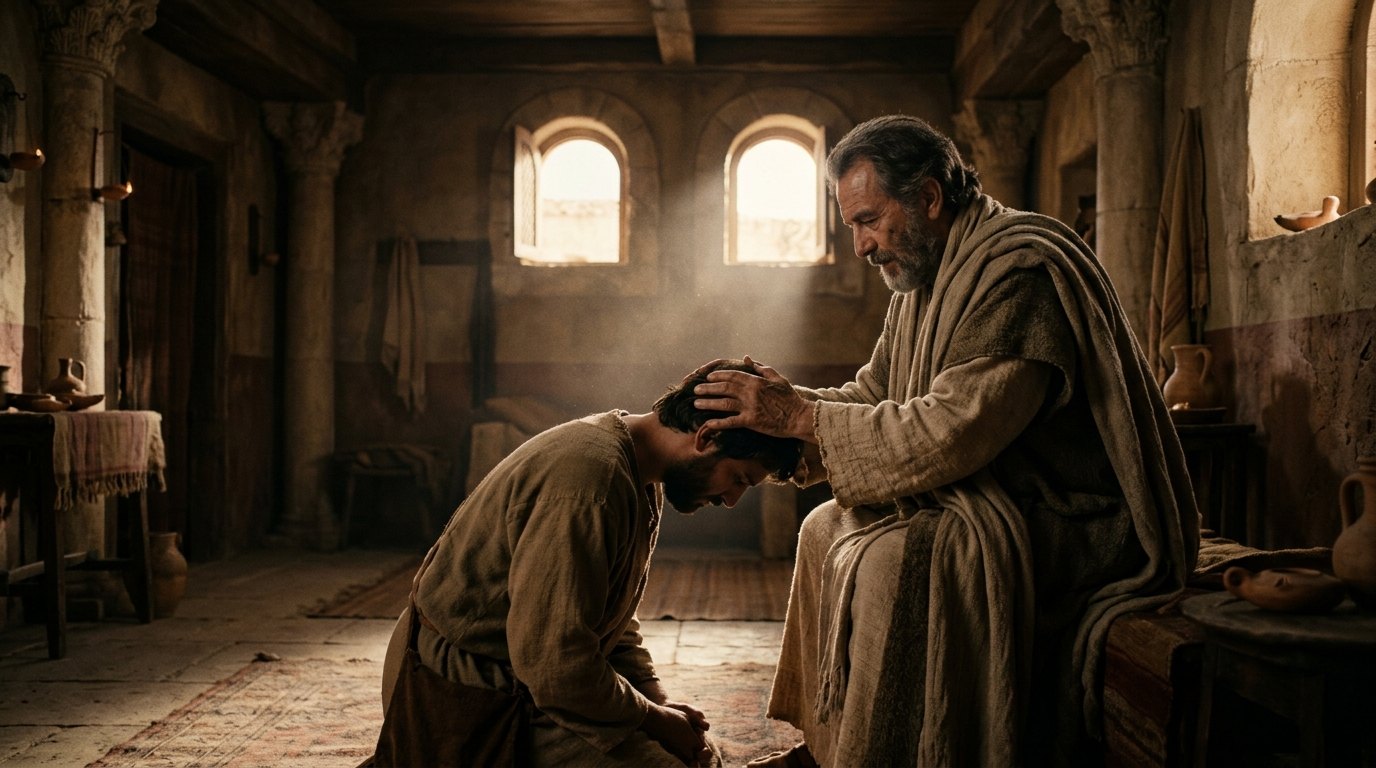
to another faith by the same Spirit, to another gifts of healing by that one Spirit,
1 Corinthians 12:9 (NIV)
Paul identifies gifts of healings as distinct distributions of the same Holy Spirit given for the common good of the church.
In 1 Corinthians 12:9, the apostle Paul explicitly names gifts of healings among the varied manifestations distributed by the third Person of the Trinity. Far from being a localized or temporary anomaly, the Holy Spirit distributes these endowments to each member of the body of Christ just as He sovereignly wills, ensuring that the manifestation of the Spirit is given for the common profit of all believers (1 Corinthians 12:7, 11). God deliberately appointed these workings, placing miracles and gifts of healings within the life of the assembly alongside apostles, teachers, and administrators (1 Corinthians 12:28).
Rather than directing believers to anticipate the fading of these supernatural operations, Scripture repeatedly commands the church to earnestly desire spiritual gifts (1 Corinthians 12:31; 1 Corinthians 14:1). Paul urges Christians to cultivate love while continuing to seek spiritual manifestations, explicitly charging the flock never to forbid speaking in tongues or quench prophetic speech (1 Corinthians 14:39). This dynamic presence mirrors the divine pattern recorded in Hebrews 2:4, where God bore witness to the gospel through signs, wonders, various miracles, and sovereign distributions of His Spirit.
The scope of this supernatural empowerment was never restricted to the apostolic era. At Pentecost, Peter proclaimed that the promise of the Holy Spirit extends to all who are far off, even as many as the Lord our God will call throughout every generation (Acts 2:38-39). While some suggest that 1 Corinthians 13:8-12 taught the cessation of such gifts when the biblical canon was compiled, the text itself insists that partial knowledge passes away only when the perfect arrives—that ultimate day of consummation when believers see Christ face to face at His return.
| Passage | What it says |
|---|---|
| 1 Corinthians 12:7 | Affirms that the manifestation of the Spirit is given to each person for the profit of all. |
| 1 Corinthians 12:9 | Lists faith and gifts of healings as granted by the one and the selfsame Spirit. |
| 1 Corinthians 12:11 | States that the Holy Spirit distributes these spiritual gifts individually to each person just as He wills. |
| 1 Corinthians 12:28 | Names gifts of healings and miracles among God's appointed provisions within the body of Christ. |
| 1 Corinthians 12:31 | Instructs believers to earnestly desire the greater spiritual gifts. |
| 1 Corinthians 14:1 | Commands the church to pursue love while earnestly desiring spiritual gifts. |
| 1 Corinthians 14:39 | Exhorts believers to be eager to prophesy and not to forbid speaking in tongues. |
| Hebrews 2:4 | Testifies that God bore witness with signs, wonders, various miracles, and distributions of the Holy Spirit. |
| Acts 2:38-39 | Declares that the promise of the Holy Spirit extends to all generations whom the Lord calls. |
| 1 Corinthians 13:8-12 | Shows gifts remain until the perfect arrives when believers see face to face at Christ's return. |
The Church's Perpetual Pattern
The Ordinance of Believing Prayer for the Sick
Is anyone among you sick? Let them call the elders of the church to pray over them and anoint them with oil in the name of the Lord.
James 5:14 (NIV)
James gives an enduring, practical ordinance for local church elders to anoint the sick and pray over them in the Lord's name.
In James 5:14, the apostle establishes an enduring ordinance for physical healing that binds the local church throughout every age: call for the elders of the church. James provides a clear pastoral protocol rather than a temporary concession. When sickness strikes, the afflicted believer is instructed to summon the spiritual leaders of the congregation, who are to anoint the sufferer with oil and pray over them in the authoritative name of the Lord Jesus.
Scripture anchors this ministry in the unfailing covenant faithfulness of God. The text promises that the prayer of faith will save the sick, and the Lord Himself will raise them up, offering both bodily restoration and the forgiveness of sins where personal transgression is involved (James 5:15). Believers are further exhorted to confess faults one to another and intercede mutually, resting on the reality that the effective, fervent prayer of a righteous person accomplishes much (James 5:16). This church ordinance directly reflects the practice instituted during Christ's earthly ministry, when the disciples anointed many sick people with oil and healed them (Mark 6:13).
Jesus Himself commissioned His followers to lay hands on the sick with the confidence that they will recover (Mark 16:18). Believers approach this ministry not in presumption, but in filial trust toward a heavenly Father who delights to give good things to those who ask Him (Matthew 7:7-11). Approaching God according to His sovereign will provides the church with absolute boldness, knowing that whenever we ask according to His purposes, He hears and grants our petitions (1 John 5:14-15).
| Passage | What it says |
|---|---|
| James 5:14 | Directs the sick person to summon the assembly's elders to pray and anoint with oil. |
| James 5:15 | Promises that the prayer of faith will save the sick and sins committed will be forgiven. |
| James 5:16 | Urges mutual confession and intercession, declaring the insistent prayer of a righteous person powerfully effective. |
| Mark 6:13 | Records the disciples casting out demons and anointing many sick people with oil and healing them. |
| Mark 16:18 | Declares that believers will lay hands on the sick and they will recover. |
| Matthew 7:7-11 | Jesus invites persistent asking in prayer, assuring believers the Father gives good gifts to His children. |
| 1 John 5:14-15 | Affirms confidence that God hears and answers whatever believers ask according to His sovereign will. |
The Apostolic Witness
Healing Continued Beyond the Cross and Ascension
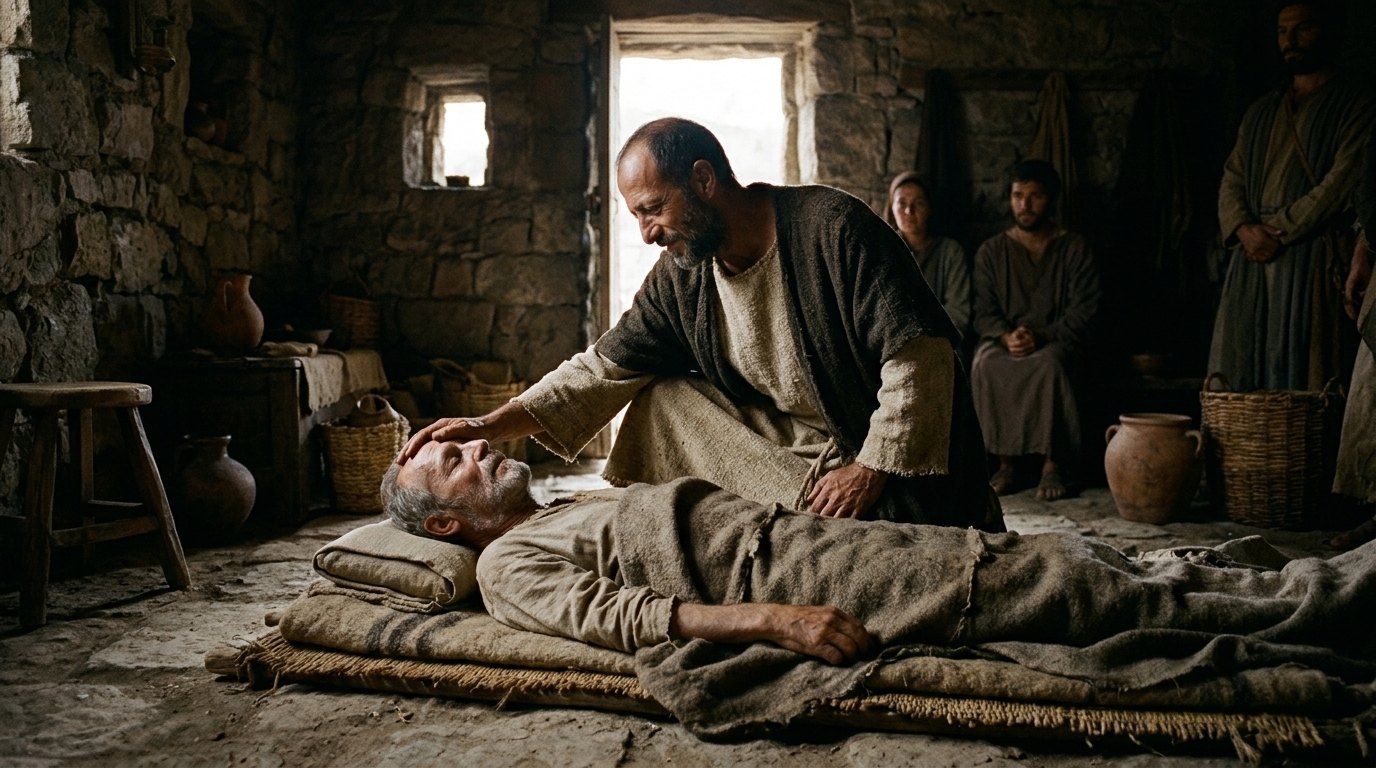
His father was sick in bed, suffering from fever and dysentery. Paul went in to see him and, after prayer, placed his hands on him and healed him.
Acts 28:8 (NIV)
At the very close of the book of Acts, Paul prays and lays hands on Publius's father, demonstrating continued healing power.
In Acts 28:8, on the remote island of Malta at the very close of the historical narrative of the New Testament, Paul entered in and prayed, laid hands on the father of Publius who lay sick with fever and dysentery, and healed him. This miraculous work occurred decades after the cross and Pentecost, demonstrating that the Holy Spirit's supernatural healing power continued uninterrupted long after the church was formally established and widespread throughout the Mediterranean world.
The entire book of Acts testifies to this persistent divine power working through ordinary disciples. Following Christ's ascension, Peter commanded the lifelong cripple at the Beautiful Gate to walk in the name of Jesus Christ of Nazareth (Acts 3:6). When threatened by civil authorities, the gathered assembly did not pray for self-preservation, but petitioned God to stretch forth His hand to heal through the holy name of His servant Jesus (Acts 4:30). Consequently, immense crowds gathered from surrounding towns bringing their sick and tormented to Jerusalem, and every one was delivered (Acts 5:16).
This demonstration of the risen Christ was not confined to Jerusalem or the original Twelve. In Lydda, Peter declared to paralyzed Aeneas that Jesus Christ made him whole, prompting immediate restoration (Acts 9:34), before raising Tabitha from death in Joppa (Acts 9:40). Philip proclaimed Christ in Samaria, accompanied by the miraculous cleansing of the lame and paralyzed (Acts 8:6-7). Paul commanded the crippled man at Lystra to stand upright (Acts 14:10), saw God work extraordinary miracles through touch in Ephesus (Acts 19:11), and ministered healing to the entire population of Malta (Acts 28:9). Throughout the apostolic journey, the Lord consistently bore witness to the word of His grace by granting signs and wonders (Acts 14:3).
| Passage | What it says |
|---|---|
| Acts 3:6 | Peter commands the lame man to walk in the name of Jesus Christ of Nazareth. |
| Acts 4:30 | The church prays for God to stretch out His hand to heal through Jesus' holy name. |
| Acts 5:16 | Crowds gather from towns around Jerusalem bringing the sick and afflicted, and all are healed. |
| Acts 9:34 | Peter tells paralyzed Aeneas that Jesus Christ heals him, and he arises immediately. |
| Acts 9:40 | Peter kneels down, prays, and commands deceased Tabitha to arise in the Lord's power. |
| Acts 14:10 | Paul calls out to a crippled man at Lystra, who leaps up and walks. |
| Acts 19:11 | Records that God performed extraordinary miracles through the hands of Paul. |
| Acts 28:8 | Paul enters in to Publius's feverish father, prays, lays hands on him, and heals him. |
| Acts 28:9 | The rest of the sick on the island of Malta come and are healed. |
| Acts 8:6-7 | Philip proclaims Christ in Samaria with many paralyzed and lame people miraculously healed. |
| Acts 14:3 | The Lord bears witness to the word of His grace, granting signs and wonders through the disciples. |
Sovereignty and God's Purposes
Bodily Affliction and the Sovereignty of God
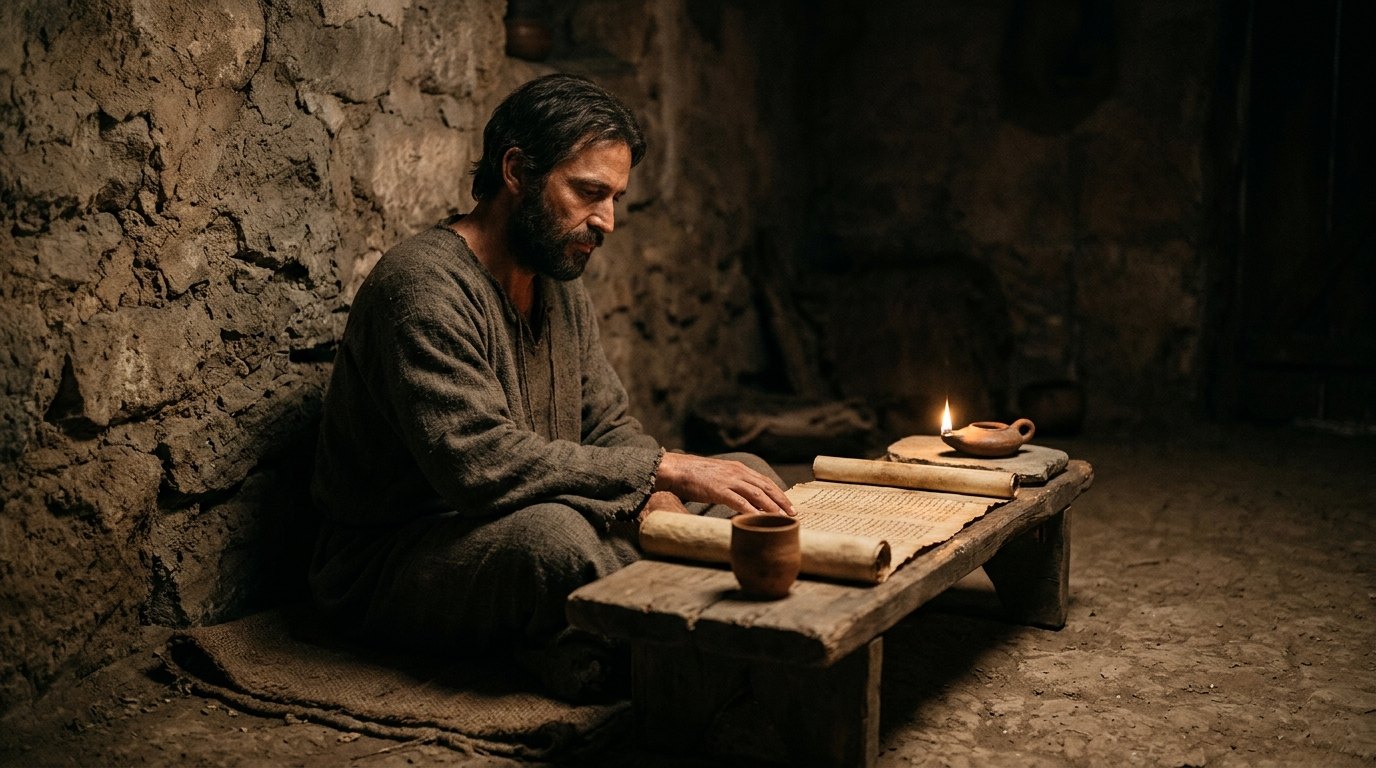
But he said to me, “My grace is sufficient for you, for my power is made perfect in weakness.” Therefore I will boast all the more gladly about my weaknesses, so that Christ’s power may rest on me.
2 Corinthians 12:9 (NIV)
God answers Paul's repeated plea for physical relief by revealing that His grace is sufficient in bodily weakness.
In 2 Corinthians 12:9, the Lord answered Paul's desperate pleas for deliverance by declaring: "My grace is sufficient for you, for My strength is made perfect in weakness." While the Holy Spirit undeniably possesses the power to heal and frequently does so in answer to believing prayer, Scripture nowhere promises that every physical ailment will be removed in this fallen world. God remains completely sovereign in how, when, and whom He restores physically, often using bodily trials to accomplish deeper spiritual sanctification.
Paul himself experienced this sovereign restraint. Stricken with a painful thorn in the flesh—a messenger of Satan sent to buffet him—the apostle pleaded three distinct times for its removal (2 Corinthians 12:7-8). Yet Christ chose not to grant physical relief, intending instead to display His supreme grace through the apostle's bodily frailty. Similarly, faithful servants of Christ in the early church endured serious physical illnesses: Epaphroditus fell sick near unto death before God showed mercy upon him (Philippians 2:27), and Paul was compelled to leave his beloved co-worker Trophimus sick at Miletus rather than performing an immediate miracle (2 Timothy 4:20).
Scripture also commends ordinary practical remedies alongside prayer, as when Paul instructed Timothy to take a little wine for his stomach's relief and his frequent bodily infirmities (1 Timothy 5:23). Until the return of Jesus Christ, even believers who possess the firstfruits of the Spirit groan inwardly, waiting patiently for the final redemption of our bodies (Romans 8:23). Physical healing today remains a genuine foretaste of the kingdom, granted according to God's wise counsel, while our ultimate bodily perfection awaits the general resurrection.
| Passage | What it says |
|---|---|
| 2 Corinthians 12:7 | Describes Paul receiving a thorn in the flesh, a messenger of Satan, to keep him humble. |
| 2 Corinthians 12:8 | Records Paul pleading with the Lord three times that this affliction might depart from him. |
| 2 Corinthians 12:9 | Christ answers that His grace is sufficient and His power is made perfect in weakness. |
| Philippians 2:27 | Mentions Epaphroditus being sick near to death before God had mercy on him. |
| 2 Timothy 4:20 | Records Paul leaving Trophimus sick at Miletus, showing believers are not immune to sickness. |
| 1 Timothy 5:23 | Advises Timothy to use a little wine for his stomach's sake and frequent infirmities. |
| Romans 8:23 | Affirms that believers groan inwardly while eagerly awaiting the redemption of their physical bodies. |
The Unchanging Healer
God's Enduring Character as Healer Across the Ages
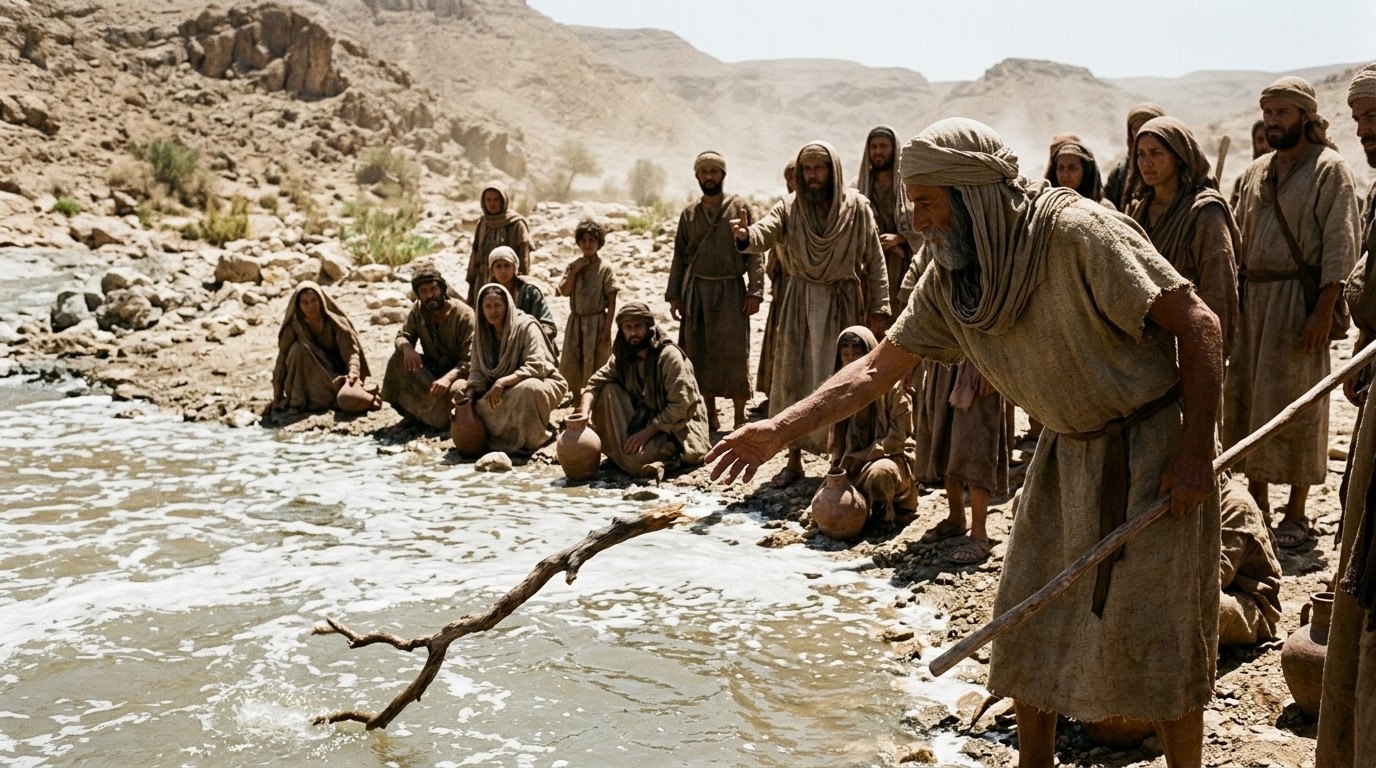
Jesus Christ is the same yesterday and today and forever.
Hebrews 13:8 (NIV)
It anchors the continuity of divine healing in the unchangeable person, power, and nature of Jesus Christ.
The bedrock of every plea for physical restoration rests upon a single, unshakeable declaration: Jesus Christ is the same yesterday and today and forever (Hebrews 13:8). The Lord does not alter His intrinsic character or diminish His compassion across covenant eras; the very same Savior who walked the dusty roads of Galilee, restoring sight to the blind and strength to withered limbs, reigns today in identical majesty and power at the right hand of the Father.
From the dawn of His covenant dealings with redeemed Israel at the waters of Marah, God revealed His essential nature by declaring, I am the Lord your healer (Exodus 15:26). This identity was not a temporary dispensation or an occasional title, but an abiding expression of His redemptive heart toward His people. David echoed this perpetual truth in worship, calling the soul to bless the Lord, and forget not all his benefits, who forgives all your iniquity, who heals all your diseases (Psalms 103:2-3). Forgiveness of sins and the gracious alleviation of physical suffering flow together from the same fountain of covenant love.
This promised restoration found its deepest purchase at the cross. Isaiah foretold that the suffering Messiah has borne our griefs and carried our sorrows, and that with his stripes we are healed (Isaiah 53:4-5). Matthew explicitly anchors Christ's physical healing ministry in this prophecy, noting that Jesus healed all who were sick to fulfill what was spoken by the prophet Isaiah: He took our illnesses and bore our diseases (Matthew 8:16-17). Peter directs the believer back to that very same sacrifice: by his wounds you have been healed (1 Peter 2:24). Because Christ’s atonement remains ever-efficacious and His character entirely immutable, the Holy Spirit continues to mediate His healing grace to the sick according to His sovereign and perfect will.
| Passage | What it says | Fulfilled |
|---|---|---|
| Exodus 15:26 | God reveals His enduring covenant character to His people as Yahweh Rapha, the Lord who heals. | |
| Psalms 103:2-3 | Calls the believer to praise God who forgives iniquities and heals all diseases. | |
| Isaiah 53:4-5 | Prophesies that the Servant took our infirmities and carried our diseases, by whose stripes we are healed. | Matthew 8:16-17, 1 Peter 2:24 |
| Hebrews 13:8 | Affirms that Jesus Christ remains the same yesterday, today, and forever. |
Where in the Bible
| Book | Passages |
|---|---|
| Exodus | 1 · Exodus 15:26 |
| Psalms | 1 · Psalms 103:2-3 |
| Isaiah | 1 · Isaiah 53:4-5 |
| Matthew | 1 · Matthew 7:7-11 |
| Mark | 2 · Mark 6:13, Mark 16:18 |
| Acts | 12 · Acts 2:38-39, Acts 3:6, Acts 4:30, Acts 5:16, Acts 9:34, Acts 9:40, Acts 14:10, Acts 19:11, Acts 28:8, Acts 28:9, Acts 8:6-7, Acts 14:3 |
| Romans | 1 · Romans 8:23 |
| 1 Corinthians | 8 · 1 Corinthians 12:7, 1 Corinthians 12:9, 1 Corinthians 12:11, 1 Corinthians 12:28, 1 Corinthians 12:31, 1 Corinthians 14:1, 1 Corinthians 14:39, 1 Corinthians 13:8-12 |
| 2 Corinthians | 3 · 2 Corinthians 12:7, 2 Corinthians 12:8, 2 Corinthians 12:9 |
| Philippians | 1 · Philippians 2:27 |
| 1 Timothy | 1 · 1 Timothy 5:23 |
| 2 Timothy | 1 · 2 Timothy 4:20 |
| Hebrews | 2 · Hebrews 2:4, Hebrews 13:8 |
| James | 3 · James 5:14, James 5:15, James 5:16 |
| 1 John | 1 · 1 John 5:14-15 |
The story in order
- God reveals Himself as Healer (c. 1446 BC) · Exodus 15:26 · God's covenant name includes 'the Lord who heals'.
- David praises God for healing (c. 1000 BC) · Psalms 103:2-3 · Praise for forgiveness and healing all diseases.
- Isaiah prophesies Christ's healing (c. 700 BC) · Isaiah 53:4-5 · The Servant's suffering brings healing.
- Jesus invites persistent prayer (c. AD 30) · Matthew 7:7-11 · God gives good gifts, including healing, to His children.
- Disciples heal the sick (c. AD 30) · Mark 6:13 · The apostles cast out demons and healed the sick.
- Jesus ascends, promises the Spirit (AD 33) · Acts 2:38-39 · The promise of the Spirit is for all generations.
- Peter heals lame man (AD 33) · Acts 3:6 · Healing in Jesus' name continues.
- Church prays for healing (AD 33) · Acts 4:30 · The church asks God to heal through Jesus.
- Philip heals in Samaria (AD 34) · Acts 8:6-7 · Miraculous healings accompany the gospel.
- Peter raises Tabitha (AD 35) · Acts 9:40 · Life and healing through apostolic prayer.
- Paul heals crippled man (AD 47) · Acts 14:10 · God uses Paul to bring healing.
- God grants extraordinary miracles (AD 57) · Acts 19:11 · God's power displayed through Paul.
- Paul leaves Trophimus sick (c. AD 67) · 2 Timothy 4:20 · Believers are not immune to sickness.
- Gifts remain until perfection (c. AD 55) · 1 Corinthians 13:8-12 · Spiritual gifts continue until Christ's return.
The Ordinance of Prayer for the Sick
| Instruction | Promise | Effectiveness | Passage |
|---|---|---|---|
| Summon the elders to pray and anoint with oil. | The prayer of faith will save the sick. | The prayer of a righteous person is powerfully effective. | James 5:14-16 |
| Believers will lay hands on the sick and they will recover. | The prayer of faith will save the sick. | The prayer of a righteous person is powerfully effective. | |
| Ask in prayer, the Father gives good gifts. | God hears and answers prayer according to His will. | The prayer of a righteous person is powerfully effective. |
Key words
- Spiritual Gifts (pneumatikos, πνευματικός)
- Manifestations of the Spirit given to believers for the profit of all. · 1 Corinthians 12:1
- Healings (therapeia, θεραπεία)
- Gifts of restoration to health, both physical and spiritual. · 1 Corinthians 12:9
- Prayer of Faith (proseuchē tēs pisteōs, προσευχὴ τῆς πίστεως)
- Prayer offered with confident trust in God's power and willingness to answer. · James 5:15
- Righteous Person (dikaios, δίκαιος)
- One who lives in right relationship with God. · James 5:16
- Yahweh Rapha (YHWH Roph'ekha, יהוה רפאך)
- The Lord who heals. · Exodus 15:26
- Perfect (teleios, τέλειος)
- Complete, mature, fully realized. · 1 Corinthians 13:10
Believers today are neither abandoned to cold cessationism nor granted a license to demand miracles as an entitlement. We are commanded to pray in faith, call upon the elders of the church, confess our sins, and rest completely in the gracious, sovereign power of the Holy Spirit who raises up the sick and redeems our bodies.
39 passages, each cited once.
Scripture cited
- James 5:14-16
- 1 Corinthians 12:7-11
- Acts 2:38-39
- 1 Corinthians 13:8-12
- 1 Corinthians 14:1
- 1 Corinthians 14:39
- 2 Timothy 4:20