How do I answer someone who says the Bible is a myth?

2 Peter 1:16
16 For we did not follow cleverly devised stories when we told you about the coming of our Lord Jesus Christ in power, but we were eyewitnesses of his majesty.
New International Version (NIV)
The answer
The core principle
The charge that Christianity is "myth" is not new to our age — Peter faced it nineteen centuries ago, and his answer is in your hands. In 2 Peter 1:16 he writes that he did not follow "cunningly devised fables" but was an eyewitness of Christ's majesty. So your main move is not to argue about science or history in the abstract, but to point the person to the apostles' own claim: I saw Him. I heard Him. This is what happened.
Step 1: Open with what Peter actually said
Quote 2 Peter 1:16 and let it do the work. Peter knew people would call the gospel a "fable" ("mythos" in the Greek), and he didn't dodge the charge — he said: no, I was on the mountain, I saw His face shine like the sun, I heard the Father's voice out of heaven. Fables are invented; this was witnessed.
Step 2: Walk them through one eyewitness event
Take them to the Transfiguration — Luke 9:28-36 — the very event Peter is pointing back to. Three apostles saw Jesus glorified, talked with Moses and Elijah, and heard God say, "This is my beloved Son. Listen to him!" Peter says plainly in 2 Peter 1:17-18, "We ourselves heard this voice come from heaven when we were with Him on the holy mountain." A made-up story doesn't feature a sleepy witness ("heavy with sleep," Luke 9:32) and a botched response from Peter himself ("...not knowing what he said," v. 33). The details ring true because they happened.
Step 3: Show this is the whole apostolic witness, not one verse
John says the same thing in another way: "That which was from the beginning, which we have heard, which we have seen with our eyes, which we have looked upon, and our hands have handled, of the Word of life" (1 John 1:1-3). And again: "We have seen and do testify that the Father sent the Son to be the Saviour of the world" (1 John 4:14). Christianity rests on the apostles having been in the room with Jesus — not on legend growing over centuries.
Step 4: Press the point Scripture makes about itself
Close the loop with 2 Peter 1:21: "No prophecy ever came by the will of man, but holy men of God spoke, being moved by the Holy Spirit." The Bible's own claim is that the same God who stepped into history on the mountain also breathed out the words the apostles then wrote. If the eyewitness event is real, the record of it is reliable. Don't argue the Bible is true because its authors were clever — argue it is true because they were there, and because the Spirit carried them.
How to actually talk to your friend
- Lead with the text, not with your argument. Read 2 Peter 1:16-21 aloud to them.
- Don't get defensive. "Fable" is the word Peter uses too — the Bible is honest that some stories are myths (1 Timothy 1:4, Titus 1:14), and it warns against them. Peter is making a distinction between made-up stories and eyewitness account.
- Hold to the resurrection as the test. If Jesus walked out of the tomb, the eyewitnesses were not fibbing; if He didn't, the whole thing collapses (1 Corinthians 15:14).
- Pray for them. A clear defence opens the door; only the Spirit opens the heart.
A verse to carry
"We have not followed cunningly devised fables... but were eyewitnesses of His majesty." — 2 Peter 1:16
Answered from Scripture · reviewed November 7, 2026
The accusation that the gospel is mere myth is not modern; the apostles faced the very same charge in the first century and confronted it head-on. Rather than retreating into philosophical abstractions, Scripture answers by resting its proclamation on empirical eyewitness testimony and the direct inspiration of the Holy Spirit. Grounding our response in the apostles' own words allows the Bible to vindicate its historical reality as the living Word of God.
The Apostolic Denial
The Gospel Is Not a Cleverly Invented Fable
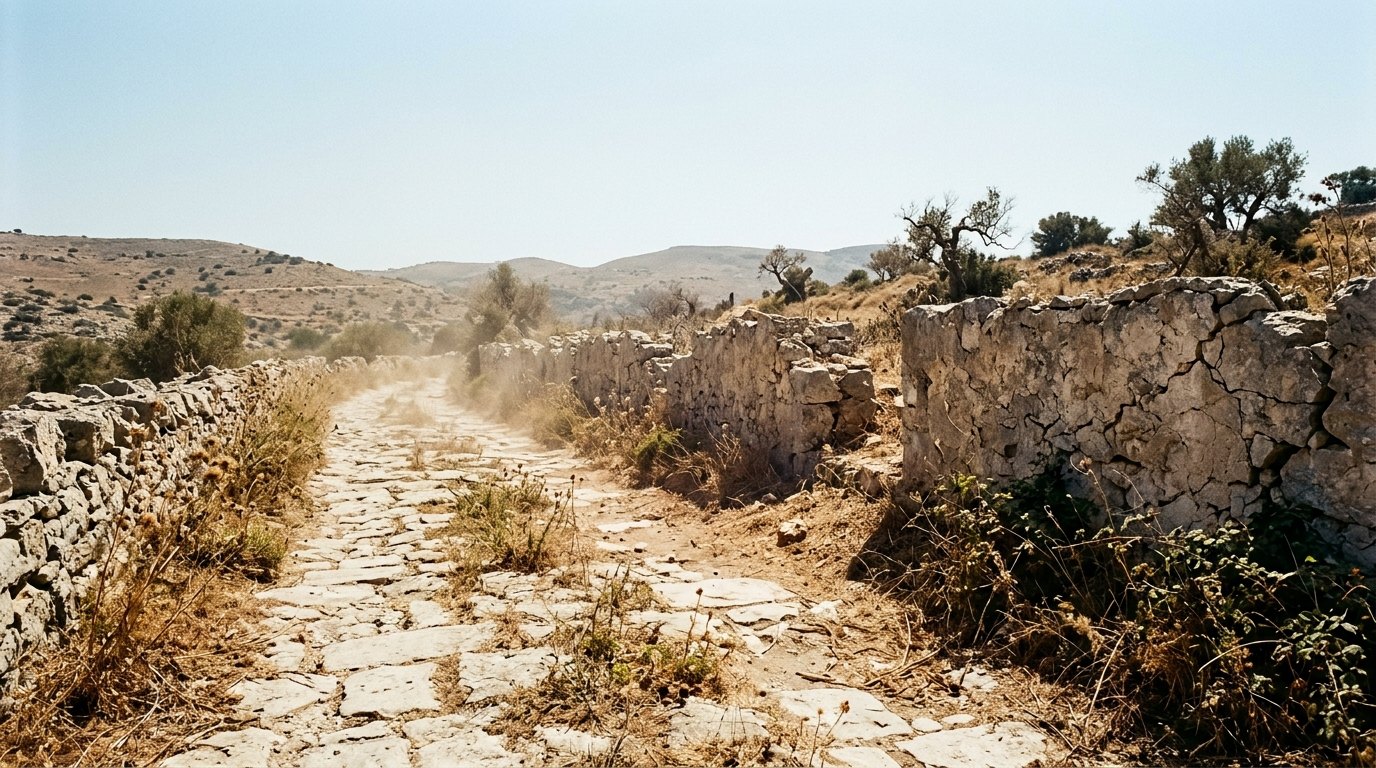
For we did not follow cleverly devised stories when we told you about the coming of our Lord Jesus Christ in power, but we were eyewitnesses of his majesty.
2 Peter 1:16 (NIV)
Peter directly repudiates the accusation of following devised myths by establishing that the apostles were literal eyewitnesses of Christ's majesty.
In 2 Peter 1:16, the apostle Peter directly takes on the accusation of myth-making: "we did not follow cleverly devised myths when we made known to you the power and coming of our Lord Jesus Christ, but we were eyewitnesses of his majesty." The apostles knew the culture of their era well, a Hellenistic world teeming with allegories, folklore, and invented pantheons. Rather than conforming to that environment, Scripture deliberately and repeatedly draws a sharp line between divine truth and manufactured lore.
Paul likewise urged Timothy in 1 Timothy 1:4 not to devote himself to myths and endless genealogies that cultivate idle speculations rather than the stewardship of God. He reinforced this in 1 Timothy 4:7, commanding the church to reject irreverent, silly myths and instead discipline oneself for godliness. The Holy Spirit knew that human hearts naturally drift toward comfortable fictions; hence 2 Timothy 4:4 cautions that a day arrives when people refuse sound doctrine and deliberately turn aside to myths. Titus 1:14 echoes this mandate, ordering believers to ignore Jewish myths and human commands that turn away from the truth. In 2 Peter 2:3, the apostle cautions against predatory teachers who exploit congregations with fabricated, deceptive words. Scripture never offers itself as a poetic metaphor or moral allegory; it presents itself as historical fact and vehemently condemns myth-making as incompatible with the living God.
| Passage | What it says |
|---|---|
| 2 Peter 1:16 | Peter states the apostles did not follow cleverly devised fables, but were eyewitnesses of Jesus Christ's majesty. |
| 1 Timothy 1:4 | Paul instructs Timothy to reject myths and endless genealogies that provoke empty speculations instead of furthering God's work in faith. |
| 1 Timothy 4:7 | Paul commands believers to have nothing to do with irreverent, silly myths, but rather train themselves for godliness. |
| 2 Timothy 4:4 | Paul warns that people will turn away from listening to the truth and wander off into myths. |
| Titus 1:14 | Paul charges Titus to rebuke false teachers so they do not devote themselves to human commandments and myths. |
| 2 Peter 2:3 | Warns against false teachers who exploit listeners with fabricated or deceptive words. |
The Historical Witness
Eyewitnesses of Christ's Transfiguration and Incarnation

He received honor and glory from God the Father when the voice came to him from the Majestic Glory, saying, “This is my Son, whom I love; with him I am well pleased.” We ourselves heard this voice that came from heaven when we were with him on the sacred mountain.
2 Peter 1:17-18 (NIV)
Peter grounds his claim in a specific historical moment on the holy mountain, hearing the Father's voice speak out of heaven.
Peter establishes the historic basis of apostolic faith by recounting a concrete event in time and space: 2 Peter 1:17-18 notes that Christ received honor and glory from God the Father when the voice reached Him from the Majestic Glory, "and we ourselves heard this voice borne from heaven, for we were with him on the holy mountain." This refers directly to the transfiguration described in Luke 9:28-36, where Peter, John, and James climbed a literal mountain, saw Jesus blaze with divine glory alongside Moses and Elijah, and trembled beneath the voice speaking from the overshadowing cloud.
This physical reality undergirds the entire apostolic witness. In John 1:14, the apostle proclaims that the Word became flesh and tabernacled among us, allowing mortal eyes to behold His glory. The opening words of 1 John 1:1-3 emphasize empirical contact: what was heard, seen with human eyes, looked upon, and touched with hands regarding the Word of life is what the apostles proclaim. In 1 John 4:14, John reiterates that they have seen and therefore testify that the Father sent the Son. When Christ was crucified, John 19:35 records the physical piercing of His side, affirmed by an eyewitness so that the reader might believe. John 20:30-31 and John 21:24 confirm that these recorded signs are historical events written by one who was physically present, offering an unshakable foundation for saving faith.
| Passage | What it says |
|---|---|
| Luke 9:28-36 | Peter, John, and James witness Jesus transfigured in glory, Moses and Elijah speaking with Him, and the Father speaking from the cloud. |
| 2 Peter 1:17-18 | Peter recounts hearing the voice of God the Father from heaven honouring Jesus while on the holy mountain. |
| John 1:14 | John proclaims that the Word became flesh and dwelt among us, and that they beheld His glory full of grace and truth. |
| 1 John 1:1-3 | John testifies to that which was heard, seen with eyes, looked upon, and touched with hands concerning the Word of life. |
| 1 John 4:14 | The apostles testify that they have seen and bear witness that the Father sent the Son as Savior of the world. |
| John 19:35 | The eyewitness record of Christ's physical crucifixion is affirmed so that readers may believe. |
| John 20:30-31 | Jesus performed many real historical signs written so readers might believe He is the Christ. |
| John 21:24 | Testifies that the disciple who wrote these specific historical events speaks absolute truth. |
The Risen Reality
The Bodily Resurrection Verified in History

For what I received I passed on to you as of first importance: that Christ died for our sins according to the Scriptures, that he was buried, that he was raised on the third day according to the Scriptures, and that he appeared to Cephas, and then to the Twelve. After that, he appeared to more than five hundred of the brothers and sisters at the same time, most of whom are still living, though some have fallen asleep. Then he appeared to James, then to all the apostles, and last of all he appeared to me also, as to one abnormally born.
1 Corinthians 15:3-8 (NIV)
Paul offers a publicly verifiable catalogue of living witnesses who saw the risen Jesus in history, refuting legendary embellishment.
The resurrection of Jesus Christ is not a spiritualized symbol; it is an event verified in human history. In 1 Corinthians 15:3-8, Paul marshals a detailed catalogue of public evidence: Christ died for our sins according to the Scriptures, was buried, and rose on the third day, appearing to Cephas, then to the twelve, then to more than five hundred brothers at one time, most of whom were still alive. By pointing to hundreds of living witnesses who could be interrogated, Paul grounds the faith in public, verifiable history.
Luke introduces his gospel in Luke 1:1-4 by explaining that he compiled an orderly account from those who from the beginning were eyewitnesses and ministers of the word, so that the reader may know the exact truth. In Acts 1:3, Luke writes that Jesus presented Himself alive after His suffering by many infallible proofs over forty days. Standing before King Agrippa, Paul boldly declared in Acts 26:25-26 that these things were not done in a corner, appealing to the king's direct knowledge of these public facts. Peter similarly preached in Acts 2:32 and Acts 10:39-41 that the apostles physically ate and drank with Christ after He rose from the dead. Christianity wagers everything on this physical resurrection; as Paul warns in 1 Corinthians 15:14-17, if Christ is not raised, our faith is futile. Because He did rise, God has provided proof to all mankind of the coming judgment, as proclaimed in Acts 17:31.
| Passage | What it says |
|---|---|
| Luke 1:1-4 | Luke writes an orderly historical account based on eyewitnesses and ministers of the word so that Theophilus may have certainty. |
| Acts 1:3 | Jesus presented Himself alive after His suffering by many infallible proofs, appearing to the apostles over forty days. |
| Acts 26:25-26 | Paul asserts before Festus and Agrippa that the resurrection events were not done in a corner, appealing to public knowledge. |
| 1 Corinthians 15:3-8 | Paul records Christ's bodily appearances to Cephas, the Twelve, over five hundred brethren at once, James, all apostles, and himself. |
| 1 Corinthians 15:14-17 | Paul states that if Christ is not risen, Christian preaching is useless and faith is futile, staking everything on physical reality. |
| Acts 2:32 | Peter preaches that God raised Jesus from the dead, a public fact to which all apostles were witnesses. |
| Acts 10:39-41 | Peter notes the witnesses ate and drank with Jesus after His resurrection from the dead. |
| Acts 17:31 | God gave assurance of His future judgment to all men by raising Christ bodily in history. |
Divine Origin
Scripture Carried Along by the Holy Spirit

Above all, you must understand that no prophecy of Scripture came about by the prophet’s own interpretation of things. For prophecy never had its origin in the human will, but prophets, though human, spoke from God as they were carried along by the Holy Spirit.
2 Peter 1:20-21 (NIV)
The ultimate guarantee of Scripture's truth is that men spoke from God as they were carried along by the Holy Spirit.
Beyond empirical history, the Bible rests on the supernatural character of its inspiration. In 2 Peter 1:20-21, the apostle reveals the origin of the written text: "no prophecy of Scripture comes from someone’s own interpretation. For no prophecy was ever produced by the will of man, but men spoke from God as they were carried along by the Holy Spirit." Peter had already noted in 2 Peter 1:19 that we have the prophetic word confirmed, standing as a bright lamp shining in a dark place until the day dawns.
This divine breath is what sets Scripture apart from human literature. Paul declares in 2 Timothy 3:16-17 that all Scripture is God-breathed and profitable for teaching, reproof, correction, and training in righteousness. In 1 Corinthians 2:4-5 and 1 Thessalonians 2:13, Paul reminds believers that they received the gospel not as mere human philosophy, but as what it really is: the Word of God at work within those who believe. Our Lord Jesus Christ placed His absolute seal upon the text. In Matthew 5:17-18, Jesus affirmed that not a single stroke of a letter will pass from the Law until all is accomplished, while John 10:35 preserves His definitive declaration that Scripture cannot be broken. In John 17:17, Christ prayed to the Father, stating simply, "Your word is truth." The Word of God remains living, active, and sharper than any two-edged sword (Hebrews 4:12), enduring forever as the bedrock of divine truth.
| Passage | What it says |
|---|---|
| 2 Peter 1:19 | Peter affirms that believers possess the prophetic word confirmed, which shines like a light in a dark place. |
| 2 Peter 1:20-21 | Scripture did not originate by human will, but holy men of God spoke as they were carried along by the Holy Spirit. |
| 2 Timothy 3:16-17 | All Scripture is breathed out by God and profitable for teaching, reproof, correction, and training in righteousness. |
| 1 Corinthians 2:4-5 | Paul emphasizes that his preaching did not rely on plausible words of human wisdom, but on the demonstration of the Spirit's power. |
| 1 Thessalonians 2:13 | Paul thanks God that the Thessalonians received the apostolic message not as human words, but as the Word of God at work. |
| Matthew 5:17-18 | Jesus affirms the absolute enduring historical authority and literal truth of every letter of Scripture. |
| John 10:35 | Jesus declares that the written Scripture cannot be broken or dismissed as untrue. |
| John 17:17 | Jesus prays to the Father declaring that His written word is objective truth. |
| Hebrews 4:12 | The word of God is living, active, and sharper than any two-edged sword. |
Engaging the Skeptic
Giving a Reasoned and Gracious Defense for the Truth

But in your hearts revere Christ as Lord. Always be prepared to give an answer to everyone who asks you to give the reason for the hope that you have. But do this with gentleness and respect,
1 Peter 3:15 (NIV)
It outlines the mandate and humble posture required when answering challenges to the faith.
Believers are directly commanded in 1 Peter 3:15 to honor Christ the Lord as holy in their hearts and to always be prepared to make a defense to anyone who asks for a reason for the hope that is in you, doing so with gentleness and respect. When someone dismisses the Bible as folklore, Scripture does not counsel silence, hostile arguing, or blind assertion. Peter instructs the church to offer an apologia—a reasoned, rational, and thoughtful vindication—grounded in the historical reality of the resurrected Christ, yet marked by a demeanor that reflects His character.
This calling requires vigilance regarding the foundations of human thought. In Colossians 2:8, Paul warns against being taken captive by philosophy and empty deceit, according to human tradition and the elemental spirits of the world, rather than according to Christ. The claim that the biblical witness is merely myth often stems from unexamined naturalistic assumptions that rule out divine intervention before evaluating the historical evidence. Scripture equips believers to dismantle such intellectual fortresses; as 2 Corinthians 10:5 declares, we destroy arguments and every lofty opinion raised against the knowledge of God, taking every thought captive to obey Christ through the power of biblical truth.
Yet the battle for truth is never won through personal bitterness or rhetorical score-settling. As Paul charges Timothy in 2 Timothy 2:24-25, the Lord's servant must not be quarrelsome but kind to everyone, able to teach and patiently enduring evil, correcting opponents with gentleness in the hope that God may grant them repentance leading to a knowledge of the truth. Apologetics is an act of pastoral love, presenting robust historical facts alongside patient, prayerful grace.
| Passage | What it says |
|---|---|
| Colossians 2:8 | Paul warns against human philosophy and empty deceit based on world traditions rather than Christ. |
| 2 Corinthians 10:5 | Believers destroy arguments and every lofty opinion raised against the real knowledge of God. |
| 1 Peter 3:15 | Believers are commanded to make a reasoned, gentle defense for the hope that is in them. |
| 2 Timothy 2:24-25 | The Lord's servant must be kind, patiently correcting opponents so God may grant repentance and truth. |
Where in the Bible
| Book | Passages |
|---|---|
| Matthew | 1 · Matthew 5:17-18 |
| Luke | 2 · Luke 9:28-36, Luke 1:1-4 |
| John | 6 · John 1:14, John 19:35, John 20:30-31, John 21:24, John 10:35, John 17:17 |
| Acts | 5 · Acts 1:3, Acts 26:25-26, Acts 2:32, Acts 10:39-41, Acts 17:31 |
| 1 Corinthians | 3 · 1 Corinthians 15:3-8, 1 Corinthians 15:14-17, 1 Corinthians 2:4-5 |
| 2 Corinthians | 1 · 2 Corinthians 10:5 |
| Colossians | 1 · Colossians 2:8 |
| 1 Thessalonians | 1 · 1 Thessalonians 2:13 |
| 1 Timothy | 2 · 1 Timothy 1:4, 1 Timothy 4:7 |
| 2 Timothy | 3 · 2 Timothy 4:4, 2 Timothy 3:16-17, 2 Timothy 2:24-25 |
| Titus | 1 · Titus 1:14 |
| Hebrews | 1 · Hebrews 4:12 |
| 1 Peter | 1 · 1 Peter 3:15 |
| 2 Peter | 5 · 2 Peter 1:16, 2 Peter 2:3, 2 Peter 1:17-18, 2 Peter 1:19, 2 Peter 1:20-21 |
| 1 John | 2 · 1 John 1:1-3, 1 John 4:14 |
The story in order
- The Incarnation (c. 4 BC - AD 30) · John 1:14 · The eternal Word became flesh and lived among us.
- The Transfiguration (AD 29) · Luke 9:28-36 · A glimpse of Christ's divine glory, witnessed by apostles.
- The Crucifixion (AD 30) · John 19:35 · Eyewitness testimony to the historical reality of Christ's death.
- The Resurrection (AD 30) · Acts 2:32 · Peter's proclamation of the bodily resurrection as a public fact.
- Apostolic Ministry (AD 30-70) · 1 Corinthians 15:3-8 · Eyewitness accounts of Christ's post-resurrection appearances.
- Apostolic Writings (c. AD 49-95) · 2 Timothy 3:16-17 · Scripture inspired by God, profitable for all teaching.
Apostolic Witness to Christ
| What was witnessed | Who witnessed | What it confirms | Passage |
|---|---|---|---|
| Jesus' majesty and glory | Peter, John, James | Apostles did not follow fables | 2 Peter 1:16-18 |
| The Word became flesh | John | Jesus' historical reality | John 1:14 |
| The Word of life, seen and touched | John | Tangible reality of Christ | 1 John 1:1-3 |
| Jesus alive after suffering | Apostles | Resurrection verified by proofs | Acts 1:3 |
| Christ's bodily appearances | Cephas, the Twelve, 500+, James, apostles, Paul | Resurrection is historical fact | 1 Corinthians 15:3-8 |
Scripture's Divine Origin
| Source of Scripture | How it was given | Its authority | Passage |
|---|---|---|---|
| Not human will | Men spoke as carried by the Holy Spirit | Prophetic word confirmed | 2 Peter 1:20-21 |
| Breathed out by God | God-inspired | Profitable for teaching and righteousness | 2 Timothy 3:16-17 |
| Not human wisdom | Demonstration of the Spirit's power | Not in plausible words | 1 Corinthians 2:4-5 |
| The Word of God | Received as such | Works in believers | 1 Thessalonians 2:13 |
| The written Word | Jesus affirms its truth | Cannot be broken | John 10:35 |
Key words
- Fables
- Cleverly invented stories or myths, not based on historical reality. · 2 Peter 1:16
- Muthos (μῦθος) (μῦθος)
- Myth, fable, or legend, often contrasted with historical truth. · 1 Timothy 1:4
- Eyewitness
- Someone who saw an event or person directly with their own eyes. · 2 Peter 1:16
- Logos (λόγος) (λόγος)
- The Word; in John's Gospel, referring to Jesus Christ, the eternal Son of God. · John 1:14
- Testify
- To bear witness to a fact or event, often publicly. · 1 John 1:1-3
- Resurrection
- The act of rising from the dead; specifically, Christ's bodily rising. · Acts 2:32
- Inspired (θεόπνευστος)
- Breathed out by God; divinely given. · 2 Timothy 3:16
- Pneuma (πνεῦμα) (πνεῦμα)
- Spirit; the Holy Spirit, the divine agent of inspiration. · 2 Peter 1:21
When someone claims the Bible is a myth, take them directly to the historical witness of the text rather than arguing in the abstract. The Christian faith does not demand belief in clever allegories or philosophical parables, but in historical events witnessed by real men and women who were carried along by the Spirit of God. Proclaim Christ with confident humility, knowing that God's Word testifies powerfully to its own unbreakable truth.
35 passages, each cited once.
Scripture cited
- 2 Peter 1:16
- 1 John 4:14
- 1 Timothy 1:4
- 1 John 1:1-3
- Titus 1:14
- 2 Peter 1:16-21
- Luke 9:28-36