How do I break a bad habit or addiction?

1 Corinthians 6:12
12 “I have the right to do anything,” you say—but not everything is beneficial. “I have the right to do anything”—but I will not be mastered by anything.
New International Version (NIV)
The answer
Break the habit by turning from its power toward God’s care: repent, flee what fuels it, replace it with obedience, and pursue help from God and other believers.
Step 1: Repent and turn back to God
- If the habit involves sin, confess it plainly to God and stop excusing it: “If we confess our sins, he is faithful and righteous to forgive us the sins, and to cleanse us from all unrighteousness” (1 John 1:9). Confession is not permission to continue; it is the way out of sin through repentance.
- Ask God to change you, not merely to manage the behavior. “It is God who works in you both to will and to work for his good pleasure” (Philippians 2:13).
Step 2: Identify what feeds the habit
- Write down the people, places, thoughts, times of day, emotions, and screens that usually pull you into it. The pattern may not be obvious until you name it.
- Remove easy access where possible: leave the room, change the routine, delete or block the apps, avoid the people who encourage the habit, or make the next healthy action easier.
- “Make no provision for the flesh, to fulfill the desires of the flesh” (Romans 13:14).
Step 3: Flee the temptation
- Paul did not argue that a harmful appetite could simply be managed. He wrote, “Flee from youthful lusts” (2 Timothy 2:22), and “Flee sexual immorality” (1 Corinthians 6:18).
- For an addiction, this can mean physically leaving the situation rather than bargaining with it. “Flee from idolatry” (1 Corinthians 10:14) applies to anything that has displaced God and taken control.
- The governing principle is in 1 Corinthians 6:12: even if something is permitted, do not let it bring you under its power.
Step 4: Replace the habit with something constructive
- Choose concrete replacements for the time, reward, comfort, and identity the habit has supplied: exercise, service, music, study, honest conversation, or another healthy activity.
- Keep “present your bodies a living sacrifice, holy, acceptable to God” (Romans 12:1) practical. Set a specific plan for the next hour, the next day, and the next week.
- Pursue “righteousness, faith, love, and peace” (2 Timothy 2:22), not merely the absence of the old behavior.
Step 5: Persist and accept help
- “Lay aside every weight and the sin which so easily entangles us, and let’s run with perseverance the race” (Hebrews 12:1). A lapse is not the end; get up and continue in repentance.
- “Confess your sins to one another and pray for one another, that you may be healed. The insistent prayer of a righteous person is powerfully effective” (James 5:16). Bring your struggle to a trusted fellow believer and ask specifically for prayer and accountability.
- Seek additional medical, counseling, or addiction support when needed. Scripture gives the church the principle of help; it does not make professional care unnecessary. Keep any treatment plan your doctor recommends.
A verse to carry
“No temptation has taken you except what is common to man. God is faithful, who will not allow you to be tempted above what you are able, but will with the temptation also make the way of escape” (1 Corinthians 10:13). Expect struggle, but do not face it alone or without a plan.
Answered from Scripture · reviewed November 11, 2026
Breaking a destructive habit or addiction begins with recognizing that sin and compulsive bondage cannot be managed through mere willpower; they must be put to death through the power of Christ. Scripture provides a clear, Spirit-empowered path of repentance, ruthless flight from temptation, godly replacement, and honest fellowship. By submitting your body and mind to the Lord, you are freed from the tyranny of the flesh to walk in the endurance of His grace.
Repentance and Cleansing
Confess your sin and rely on God's power

If we confess our sins, he is faithful and just and will forgive us our sins and purify us from all unrighteousness.
1 John 1:9 (NIV)
It promises complete forgiveness and cleansing from unrighteousness when we honestly confess our sins before God without excuse.
The path out of any destructive pattern begins not with self-justification, but with honest brokenness before God. First John 1:9 cuts straight to the root of our guilt, promising that when we openly confess our sins, God is faithful and just to forgive us and cleanse us from all unrighteousness. True confession never minimizes the offense or offers excuses; it names sin as God names it, bringing hidden guilt into His searching light. As Proverbs 28:13 makes clear, whoever conceals their sins will never prosper, but the one who confesses and forsakes them finds mercy.
David experienced the heavy agony of concealment before finding the relief of unreserved confession. In Psalm 32:5, he writes of acknowledging his iniquity without hiding his transgressions, met instantly by God’s pardon. Yet breaking an addiction requires more than relief from the penalty; it requires a transformed nature. David cries out in Psalm 51:10 for God to create in him a clean heart and renew a steadfast spirit, knowing that real renewal must be granted by the Lord. We cannot conquer the impulses of the flesh by our own frail resolve. According to Philippians 2:13, it is God who works within us, supplying both the will and the power to accomplish His good pleasure. As Titus 2:11-12 declares, the grace that brings salvation actively trains us to renounce ungodliness and worldly passions, granting genuine power to live sober, upright lives in this present age.
| Passage | What it says |
|---|---|
| 1 John 1:9 | God promises faithful forgiveness and total cleansing to all who confess their sins honestly. |
| Philippians 2:13 | God works directly within believers, providing both the will and the power to obey His good pleasure. |
| Proverbs 28:13 | Whoever conceals their sins does not prosper, but the one who confesses and forsakes them finds mercy. |
| Psalms 51:10 | David cries out to God to create a clean heart and renew a right spirit within him. |
| Psalms 32:5 | David acknowledges his sin without hiding guilt, and the Lord forgives his iniquity. |
| Titus 2:11-12 | God's saving grace trains believers to renounce ungodliness and worldly passions. |
Cutting Off Fuel
Starve the flesh by removing every provision
Rather, clothe yourselves with the Lord Jesus Christ, and do not think about how to gratify the desires of the flesh.
Romans 13:14 (NIV)
It commands believers to put on Christ and make zero forethought or provision to satisfy sinful desires.
Overcoming destructive habits requires ruthless, practical action that cuts off every avenue of temptation. In Romans 13:14, the apostle Paul gives a direct command: put on the Lord Jesus Christ, and make no provision for the flesh, to gratify its desires. Starving a habit means removing every physical trigger, app, location, or circumstance that feeds the sinful impulse. Jesus illustrated this uncompromising posture in Matthew 5:29-30, commanding believers to cut off a stumbling hand or tear out an offending eye, demonstrating that no price is too high to protect the soul from destruction.
God’s wisdom constantly warns us against lingering near the precipice. Proverbs 4:14-15 urges us not to set foot on the path of the wicked, but to turn away from it and pass on. Remaining in environments that normalize or invite sin is lethal to recovery; as First Corinthians 15:33 bluntly reminds us, bad company ruins good morals. Keeping ungodly companions or holding onto lingering compromised associations guarantees relapse. We must establish firm boundaries long before temptation strikes. In Job 31:1, Job describes making a deliberate covenant with his eyes not to gaze upon impurity, illustrating preventative holiness in practice. Finally, First Thessalonians 5:22 commands believers to abstain from every form of evil. When we leave zero room for the flesh to linger, the compulsive power of the habit loses its fuel.
| Passage | What it says |
|---|---|
| Romans 13:14 | Believers are commanded to put on the Lord Jesus and make no provision for the flesh. |
| Matthew 5:29-30 | Jesus commands radical amputation of whatever causes stumbling, sparing nothing that leads to sin. |
| Proverbs 4:14-15 | Wisdom warns never to enter the path of the wicked, urging believers to turn away and pass on. |
| 1 Corinthians 15:33 | Scripture explicitly warns that bad company ruins good morals, requiring separation from compromising environments. |
| Job 31:1 | Job makes a covenant with his eyes to guard against looking lustfully. |
| 1 Thessalonians 5:22 | Believers are commanded to abstain from every form or appearance of evil. |
Fleeing Bondage
Refuse to be dominated and run from lusts

“I have the right to do anything,” you say—but not everything is beneficial. “I have the right to do anything”—but I will not be mastered by anything.
1 Corinthians 6:12 (NIV)
It establishes that even lawful actions must never be permitted to bring the believer under their mastery.
Addiction operates by enslaving the will, but believers are called to walk in absolute freedom under Christ. First Corinthians 6:12 establishes our governing standard: all things are lawful for me, but I will not be dominated by anything. A Christian must never allow any substance, practice, or fixation to exert mastery over body or spirit. Whenever lusts arise, Scripture does not tell us to negotiate, reason, or flirt with temptation; it commands us to run. First Corinthians 6:18 commands us plainly to flee sexual immorality, honoring the body as a temple belonging to the Lord.
This urgent flight is reinforced in Second Timothy 2:22, where Paul orders believers to flee youthful passions and vigorously pursue righteousness, faith, love, and peace alongside those who call on the Lord from a pure heart. We see this holy reaction exemplified in Genesis 39:12, when Joseph fled from Potiphar's wife, leaving his very garment in her hands rather than lingering to debate the cost. Idolatry—elevating an appetite above God—must be abandoned with equal vigor, as First Corinthians 10:14 orders us to flee from idolatry. In every trial, God remains faithful; First Corinthians 10:13 guarantees that He will not let us be tempted beyond our ability, but provides the way of escape. As strangers and sojourners, First Peter 2:11 urges us to abstain from fleshly passions that wage war against the soul.
| Passage | What it says |
|---|---|
| 1 Corinthians 6:12 | All things may be lawful, but a believer must never be mastered or dominated by anything. |
| 1 Corinthians 6:18 | Believers are directly commanded to flee sexual immorality, honoring the body as belonging to the Lord. |
| 2 Timothy 2:22 | Paul commands believers to flee youthful lusts and pursue righteousness, faith, love, and peace. |
| 1 Corinthians 10:14 | Believers are ordered to flee from idolatry, casting down anything that displaces God's rightful lordship. |
| 1 Corinthians 10:13 | God provides a faithful way of escape in every temptation so that His people can endure. |
| Genesis 39:12 | Joseph flees leaving his garment behind rather than succumbing to sin. |
| 1 Peter 2:11 | Believers are urged as sojourners to abstain from fleshly passions that wage war. |
Renewing the Mind
Replace sinful habits with righteous discipline

Therefore, I urge you, brothers and sisters, in view of God’s mercy, to offer your bodies as a living sacrifice, holy and pleasing to God—this is your true and proper worship. Do not conform to the pattern of this world, but be transformed by the renewing of your mind. Then you will be able to test and approve what God’s will is—his good, pleasing and perfect will.
Romans 12:1-2 (NIV)
It calls believers to present their physical bodies as living sacrifices and experience true transformation through renewed minds.
Stopping a bad habit leaves a dangerous void unless it is actively replaced by godly discipline and holy thinking. In Romans 12:1-2, the apostle appeals to us to present our bodies as living sacrifices, holy and acceptable to God, being transformed by the renewal of our minds. Total victory requires reordering how we think and act. According to Ephesians 4:22-24, the Christian life demands a deliberate exchange: stripping off the corrupt old self and putting on the new self created after the likeness of God in true righteousness and holiness. We do not drift into holiness; we discipline ourselves for it.
Paul describes this intense self-control in First Corinthians 9:27, noting that he disciplines his body and keeps it under subjection so that he will not be disqualified. Mortification of the flesh is essential; Colossians 3:5 instructs us to put to death whatever is earthly within us, including immorality and evil desires. We win the battle in the mind by saturating our thoughts with the pure Word of God. As Psalm 119:9 asks, how can a young man keep his way pure? By guarding it according to God’s word. In Psalm 119:11, the psalmist stores up God’s word in his heart so that he might not sin against Him. Finally, Philippians 4:8 commands us to fix our minds intentionally on whatever is true, honorable, pure, and worthy of praise.
| Passage | What it says |
|---|---|
| Romans 12:1-2 | Present your bodies as living sacrifices and be transformed through the daily renewing of your mind. |
| Ephesians 4:22-24 | Believers are instructed to strip off the corrupt old self and put on the new righteous creation. |
| 1 Corinthians 9:27 | Paul disciplines his physical body and brings it into subjection to guard against being disqualified. |
| Philippians 4:8 | Believers are commanded to dwell intentionally on things that are true, honorable, pure, and praiseworthy. |
| Psalms 119:9 | A young man guards his way pure by keeping it according to God's word. |
| Psalms 119:11 | The psalmist treasures God's word in his heart so as not to sin. |
| Colossians 3:5 | Believers are called to put to death earthly desires such as immorality and evil passion. |
Walking in Community
Confess struggles, seek prayer, and persevere
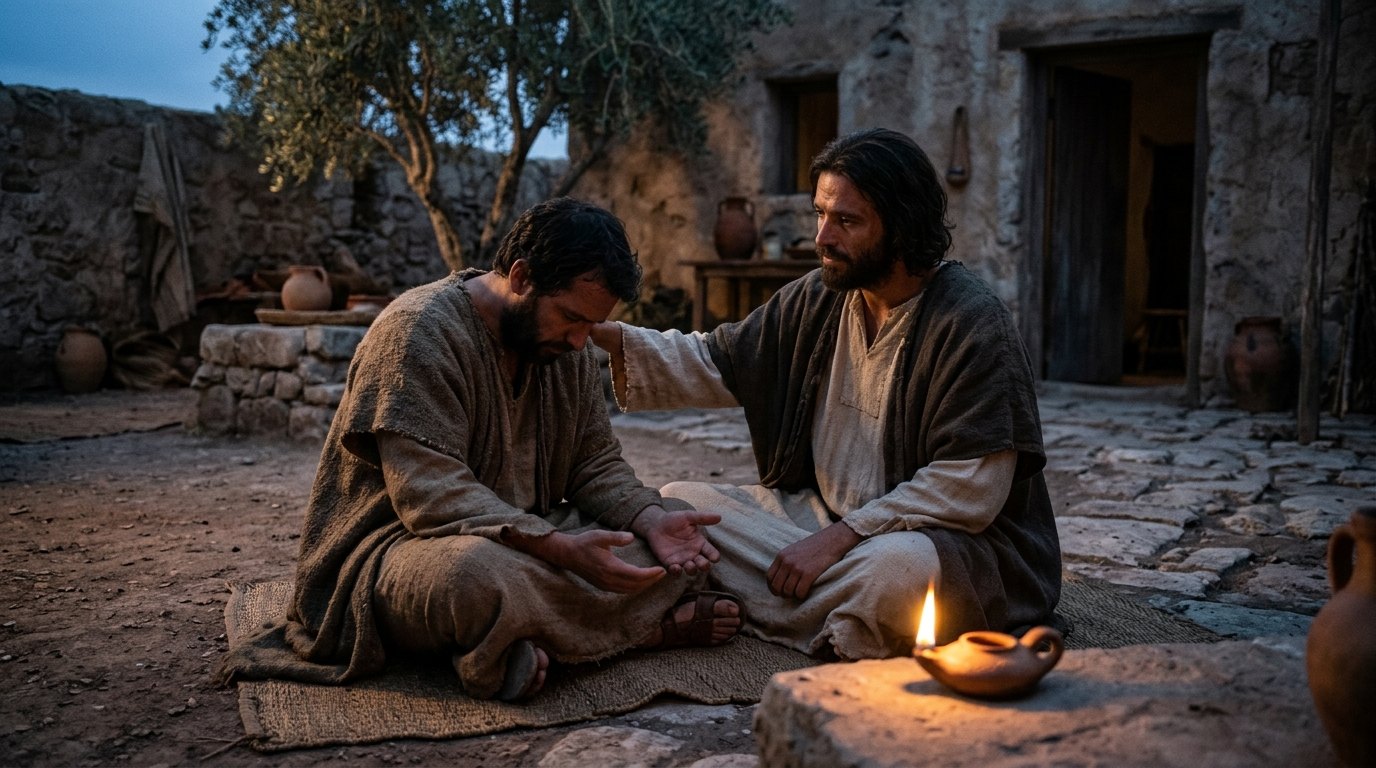
Therefore confess your sins to each other and pray for each other so that you may be healed. The prayer of a righteous person is powerful and effective.
James 5:16 (NIV)
It commands mutual confession and intercessory prayer among believers as God's instrument for healing and victory.
James 5:16 shows that God has designed personal confession and intercessory prayer among fellow believers as vital channels for healing and release from entrenched sins. Secrecy is the fertile soil where sinful habits thrive, but bringing our private failures into the light before trusted believers destroys the shame and isolation that keep us captive. Scripture never calls a Christian to wage war against habitual sin alone. Hebrews 12:1-2 urges us to lay aside every weight and the sin that clings so closely, casting our eyes on Jesus as we run alongside a community of faith with endurance. When someone is overtaken in a transgression, Galatians 6:1-2 commands the spiritually mature to restore that brother or sister with gentleness, fulfilling the law of Christ by bearing one another's heavy loads.
God designed the fellowship of believers to sustain us when our personal strength falters. Ecclesiastes 4:9-10 reminds us that two are better than one, warning of the perilous state of the man who falls alone with no one to lift him up. To guard against falling back into compulsive habits, Hebrews 10:24-25 charges the church to stir one another up to love and good deeds, intentionally gathering together and offering mutual exhortation as the day approaches. In this shared walk, Proverbs 27:17 explains that iron sharpens iron, meaning that candid, truth-filled relationships refine our character and fortify our resolve against temptation.
| Passage | What it says |
|---|---|
| James 5:16 | Confess your sins to one another and pray for one another, for righteous prayer is effective. |
| Hebrews 12:1-2 | Lay aside every weight and entangling sin, running the race with perseverance while fixing eyes on Jesus. |
| Galatians 6:1-2 | Spiritual believers are called to restore those caught in transgression and bear one another's burdens. |
| Ecclesiastes 4:9-10 | Two are better than one, providing mutual support so that a fallen brother is lifted up. |
| Hebrews 10:24-25 | Believers must encourage one another and stir up love and good deeds continuously. |
| Proverbs 27:17 | Iron sharpens iron, showing the strengthening benefit of godly mutual fellowship. |
Deliverance in Christ
Christ Breaks the Power of Enslaving Sin
For sin shall no longer be your master, because you are not under the law, but under grace.
Romans 6:14 (NIV)
It promises absolute freedom from sin's tyrannical reign through union with Jesus Christ.
Romans 6:14 declares with absolute certainty that sin shall not have dominion over you, because you are not under law but under grace. Habitual sin and destructive addictions feel entirely insurmountable when viewed through human will alone. Jesus warned in John 8:34 that everyone who makes a practice of sinning is a slave to sin, caught in a bondage no creaturely effort can overturn. Yet the very next words in John 8:36 establish the triumphant reality of the gospel: if the Son sets you free, you will be free indeed. This freedom is not an abstract theory; it is the concrete result of our historic union with Jesus Christ in His death and resurrection.
According to Romans 6:6, our old self was crucified with Christ so that the body ruled by sin might be brought to nothing, that we would no longer be enslaved. Because of this decisive spiritual reality, Romans 6:12-14 instructs us not to let sin reign in our mortal bodies to obey its lusts, but to present our members to God as instruments of righteousness. Breaking the grip of an addiction is the daily outworking of this resurrection life. As Romans 8:12-13 makes clear, we are debtors not to the flesh to live according to it, but by the Spirit we must put to death the deeds of the body to live. When we walk by the Spirit, Galatians 5:16 guarantees that we will not gratify the desires of the flesh.
| Passage | What it says |
|---|---|
| John 8:34 | Jesus warns that whoever commits habitual sin is a slave to sin. |
| John 8:36 | If the Son sets you free, you will be truly free. |
| Romans 6:6 | The old self was crucified with Christ so we are no longer enslaved to sin. |
| Romans 6:12-14 | Sin shall not have dominion over you because you are under grace. |
| Romans 8:12-13 | By the Spirit believers put to death the deeds of the body and live. |
| Galatians 5:16 | Walking by the Spirit prevents fulfilling the desires of the flesh. |
Spiritual Warfare
Arm Yourself to Resist the Enemy's Attacks

Submit yourselves, then, to God. Resist the devil, and he will flee from you.
James 4:7 (NIV)
It links decisive submission to God with the certain flight of the devil.
James 4:7 lays down the indispensable order of spiritual victory: submit yourselves therefore to God, resist the devil, and he will flee from you. Breaking destructive patterns is not merely an internal psychological struggle; it is an active theater of spiritual warfare. Satan constantly seeks to exploit our weaknesses and anchor us in deceitful compromises. In Ephesians 6:10-11, believers are commanded to be strong in the Lord and in the strength of His might, putting on the whole armor of God so they may stand against the schemes of the adversary.
Every day presents incoming assaults that must be parried with the resources God provides. Ephesians 6:16 directs us to take up the shield of faith, with which we can extinguish every flaming dart of the wicked one, whether those darts come as accusatory lies or enticing invitations to indulge old sins. To keep that armor secured, Ephesians 6:18 calls for praying at all times in the Spirit with all prayer and supplication, keeping alert with all perseverance. Peter echoes this urgency in 1 Peter 5:8-9, warning us to be sober-minded and watchful because the devil prowls around like a roaring lion seeking someone to devour. We resist him by standing firm in the truth of God's Word, anchored in the victory already secured by Christ.
| Passage | What it says |
|---|---|
| Ephesians 6:10-11 | Believers must stand strong in the Lord and put on God's whole armor. |
| Ephesians 6:16 | The shield of faith extinguishes all the flaming darts of the evil one. |
| Ephesians 6:18 | Pray at all times in the Spirit with watchful perseverance for all saints. |
| James 4:7 | Submit to God and resist the devil, and he will flee from you. |
| 1 Peter 5:8-9 | Be sober and watchful against the devil, resisting him firm in the faith. |
Where in the Bible
| Book | Passages |
|---|---|
| Genesis | 1 · Genesis 39:12 |
| Job | 1 · Job 31:1 |
| Psalms | 4 · Psalms 51:10, Psalms 32:5, Psalms 119:9, Psalms 119:11 |
| Proverbs | 3 · Proverbs 28:13, Proverbs 4:14-15, Proverbs 27:17 |
| Ecclesiastes | 1 · Ecclesiastes 4:9-10 |
| Matthew | 1 · Matthew 5:29-30 |
| John | 2 · John 8:34, John 8:36 |
| Romans | 5 · Romans 13:14, Romans 12:1-2, Romans 6:6, Romans 6:12-14, Romans 8:12-13 |
| 1 Corinthians | 6 · 1 Corinthians 15:33, 1 Corinthians 6:12, 1 Corinthians 6:18, 1 Corinthians 10:14, 1 Corinthians 10:13, 1 Corinthians 9:27 |
| Galatians | 2 · Galatians 6:1-2, Galatians 5:16 |
| Ephesians | 4 · Ephesians 4:22-24, Ephesians 6:10-11, Ephesians 6:16, Ephesians 6:18 |
| Philippians | 2 · Philippians 2:13, Philippians 4:8 |
| Colossians | 1 · Colossians 3:5 |
| 1 Thessalonians | 1 · 1 Thessalonians 5:22 |
| 2 Timothy | 1 · 2 Timothy 2:22 |
| Titus | 1 · Titus 2:11-12 |
| Hebrews | 2 · Hebrews 12:1-2, Hebrews 10:24-25 |
| James | 2 · James 5:16, James 4:7 |
| 1 Peter | 2 · 1 Peter 2:11, 1 Peter 5:8-9 |
| 1 John | 1 · 1 John 1:9 |
The story in order
- The Fall (c. 4000 BC) · Genesis 3:1-19 · Introduces sin and its enslavement.
- Israel's bondage in Egypt (c. 1876 BC) · Exodus 1:11-14 · Illustrates national enslavement to sin and oppression.
- David's sin and repentance (c. 1000 BC) · Psalms 51:1-19 · Shows the need for confession and God's cleansing.
- Jesus declares freedom (AD 30) · John 8:34-36 · Christ offers true freedom from sin's dominion.
- The new self in Christ (AD 55) · Romans 6:6-14 · Explains believers are no longer slaves to sin.
- Putting on God's armor (AD 60) · Ephesians 6:10-18 · Equips believers for spiritual warfare against sin.
- Community confession and prayer (AD 45) · James 5:16 · Highlights the role of fellowship in overcoming sin.
Key words
- Repentance (metanoia, μετάνοια)
- Turning away from sin and towards God. · Proverbs 28:13
- Cleansing (katharismos, καθαρισμός)
- Being made pure and free from sin's stain. · 1 John 1:9
- Flee (pheugo, φεύγω)
- To run away from danger or temptation. · 1 Corinthians 6:18
- Renewing of the mind (anakainosis tou noos, ἀνακαίνωσις τοῦ νοός)
- Transforming one's thinking through God's truth. · Romans 12:2
- Bondage (douloō, δουλόω)
- Being enslaved or dominated by sin. · John 8:34
- Freedom (eleutheria, ἐλευθερία)
- Liberation from the power and dominion of sin. · John 8:36
No persistent sin or destructive pattern is beyond the reach of Christ's redeeming power and forgiveness. As you turn from the habit, cut off its provisions, and walk openly with God and His people, the Holy Spirit produces genuine freedom and self-control. Stand fast in the victory won at the cross, knowing that He who began this good work in you will faithfully sustain you.
43 passages, each cited once.
Scripture cited
- 1 Corinthians 6:12
- 1 Corinthians 6:12-20
- 1 Corinthians 10:13-14
- 2 Timothy 2:22
- Philippians 2:12-13
- James 5:16
- Romans 12:1-2
- Hebrews 12:1-2