How does science relate to faith?

Psalms 19:1-4
1 The heavens declare the glory of God; the skies proclaim the work of his hands.
2 Day after day they pour forth speech; night after night they reveal knowledge.
3 They have no speech, they use no words; no sound is heard from them.
4 Yet their voice goes out into all the earth, their words to the ends of the world. In the heavens God has pitched a tent for the sun.
New International Version (NIV)
The answer
Science and Christian faith are not enemies: science investigates God’s creation, while faith receives God’s Word and trusts the Creator whom creation reveals. Psalms 19:1 says, “The heavens declare the glory of God.” Far from forbidding close examination of the world, Psalms 111:2 says, “Yahweh’s works are great, pondered by all those who delight in them.” Because all things were created through Christ and are held together in him (Colossians 1:16-17), honest scientific study can become an occasion for worship.
Creation gives real knowledge of God, but not the whole gospel. Romans 1:19-20 teaches that God’s everlasting power and divinity are perceived through what he has made, leaving humanity without excuse. The orderly purposes assigned to the heavenly lights in Genesis 1:14-15 also show that nature is God’s handiwork, not a collection of gods to be worshipped. Yet studying stars, cells or rocks cannot by itself reveal Christ’s death and resurrection or bring saving faith. God gave the written record of Jesus’ signs so that people may believe that he is the Christ and have life in his name (John 20:30-31).
Faith is not a guess made against evidence. Hebrews 11:1 calls it “assurance of things hoped for, proof of things not seen,” and Hebrews 11:3 says that through faith believers understand that God framed the universe by his word. Christian faith trusts God’s truthful testimony, including testimony grounded in witnessed events. Science observes, measures and tests physical processes; it does not thereby acquire authority to define good and evil, exclude every miracle in advance or explain how sinners are reconciled to God.
Conflict arises when observations are confused with worldview assumptions. Scientific models can be refined as knowledge grows, and observations must be distinguished from interpretations that already assume nothing exists beyond nature. A denial of the Creator is not compelled merely by measuring natural processes. Scripture is God-breathed and inerrant, so it never needs correction by a passing scientific consensus. First Timothy 6:20-21 warns against what is “falsely called knowledge,” which has led some away from the faith. At the same time, Christians must handle evidence honestly and must not force Scripture to say something its words and context do not say.
A faithful approach therefore includes:
- Study rigorously and honestly: careful observation is compatible with delight in God’s works.
- Separate evidence from philosophical inference: naturalism is an assumption, not a scientific measurement.
- Keep Scripture authoritative: where an interpretation denies what God has plainly revealed, the interpretation must yield.
- Begin with reverence: “The fear of Yahweh is the beginning of knowledge” (Proverbs 1:7). Scientific ability is never a reason for pride, but for humility, gratitude and responsible service.
Answered from Scripture · reviewed November 11, 2026
Science and faith are not combatants in an inescapable war, but complementary pursuits that share a single Author. Scripture teaches that the physical universe is God's constant, eloquent theater of revelation, meaning that genuine investigation of nature is simply thinking God's thoughts after Him.
Creation as Revelation
The natural world pours out continual speech about God

For since the creation of the world God’s invisible qualities—his eternal power and divine nature—have been clearly seen, being understood from what has been made, so that people are without excuse.
Romans 1:20 (NIV)
It affirms that God's invisible eternal power and divine nature are clearly seen and understood through physical creation.
The apostolic testimony in Romans 1:20 anchors the Christian understanding of the physical cosmos: God's invisible attributes, namely His eternal power and divine nature, are clearly perceived through the things that have been made. Creation is neither an illusion nor a mute accident; it is an active, persistent proclamation of the Living God. As the preceding verse affirms in Romans 1:19, what can be known about God is entirely plain to human observation because God Himself has set it on display. The material world functions as general revelation, a universal canvas disclosing the glory, reality, and sovereign authority of its Maker to every human heart across every generation.
David sings of this unceasing broadcast in Psalms 19:1, declaring that the skies display the craftsmanship of God's hands. Day after day and night after night, the created order pours forth speech and imparts knowledge without uttering an audible syllable in human speech (Psalms 19:2-3). This non-verbal yet inescapable voice runs out into all the earth, penetrating every shore and horizon (Psalms 19:4). In the same way, Psalms 50:6 proclaims that the very heavens declare His righteousness, verifying that creation operates under divine moral and physical sovereignty. When Paul and Barnabas confronted pagan crowds in Lystra, they appealed not to Hebrew scrolls, but to nature itself: God left an unmistakable witness by bestowing rain from heaven, fruitful seasons, and bountiful food (Acts 14:17). Addressing the philosophers at the Areopagus, Paul further confirmed that God formed the world and ordered human times and boundaries so that mankind might grope for Him and find Him (Acts 17:24-27). True science operates within this reality, investigating an environment that ceaselessly witnesses to the glory of its Creator.
| Passage | What it says |
|---|---|
| Romans 1:19 | States that what may be known about God is plain to humanity because God has actively revealed it to them. |
| Romans 1:20 | Declares that God's eternal power and divine nature are plainly visible through the created world, leaving mankind without excuse. |
| Psalms 19:1 | Proclaims that the heavens continually declare God's glory and the sky displays the craftsmanship of His hands. |
| Psalms 19:2 | Describes day and night pouring forth speech and unceasingly communicating knowledge about the Creator. |
| Psalms 19:3 | Observes that creation's testimony transcends human language barriers, possessing a voice that is universal. |
| Psalms 19:4 | Affirms that nature's voice extends across the whole earth, encompassing all humanity to the ends of the world. |
| Psalms 50:6 | Announces that the heavens testify to God's righteousness because the Lord Himself is the sovereign judge. |
| Acts 14:17 | God leaves a witness of Himself in nature by giving rains, fruitful seasons, and food to fill human hearts with gladness. |
| Acts 17:24-27 | God made the world and determined the boundaries of mankind so that humanity might seek and find Him. |
The Creator and Order
The universe reflects the intentional design of God's Word

By the word of the LORD the heavens were made, their starry host by the breath of his mouth.
Psalms 33:6 (NIV)
It identifies the spoken word and breath of the Lord as the singular source of the cosmic order.
Modern empirical science could only take root within a worldview that assumes the cosmos is orderly, dependable, and governed by consistent laws. Psalms 33:6 identifies the true foundation of this order: by the word of the Lord the heavens were made, and by the breath of His mouth all their host. Scripture refutes the ancient pagan notion that nature is chaotic, capricious, or divine in itself. In Genesis 1:1, God initiates history by calling the universe into existence out of nothing, proceeding to assign celestial bodies fixed tasks to govern days, seasons, and years (Genesis 1:14-15). When God spoke, the cosmos stood fast, operating by His sovereign decree (Psalms 33:9).
This structural stability is a direct expression of God's faithful character. In Jeremiah 33:25, the Lord points to His established covenant with day and night and the fixed ordinances governing heaven and earth as an unshakeable proof of His dependability. This covenantal rhythm was formalized following the Flood, where God promised that seedtime and harvest, cold and heat, summer and winter, day and night shall never cease (Genesis 8:22). God created the moon to mark seasons and gave the sun its precise circuit (Psalms 104:19), demanding of Job whether any mortal could alter the governing ordinances of the heavens (Job 38:33). The New Testament reveals that this rational stability is Christ-centered: by Him all things were created, and in Him all physical realities hold together (Colossians 1:16-17). Hebrews 11:3 declares that we understand by faith that the physical universe was formed at God's command from what is unseen. Science does not create this order; it simply explores the cosmic consistency that Jesus Christ upholds.
| Passage | What it says |
|---|---|
| Genesis 1:1 | Establishes that in the beginning God created the heavens and the earth out of nothing. |
| Genesis 1:14 | Shows God establishing heavenly luminaries with orderly purpose to divide seasons, days, and years. |
| Genesis 1:15 | Records God setting the celestial lights in place to illuminate the earth under His governing command. |
| Psalms 33:6 | Testifies that the heavens and their entire host were created by the word and breath of the Lord. |
| Psalms 33:9 | Affirms that God spoke and the cosmos stood firm, establishing an orderly and stable universe. |
| Jeremiah 33:25 | Highlights the fixed covenants of day and night and the established laws governing heaven and earth. |
| Colossians 1:16 | Reveals that all things in heaven and earth, visible and invisible, were created by Christ and for Him. |
| Colossians 1:17 | Declares that Christ is before all things and that in Him all created realities hold together. |
| Hebrews 11:3 | Explains that by faith we understand the universe was formed at God's command from what is unseen. |
| Genesis 8:22 | God establishes the steadfast physical laws of planting, harvest, heat, cold, summer, winter, day, and night. |
| Psalms 104:19 | God marked the seasons by the moon, and the sun knows the exact time of its going down. |
| Job 38:33 | God questions Job about the enduring ordinances of heaven and their rule established over the earth. |
The Call to Investigate
Studying the works of God leads to wonder and worship
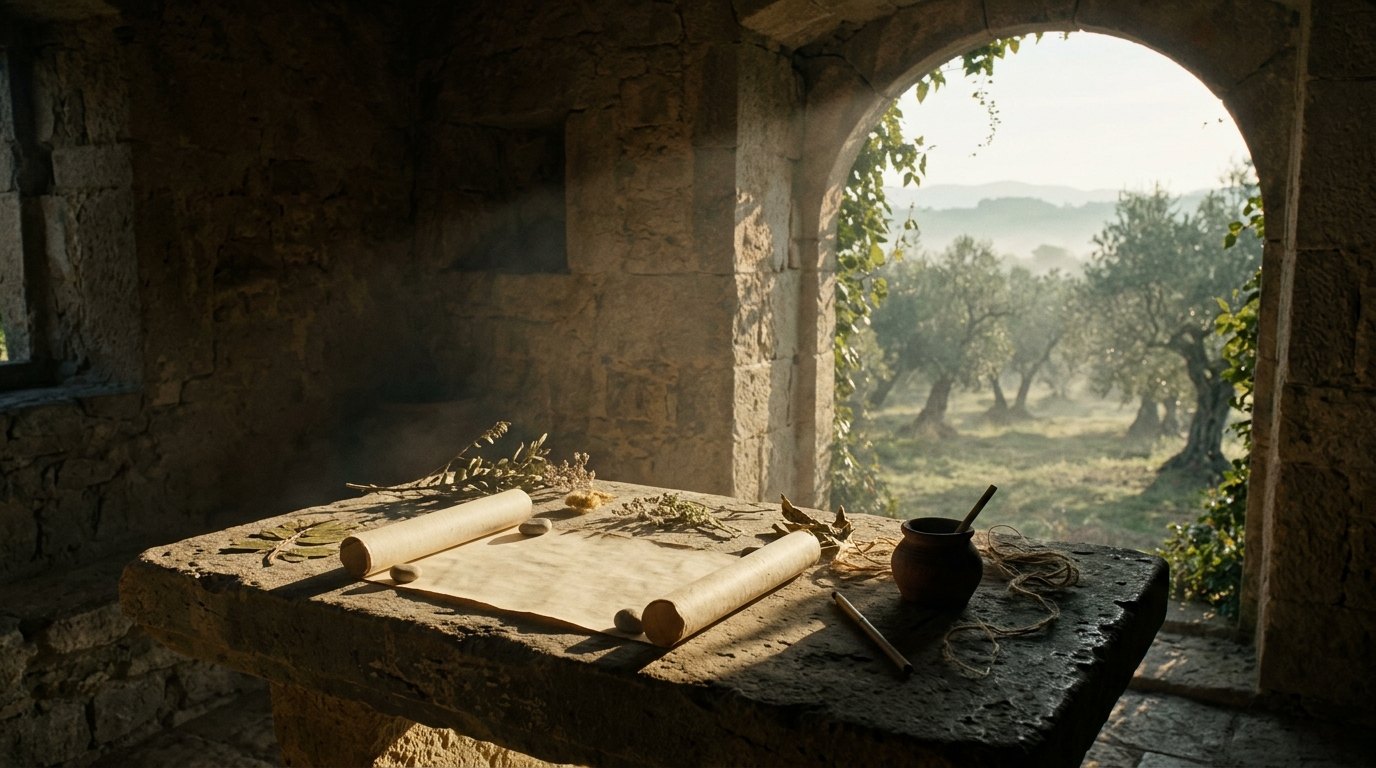
Great are the works of the LORD; they are pondered by all who delight in them.
Psalms 111:2 (NIV)
It explicitly commends the rigorous study and delight in the Lord's physical works.
Far from discouraging rigorous observation of nature, Scripture invites and commands the disciplined investigation of God's world. Psalms 111:2 sets the standard for scientific enquiry: great are the works of the Lord, studied by all who delight in them. Investigation of natural phenomena is not an act of secular rebellion, but a reverent response of holy curiosity. When the psalmist ponders the moon and stars ordained by God's fingers, the vastness of the cosmos reveals man's smallness while magnifying the dignity God bestowed on him (Psalms 8:3-4). The entirety of the cosmic order—sun, moon, stars, and atmospheric waters—is called to praise its Maker (Psalms 148:3-4), and human study deciphers the depth of that praise.
The historical narrative demonstrates this observational impulse in practice. King Solomon was endowed with extraordinary wisdom to study botany and zoology, cataloguing trees from the cedar of Lebanon to the hyssop, alongside beasts, birds, reptiles, and fish (1 Kings 4:33). Job was commanded to examine the beasts, birds, earth, and fish of the sea, because every creature testifies to the hand of the Lord (Job 12:7-8). Even when God's questioning regarding the earth's foundations exposes human limitation (Job 38:4), the inquiry underscores the wonder of natural law. This investigative call stems directly from the Creation Mandate: God commanded humanity to exercise dominion and steward the earth (Genesis 1:28), beginning with Adam's taxonomic classification of every beast and bird (Genesis 2:19). As Proverbs 25:2 summarizes, it is the glory of God to conceal a matter, but the honor of kings to search it out.
| Passage | What it says |
|---|---|
| Psalms 8:3 | Depicts thoughtful contemplation of the moon and stars which God ordained with His fingers. |
| Psalms 8:4 | Contrasts the vastness of the celestial realm with the remarkable dignity God bestows upon mortal humanity. |
| Psalms 111:2 | Praises the greatness of God's works and notes they are studied by all who delight in them. |
| Psalms 148:3 | Commands the sun, moon, and shining stars to offer praise to their Creator. |
| Psalms 148:4 | Summons the highest heavens and waters above the skies to join in praise of the Lord. |
| 1 Kings 4:33 | Demonstrates God-given wisdom applied to the observational study of trees, beasts, birds, reptiles, and fish. |
| Job 12:7 | Instructs the reader to observe animals and birds to learn of God's governing wisdom. |
| Job 12:8 | Urges inquiry into the earth and the fish of the sea to observe divine craftsmanship. |
| Job 38:4 | Records God questioning Job regarding the measurement and founding of the earth, exposing human intellectual limits. |
| Genesis 1:28 | God commands humanity to have dominion over the earth and steward all living creatures, prompting active exploration. |
| Genesis 2:19 | Adam classifies and names every beast of the field and bird of the heavens as God brings them to him. |
| Proverbs 25:2 | It is God's glory to conceal a matter, but the glory of kings to search out a matter. |
Wisdom and Limits
Human knowledge must be anchored in the reverent fear of God

The fear of the LORD is the beginning of knowledge, but fools despise wisdom and instruction.
Proverbs 1:7 (NIV)
This verse sets the foundational boundary condition for all pursuit of knowledge and empirical observation.
While Scripture celebrates the empirical investigation of nature, it draws a sharp boundary around the arrogance of fallen human reasoning. Proverbs 1:7 establishes the non-negotiable prerequisite for all genuine knowledge: the fear of the Lord is the beginning of knowledge, but fools despise wisdom and instruction. Empirical observation can measure the mechanics of matter, but it cannot explain ultimate purpose, origin, or moral truth apart from God. When human intellect detaches itself from the Creator, science ceases to be an act of worship and becomes an engine of idolatry.
The ancient wisdom literature in Job 28:12-28 illustrates this critical distinction. Man possesses the remarkable engineering ability to sink shafts into the earth, unearthing hidden iron, copper, and precious gold; yet with all his mining prowess, man cannot locate true wisdom in the strata of the earth or the depths of the sea. Wisdom is found only when man submits to the Creator, for the fear of the Lord is wisdom, and turning away from evil is understanding (Job 28:28). Paul warns that worldly intellect, boasting in its autonomous reasoning, utterly fails to know God, stumbling over the cross of Christ which shames human pretensions (1 Corinthians 1:20-25). Finally, Paul charges Timothy to guard what has been entrusted to him, turning away from irreverent babble and the contradictions of what is falsely called knowledge (1 Timothy 6:20-21). True science flourishes only when it recognizes its proper scope, gladly kneeling before the sovereign God who spoke the universe into being.
| Passage | What it says |
|---|---|
| Proverbs 1:7 | True knowledge and science begin with reverence for the Creator; fools despise instruction. |
| Job 28:12-28 | Man can mine precious metals from the earth, but the fear of the Lord is true wisdom and understanding. |
| 1 Corinthians 1:20-25 | Worldly philosophy fails to know God by its own power, but God's wisdom is displayed in Christ. |
| 1 Timothy 6:20-21 | Paul warns against godless chatter and the contradictions of what is falsely called knowledge or science. |
Where in the Bible
| Book | Passages |
|---|---|
| Genesis | 6 · Genesis 1:1, Genesis 1:14, Genesis 1:15, Genesis 8:22, Genesis 1:28, Genesis 2:19 |
| 1 Kings | 1 · 1 Kings 4:33 |
| Job | 5 · Job 38:33, Job 12:7, Job 12:8, Job 38:4, Job 28:12-28 |
| Psalms | 13 · Psalms 19:1, Psalms 19:2, Psalms 19:3, Psalms 19:4, Psalms 50:6, Psalms 33:6, Psalms 33:9, Psalms 104:19, Psalms 8:3, Psalms 8:4, Psalms 111:2, Psalms 148:3, Psalms 148:4 |
| Proverbs | 2 · Proverbs 25:2, Proverbs 1:7 |
| Jeremiah | 1 · Jeremiah 33:25 |
| Acts | 2 · Acts 14:17, Acts 17:24-27 |
| Romans | 2 · Romans 1:19, Romans 1:20 |
| 1 Corinthians | 1 · 1 Corinthians 1:20-25 |
| Colossians | 2 · Colossians 1:16, Colossians 1:17 |
| 1 Timothy | 1 · 1 Timothy 6:20-21 |
| Hebrews | 1 · Hebrews 11:3 |
The story in order
- God creates the universe by His Word (c. 4000 BC) · Genesis 1:1 · Establishes God as the Creator and the origin of all things.
- God establishes natural laws and seasons (c. 4000 BC) · Genesis 1:14 · Shows God's intentional design in the orderly functioning of the cosmos.
- Adam names the animals (c. 4000 BC) · Genesis 2:19 · Humanity's first act of classification and study of creation.
- God's covenant of seasons is established (c. 2350 BC) · Genesis 8:22 · God's promise of continued natural order, providing stability.
- Job questions God about creation's order (c. 2000 BC) · Job 38:4 · Highlights the limits of human understanding compared to God's knowledge.
- David praises God's glory in the heavens (c. 1000 BC) · Psalms 19:1 · The natural world declares God's glory and His handiwork.
- Solomon's wisdom in studying nature (c. 950 BC) · 1 Kings 4:33 · Demonstrates God-given wisdom applied to scientific observation.
- Jeremiah speaks of God's established laws (c. 600 BC) · Jeremiah 33:25 · Affirms the fixed covenants and laws governing the universe.
- Paul explains God's revelation in nature (c. AD 55) · Romans 1:19-20 · God's power and nature are evident through creation.
- Paul connects Christ to creation (c. AD 60) · Colossians 1:16 · All things were created by Christ and for Him.
- The author of Hebrews explains creation by faith (c. AD 65) · Hebrews 11:3 · The universe was formed by God's command from the unseen.
Key words
- Revelation
- God making Himself and His truth known to humanity. · Romans 1:19
- Created Order
- The universe's consistent laws and patterns established by God. · Genesis 1:14
- Dominion
- Humanity's God-given responsibility to steward and manage creation. · Genesis 1:28
- Wisdom
- Skill and insight, particularly the knowledge and application of God's truth. · Proverbs 1:7
- Fear of the Lord
- Reverence and awe for God, the starting point of true knowledge. · Proverbs 1:7
True science never threatens genuine Christian faith, because every law, atom, and galaxy belongs to the Lord who spoke them into existence. When we investigate nature with humility, our growing knowledge does not displace God; it compels us to fall to our knees in worship before the Creator.
37 passages, each cited once.
Scripture cited
- Romans 1:19-20
- Genesis 1:14-15
- Hebrews 11:1-3
- Colossians 1:16-17
- Psalms 111:2-4
- 1 Timothy 6:20-21
- John 20:30-31
- Proverbs 1:7