Is God in control of everything?

Isaiah 46:9-11
9 Remember the former things, those of long ago; I am God, and there is no other; I am God, and there is none like me.
10 I make known the end from the beginning, from ancient times, what is still to come. I say, ‘My purpose will stand, and I will do all that I please.’
11 From the east I summon a bird of prey; from a far-off land, a man to fulfill my purpose. What I have said, that I will bring about; what I have planned, that I will do.
New International Version (NIV)
The answer
Yes. God is in control of everything. His kingdom rules over all, his purposes cannot be stopped, and nothing—chance, human power, suffering, or evil—can place itself beyond his sovereignty. Yet he is not the author of sin, and human beings remain responsible for their actions.
God's rule has no limits
Psalm 103:19 declares, “Yahweh has established his throne in the heavens. His kingdom rules over all.” In Isaiah 46:9-11, God says there is none like him, that he declares the end from the beginning, and that what he has planned he will do. His control is therefore not merely knowledge of the future; he actively accomplishes his counsel.
Daniel 4:35 says that God does according to his will in heaven and on earth, and no one can stop his hand. Ephesians 1:11 likewise describes him as the one “who does all things after the counsel of his will.” This rule reaches even what appears random or insignificant: Proverbs 16:33 says every decision of a cast lot is from Yahweh, while Matthew 10:29-30 says no sparrow falls apart from the Father's will and even the hairs of his people's heads are numbered.
God rules over evil without committing evil
God's sovereignty never makes him guilty of sin. James 1:13-14 states that God tempts no one; temptation draws people away through their own lust.
The crucifixion shows how divine sovereignty and human responsibility operate together. Acts 2:23-24 says Jesus was delivered up according to God's “determined counsel and foreknowledge,” yet lawless men crucified and killed him. The men were responsible for their wicked act; God was accomplishing salvation through it. God then raised Jesus from the dead, demonstrating that evil could not defeat his purpose.
What this means in suffering
God's control does not make pain imaginary or call evil good. Romans 8:28 gives a specific promise: “all things work together for good for those who love God, for those who are called according to his purpose.” This does not promise immediate relief or an explanation for every event. It promises that, for God's people, suffering cannot ultimately frustrate his good purpose.
His sovereignty is also personal care, not distant control. After speaking of sparrows and numbered hairs, Jesus says in Matthew 10:31, “Therefore don't be afraid. You are of more value than many sparrows.”
Answered from Scripture · reviewed November 11, 2026
Scripture leaves no room for chance or competing deities: the Lord God alone is sovereign over all creation, history, and human destiny. From declaring the end from the beginning to directing the hearts of kings and numbering every hair on our heads, His eternal purpose is unwavering and absolute.
The Incomparable God
No God Rivals His Supreme Rule

Remember the former things, those of long ago; I am God, and there is no other; I am God, and there is none like me.
Isaiah 46:9 (NIV)
God grounds His complete sovereignty in His unique divine nature: He alone is God, without rival or equal.
In Isaiah 46:9, God issues an absolute summons to His people: remember the former things of old, for I am God, and there is no other. His supreme authority is not merely an office He holds; it is the natural consequence of who He is. As the Lord challenges the nations in Isaiah 46:5, there is simply no likeness or rival who can be weighed against Him. Moses had declared this same reality to wandering Israel in Deuteronomy 33:26, proclaiming that there is none like the God of Jeshurun, who rides across the heavens in His majesty to deliver His people. To grasp this unmatched majesty, God calls His covenant community to memory in Deuteronomy 32:7, telling them to ask their elders and recall His faithful deeds across generations. Psalm 111:4 explains that the Lord deliberately caused His wondrous works to be remembered, displaying His unmerited grace and steadfast compassion through His sovereign acts in history. When King David praised the Lord before the assembly in 1 Chronicles 29:11-12, he affirmed that all greatness, power, glory, victory, and majesty in heaven and earth belong exclusively to God, who reigns head over all. This supreme rule means the Creator answers to none: Psalm 115:3 affirms that our God is in the heavens, doing whatever pleases Him across all reality. Psalm 135:6 repeats this glorious fact, declaring that whatever the Lord pleases, He does—in heaven, on earth, in the seas, and in all deeps. Nothing exists outside His sovereign domain.
| Passage | What it says |
|---|---|
| Isaiah 46:9 | God demands that His people remember His past acts, declaring that He alone is God and none compares to Him. |
| Isaiah 46:5 | The Lord challenges anyone to find an equal or likeness that can stand beside His unmatched glory. |
| Deuteronomy 33:26 | Moses proclaims there is none like the God of Jeshurun, who rides across the heavens to help His people. |
| Deuteronomy 32:7 | Israel is instructed to remember the days of old and ask their elders to recount God's faithful deeds. |
| Psalms 111:4 | The psalmist declares that God has caused His wonderful works to be remembered in grace and compassion. |
| 1 Chronicles 29:11-12 | David declares that greatness, power, glory, and total dominion over heaven and earth belong exclusively to the LORD. |
| Psalms 115:3 | Declares that God sits in the heavens and does whatever pleases Him across all reality. |
| Psalms 135:6 | Asserts the LORD does whatever pleases Him in the heavens, on the earth, in the seas, and in all deeps. |
The Sovereign Counsel
His Purpose Stands Over All History

I make known the end from the beginning, from ancient times, what is still to come. I say, ‘My purpose will stand, and I will do all that I please.’
Isaiah 46:10 (NIV)
God declares both the future and the execution of His eternal purpose, promising that His counsel will always stand.
In Isaiah 46:10, God reveals the bedrock of biblical hope: He declares the end from the beginning, guaranteeing that His counsel shall stand and all His pleasure will be accomplished. Human leaders react to circumstances, but the Lord determines history beforehand. To prove this sovereign precision, Isaiah 46:11 shows God summoning King Cyrus from the east like a bird of prey, fulfilling centuries in advance exactly what He purposed and spoke. The Lord challenges every false idol in Isaiah 45:21, asking who else announced these world-shaping events from antiquity, concluding that there is no other righteous God and Savior. Because He alone directs the cosmos, Isaiah 45:22 extends a universal invitation to all ends of the earth to look to Him and be saved. In Isaiah 42:9, God reminds His people that former prophecies came to pass precisely as stated, giving absolute certainty to new things He foretells before they spring forth. Nothing can interrupt this divine trajectory: Isaiah 14:24-27 records God swearing by Himself that what He has planned will occur, and when His hand is stretched out, no power can turn it back. This unbending providence reached its apex at the cross, where Acts 4:27-28 explains that Herod, Pontius Pilate, the Gentiles, and the peoples of Israel gathered to do whatever God's hand and plan had predestined to occur. Because the Lord rules every historical event, Romans 8:28 promises believers that God actively works all things together for the good of those who love Him and are called according to His eternal purpose.
| Passage | What it says |
|---|---|
| Isaiah 46:10 | The Lord declares the end from the beginning and promises that His counsel will stand and all His pleasure will be done. |
| Isaiah 46:11 | God summons Cyrus from the east like a bird of prey, confirming that what He has spoken and purposed will come to pass. |
| Isaiah 45:21 | The Lord asks who announced these events from ancient times, asserting that there is no righteous God and Savior besides Him. |
| Isaiah 45:22 | All ends of the earth are summoned to look to the Lord and be saved, for He alone is God. |
| Isaiah 42:9 | God declares that the former prophecies have occurred, and announces new events before they spring forth into existence. |
| Isaiah 14:24-27 | The LORD swears that as He planned, so shall it be, and no hand can turn back His outstretched hand. |
| Acts 4:27-28 | Herod, Pilate, the Gentiles, and Israel converged to carry out what God's hand and plan predestined. |
| Romans 8:28 | Affirms that God works all things together for good to those who love Him and are called. |
The Unstoppable Decree
Human Wills Cannot Thwart Divine Decrees

All the peoples of the earth are regarded as nothing. He does as he pleases with the powers of heaven and the peoples of the earth. No one can hold back his hand or say to him: “What have you done?”
Daniel 4:35 (NIV)
Nebuchadnezzar confesses that no earthly inhabitant can stay God's hand or challenge what He does.
In Daniel 4:35, a humbled Babylonian monarch articulates what all Scripture teaches: God does according to His will among the host of heaven and the inhabitants of the earth, and none can stay His hand or say to Him, 'What have you done?' Human arrogance imagines that creaturely desires can overturn God's decrees, yet Psalm 33:11 assures us that the counsel of the Lord stands forever, the thoughts of His heart to all generations. As Proverbs 19:21 observes, many are the plans in a person's heart, but it is the Lord's purpose that will ultimately prevail. Isaiah 40:13-14 dismantles every pretension of human wisdom, asking who has directed the Spirit of the Lord or instructed Him as His counselor, since God was taught knowledge, understanding, and justice by no one. Paul affirms this triumphant reality in Ephesians 1:11, explaining that believers are chosen and predestined according to the purpose of Him who works all things after the counsel of His own will. When tested by incomprehensible suffering, Job confessed in Job 42:2 that the Lord can do all things and no purpose of His can be thwarted. Proverbs 16:9 notes that while the heart of man plans his way, the Lord establishes his steps. Even the most powerful earthly rulers remain subject to His design: Proverbs 21:1 declares that the king's heart is like streams of water in the hand of the Lord, directed wherever He pleases. No earthly will ever frustrates His eternal decree.
| Passage | What it says |
|---|---|
| Daniel 4:35 | Nebuchadnezzar acknowledges that God does as He pleases among the host of heaven and mankind, with no one able to stay His hand. |
| Psalms 33:11 | The counsel of the Lord stands firm forever, and the thoughts of His heart endure across all generations. |
| Proverbs 19:21 | Many plans reside in a person's heart, but the counsel and purpose of the Lord will ultimately prevail. |
| Isaiah 40:13 | The prophet asks who has directed the Spirit of the Lord or instructed Him as His counselor. |
| Isaiah 40:14 | Scripture emphasizes that no one taught God justice, knowledge, or the path of understanding. |
| Ephesians 1:11 | Paul explains that believers are predestined according to the purpose of Him who works all things after His counsel. |
| Job 42:2 | Job confesses that God can do all things and no divine purpose can be thwarted. |
| Proverbs 16:9 | The human heart plans its way, but the LORD establishes every single step. |
| Proverbs 21:1 | The king's heart is a stream of water in God's hand; He directs it wherever He pleases. |
Providence Over Creation
Every Atom And Season Is Sustained Continually

For in him all things were created: things in heaven and on earth, visible and invisible, whether thrones or powers or rulers or authorities; all things have been created through him and for him. He is before all things, and in him all things hold together.
Colossians 1:16-17 (NIV)
It establishes that total universal governance is executed through the Son who upholds every existing element.
In Colossians 1:16-17, the Apostle Paul reveals the cosmic breadth of Christ's sovereignty: all things were created through Him and for Him, and in Him all things hold together. God did not wind up creation like a clock to run on its own; His Son actively sustains every atom. Hebrews 1:3 echoes this profound truth, declaring that the Son continuously upholds the universe by the word of His power. Without His sustaining decree, creation would instantly collapse into nothingness. This providential care extends from the greatest celestial bodies to the smallest details of earthly ecology: Psalm 104:14 records that the Lord causes grass to grow for livestock and plants for man to cultivate, supplying food from the earth by His direct command. In Job 38:8-11, God describes how He set limits for the ocean at its birth, locking its doors and declaring that its proud waves must stop at His boundary line. Nothing in the natural world operates outside of His direct oversight. Jesus underscored this tender yet absolute rule in Matthew 10:29-30, explaining that not a single sparrow falls to the ground apart from the Father, and even the very hairs of our head are all numbered. From the bounds of the sea to the smallest bird, creation exists moment by moment under the watchful, loving, and sovereign governance of its Maker.
| Passage | What it says |
|---|---|
| Colossians 1:16-17 | All things in heaven and earth were created by Christ, for Christ, and in Him all things hold together. |
| Hebrews 1:3 | The Son upholds and sustains the entire universe by the word of His divine power. |
| Psalms 104:14 | God personally causes the grass to grow for livestock and plants for man to cultivate. |
| Job 38:8-11 | The LORD sets explicit limits for the raging sea, halting its proud waves at His boundary. |
| Matthew 10:29-30 | Not a single sparrow falls apart from the Father, and every hair of our head is numbered. |
Rule Over Circumstance
Calm And Calamity Fall Within His Sovereign Scope
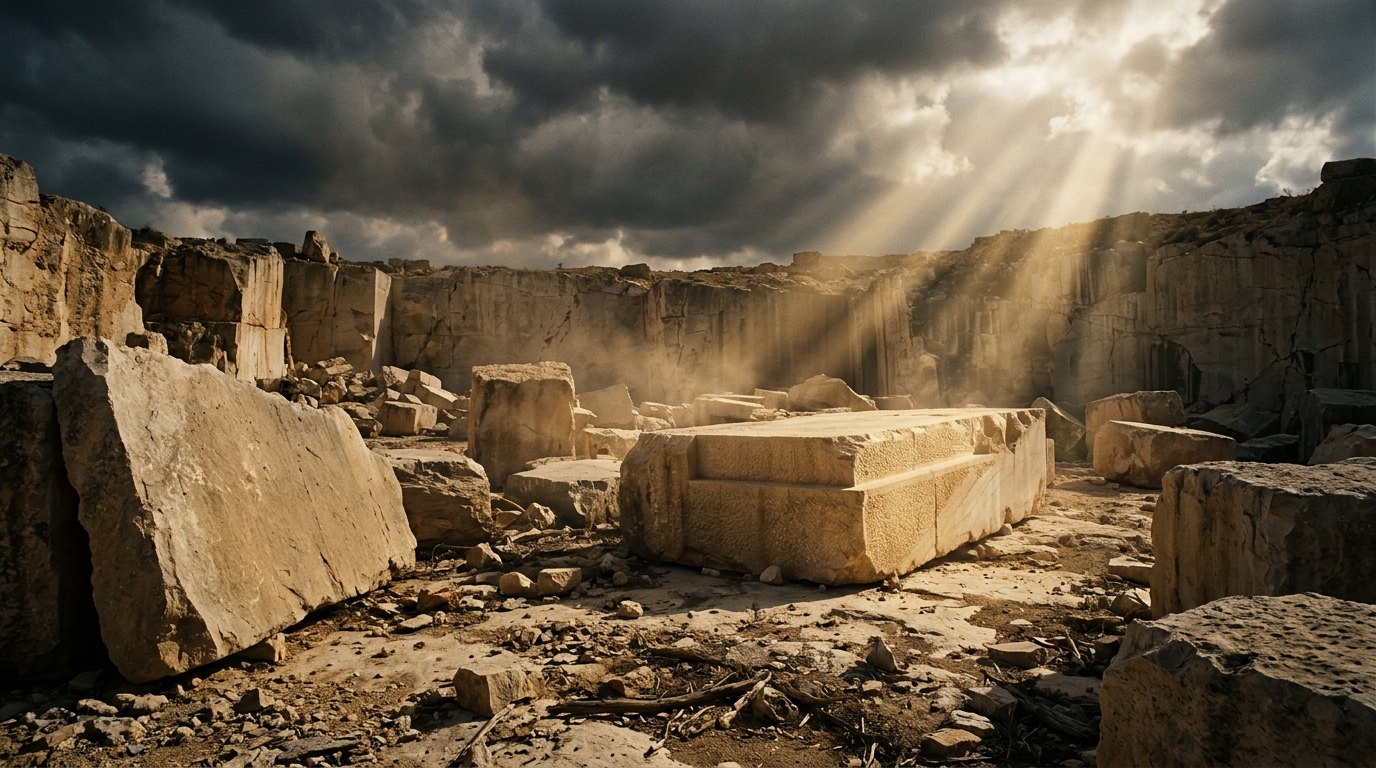
You intended to harm me, but God intended it for good to accomplish what is now being done, the saving of many lives.
Genesis 50:20 (NIV)
It shows God's control operating through and above human wrongdoing to achieve His flawless redemptive intentions.
In Genesis 50:20, Joseph articulates one of the most profound realities of divine providence: human actors may intend genuine evil, yet God ordains and directs the outcome toward His good and saving purpose. Divine sovereignty does not simply react to the wreckage of fallen humanity; it governs above, beneath, and through every intention and consequence without being stained by sin. Even events that appear entirely random to human eyes are wholly subject to His decree. In Proverbs 16:33, Scripture reminds us that while the lot is cast into the lap, every decision comes entirely from the Lord. What men call chance is simply the secret operation of His unseen hand directing every circumstance to its appointed end.
This sovereign governance encompasses both blessing and calamity. Lamentations 3:37-38 presses this truth with piercing clarity, asking who can speak and have it come to pass unless the Sovereign Lord has commanded it, affirming that both good and adversity proceed from the mouth of the Most High. The prophet Amos echoes this same sobering reality in Amos 3:6, declaring that disaster does not fall upon a city unless the Lord has done it, assuring God's people that no trial is an accident or outside His governing rule. All things ultimately find their source, path, and goal in His infinite majesty. As the apostle writes in Romans 11:36, from Him and through Him and to Him are all things, to whom be glory forever. Resting in this supreme oversight grants steadfast endurance, knowing no circumstance escapes His purpose.
| Passage | What it says |
|---|---|
| Genesis 50:20 | Joseph declares that man meant evil against him, but God meant it for saving good. |
| Proverbs 16:33 | The lot is cast into the lap, but its every decision is entirely from the LORD. |
| Lamentations 3:37-38 | Affirms that nothing comes to pass unless the Sovereign Lord has commanded and decreed it. |
| Amos 3:6 | Asks whether disaster comes to a city unless the LORD has done it. |
| Romans 11:36 | Concludes that from Him, through Him, and to Him are all things, with glory forever. |
Where in the Bible
| Book | Passages |
|---|---|
| Genesis | 1 · Genesis 50:20 |
| Deuteronomy | 2 · Deuteronomy 33:26, Deuteronomy 32:7 |
| 1 Chronicles | 1 · 1 Chronicles 29:11-12 |
| Job | 2 · Job 42:2, Job 38:8-11 |
| Psalms | 5 · Psalms 111:4, Psalms 115:3, Psalms 135:6, Psalms 33:11, Psalms 104:14 |
| Proverbs | 4 · Proverbs 19:21, Proverbs 16:9, Proverbs 21:1, Proverbs 16:33 |
| Isaiah | 10 · Isaiah 46:9, Isaiah 46:5, Isaiah 46:10, Isaiah 46:11, Isaiah 45:21, Isaiah 45:22, Isaiah 42:9, Isaiah 14:24-27, Isaiah 40:13, Isaiah 40:14 |
| Lamentations | 1 · Lamentations 3:37-38 |
| Daniel | 1 · Daniel 4:35 |
| Amos | 1 · Amos 3:6 |
| Matthew | 1 · Matthew 10:29-30 |
| Acts | 1 · Acts 4:27-28 |
| Romans | 2 · Romans 8:28, Romans 11:36 |
| Ephesians | 1 · Ephesians 1:11 |
| Colossians | 1 · Colossians 1:16-17 |
| Hebrews | 1 · Hebrews 1:3 |
The story in order
- Creation of all things (c. 4000 BC) · Colossians 1:16-17 · Christ created and sustains all things in heaven and earth.
- God's covenant with Abraham (c. 1800 BC) · Genesis 50:20 · God used Joseph's hardship for good, showing His overarching plan.
- Moses proclaims God's uniqueness (c. 1400 BC) · Deuteronomy 33:26 · None is like God, who rides the heavens to help His people.
- Israel instructed to remember God's deeds (c. 1400 BC) · Deuteronomy 32:7 · Remembering God's faithfulness is a command for generations.
- David declares God's dominion (c. 1000 BC) · 1 Chronicles 29:11-12 · All greatness, power, glory, and dominion belong to the LORD.
- Psalmist praises God's sovereignty (c. 950 BC) · Psalms 115:3 · God sits in the heavens and does whatever pleases Him.
- Isaiah declares God's foreknowledge (c. 700 BC) · Isaiah 46:10 · God declares the end from the beginning; His counsel will stand.
- God summons Cyrus (c. 700 BC) · Isaiah 46:11 · God's spoken purpose will come to pass, even using pagan kings.
- Nebuchadnezzar acknowledges God's rule (c. 600 BC) · Daniel 4:35 · God does as He pleases; no one can stay His hand.
- Proverbs on God's ultimate purpose (c. 900 BC) · Proverbs 19:21 · Many plans are in a person's heart, but the LORD's counsel prevails.
- Apostles affirm God's predestination (AD 30) · Acts 4:27-28 · Human actions fulfilled what God's hand and plan predestined.
- Paul on God working all things (AD 50) · Romans 8:28 · God works all things together for good for those who love Him.
- Paul on God's eternal purpose (AD 60) · Ephesians 1:11 · Believers are predestined according to His purpose and counsel.
Key words
- Sovereign (Hebrew: 'elyon (עֶלְיוֹן))
- Possessing supreme or ultimate power and authority. · Deuteronomy 33:26
- Counsel (Hebrew: 'etsah (עֵצָה))
- God's plan or purpose, which is unchangeable and will surely be accomplished. · Isaiah 46:10
- Predestined (Greek: proorizō (προορίζω))
- Determined or decreed in advance by divine will. · Acts 4:27
- Purpose (Greek: prothesis (πρόθεσις))
- The reason for which something is done or created or for which something exists. · Ephesians 1:11
- Works (Greek: energō (ἐνεργέω))
- God's actions and providential governance over all creation and history. · Romans 8:28
- Decreed (Hebrew: amar (אָמַר) / chazaq (חָזַק))
- Officially decided and stated authoritatively. · Lamentations 3:37
Because God's sovereign control encompasses every cosmic event and every quiet tear, believers find unshakeable peace in His hands. We do not rest in blind fate, but in the wise, loving, and unstoppable purpose of our Father.
35 passages, each cited once.
How the major Christian traditions read this
All Christian traditions confess that God is the sovereign, almighty Creator whose kingdom rules over all creation and whose ultimate purposes cannot be defeated (Psalm 103:19; Ephesians 1:11).
Catholic
We believe God is the almighty Father who governs all things with wisdom and love through His divine providence. God’s absolute sovereignty does not destroy human freedom; rather, His grace upholds, directs, and enables genuine free choices (Philippians 2:12-13). God causes all good, while evil He merely permits, respecting the freedom of His creatures while powerfully drawing forth greater good from it (Romans 8:28).
Scripture: Psalms 103:19, Romans 8:28, Philippians 2:12-13
Orthodox
We confess God as the Pantokrator, the Almighty Ruler of the cosmos. Divine providence guides all creation toward its final end in Christ, yet God respects genuine human free will. God does not cause evil or sin; He foreknows all things from eternity without predetermining every human choice, inviting mankind into synergistic cooperation (synergeia) with His uncreated grace (2 Peter 1:4; 1 Corinthians 3:9).
Scripture: 1 Corinthians 3:9, 2 Peter 1:4, Isaiah 46:9-10
Lutheran
We teach that God alone is Lord of heaven and earth, working through His active preservation and governance of all creation (Matthew 10:29-30). While God is all-powerful, Scripture insists that He is not the author of sin or evil; evil stems solely from the perverse will of Satan and fallen man (James 1:13-14). We rest in God’s hidden and revealed will, trusting His grace in Christ rather than probing unrevealed mysteries.
Scripture: Matthew 10:29-30, James 1:13-14
Reformed & Presbyterian
We confess that God from all eternity did, by the most wise and holy counsel of His own will, freely and unchangeably ordain whatsoever comes to pass (Ephesians 1:11). Yet He does so in such a way that neither is God the author of sin, nor is violence offered to the will of creatures, nor is the liberty of second causes taken away (Acts 2:23; Proverbs 16:33). Every detail is subject to His absolute sovereign decree.
Scripture: Ephesians 1:11, Acts 2:23, Proverbs 16:33
Anglican & Episcopal
We hold that God is almighty and that His providence guides all creation and human history to its appointed end. While recognizing God's supreme authority and eternal purpose as declared in Article 17, our tradition balances divine sovereignty with human moral responsibility, affirming that God's overarching rule works through both direct intervention and creaturely agency according to His godly counsel (Ephesians 1:11; Romans 8:28).
Scripture: Ephesians 1:11, Romans 8:28
Baptist
We proclaim that God rules supreme over all nature, history, and human decisions, directing all things according to the counsel of His righteous will (Daniel 4:35). While Reformed Baptists emphasize detailed divine predetermination and General Baptists emphasize human free choice in response to grace, all Baptists agree that God's sovereign plan stands secure and every person remains entirely accountable for their sin (Acts 4:27-28).
Scripture: Daniel 4:35, Acts 4:27-28
Methodist & Wesleyan
We believe that God is sovereign over all, yet in His holy love He grants genuine free will to humanity. God’s sovereignty operates not by deterministic decree, but through His universal prevenient grace, which frees fallen sinners to accept or resist His salvation (1 Timothy 2:3-4). God foreknows all free choices from eternity, permits human disobedience, and works through love rather than coercion (Acts 7:51).
Scripture: 1 Timothy 2:3-4, Acts 7:51, Titus 2:11
Pentecostal & Charismatic
We believe God is sovereign and reigning on His throne, actively intervening through the power of the Holy Spirit. While acknowledging God's ultimate dominion over the universe (Psalm 103:19), we emphasize the spiritual battle between God’s kingdom and demonic opposition; human faith, prayer, and obedience genuinely alter circumstances because God has invited His church to exercise spiritual authority in Christ (Mark 11:22-24; James 5:16).
Scripture: Psalms 103:19, Mark 11:22-24, James 5:16
Non-denominational & Evangelical
We affirm the clear witness of Scripture: God is completely in control, declaring the end from the beginning and working all things for the good of those who love Him (Isaiah 46:10; Romans 8:28). Across our churches, believers find unity in trusting God’s unshakeable authority over the universe while maintaining human responsibility before God, trusting His perfect character in times of trial and rejoicing in His sovereign salvation.
Scripture: Isaiah 46:10, Romans 8:28, Proverbs 19:21
Where they differ
Extent of divine determination
- Catholic
- God causes all good and permits evil without violating human free will.
- Orthodox
- God governs the cosmos while preserving genuine, uncoerced human freedom through synergy.
- Lutheran
- God governs creation, but evil originates solely in the creature's fallen will.
- Reformed & Presbyterian
- God has immutably foreordained whatsoever comes to pass through primary and secondary causes.
- Anglican & Episcopal
- God exercises overarching providence while upholding moral agency and human accountability.
- Baptist
- Views divide between exhaustive decree and sovereign foreknowledge of free choices.
- Methodist & Wesleyan
- God limits coercive control to grant creatures real, resistible choices.
- Pentecostal & Charismatic
- God rules over all, while inviting human prayer to effect change.
- Non-denominational & Evangelical
- God is completely sovereign, with varying views on how He decrees choices.
Scripture: Ephesians 1:11, Proverbs 16:9, Acts 2:23
How God handles evil and sin
- Catholic
- God permits sin to respect freedom, drawing higher good from it.
- Orthodox
- God never wills or causes evil, but patiently redeems broken human history.
- Lutheran
- God permits evil and restrains it, though evil opposes His holy will.
- Reformed & Presbyterian
- God sovereignly decrees even sinful acts for His glory without incurring guilt.
- Anglican & Episcopal
- God permits evil and overrules it to accomplish His good purposes.
- Baptist
- God directs and governs all evil actions without being the author of sin.
- Methodist & Wesleyan
- Evil is the direct result of creaturely rebellion against God's loving will.
- Pentecostal & Charismatic
- Evil is real spiritual resistance that Christ and His church actively overcome.
- Non-denominational & Evangelical
- God sovereignly overrules evil for good without ever tempting anyone to sin.
Scripture: Genesis 50:20, James 1:13-14, Acts 4:27-28
Your pastor can tell you where your church stands.
Scripture cited
- Isaiah 46:9-11
- Psalms 103:19
- Daniel 4:34-35
- Ephesians 1:11
- James 1:13-14
- Acts 2:22-24
- Romans 8:28
- Proverbs 16:33
- Matthew 10:29-31