Is it a sin to kill in self-defense?
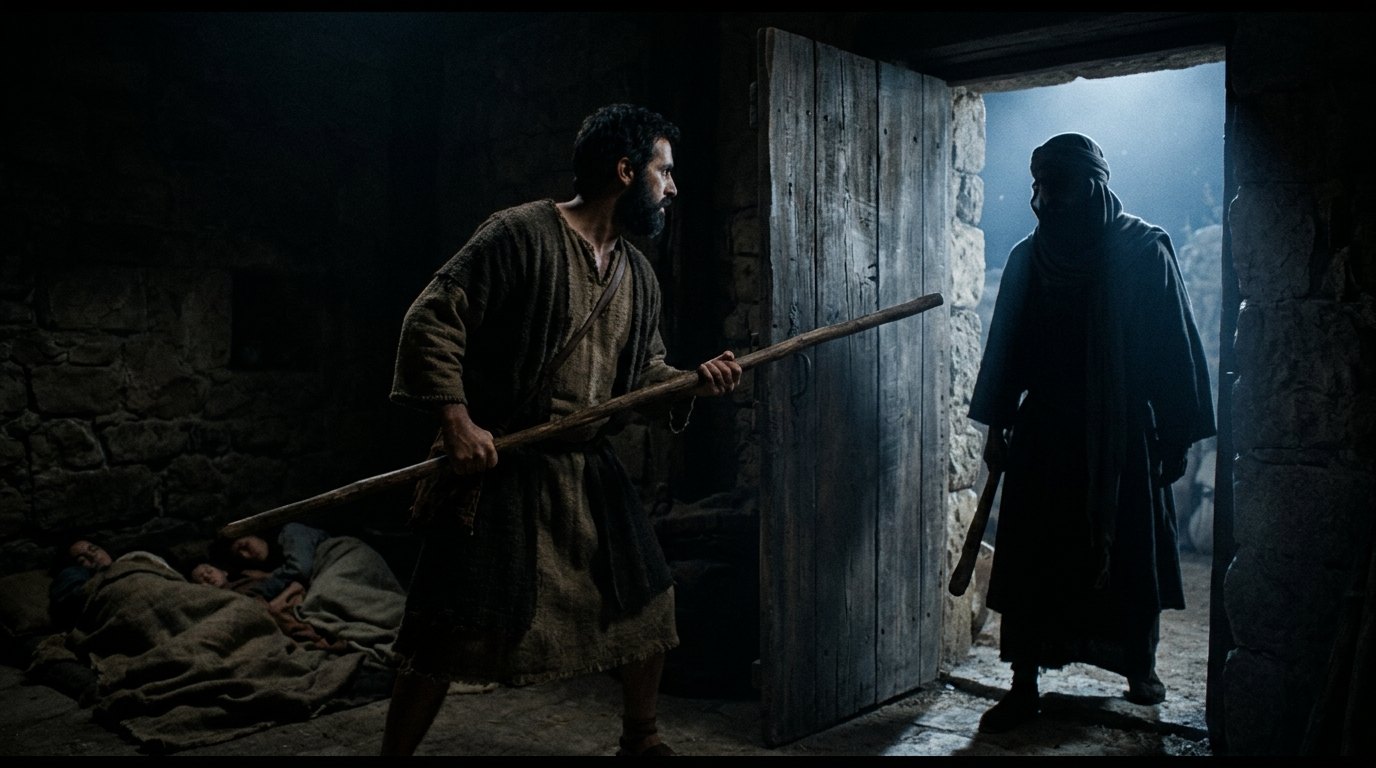
Exodus 22:2-3
2 “If a thief is caught breaking in at night and is struck a fatal blow, the defender is not guilty of bloodshed;
3 but if it happens after sunrise, the defender is guilty of bloodshed. “Anyone who steals must certainly make restitution, but if they have nothing, they must be sold to pay for their theft.
New International Version (NIV)
The answer
No. Killing in self-defense is not inherently sinful when it is necessary to protect life from an attacker; murder, revenge, and unnecessary killing are sinful.
Exodus 22:2 says, “If the thief is found breaking in, and is struck so that he dies, there shall be no guilt of bloodshed for him.” A death caused while resisting someone breaking in is therefore not automatically murder.
But Exodus 22:3 adds, “If the sun has risen on him, he is guilty of bloodshed. He shall make restitution. If he has nothing, then he shall be sold for his theft.” The different verdict shows that circumstances and necessity matter: this is not blanket permission to kill whenever property is threatened, nor an excuse for retaliation.
The biblical distinction is therefore:
- Necessary protection of life: Exodus 22:2 recognizes a case in which the person who causes the intruder’s death bears no bloodguilt.
- Unjustified killing: Exodus 22:3 recognizes another case in which the person is guilty. Calling a killing “self-defense” does not settle whether it was justified.
- Property alone is not the issue: the law proceeds to require restitution for the theft, showing that a thief was not simply to be executed for stealing.
So the verdict is: necessary defense of life can be blameless; killing from revenge, hatred, or when it is unnecessary is sin. The actual circumstances must be examined honestly rather than assuming either automatic guilt or automatic innocence.
Answered from Scripture · reviewed November 11, 2026
Scripture nowhere condemns defending human life against an active, deadly assault, establishing plainly that killing in justifiable self-defense does not incur the guilt of murder. While God fiercely protects the sanctity of life and strictly outlaws premeditated bloodshed, His law carefully distinguishes between criminal homicide and necessary defense against imminent harm.
The Law of the Intruder
God Distinguishes Immediate Defense From Murderous Intent
“If a thief is caught breaking in at night and is struck a fatal blow, the defender is not guilty of bloodshed;
Exodus 22:2 (NIV)
This statute provides the foundational biblical precedent that striking an intruder fatally during a nighttime break-in incurs no bloodguilt.
The Mosaic law makes a clear, authoritative distinction between criminal bloodshed and justifiable defense in Exodus 22:2, where God decrees that a homeowner who strikes a nighttime burglar fatally incurs no bloodguilt. Under the cover of pitch darkness, the resident cannot discern the intruder's weapons, identity, or ultimate intent; the immediate presumption is that a violent violator of the domestic threshold poses an imminent threat to life itself. However, Exodus 22:3 introduces an essential qualification: if the sun has risen upon the scene, killing the thief brings bloodguilt. Daylight transforms the situation, enabling the resident to perceive whether the intruder carries deadly arms, to summon community assistance, and to capture rather than destroy the trespasser. Scripture treats lethal force as an absolute last resort, permissible only when life hangs in immediate, unnavigable peril.
This night-and-day balance reflects God's broader portrayal of predatory violence. In Job 24:14, the patriarch describes the hardened murderer who rises at dusk to prey upon the poor and operates in the darkness like a common thief, showing that nocturnal intrusions carry an implicit menace of fatal violence. Centuries later, the Lord Jesus Christ Himself draws on this universal reality in Matthew 24:43, observing that if a householder had known during which watch of the night the thief would arrive, he would have remained vigilant and refused to allow his house to be broken into. The biblical witness thus firmly establishes that safeguarding one's household against dangerous, clandestine violations is neither unlawful nor sinful, provided the force exercised directly corresponds to the gravity of an active threat.
| Passage | What it says |
|---|---|
| Exodus 22:2 | A homeowner who strikes a thief breaking in at night incurs no bloodguilt for the burglar's death. |
| Exodus 22:3 | Striking a thief after sunrise incurs bloodguilt, because daylight reveals intent and allows community restraint without lethal force. |
| Job 24:14 | Job describes the ruthless murderer who operates in the dark of night just like a stealthy thief. |
| Matthew 24:43 | Jesus notes that a homeowner would stay awake to prevent an intruder from breaking into his house. |
Bloodguilt and Intent
The Law Separates Deliberate Murder From Unintentional Slaying
But if anyone schemes and kills someone deliberately, that person is to be taken from my altar and put to death.
Exodus 21:14 (NIV)
The altar provides no shelter for the schemer, proving that malice and premeditation define the crime of murder.
God's moral law sharply separates cold-blooded murder from non-culpable homicide, declaring in Exodus 21:14 that a scheming perpetrator who slays his neighbor through treachery must be dragged even from the sanctuary of God's altar to face capital justice. The baseline command of Exodus 21:12 establishes that striking a person down fatally warrants death, but Exodus 21:13 immediately clarifies that if an individual did not lie in wait, but God permitted the encounter, the Lord provides a place of asylum. Murder requires premeditation, hatred, or unprovoked aggression; where these evil motives are absent, the taking of life is treated by divine justice on completely different moral terms.
To codify this principle across the commonwealth, God instituted the cities of refuge. In Numbers 35:11 and Numbers 35:15, the law provides legal sanctuary for anyone who slays another unintentionally, extending equitable protection to native Israelites and resident aliens alike. Further, Numbers 35:22 and Numbers 35:23 absolve the one who strikes another suddenly without prior enmity, without laying in wait, or without seeking their harm. Moses illustrates this practical distinction in Deuteronomy 19:4 and Deuteronomy 19:5 by describing two men cutting timber when an axe head slips from the handle and fatally strikes a neighbor without malice or prior enmity. While Numbers 35:27 warns that stepping outside the refuge bounds leaves the manslayer legally exposed to the avenger of blood, the statutory framework proves decisively that biblical guilt resides in the malice of the heart, never in an unintentional or purely protective casualty.
| Passage | What it says |
|---|---|
| Exodus 21:12 | The baseline moral command requires death for anyone who willfully strikes another person fatally. |
| Exodus 21:13 | God establishes sanctuary for an individual who kills without premeditation when God allows the encounter. |
| Exodus 21:14 | A scheming murderer who acts presumptuously must be pulled even from God's altar to be executed. |
| Numbers 35:11 | Cities of refuge provide asylum for anyone who kills another person unintentionally rather than with hatred. |
| Numbers 35:15 | Refuge cities shelter Israelites and resident strangers alike who take life accidentally without hostile intent. |
| Numbers 35:27 | The avenger of blood incurs no bloodguilt if he slays the manslaughterer outside the legal boundaries of refuge. |
| Deuteronomy 19:4 | Protects a person who kills their neighbour unintentionally without previous hatred. |
| Deuteronomy 19:5 | Cites the accidental death from an axe head slipping as non-culpable homicide. |
| Numbers 35:22 | Absolves someone who strikes another suddenly without enmity or hidden motive. |
| Numbers 35:23 | Explicitly distinguishes fatal accidents without malice from murder. |
Arms and Defense
Scripture Recognizes the Legitimacy of Physical Protection
He said to them, “But now if you have a purse, take it, and also a bag; and if you don’t have a sword, sell your cloak and buy one.
Luke 22:36 (NIV)
Jesus instructs His disciples to acquire a sword, affirming the lawful need for physical provision and self-protection on dangerous roads.
Physical preparedness and the armed protection of human life find consistent validation throughout the biblical narrative, culminating in the Upper Room when Jesus declares in Luke 22:36 that whoever possesses no sword must sell his cloak and buy one. While Christ elsewhere rebuked Peter's impulsive, subversive attempt to disrupt the divine redemptive plan at Gethsemane, His directive here recognizes that as His followers stepped into an openly hostile world, practical readiness and defense against violent bandits on lonely roads were entirely legitimate. When the disciples answered with two blades in Luke 22:38, the Lord affirmed that these were sufficient, ruling out both unarmed helplessness and militaristic rebellion.
This balanced posture permeates Old Testament history as well. When Persian enemies plotted the extermination of God's people, Esther 8:11 and Esther 9:2 record how royal authority lawfully permitted the Jews to assemble, bear arms, and defend their lives and families against active aggressors. Generations earlier during the rebuilding of Jerusalem, Nehemiah 4:14 spurred the laborers to remember the great and awesome Lord and fight courageously for their brothers, sons, daughters, wives, and homes, ensuring in Nehemiah 4:18 that every builder worked with a sword girded at his side. This valor echoes the patriarch Abram in Genesis 14:14, who mobilized three hundred and eighteen trained men of his household to rescue his kin Lot from predatory invaders. Such protective interventions fulfill the righteous imperative of Proverbs 24:11, which explicitly commands the believer to rescue those being dragged toward death.
| Passage | What it says |
|---|---|
| Nehemiah 4:14 | Nehemiah charges the people to fight boldly for their families, wives, and homes against hostile threats. |
| Nehemiah 4:18 | Builders on Jerusalem's wall kept their swords strapped to their sides as they labored under constant peril. |
| Luke 22:36 | Jesus directs the disciples to take provisions and obtain a sword for impending travel in a hostile world. |
| Luke 22:38 | When the disciples present two swords, the Lord affirms that these are enough for defensive readiness. |
| Esther 8:11 | Royal edict grants the Jews the right to arm and defend their lives. |
| Esther 9:2 | The Jews gather in their cities to defend themselves against those seeking their harm. |
| Genesis 14:14 | Abram arms his trained household men to rescue his kin from captors. |
| Proverbs 24:11 | Commands the rescue of those being led away unlawfully to death. |
Justice and Vengeance
God Forbids Private Revenge While Authorizing Civil Restraint
For the one in authority is God’s servant for your good. But if you do wrong, be afraid, for rulers do not bear the sword for no reason. They are God’s servants, agents of wrath to bring punishment on the wrongdoer.
Romans 13:4 (NIV)
Civil authorities bear the sword legitimately under God's appointment to punish evil and execute wrath on wrongdoers.
The moral legitimacy of urgent self-defense never sanctions private revenge, for the Apostle Paul declares in Romans 13:4 that the civil ruler is God's minister to you for good, carrying the sword not in vain but as an avenger carrying out divine wrath upon evildoers. Scripture forbids individuals from taking justice into their own hands out of vindictiveness or lingering grudge. In Leviticus 19:18 and Romans 12:19, believers are commanded never to avenge themselves or nurse malice, but to leave ultimate recompense to the wrath of God, who alone judges with sovereign perfection. God delegates the formal execution of retributive justice exclusively to lawful magistrates and judicial tribunals, as echoed by the Apostle Peter in 1 Peter 2:14.
This crucial boundary illuminates Jesus' teaching on non-retaliation. In Matthew 5:38 and Matthew 5:39, Christ addresses the personal abuse of the civil lex talionis, commanding His disciples to turn the other cheek rather than trade insults or indulge private spite. A personal slap to the right cheek was an intentional social insult, not an imminent, deadly assault threatening human life. God established the baseline inviolability of human life in Genesis 9:6, decreeing that whoever sheds man's blood by murder shall face human accountability because humanity is created in God's image. This is precisely why Exodus 20:13 specifically forbids murder (ratsach), rather than legitimate civil execution or necessary defensive intervention. Defending an innocent life against a lethal predator preserves the sacred image of God; private vengeance and murderous hatred wholly desecrate it.
| Passage | What it says |
|---|---|
| Matthew 5:38 | Jesus addresses the misuse of civil judicial penalties when twisted into personal retaliation. |
| Matthew 5:39 | Believers are commanded to endure personal insults without reciprocating private malice or petty vengeance. |
| Romans 12:19 | Paul instructs Christians never to avenge themselves, leaving ultimate vengeance to the wrath of God. |
| Romans 13:4 | The civil ruler acts as God's minister, carrying the sword to execute justice against violent offenders. |
| Genesis 9:6 | Establishes the divine accounting for murder while reserving bloodshed to lawful justice. |
| Exodus 20:13 | The commandment expressly forbids murder rather than lawful killing. |
| Leviticus 19:18 | Forbids taking personal vengeance or bearing a grudge against neighbours. |
| 1 Peter 2:14 | Governors are commissioned by God to punish evildoers and praise the good. |
Where in the Bible
| Book | Passages |
|---|---|
| Genesis | 2 · Genesis 14:14, Genesis 9:6 |
| Exodus | 6 · Exodus 22:2, Exodus 22:3, Exodus 21:12, Exodus 21:13, Exodus 21:14, Exodus 20:13 |
| Leviticus | 1 · Leviticus 19:18 |
| Numbers | 5 · Numbers 35:11, Numbers 35:15, Numbers 35:27, Numbers 35:22, Numbers 35:23 |
| Deuteronomy | 2 · Deuteronomy 19:4, Deuteronomy 19:5 |
| Nehemiah | 2 · Nehemiah 4:14, Nehemiah 4:18 |
| Esther | 2 · Esther 8:11, Esther 9:2 |
| Job | 1 · Job 24:14 |
| Proverbs | 1 · Proverbs 24:11 |
| Matthew | 3 · Matthew 24:43, Matthew 5:38, Matthew 5:39 |
| Luke | 2 · Luke 22:36, Luke 22:38 |
| Romans | 2 · Romans 12:19, Romans 13:4 |
| 1 Peter | 1 · 1 Peter 2:14 |
The story in order
- Abram arms his men (c. 2000 BC) · Genesis 14:14 · Shows early legitimacy of armed defense for kin.
- Mosaic Law on Homicide (c. 1450 BC) · Exodus 21:12-14 · Distinguishes murder from unintentional killing.
- Law of the Intruder (c. 1450 BC) · Exodus 22:2-3 · Differentiates defense against night intruder from daylight assault.
- Cities of Refuge (c. 1450 BC) · Numbers 35:11-15 · Provides asylum for unintentional killing.
- Prohibitions on Vengeance (c. 1450 BC) · Leviticus 19:18 · Forbids personal revenge and grudges.
- Divine mandate for justice (c. 2350 BC) · Genesis 9:6 · God institutes capital punishment for murder.
- Nehemiah's defense of Jerusalem (c. 445 BC) · Nehemiah 4:14 · Charge to fight for family and home.
- Jews armed for defense (c. 470 BC) · Esther 8:11 · Royal decree allows Jews to defend themselves.
- Jesus on swords (AD 30) · Luke 22:36 · Disciples directed to obtain swords for defense.
- Jesus on retaliation (c. AD 30) · Matthew 5:38-39 · Teaches against personal vengeance.
- Paul on civil authority (c. AD 55) · Romans 13:4 · Rulers carry the sword for justice.
- Peter on governors (c. AD 60) · 1 Peter 2:14 · Governors punish evildoers.
Key words
- Bloodguilt (dam, דָּם)
- Moral culpability for causing death, requiring atonement or penalty. · Exodus 22:2
- Murder (רָצַח (ratzach))
- Premeditated, unlawful killing of another human being. · Exodus 20:13
- Manslaughter (שֹׁגֵג (shogeg))
- Unintentional killing without malice or premeditation. · Numbers 35:11
- Self-defense (not a single word, but concept)
- Protecting one's life or others from imminent deadly assault. · Exodus 22:2
- Vengeance (נָקָם (naqam))
- Retaliation or punishment inflicted in return for an injury or wrong. · Romans 12:19
Believers are summoned to value human life deeply, guarding their hearts against malice, vigilantism, and private revenge. Scripture grants freedom to shield the vulnerable and defend oneself against mortal violence, while calling us to leave vengeance in the righteous hands of God and His ordained magistrates.
30 passages, each cited once.
Scripture cited
- Exodus 22:1-4