Is it a sin to miss church?
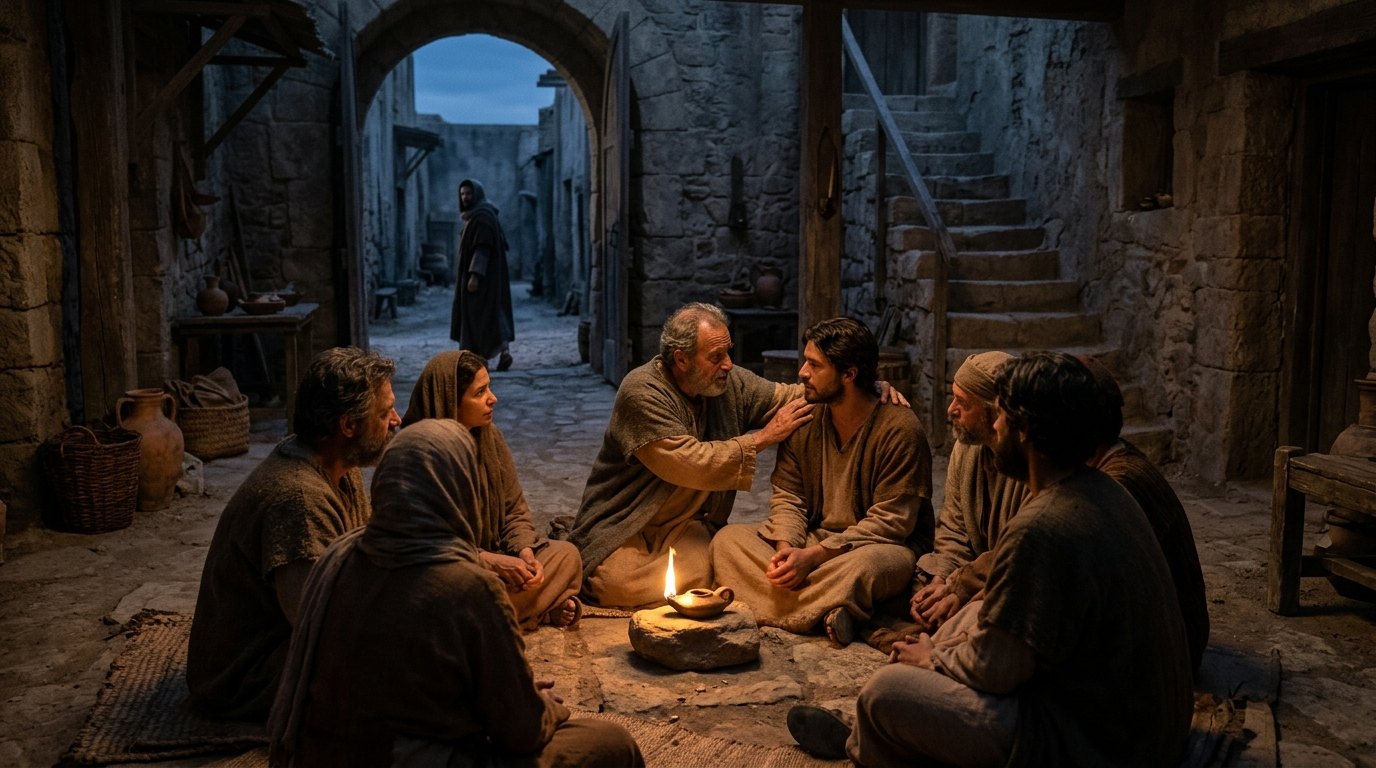
Hebrews 10:24-25
24 And let us consider how we may spur one another on toward love and good deeds,
25 not giving up meeting together, as some are in the habit of doing, but encouraging one another—and all the more as you see the Day approaching.
New International Version (NIV)
The answer
Missing church occasionally is not automatically sinful, but deliberately neglecting or abandoning fellowship with other believers is disobedience to God. Hebrews 10:25 commands, “not forsaking our own assembling together, as the custom of some is.” The warning concerns forsaking the assembly as a settled practice, not a rule that every isolated absence is sinful.
When an absence is not itself sin
Illness, emergencies, necessary work, caregiving, travel, or other genuine constraints can prevent attendance without constituting abandonment of God’s people. Hebrews 10:25 does not pronounce every missed service sinful, nor does it make every additional meeting a congregation schedules compulsory.
When missing church becomes sin
The word translated “forsaking” means leaving behind or abandoning, and the verse explicitly speaks of something becoming a person’s “custom.” Knowingly drifting into habitual neglect, withdrawing from Christian fellowship, or treating Christ’s command as unimportant is sin. The issue is therefore not merely an empty seat on one occasion, but the direction and attitude of the heart over time.
The command also has a positive purpose. Hebrews 10:24 says, “Let’s consider how to provoke one another to love and good works,” and Hebrews 10:25 adds that believers are to be “exhorting one another.” Gathering is not simply about receiving something or completing a religious duty: 1 Thessalonians 5:11 calls believers to “comfort yourselves together, and edify one another,” while Galatians 5:13 says, “by love serve one another.” Regular absence deprives others of that encouragement and service.
Where absence has come from indifference or deliberate neglect, the answer is confession and a return to fellowship, not despair. 1 John 1:9 promises, “If we confess our sins, he is faithful and righteous to forgive us the sins and to cleanse us from all unrighteousness.”
Answered from Scripture · reviewed November 11, 2026
Scripture does not condemn occasional, unavoidable absences from corporate worship due to illness, emergency, or acts of mercy, but it issues a grave warning against the deliberate habit of forsaking the assembly. The gathering of the local church is God's ordained lifeline for mutual encouragement, spiritual protection, and corporate adoration of Christ as the Day of the Lord approaches.
The Habitual Drift
Forsaking the Gathering Is a Severe Spiritual Peril

not giving up meeting together, as some are in the habit of doing, but encouraging one another—and all the more as you see the Day approaching.
Hebrews 10:25 (NIV)
The command specifically forbids abandoning corporate worship as an entrenched habit, contrasting desertion with urgent mutual exhortation.
The author of Hebrews issues an unmistakable warning concerning corporate assembly in Hebrews 10:25, commanding believers not to forsake meeting together, as has become the damaging custom of some. The surrounding context reveals this is not an arbitrary attendance quota, but a matter of spiritual survival. In Hebrews 10:24, we are instructed to consider carefully how to provoke one another to love and good works—an intentional investment that requires proximity, observation, and personal engagement. When someone isolates themselves, they sever their ties with God's ordained network of mutual protection.
This deliberate withdrawal carries deadly spiritual consequences. As Hebrews 3:12 cautions, there is a constant danger of cultivating an evil, unbelieving heart that departs from the living God. Scripture's remedy is immediate and corporate: believers must exhort one another daily while it is still called today (Hebrews 3:13), lest their hearts become hardened through the deceitfulness of sin. Sin thrives in secrecy and seclusion; left to our own devices, our self-deception goes unchecked.
This hardening culminates in the terrifying prospect described in Hebrews 10:26, where willful, persistent rebellion after receiving the knowledge of the truth leaves no further sacrifice for sins. Missing corporate worship by habit is rarely a neutral scheduling choice. It is usually the outward symptom of an inward drift away from the living God.
| Passage | What it says |
|---|---|
| Hebrews 10:24 | Believers are charged to actively contemplate and stir one another up to love and good deeds. |
| Hebrews 10:25 | Scripture forbids the neglect or abandonment of corporate worship, commanding increased mutual exhortation as Christ's Day draws near. |
| Hebrews 3:12 | Believers must beware of an evil, unbelieving heart that departs from the living God. |
| Hebrews 3:13 | Christians must exhort one another daily so that no one becomes hardened through the deceitfulness of sin. |
| Hebrews 10:26 | Warns of the terrifying spiritual danger when deliberate sin follows abandoning the fellowship and truth of God. |
The Gathered Body
We Cannot Function in Isolation from Christ's Body

The eye cannot say to the hand, “I don’t need you!” And the head cannot say to the feet, “I don’t need you!”
1 Corinthians 12:21 (NIV)
Paul shows that no member of the body can claim complete independence or lack of need for fellow members.
The Apostle Paul exposes the sheer folly of self-sufficiency in 1 Corinthians 12:21, where he reminds the church that the eye cannot say to the hand, 'I have no need of you,' nor the head tell the feet, 'I have no need of you.' Just as a physical body cannot function if its limbs detach and scatter, 1 Corinthians 12:12 demonstrates that Christ's body is fundamentally corporate, unified across its diverse members. Christian maturity is never an individualist pursuit. As Ephesians 4:15 and Ephesians 4:16 teach, speaking the truth in love causes the whole body to grow and build itself up, joined and held together by every supporting ligament as each part does its specific work.
From Pentecost onward, the apostolic church lived out this biological interdependence. Believers continually devoted themselves to the apostles' teaching, fellowship, the breaking of bread, and prayers (Acts 2:42). They marked the first day of the week by gathering specifically to hear the Word preached and to share the Lord's table (Acts 20:7).
Paul consistently speaks of believers literally coming together as a church (1 Corinthians 11:18) in one place to partake of the Lord's Supper (1 Corinthians 11:20). When the congregation meets, each person contributes their spiritual gifts for the edification of all (1 Corinthians 14:26). To withdraw from the assembly is to withhold what the Spirit gave you for the good of the body.
| Passage | What it says |
|---|---|
| Acts 2:42 | The apostolic church continually devoted itself to the apostles' teaching, fellowship, breaking of bread, and prayers. |
| Acts 20:7 | The disciples gathered together on the first day of the week specifically to break bread and hear God's word. |
| 1 Corinthians 12:12 | Just as the physical body has many members forming one unit, so also is the body of Christ. |
| 1 Corinthians 12:21 | The eye cannot tell the hand it has no need of it, nor the head tell the feet the same. |
| Ephesians 4:15 | Speaking the truth in love produces corporate growth toward Christ who is the church's head. |
| Ephesians 4:16 | The whole body grows and builds itself up in love through every joint and each part doing its share. |
| 1 Corinthians 11:18 | Identifies the regular practice of believers coming together as a local church assembly. |
| 1 Corinthians 11:20 | Points to coming together in one place specifically to observe the Lord's Supper. |
| 1 Corinthians 14:26 | Describes believers assembling together so each member may contribute to building up the body. |
Mutual Ministry
Gathering Is Necessary to Fulfil the Law of Love
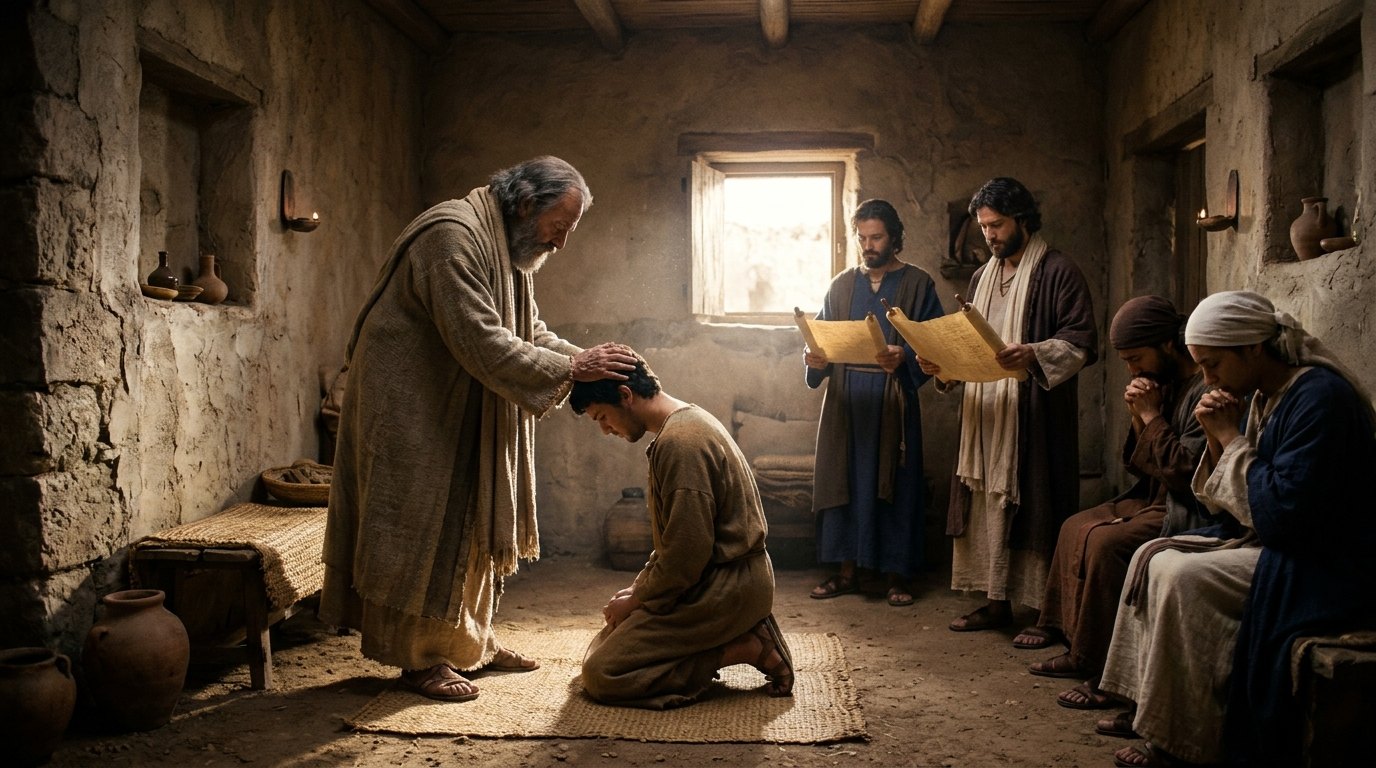
Let the message of Christ dwell among you richly as you teach and admonish one another with all wisdom through psalms, hymns, and songs from the Spirit, singing to God with gratitude in your hearts.
Colossians 3:16 (NIV)
Word ministry and corporate singing require tangible, face-to-face community to admonish and build up our brothers and sisters.
Corporate worship is not a spectator event; it is an arena of reciprocal ministry where the Word of Christ dwells richly among us. In Colossians 3:16, Scripture commands us to teach and admonish one another in all wisdom, singing psalms, hymns, and spiritual songs with thankfulness in our hearts to God. This horizontal ministry of singing and mutual instruction cannot occur in isolation. We gather to bolster the faint-hearted and to build each other up corporately, fulfilling the charge of 1 Thessalonians 5:11.
Redeemed life is inherently communal. We have been called to liberty, not to indulge our selfish preferences, but through love to serve one another (Galatians 5:13). The author of Hebrews succinctly commands that brotherly love must continue (Hebrews 13:1), echoing John's urgent plea that love must never remain mere sentiment or speech, but must prove itself through tangible action and truth (1 John 3:18).
Believers must intentionally devote themselves to good works that benefit those around them (Titus 3:8). When life crushes our brothers and sisters, we are commanded to bear one another's burdens, and so fulfill the law of Christ (Galatians 6:2). Even in times of illness, the suffering saint calls for the elders of the church to pray over them (James 5:14). Every one of these New Testament commands presupposes an active, present community.
| Passage | What it says |
|---|---|
| Colossians 3:16 | Christians are commanded to teach and admonish one another through psalms, hymns, and spiritual songs with thankfulness. |
| 1 Thessalonians 5:11 | Believers are instructed to encourage one another and build each other up collectively. |
| Galatians 5:13 | Christian liberty must never become an occasion for the flesh, but a means to serve one another through love. |
| Hebrews 13:1 | Brotherly love must continue actively among the gathered household of faith. |
| 1 John 3:18 | Love must not be limited to mere words or talk, but shown in tangible action and truth. |
| Titus 3:8 | Those who have believed in God must be careful to devote themselves to good works profitable to all. |
| Galatians 6:2 | Commands believers to bear one another's burdens, fulfilling the law of Christ through shared community life. |
| James 5:14 | Instructs the sick to call for the elders of the church for prayer and anointing. |
Mercy and Order
Scripture Distinguishes Necessity from Willful Neglect
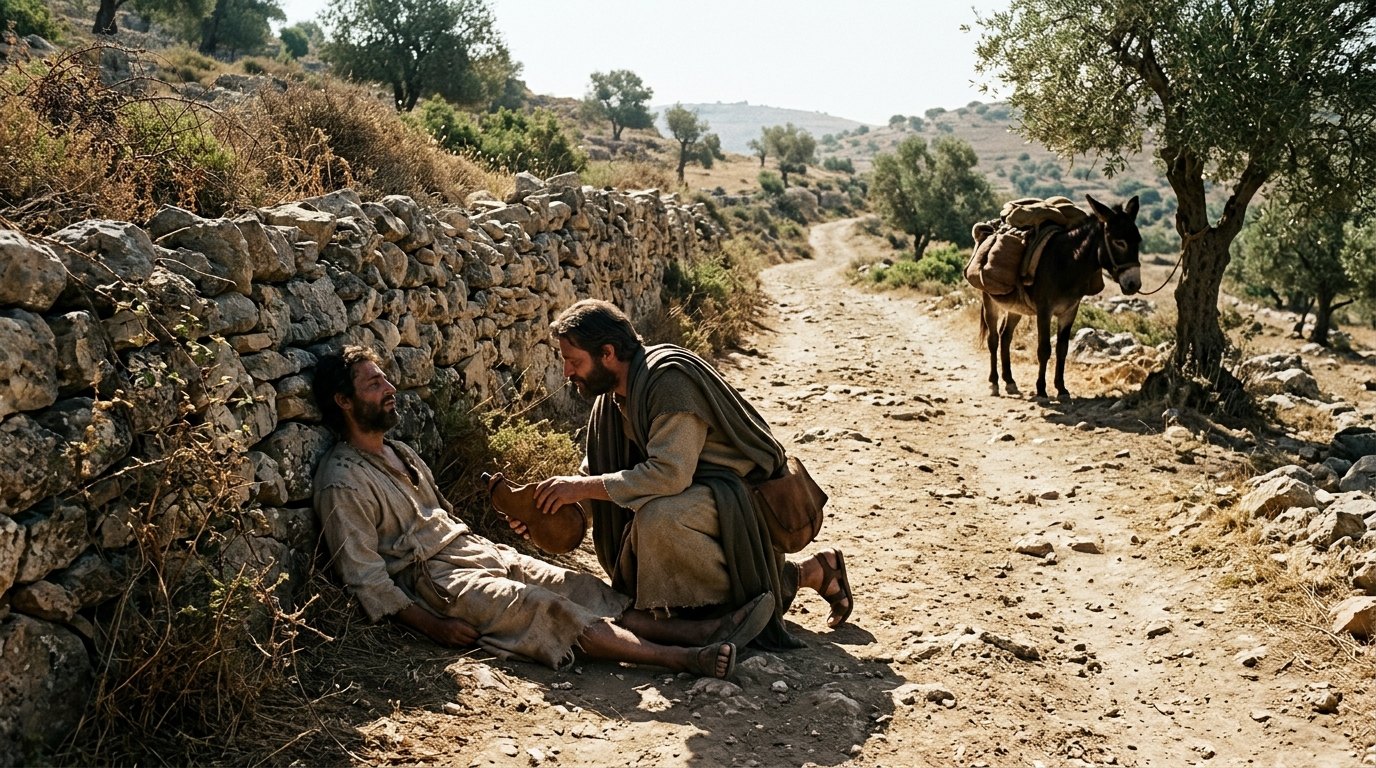
How much more valuable is a person than a sheep! Therefore it is lawful to do good on the Sabbath.”
Matthew 12:12 (NIV)
Jesus affirms that doing good and attending to life-preserving mercy fulfills rather than violates God's holy Sabbath rest.
When discerning whether missing church is sinful, Jesus provides clarity by declaring that it is lawful to do good on the Sabbath in Matthew 12:12. Rebuking the cold legalism of the Pharisees, the Lord reminds them that God desires mercy, not empty sacrifice (Matthew 12:7). Jesus asks whether any of them, having an ox or a child fall into a well on the Sabbath, would not immediately pull them out (Luke 14:5). Scripture never penalizes acts of mercy, essential duties of rescue, sudden illness, or caring for the vulnerable. These are not instances of deserting the church; they are direct expressions of Christlike love.
The sin lies not in unavoidable physical absence, but in the attitude of the heart. James 4:17 warns that whoever knows the right thing to do and fails to do it, for him it is sin. If someone treats the gathered church with flippant disregard, preferring leisure or sleep over meeting with Christ's people, they despise God's command. Furthermore, shepherds are charged to keep watch over our souls as men who will give an account (Hebrews 13:17), an impossible task when sheep willfully wander away.
In matters of travel or conscience, each believer must be fully convinced in their own mind before the Lord (Romans 14:5). Yet the standard remains: whatever does not proceed from faith is sin (Romans 14:23). If our absence stems from apathy, it requires immediate repentance.
| Passage | What it says |
|---|---|
| Matthew 12:7 | God desires mercy and not empty sacrifice, vindicating acts of necessity over rigid ritualism. |
| Matthew 12:12 | Jesus affirms that it is entirely lawful and righteous to do good on the day of worship. |
| Hebrews 13:17 | Pastors watch over the souls of the flock as men who must give an account to God. |
| James 4:17 | Whoever knows the right thing to do and fails to do it commits sin. |
| Luke 14:5 | Affirms that urgent necessities of preservation and rescue rightly take precedence over formal rest observances. |
| Romans 14:5 | Urges believers to walk in clear conscience before the Lord regarding observance of specific days. |
| Romans 14:23 | Establishes that whatever action does not proceed from faith and a clear conscience is sin. |
Where in the Bible
| Book | Passages |
|---|---|
| Matthew | 2 · Matthew 12:7, Matthew 12:12 |
| Luke | 1 · Luke 14:5 |
| Acts | 2 · Acts 2:42, Acts 20:7 |
| Romans | 2 · Romans 14:5, Romans 14:23 |
| 1 Corinthians | 5 · 1 Corinthians 12:12, 1 Corinthians 12:21, 1 Corinthians 11:18, 1 Corinthians 11:20, 1 Corinthians 14:26 |
| Galatians | 2 · Galatians 5:13, Galatians 6:2 |
| Ephesians | 2 · Ephesians 4:15, Ephesians 4:16 |
| Colossians | 1 · Colossians 3:16 |
| 1 Thessalonians | 1 · 1 Thessalonians 5:11 |
| Titus | 1 · Titus 3:8 |
| Hebrews | 7 · Hebrews 10:24, Hebrews 10:25, Hebrews 3:12, Hebrews 3:13, Hebrews 10:26, Hebrews 13:1, Hebrews 13:17 |
| James | 2 · James 5:14, James 4:17 |
| 1 John | 1 · 1 John 3:18 |
The story in order
- The early church gathers (c. AD 30) · Acts 2:42 · The first believers devoted themselves to teaching, fellowship, and prayer.
- The church as Christ's body (c. AD 55) · 1 Corinthians 12:12 · Illustrates the interconnectedness and necessity of each member in the church.
- Growth through mutual ministry (c. AD 60) · Ephesians 4:15-16 · Speaking truth in love and each part doing its share leads to corporate growth.
- Warning against forsaking fellowship (c. AD 65) · Hebrews 10:25 · Exhortation to not neglect meeting together, especially as the Day of the Lord nears.
- Daily exhortation to prevent hardening (c. AD 65) · Hebrews 3:13 · Daily encouragement prevents hearts from becoming hardened by sin.
- The danger of deliberate sin (c. AD 65) · Hebrews 10:26 · Highlights the severe spiritual peril after abandoning God's truth and fellowship.
- Love in action within the church (c. AD 90) · 1 John 3:18 · Love is demonstrated through tangible actions, not just words.
- Bearing one another's burdens (c. AD 50) · Galatians 6:2 · Fulfilling Christ's law through shared community life and mutual support.
- Pastoral responsibility for souls (c. AD 65) · Hebrews 13:17 · Leaders are accountable to God for the spiritual well-being of the flock.
- Mercy takes precedence over ritual (c. AD 30) · Matthew 12:7 · God values mercy, showing that necessity can override formal observance.
The Peril of Neglecting Fellowship
| Warning | Consequence | Action Required | Passage |
|---|---|---|---|
| Beware of an evil heart departing from God. | Hardening through deceitfulness of sin. | Exhort one another daily. | Hebrews 3:12-13 |
| Do not neglect meeting together. | Spiritual danger from deliberate sin. | Actively stir one another up. | Hebrews 10:24-26 |
| Know the right thing to do. | Committing sin by failing to do it. | Devote yourselves to good works. |
The Body of Christ in Action
| Analogy | Principle | Result | Passage |
|---|---|---|---|
| Physical body with many members. | No member can say to another, 'I have no need of you.' | The whole body is built up in love. | |
| The church as Christ's body. | Speaking truth in love. | Corporate growth toward Christ. | Ephesians 4:15 |
| The church as a growing body. | Each part doing its share. | The body builds itself up in love. | Ephesians 4:16 |
| The church as a community. | Mutual teaching and admonishment. | Building each other up. |
Key words
- Forsaking the assembly
- Deliberately neglecting or abandoning corporate worship and fellowship. · Hebrews 10:25
- Mutual exhortation
- Encouraging, admonishing, and stirring one another up in love and good deeds.
- Body of Christ
- The church, understood as a unified organism with Christ as its head and believers as its members. · 1 Corinthians 12:12
- Good works
- Actions that are profitable and beneficial to others, flowing from faith.
- Mercy
- Compassion and kindness shown towards those in need, often taking precedence over strict adherence to ritual. · Matthew 12:7
Examine your heart honestly before God: an occasional missed service is not a breach of fellowship, but treating corporate worship as optional starves the soul and isolates the believer from God's means of grace. If you have slipped into a pattern of absence, repent of the drift and joyfully return to the fellowship, accountability, and love of your local church family.
29 passages, each cited once.
Scripture cited
- 1 Thessalonians 5:11
- Galatians 5:13
- 1 John 1:9