Is speaking in tongues for today?

1 Corinthians 13:8-10
8 Love never fails. But where there are prophecies, they will cease; where there are tongues, they will be stilled; where there is knowledge, it will pass away.
9 For we know in part and we prophesy in part,
10 but when completeness comes, what is in part disappears.
New International Version (NIV)
The answer
Yes—speaking in tongues is for today, as a gift the Holy Spirit gives according to His will, not an experience every Christian must have. Different kinds of languages are included among the gifts that the Spirit distributes “to each one separately as he desires” (1 Corinthians 12:10-11). Paul’s instruction is explicit: “don’t forbid speaking with other languages” (1 Corinthians 14:39).
The promise of the Holy Spirit was not confined to the first generation. Peter extended it to his hearers, their children, those far off, and “even as many as the Lord our God will call to himself” (Acts 2:38-39).
When will tongues cease?
First Corinthians 13:8 plainly says that languages will cease, but the chapter also explains when. Our present knowledge and prophecy are partial; the partial will pass away when the complete comes (1 Corinthians 13:9-10).
Paul illustrates this with a child becoming a man, a dim reflection giving way to seeing face to face, and partial knowledge giving way to knowing fully (1 Corinthians 13:11-12). The completion concerns our present, incomplete knowledge reaching its face-to-face fullness. The passage never identifies it as the completion of the New Testament or the end of the apostolic age. Meanwhile, faith, hope and love remain, and love is the greatest (1 Corinthians 13:13).
How is the gift to be exercised?
- Do not require it of everyone: Paul asks, “Do all speak with various languages? Do all interpret?” The expected answer is no (1 Corinthians 12:30). Tongues are therefore not a universal proof of salvation, spiritual maturity or possessing the Holy Spirit.
- Seek edification, not display: The speaker addresses God rather than the congregation, while prophecy builds up the congregation directly. Paul wanted believers to speak in tongues, but valued prophecy more highly unless interpretation enabled the assembly to be built up (1 Corinthians 14:2-5).
- Keep public worship orderly: In the assembly, two or at most three may speak, one at a time, with interpretation. Without an interpreter, the person must remain silent in the assembly and speak to himself and to God (1 Corinthians 14:27-28). Everything must be done “decently and in order” (1 Corinthians 14:40).
- Put love before giftedness: Believers are to follow after love while earnestly desiring spiritual gifts, especially prophecy (1 Corinthians 14:1). Speaking even with the tongues of men and angels is empty without love (1 Corinthians 13:1-2).
Paul himself practised the gift while keeping it in its proper place: he thanked God that he spoke in tongues more than the Corinthians, yet in the assembly preferred five understandable words that instructed others to ten thousand words in another language (1 Corinthians 14:18-19).
Answered from Scripture · reviewed November 11, 2026
Scripture nowhere states or implies that the gift of speaking in tongues was intended to cease before the Lord Jesus returns. The Holy Spirit distributes His spiritual gifts according to His sovereign will for the common good of the body of Christ, commanding believers to eagerly desire spiritual gifts within the bounds of order, edification, and supreme love.
The Spirit's Sovereign Provision
The Holy Spirit imparts gifts to the church according to His will
All these are the work of one and the same Spirit, and he distributes them to each one, just as he determines.
1 Corinthians 12:11 (NIV)
It affirms that spiritual gifts are distributed sovereignly by the Spirit as He determines, not by human initiative or merit.
The Holy Spirit distributes His spiritual gifts according to His sovereign purpose and grace. In 1 Corinthians 12:11, the Apostle Paul declares that the Spirit distributes to each one individually just as He wills. Spiritual gifts are never manufactured by human effort or earned by spiritual pedigree; they flow from divine initiative. As Paul explains in 1 Corinthians 12:4-7, there are varieties of gifts and ministries, yet the same Spirit grants each manifestation for the common profit of the body of Christ. Among these manifestations, 1 Corinthians 12:10-11 lists diverse kinds of tongues and their interpretation. Not every believer performs the identical role or exercises identical gifts, as 1 Corinthians 12:28-30 makes clear, yet every genuine gift is ordained by God to strengthen His church.
This sovereign pattern unfolded dramatically across the early church. On the Day of Pentecost in Acts 2:4, the disciples were filled with the Holy Spirit and began speaking in other languages as the Spirit gave them utterance, so that international pilgrims heard the mighty deeds of God in their native tongues (Acts 2:11). In Acts 2:38-39, Peter proclaimed that this promise of the Spirit extends to every generation whom the Lord calls. The Lord confirmed this universal reach when the Holy Spirit fell upon Cornelius's Gentile household in Acts 10:44-46, prompting them to speak in tongues and magnify God. Later, in Acts 19:6, Paul laid hands on disciples in Ephesus, and they spoke in tongues and prophesied. This dynamic presence fulfilled Christ's word in Mark 16:17 that believers would speak in new tongues as the gospel went forth, just as earlier in Acts 8:17-18 the Samaritan converts received the Spirit with unmistakable, observable evidence. Scripture shows that whenever the Spirit moves, He distributes His gifts with living power.
| Passage | What it says |
|---|---|
| 1 Corinthians 12:4-7 | There are varieties of gifts and ministries, but the same Spirit gives each manifestation for the common profit of all believers. |
| 1 Corinthians 12:10-11 | The Spirit gives various kinds of tongues and the interpretation of tongues as He individually wills. |
| 1 Corinthians 12:28-30 | God has appointed various offices and gifts in the church, and not every believer performs the identical functional ministry. |
| Acts 2:4 | The disciples were filled with the Holy Spirit and began speaking in other languages as the Spirit gave them utterance. |
| Acts 2:38-39 | Peter proclaims that the promise of the Holy Spirit extends to all generations whom the Lord God calls. |
| Acts 10:44-46 | The Gentile household of Cornelius receives the Holy Spirit, heard speaking in tongues and exalting God. |
| Acts 19:6 | When Paul lays hands on the disciples at Ephesus, the Holy Spirit comes upon them and they speak in tongues and prophesy. |
| Mark 16:17 | Jesus promises that those who believe will speak in new tongues among the signs confirming the gospel word. |
| Acts 2:11 | Hearers from diverse nations marvel at hearing the mighty works of God proclaimed in their own native languages. |
| Acts 8:17-18 | Samaritan converts receive the Holy Spirit through the apostles' laying on of hands with tangible, observable evidence. |
The Meaning of Maturity
The partial gives way only when we see Christ face to face

but when completeness comes, what is in part disappears.
1 Corinthians 13:10 (NIV)
It states that the partial passes away when the complete arrives, which verse 12 defines as seeing the Lord face to face.
Scripture explicitly defines the timeframe for when partial spiritual gifts will pass away. In 1 Corinthians 13:10, Paul states that when that which is perfect comes, then that which is in part will be done away. Rather than pointing to the closing of the biblical canon or the passing of the apostles, the surrounding verses demonstrate that this perfection arrives only at the consummation of all things. Paul sets the supreme benchmark in 1 Corinthians 13:1-3, warning that speaking in tongues, prophesying, or possessing profound knowledge without love profits a person nothing. Love is the eternal character of God that outlasts every earthly instrument.
In 1 Corinthians 13:8-10, the Apostle explains that while prophecies fail and tongues cease, they yield only when the complete state arrives. He clarifies this transition in 1 Corinthians 13:11-12 with two vivid analogies: moving from childhood to manhood, and looking through a dim bronze mirror compared to seeing face to face. We currently possess partial, imperfect knowledge, but when Christ returns, we shall know fully, just as we are fully known. Until believers behold the Lord in glory face to face, the church remains in the present age of partial sight, relying on the Spirit's gifts to sustain her pilgrimage. Meanwhile, as 1 Corinthians 13:13 establishes, faith, hope, and love abide throughout this present distress, with love standing as the greatest of all.
| Passage | What it says |
|---|---|
| 1 Corinthians 13:1-3 | Exercising tongues, prophecy, or faith without love is completely useless and profits the speaker nothing. |
| 1 Corinthians 13:8-10 | Prophecies, tongues, and partial knowledge pass away only when that which is perfect or complete arrives. |
| 1 Corinthians 13:11-12 | Present understanding is like looking through a mirror dimly, whereas the future state brings full, face-to-face knowing. |
| 1 Corinthians 13:13 | Faith, hope, and love endure now, and love remains the greatest of all. |
Order and Edification
Biblical boundaries govern the practice of tongues in worship
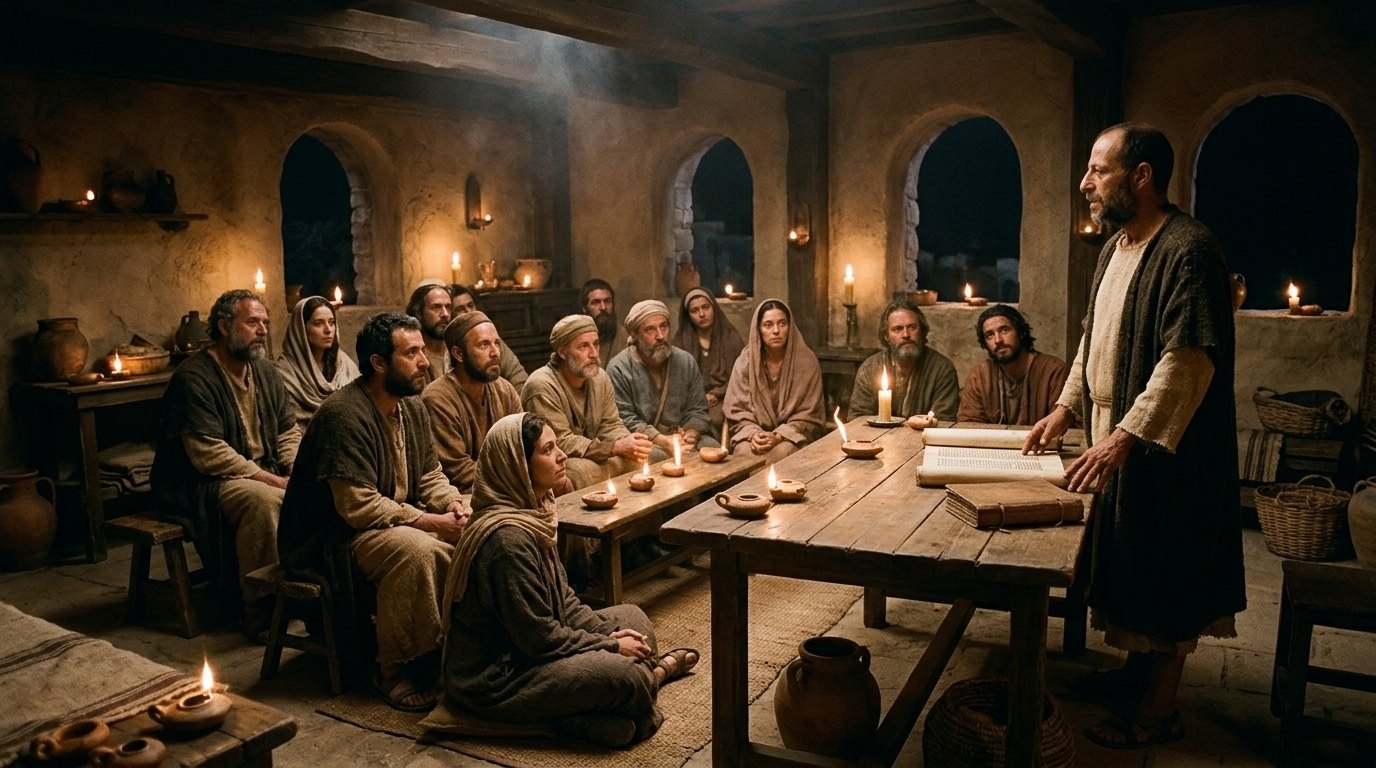
Therefore, my brothers and sisters, be eager to prophesy, and do not forbid speaking in tongues. But everything should be done in a fitting and orderly way.
1 Corinthians 14:39-40 (NIV)
Paul commands believers not to forbid speaking in tongues while insisting that all corporate worship be orderly.
God is a God of order rather than confusion, and His Word provides clear boundaries for how the gift of tongues operates in both personal devotion and public worship. In 1 Corinthians 14:39-40, the Apostle leaves an unmistakable command: do not forbid to speak with tongues, and let all things be done decently and in order. Paul directs the Corinthians in 1 Corinthians 14:1-5 to pursue love and earnestly desire spiritual gifts, emphasizing that uninterpreted tongues build up the individual speaker, whereas prophecy edifies the entire gathered assembly. For this reason, 1 Corinthians 14:13-15 instructs anyone who speaks in a tongue to pray for the interpretation, ensuring that both the human spirit and the understanding remain fruitful.
In 1 Corinthians 14:18-19, Paul gives thanks that he speaks in tongues privately more than all of them, yet within the assembly he desires to speak five intelligible words rather than ten thousand words in an unknown tongue. Tongues serve as a sign to unbelievers (1 Corinthians 14:22-25), while clear prophetic preaching exposes hidden hearts, causing seekers to fall down and confess God's presence. In congregational life, 1 Corinthians 14:26-28 mandates that tongues must be limited to two or three speakers, one at a time, and always accompanied by interpretation; otherwise, the speaker must remain silent in church and speak quietly to God. This private communion aligns with Romans 8:26-27, where the Spirit intercedes through groanings too deep for words, as well as Ephesians 6:18 and Jude 1:20, which urge believers to pray at all times in the Holy Spirit.
| Passage | What it says |
|---|---|
| 1 Corinthians 14:1-5 | Believers are urged to pursue love, desire spiritual gifts, and seek corporate edification through interpretation when tongues are spoken. |
| 1 Corinthians 14:13-15 | The one who speaks in a tongue should pray for the interpretation so both mind and spirit may engage fruitfully. |
| 1 Corinthians 14:18-19 | Paul thanks God that he speaks in tongues privately, but values intelligible instruction far higher in public assembly. |
| 1 Corinthians 14:22-25 | Tongues serve as a sign, while clear prophetic proclamation convicts outsiders and reveals God's presence. |
| 1 Corinthians 14:26-28 | In public worship, tongues must be spoken by two or three in turn, followed by an interpretation, or kept silent. |
| 1 Corinthians 14:39-40 | The Apostle commands not to forbid speaking in tongues, requiring all things to be done decently and in order. |
| Romans 8:26-27 | The Holy Spirit helps believers in their weakness, interceding for them with groanings too deep for words. |
| Ephesians 6:18 | Believers are exhorted to pray at all times in the Spirit with all prayer and supplication. |
| Jude 1:20 | Believers are urged to build themselves up on their most holy faith by praying in the Holy Spirit. |
Prophetic Promise
The Old Testament foreshadows the universal outpouring of God's Spirit

“And afterward, I will pour out my Spirit on all people. Your sons and daughters will prophesy, your old men will dream dreams, your young men will see visions. Even on my servants, both men and women, I will pour out my Spirit in those days.
Joel 2:28-29 (NIV)
Joel reveals God's eternal design to pour out His Spirit upon all people without distinction of age or rank.
The outpouring of the Holy Spirit upon all flesh represents the climactic fulfilment of ancient prophetic promises. In Joel 2:28-29, the Lord announced through the prophet: I will pour out My Spirit on all flesh; your sons and your daughters shall prophesy. God declared that this divine visitation would shatter old barriers of age, gender, and social status, extending to servants and handmaidens alike. The Old Testament consistently pointed toward a day when the presence of God would no longer be restricted to selected leaders, but would flood the hearts of His entire covenant people.
Centuries before Joel, Moses captured this longing in Numbers 11:25-29 when the divine Spirit rested upon the seventy elders of Israel. As Eldad and Medad prophesied in the camp, Joshua grew concerned, but Moses exclaimed that he wished all the Lord's people were prophets and that the Lord would put His Spirit upon them all. Later, in Isaiah 28:11-12, the Lord warned of His covenant chastening and future sign, declaring that with stammering lips and another tongue He would speak to His people. When the Spirit descended at Pentecost, Peter cited Joel directly to prove that the messianic age had dawned. That promised stream has never run dry; the risen Lord continues to pour out His Spirit to empower His people for holy witness until the day He returns.
| Passage | What it says |
|---|---|
| Numbers 11:25-29 | Moses wishes that all the Lord's people were prophets and that the Lord would put His Spirit on them. |
| Isaiah 28:11-12 | The Lord declares He will speak to His people with stammering lips and another tongue as a covenant sign. |
| Joel 2:28-29 | God promises to pour out His Spirit on all flesh in the last days, producing prophecy and visionary revelation. |
Where in the Bible
| Book | Passages |
|---|---|
| Numbers | 1 · Numbers 11:25-29 |
| Isaiah | 1 · Isaiah 28:11-12 |
| Joel | 1 · Joel 2:28-29 |
| Mark | 1 · Mark 16:17 |
| Acts | 6 · Acts 2:4, Acts 2:38-39, Acts 10:44-46, Acts 19:6, Acts 2:11, Acts 8:17-18 |
| Romans | 1 · Romans 8:26-27 |
| 1 Corinthians | 13 · 1 Corinthians 12:4-7, 1 Corinthians 12:10-11, 1 Corinthians 12:28-30, 1 Corinthians 13:1-3, 1 Corinthians 13:8-10, 1 Corinthians 13:11-12, 1 Corinthians 13:13, 1 Corinthians 14:1-5, 1 Corinthians 14:13-15, 1 Corinthians 14:18-19, 1 Corinthians 14:22-25, 1 Corinthians 14:26-28, 1 Corinthians 14:39-40 |
| Ephesians | 1 · Ephesians 6:18 |
| Jude | 1 · Jude 1:20 |
The story in order
- Moses wishes all were prophets (c. 1400 BC) · Numbers 11:25-29 · Foreshadows a universal outpouring of the Spirit.
- God promises Spirit on all flesh (c. 800 BC) · Joel 2:28-29 · Prophetic promise of future Spirit empowerment.
- Lord will speak with other tongues (c. 700 BC) · Isaiah 28:11-12 · A sign of covenant, speaking in tongues.
- Jesus promises new tongues (c. AD 30) · Mark 16:17 · Sign confirming the gospel word.
- Spirit poured out at Pentecost (AD 30) · Acts 2:4 · Disciples speak in other languages.
- Promise of Spirit to all generations (AD 30) · Acts 2:38-39 · The Spirit's promise is for all called.
- Samaritans receive the Spirit (AD 30s) · Acts 8:17-18 · Observable evidence of Spirit's reception.
- Cornelius' household receives Spirit (AD 40s) · Acts 10:44-46 · Gentiles speak in tongues, exalting God.
- Ephesian disciples receive the Spirit (AD 50s) · Acts 19:6 · Speaking in tongues and prophesying.
- Paul writes on spiritual gifts (c. AD 55) · 1 Corinthians 12:4-7 · Gifts for the common profit of all.
- Maturity comes with perfection (c. AD 55) · 1 Corinthians 13:8-10 · Tongues and prophecy pass away when perfect arrives.
- Order in public worship (c. AD 55) · 1 Corinthians 14:26-28 · Tongues require interpretation or silence.
- Do not forbid tongues (c. AD 55) · 1 Corinthians 14:39-40 · All done decently and in order.
Tongues and Prophecy Pass Away
| Partial Knowledge/Gift | Perfect State | Result | Passage |
|---|---|---|---|
| Prophecies | That which is perfect | Pass away | 1 Corinthians 13:8 |
| Tongues | That which is perfect | Pass away | 1 Corinthians 13:8 |
| Knowledge | That which is perfect | Pass away | 1 Corinthians 13:8 |
| Partial understanding | Face to face knowing | Replaced | 1 Corinthians 13:12 |
Purpose of Spiritual Gifts
| Gift | Purpose | Condition | Passage |
|---|---|---|---|
| Manifestation of the Spirit | Common profit of all | Given by the same Spirit | 1 Corinthians 12:7 |
| Speaking in tongues | Edification of the church (with interpretation) | Desire spiritual gifts, pursue love | |
| Prophecy | Edification of the church | Desire spiritual gifts, pursue love | |
| Speaking in tongues (public) | Sign to unbelievers | Must have interpretation | 1 Corinthians 14:22-23 |
| Prophecy (public) | Convicts unbelievers, reveals God | Orderly practice | 1 Corinthians 14:24-25 |
Orderly Worship with Tongues
| Action | Requirement | Outcome | Passage |
|---|---|---|---|
| Speaking in tongues | Must be interpreted | Mind and spirit engaged | 1 Corinthians 14:13-15 |
| Speaking in tongues (public) | Two or three in turn, with interpretation | Orderly worship | 1 Corinthians 14:27 |
| Speaking in tongues (public) | Silent if no interpreter | Decency and order | 1 Corinthians 14:28 |
| All things | Done decently and in order | No confusion | 1 Corinthians 14:40 |
Key words
- Tongues (glōssa, γλῶσσα)
- Supernatural utterance in an unknown language, or a known language not learned by the speaker. · 1 Corinthians 12:10
- Prophecy (prophēteia, προφητεία)
- Speaking forth God's message, often with foretelling, for edification, exhortation, and comfort. · 1 Corinthians 14:3
- Edification (oikodomē, οἰκοδομή)
- The building up of believers in faith and spiritual maturity. · 1 Corinthians 14:4
- Common Profit (ōphelimos, ὠφέλιμος)
- The benefit and good of the entire community of believers. · 1 Corinthians 12:7
- Perfect (teleios, τέλειος)
- Complete, mature, fully developed; referring to the arrival of Christ or the eternal state. · 1 Corinthians 13:10
The biblical witness leaves no room for writing off the Holy Spirit's supernatural gifts in the life of the church today. As believers pursue Christ, let every gift be sought with humility, governed strictly by the order and edification demanded in Scripture, and exercised in selfless love for the glory of God.
26 passages, each cited once.
Scripture cited
- 1 Corinthians 13:8-10
- 1 Corinthians 13:13
- 1 Corinthians 13:1-2
- 1 Corinthians 12:7-11
- 1 Corinthians 12:27-31
- 1 Corinthians 13:8-13
- 1 Corinthians 14:1-5
- 1 Corinthians 14:18-19
- 1 Corinthians 14:26-40
- Acts 2:38-39