Should I pray out loud or silently?

Matthew 6:5-8
5 “And when you pray, do not be like the hypocrites, for they love to pray standing in the synagogues and on the street corners to be seen by others. Truly I tell you, they have received their reward in full.
6 But when you pray, go into your room, close the door and pray to your Father, who is unseen. Then your Father, who sees what is done in secret, will reward you.
7 And when you pray, do not keep on babbling like pagans, for they think they will be heard because of their many words.
8 Do not be like them, for your Father knows what you need before you ask him.
New International Version (NIV)
The answer
Either is good: you may pray out loud or silently, because God hears the heart, not the volume of a voice. Jesus corrects praying to impress people or trusting in many words, not whether prayer is spoken or unspoken (Matthew 6:5-8).
- Silent prayer is real prayer. When Hannah prayed, she “spoke in her heart. Only her lips moved, but her voice was not heard” (1 Samuel 1:13). She was not performing; she told Eli, “I poured out my soul before Yahweh” (1 Samuel 1:15), and God answered her request for a son (1 Samuel 1:19-20).
- Spoken prayer is also real prayer. The early believers “lifted up their voice to God with one accord” and prayed together (Acts 4:24). Praying aloud is especially natural with others, and it can also help keep your own thoughts focused.
- The heart matters more than the volume. Jesus warns against praying “that they may be seen by men” (Matthew 6:5) and directs His disciples to pray to the Father in secret, who “sees in secret” (Matthew 6:6). This guards against hypocrisy; it does not forbid public prayer, since the believers in Acts prayed together.
So choose the way that helps you pray sincerely and attentively. Speak aloud when that helps; pray silently when you are around others or want privacy. Neither is more spiritual, and neither should be used to display devotion. Come honestly, for “your Father knows what things you need before you ask him” (Matthew 6:8).
Answered from Scripture · reviewed November 11, 2026
Scripture nowhere commands a single posture or volume for prayer, embracing both voiced cries and deep inward petitions. What God weighs is never the decibels of your speech, but the sincerity, faith, and humility of your heart. Whether spoken in secret or whispered in the soul, true prayer reaches an attentive Father who already knows what you need.
The Heart over Performance
Jesus Condemns Prayer Designed for Show
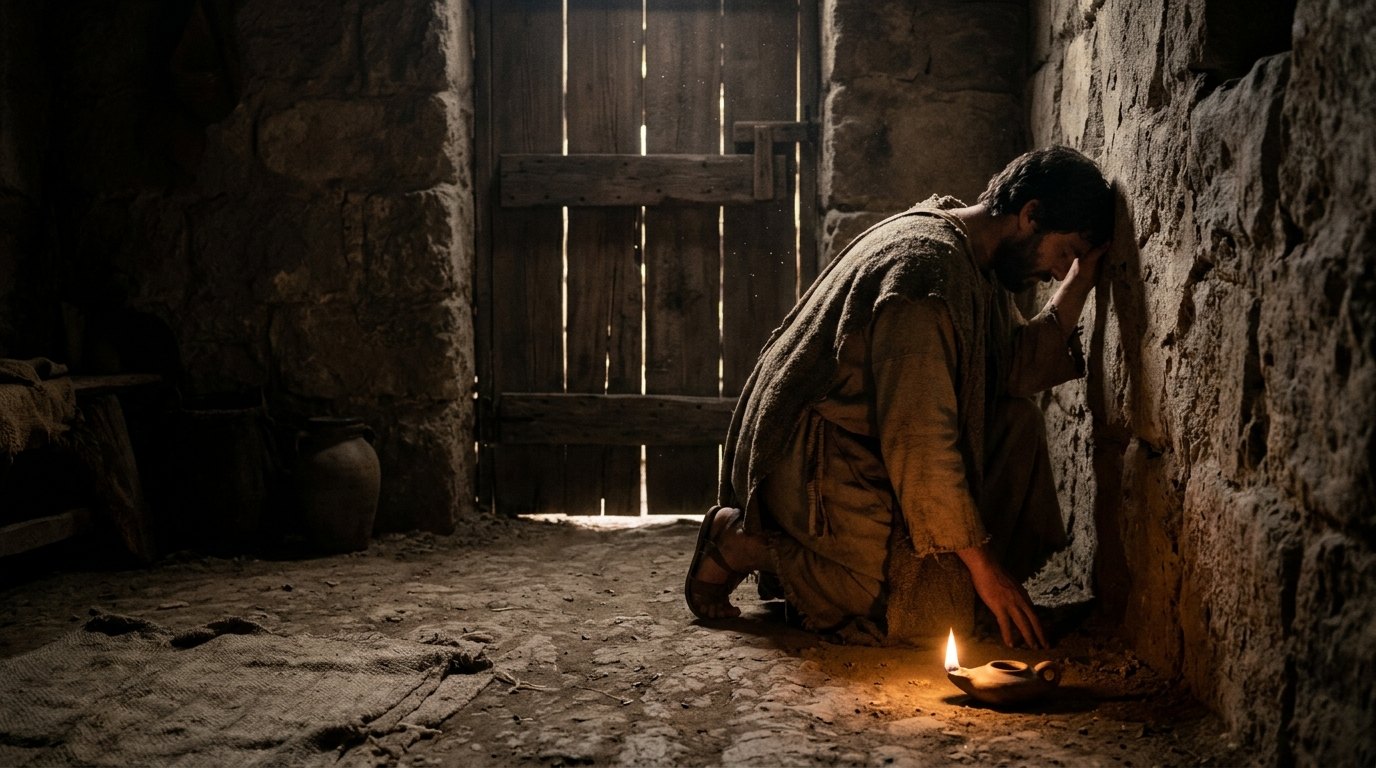
“And when you pray, do not be like the hypocrites, for they love to pray standing in the synagogues and on the street corners to be seen by others. Truly I tell you, they have received their reward in full.
Matthew 6:5 (NIV)
Jesus explicitly exposes the danger of using audible, public prayer merely to win the praise and admiration of onlookers.
In Matthew 6:5, Jesus addresses the seductive danger of performative religion, warning His followers not to be like the hypocrites who love to pray standing on street corners and in public synagogues to be seen by men. Audible prayer becomes empty noise when spoken for human applause, earning nothing more than the temporary approval of onlookers. Instead, Christ commands a radical retreat from theatrical displays in Matthew 6:6, instructing the believer to enter an inner room, shut the door, and pray to the Father who sees in secret. This secret audience strips away pretense, assuring us that God rewards what is genuine rather than what is publicly staged.
Volume and verbosity offer no leverage before the Almighty. In Matthew 6:7, Jesus warns against piling up empty phrases and babbling like the Gentiles, who mistakenly assume they will be heard for their many words. Rather than laboring to inform an uninformed deity, disciples rest in the assurance of Matthew 6:8, knowing the Father already understands their needs before they ask. Prayer is not an exercise in persuasion through sound, but an act of filial trust in an omniscient God.
The posture of the soul matters infinitely more than vocal polish. In Luke 18:10-14, Jesus illustrates this through the contrast between the self-righteous Pharisee, who loudly recited his moral achievements, and the humble tax collector, who beat his breast in brokenness and cried out for mercy; only the humble man went home justified. Furthermore, Mark 11:25 conditions our prayers on forgiving those who have offended us, showing that an unyielding heart renders any spoken petition hollow. Jesus delivers His fiercest rebuke in Matthew 23:14 against religious leaders who make lengthy, audible prayers for a pretense while devouring widows' houses, demonstrating that God abhors outward volume paired with inward corruption.
| Passage | What it says |
|---|---|
| Matthew 6:5 | Jesus warns against praying on street corners and in synagogues to be seen by men, declaring such applause their only reward. |
| Matthew 6:6 | Christ directs believers to enter an inner room, close the door, and pray secretly to the Father who sees in secret. |
| Matthew 6:7 | The Lord forbids vain repetitions and empty babbling, showing that verbosity does not persuade God. |
| Matthew 6:8 | Jesus reminds His disciples that the Father already knows their needs before they ask Him. |
| Luke 18:10-14 | Jesus contrasts the self-congratulatory audible prayer of the Pharisee with the humble, chest-beating plea of the justified tax collector. |
| Mark 11:25 | Jesus conditions effective prayer on forgiving others, making relational purity far more vital than outward presentation. |
| Matthew 23:14 | Jesus rebukes the scribes and Pharisees for making long vocal prayers for a pretense while devouring widows' houses. |
Silent and Heartfelt Communion
God Hears the Unspoken Longings of the Soul

Hannah was praying in her heart, and her lips were moving but her voice was not heard. Eli thought she was drunk
1 Samuel 1:13 (NIV)
Hannah exemplifies pure inward prayer, speaking deeply in her heart while only her lips moved without sound.
In 1 Samuel 1:13, Hannah provides Scripture's most poignant portrait of inward supplication: she spoke in her heart, and though her lips trembled, her voice was not heard. Eli the priest mistook her deep distress for drunkenness, yet as 1 Samuel 1:12-15 reveals, God instantly heard the wordless pouring out of her soul. Hannah did not need to vocalize her grief for the Lord of hosts to receive her plea and grant her petition. Similarly, in Nehemiah 2:4-5, the cupbearer Nehemiah stood before the Persian monarch Artaxerxes and offered a rapid, silent petition to the God of heaven before answering the king, proving that silent prayer can bridge urgent moments where speaking aloud is impossible.
The Psalms consistently celebrate God’s immediate access to the unspoken chambers of our being. David prays in Psalm 19:14 that both the spoken words of his mouth and the silent meditations of his heart may be acceptable to God. He expands this wonder in Psalm 139:1-4, marveling that the Lord discerns his thoughts from afar and knows every word completely before it is even formed upon his tongue. In Psalm 4:4, believers are commanded to commune with their own hearts upon their beds and be still, resting in quiet reverence. Psalm 62:8 likewise urges God's people to pour out their hearts before Him, finding refuge not in auditory sound, but in steady spiritual reliance.
This intimacy reaches its zenith in Romans 8:26-27, where Paul explains that the Holy Spirit intercedes for the saints with wordless groanings too deep for human speech. Even when our trials exceed our ability to formulate syllables, the Searcher of hearts perfectly understands the mind of the Spirit. As Ephesians 5:19 encourages believers to make melody in their hearts to the Lord, Scripture confirms that silent, inward communion is fully audible to heaven.
| Passage | What it says |
|---|---|
| 1 Samuel 1:12-15 | Hannah prays in her heart before the Lord with moving lips but no audible voice, pouring out her soul. |
| Nehemiah 2:4-5 | Nehemiah shoots a swift, silent prayer to God in the presence of the Persian king before making his request. |
| Psalms 19:14 | David asks that both the words of his mouth and the silent meditations of his heart be acceptable to God. |
| Psalms 139:1-4 | David declares that God knows every thought and word completely before it is even formed upon his tongue. |
| Romans 8:26-27 | Paul explains that the Holy Spirit intercedes for believers with wordless groans aligned with God's will. |
| Psalms 4:4 | David instructs the godly to commune with their own heart upon their bed and be silent before the Lord. |
| Psalms 62:8 | God's people are exhorted to trust in Him at all times and pour out their heart before Him in silent dependence. |
| Ephesians 5:19 | Believers are urged to address one another in spiritual songs, singing and making melody in their heart to the Lord. |
Lifting Up the Voice
Scripture Celebrates Crying Out Loudly to God

I call out to the LORD, and he answers me from his holy mountain.
Psalms 3:4 (NIV)
David describes calling aloud with his voice to the Lord, who hears and answers from His holy hill.
In Psalm 3:4, David testifies to the power of vocal prayer: 'I cried aloud to the Lord with my voice, and He answered me from His holy hill.' Lifting the physical voice releases the full weight of human anguish and longing into God's presence. Throughout the Psalter, the cry of the lips accompanies the burden of the soul. Asaph declares in Psalm 77:1 that he cries out to God with his voice, confident of a divine ear. David reiterates this in Psalm 142:1-2, proclaiming that he cries aloud with his voice to make supplication and pour out his complaint. In Psalm 5:1-3, David appeals to God to give ear to his morning words; in Psalm 55:16-17, he vows to pray and cry aloud evening, morning, and noon; and in Psalm 88:1-2, Psalm 119:145-147, and Psalm 130:1-2, the saints lift vociferous cries from the depths, pleading that God's ears attend to their spoken pleas.
Scripture equally commands and models vocal prayer in community and national devotion. In 1 Kings 8:22-23, King Solomon spreads his hands toward heaven before the entire congregation of Israel, praying audibly at the temple dedication. God promises in Jeremiah 29:12 that when His exiled people call and go and pray to Him, He will listen. In the New Testament, Acts 4:24 records the early church raising their voices together in one accord to glorify the Sovereign Lord amid fierce hostility, receiving boldness in answer. In Acts 16:25, Paul and Silas pray and sing hymns aloud at midnight from the inner prison, their audible praises echoing to fellow captives.
Our Lord Himself embraced vocal prayer in moments of solemn preparation and agony. Luke 6:12 notes that Jesus spent an entire night on a mountain praying to God, and in Luke 22:41-44, He knelt in Gethsemane, sweating drops of blood as He audibly surrendered His will to the Father. Hebrews 5:7 summarizes His earthly pilgrimage, noting that Jesus offered up prayers and supplications with loud cries and tears, finding hearing because of His reverent submission.
| Passage | What it says |
|---|---|
| Psalms 3:4 | David cries aloud with his voice to the Lord, and God answers him from His holy hill. |
| Psalms 77:1 | Asaph cries out to God with his voice, confident that God gives ear to his verbal plea. |
| Psalms 142:1-2 | David cries aloud to the Lord with his voice, making his supplication and pouring out his complaint. |
| 1 Kings 8:22-23 | Solomon spreads his hands toward heaven and prays aloud before the entire assembly of Israel at the temple dedication. |
| Jeremiah 29:12 | The Lord promises that when His people call, go, and pray aloud to Him, He will listen. |
| Acts 4:24 | The early church raises their voices together in unified, audible prayer to Sovereign God amid persecution. |
| Hebrews 5:7 | Jesus offered up prayers and petitions with loud cries and tears to the One who could save Him from death. |
| Psalms 5:1-3 | David asks the Lord to give ear to his words and consider his meditation, crying aloud in the morning. |
| Psalms 55:16-17 | David declares that evening, morning, and at noon he will pray and cry aloud, and God hears his voice. |
| Psalms 88:1-2 | The psalmist cries day and night before the Lord, asking that his vocal cry come into God's presence. |
| Psalms 119:145-147 | The psalmist cries with his whole heart and voice before dawn, seeking the Lord's hearing and salvation. |
| Psalms 130:1-2 | From the depths the psalmist cries to the Lord, pleading that God's ears be attentive to his supplications. |
| Luke 6:12 | Jesus goes out to the mountain to pray and spends the entire night in prayer to God. |
| Luke 22:41-44 | In Gethsemane, Jesus kneels and prays audibly to the Father in agonizing supplication before His betrayal. |
| Acts 16:25 | At midnight Paul and Silas pray and sing hymns aloud to God while the prisoners listen to them. |
Words and Understanding
Scripture Welcomes Both Spoken Words and the Silent Heart
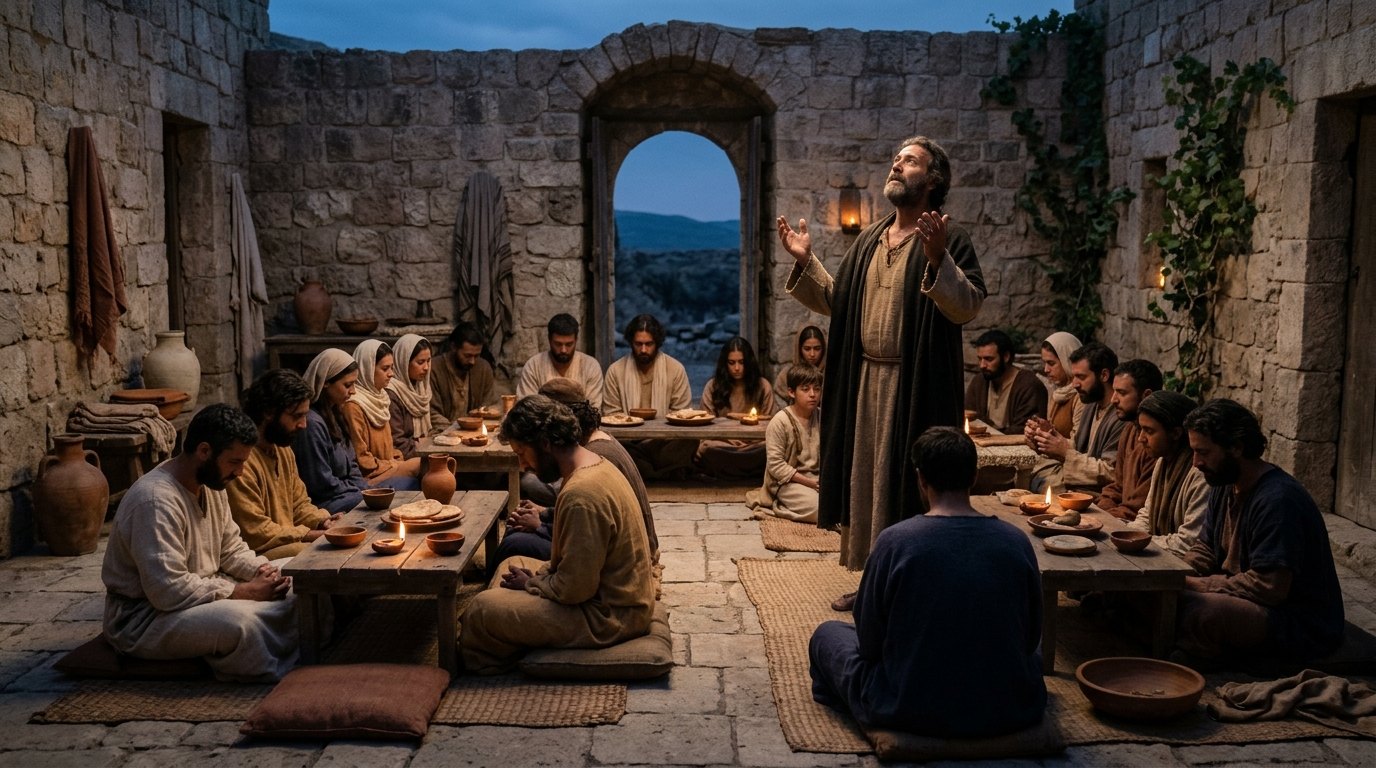
So what shall I do? I will pray with my spirit, but I will also pray with my understanding; I will sing with my spirit, but I will also sing with my understanding.
1 Corinthians 14:15 (NIV)
Paul shows that vocal and inward prayer both have their place when directed toward God with understanding.
In 1 Corinthians 14:15, Paul resolves the tension between outward expression and inner devotion by asking: 'What am I to do? I will pray with the spirit, but I will pray with the mind also; I will sing praise with the spirit, but I will sing praise with the mind also.' Scripture embraces both spoken articulation and silent devotion whenever faith and understanding unite. In 1 Corinthians 14:14-17, the apostle emphasizes that audible prayer is indispensable in corporate settings because it edifies the church. When a believer articulates praise and petition with clarity, brothers and sisters can join their hearts and respond with a shared 'Amen.' Audible prayer functions as an instrument of mutual encouragement, building up the body of Christ through intelligible truth.
At the same time, vocal prayer must never degenerate into fleshly bravado. In 1 Timothy 2:8, Paul instructs that men pray everywhere, lifting up holy hands without wrath or doubting. The physical posture and spoken voice are meaningless unless accompanied by a peaceful conscience and unwavering trust in God. Outward forms remain empty vessels unless animated by inward holiness.
Ultimately, Scripture invites the believer to bring every dimension of existence before God in full freedom. Philippians 4:6-7 commands us not to be anxious about anything, but in everything by prayer and supplication with thanksgiving to make our requests known to God. Whether those requests are voiced aloud amid the congregation or whispered in the quiet recesses of the heart, the promise remains sure: the peace of God, which surpasses all understanding, will guard your hearts and minds in Christ Jesus. The Father listens to both the crying tongue and the silent soul.
| Passage | What it says |
|---|---|
| 1 Corinthians 14:14-17 | Paul distinguishes between praying with the spirit and praying with the mind, noting vocal prayer edifies others with 'Amen'. |
| 1 Timothy 2:8 | Paul desires that men pray everywhere, lifting up holy hands without wrath or doubting in congregational worship. |
| Philippians 4:6-7 | Believers are instructed in everything by prayer and supplication with thanksgiving to make their requests known unto God. |
Where in the Bible
| Book | Passages |
|---|---|
| 1 Samuel | 1 · 1 Samuel 1:12-15 |
| 1 Kings | 1 · 1 Kings 8:22-23 |
| Nehemiah | 1 · Nehemiah 2:4-5 |
| Psalms | 12 · Psalms 19:14, Psalms 139:1-4, Psalms 4:4, Psalms 62:8, Psalms 3:4, Psalms 77:1, Psalms 142:1-2, Psalms 5:1-3, Psalms 55:16-17, Psalms 88:1-2, Psalms 119:145-147, Psalms 130:1-2 |
| Jeremiah | 1 · Jeremiah 29:12 |
| Matthew | 5 · Matthew 6:5, Matthew 6:6, Matthew 6:7, Matthew 6:8, Matthew 23:14 |
| Mark | 1 · Mark 11:25 |
| Luke | 3 · Luke 18:10-14, Luke 6:12, Luke 22:41-44 |
| Acts | 2 · Acts 4:24, Acts 16:25 |
| Romans | 1 · Romans 8:26-27 |
| 1 Corinthians | 1 · 1 Corinthians 14:14-17 |
| Ephesians | 1 · Ephesians 5:19 |
| Philippians | 1 · Philippians 4:6-7 |
| 1 Timothy | 1 · 1 Timothy 2:8 |
| Hebrews | 1 · Hebrews 5:7 |
The story in order
- Hannah prays silently (c. 1100 BC) · 1 Samuel 1:12-15 · Shows heartfelt prayer can be silent.
- David's silent meditations (c. 1000 BC) · Psalms 4:4 · Instructs to commune with heart and be silent.
- Solomon's loud temple prayer (c. 960 BC) · 1 Kings 8:22-23 · Shows public, audible prayer in worship.
- Asaph cries aloud to God (c. 750 BC) · Psalms 77:1 · Demonstrates confidence in God hearing vocal pleas.
- Jesus prays all night (c. AD 30) · Luke 6:12 · Illustrates persistent, devoted prayer.
- Jesus condemns showy prayer (c. AD 30) · Matthew 6:5 · Warns against praying to be seen by men.
- Jesus teaches silent prayer (c. AD 30) · Matthew 6:6 · Directs prayer to the Father who sees in secret.
- Jesus teaches against vain repetition (c. AD 30) · Matthew 6:7 · Discourages empty babbling in prayer.
- Jesus' Gethsemane prayer (AD 30) · Luke 22:41-44 · Shows agonizing, audible prayer in distress.
- Early church prays audibly (c. AD 45) · Acts 4:24 · Unified, loud prayer in the face of persecution.
- Paul and Silas sing aloud (c. AD 55) · Acts 16:25 · Singing and praying aloud in prison.
- Paul on praying everywhere (c. AD 65) · 1 Timothy 2:8 · Desires men to pray everywhere with holy hands.
- Paul on Spirit's intercession (c. AD 57) · Romans 8:26-27 · The Spirit intercedes with wordless groans.
Key words
- Prayer
- Communication with God, encompassing spoken words, silent thoughts, and heartfelt petitions. · Matthew 6:5-8
- Vain repetitions (Greek: battalogeō (βατταλογέω))
- Empty, meaningless babbling or excessive verbosity in prayer. · Matthew 6:7
- Heart
- The inner person, the seat of emotions, will, and true sincerity before God. · 1 Samuel 1:15
- Meditations
- Silent thoughts or reflections of the heart directed towards God. · Psalms 19:14
- Cry aloud
- To pray with a loud voice, often expressing strong emotion or supplication. · Psalms 3:4
- Spirit (Greek: pneuma (πνεῦμα))
- The Holy Spirit, who intercedes for believers with wordless groans. · Romans 8:26
- Mind (Greek: nous (νοῦς))
- The faculty of understanding and conscious thought, used in prayer. · 1 Corinthians 14:15
You need never worry whether God hears the unspoken thought or requires an audible voice to act. Pray out loud when speaking aloud anchors your focus and vents your heart, and pray silently when quiet communion or discretion demands it. Bring your honest needs before your Father in secret, trusting that He sees and hears you completely.
33 passages, each cited once.
Scripture cited
- Matthew 6:5-8
- 1 Samuel 1:9-18
- Acts 4:23-31
- 1 Samuel 1:19-20