Was the Bible changed over time?
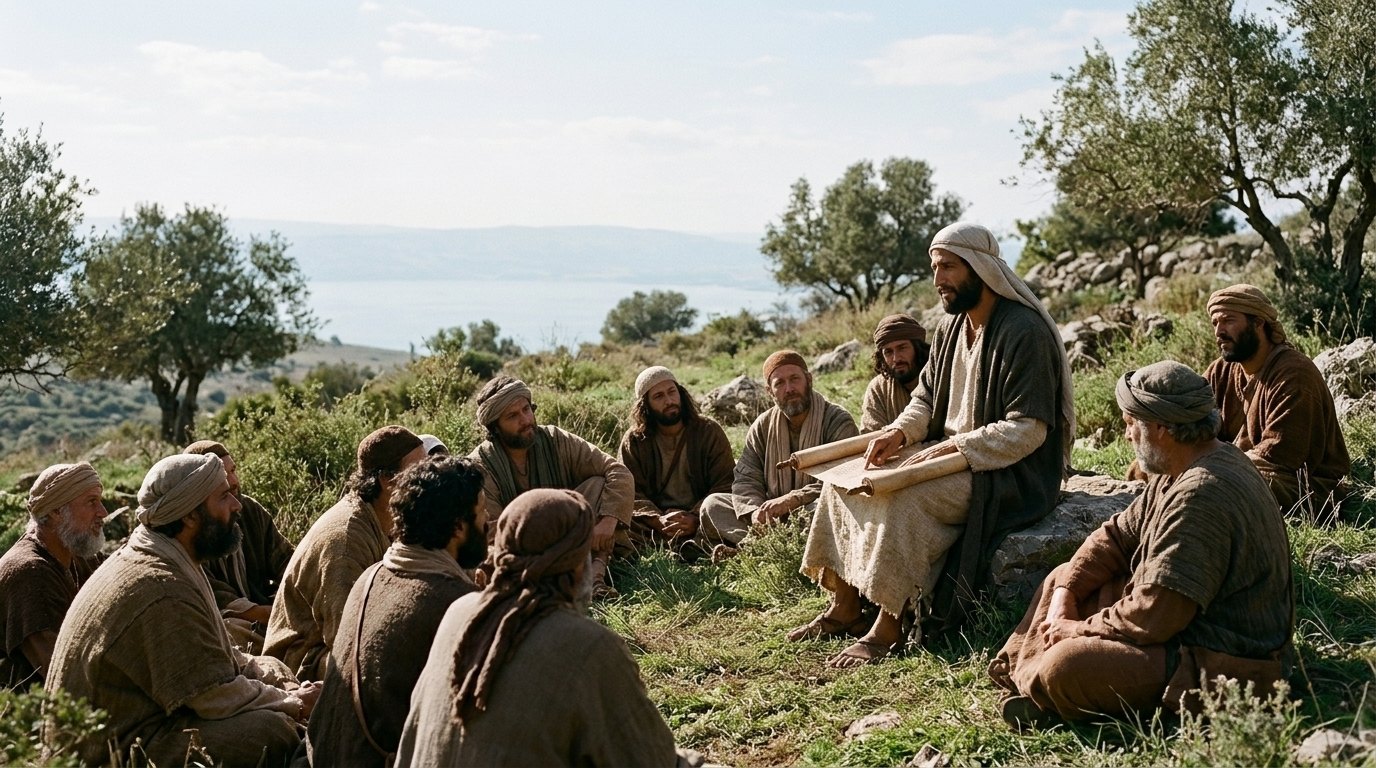
Matthew 5:18
18 For truly I tell you, until heaven and earth disappear, not the smallest letter, not the least stroke of a pen, will by any means disappear from the Law until everything is accomplished.
New International Version (NIV)
The answer
No—God’s word has not changed in its truth, saving message, or authority, although the wording of individual handwritten copies and translations has varied over time.
The key distinction is between Scripture itself and the human processes of copying and translating it. Isaiah 40:8 says, “the word of our God shall stand for ever.” First Peter 1:25 connects that enduring word specifically with the gospel: “the word of the Lord endureth for ever. And this is the word which by the gospel is preached unto you.” Likewise, Psalm 119:89 declares, “For ever, O LORD, thy word is settled in heaven.” Confidence in Scripture therefore rests on God’s faithfulness, not on an assumption that every scribe, translator, or printer worked perfectly.
Matthew 5:18 concerns the law’s divine authority and certain fulfilment. Jesus says that not “one smallest letter or one tiny pen stroke” will pass from the law “until all things are accomplished.” This teaches that God’s purpose for His law cannot be frustrated; it is not a promise that no handwritten copy would ever contain a mistake.
Before printing, Scripture was copied by hand, so surviving copies can differ in spelling, wording, additions, or omissions. Translations may also express the same underlying text with different English wording. A revised translation is not necessarily a changed Bible, and a copyist’s mistake does not mean God’s word itself changed or failed. Disputed readings should be examined honestly through the manuscript evidence and the context, without either pretending that every copy is identical or concluding that Scripture has lost its God-given truth.
Answered from Scripture · reviewed November 12, 2026
God's word has not changed in its divine truth, authority, or saving power, even as handwritten copies and translation choices have varied across languages and centuries. Scripture itself anchors our confidence in God's eternal faithfulness rather than the flawless mechanics of human scribes, demonstrating that what He revealed remains unshaken forever.
The Eternal Word
God's Truth Stands Settled in Heaven Forever

Your word, LORD, is eternal; it stands firm in the heavens.
Psalms 119:89 (NIV)
It affirms that God's word is fixed eternally above the shifts and decays of the created world.
The psalmist lifts our eyes beyond earthly archives when he proclaims, "Forever, O Lord, your word is firmly fixed in the heavens" (Psalm 119:89). Scripture anchors the endurance of divine truth not in the shifting currents of human memory, but in the unalterable character of God Himself. His faithfulness extends throughout all generations, remaining as immovable as the foundations of the earth He established (Psalm 119:90). From ancient times, the Lord established His testimonies so that they would never wear out or fall into decay (Psalm 119:152). When we tally every decree and promise God has spoken, "the sum of your word is truth, and every one of your righteous rules endures forever" (Psalm 119:160).
This heavenly permanence stands in stark contrast to the mortal realm. As the prophet declares, the grass withers and the flower falls, but "the word of our God will stand forever" (Isaiah 40:8). Even if the visible heavens vanish like smoke and the earth wears out like a tattered garment, His salvation will never expire and His righteousness will never be broken (Isaiah 51:6). The words the Lord has delivered are not fragile or contaminated; they are "pure words, like silver refined in a furnace on the ground, purified seven times" (Psalm 12:6). Because they are His own, the Lord preserves them and guards His people from the deceptions of a corrupt generation (Psalm 12:7). God’s sovereign purpose cannot be diverted by centuries of history, for "the counsel of the Lord stands forever, the plans of his heart to all generations" (Psalm 33:11). Through the covenant established with His people, the Spirit and the words placed within their mouths will never depart from their seed or their children’s seed from this time forth and forevermore (Isaiah 59:21).
| Passage | What it says |
|---|---|
| Psalms 119:89 | Declares that the Lord's word is settled forever in heaven. |
| Psalms 119:90 | Affirms God's faithfulness to all generations, established like the earth. |
| Psalms 119:152 | Proclaims that the Lord founded His testimonies forever from of old. |
| Psalms 119:160 | States that the sum of God's word is truth and lasts forever. |
| Isaiah 40:8 | Contrasts the fading grass and flower with God's word standing forever. |
| Isaiah 51:6 | Affirms that while the earth wears out, God's salvation and righteousness endure. |
| Psalms 12:6 | The words of the Lord are pure, refined like silver seven times over. |
| Psalms 12:7 | The Lord promises to keep and guard His people and His word from this generation forever. |
| Psalms 33:11 | The counsel of the Lord stands forever, the plans of His heart to all generations. |
| Isaiah 59:21 | God's words put in the mouth of His servant shall not depart from his seed forever. |
Authority and Accomplishment
Every Letter of God's Law Will Be Accomplished

For truly I tell you, until heaven and earth disappear, not the smallest letter, not the least stroke of a pen, will by any means disappear from the Law until everything is accomplished.
Matthew 5:18 (NIV)
Christ establishes that no small stroke of God's law can fail of its sovereign purpose.
When the Lord Jesus Christ walked among us, He removed any doubt regarding the absolute survival and integrity of God's revealed law. He spoke with sovereign authority: "For truly, I say to you, until heaven and earth pass away, not an iota, not a dot, will pass from the Law until all is accomplished" (Matthew 5:18). By naming the smallest letter of the Hebrew alphabet and the tiniest pen stroke used to distinguish Hebrew characters, Christ insisted that God's sovereign intentions in the sacred text cannot fail. He reaffirmed this unyielding reality to His hearers, noting that "it is easier for heaven and earth to pass away than for one dot of the Law to become void" (Luke 16:17).
Christ's own words carry this same divine immutability across time. As He foretold the end of the age and the crumbling of nations, He gave His disciples an anchor: "Heaven and earth will pass away, but my words will not pass away" (Matthew 24:35). The Gospel writers record this solemn pledge with absolute clarity (Mark 13:31; Luke 21:33), confirming that the Lord's teaching will outlast the cosmos itself. When confronted by His opponents regarding the authority of the sacred writings, Jesus rested His entire argument on a single principle: "Scripture cannot be broken" (John 10:35). Human empires rise, crumble, and rewrite their histories, yet the Word spoken by God retains its binding power and reaches its appointed fulfillment in every age.
| Passage | What it says |
|---|---|
| Matthew 5:18 | Teaches not one jot or tittle will pass until all is accomplished. |
| Luke 16:17 | States it is easier for heaven and earth to pass than for one tittle of the law to fail. |
| Matthew 24:35 | Declares that heaven and earth will pass away, but Christ's words will never pass away. |
| Mark 13:31 | Reiterates that the words of Jesus will never pass away despite cosmic shaking. |
| Luke 21:33 | Confirms the unshakeable certainty of Christ's words above temporal heavens and earth. |
| John 10:35 | Jesus declares that the Scripture cannot be broken or revoked. |
The Incorruptible Gospel
The Living Message Endures in Every Generation

but the word of the Lord endures forever.” And this is the word that was preached to you.
1 Peter 1:25 (NIV)
It ties Isaiah's ancient prophecy directly to the apostolic preaching of the gospel received today.
Centuries after the prophets wrote, the apostle Peter looked back across the generations and affirmed that the message of salvation remained entirely uncorrupted: "the word of the Lord remains forever. And this word is the good news that was preached to you" (1 Peter 1:25). Believers are not born anew from perishable human origin, but from "imperishable, through the living and abiding word of God" (1 Peter 1:23). Peter reminds the church that while mortal flesh is like grass and all its earthly glory like the bloom of the field, the grass dries up and the blossom falls away (1 Peter 1:24). Yet the saving gospel delivered by the apostles has not diminished in vitality or lost its divine force.
This continuous life flows directly from the origin of the text itself. The scriptures are not the invention of religious thinkers or committees, for "all Scripture is breathed out by God and profitable for teaching, for reproof, for correction, and for training in righteousness" (2 Timothy 3:16). The living God breathed out His truth through human instruments without losing a single drop of His authority. As Peter explains, "no prophecy was ever produced by the will of man, but men spoke from God as they were carried along by the Holy Spirit" (2 Peter 1:21). The Holy Spirit who superintended the writing of Scripture has watched over its transmission, ensuring that the living message of grace in Jesus Christ confronts every generation with the same saving power as when it was first proclaimed.
| Passage | What it says |
|---|---|
| 1 Peter 1:23 | Explains that new birth comes through the living, abiding word of God. |
| 1 Peter 1:24 | Reminds that all human flesh and glory wither like grass. |
| 1 Peter 1:25 | Identifies the enduring word of the Lord with the gospel preached to believers. |
| 2 Timothy 3:16 | Affirms all Scripture is breathed out by God and profitable for righteousness. |
| 2 Peter 1:21 | Explains that prophecy came not by human will, but men spoke from God carried along by the Holy Spirit. |
Guarded from Alteration
Strict Warnings Protect God's Word from Being Altered
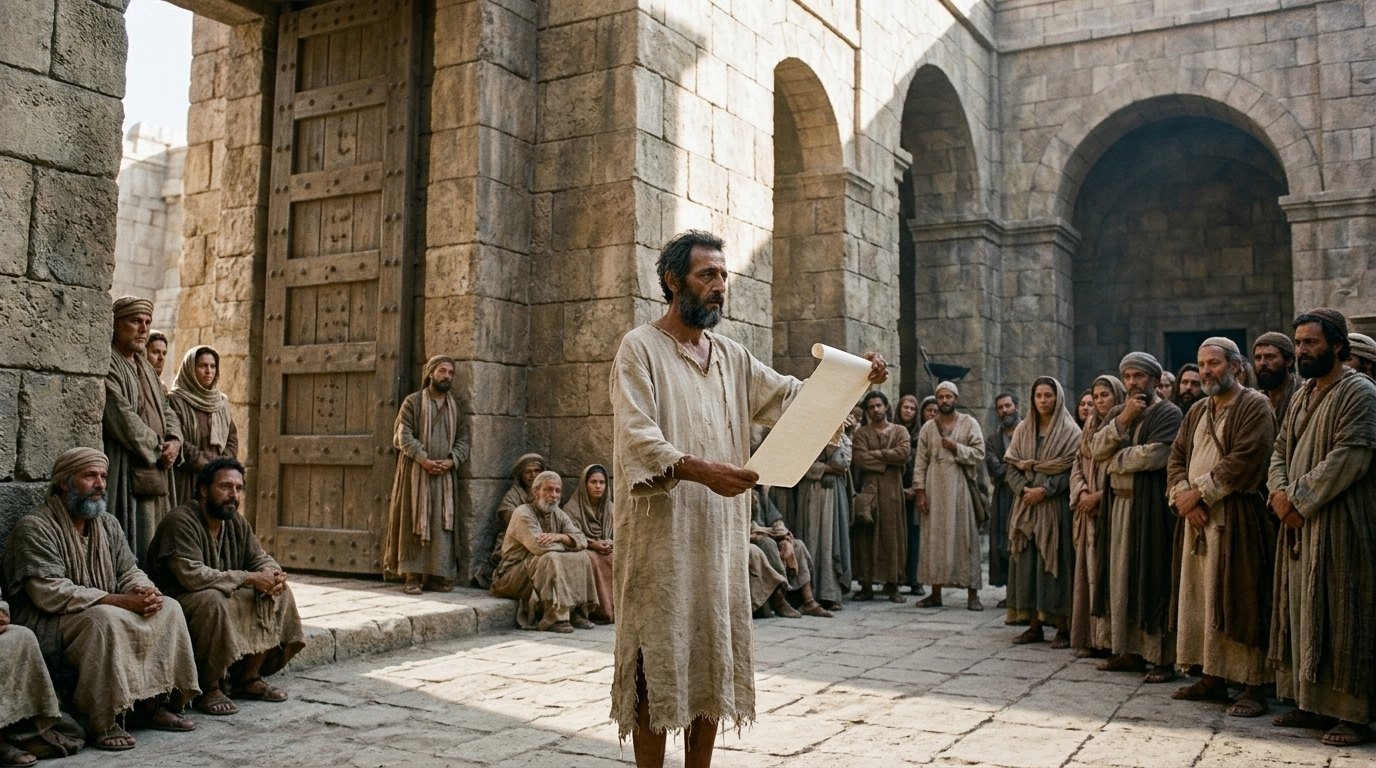
Do not add to his words, or he will rebuke you and prove you a liar.
Proverbs 30:6 (NIV)
This verse warns directly that adding to God's speech brings divine rebuke and proves the speaker false.
Because Scripture is divine speech, God placed strict boundaries around His text from the very beginning. The sage Agur warns: "Do not add to his words, lest he rebuke you and you be found a liar" (Proverbs 30:6). Human beings are forbidden to tamper with the revelation God gives, because "every word of God proves true; he is a shield to those who take refuge in him" (Proverbs 30:5). When Israel assembled at Sinai and prepared to enter the Promised Land, Moses commanded them: "You shall not add to the word that I command you, nor take from it, that you may keep the commandments of the Lord your God" (Deuteronomy 4:2). God repeated this exact charge to underline its eternal seriousness: "Everything that I command you, you shall be careful to do. You shall not add to it or take from it" (Deuteronomy 12:32).
When the Lord commissioned Jeremiah to preach in the temple court, He gave him an uncompromising charge: "speak all the words that I command you to speak to them; do not hold back a word" (Jeremiah 26:2). At the conclusion of the canon, the ascended Lord Jesus seals the warning with ultimate finality. John writes: "I warn everyone who hears the words of the prophecy of this book: if anyone adds to them, God will add to him the plagues described in this book" (Revelation 22:18). In the very next breath, the judgment is balanced: "and if anyone takes away from the words of the book of this prophecy, God will take away his share in the tree of life and in the holy city" (Revelation 22:19). God's warnings stand as a fortress around His revelation, ensuring that His people receive His word intact and uncorrupted.
| Passage | What it says |
|---|---|
| Deuteronomy 4:2 | Israel is forbidden to add to or take away from the words commanded by the Lord. |
| Deuteronomy 12:32 | A strict warning to observe whatever God commands without adding to or taking away from it. |
| Proverbs 30:5 | Every word of God proves true, and He is a shield to those taking refuge in Him. |
| Proverbs 30:6 | A warning against adding to God's words lest He rebuke you and prove you a liar. |
| Jeremiah 26:2 | God commands Jeremiah to speak all the words He commanded without dropping a single word. |
| Revelation 22:18 | Warning of plagues upon anyone who adds to the words of the prophecy of this book. |
| Revelation 22:19 | Warning of losing one's share in the tree of life if anyone takes away from the prophecy. |
Preserved Through Written Record
Scripture Was Written and Faithfully Handed Down Once for All
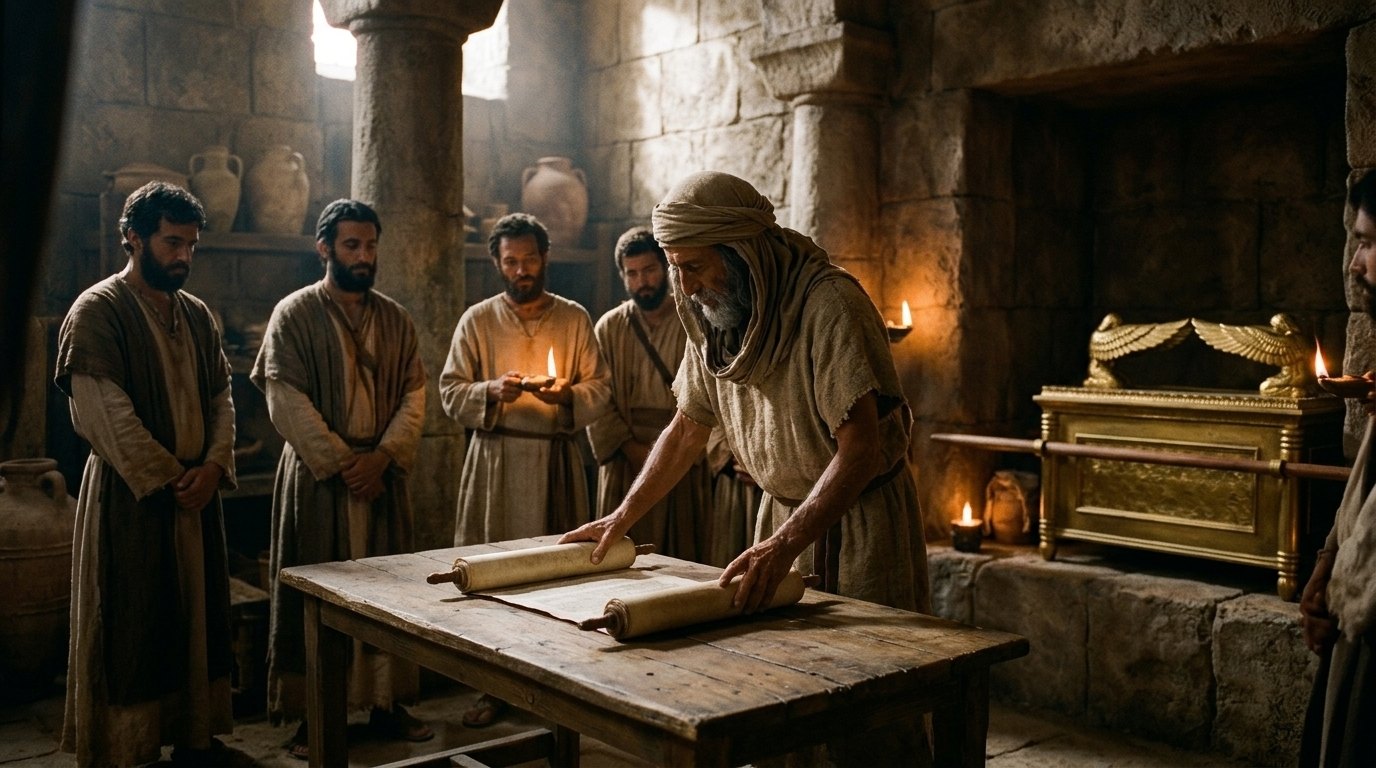
Dear friends, although I was very eager to write to you about the salvation we share, I felt compelled to write and urge you to contend for the faith that was once for all entrusted to God’s holy people.
Jude 1:3 (NIV)
It affirms that the apostolic faith was delivered once for all time, fully sealed rather than endlessly shifting.
In Jude 1:3, Jude urges the saints to contend earnestly for the faith once for all delivered to the saints, establishing that divine revelation is not an evolving, malleable tradition, but a definitive deposit completed and guarded across generations. From the beginning, God ensured that His revelation was committed to objective, durable text rather than left to fluctuating oral memory. At Sinai, Exodus 24:4 records that Moses wrote down all the words of the Lord, formalizing the covenant in writing for Israel. As his ministry drew to a close, Moses was meticulous; Deuteronomy 31:24 emphasizes that he finished writing the words of this law in a book until they were completely finished, leaving nothing half-recorded or subject to drift. To ensure its preservation and continual authority, Deuteronomy 31:26 commanded that this written book of the law be placed beside the Ark of the Covenant as a permanent witness.
Even when human hostility sought to eradicate the text, God sovereignly preserved His word intact. When King Jehoiakim cut up and burned the prophet's scroll, God commanded in Jeremiah 36:28 to take another scroll and write on it all the former words that were on the first scroll. Obeying the divine mandate, Jeremiah 36:32 shows Jeremiah dictating to Baruch the scribe the complete original text, proving that God's truth cannot be extinguished by fire or royal decree.
In the New Testament era, this same careful preservation governed apostolic writing. Paul demanded that his epistles be faithfully preserved and shared, charging in Colossians 4:16 that his letter be read publicly among the Laodiceans as well. The church received these letters not as mere personal reflections, but as God-breathed text. In 2 Peter 3:15, Peter notes Paul's writing according to given wisdom, and in 2 Peter 3:16, he places Paul's letters directly on par with the rest of the Scriptures, warning against those who twist them. God's truth was written down, meticulously stewarded, and anchored once for all.
| Passage | What it says |
|---|---|
| Exodus 24:4 | Moses wrote down all the words of the Lord after receiving them at Sinai. |
| Deuteronomy 31:24 | Moses completed writing the words of this law in a book to the very end. |
| Deuteronomy 31:26 | The book of the law was placed beside the Ark of the Covenant as a witness. |
| Jeremiah 36:28 | The Lord commands Jeremiah to rewrite all former words on a new scroll after the king burned the first. |
| Jeremiah 36:32 | Jeremiah dictated the exact words again to Baruch, with many similar words added. |
| Colossians 4:16 | Paul instructs his letters to be read publicly and circulated among local churches. |
| 2 Peter 3:15 | Peter refers to Paul writing according to the wisdom given to him. |
| 2 Peter 3:16 | Peter recognizes Paul's epistles as Scripture alongside the other Scriptures which the untaught distort. |
| Jude 1:3 | Jude appeals to believers to contend earnestly for the faith once for all delivered to the saints. |
Where in the Bible
| Book | Passages |
|---|---|
| Exodus | 1 · Exodus 24:4 |
| Deuteronomy | 4 · Deuteronomy 4:2, Deuteronomy 12:32, Deuteronomy 31:24, Deuteronomy 31:26 |
| Psalms | 7 · Psalms 119:89, Psalms 119:90, Psalms 119:152, Psalms 119:160, Psalms 12:6, Psalms 12:7, Psalms 33:11 |
| Proverbs | 2 · Proverbs 30:5, Proverbs 30:6 |
| Isaiah | 3 · Isaiah 40:8, Isaiah 51:6, Isaiah 59:21 |
| Jeremiah | 3 · Jeremiah 26:2, Jeremiah 36:28, Jeremiah 36:32 |
| Matthew | 2 · Matthew 5:18, Matthew 24:35 |
| Mark | 1 · Mark 13:31 |
| Luke | 2 · Luke 16:17, Luke 21:33 |
| John | 1 · John 10:35 |
| Colossians | 1 · Colossians 4:16 |
| 2 Timothy | 1 · 2 Timothy 3:16 |
| 1 Peter | 3 · 1 Peter 1:23, 1 Peter 1:24, 1 Peter 1:25 |
| 2 Peter | 3 · 2 Peter 1:21, 2 Peter 3:15, 2 Peter 3:16 |
| Jude | 1 · Jude 1:3 |
| Revelation | 2 · Revelation 22:18, Revelation 22:19 |
The story in order
- Moses writes the Law (c. 1450 BC) · Exodus 24:4 · God's words are written down and preserved.
- The Law is written in a book (c. 1400 BC) · Deuteronomy 31:24 · The written word is completed and preserved.
- The Law placed by the Ark (c. 1400 BC) · Deuteronomy 31:26 · The written word serves as a witness.
- Jeremiah writes God's words (c. 600 BC) · Jeremiah 26:2 · God commands His words to be spoken fully.
- Jeremiah rewrites the scroll (c. 600 BC) · Jeremiah 36:28 · God's word is preserved even when destroyed.
- Jesus affirms the Law's authority (c. AD 30) · Matthew 5:18 · Not a jot or tittle will pass until all is accomplished.
- Jesus' words will not pass (c. AD 30) · Matthew 24:35 · Heaven and earth will pass, but His words will not.
- Scripture is God-breathed (c. AD 67) · 2 Timothy 3:16 · All Scripture is inspired by God.
- Prophecy by the Holy Spirit (c. AD 67) · 2 Peter 1:21 · Men spoke from God, carried by the Spirit.
- Paul's letters circulated (c. AD 62) · Colossians 4:16 · Paul's letters were to be shared among churches.
- Paul's epistles recognized as Scripture (c. AD 67) · 2 Peter 3:16 · Paul's writings are placed alongside other Scriptures.
- The faith once for all delivered (c. AD 65) · Jude 1:3 · The faith was delivered completely to the saints.
Key words
- Word of God
- The divinely inspired and authoritative message from God, both spoken and written. · Psalms 119:89
- Settled (לָעַד (la'ad))
- Established, firm, and enduring. · Psalms 119:89
- Faithfulness (אֱמוּנָה (emunah))
- God's steadfast commitment and reliability, evident through generations. · Psalms 119:90
- Accomplished (כָּל־ (kol))
- Completed, fulfilled, brought to its intended end. · Matthew 5:18
- Breathed out by God (θεόπνευστος (theopneustos))
- Inspired by God, originating from His very being. · 2 Timothy 3:16
- Living Word (ζῶν (zōn))
- The active, powerful, and life-giving message of God. · 1 Peter 1:23
- Abiding (μένω (meno))
- Remaining permanently, enduring without change. · 1 Peter 1:25
Because God's truth is eternally settled in heaven, believers can trust the Bible with unwavering assurance. Neither the passage of centuries nor the honest work of translating across languages diminishes the certainty that God has kept His word alive, intact, and active for our salvation.
37 passages, each cited once.
Scripture cited
- Matthew 5:18
- Isaiah 40:8
- Psalms 119:89-90
- 1 Peter 1:25