Was Jesus born of a virgin, and why does it matter?
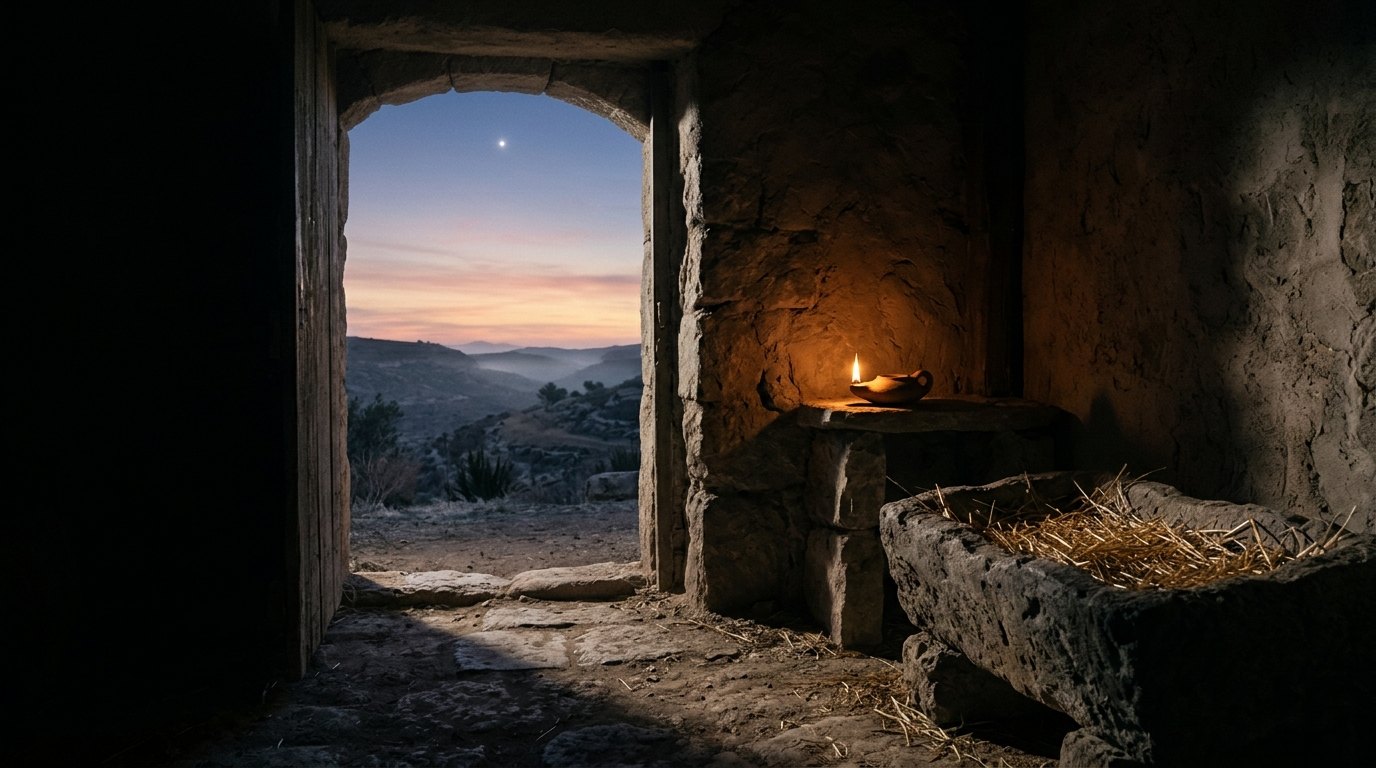
Matthew 1:18-25
18 This is how the birth of Jesus the Messiah came about: His mother Mary was pledged to be married to Joseph, but before they came together, she was found to be pregnant through the Holy Spirit.
19 Because Joseph her husband was faithful to the law, and yet did not want to expose her to public disgrace, he had in mind to divorce her quietly.
20 But after he had considered this, an angel of the Lord appeared to him in a dream and said, “Joseph son of David, do not be afraid to take Mary home as your wife, because what is conceived in her is from the Holy Spirit.
21 She will give birth to a son, and you are to give him the name Jesus, because he will save his people from their sins.”
22 All this took place to fulfill what the Lord had said through the prophet:
23 “The virgin will conceive and give birth to a son, and they will call him Immanuel” (which means “God with us”).
24 When Joseph woke up, he did what the angel of the Lord had commanded him and took Mary home as his wife.
25 But he did not consummate their marriage until she gave birth to a son. And he gave him the name Jesus.
New International Version (NIV)
The answer
Yes. Jesus was conceived in Mary while she was still a virgin, by the power of the Holy Spirit. This matters because it reveals Him as the promised Immanuel—God with us—the eternal Son who became truly human to save sinners.
Matthew 1:18 says that before Mary and Joseph came together, “she was found pregnant by the Holy Spirit.” Luke 1:34 records Mary’s own question, “How can this be, seeing I am a virgin?” Gabriel answered, “The Holy Spirit will come on you, and the power of the Most High will overshadow you” (Luke 1:35). Matthew 1:25 adds that Joseph did not know Mary sexually until after she had given birth.
Why the virgin birth matters
- God fulfilled His promise. Isaiah 7:14 foretold that the virgin would conceive and bear a son called Immanuel. Matthew 1:22-23 says that Jesus’ conception fulfilled this word and interprets Immanuel as “God with us.” His birth therefore displays God’s faithfulness and identifies Jesus as the promised Messiah.
- God’s eternal Son truly became man. Galatians 4:4 says that God sent out His Son, “born to a woman, born under the law.” The Son did not begin to exist in Mary’s womb; God sent Him, and He entered genuine human life through her. He is both Immanuel, God with us, and the human son born of Mary.
- The child is the holy Savior. Luke 1:35 calls Him “the holy one” and “the Son of God.” His name, Jesus, announces His mission: He saves His people from their sins (Matthew 1:21). Galatians 4:4-5 connects His coming with redemption and adoption as God’s children.
- His sinlessness fits His saving work. Jesus was tempted in every respect as people are, “yet without sin” (Hebrews 4:15). Second Corinthians 5:21 says that the One who knew no sin was made sin on behalf of sinners, so that in Him they might become the righteousness of God.
The virgin birth is not a suggestion that marriage or ordinary sexual relations are sinful, nor does Scripture explain it by claiming that sin passes only through fathers. Its testimony is that God Himself brought His holy Son into human life to redeem sinners. Because this Savior is also the compassionate high priest, Hebrews 4:16 invites people to draw near boldly to God’s throne for mercy and grace.
Answered from Scripture · reviewed November 11, 2026
Scripture explicitly affirms that the Lord Jesus Christ was miraculously conceived by the Holy Spirit and born of the virgin Mary without a human father. This foundational reality establishes that Jesus is truly God and truly man, the sinless Savior who alone fulfills ancient prophecy and reconciles fallen humanity to God.
Prophetic Promise
Prophets Foretold the Seed and Virgin Conception
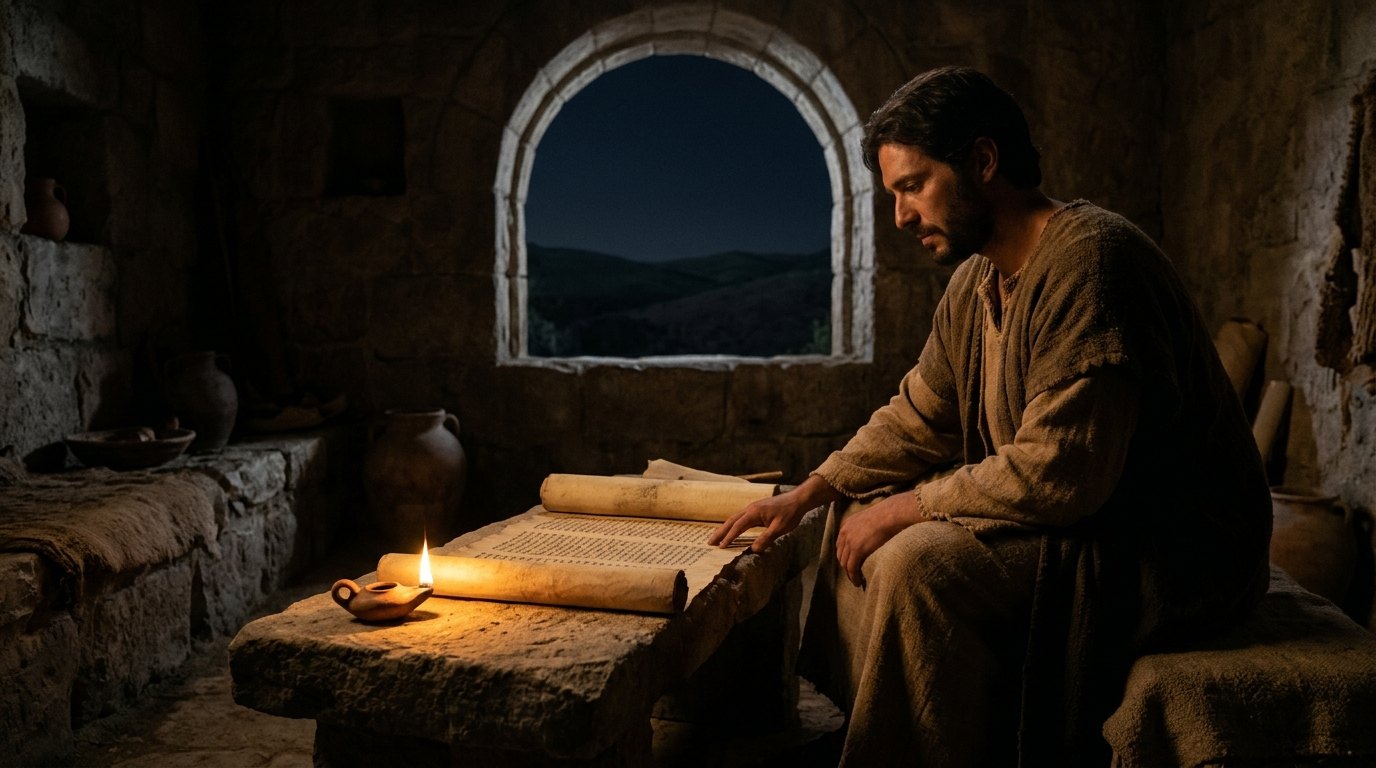
Therefore the Lord himself will give you a sign: The virgin will conceive and give birth to a son, and will call him Immanuel.
Isaiah 7:14 (NIV)
It gives the definitive sign that a virgin would conceive and bear the child named Immanuel, meaning God with us.
The definitive promise of the virgin birth stands at the center of ancient prophecy in Isaiah 7:14, where the Lord Himself gives an astonishing sign to the house of David: a virgin shall conceive and bear a son, calling His name Immanuel. The New Testament records the direct realization of this word in Matthew 1:22-23, confirming that the ancient sign found its literal reality in Mary of Nazareth. This was not an isolated prediction but the culmination of a thread woven throughout the Hebrew Scriptures. In the garden of Eden, immediately after humanity fell, the Lord announced in Genesis 3:15 that the seed of the woman would ultimately crush the head of the serpent, a veiled pointer to a champion born of woman without human fatherhood, fulfilled when God sent His Son born of a woman (Galatians 4:4).
The prophets continuously expanded this vision of a divine child. The prophet in Jeremiah 31:22 spoke of a brand-new work wrought by the Lord in the earth, where a woman encompasses a man, finding its ultimate expression in the virgin mother carrying the incarnate Lord (Luke 1:31-35). In Isaiah 9:6, the prophet reveals that this born child and given son bears names that belong exclusively to the divine nature—Wonderful Counselor, Mighty God, Everlasting Father, and Prince of Peace—whose endless kingdom is announced to Mary in Luke 1:32-33. Furthermore, Micah 5:2 identifies the exact village of His arrival, Bethlehem Ephrathah, while declaring that this coming ruler possesses origins stretching back to the days of eternity, fulfilled when Jesus was born in Judea during the days of Herod (Matthew 2:1-6). God carefully framed human history so that the Messiah's supernatural conception would stand vindicated by every ancient promise.
| Passage | What it says | Fulfilled |
|---|---|---|
| Genesis 3:15 | God promises that the seed of the woman will crush the serpent's head, hinting at a unique conception. | Galatians 4:4 |
| Isaiah 7:14 | The prophet declares the Lord will give a sign: a virgin shall conceive and bear Immanuel. | Matthew 1:22-23 |
| Jeremiah 31:22 | The Lord declares a new thing created in the earth: a woman shall encompass a man. | Luke 1:31-35 |
| Isaiah 9:6 | Foretells that a child is born and a son is given whose name is Mighty God and Everlasting Father. | Luke 1:32-33 |
| Micah 5:2 | Prophesies that the ruler coming forth from Bethlehem has origins from the days of eternity. | Matthew 2:1-6 |
Gospel Testimony
The New Testament Records the Virgin Birth
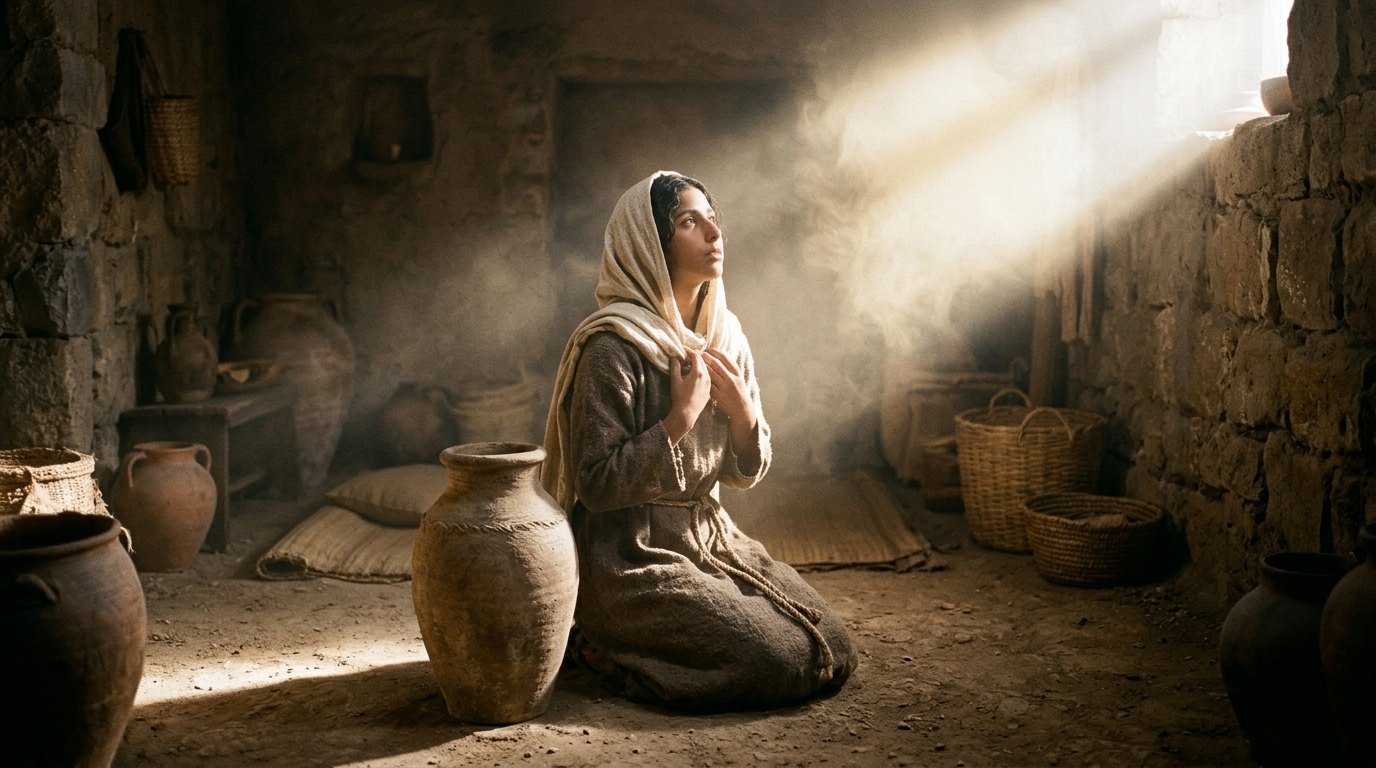
“How will this be,” Mary asked the angel, “since I am a virgin?” The angel answered, “The Holy Spirit will come on you, and the power of the Most High will overshadow you. So the holy one to be born will be called the Son of God.
Luke 1:34-35 (NIV)
Mary asks how conception can happen without a man, and Gabriel reveals the Holy Spirit's overshadowing power.
When the angel Gabriel announced the coming birth, Mary's immediate response in Luke 1:34-35 acknowledged her biological reality: she had known no man, making normal conception impossible. The angel's reply establishes the supernatural architecture of the event: the Holy Spirit will come upon you, and the power of the Most High will overshadow you, guaranteeing that the child born of her would be holy, the Son of God. The full narrative in Luke 1:26-38 shows Mary's humble surrender to this sovereign work of God. Matthew confirms this miracle from Joseph's perspective in Matthew 1:18-25, explaining that before they came together in marriage, Mary was found to be with child of the Holy Spirit. Joseph took Mary as his wife in obedience to an angelic command, yet kept her a virgin until she gave birth to her firstborn Son.
This miraculous origin was preserved within family records and early witness. In Luke 1:39-45, Elizabeth, filled with the Holy Spirit, recognized Mary as the mother of her Lord even while the child was newly conceived in her womb. When the time arrived, Luke 2:1-7 records the quiet birth of Jesus in Bethlehem, where Mary wrapped her firstborn in swaddling clothes and laid Him in a manger. The public, however, remained largely unaware of this hidden miracle during Jesus' early life, which is why Luke 3:23 carefully notes that Jesus was 'as was supposed' the son of Joseph. The Gospel writers leave no room for ambiguity: Jesus Christ entered the world through a literal, biological virgin conception.
| Passage | What it says |
|---|---|
| Luke 1:26-38 | Gabriel announces to the virgin Mary that the Holy Spirit will overshadow her and produce the holy Son of God. |
| Matthew 1:18-25 | Matthew records that Mary was pregnant of the Holy Spirit before coming together with Joseph, who kept her a virgin until birth. |
| Luke 3:23 | Luke records that Jesus began His ministry being, as was supposed, the son of Joseph. |
| Luke 2:1-7 | Records Mary giving birth to her firstborn son Jesus in Bethlehem wrapped in swaddling clothes. |
| Luke 1:39-45 | Elizabeth, filled with the Holy Spirit, calls Mary blessed and the mother of her Lord. |
Incarnation and Identity
The Eternal Son Truly Became Human
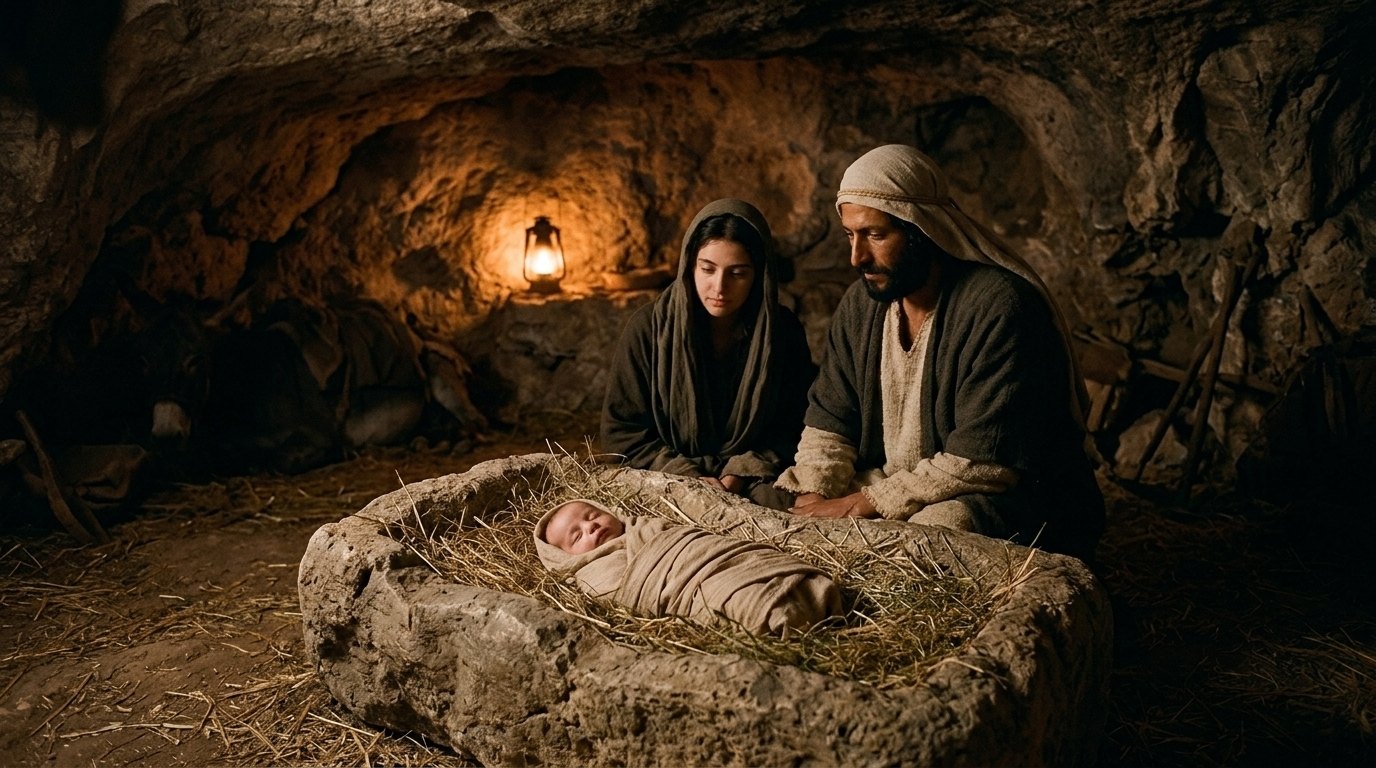
But when the set time had fully come, God sent his Son, born of a woman, born under the law, to redeem those under the law, that we might receive adoption to sonship.
Galatians 4:4-5 (NIV)
It shows that God sent His preexistent Son to be made of a woman under the law to redeem sinners.
The doctrinal heart of the virgin birth is the mystery of the Incarnation, articulated in Galatians 4:4-5: when the fullness of time had come, God sent forth His Son, born of woman, born under the law, to redeem those who were under the law. This passage presents two vital truths side by side: the Son was sent forth from eternity, yet He was genuinely made of a woman. The virgin birth was the divine mechanism by which the eternal Word became flesh without ceasing to be God. As John 1:14 declares, the Word became flesh and tabernacled among us, displaying the glory of the only begotten Son. He was not a newly created being, nor was He a deified man; He was God the Son taking on a complete, authentic human nature.
The rest of the apostolic witness reinforces this dual reality. In Hebrews 10:5, the incarnate Christ affirms that the Father prepared a body for Him as He entered the world. Paul describes this great condescension in Philippians 2:6-7, where the One existing in the form of God emptied Himself by taking the form of a servant and being born in the likeness of men. According to Romans 1:3-4, Jesus was born of the seed of David according to the flesh, fulfilling the royal covenant lineage, while being declared the Son of God in power through His resurrection. The early church celebrated this truth in the confession of 1 Timothy 3:16, that God was manifested in the flesh. As Hebrews 2:14-17 demonstrates, Christ had to partake of the same flesh and blood as His brethren so that He might destroy the devil's power and make propitiation for our sins.
| Passage | What it says |
|---|---|
| Galatians 4:4-5 | In the fullness of time, God sent forth His Son, made of a woman, to redeem those under the law. |
| John 1:14 | The eternal Word became flesh and dwelt among us, revealing the Father's glory. |
| Hebrews 10:5 | Christ coming into the world declares that the Father has prepared a body for Him. |
| Philippians 2:6-7 | Being in the form of God, Christ emptied Himself and took on the likeness of men. |
| Romans 1:3-4 | Declares Jesus descended from David according to the flesh and declared Son of God in power. |
| 1 Timothy 3:16 | Confesses the great mystery of godliness that Christ was manifest in the flesh. |
| Hebrews 2:14-17 | Explains that Christ partook of flesh and blood to destroy the devil and deliver His people. |
Sinless Redemption
A Holy Savior Free From Adam's Condemnation
God made him who had no sin to be sinfor us, so that in him we might become the righteousness of God.
2 Corinthians 5:21 (NIV)
God made Him who knew no sin to be sin for us, requiring a completely spotless Redeemer.
The virgin birth matters profoundly because our redemption demanded a mediator who was entirely free from sin. In 2 Corinthians 5:21, the gospel is stated with striking clarity: For our sake He made Him to be sin who knew no sin, so that in Him we might become the righteousness of God. If Jesus had been born through the natural generation of an earthly father, He would have shared in the fallen headship and guilt of Adam. In Romans 5:12-19, Scripture explains that through one man sin entered the world, bringing death and condemnation to all his natural descendants. Jesus entered the human race not through Adam's federal line, but through the direct overshadowing of the Holy Spirit, constituting Him as the sinless Second Adam who can overturn the fall.
Because of His virgin conception, Christ possessed a human nature completely untainted by inherited corruption. The author of Hebrews 4:15 writes that we do not have a high priest unable to sympathize with our weaknesses, but One who was tempted in all points as we are, yet remained without sin. According to Hebrews 7:26, this makes Him the perfect high priest: holy, innocent, undefiled, separated from sinners, and exalted above the heavens. His sacrificial death has saving power precisely because His blood was pure, as 1 Peter 1:18-19 explains that we were redeemed with the precious blood of Christ, like that of a lamb without blemish or spot. He committed no sin, nor was deceit found in His mouth, yet He bore our sins in His body on the tree (1 Peter 2:22-24). As 1 John 3:5 summarizes, He appeared in order to take away sins, and in Him there is no sin.
| Passage | What it says |
|---|---|
| Hebrews 4:15 | Our high priest was tempted in all points as we are, yet remained entirely without sin. |
| 2 Corinthians 5:21 | God made Christ, who knew no sin, to be sin for us so that we might become God's righteousness. |
| 1 Peter 1:18-19 | Believers are redeemed with the precious blood of Christ, a lamb without blemish and without spot. |
| Hebrews 7:26 | Such a high priest was fitting for us: holy, innocent, unstained, and separated from sinners. |
| Romans 5:12-19 | Contrasts Adam's disobedience bringing condemnation to all with Christ's obedience bringing justification and life. |
| 1 Peter 2:22-24 | Testifies that Christ committed no sin yet bore our sins in His own body on the tree. |
| 1 John 3:5 | Affirms that Jesus appeared to take away sins and in Him there is no sin. |
Where in the Bible
| Book | Passages |
|---|---|
| Genesis | 1 · Genesis 3:15 |
| Isaiah | 2 · Isaiah 7:14, Isaiah 9:6 |
| Jeremiah | 1 · Jeremiah 31:22 |
| Micah | 1 · Micah 5:2 |
| Matthew | 1 · Matthew 1:18-25 |
| Luke | 4 · Luke 1:26-38, Luke 3:23, Luke 2:1-7, Luke 1:39-45 |
| John | 1 · John 1:14 |
| Romans | 2 · Romans 1:3-4, Romans 5:12-19 |
| 2 Corinthians | 1 · 2 Corinthians 5:21 |
| Galatians | 1 · Galatians 4:4-5 |
| Philippians | 1 · Philippians 2:6-7 |
| 1 Timothy | 1 · 1 Timothy 3:16 |
| Hebrews | 4 · Hebrews 10:5, Hebrews 2:14-17, Hebrews 4:15, Hebrews 7:26 |
| 1 Peter | 2 · 1 Peter 1:18-19, 1 Peter 2:22-24 |
| 1 John | 1 · 1 John 3:5 |
The story in order
- God promises a seed to crush the serpent (c. 4000 BC) · Genesis 3:15 · Hints at a unique conception in the seed of the woman.
- Prophecy of a virgin conceiving Immanuel (c. 700 BC) · Isaiah 7:14 · Declares the Lord will give a sign: a virgin shall conceive.
- Prophecy of a ruler from eternity (c. 700 BC) · Micah 5:2 · The ruler from Bethlehem has origins from the days of eternity.
- Prophecy of a child born, a son given (c. 700 BC) · Isaiah 9:6 · Foretells a child born with divine names like Mighty God.
- Prophecy of a new thing: woman encompasses man (c. 600 BC) · Jeremiah 31:22 · Declares a new thing created: a woman shall encompass a man.
- Angel announces virgin conception to Mary (c. 5 BC) · Luke 1:26-38 · Gabriel announces the Holy Spirit will overshadow Mary.
- Mary found pregnant by the Holy Spirit (c. 5 BC) · Matthew 1:18-25 · Mary was pregnant of the Holy Spirit before cohabitation.
- Jesus born in Bethlehem (c. 4 BC) · Luke 2:1-7 · Mary gives birth to her firstborn son Jesus.
- Elizabeth calls Mary blessed, mother of her Lord (c. 5 BC) · Luke 1:39-45 · Filled with the Spirit, Elizabeth recognizes Mary's unique role.
- Jesus's supposed sonship of Joseph recorded (AD 27-30) · Luke 3:23 · Records Jesus began His ministry as, supposedly, Joseph's son.
- God's Son, made of a woman, redeems (AD 50s) · Galatians 4:4-5 · In fullness of time, God sent His Son, made of a woman.
- The eternal Word became flesh (AD 90s) · John 1:14 · The eternal Word became flesh and dwelt among us.
- Christ's body prepared by the Father (AD 60s) · Hebrews 10:5 · Christ coming into the world declares the Father prepared a body.
- Christ took on the likeness of men (AD 60s) · Philippians 2:6-7 · Christ emptied Himself and took on the likeness of men.
Adam's Disobedience vs. Christ's Obedience
| The First Adam | The Last Adam | Result | Passage |
|---|---|---|---|
| One man's disobedience | One man's obedience | Condemnation | Romans 5:12-19 |
| Through disobedience | Through obedience | Justification and life | Romans 5:12-19 |
Prophetic Promises of the Savior
| Promise | Fulfillment | Significance | Passage |
|---|---|---|---|
| Seed of the woman crushes serpent's head | Jesus born of a woman | First hint of a unique conception | Genesis 3:15 |
| A virgin shall conceive Immanuel | Mary, a virgin, conceived by the Spirit | Sign of God's intervention | Isaiah 7:14 |
| Ruler from Bethlehem has eternal origins | Jesus born in Bethlehem, eternal Son | Divine identity of the Savior | Micah 5:2 |
| Child born, Son given, Mighty God | Jesus, the Son of God | His divine nature | Isaiah 9:6 |
| A woman shall encompass a man | Virgin birth | A new creation by God | Jeremiah 31:22 |
The Identity of Jesus Christ
| Divine Nature | Human Nature | Purpose | Passage |
|---|---|---|---|
| Eternal Word | Became flesh | To dwell among us | John 1:14 |
| Form of God | Took on likeness of men | To redeem those under law | Philippians 2:6-7 |
| Son of God in power | Descended from David according to flesh | To destroy the devil | Romans 1:3-4 |
| Christ | Manifest in the flesh | Great mystery of godliness | 1 Timothy 3:16 |
| Holy, innocent, unstained | Partook of flesh and blood | To deliver His people | Hebrews 7:26 |
Key words
- Virgin Conception (parthenos, παρθένος)
- Conception of a child by a woman not having had sexual intercourse. · Matthew 1:23
- Immanuel (immānû'ēl, עִמָּנוּאֵל)
- Hebrew name meaning 'God with us'. · Isaiah 7:14
- Incarnation (enanthrōpizō, ἐνανθρωπίζω)
- The eternal Son of God taking on human flesh. · John 1:14
- Sinless (hamartia, ἁμαρτία)
- Without sin; perfectly righteous. · 1 John 3:5
- Redemption (lytrosis, λύτρωσις)
- The act of buying back or setting free, often through a sacrifice. · 1 Peter 1:18
Because the eternal Son took on true flesh without inheriting the fallen ruin of Adam, He stands as our perfect, spotless representative and Redeemer. In Christ, God has drawn near to save us from our sins, inviting all who believe to approach His throne of grace with unshakable confidence.
24 passages, each cited once.
Scripture cited
- Matthew 1:18-25
- Galatians 4:4-5
- Luke 1:26-38
- Isaiah 7:10-14
- Hebrews 4:14-16
- 2 Corinthians 5:21