Was Noah's flood global?
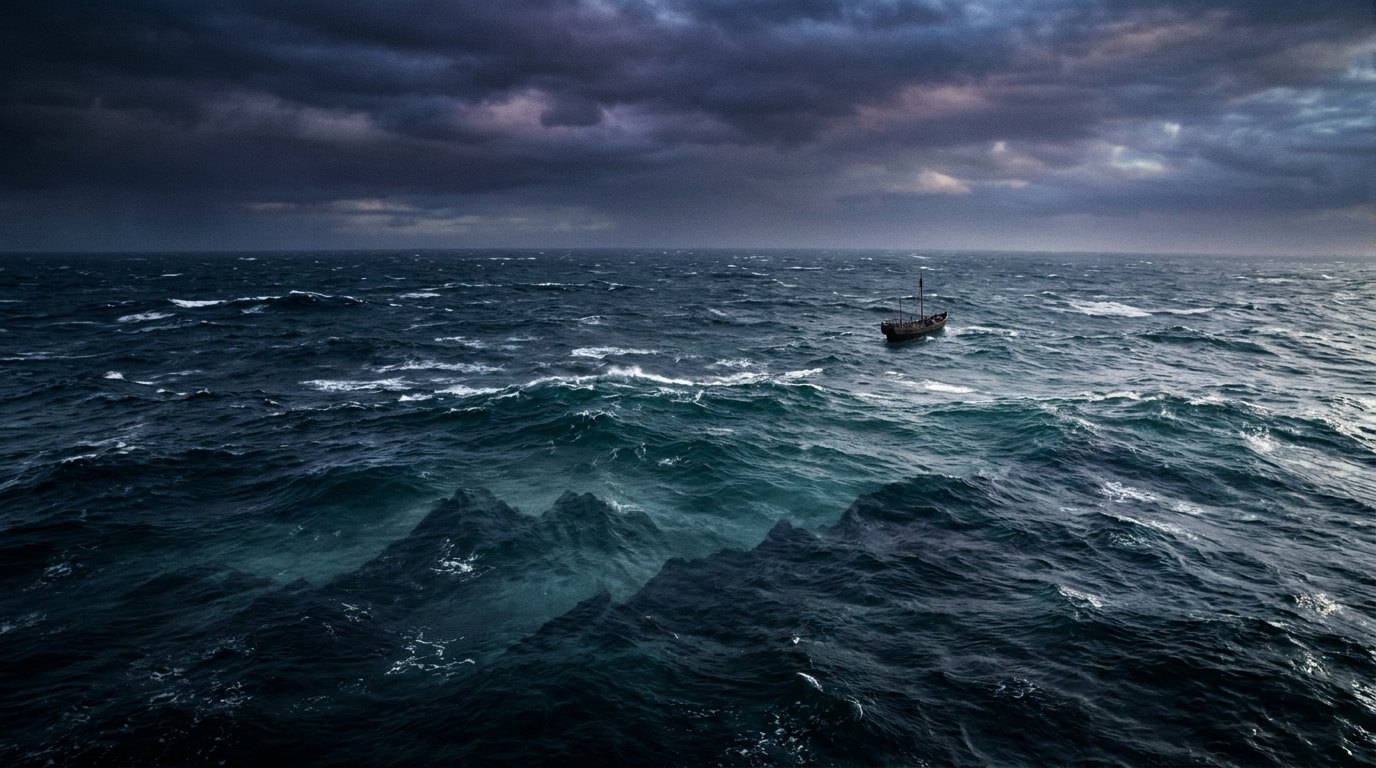
Genesis 7:17-24
17 For forty days the flood kept coming on the earth, and as the waters increased they lifted the ark high above the earth.
18 The waters rose and increased greatly on the earth, and the ark floated on the surface of the water.
19 They rose greatly on the earth, and all the high mountains under the entire heavens were covered.
20 The waters rose and covered the mountains to a depth of more than fifteen cubits.
21 Every living thing that moved on land perished—birds, livestock, wild animals, all the creatures that swarm over the earth, and all mankind.
22 Everything on dry land that had the breath of life in its nostrils died.
23 Every living thing on the face of the earth was wiped out; people and animals and the creatures that move along the ground and the birds were wiped from the earth. Only Noah was left, and those with him in the ark.
24 The waters flooded the earth for a hundred and fifty days.
New International Version (NIV)
The answer
Yes. Genesis 7 plainly describes a worldwide flood: all the high mountains under the whole sky were covered, and all living creatures on the earth died except those in the ark.
The text’s plain teaching
- Its scope was global. “All the high mountains that were under the whole sky were covered” (Genesis 7:19). “All flesh died that moved on the earth” (Genesis 7:21), and every living thing on the surface of the ground was destroyed (Genesis 7:23). These are comprehensive statements, not descriptions of one river valley or coastal region.
- The waters covered the mountains. The waters rose fifteen cubits above the mountains, and the mountains were covered (Genesis 7:20). That is an intentional measure of the flood’s depth against the highest terrain.
- Only Noah’s household survived. “Only Noah was left, and those who were with him in the ship” (Genesis 7:23). Genesis 9:15-17 then describes God’s covenant concerning “all flesh” on the earth.
- Jesus understood it as a world-wide judgment. In Matthew 24:37-39 and Luke 17:26-27, Jesus compares His return to the days of Noah when the flood came upon the whole earth.
What is genuinely open, and what is not
The text clearly settles what happened and how widespread it was: the whole earth was flooded and all flesh outside the ark died. People may ask about secondary details, such as how the waters rose or how the mountains were affected, but that does not make the flood’s global extent optional. A proposal that the flood was only local contradicts Genesis 7:19-23.
The flood also carries a gospel meaning. It pictures judgment passing over a rebellious world and salvation through one righteous man obedient to God: 2 Peter 2:5 calls Noah “a preacher of righteousness,” while 1 Peter 3:18-21 connects the water of baptism to Christ’s resurrection and salvation. The sequence is judgment first, then deliverance through Christ—not salvation by human effort.
Verdict: Yes, Noah’s flood was global. Genesis 7 describes the whole earth being covered and all flesh perishing outside the ark, apart from Noah’s household.
Answered from Scripture · reviewed November 11, 2026
Genesis presents the Flood not as an isolated regional inundation, but as a total, global catastrophe that submerged the entire world under heaven. From the universal language of Genesis 7 to the witness of the Lord Jesus Christ and the apostles, Scripture consistently testifies that the ancient world was entirely destroyed and remade.
The Universal Language
Waters Covered All Mountains Under Heaven
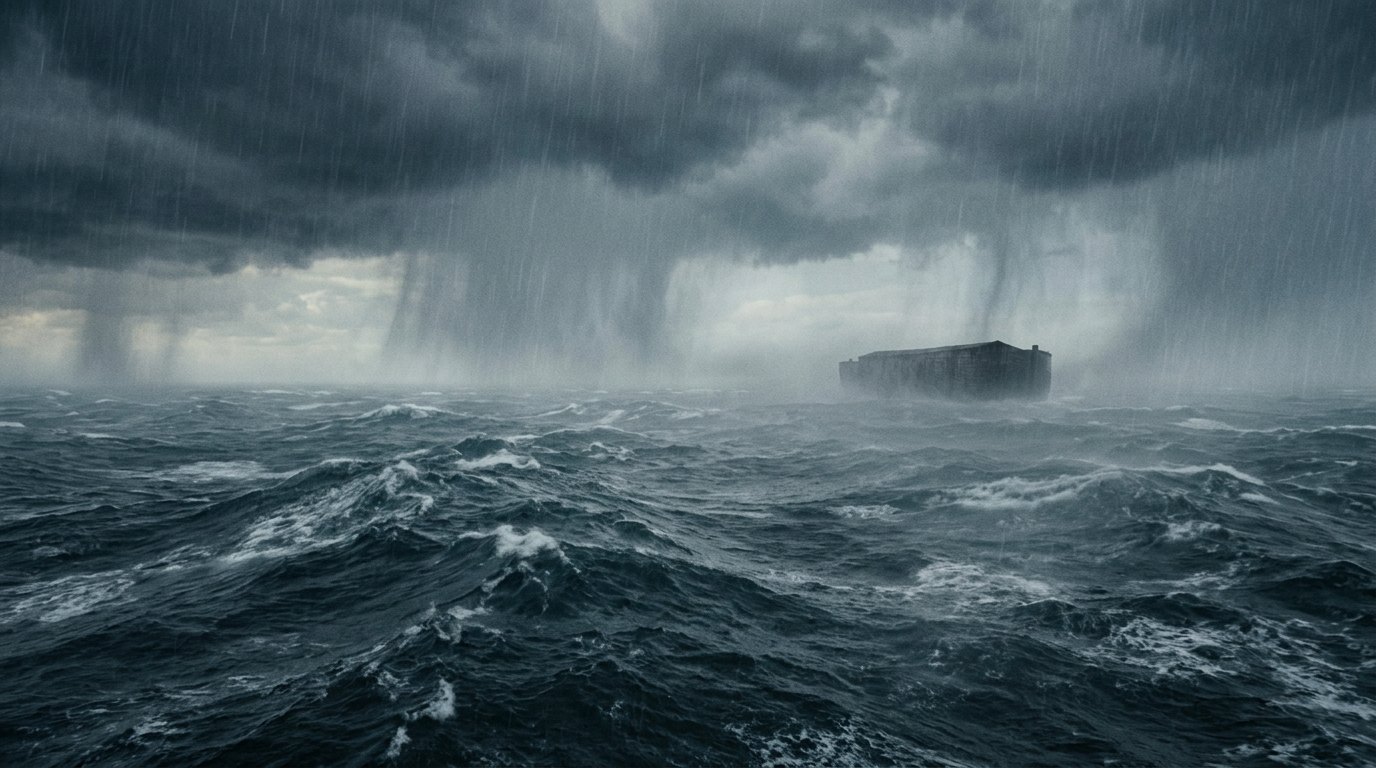
They rose greatly on the earth, and all the high mountains under the entire heavens were covered.
Genesis 7:19 (NIV)
The text explicitly states that every high mountain beneath the entire heaven was submerged under the rising floodwaters.
In Genesis 7:19, Scripture settles the geographic extent of the deluge with unmistakable clarity: all the high mountains under the entire heaven were covered. The inspired text uses universal terms in an absolute sense, leaving no room for a localized Mesopotamia river overflow. This cataclysm began when all the fountains of the great deep burst open and the windows of heaven opened in Genesis 7:11, shattering the earth's crust and pouring water from both above and beneath. Rain steadily fell for forty days, causing the rising waters to lift the massive ark high above the ground as recorded in Genesis 7:17.
As the deluge intensified, the waters prevailed greatly upon the land, bearing the vessel safely upon the vast, boundless surface according to Genesis 7:18. There were no dry summits remaining as refuges, because Genesis 7:20 specifies that the waters prevailed fifteen cubits above the highest peaks, submerging every elevated landmass under the sky. This crushing expanse held dominion over the submerged globe for one hundred and fifty days, as noted in Genesis 7:24. When God remembered Noah, He sent a wind, closed the subterranean fountains, and caused the waters to recede gradually over many months, until the distant mountain peaks finally reappeared in Genesis 8:1-5. The physical progression of the narrative requires a worldwide inundation.
| Passage | What it says |
|---|---|
| Genesis 7:17 | The floodwaters steadily multiplied for forty days, eventually bearing up the ark high above the ground. |
| Genesis 7:18 | The surging waters prevailed greatly upon the land, allowing the ark to float safely across the water's surface. |
| Genesis 7:19 | The waters rose excessively until every high mountain under the whole heaven was submerged. |
| Genesis 7:20 | The flood rose fifteen cubits above the tops of the highest mountains, leaving no exposed high ground anywhere. |
| Genesis 7:24 | The floodwaters dominated the entire surface of the earth for one hundred and fifty continuous days. |
| Genesis 7:11 | All fountains of the great deep burst open and the floodgates of heaven were opened globally. |
| Genesis 8:1-5 | The waters gradually receded over months until the tops of the mountains were seen. |
Total Extinction of Life
All Breathing Flesh Outside Died
Every living thing on the face of the earth was wiped out; people and animals and the creatures that move along the ground and the birds were wiped from the earth. Only Noah was left, and those with him in the ark.
Genesis 7:23 (NIV)
The text confirms absolute devastation of terrestrial life, emphasizing that only Noah and those with him in the ark survived.
Genesis 7:23 records the devastating severity of God's holy wrath: He blotted out every living thing that was on the face of the ground, and only Noah was left, and those who were with him in the ark. This total destruction was previously decreed when the Lord declared in Genesis 6:13 that He would destroy all flesh together with the earth because the world had corrupted its way. In Genesis 6:17, God warned that He was bringing a flood of waters to wipe out everything possessing the breath of life under heaven.
When the forty days of relentless rain poured out according to Genesis 7:4 and Genesis 7:12, no terrestrial creature outside the ark could endure the catastrophe. Genesis 7:21 explains that every creature moving on dry ground perished, including birds, cattle, wild beasts, swarming things, and all mankind. Lest any reader assume some escaped to higher ground, Genesis 7:22 repeats that all in whose nostrils was the breath of life, everything on dry land, died. The cross of Christ shows the terrible cost of human rebellion; the Flood demonstrates that God's righteous judgment against sin is thorough and absolute, leaving salvation solely to those who enter the refuge He provides.
| Passage | What it says |
|---|---|
| Genesis 7:4 | God decreed that forty days of rain would obliterate every existing living thing from the face of the ground. |
| Genesis 7:12 | Torrential rain fell uninterrupted upon the earth for forty days and forty nights. |
| Genesis 7:21 | Every creature that moved on dry ground perished, including birds, cattle, wild animals, creeping things, and all mankind. |
| Genesis 7:22 | Everything possessing the breath of life in its nostrils that dwelled upon dry land died. |
| Genesis 7:23 | God blotted out every living thing from the ground, sparing exclusively Noah and the inhabitants of the ark. |
| Genesis 6:13 | God tells Noah He will destroy all flesh and the entire earth. |
| Genesis 6:17 | God declares a flood of waters to destroy all flesh with the breath of life under heaven. |
The Universal Covenant
A Promise Encompassing the Entire Earth
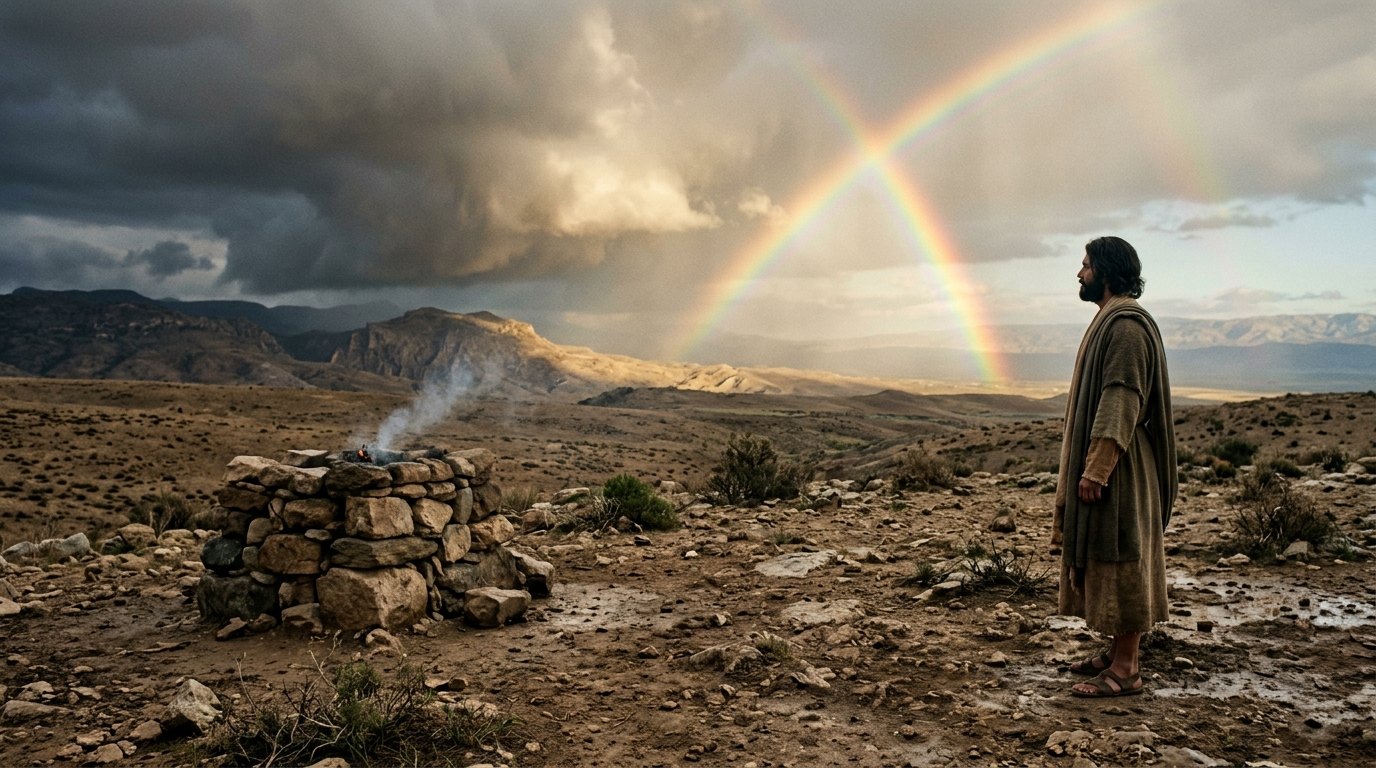
I establish my covenant with you: Never again will all life be destroyed by the waters of a flood; never again will there be a flood to destroy the earth.”
Genesis 9:11 (NIV)
God's covenant promise never again to destroy all flesh or ruin the entire earth with water demonstrates the flood's global scope.
Genesis 9:11 provides an insurmountable theological proof for a worldwide flood, wherein God swears: never again shall all flesh be cut off by the waters of the flood, and never again shall there be a flood to destroy the earth. If Noah's flood had been merely a local inundation, this solemn divine oath would be broken whenever regional floods kill communities and ravage river valleys. After Noah stepped onto the cleansed ground and built an altar, the Lord resolved in Genesis 8:21 never again to curse the ground on account of man or strike down every living creature as He had done.
In Genesis 9:1, God blessed Noah and his sons, commanding them to be fruitful, multiply, and fill the emptied earth. God established His covenant sign in Genesis 9:13, placing the rainbow in the clouds as an enduring witness between Himself and the entire planet. As Genesis 9:15 affirms, the Lord remembers this covenant so that waters shall never again become a flood to destroy all flesh. From the three sons of Noah, the entire globe was subsequently repopulated according to Genesis 9:19. Centuries later, in Isaiah 54:9, the Lord anchored His everlasting mercy to this very event, recalling His oath that the waters of Noah should never again cover the earth.
| Passage | What it says |
|---|---|
| Genesis 8:21 | The Lord resolved never again to curse the ground or strike down every living creature as He had done. |
| Genesis 9:11 | God established a covenant that no flesh would ever again be wiped out by waters of a deluge. |
| Genesis 9:15 | God promised to remember His covenant so that the waters would never again become a flood destroying all flesh. |
| Genesis 9:19 | The three sons of Noah survived the flood, and from them the whole earth was repopulated. |
| Genesis 9:1 | God commands Noah and his sons to be fruitful, multiply, and fill the emptied earth. |
| Genesis 9:13 | God sets the rainbow as a covenant sign between Him and the whole earth. |
| Isaiah 54:9 | The Lord recalls His oath that the waters of Noah should no more go over the earth. |
New Testament Witness
Christ and Apostles Confirm Worldwide Catastrophe
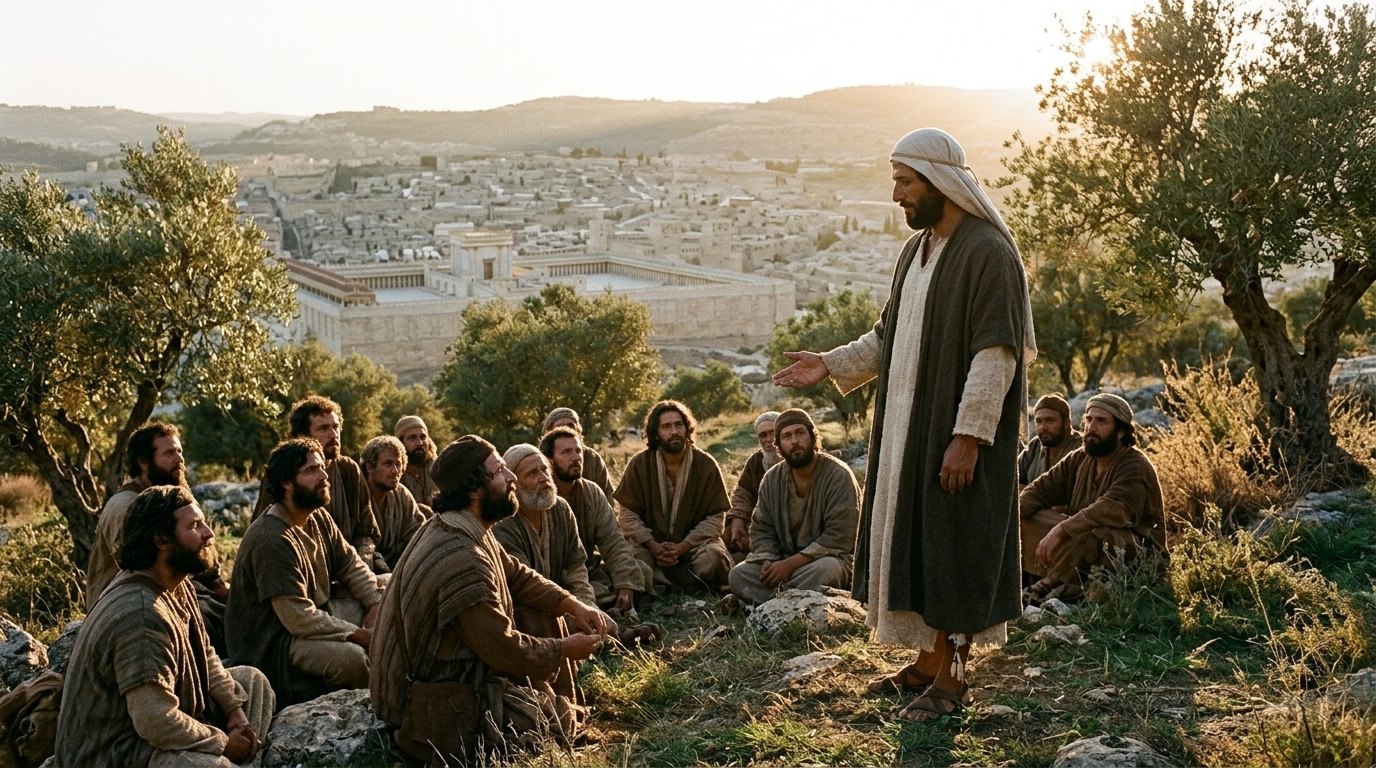
As it was in the days of Noah, so it will be at the coming of the Son of Man.
Matthew 24:37 (NIV)
Jesus explicitly treats Noah's historical deluge as a worldwide judgment prototype for His final, universal return.
Jesus Christ established the historical and global reality of the deluge when He warned in Matthew 24:37, as were the days of Noah, so will be the coming of the Son of Man. The Lord explicitly compared the worldwide reach of His future return in Matthew 24:30-31 to the deluge, noting in Matthew 24:38-39 that ungodly people were eating and drinking until the flood came and swept them all away. Luke 17:26-27 repeats this solemn warning: Noah entered the ark, the deluge arrived, and it destroyed them all, typifying the sudden, inescapable judgment awaiting the unrepentant at Christ's appearing in Luke 17:30.
The apostolic writers maintained this exact perspective. In Hebrews 11:7, Noah's faith-filled obedience in building the ark condemned the entire unbelieving world, pointing to the righteousness that comes by faith fulfilled in Romans 1:17. Peter records in 1 Peter 3:20 that only eight persons were saved through water, an archetype pointing to the spiritual deliverance found in Jesus Christ in 1 Peter 3:21. Peter then reminds the church in 2 Peter 2:5 that God did not spare the ancient world, preserving only Noah as a herald of righteousness, a pattern of the judgment reserved for the ungodly in 2 Peter 3:7. Finally, 2 Peter 3:5-6 declares that the world of that time was deluged with water and perished, foreshadowing the day when the heavens and earth will be dissolved by fire in 2 Peter 3:10.
| Passage | What it says | Fulfilled |
|---|---|---|
| Matthew 24:37-39 | Jesus affirms the flood swept everyone away unexpectedly, comparing its universal scope to His future second coming. | Matthew 24:30-31 |
| Luke 17:26-27 | Jesus warns that until Noah entered the ark, people lived heedlessly until the flood arrived and destroyed them all. | Luke 17:30 |
| Hebrews 11:7 | Noah's faithful building of the ark condemned the whole unbelieving world and preserved his household. | Romans 1:17 |
| 1 Peter 3:20 | Peter records that only eight souls were preserved through water within the ark. | 1 Peter 3:21 |
| 2 Peter 2:5 | God did not spare the ancient world, but brought a deluge upon the ungodly while preserving Noah, a herald of righteousness. | 2 Peter 3:7 |
| 2 Peter 3:5-6 | The world of that time, formed out of water and through water, was deluged and utterly perished. | 2 Peter 3:10 |
The Ark's Scale
The Vessel Sized to Preserve All Terrestrial Species
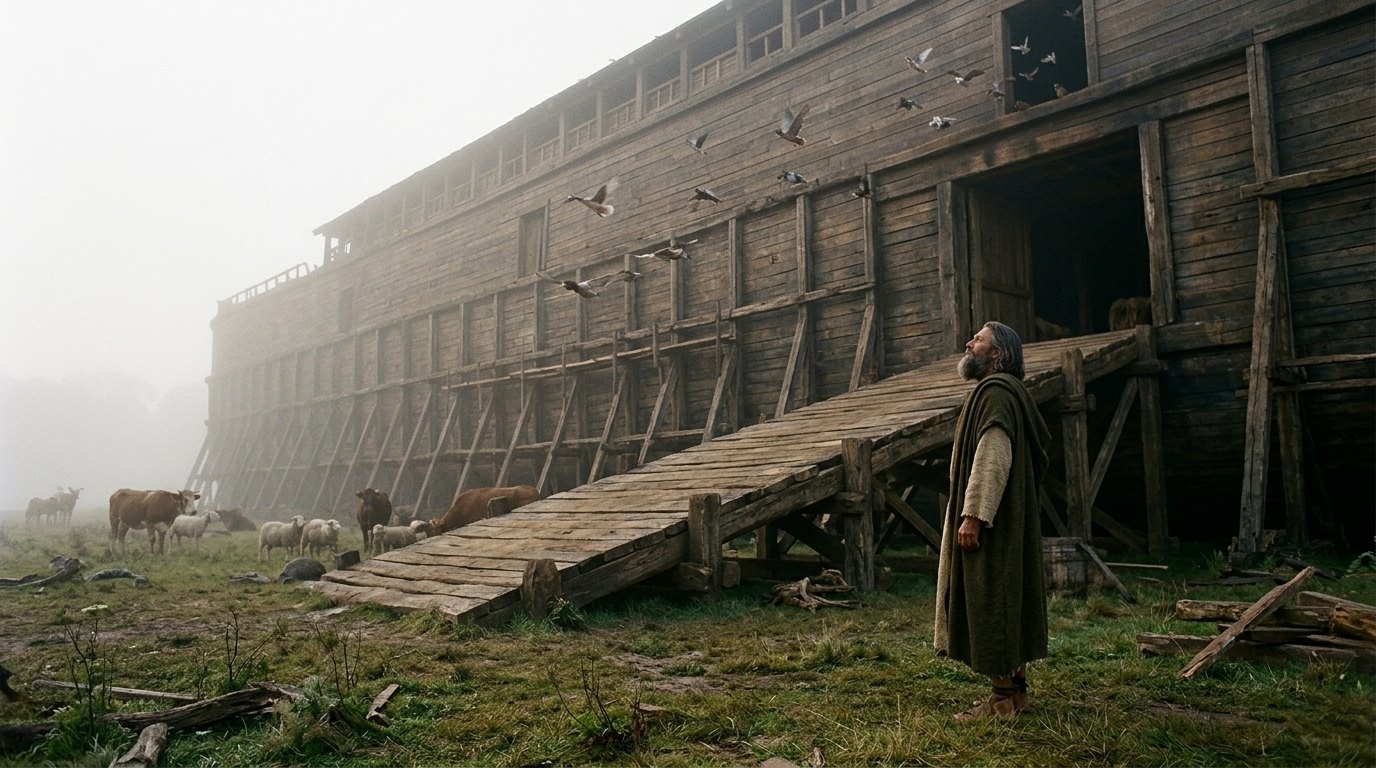
You are to bring into the ark two of all living creatures, male and female, to keep them alive with you. Two of every kind of bird, of every kind of animal and of every kind of creature that moves along the ground will come to you to be kept alive.
Genesis 6:19-20 (NIV)
The command to preserve pairs of every terrestrial creature demonstrates the extinction was worldwide.
In Genesis 6:19-20, God commands Noah to bring two of every sort of living thing into the ark to keep them alive, specifying birds, animals, and creeping things according to their kinds. The sheer necessity of gathering every terrestrial species to ensure their survival is an unmistakable proof of a worldwide cataclysm; if the deluge were merely local, animals outside the inundated valley would have preserved their populations without any human intervention or floating refuge.
The colossal proportions prescribed in Genesis 6:14-16 underscore this universal purpose. God commanded a three-decked vessel of immense displacement—three hundred cubits long, fifty cubits wide, and thirty cubits high—constructed with rooms and sealed with pitch. Such staggering capacity was unnecessary for escaping a seasonal or regional river overflow, but precisely calibrated to house representatives of every terrestrial vertebrate alongside sufficient provisions for an entire year.
This scope is further emphasized in Genesis 7:2-3, where Noah is directed to take additional pairs of clean beasts and birds to keep their offspring alive upon the face of all the earth. After the catastrophe subsided, Genesis 8:17 recounts God commanding every living creature out of the vessel specifically so they might breed abundantly, be fruitful, and multiply upon the earth. The entire terrestrial animal kingdom today descends from the surviving remnant preserved within that single sanctuary.
| Passage | What it says |
|---|---|
| Genesis 6:14-16 | The massive dimensions of the ark were designed for global animal preservation. |
| Genesis 6:19-20 | Two of every kind of animal were brought into the ark to keep them alive. |
| Genesis 7:2-3 | Clean and unclean animals and birds taken to preserve their offspring on the face of all the earth. |
| Genesis 8:17 | Every living creature brought out of the ark to breed abundantly and fill the earth. |
Where in the Bible
| Book | Passages |
|---|---|
| Genesis | 24 · Genesis 7:17, Genesis 7:18, Genesis 7:19, Genesis 7:20, Genesis 7:24, Genesis 7:11, Genesis 8:1-5, Genesis 7:4, Genesis 7:12, Genesis 7:21, Genesis 7:22, Genesis 7:23, Genesis 6:13, Genesis 6:17, Genesis 8:21, Genesis 9:11, Genesis 9:15, Genesis 9:19, Genesis 9:1, Genesis 9:13, Genesis 6:14-16, Genesis 6:19-20, Genesis 7:2-3, Genesis 8:17 |
| Isaiah | 1 · Isaiah 54:9 |
| Matthew | 1 · Matthew 24:37-39 |
| Luke | 1 · Luke 17:26-27 |
| Hebrews | 1 · Hebrews 11:7 |
| 1 Peter | 1 · 1 Peter 3:20 |
| 2 Peter | 2 · 2 Peter 2:5, 2 Peter 3:5-6 |
The story in order
- God's decree to destroy all flesh (c. 2348 BC) · Genesis 6:13 · God announces His intention to destroy all life on earth.
- God commands Noah to build the ark (c. 2348 BC) · Genesis 6:14-16 · Instructions given for the ark's construction to preserve life.
- The great deep bursts open (c. 2348 BC) · Genesis 7:11 · The Flood begins with the opening of the deep and heavens.
- Forty days of rain (c. 2348 BC) · Genesis 7:12 · Continuous rain falls for forty days and nights.
- Waters cover the highest mountains (c. 2348 BC) · Genesis 7:19 · Floodwaters rise above all mountains under heaven.
- All flesh on dry land perishes (c. 2348 BC) · Genesis 7:21 · All living creatures on dry land die.
- The ark floats on prevailing waters (c. 2348 BC) · Genesis 7:18 · The ark is borne safely on the waters.
- Waters recede from the earth (c. 2347 BC) · Genesis 8:3 · Floodwaters gradually decrease over 150 days.
- Mountains appear (c. 2347 BC) · Genesis 8:5 · The tops of mountains become visible as waters recede.
- God establishes His covenant (c. 2347 BC) · Genesis 9:11 · Promise never to destroy all flesh by flood again.
- Noah's descendants repopulate the earth (c. 2347 BC onwards) · Genesis 9:19 · The earth is repopulated from Noah's three sons.
- Jesus confirms the Flood's universality (AD 30) · Matthew 24:37-39 · Jesus compares His coming to Noah's time, implying a global flood.
Key words
- Flood (mabbul, מַבּוּל)
- A catastrophic deluge sent by God to destroy all life on earth, except for those on the ark. · Genesis 6:17
- All flesh (kol-basar, כָּל־בָּשָׂר)
- Encompasses all living creatures with the breath of life, including humans and animals. · Genesis 6:13
- Under heaven (tachat kol-hashamayim, תַּחַת כָּל־הַשָּׁמַיִם)
- Referring to the entire world or the whole earth. · Genesis 7:19
- Deluge (kataklysmos, κατάκλυσμος)
- A great flood or overwhelming quantity of water. · 2 Peter 3:5
The historical reality of the global flood stands as a sobering monument to God's holy wrath against human rebellion and a glorious witness to His preserving grace. Just as the ark was the only refuge from total ruin, Jesus Christ is the sole sanctuary from the coming universal judgment by fire, calling every sinner to repent and enter His salvation.
31 passages, each cited once.
Scripture cited
- Genesis 7:19-23
- Genesis 9:15-17
- Matthew 24:37-39
- Luke 17:26-27
- 2 Peter 2:5
- 1 Peter 3:18-21
- Genesis 7
- Genesis 7:19
- Genesis 7:21
- Genesis 7:23
- Genesis 7:20