What are the Gospels and why are there four?

John 21:24-25
24 This is the disciple who testifies to these things and who wrote them down. We know that his testimony is true.
25 Jesus did many other things as well. If every one of them were written down, I suppose that even the whole world would not have room for the books that would be written.
New International Version (NIV)
The answer
The Gospels are Matthew, Mark, Luke and John: four inspired, truthful accounts of the one Jesus Christ and the one good news about him. They recount his coming, teaching, mighty works, sacrificial death and resurrection. Mark 1:1 opens with “The beginning of the Good News of Jesus Christ, the Son of God.” At the heart of that news, 1 Corinthians 15:3-4 identifies Christ’s death for our sins, his burial and his resurrection on the third day according to the Scriptures.
These are not merely human recollections. Every Scripture is God-breathed, according to 2 Timothy 3:16, and 2 Peter 1:21 explains that holy men of God spoke as they were moved by the Holy Spirit. God gave one gospel through four witnesses, not four competing gospels.
No verse supplies a mathematical explanation for the number four, but Scripture makes the character and value of this fourfold witness clear.
A rich testimony to real events
God’s law established a matter through multiple witnesses: Deuteronomy 19:15 says, “At the mouth of two witnesses, or at the mouth of three witnesses, shall a matter be established.” The Gospels likewise emphasize testimony. John 21:24 identifies the disciple behind that Gospel as the one who testified and wrote these things, adding that his witness is true. Luke 1:1-4 explains that Luke carefully investigated matters handed down by eyewitnesses and servants of the word, writing an orderly account so that Theophilus could know their certainty.
Their testimony does not make Christ true by majority vote. Rather, God has graciously given an abundant witness to what Jesus did and said.
A fuller view of the same Christ
Each Gospel has distinguishing emphases, though no single label exhausts any of them:
- Gospel — An emphasis grounded in its own words
- Matthew — Jesus is introduced as the Christ, the son of David and the son of Abraham, placing him within God’s promises to Israel and the patriarchs (Matthew 1:1).
- Mark — Jesus is the Son of God who came not to be served but to serve, giving his life as a ransom for many (Mark 1:1; Mark 10:45).
- Luke — A carefully researched account brings certainty and displays God’s salvation prepared for all peoples: a light to the nations and the glory of Israel (Luke 1:1-4; Luke 2:29-32).
- John — Jesus is the eternal Word who was God and became flesh; his signs reveal him as the Christ, the Son of God, so that people may believe and receive life in his name (John 1:1; John 1:14; John 20:31).
These are complementary witnesses, not contradictory portraits. Differences in selection, arrangement and emphasis allow each writer to communicate what the Holy Spirit intended without changing the identity or work of Jesus.
Written selectively, with a saving purpose
None of the Gospels attempts to record everything Jesus did. John 21:25 says that Jesus did so many other things that the world itself would not have room for all the books if everything were written. John 20:30-31 therefore distinguishes between the many signs Jesus performed and the particular signs selected for that book.
Their purpose is not exhaustive information but certain knowledge, faith and life. Luke writes so that the reader may know the certainty of what was taught; John states that his written signs are intended “that you may believe that Jesus is the Christ, the Son of God, and that believing you may have life in his name.”
Answered from Scripture · reviewed November 11, 2026
The four Gospels—Matthew, Mark, Luke, and John—are Spirit-inspired, historical testimonies of the incarnation, earthly ministry, death, and resurrection of Jesus Christ. Rather than providing an exhaustive biography, God provided a fourfold witness so that from distinct perspectives the church might receive a trustworthy, rich portrait of the Son of God and believe on His name for eternal life.
Good News Proclaimed
The Gospel Is God's Saving Announcement

The beginning of the good news about Jesus the Messiah, the Son of God,
Mark 1:1 (NIV)
Mark establishes that the narrative of Jesus Christ's ministry and cross is itself the very proclamation of God's good news.
The narrative of the life and death of Jesus opens with a proclamation that shatters the silence of centuries. In Mark 1:1, the writer names his subject with absolute clarity: "The beginning of the gospel of Jesus Christ, the Son of God." The Greek term euangelion was not originally the label for a literary genre, but a vibrant royal announcement. It heralded the arrival of an imperial victory or the coronation of a sovereign ruler. Mark seizes this word to demonstrate that the true King has stepped into history to deliver His people.
This saving announcement echoes the ancient promises of the prophets. In Isaiah 52:7, the prophet envisioned feet beautiful upon the mountains, carrying the herald's report to Zion that God reigns and brings peace. When the Lord Jesus emerges from the wilderness, He takes up this exact proclamation. In Mark 1:14-15, Jesus enters Galilee proclaiming the gospel of God, urging all hearers to repent and believe because the kingdom of heaven is at hand. The message is not an abstract philosophy; it is an urgent historical reality that demands personal faith and total surrender.
The apostolic church consistently recognized this good news as the centerpiece of divine revelation. Writing to the church in Rome, the apostle Paul opens his treatise in Romans 1:1-4 by rooting this gospel in the prophetic scriptures, centered entirely on God's resurrected Son of the seed of David. Paul crystallizes this essential truth in 1 Corinthians 15:1-4, declaring that Christ died for our sins according to the Scriptures, was buried, and rose again on the third day. Peter affirms this same foundational reality in Acts 10:36-38, testifying to Cornelius how God anointed Jesus of Nazareth with the Holy Spirit and with power to save.
| Passage | What it says |
|---|---|
| Mark 1:1 | Declares the beginning of the gospel concerning Jesus Christ, the Son of God. |
| Mark 1:14-15 | Jesus preaches the gospel of the kingdom, calling all hearers to repent and believe. |
| Romans 1:1-4 | Paul identifies the gospel as promised beforehand through the prophets concerning God's resurrected Son. |
| 1 Corinthians 15:1-4 | Summarizes the essential gospel message: Christ died for our sins, was buried, and rose again. |
| Isaiah 52:7 | Prophesies the good news of salvation proclaimed to Zion when the Lord reigns. |
| Acts 10:36-38 | Summarizes the good news preached concerning Jesus of Nazareth from Galilee through His resurrection. |
The Multiplied Witness
God Confirms Truth by Multiple Witnesses

One witness is not enough to convict anyone accused of any crime or offense they may have committed. A matter must be established by the testimony of two or three witnesses.
Deuteronomy 19:15 (NIV)
This legal requirement underpins God's provision of multiple gospel witnesses to establish unshakeable certainty for His church.
Behind the divine wisdom of providing four distinct Gospel records stands a solemn biblical principle of judicial certainty. In Deuteronomy 19:15, God laid down the legal foundation for establishing truth among His people: "A single witness shall not rise up against anyone on account of any iniquity or any sin... on the evidence of two or three witnesses a matter shall be confirmed." The Lord never intended His church to rely on a solitary human voice to substantiate the supreme events of redemptive history.
This statutory standard governed the public life of ancient Israel and was reiterated across the covenants. Under Mosaic law, capital cases strictly required multiple independent testimonies, as confirmed in Deuteronomy 17:6. Jesus Himself upheld this standard as enduring and binding for the life of the covenant community in Matthew 18:16, teaching that every charge must stand on the testimony of two or three witnesses. Even in His own ministry, Jesus met His accusers on this ground; in John 8:17-18, He appealed directly to the law, citing both His own witness and the confirming testimony of the Father who sent Him.
The apostles maintained this exact criterion when guarding the purity and doctrine of the early church. Paul applied the principle to discipline and truth in 2 Corinthians 13:1 and warned Timothy in 1 Timothy 5:19 never to admit an elder's accusation without multiple witnesses. The author of Hebrews 10:28 likewise highlights that under Moses, judgment fell only on the word of two or three witnesses. By granting four harmonizing Gospels, God provided an impregnable fourfold testimony that leaves the world without excuse and gives believers unshakable confidence.
| Passage | What it says |
|---|---|
| Deuteronomy 19:15 | Specifies that a matter is confirmed only at the mouth of two or three witnesses. |
| Matthew 18:16 | Jesus affirms the enduring authority of confirming every charge by two or three witnesses. |
| 2 Corinthians 13:1 | Paul reiterates the standard that every fact is established by multiple witnesses. |
| John 8:17-18 | Jesus points to the law's requirement of two witnesses, naming Himself and the Father. |
| Deuteronomy 17:6 | Establishes the foundational principle that evidence is ratified on the testimony of two or three witnesses. |
| 1 Timothy 5:19 | Reaffirms the requirement of multiple witnesses to establish truth in church practice. |
| Hebrews 10:28 | Recalls the Old Testament standard that an accusation stood on the testimony of multiple witnesses. |
The Promised King
Matthew Presents the Lion of Judah
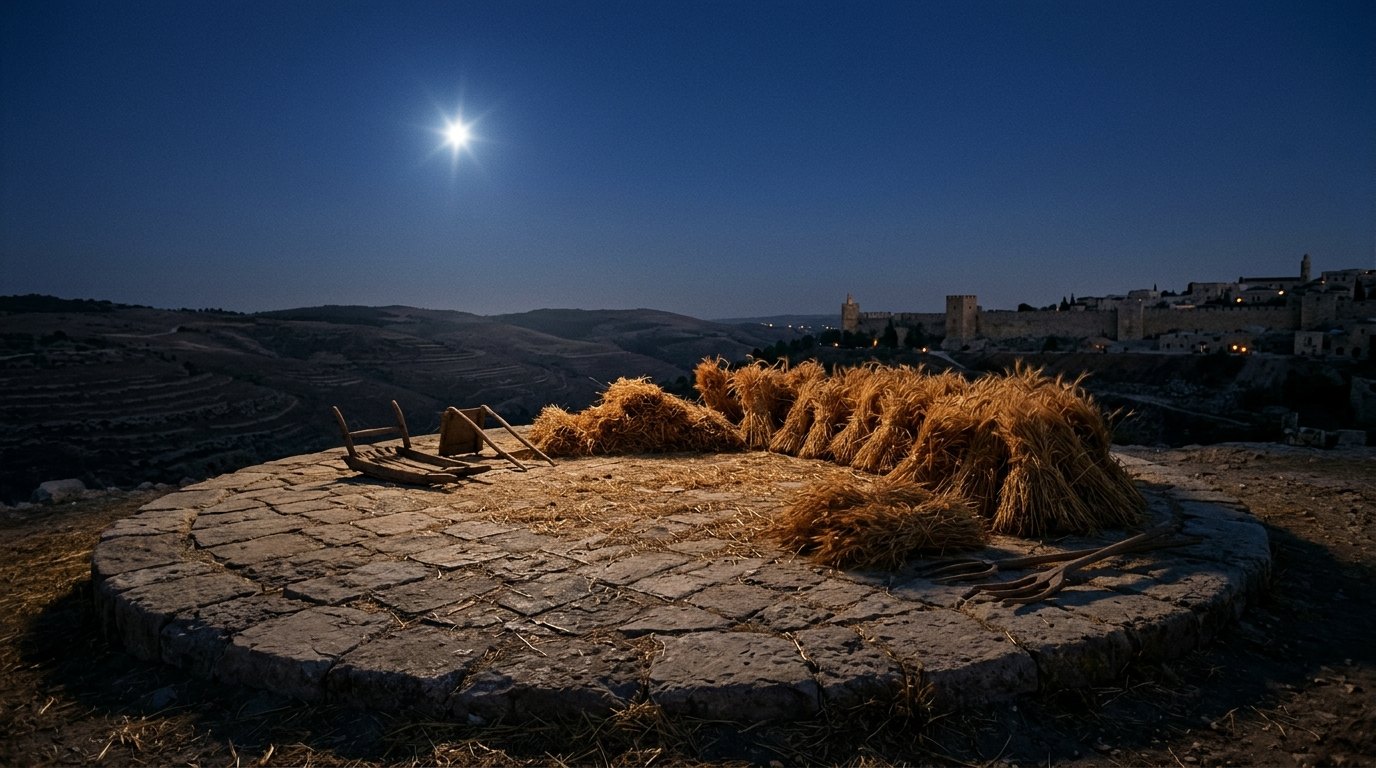
This is the genealogy of Jesus the Messiah the son of David, the son of Abraham:
Matthew 1:1 (NIV)
Matthew immediately roots Christ's identity in the Davidic royal covenant and the Abrahamic promise.
The First Gospel introduces the Messiah through the lineage of Israel's royal line. In Matthew 1:1, the opening line rings out with covenantal authority: "The record of the genealogy of Jesus the Messiah, the son of David, the son of Abraham." Matthew directs his pen primarily to a Jewish audience, demonstrating at every turn that Jesus of Nazareth is the long-awaited King who fulfills the promises made to the fathers.
From Jesus' birth, His regal identity takes center stage. In Matthew 2:1-2, Eastern magi arrive in Jerusalem with a startling inquiry: "Where is He who has been born King of the Jews?" This infant King fulfills ancient patriarchal prophecy; in Genesis 49:9-10, Jacob had foretold that the scepter would not depart from Judah until Shiloh arrived. The prophet Micah pinpointed His humble birthplace in Micah 5:2, declaring Bethlehem the source of Israel's eternal ruler. The visionary seer in Revelation 5:5 celebrates the ultimate victory of this promised King, hailing Him as the Lion of the tribe of Judah who has conquered.
Throughout His earthly walk, the King does not abolish the sacred heritage of Israel. As Jesus declares in Matthew 5:17, He came not to abolish the Law or the Prophets, but to fulfill them entirely. His triumphal entry, recorded in Matthew 21:4-5, fulfills the prophecy of Zechariah, presenting Zion's King coming in meekness on a donkey. His royal authority culminates in Matthew 28:18-20, where the risen Christ announces that all authority in heaven and on earth has been granted to Him, commissioning His followers to disciple every nation.
| Passage | What it says |
|---|---|
| Matthew 1:1 | Presents the record of the genealogy of Jesus Christ, Son of David and Abraham. |
| Matthew 2:1-2 | Magi arrive in Jerusalem seeking the newborn King of the Jews to worship Him. |
| Matthew 5:17 | Jesus explains that He came not to abolish the Law or Prophets, but to fulfill them. |
| Matthew 28:18-20 | The risen King claims all authority in heaven and earth and commands world discipleship. |
| Genesis 49:9-10 | Prophesies that the scepter will not depart from Judah until Shiloh comes. |
| Micah 5:2 | Identifies Bethlehem Ephrathah as the birthplace of the eternal ruler of Israel. |
| Matthew 21:4-5 | Declares Jesus entering Jerusalem as the humble King foretold by Zechariah. |
| Revelation 5:5 | Designates Jesus Christ as the triumphant Lion of the tribe of Judah. |
The Obedient Servant
Mark Reveals the Tireless Servant of the Lord

For even the Son of Man did not come to be served, but to serve, and to give his life as a ransom for many.”
Mark 10:45 (NIV)
This verse states the central purpose of Jesus' life and sacrificial mission in Mark's narrative.
The Gospel of Mark delivers a brisk, immediate portrait of the Messiah as the tireless and obedient Servant of the Lord. The narrative moves swiftly from one act of power and compassion to the next, finding its theological anchor in Mark 10:45: "For even the Son of Man did not come to be served, but to serve, and to give His life a ransom for many." Mark reveals a Savior whose majesty is manifested in self-emptying humiliation and sacrificial atonement.
This portrait corresponds precisely to the prophetic vision of the Suffering Servant. Centuries earlier, the Lord spoke through the prophet in Isaiah 42:1-4, presenting His chosen Servant who would not cry out or raise His voice in the streets, but would faithfully establish divine justice across the earth. Mark shows this servant heart commencing at the Jordan. In Mark 1:9-11, Jesus steps into the water to be baptized by John, receiving the anointing of the Holy Spirit as the Father's voice confirms His divine delight.
The climax of Mark's Gospel displays the ultimate obedience of this divine Servant. In Mark 15:39, as Jesus breathes His last upon the cross, a hardened Roman centurion witnesses the manner of His death and confesses, "Truly this man was the Son of God!" This radical descent into suffering fulfills the pattern celebrated in Philippians 2:5-8, where Christ took the form of a bondservant and humbled Himself to the point of death on a cross. Yet the Servant's work does not end in the tomb; in Mark 16:19-20, the ascended Lord continues working from heaven alongside His disciples, confirming their proclamation with divine signs.
| Passage | What it says |
|---|---|
| Mark 1:9-11 | Jesus is baptized by John and anointed by the Spirit as the Father's beloved Son. |
| Mark 10:45 | The Son of Man came not to be served, but to give His life a ransom. |
| Mark 15:39 | A Roman centurion witnesses the death of Jesus and confesses Him as God's Son. |
| Mark 16:19-20 | The ascended Lord works with His disciples, confirming their proclamation by accompanying signs. |
| Isaiah 42:1-4 | Presents the Lord's chosen Servant who faithfully brings forth justice without faltering. |
| Philippians 2:5-8 | Describes Christ taking the form of a servant and becoming obedient unto death. |
The Son of Man
Luke Traces the Savior of Humanity

Many have undertaken to draw up an account of the things that have been fulfilled among us, just as they were handed down to us by those who from the first were eyewitnesses and servants of the word. With this in mind, since I myself have carefully investigated everything from the beginning, I too decided to write an orderly account for you, most excellent Theophilus, so that you may know the certainty of the things you have been taught.
Luke 1:1-4 (NIV)
Luke explains his careful historical investigation undertaken so that believers may know the certainty of the faith.
In Luke 1:1-4, the physician sets forth the pastoral purpose of his careful labor: having followed all things closely from the very first, he compiled an orderly narrative from firsthand eyewitnesses so that believers might know the certainty of the things taught. Luke presents Jesus as the true Son of Man, the promised Deliverer whose reach extends beyond Israel to the entirety of the fallen human race.
While Matthew anchors Jesus in the covenant lineage of Abraham and David, Luke 3:23-38 deliberately traces His lineage all the way back to Adam, demonstrating that Christ is the kinsman-Redeemer for all nations. He is the long-awaited Seed of the woman promised in Genesis 3:15, stepping into real human history to undo the ruin wrought by the first Adam. This universal scope shines brightly at His nativity, where the heavenly host proclaims in Luke 2:10-11 good tidings of great joy which shall be to all people, heralding the birth of a Savior for the destitute, the marginalized, and the gentile outcast.
Throughout His travel narrative toward Jerusalem, Jesus exemplifies this compassionate rescue, declaring in Luke 19:10 that the Son of Man came specifically to seek and to save that which was lost. This genuine incarnation required full participation in human flesh and blood, as Hebrews 2:14-17 reminds us, so that Christ could defeat the devil through death and stand as a merciful, faithful High Priest. Following His triumph over the grave, the risen Christ in Luke 24:44-47 opens the minds of His followers to comprehend how Moses, the Prophets, and the Psalms converged upon His suffering, His bodily resurrection, and the global proclamation of repentance and remission of sins in His name.
| Passage | What it says |
|---|---|
| Luke 1:1-4 | Luke writes an orderly account compiled from eyewitnesses to provide certainty of the truth. |
| Luke 3:23-38 | Traces Jesus' genealogy back to Adam, demonstrating His connection to all humanity. |
| Luke 19:10 | Declares that the Son of Man came to seek and save the lost. |
| Luke 24:44-47 | The risen Christ opens minds to understand how the Scriptures foretold His suffering and rising. |
| Genesis 3:15 | Promises the seed of the woman who will crush the serpent's head. |
| Luke 2:10-11 | Announces tidings of great joy for all people with the birth of the Savior. |
| Hebrews 2:14-17 | Explains Christ's full participation in human flesh to become a merciful High Priest. |
The Divine Word
John Declares the Eternal Son from Heaven

Jesus performed many other signs in the presence of his disciples, which are not recorded in this book. But these are written that you may believethat Jesus is the Messiah, the Son of God, and that by believing you may have life in his name.
John 20:30-31 (NIV)
John gives his explicit purpose for recording selected signs: that readers would believe and receive life.
The fourth Gospel states its explicit theological objective in John 20:30-31: Jesus performed many other signs in the presence of His disciples, but these are written that you may believe that Jesus is the Christ, the Son of God, and that believing you may have life in His name. Where the Synoptics begin in history and genealogy, John lifts the reader's gaze into the uncreated eternity of God.
Opening with the majesty of John 1:1-4, John reveals that the Word was in the beginning, was with God, and was fully God, the source of all life and light. Yet this eternal Lord did not remain distant; in John 1:14, the Word became flesh and tabernacled among us, allowing mortal witnesses to behold His divine glory, full of grace and truth. Throughout His earthly ministry, Jesus openly claimed this absolute equality of being with the Father, proclaiming before hostile crowds in John 8:58 that before Abraham was, 'I AM,' and declaring in John 10:30 that He and the Father are one.
This high Christology is not philosophical speculation; it is historical reality confirmed by direct sight, as John 19:35 insists that he who saw the pierced side of the crucified Christ bore record so that his readers might believe. Furthermore, the accuracy of this testimony is guaranteed by the supernatural work of God. Jesus promised in John 14:26 that the Father would send the Holy Spirit to teach the disciples and bring all Christ's words to remembrance, while John 16:13-14 ensured that the Spirit of truth would guide them into all truth to glorify the Son.
| Passage | What it says |
|---|---|
| John 1:1-4 | Identifies Jesus as the eternal Word who was with God and was God. |
| John 1:14 | Testifies that the Word became flesh and dwelt among us, full of grace and truth. |
| John 19:35 | The eyewitness bears record of Christ's death so that readers might believe. |
| John 20:30-31 | States these signs are written so readers believe Jesus is the Christ and have life. |
| John 8:58 | Records Jesus declaring His eternal divine existence before Abraham was born. |
| John 10:30 | Records Jesus' affirmation of His oneness in essence with the Father. |
| John 14:26 | Promises the Holy Spirit who will bring all Christ taught to the disciples' remembrance. |
| John 16:13-14 | Promises the Spirit of truth to guide the apostles into all truth. |
The Heavenly Vision
Four Living Creatures Reflect One Sovereign Lord

Also in front of the throne there was what looked like a sea of glass, clear as crystal. In the center, around the throne, were four living creatures, and they were covered with eyes, in front and in back. The first living creature was like a lion, the second was like an ox, the third had a face like a man, the fourth was like a flying eagle. Each of the four living creatures had six wings and was covered with eyes all around, even under its wings. Day and night they never stop saying: “ ‘Holy, holy, holy is the Lord God Almighty,’ who was, and is, and is to come.”
Revelation 4:6-8 (NIV)
The four living creatures around the heavenly throne historically mirror the four aspects of Christ portrayed across the Gospels.
The unified testimony of the four Gospels finds an enduring heavenly emblem in Revelation 4:6-8, where four living creatures stand round about the throne, unceasingly giving glory and honor to God Almighty. Throughout church history, beginning with early fathers such as Irenaeus, the church observed that these four distinct countenances beautifully mirror the fourfold portrait of Jesus Christ presented in Holy Scripture.
This imagery was first unveiled to the prophet in Ezekiel 1:10, which describes the cherubim bearing the faces of a man, a lion on the right, an ox on the left, and an eagle above, a vision renewed in Ezekiel 10:14 before the divine glory. Each living creature captures a primary dimension of the Redeemer's person and work as set down by the Evangelists. Matthew presents the Lion of Judah, the authoritative King who fulfills the covenant promises of royalty. Mark displays the ox, the untiring servant who yields His life in labor and sacrifice. Luke portrays the face of the man, highlighting the sympathetic Son of Man in His tender humanity and universal compassion. John reflects the eagle soaring in the heavens, declaring the eternal deity of the Word who came from the bosom of the Father. Far from being redundant, this fourfold witness provides a rich, complementary revelation of the one Lord Jesus Christ, proving that no single vantage point could exhaust the majesty of God manifest in the flesh.
| Passage | What it says |
|---|---|
| Ezekiel 1:10 | Describes four cherubim faces: man, lion on the right, ox on the left, eagle above. |
| Ezekiel 10:14 | Reiterates the fourfold heavenly faces of cherub, man, lion, and eagle before God's presence. |
| Revelation 4:6-8 | Depicts four living creatures like a lion, calf, man, and flying eagle praising God unceasingly. |
Eyewitness Reliability
Historical Testimony Grounded in Truth

This is the disciple who testifies to these things and who wrote them down. We know that his testimony is true. Jesus did many other things as well. If every one of them were written down, I suppose that even the whole world would not have room for the books that would be written.
John 21:24-25 (NIV)
John affirms the historical veracity of his eyewitness testimony while noting the deliberate divine selection of content.
In John 21:24-25, the beloved disciple authenticates his record, writing that this is the disciple who testifies of these things, and we know that his testimony is true, adding that the world itself could not contain the books if every deed of Christ were recorded. The four Gospels do not represent pious myth or detached folklore; they are rock-solid historical testimony preserved by men who walked with the Lord.
Jesus established this firsthand foundation during His upper room discourse, charging the apostles in John 15:27 to bear witness precisely because they had been with Him from the beginning. The Apostle John reiterates this physical, verifiable reality in 1 John 1:1-3, insisting that the apostolic message rests entirely upon that which they had heard, seen with their own eyes, looked upon, and handled with their hands concerning the Word of life. In identical fashion, the Apostle Peter repudiates fabrications in 2 Peter 1:16, declaring that they did not follow cunningly devised fables, but were eyewitnesses of His majesty upon the holy mount.
This strict standard of direct verification governed the earliest church. When choosing an apostle to replace Judas in Acts 1:21-22, the assembly required someone who had accompanied them from John's baptism through the ascension, to stand as a witness of the resurrection. Peter confirmed this unique commissioning in Acts 10:39-41, reminding the household of Cornelius that God chose specific witnesses who ate and drank with Christ after He rose from the dead, providing an unbreakable historical foundation for our faith.
| Passage | What it says |
|---|---|
| John 15:27 | Jesus commissions the apostles to testify because they were with Him from the beginning. |
| John 21:24-25 | Confirms the eyewitness testimony is true while noting books could not contain every deed. |
| 1 John 1:1-3 | Proclaims what the apostles saw, heard, and touched regarding the Word of life. |
| 2 Peter 1:16 | Asserts the apostles did not follow myths but were eyewitnesses of His majesty. |
| Acts 1:21-22 | Specifies eyewitness accompaniment throughout Jesus' earthly ministry as the requirement for apostolic testimony. |
| Acts 10:39-41 | States the apostles were chosen by God as eyewitnesses who ate and drank with Jesus after His resurrection. |
Where in the Bible
| Book | Passages |
|---|---|
| Genesis | 2 · Genesis 49:9-10, Genesis 3:15 |
| Deuteronomy | 2 · Deuteronomy 19:15, Deuteronomy 17:6 |
| Isaiah | 2 · Isaiah 52:7, Isaiah 42:1-4 |
| Ezekiel | 2 · Ezekiel 1:10, Ezekiel 10:14 |
| Micah | 1 · Micah 5:2 |
| Matthew | 6 · Matthew 18:16, Matthew 1:1, Matthew 2:1-2, Matthew 5:17, Matthew 28:18-20, Matthew 21:4-5 |
| Mark | 6 · Mark 1:1, Mark 1:14-15, Mark 1:9-11, Mark 10:45, Mark 15:39, Mark 16:19-20 |
| Luke | 5 · Luke 1:1-4, Luke 3:23-38, Luke 19:10, Luke 24:44-47, Luke 2:10-11 |
| John | 11 · John 8:17-18, John 1:1-4, John 1:14, John 19:35, John 20:30-31, John 8:58, John 10:30, John 14:26, John 16:13-14, John 15:27, John 21:24-25 |
| Acts | 3 · Acts 10:36-38, Acts 1:21-22, Acts 10:39-41 |
| Romans | 1 · Romans 1:1-4 |
| 1 Corinthians | 1 · 1 Corinthians 15:1-4 |
| 2 Corinthians | 1 · 2 Corinthians 13:1 |
| Philippians | 1 · Philippians 2:5-8 |
| 1 Timothy | 1 · 1 Timothy 5:19 |
| Hebrews | 2 · Hebrews 10:28, Hebrews 2:14-17 |
| 2 Peter | 1 · 2 Peter 1:16 |
| 1 John | 1 · 1 John 1:1-3 |
| Revelation | 2 · Revelation 5:5, Revelation 4:6-8 |
The story in order
- Creation and Fall (c. 4000 BC) · Genesis 3:15 · Promise of the Seed of the woman to crush the serpent's head.
- Abraham and Judah's Seed (c. 1450 BC) · Genesis 49:9-10 · Prophecy of the scepter from Judah until Shiloh comes.
- Prophecy of Bethlehem Birth (c. 700 BC) · Micah 5:2 · Identifies Bethlehem as the birthplace of the eternal ruler.
- Prophecy of the Gospel (c. 700 BC) · Isaiah 52:7 · Prophesies the good news of salvation proclaimed.
- Jesus' Birth Announced (c. 4 BC) · Luke 2:10-11 · Tidings of great joy for all people with the Savior's birth.
- Jesus' Baptism and Anointing (AD 27) · Mark 1:9-11 · Jesus is baptized and anointed by the Spirit as the Son.
- Jesus Preaches the Gospel (c. AD 28) · Mark 1:14-15 · Jesus preaches the gospel of the kingdom, calling for repentance.
- Jesus' Eternal Existence (c. AD 30) · John 8:58 · Jesus declares His eternal divine existence before Abraham.
- Jesus' Death as Ransom (c. AD 30) · Mark 10:45 · The Son of Man gives His life as a ransom.
- Jesus' Resurrection and Commission (AD 30) · Matthew 28:18-20 · The risen King claims authority and commands world discipleship.
- Apostolic Testimony (c. AD 30-33) · Acts 1:21-22 · Eyewitness requirement for apostolic testimony.
- Gospel Summary (c. AD 55) · 1 Corinthians 15:1-4 · Summary of Christ's death, burial, and resurrection.
- The Word Became Flesh (c. AD 90) · John 1:14 · Testifies that the eternal Word became flesh.
The Fourfold Heavenly Vision
| Creature | Associated Gospel | Symbolism | Passage |
|---|---|---|---|
| Man | Matthew | Jesus as the King, Son of Man, fulfilling human hopes. | Ezekiel 1:10 |
| Lion | Mark | Jesus as the powerful Servant, the Lion of Judah. | Ezekiel 1:10 |
| Ox | Luke | Jesus as the Servant bearing burdens for all humanity. | Ezekiel 1:10 |
| Eagle | John | Jesus as the divine Word, soaring in heavenly authority. | Ezekiel 1:10 |
Key words
- Gospel (euangelion, εὐαγγέλιον)
- The good news of salvation through Jesus Christ, His death, burial, and resurrection. · Mark 1:1
- Witness (martys, μάρτυς)
- Testimony given to establish the truth of a matter, often requiring multiple sources. · Deuteronomy 19:15
- Son of Man (huios anthrōpou, υἱὸς ἀνθρώπου)
- A title Jesus used for Himself, emphasizing His humanity and divine authority. · Mark 10:45
- Word (logos, λόγος)
- Refers to Jesus Christ as the eternal, divine expression of God. · John 1:1
These four distinct accounts do not compete; they harmonize to reveal the single, glorious person and work of Jesus Christ. In receiving their Spirit-breathed testimony, the believer is grounded in historical certainty and summoned to unwavering faith in the living Savior.
51 passages, each cited once.
Scripture cited
- Mark 1:1
- Luke 1:1-4
- John 20:30-31
- Matthew 1:1
- 2 Peter 1:20-21
- 1 Corinthians 15:1-4
- Deuteronomy 19:15
- 2 Timothy 3:16
- Mark 10:45
- Luke 2:29-32
- John 1:1-14