What are the names of God and what do they mean?

Exodus 3:13-15
13 Moses said to God, “Suppose I go to the Israelites and say to them, ‘The God of your fathers has sent me to you,’ and they ask me, ‘What is his name?’ Then what shall I tell them?”
14 God said to Moses, “I AM WHO I AM. This is what you are to say to the Israelites: ‘I AM has sent me to you.’ ”
15 God also said to Moses, “Say to the Israelites, ‘The LORD, the God of your fathers—the God of Abraham, the God of Isaac and the God of Jacob—has sent me to you.’ “This is my name forever, the name you shall call me from generation to generation.
New International Version (NIV)
The answer
God’s names in Scripture are revelations of who He is and what He does, not different gods and not formulas for manipulating Him. His personal covenant name is Yahweh, explained at the burning bush by “I AM WHO I AM”: He is the living, self-existent, eternal God who depends on no one and remains faithful to His promises. Exodus 3:15 declares that this is His name forever.
When God later proclaimed His name, He described His character: merciful, gracious, slow to anger, abundant in loving kindness and truth, forgiving sin, yet by no means clearing the guilty (Exodus 34:6-7). His name reveals both His grace and His justice.
The primary Old Testament names
- Name — Meaning and significance
- Elohim — God — The Hebrew word for God used of the one true God as the powerful, majestic Creator. Genesis 1:1 introduces Elohim as the One who created the heavens and the earth.
- Yahweh — LORD, traditionally Jehovah — God’s personal covenant name. Many English Bibles print LORD in capitals where the Hebrew has Yahweh. It is closely connected with the Hebrew verb to be or exist: in Exodus 3:14, ehyeh means I am or I will be. Yahweh is therefore the self-existent, ever-living, unchanging God who keeps His covenant (Exodus 3:14-15).
- Adonai — Lord or Master — This emphasizes God’s sovereign authority and His right to rule and receive obedience. Abram addressed God as Adonai Yahweh, rendered “Lord Yahweh” in Genesis 15:2.
- El Shaddai — God Almighty — The all-powerful God, whose might is sufficient to accomplish His promises. He revealed Himself by this name to Abram when natural circumstances made the promised offspring seem impossible (Genesis 17:1).
- El Elyon — God Most High — The supreme God, exalted over every power and described as the possessor of heaven and earth (Genesis 14:18-22).
- El Roi — the God who sees — Hagar’s confession that God had seen and cared for her in her affliction. God is not distant or unaware of suffering (Genesis 16:13).
Names joined to Yahweh
These names usually commemorate something God revealed about Himself in a particular event:
- Yahweh Jireh — Yahweh will provide: Abraham gave this name to the place where God provided the sacrifice. It confesses God as the faithful provider, ultimately pointing to His provision for sin through the promised sacrifice (Genesis 22:14).
- Yahweh Rapha — Yahweh who heals: God revealed Himself as the One with power to heal and restore His people (Exodus 15:26).
- Yahweh Nissi — Yahweh our banner: Moses’ altar proclaimed God as His people’s rallying point, protector, and source of victory (Exodus 17:15).
- Yahweh Shalom — Yahweh is peace: Gideon’s altar confessed that true peace comes from God’s presence and favour, not from circumstances alone (Judges 6:24).
- Yahweh Rohi — Yahweh is my shepherd: David’s words describe God as the shepherd who personally leads, provides for, and cares for His people (Psalm 23:1).
- Yahweh Tsidkenu — the LORD our righteousness: God Himself is the source of His people’s righteousness and salvation; they cannot establish their standing before Him by their own goodness (Jeremiah 23:6).
- Yahweh Shammah — Yahweh is there: The name of the future city proclaims God’s abiding presence with His people as its crowning glory (Ezekiel 48:35).
God’s name revealed in Jesus Christ
The names and titles given to Jesus show that He is not merely a teacher sent by God; He is God the Son and the promised Saviour:
- Jesus — Yahweh saves: The angel explained His name by His mission: “for it is he who shall save his people from their sins” (Matthew 1:21).
- Immanuel — God with us: The virgin-born Son promised in Isaiah 7:14 is identified in Matthew 1:23 as “Immanuel,” interpreted “God with us.”
- Messiah or Christ — the Anointed One: These are two forms of the same title, identifying God’s promised King and deliverer (John 1:41).
- I AM: Jesus declared, “before Abraham came into existence, I AM” (John 8:58). He claimed eternal existence before Abraham and used language that reaches back to God’s self-revelation in Exodus 3:14.
- The divine Messiah: Isaiah 9:6 calls the promised Son “Wonderful, Counsellor, The mighty God, The everlasting Father, The Prince of Peace.” These titles ascribe divine wisdom, power, eternal care, and righteous, peaceful rule to Him.
Finally, Matthew 28:19 joins the singular name of God to the Father, the Son, and the Holy Spirit: one God, not three. To honour His name is to believe what He reveals about Himself—to trust His mercy, fear His justice, obey His rule, and receive salvation through Jesus Christ.
Answered from Scripture · reviewed November 11, 2026
Scripture reveals God not through speculative human philosophy, but through the names He graciously discloses to His people. Each divine name unfolds His eternal character, His covenant faithfulness, and His saving power across redemptive history. To know God's names is to grasp who He is, how He acts toward us, and why He alone is worthy of our worship.
The Covenant Memorial
The Self-Existent Lord Discloses His Covenant Name
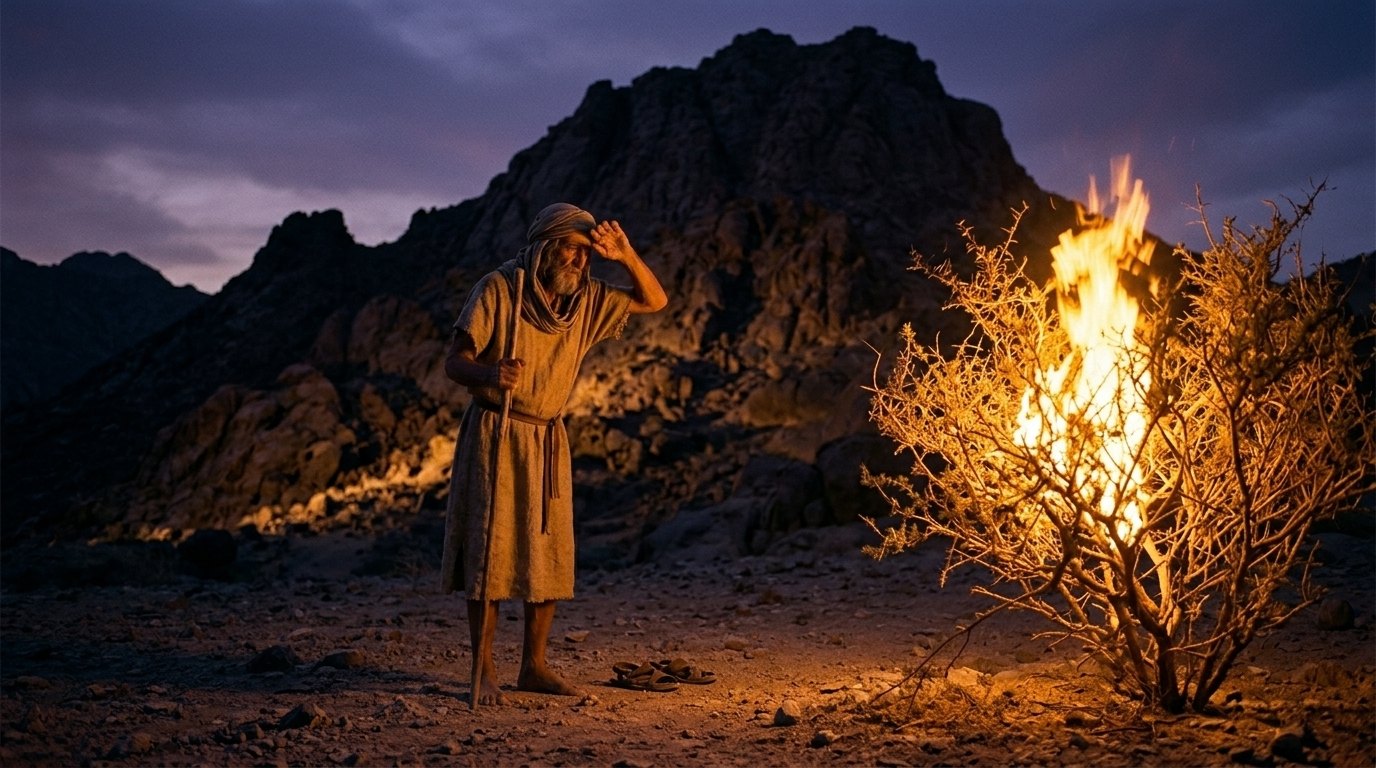
God said to Moses, “I AM WHO I AM. This is what you are to say to the Israelites: ‘I AM has sent me to you.’ ”
Exodus 3:14 (NIV)
God declares His absolute self-existence and unchangeable nature with the foundational declaration 'I AM WHO I AM.'
When God commissioned Moses at Horeb, He disclosed the bedrock of divine identity in Exodus 3:14: 'I AM WHO I AM.' When Moses asked what name he should declare to the enslaved Israelites in Exodus 3:13, the Almighty did not offer an invented label but revealed His absolute, uncaused self-existence. This disclosure reaches its ultimate summit when the Lord Jesus Christ stands in the temple courts and boldly proclaims, 'Before Abraham was, I am' (John 8:58), taking the very memorial name of the burning bush upon Himself. In Exodus 3:15, the Lord established Yahweh as His everlasting covenant memorial to Abraham, Isaac, and Jacob, a living reality Jesus cited to prove the certainty of the resurrection (Matthew 22:32).
While the patriarchs knew the name, Exodus 6:3 records that the Lord was now making the redemptive power of Yahweh fully manifest through Egypt's plagues and Israel's deliverance. Hidden in the cleft of the rock, Moses witnessed Yahweh proclaiming His name in Exodus 34:6, unfolding His boundless compassion, grace, and abundant truth—glory made flesh when Christ came full of grace and truth (John 1:14, John 1:17). Yet this mercy does not compromise divine justice; Exodus 34:7 warns that He by no means clears the guilty. Israel was therefore commanded in Deuteronomy 28:58 to revere this glorious and fearful name. The psalmist exhorts the righteous to lift up praises to Him by His shortened poetic name Yah (Psalms 68:4), celebrating that Yahweh alone reigns supreme over every nation (Psalms 83:18). God brooks no rivals, declaring through the prophet in Isaiah 42:8, 'I am Yahweh; that is My name; My glory I give to no other.'
| Passage | What it says | Fulfilled |
|---|---|---|
| Exodus 3:13 | Moses asks God what name he should report to the captive children of Israel in Egypt. | |
| Exodus 3:14 | God identifies Himself to Moses as 'I AM WHO I AM', commissioning him in that name. | John 8:58 |
| Exodus 3:15 | God establishes Yahweh as His memorial name to all generations, bound to Abraham, Isaac, and Jacob. | Matthew 22:32 |
| Exodus 6:3 | The Lord explains that by His covenant name Yahweh He was now making Himself fully known to Israel. | |
| Exodus 34:6 | The Lord proclaims His name Yahweh before Moses, highlighting His compassion, grace, patience, and truth. | John 1:14, John 1:17 |
| Exodus 34:7 | Proclaims Yahweh as keeping steadfast love for thousands, forgiving iniquity, yet by no means clearing the guilty. | |
| Deuteronomy 28:58 | Exhorts Israel to fear this glorious and awesome name, the Lord your God. | |
| Psalms 68:4 | Calls the righteous to sing praise to His name and exult before Him by His name Yah. | |
| Psalms 83:18 | Declares that He alone, whose name is Yahweh, is the Most High over all the earth. | |
| Isaiah 42:8 | Affirms 'I am Yahweh; that is My name; My glory I give to no other.' |
Creator and Almighty
The Sovereign Maker and All-Sufficient Ruler
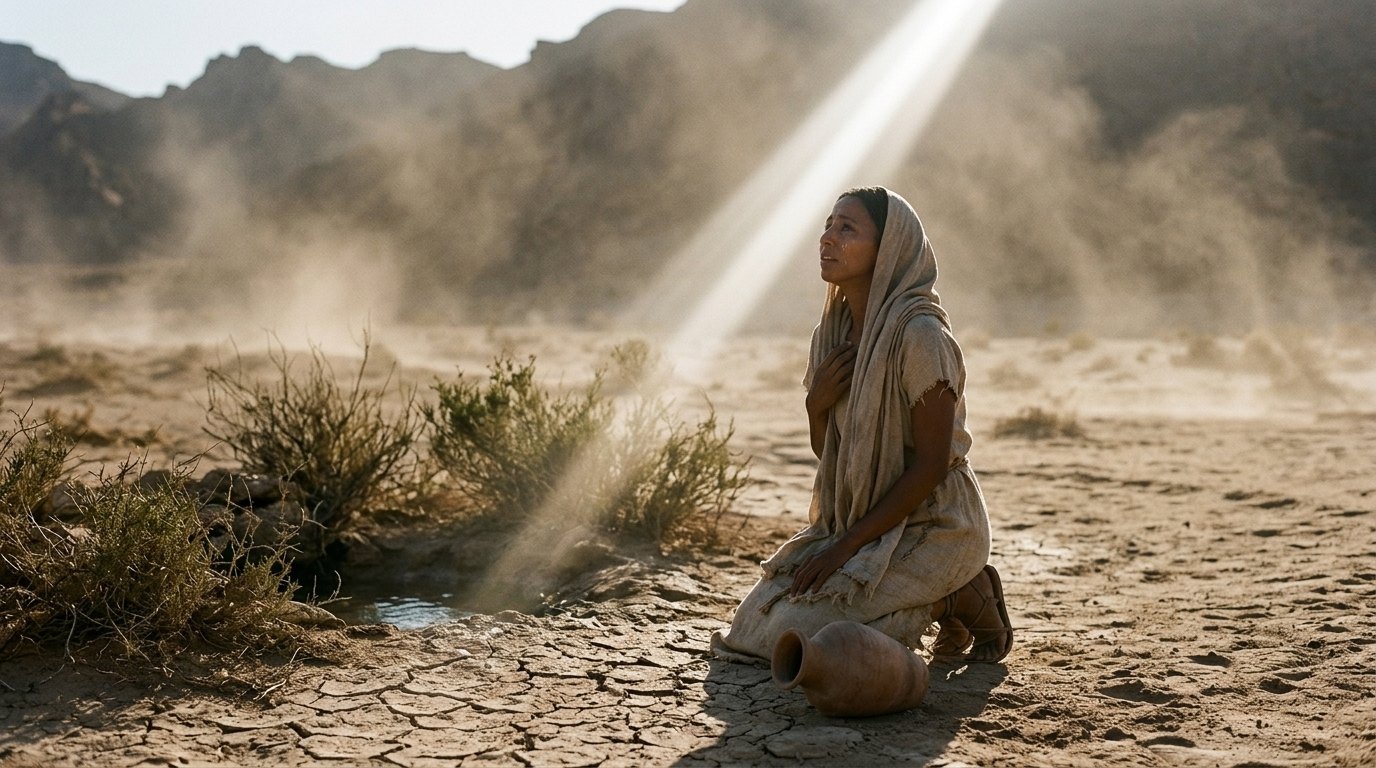
When Abram was ninety-nine years old, the LORD appeared to him and said, “I am God Almighty; walk before me faithfully and be blameless.
Genesis 17:1 (NIV)
God reveals Himself to Abram as El Shaddai, demanding blameless walk before the All-Sufficient God.
The narrative of Scripture opens in Genesis 1:1 with Elohim, the majestic plural title announcing God as the supreme, all-powerful Creator who formed the heavens and the earth out of nothing. When Abram stood in ancient Canaan, God broadened this revelation in Genesis 17:1, declaring Himself as El Shaddai: 'I am Almighty God; walk before Me and be blameless.' This title establishes God as the all-sufficient sustainer whose boundless power overrides human impossibility to accomplish His covenant purposes. Earlier, after Abram’s rescue of Lot, Melchizedek blessed him by El Elyon in Genesis 14:18, identifying the Lord as Most High, Possessor of heaven and earth. In Psalms 91:1, the believer finds sovereign security resting under the shadow of the Almighty (Shaddai) within the shelter of the Most High (Elyon).
God’s watchful providence extends to the lowliest outcasts. In the wilderness of Shur, the abandoned Egyptian maidservant Hagar encountered the angel and addressed the Lord in Genesis 16:13 as El Roi, 'the God who sees.' At Beersheba, Abraham planted a tamarisk tree and called upon Yahweh, El Olam, the Everlasting God whose sovereign faithfulness outlasts the ages (Genesis 21:33). His character demands our undivided allegiance: Exodus 20:5 reveals Him as El Qanna, a jealous God whose holiness permits no rivals or idols. He is El Gadol, the great, mighty, and awesome God who executes justice (Deuteronomy 10:17), and El Chai, the living God who marches before His redeemed people to overcome every spiritual foe (Joshua 3:10). Yet in all His unapproachable majesty, Nehemiah reminds the returned exiles in Nehemiah 9:31 that He remains El Channun ve-Rachum, a gracious and merciful God who does not forsake His people.
| Passage | What it says |
|---|---|
| Genesis 1:1 | The name Elohim introduces God as the supreme, transcendent Creator of heaven and earth. |
| Genesis 14:18 | Melchizedek blesses Abram in the name of El Elyon, God Most High, Possessor of heaven and earth. |
| Genesis 17:1 | The Lord appears to Abram as El Shaddai, the Almighty God, establishing His everlasting covenant. |
| Psalms 91:1 | The psalmist unites Elyon and Shaddai to describe the divine shelter and shadow of the Almighty. |
| Genesis 16:13 | Hagar names the Lord El Roi, 'the God who sees,' for He looked upon her affliction. |
| Genesis 21:33 | Abraham plants a tamarisk tree in Beersheba and calls on the name of Yahweh, El Olam, the Everlasting God. |
| Exodus 20:5 | Reveals the Lord as El Qanna, a jealous God who tolerates no rival gods. |
| Deuteronomy 10:17 | Proclaims the Lord as God of gods and Lord of lords, El Gadol, great, mighty, and awesome. |
| Joshua 3:10 | Identifies the Lord among Israel as El Chai, the living God who drives out their enemies. |
| Nehemiah 9:31 | Acknowledges God in His great mercies as El Channun ve-Rachum, a gracious and merciful God. |
Covenant Titles
Compound Names Revealing the Lord's Care
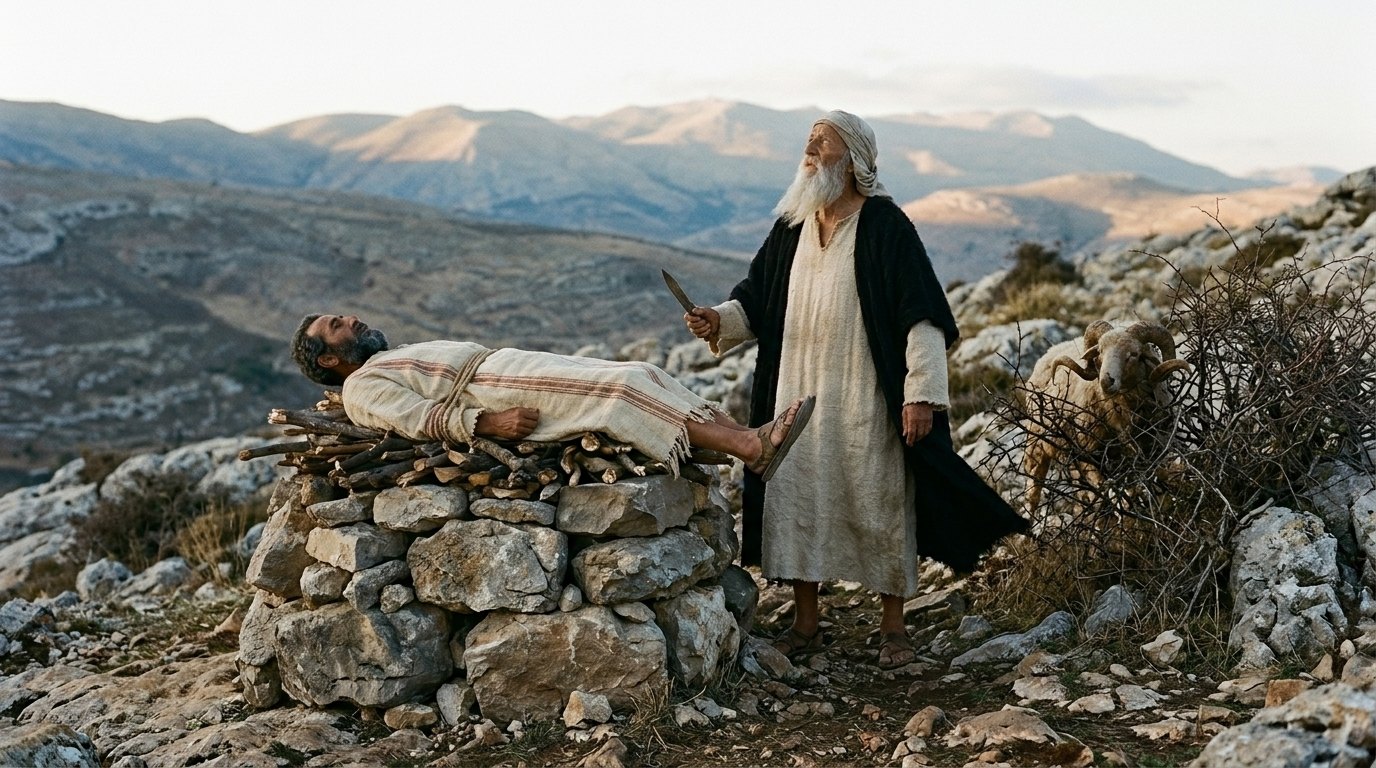
So Abraham called that place The LORD Will Provide. And to this day it is said, “On the mountain of the LORD it will be provided.”
Genesis 22:14 (NIV)
Abraham names the mount Yahweh-Yireh, pointing forward to the ultimate provision of God's own sacrifice.
On the heights of Mount Moriah, God bound His covenant name to His active redemption when Abraham named the mountain Yahweh-Yireh in Genesis 22:14, declaring, 'The Lord will provide.' This substitution of a ram caught in the thicket pointed forward to Mount Calvary, where the Father spared not His own Son but offered Him as the true Lamb of God (John 1:29; Romans 8:32). At the bitter waters of Marah, God revealed Himself in Exodus 15:26 as Yahweh-Rapha, 'the Lord who heals,' promising physical and spiritual wholeness to His obedient people, a restorative covenant verified when Christ bore our sins and wounds upon the cross (1 Peter 2:24). Following the battle against Amalek, Moses built an altar in Exodus 17:15 named Yahweh-Nissi, 'the Lord is my banner,' establishing God as the rallying standard who grants overwhelming victory (Romans 8:37).
When Midianite oppression overwhelmed Israel, Gideon erected an altar in Judges 6:24 calling it Yahweh-Shalom, 'the Lord is peace,' fulfilled in Christ who broke down the dividing wall of hostility to become our enduring peace (Ephesians 2:14). David tasted this covenant tenderness, singing in Psalms 23:1 of Yahweh-Roi, 'the Lord is my shepherd,' the shepherd who lays down His life for the sheep (John 10:11). Through the weeping prophet, God gave the promise in Jeremiah 23:6 of the righteous Branch called Yahweh-Tsidkenu, 'the Lord our righteousness,' made real when Christ became our righteousness and sanctification (1 Corinthians 1:30; 2 Corinthians 5:21). The prophetic temple closes in Ezekiel 48:35 with the holy city named Yahweh-Shammah, 'the Lord is there,' foreshadowing the New Jerusalem where God tabernacles with men (Revelation 21:3). This covenant Lord remains Yahweh Mekaddishkhem who sanctifies His own (Exodus 31:13), known from Shiloh to Jerusalem as Yahweh Sabaoth, the Lord of heavenly hosts and King of glory (1 Samuel 1:3; Psalms 24:10).
| Passage | What it says | Fulfilled |
|---|---|---|
| Genesis 22:14 | Abraham names the place Yahweh-Yireh, meaning the Lord will provide, after receiving the substitutionary ram. | John 1:29, Romans 8:32 |
| Exodus 15:26 | God identifies Himself as Yahweh-Rapha, the Lord who heals His obedient covenant people. | 1 Peter 2:24 |
| Exodus 17:15 | Moses builds an altar named Yahweh-Nissi, the Lord is my banner, following victory over Amalek. | Romans 8:37 |
| Judges 6:24 | Gideon builds an altar called Yahweh-Shalom, the Lord is peace, receiving assurance of divine deliverance. | Ephesians 2:14 |
| Psalms 23:1 | David confesses Yahweh-Roi, the Lord is my shepherd, who guides and preserves His own. | John 10:11 |
| Jeremiah 23:6 | The coming righteous Branch is named Yahweh-Tsidkenu, the Lord our righteousness, granting safety and justification. | 1 Corinthians 1:30, 2 Corinthians 5:21 |
| Ezekiel 48:35 | The restored city of God is designated Yahweh-Shammah, the Lord is there, signifying His perpetual presence. | Revelation 21:3 |
| Exodus 31:13 | Declares the Lord to be Yahweh Mekaddishkhem, the Lord who sanctifies His people. | |
| 1 Samuel 1:3 | Introduces the compound title Yahweh Sabaoth, the Lord of Hosts, the Commander of heavenly armies. | |
| Psalms 24:10 | Hails the King of glory as the Lord of hosts, Yahweh Sabaoth. |
Prophetic and Incomprehensible
The Inscrutable Mystery and the Prophesied Son
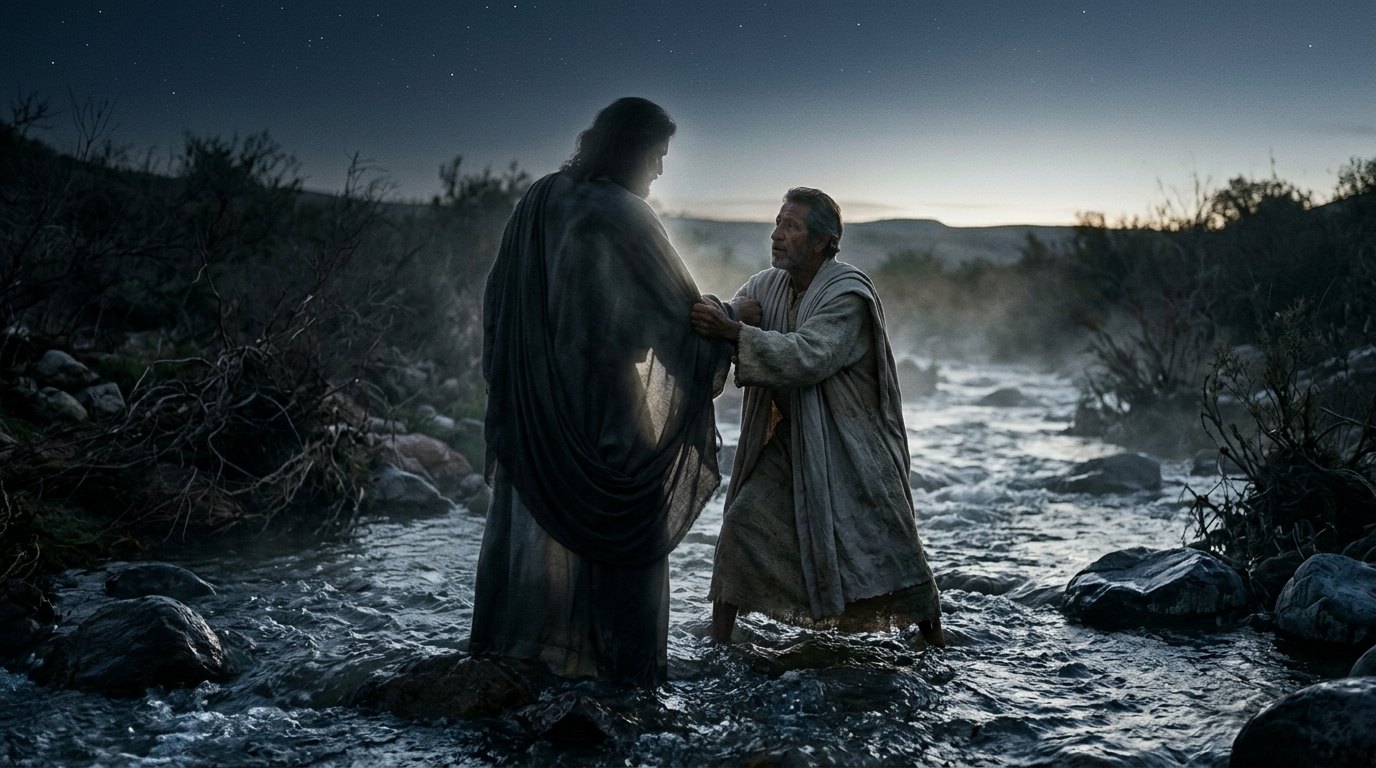
For to us a child is born, to us a son is given, and the government will be on his shoulders. And he will be called Wonderful Counselor, Mighty God, Everlasting Father, Prince of Peace.
Isaiah 9:6 (NIV)
The prophetic child is given four majestic divine titles that announce His eternal deity and saving rule.
Scripture repeatedly confronts human arrogance with the unsearchable mystery of the divine name. In Genesis 32:29, when Jacob wrestled through the night at the ford of the Jabbok and demanded the name of his opponent, he received a blessing rather than a title, learning that God cannot be mastered by human comprehension. Manoah met this same mystery in Judges 13:18, where the Angel of the Lord asked, 'Why do you ask My name, seeing it is wonderful?'—a word signifying that which is incomprehensible and beyond mortal grasp. Agur echoed this solemn wonder in Proverbs 30:4, asking who has ascended into heaven or bound the waters in a garment: 'What is His name, and what is His Son’s name, if you know?'—a question answered only in the incarnation of the Son of God (John 3:13).
The prophets explicitly connected this unfathomable God to a promised child. In Isaiah 7:14, the Lord gave an unmistakable sign: a virgin would conceive and bear a son named Immanuel, 'God with us,' fulfilled when Mary gave birth to Jesus Christ (Matthew 1:22-23). In Isaiah 9:6, the prophet heaps divine titles upon this royal infant, naming Him 'Wonderful, Counsellor, The mighty God, The everlasting Father, The Prince of Peace,' whose eternal throne shall never fail (Luke 1:32-33). Daniel lifted the veil on heavenly majesty in Daniel 7:9, beholding the throne of blazing fire occupied by the Ancient of Days, whose garment was white as snow. Before this sovereign throne, Daniel 7:13 portrays one like the Son of Man approaching to receive everlasting dominion over all peoples, the exact heavenly vision Jesus claimed for Himself before the high priest (Matthew 26:64; Revelation 1:13-14).
| Passage | What it says | Fulfilled |
|---|---|---|
| Genesis 32:29 | Jacob asks the divine Wrestler His name, receiving a covenant blessing instead of a title. | |
| Proverbs 30:4 | Agur poses the unanswerable human question regarding the holy Maker's name and His Son's name. | John 3:13 |
| Isaiah 7:14 | The prophet gives the sign of the virgin-born son whose name shall be called Immanuel. | Matthew 1:22, Matthew 1:23 |
| Isaiah 9:6 | The promised royal Child is named Wonderful Counsellor, Mighty God, Everlasting Father, Prince of Peace. | Luke 1:32, Luke 1:33 |
| Daniel 7:13 | Daniel sees one like a Son of Man approach the Ancient of Days to receive everlasting dominion. | Matthew 26:64, Revelation 1:13-14 |
| Judges 13:18 | The Angel of the Lord asks Manoah why he asks His name, seeing it is wonderful and beyond understanding. | |
| Daniel 7:9 | Presents God upon His heavenly throne of fiery flame under the name Ancient of Days. |
The Name Revealed
The Incarnate Son and the Trinitarian Name
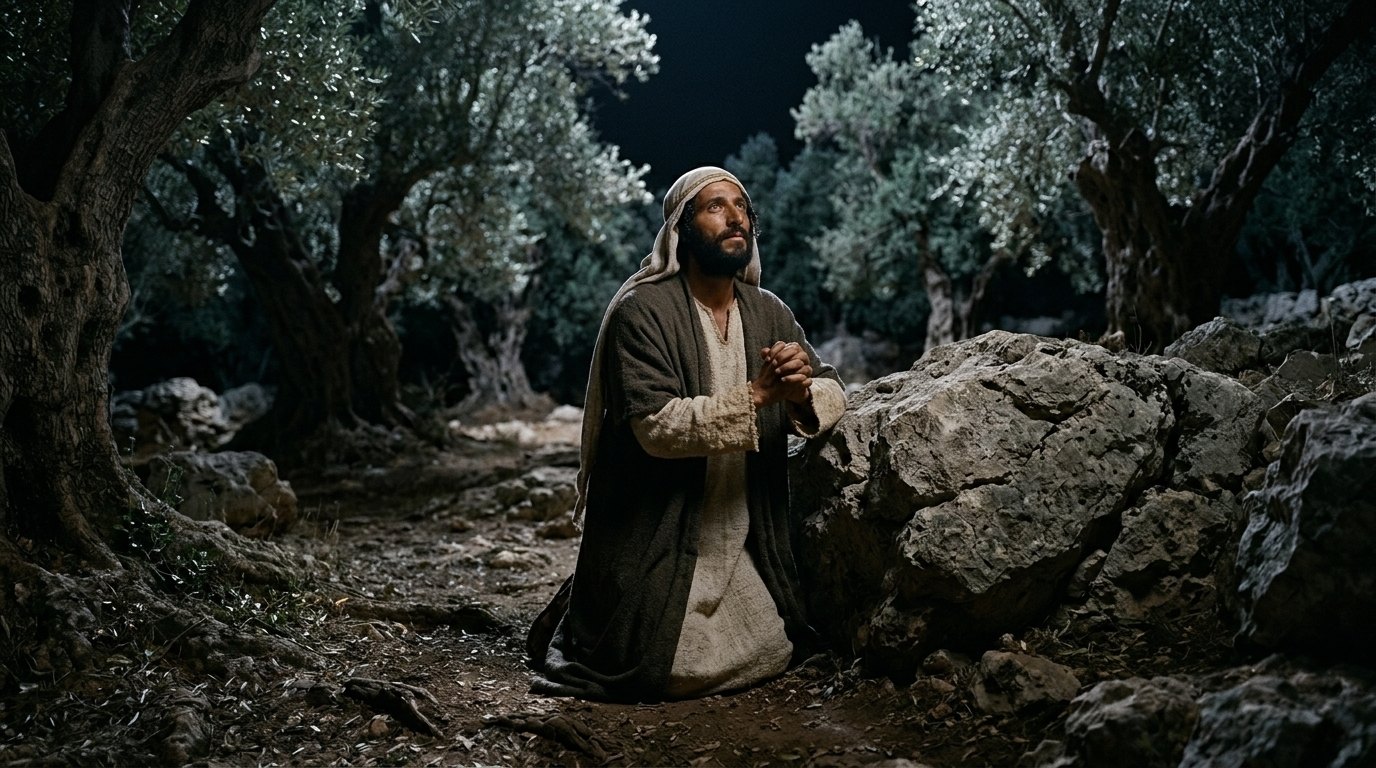
Therefore God exalted him to the highest place and gave him the name that is above every name,
Philippians 2:9 (NIV)
It shows God exalting the incarnate Son and bestowing upon Him the supreme divine name above every name.
In Philippians 2:9, Scripture proclaims that God has highly exalted Him and bestowed on Him the name that is above every name. The revelation of God's name finds its climactic fulfillment in the incarnation of Jesus Christ. Before His birth, the angel commanded Joseph to name the child Jesus, 'for He will save His people from their sins' (Matthew 1:21), fulfilling the ancient prophecy of Immanuel, which translates directly as 'God with us' (Matthew 1:23). Throughout His earthly ministry, Christ made known the fullness of the divine identity. In John 8:58, Jesus openly took the covenant name of God upon Himself, stunning His hearers by declaring, 'Truly, truly, I say to you, before Abraham was, I am.' In the intimate agony of Gethsemane, He addressed the Almighty as 'Abba, Father' (Mark 14:36), opening the way for redeemed sinners to receive the Spirit of adoption and cry out with that same filial confidence: 'Abba! Father!' (Romans 8:15).
Because Jesus offered Himself as the spotless sacrifice for sin, the apostolic church boldly proclaimed that there is salvation in no one else, for there is no other name under heaven given among men by which we must be saved (Acts 4:12). Before His ascension, the risen Lord commanded His disciples to baptize nations into the single 'name of the Father and of the Son and of the Holy Spirit' (Matthew 28:19)—revealing the one true God subsisting eternally in three persons. The exaltation of the Son culminates in the grand decree of Philippians 2:10-11, where at the name of Jesus every knee must bow, and every tongue confess that Jesus Christ is Lord (Kyrios), fulfilling what Yahweh claimed for Himself alone. In the final book of Scripture, He stands revealed as 'the Alpha and the Omega... who is and who was and who is to come, the Almighty' (Revelation 1:8), bearing the triumphant inscription upon His robe and thigh: 'King of kings and Lord of lords' (Revelation 19:16).
| Passage | What it says |
|---|---|
| Matthew 1:21 | Directs that the child be named Jesus (Yeshua), for He will save His people from their sins. |
| Matthew 1:23 | Explains the prophetic name Immanuel as meaning 'God with us,' fulfilled in the birth of Christ. |
| Matthew 28:19 | Commands baptism into the singular name of the Father, and of the Son, and of the Holy Spirit. |
| Mark 14:36 | Records Jesus praying in Gethsemane using the filial address 'Abba, Father.' |
| John 8:58 | Jesus applies the absolute divine name to Himself, declaring, 'Before Abraham was, I am.' |
| Acts 4:12 | Declares there is no other name under heaven given among men by which we must be saved. |
| Romans 8:15 | Reveals believers receive the Spirit of adoption, by whom we cry, 'Abba! Father!' |
| Philippians 2:9 | States God has highly exalted Christ and bestowed on Him the name that is above every name. |
| Philippians 2:10 | Commands that at the name of Jesus every knee should bow in heaven, on earth, and under the earth. |
| Philippians 2:11 | Declares that every tongue shall confess that Jesus Christ is Lord (Kyrios), to God's glory. |
| Revelation 1:8 | The Lord God reveals Himself as the Alpha and the Omega, who is and who was and who is to come. |
| Revelation 19:16 | Bestows on the returning Christ the title King of kings and Lord of lords upon His robe and thigh. |
Where in the Bible
| Book | Passages |
|---|---|
| Genesis | 7 · Genesis 1:1, Genesis 14:18, Genesis 17:1, Genesis 16:13, Genesis 21:33, Genesis 22:14, Genesis 32:29 |
| Exodus | 10 · Exodus 3:13, Exodus 3:14, Exodus 3:15, Exodus 6:3, Exodus 34:6, Exodus 34:7, Exodus 20:5, Exodus 15:26, Exodus 17:15, Exodus 31:13 |
| Deuteronomy | 2 · Deuteronomy 28:58, Deuteronomy 10:17 |
| Joshua | 1 · Joshua 3:10 |
| Judges | 2 · Judges 6:24, Judges 13:18 |
| 1 Samuel | 1 · 1 Samuel 1:3 |
| Nehemiah | 1 · Nehemiah 9:31 |
| Psalms | 5 · Psalms 68:4, Psalms 83:18, Psalms 91:1, Psalms 23:1, Psalms 24:10 |
| Proverbs | 1 · Proverbs 30:4 |
| Isaiah | 3 · Isaiah 42:8, Isaiah 7:14, Isaiah 9:6 |
| Jeremiah | 1 · Jeremiah 23:6 |
| Ezekiel | 1 · Ezekiel 48:35 |
| Daniel | 2 · Daniel 7:13, Daniel 7:9 |
| Matthew | 3 · Matthew 1:21, Matthew 1:23, Matthew 28:19 |
| Mark | 1 · Mark 14:36 |
| John | 1 · John 8:58 |
| Acts | 1 · Acts 4:12 |
| Romans | 1 · Romans 8:15 |
| Philippians | 3 · Philippians 2:9, Philippians 2:10, Philippians 2:11 |
| Revelation | 2 · Revelation 1:8, Revelation 19:16 |
The story in order
- God creates the world (c. 4000 BC) · Genesis 1:1 · Elohim introduces God as the supreme Creator.
- God establishes His covenant (c. 2000 BC) · Genesis 17:1 · El Shaddai appears to Abram, the Almighty God.
- God reveals His covenant name (c. 1450 BC) · Exodus 3:14 · God identifies Himself as 'I AM WHO I AM' (Yahweh).
- God proclaims His character (c. 1450 BC) · Exodus 34:6 · Yahweh proclaims His compassion, grace, patience, and truth.
- God provides for His people (c. 2000 BC) · Genesis 22:14 · Abraham names the place Yahweh-Yireh, the Lord will provide.
- God is peace and our banner (c. 1200 BC) · Judges 6:24 · Gideon names an altar Yahweh-Shalom, the Lord is peace.
- God is our shepherd (c. 1000 BC) · Psalms 23:1 · David confesses Yahweh-Roi, the Lord is my shepherd.
- Prophet names the virgin-born son (c. 700 BC) · Isaiah 7:14 · The sign of Immanuel, 'God with us'.
- Prophet names the royal Child (c. 700 BC) · Isaiah 9:6 · The promised Child named Wonderful Counsellor, Mighty God, etc.
- Jesus is born and named (c. 4 BC) · Matthew 1:21 · Jesus (Yeshua) means 'He will save His people from their sins'.
- Jesus claims His divine name (c. AD 30) · John 8:58 · Jesus declares, 'Before Abraham was, I am'.
- Disciples baptized in the Trinity (c. AD 30) · Matthew 28:19 · Baptism into the name of Father, Son, and Holy Spirit.
- Christ exalted above all names (c. AD 60) · Philippians 2:9 · God has highly exalted Christ and given Him the name above every name.
- Christ is King of kings (c. AD 95) · Revelation 19:16 · The returning Christ has the title King of kings and Lord of lords.
God's Names Reveal His Character and Actions
| Name | Meaning | What it reveals | Passage |
|---|---|---|---|
| El Elyon | God Most High | His sovereignty over all creation | Genesis 14:18 |
| El Shaddai | Almighty God | His power and covenant faithfulness | Genesis 17:1 |
| Yahweh-Rapha | The Lord who heals | His power to restore and make whole | Exodus 15:26 |
| Yahweh-Nissi | The Lord is my banner | His victory and protection in battle | Exodus 17:15 |
| Yahweh-Shalom | The Lord is peace | His provision of peace and deliverance | Judges 6:24 |
| Yahweh-Tsidkenu | The Lord our righteousness | His provision of justification and safety | Jeremiah 23:6 |
| Yahweh-Shammah | The Lord is there | His perpetual presence with His people | Ezekiel 48:35 |
The Unfolding Revelation of God's Name
| Name/Title | Context | Significance | Passage |
|---|---|---|---|
| Elohim | Creation | Supreme, transcendent Creator | Genesis 1:1 |
| Yahweh | Covenant | Self-existent, memorial name of God | Exodus 3:15 |
| El Roi | Affliction | The God who sees and cares | Genesis 16:13 |
| Immanuel | Prophecy | God with us | Isaiah 7:14 |
| Jesus (Yeshua) | Incarnation | He will save His people | Matthew 1:21 |
| Abba, Father | Adoption | Intimate filial relationship | Mark 14:36 |
| Kyrios (Lord) | Exaltation | Christ's supreme authority | Philippians 2:11 |
Key words
- Yahweh (YHWH, יהוה)
- The self-existent, covenant-keeping God; His memorial name. · Exodus 3:15
- Elohim (Elohim, אֱלֹהִים)
- God, the supreme, transcendent Creator. · Genesis 1:1
- El Elyon (El Elyon, אֵל עֶלְיוֹן)
- God Most High; Possessor of heaven and earth. · Genesis 14:18
- El Shaddai (El Shaddai, אֵל שַׁדַּי)
- Almighty God; God who is more than enough. · Genesis 17:1
- Immanuel (Immanuel, עִמָּנוּ אֵל)
- God with us. · Isaiah 7:14
- Jesus (Yeshua, יֵשׁוּעַ)
- Yahweh saves; He will save His people from their sins. · Matthew 1:21
- Abba (Abba, אַבָּא)
- Father; an intimate term of endearment and trust. · Mark 14:36
- Kyrios (Kyrios, Κύριος)
- Lord; Master; indicating supreme authority and dominion. · Philippians 2:11
God does not disclose His names to satisfy our casual curiosity, but to anchor our faith in His unchanging character and covenant promises. From the bush that burned before Moses to the incarnate Son who declared 'Before Abraham was, I AM,' the eternal God reveals Himself so that we might trust, obey, and adore Him forever. In Jesus Christ, every name of God finds its ultimate clarity, assurance, and saving power for all who call upon Him.
49 passages, each cited once.
Scripture cited
- Isaiah 9:6
- Exodus 3:14
- Isaiah 7:14
- Jeremiah 23:6
- Genesis 1:1
- Genesis 15:2
- Genesis 17:1
- Genesis 22:14
- Exodus 17:15
- Judges 6:24
- Ezekiel 48:35
- Matthew 1:21-23