What are the seven seals, trumpets and bowls in Revelation?

Revelation 8:1-6
1 When he opened the seventh seal, there was silence in heaven for about half an hour.
2 And I saw the seven angels who stand before God, and seven trumpets were given to them.
3 Another angel, who had a golden censer, came and stood at the altar. He was given much incense to offer, with the prayers of all God’s people, on the golden altar in front of the throne.
4 The smoke of the incense, together with the prayers of God’s people, went up before God from the angel’s hand.
5 Then the angel took the censer, filled it with fire from the altar, and hurled it on the earth; and there came peals of thunder, rumblings, flashes of lightning and an earthquake.
6 Then the seven angels who had the seven trumpets prepared to sound them.
New International Version (NIV)
The answer
Revelation unfolds God's judgments in three successive series of seven: the seven seals, the seven trumpets, and the seven bowls. They are nested, not parallel: the opening of the seventh seal introduces the seven trumpets, and after the seventh trumpet sounds, the seven bowls are poured out.
The seven seals (Revelation 5–8:1)
A scroll sealed with seven seals sits in the right hand of the one on the throne, and no one is found worthy to open it — until the Lion of Judah, the slain Lamb, takes the book (Revelation 5:1-9). As the Lamb breaks each seal, John sees what follows:
- Seal 1 — a white horse, a crowned rider conquering (Revelation 6:2).
- Seal 2 — a red horse, given a great sword; peace taken from the earth (Revelation 6:4).
- Seal 3 — a black horse with a balance, famine-scale prices (Revelation 6:5-6).
- Seal 4 — a pale horse named Death, with Hades following, given authority over a fourth of the earth (Revelation 6:8).
- Seal 5 — souls under the altar who were slain for the Word, crying "How long?" until their blood is avenged (Revelation 6:9-11).
- Seal 6 — a great earthquake, sun black as sackcloth, moon like blood, stars falling, sky rolled up, every king and slave hiding from "the wrath of the Lamb" (Revelation 6:12-17).
- Seal 7 — silence in heaven for half an hour, then seven angels stand before God and seven trumpets are given to them (Revelation 8:1-2).
The seven trumpets (Revelation 8–11)
When the Lamb opens the seventh seal, the scroll's next stage begins: seven angels receive seven trumpets. After incense and prayers rise before God, fire is thrown to the earth and the angels prepare to sound (Revelation 8:3-6). The judgments:
- Trumpets 1–4 strike "one third" of the earth, sea, rivers, and the heavenly lights (Revelation 8:7-12). An eagle then cries, "Woe, woe, woe" to the inhabitants of the earth because of the three trumpets still to come (Revelation 8:13).
- Trumpet 5 opens the bottomless pit; locust-like creatures with a king called Abaddon/Apollyon torment the unsealed for five months (Revelation 9:1-11).
- Trumpet 6 releases four angels at the Euphrates; a cavalry of two hundred million kills a third of mankind — and the survivors still do not repent of idolatry, murder, sorcery, sexual immorality, and theft (Revelation 9:13-21).
- Trumpet 7 sounds, and great voices in heaven declare, "The kingdom of the world has become the Kingdom of our Lord and of his Christ, and he shall reign forever and ever" (Revelation 11:15-18).
The seven bowls (Revelation 15–16)
After the seventh trumpet, seven angels come out of the heavenly temple with seven golden bowls filled with the wrath of God — described as "the seven last plagues, for in them God's wrath is finished" (Revelation 15:1, 7). When each bowl is poured out:
- Bowls 1–4 bring painful sores on the beast's worshipers, blood in the sea, blood in the rivers and springs, and scorching fire from the sun — and people blaspheme God and refuse to repent (Revelation 16:2-9).
- Bowls 5–6 darken the beast's kingdom, dry up the Euphrates to prepare the way for the kings from the east, and unleash three demonic spirits that gather the world to Armageddon (Revelation 16:10-16).
- Bowl 7 is poured into the air, and a voice from the throne cries, "It is done!" — the greatest earthquake since men lived, Babylon judged, every island and mountain gone, and great hailstones (Revelation 16:17-21).
How the three series relate
The structure is intentional: the seventh seal contains the seven trumpets (Revelation 8:1-2), and the seventh trumpet sounds just before the bowls of final wrath (Revelation 15:1). Each series also intensifies the last. The trumpets strike a third of the earth; the bowls strike the whole. The trumpets call people to repent; the bowls come when repentance has been refused (Revelation 9:20-21, 16:9, 16:11). The whole sweep ends with the kingdom handed to Christ and the last plagues declaring, "It is done."
Answered from Scripture · reviewed November 7, 2026
The judgments of Revelation unfold in three consecutive series of seven—the seals, the trumpets, and the bowls—tracing God's righteous reclamation of creation. Nested within one another, each series intensifies in severity from preliminary warnings to the final, unmixed wrath of God. Together, they demonstrate the Lamb's authority over human history, the hearing of the saints' prayers, and the inevitable triumph of His eternal kingdom.
The Lamb and the Scroll
Only the Slain Lamb Is Worthy to Open the Book
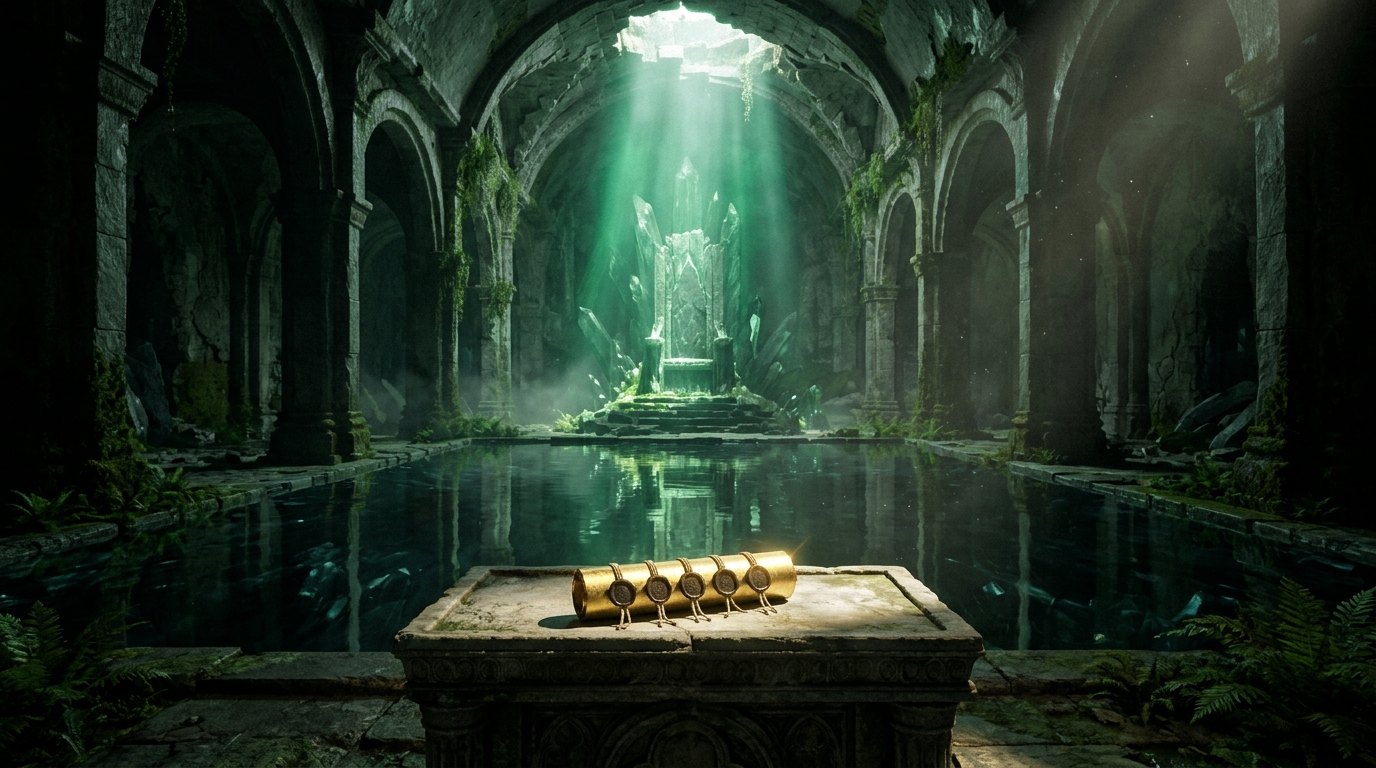
And they sang a new song, saying: “You are worthy to take the scroll and to open its seals, because you were slain, and with your blood you purchased for God persons from every tribe and language and people and nation.
Revelation 5:9 (NIV)
The Lamb's sacrificial death establishes His unique worthiness to take the scroll and execute divine judgment across the earth.
The vision of divine judgment in Revelation does not begin with cataclysm on earth, but with coronation in heaven. In Revelation 5:9, the living creatures and the elders sing a new song to Christ, declaring that the Lamb's sacrificial death establishes His unique worthiness to take the scroll and break its seals. John had wept bitterly when an exhaustive search throughout heaven, earth, and the underworld found no created being worthy to look upon the divine title deed of redemption and judgment (Revelation 5:1-5). Yet the elder directs John away from his grief: the Lion of the tribe of Judah, the Root of David, has conquered so that He can open the scroll and its seven seals. When John turns, he beholds not a prowling predator, but a Lamb standing as though it had been slain, possessing seven horns and seven eyes, representing the fullness of sovereign omnipotence and the Holy Spirit's searching omniscience (Revelation 5:6-8). The Lamb steps forward to take the seven-sealed scroll from the right hand of the Father seated upon the throne. Instantly, the heavenly court falls prostrate, holding harps and golden bowls full of incense, which are the prayers of the holy people of God. As Christ grasps the document, all creation erupts into antiphonal praise (Revelation 5:9-14), confessing that by His blood He ransomed people for God from every tribe, language, people, and nation, making them a kingdom and priests to reign on the earth. Judgment can proceed only because the Redeemer has paid the ultimate price to inherit and cleanse His creation.
| Passage | What it says |
|---|---|
| Revelation 5:1-5 | John weeps because no one is found worthy to open the seven-sealed scroll until the Lion of Judah is revealed. |
| Revelation 5:6-8 | The Lamb that was slain takes the scroll amidst worship and the golden bowls of incense carrying the saints' prayers. |
| Revelation 5:9-14 | Heaven and creation burst into praise declaring the Lamb worthy to loose the seals and make His people a kingdom of priests. |
The Four Horsemen
The First Four Seals Unleash Conquest, War, Famine, and Death

I looked, and there before me was a pale horse! Its rider was named Death, and Hades was following close behind him. They were given power over a fourth of the earth to kill by sword, famine and plague, and by the wild beasts of the earth.
Revelation 6:8 (NIV)
Death and Hades receive authority over a fourth of the earth, synthesizing the devastating impact of the four horsemen.
When the Lamb begins breaking the outer seals of the scroll, judgment assumes an active, historical reality across the terrestrial sphere. In Revelation 6:8, the devastation converges in a terrifying climax as Death and Hades receive authority over a fourth of the earth, synthesizing the four horsemen's ruin. Christ breaks the first seal, and one of the living creatures summons forth a rider on a white horse, holding a bow and crowned with a victor's wreath, who rides out conquering and to conquer (Revelation 6:1-2), depicting deceptive imperial conquest and dominion. The opening of the second seal calls forth a fiery red horse whose rider wields a great sword, granted permission to strip peace from the world so that mankind slaughters one another in unrestrained civil butchery and violence (Revelation 6:3-4). The third seal unleashes a black horse whose rider holds a pair of balance scales, accompanied by a voice from the throne proclaiming exorbitant prices for staple grains while leaving luxury oil and wine unmeasured—marking crippling, asymmetric famine and economic ruin (Revelation 6:5-6). Finally, the fourth seal exposes an ashen, pale-green horse driven by Death, with the grave itself pursuing closely behind (Revelation 6:7-8). This horseman is granted jurisdiction to decimate one-fourth of the human population through the sword, severe famine, deadly pestilence, and the wild beasts of the field, demonstrating that even preliminary judgments unleash staggering global sorrow under God's righteous oversight.
| Passage | What it says |
|---|---|
| Revelation 6:1-2 | The Lamb opens the first seal, releasing a rider on a white horse with a bow and crown, conquering and to conquer. |
| Revelation 6:3-4 | The second seal releases a bright red horse and rider with a great sword, taking peace from the earth to incite slaughter. |
| Revelation 6:5-6 | The third seal sends a black horse with balances, inaugurating acute economic scarcity and hyper-inflated staple grain prices. |
| Revelation 6:7-8 | The fourth seal releases a pale green horse whose rider, Death, accompanied by Hades, slays a fourth of the earth by sword, famine, pestilence, and beasts. |
Martyrs and Cosmic Terror
The Fifth and Sixth Seals Reveal Heaven's Cry and Earth's Dread
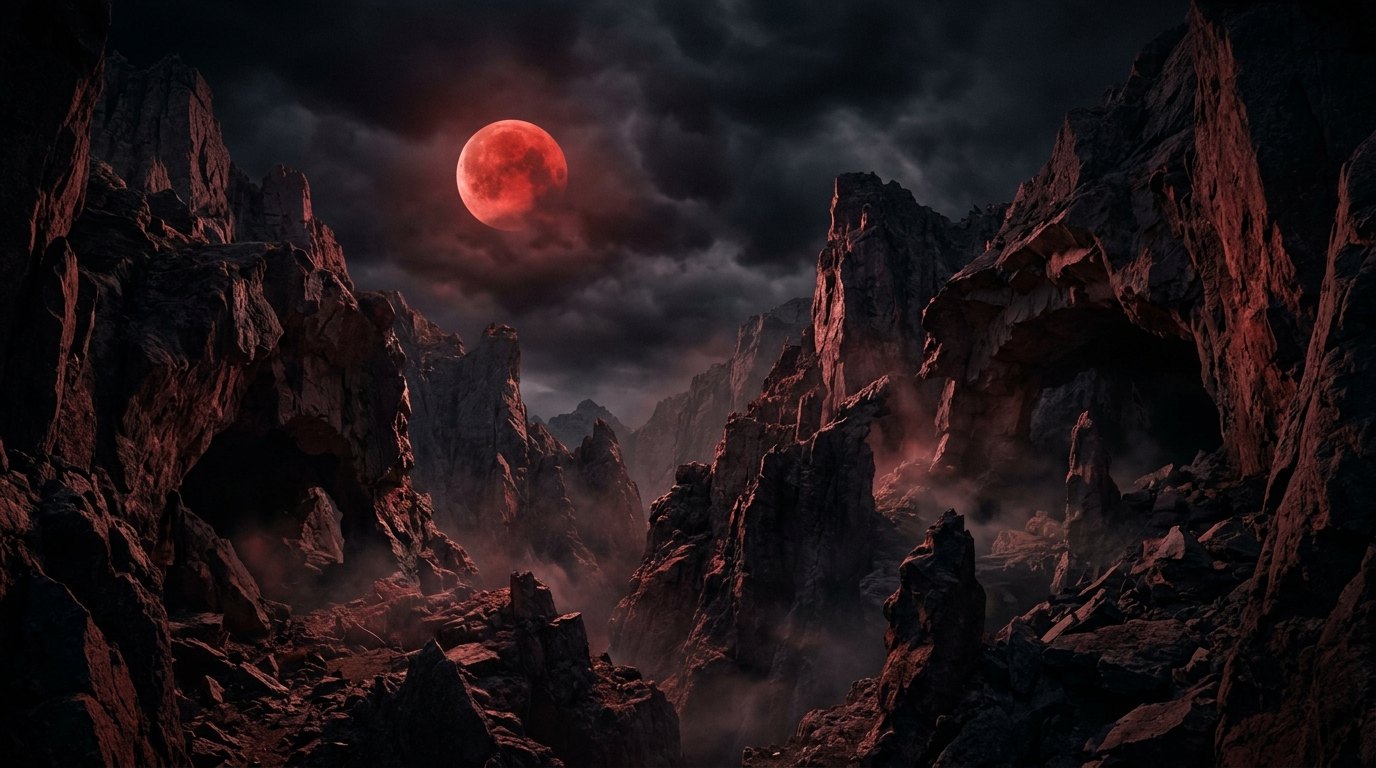
They called to the mountains and the rocks, “Fall on us and hide us from the face of him who sits on the throne and from the wrath of the Lamb! For the great day of theirwrath has come, and who can withstand it?”
Revelation 6:16-17 (NIV)
Rulers and slaves alike plead for mountains to fall upon them to hide from the wrath of the Lamb, signaling the great day of judgment.
As the Lamb breaks the remaining preliminary seals, the scene alternates between the heavenly sanctuary and the panic-stricken face of the earth. In Revelation 6:16-17, mankind's rebellious pride collapses as rulers and slaves plead for the mountains to fall on them to escape the wrath of the Lamb. Upon the opening of the fifth seal, John sees beneath the altar of incense the souls of those slaughtered for the word of God and their faithful witness, crying with a loud voice for sovereign vindication against their persecutors (Revelation 6:9-11). They are clothed in white robes and instructed to rest a little longer until the full number of their fellow servants and brothers who are to be killed is fulfilled. Then, the Lamb unseals the sixth seal, precipitating terrifying cosmic convulsions: a massive earthquake shakes the globe, the sun turns black as sackcloth, the full moon becomes like blood, stars fall like late figs shaken by a gale, and the sky rolls up like a scroll while every mountain and island is jarred from its foundation (Revelation 6:12-14). Kings, magnates, generals, the rich, the powerful, and every slave and free person flee to cavernous dens, terrified not merely of physical ruin, but of the presence of God upon His throne (Revelation 6:15-17). Yet before destruction descends, four angels restrain the four winds of the earth until one hundred and forty-four thousand servants of God from the tribes of Israel are sealed on their foreheads for preservation (Revelation 7:1-8). Immediately following, John witnesses a countless multitude from every nation standing before the throne, robed in white and washed in the blood of the Lamb, securely sheltered through the great tribulation (Revelation 7:9-17).
| Passage | What it says |
|---|---|
| Revelation 6:9-11 | The fifth seal reveals souls of slaughtered saints under the altar crying for vengeance, who are given white robes and told to rest briefly. |
| Revelation 6:12-14 | The sixth seal initiates a violent earthquake, blackening the sun, turning the moon blood-red, raining stars, and rolling up the sky like a scroll. |
| Revelation 6:15-17 | Kings, commanders, rich men, and slaves hide in caves, crying to the rocks to shelter them from the presence of God and the Lamb's wrath. |
| Revelation 7:1-8 | Four angels hold back destructive winds until one hundred and forty-four thousand servants of God from Israel's tribes are sealed on their foreheads. |
| Revelation 7:9-17 | John beholds an innumerable multitude from every nation standing before the Lamb in white robes, redeemed through the great tribulation. |
Silence and the Incense Altar
The Seventh Seal Opens with Heaven's Hush and Saints' Prayers
When he opened the seventh seal, there was silence in heaven for about half an hour.
Revelation 8:1 (NIV)
Heaven falls silent for half an hour, marking an awesome, suspenseful pause before the climactic trumpet blasts sound.
The breaking of the seventh seal completes the opening of the scroll while simultaneously functioning as the direct introduction to the next septet of divine intervention. In Revelation 8:1, the opening of this final seal brings a profound silence across heaven for about half an hour, holding all creation in awesome suspense. This solemn hush underscores the gravity of what is about to be revealed, halting the uninterrupted praises of angels and elders as the divine court anticipates God's climactic wrath. When the silence yields, John sees seven angels who stand continually in the presence of God receiving seven trumpets of warning and impending judgment (Revelation 8:1-2). Before a single trumpet sounds, another angel holding a golden censer approaches the heavenly altar and is given a large quantity of incense to offer alongside the prayers of all the holy saints (Revelation 8:3-4). The fragrant smoke ascends directly before God, illustrating that the cries of suffering believers on earth are neither forgotten nor disregarded in heaven's council. The angel then takes the censer, fills it with blazing coals from the altar of fire, and hurls it violently down onto the earth below (Revelation 8:5-6). The impact immediately triggers rolling peals of thunder, rumblings, flashes of lightning, and a catastrophic earthquake. This violent downpour of holy fire signals that the cries for justice under the fifth seal are being answered, setting the stage for the seven trumpet angels to raise their instruments to their lips.
| Passage | What it says |
|---|---|
| Revelation 8:1-2 | Opening the seventh seal brings half an hour of heaven-wide silence, followed by seven angels receiving seven trumpets before God. |
| Revelation 8:3-4 | An angel offers incense with the prayers of all the saints upon the golden altar before the divine throne. |
| Revelation 8:5-6 | The angel casts the fire-filled censer to the earth, generating thunders, lightnings, and an earthquake as the seven trumpets prepare to sound. |
The First Four Trumpets
One-Third of Earth, Sea, Waters, and Sky Are Stricken
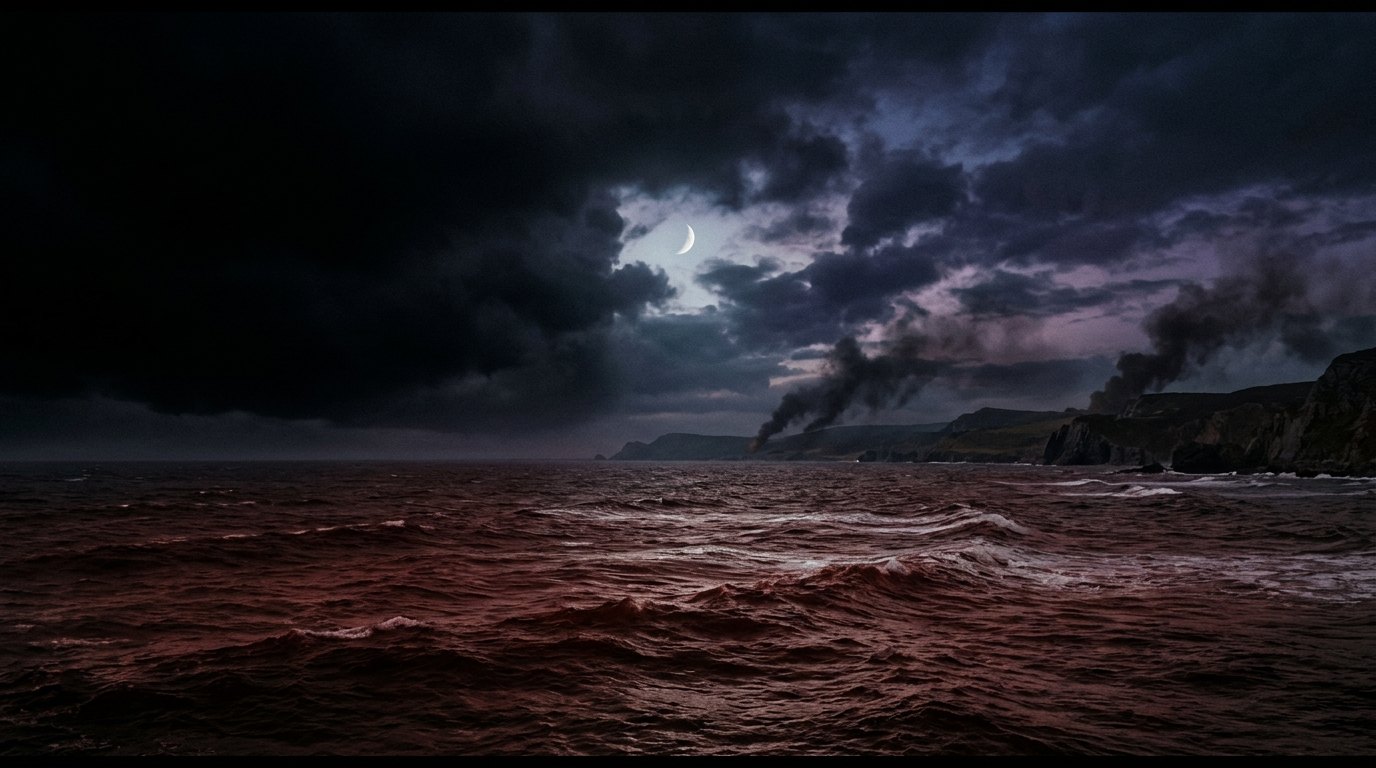
The fourth angel sounded his trumpet, and a third of the sun was struck, a third of the moon, and a third of the stars, so that a third of them turned dark. A third of the day was without light, and also a third of the night.
Revelation 8:12 (NIV)
The strike on a third of the sun, moon, and stars darkens creation, highlighting the partial yet severe character of the trumpet warnings.
Under the fourth blast in Revelation 8:12, creation itself shudders as a third of the sun, moon, and stars are smitten, plunging the world into eerie, terrifying darkness. This deliberate constraint—striking one-third rather than the whole—establishes that the trumpets serve as severe, gracious warnings urging a defiant world to turn back to its Creator before final judgment arrives. The sequence begins in Revelation 8:7, where the first trumpet hurls hail and fire mingled with blood onto the dry land, burning up a third of the earth and trees and consuming all green grass. God's assault on false security moves next to the waters. In Revelation 8:8-9, the second angel sounds, and what appears to be a great mountain burning with fire crashes into the ocean, turning a third of the sea into blood, killing a third of its creatures, and shattering a third of all ships. The third trumpet follows swiftly in Revelation 8:10-11, sending a blazing star named Wormwood plunging into the freshwater systems, polluting a third of the world's rivers and springs and bringing bitter death to many who drink. Once the cosmos is dimmed under Revelation 8:12, heaven issues a solemn proclamation before the remaining blasts. An eagle soars through midheaven in Revelation 8:13, crying out with a loud voice a threefold woe to the earth's inhabitants, warning that the three trumpets yet to sound will bring far deeper terrors than the devastation witnessed so far.
| Passage | What it says |
|---|---|
| Revelation 8:7 | The first trumpet brings hail and fire mingled with blood, burning up a third of the earth, trees, and all green grass. |
| Revelation 8:8-9 | The second trumpet casts a great blazing mountain into the sea, turning a third of the ocean to blood and destroying ships and marine life. |
| Revelation 8:10-11 | The third trumpet drops the blazing star Wormwood upon fresh waters, turning a third of the rivers bitter and killing many men. |
| Revelation 8:12 | The fourth trumpet smites a third of the sun, moon, and stars, darkening a third of the day and night. |
| Revelation 8:13 | An eagle flies through midheaven crying three woes upon earth's dwellers because of the remaining trumpet blasts to come. |
The First Two Woes
Demonic Torment from the Abyss and the Euphrates Cavalry
The rest of mankind who were not killed by these plagues still did not repent of the work of their hands; they did not stop worshiping demons, and idols of gold, silver, bronze, stone and wood—idols that cannot see or hear or walk. Nor did they repent of their murders, their magic arts, their sexual immorality or their thefts.
Revelation 9:20-21 (NIV)
Despite a third of humanity perishing under demonic cavalry, the survivors stubbornly refuse to repent of idolatry, murder, sorceries, and thefts.
The terrifying paradox of human rebellion reaches its zenith in Revelation 9:20-21, where the survivors of apocalyptic devastation obstinately refuse to repent of their demon worship, idolatry, murders, sorceries, and thefts. The fifth trumpet, opening the first woe in Revelation 9:1-6, unlocks the shaft of the bottomless pit, releasing a swarm of demonic locusts under strict orders to spare vegetation and torment only the unsealed of mankind for five agonizing months. In Revelation 9:7-12, John details their dread appearance—equipped like horses prepared for battle, crowned with gold, and bearing scorpions' stings—ruled by the angel of the abyss whose name is Abaddon or Apollyon. When the sixth trumpet sounds in Revelation 9:13-19, four angels bound at the great river Euphrates are released to unleash a supernatural cavalry of two hundred million, slaying a third of mankind with fire, smoke, and sulfur issuing from their mounts' mouths. Yet despite this slaughter, Revelation 9:20-21 records that the unregenerate heart clings desperately to its idols. Before the final trumpet sounds, heaven provides reassurance through two interludes. In Revelation 10:1-11, a mighty angel sets foot on sea and land, swearing that delay is no more, while John eats a little scroll that tastes sweet in his mouth but turns bitter in his stomach. Then in Revelation 11:1-14, God establishes His two invincible witnesses in Jerusalem, who prophesy for 1,260 days, are martyred by the beast, and are vindicated by resurrection and ascension before the eyes of their terrified enemies.
| Passage | What it says |
|---|---|
| Revelation 9:1-6 | The fifth trumpet unlocks the bottomless pit, releasing demonic locusts commanded to torment unsealed men for five agonizing months. |
| Revelation 9:7-12 | The terrifying locust army is described under their king, the angel of the abyss named Abaddon or Apollyon, concluding the first woe. |
| Revelation 9:13-19 | The sixth trumpet releases four angels bound at the Euphrates, leading a two-hundred-million horsemen army that slays a third of mankind with fire, smoke, and brimstone. |
| Revelation 9:20-21 | The surviving population refuses to repent of worshiping demons and idols, or of their murders, sorceries, immorality, and thefts. |
| Revelation 10:1-11 | A mighty angel with a little scroll swears delay will be no longer, commanding John to eat the sweet-turned-bitter scroll and prophesy again. |
| Revelation 11:1-14 | Two witnesses prophesy in Jerusalem with power for 1,260 days, are slain by the beast, resurrected after three-and-a-half days, and summoned to heaven. |
The Seventh Trumpet
The Kingdom of the World Becomes Christ's Eternal Domain
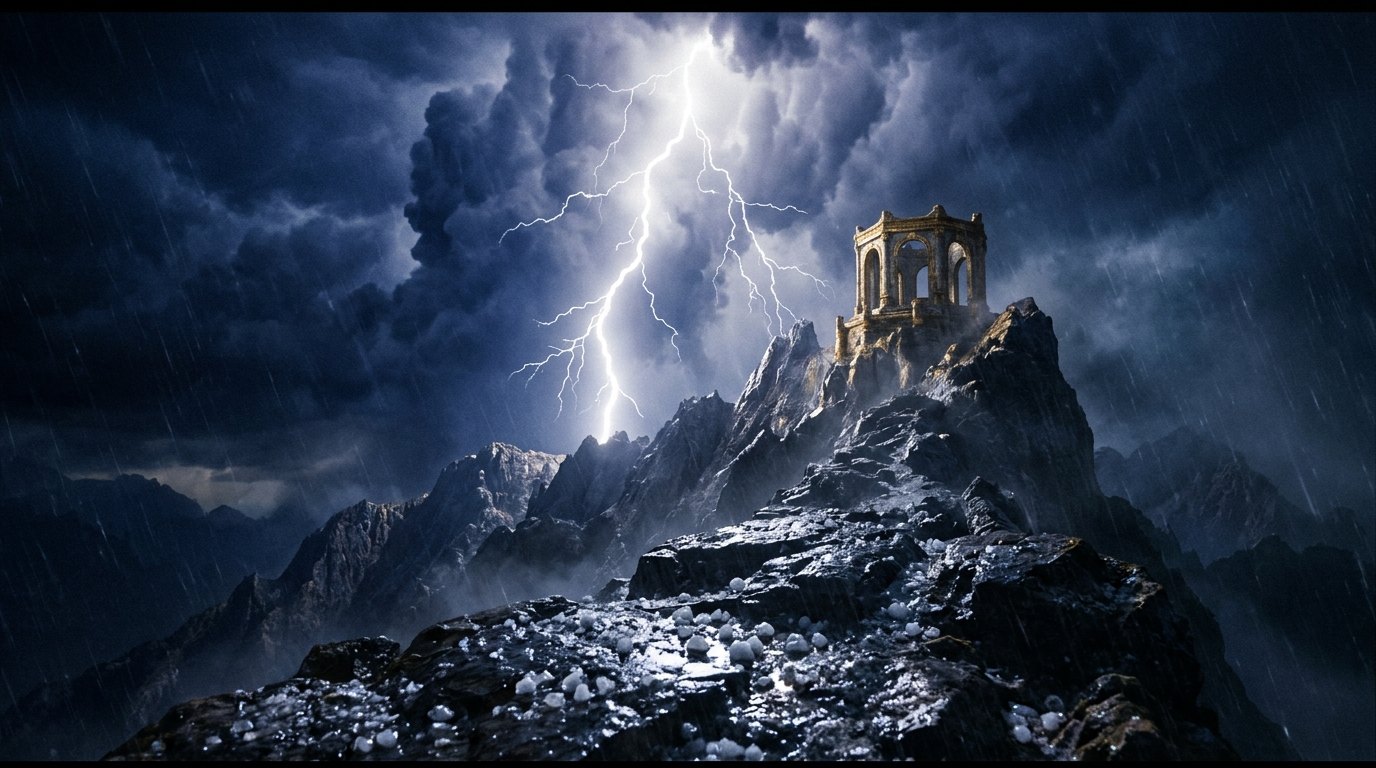
The seventh angel sounded his trumpet, and there were loud voices in heaven, which said: “The kingdom of the world has become the kingdom of our Lord and of his Messiah, and he will reign for ever and ever.”
Revelation 11:15 (NIV)
Heavenly voices declare the total transfer of universal sovereignty to our Lord and His Christ for ever and ever.
The sounding of the seventh trumpet in Revelation 11:15 triggers a triumphant roar across heaven, declaring that the kingdom of the world has become the kingdom of our Lord and of His Christ, and He shall reign forever and ever. Unlike the preceding trumpets, which released immediate earthly plagues, this final blast announces the consummation of history and initiates the third woe, which encompasses the rapid outpouring of the seven bowls. In Revelation 11:16-18, the twenty-four elders fall on their faces in holy adoration, thanking the Lord God Almighty because He has taken His great power and begun His sovereign reign. They celebrate the arrival of divine wrath, the long-awaited judgment of the dead, the rewarding of God's bondservants, prophets, and saints, and the righteous destruction of those who corrupt the earth. The heavenly vision concludes in Revelation 11:19 with the opening of God's heavenly sanctuary. There, the long-hidden ark of His covenant is revealed, reminding His people of His unbreakable faithfulness and holiness. This magnificent revelation is accompanied by flashes of lightning, rumblings, peals of thunder, a violent earthquake, and heavy hail—signs that signal the irrevocable, holy approach of God's final and complete judgment upon an unrepentant world.
| Passage | What it says |
|---|---|
| Revelation 11:15 | The seventh trumpet sounds, evoking loud heavenly voices that proclaim the kingdoms of this world have become the Kingdom of Christ. |
| Revelation 11:16-18 | The twenty-four elders worship God for taking His great power to reign, rewarding His servants, and destroying those who destroy the earth. |
| Revelation 11:19 | God's temple in heaven opens to reveal the ark of His covenant, accompanied by lightnings, rumblings, an earthquake, and heavy hail. |
The Seven Last Plagues
Seven Angels Receive the Golden Bowls of Complete Divine Wrath
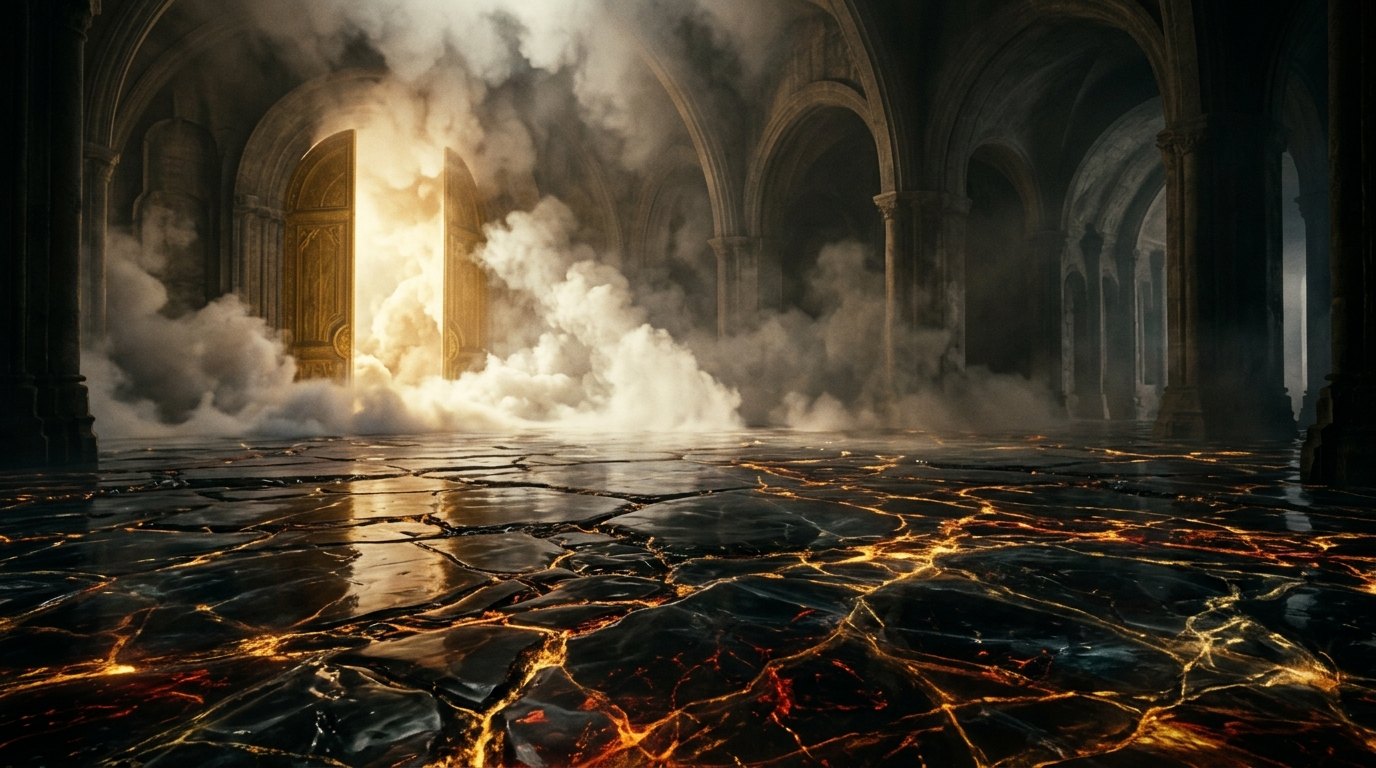
I saw in heaven another great and marvelous sign: seven angels with the seven last plagues—last, because with them God’s wrath is completed.
Revelation 15:1 (NIV)
The seven angels with the seven last plagues mark the definitive completion and culmination of the righteous wrath of God.
Heaven prepares for the final crescendo of judgment in Revelation 15:1, where John beholds seven angels bearing the seven last plagues, for in them the wrath of God is finished. The bowls represent no partial warning or fractional restraint; they are the full, undiluted justice of God poured out upon an empire that has martyred His saints. Before this judgment begins, God anchors His people in holy peace. In Revelation 15:2-4, the victorious saints who conquered the beast and his mark stand upon a sea of glass mingled with fire, holding harps of God and singing the song of Moses and the Lamb, magnifying the Lord for His righteous and true ways. Following this worship, Revelation 15:5-8 reveals the heavenly temple opening in holy majesty. Seven angels emerge clothed in pure, bright linen and girded with golden sashes, receiving seven golden bowls brimming with the wrath of God from one of the four living creatures. Instantly, the temple is filled with smoke from the glory and power of God, barring anyone from entering until the seven plagues are completed. Finally, in Revelation 16:1, a loud voice thunders from within the smoke-filled temple, commanding the angels to go and pour out the bowls of God's fury upon the earth, inaugurating the rapid and decisive end of worldly rebellion.
| Passage | What it says |
|---|---|
| Revelation 15:1-4 | Overcoming saints stand on the sea of glass singing the song of Moses and the Lamb, extolling God's righteous acts and judgments. |
| Revelation 15:5-8 | Seven angels clothed in pure bright linen receive seven golden bowls filled with God's wrath as smoke fills the temple from His glory. |
| Revelation 16:1 | A loud voice from the temple commands the seven angels to go and pour out the bowls of God's fury upon the earth. |
Bowls of Direct Wrath
Sores, Blood, Scorching Fire, and Darkness Afflict the Beast's Kingdom
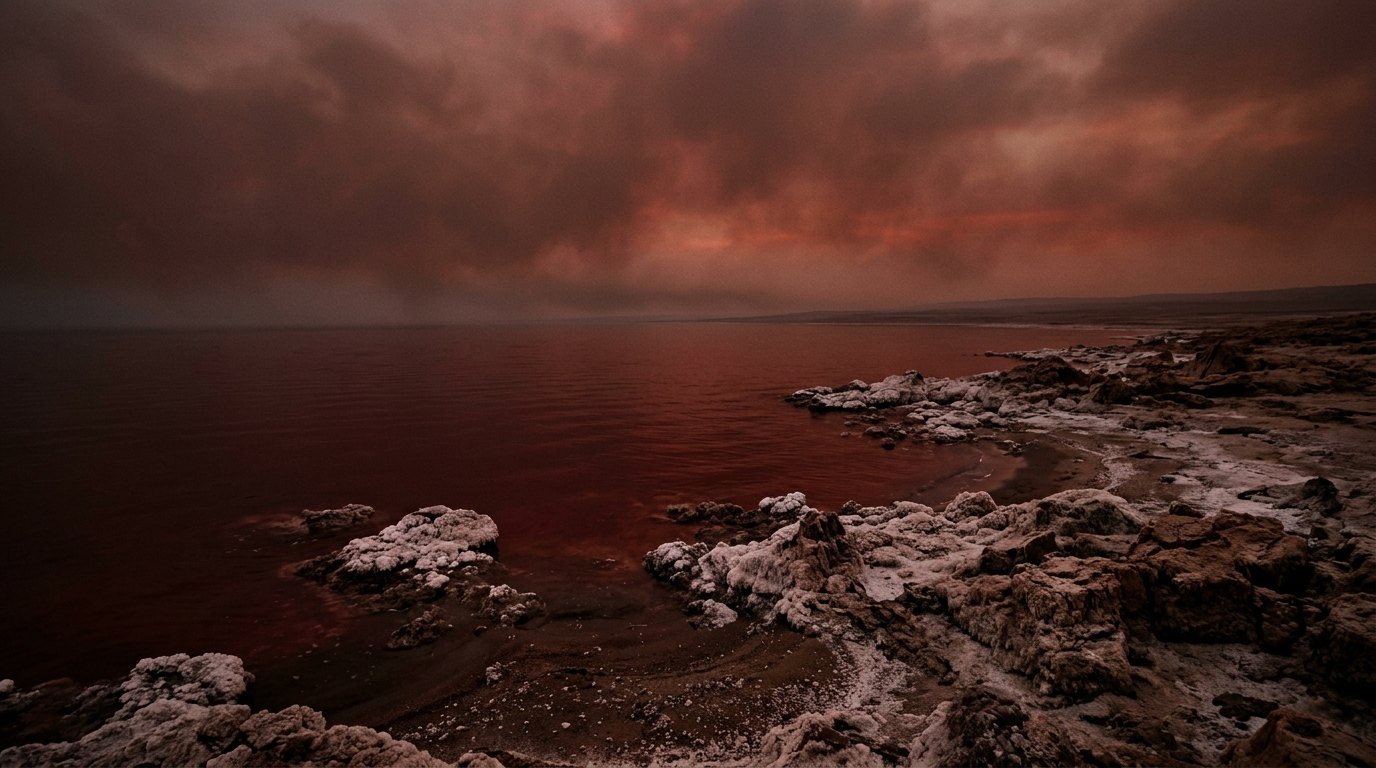
Then I heard the angel in charge of the waters say: “You are just in these judgments, O Holy One, you who are and who were; for they have shed the blood of your holy people and your prophets, and you have given them blood to drink as they deserve.”
Revelation 16:5-6 (NIV)
The angel of the waters affirms God's justice in giving blood to drink to those who shed the blood of saints and prophets.
The focal point of God's final retribution appears in Revelation 16:5-6, where the angel of the waters proclaims the absolute righteousness of divine judgment: 'You are righteous, O Lord... because You have judged these things. For they have shed the blood of saints and prophets, and You have given them blood to drink. For it is their just due.' Unlike the earlier partial trumpets that struck a third of creation to warn sinners, the seven bowls represent the complete, unmitigated wrath of God poured out upon an obstinate world that has allied itself with the beast.
This devastating sequence commences as the first angel empties his vial in Revelation 16:2, striking those who received the mark of the beast and worshiped his image with repulsive, agonizing sores. Physical retribution directly identifies the allegiance of the wicked. In Revelation 16:3, the second bowl strikes the global ocean, transforming it into coagulated blood resembling that of a corpse, extinguishing every living creature beneath the waves and choking maritime life.
Divine vengeance expands inland in Revelation 16:4-7 as the third bowl contaminates every freshwater river and spring, answering the historic cry of the martyred saints with poetic justice. The fourth bowl in Revelation 16:8-9 removes the sun's gentle warmth, enabling fierce solar flares to scorch men with fiery heat; remarkably, rather than breaking in humble repentance, humanity fiercely blasphemes the sovereign name of God. Finally, Revelation 16:10-11 strikes the heart of political rebellion by blanketing the beast's throne and empire in heavy, supernatural darkness. In their agony, men gnaw their tongues from unrelenting pain yet adamantly refuse to repent of their deeds.
| Passage | What it says |
|---|---|
| Revelation 16:2 | The first bowl pours out foul and painful sores upon everyone bearing the beast's mark and worshiping his image. |
| Revelation 16:3 | The second bowl turns the entire sea into blood like that of a dead man, causing every living thing in the sea to die. |
| Revelation 16:4-7 | The third bowl turns rivers and springs into blood, vindicating God's justice for avenging the blood of His holy martyrs. |
| Revelation 16:8-9 | The fourth bowl empowers the sun to scorch people with intense heat, yet they blaspheme God's name rather than repent. |
| Revelation 16:10-11 | The fifth bowl plunges the beast's throne and kingdom into darkness; men gnaw their tongues in pain and curse God without repenting. |
Armageddon and Consummation
The River Dries, Kings Gather, and It Is Finished

The seventh angel poured out his bowl into the air, and out of the temple came a loud voice from the throne, saying, “It is done!”
Revelation 16:17 (NIV)
When the seventh bowl empties into the air, a voice from the throne proclaims 'It is done,' signaling the final climax of God's wrath.
The climactic crescendo of world history culminates in Revelation 16:17, where the seventh angel empties his vial into the atmosphere and a loud voice resounds from the heavenly throne, declaring with finality: 'It is done!' This monumental declaration announces the total exhaustion of God's wrath and the imminent dismantling of rebellious human empires to make way for Christ's direct reign.
The pathway to this confrontation begins in Revelation 16:12, when the sixth angel empties his bowl upon the legendary Euphrates River, causing its ancient waters to evaporate completely so that the kings of the East can march unobstructed toward the land of Israel. In Revelation 16:13-16, John observes an unholy deception as three unclean, frog-like spirits issue from the mouths of the dragon, the beast, and the false prophet. These deceptive demonic spirits perform signs to seduce all earthly rulers, marshaling their combined military might to the staging ground of Har-Magedon (Armageddon) for war against God Almighty.
Immediately following the cosmic decree in Revelation 16:17-18, violent flashes of lightning, deep rumblings, and an unprecedented worldwide earthquake rip through creation—a convulsion so violent that no human era has ever witnessed its equal. As described in Revelation 16:19-21, this supreme seismic shock shatters the great metropolis into three parts, collapses every earthly city, and forces Babylon the Great to drink the cup of the wine of God's fierce fury. Mountains vanish, islands flee from their foundations, and colossal hailstones weighing nearly a hundred pounds rain down from heaven upon mankind, who continue their tragic defiance by blaspheming God to the very end.
| Passage | What it says |
|---|---|
| Revelation 16:12 | The sixth bowl dries up the great river Euphrates, preparing the way for the kings from the east to assemble. |
| Revelation 16:13-16 | Three demonic spirits like frogs emerge from dragon, beast, and false prophet to gather earth's kings to battle at Armageddon. |
| Revelation 16:17-18 | The seventh angel pours his bowl into the air; a voice cries 'It is done!' amidst unequaled thunder, lightning, and a catastrophic earthquake. |
| Revelation 16:19-21 | The great city splits into three parts, cities of nations fall, Babylon drinks God's fierce fury, and hundred-pound hailstones crush blaspheming men. |
Where in the Bible
| Book | Passages |
|---|---|
| Revelation | 41 · Revelation 5:1-5, Revelation 5:6-8, Revelation 5:9-14, Revelation 6:1-2, Revelation 6:3-4, Revelation 6:5-6, Revelation 6:7-8, Revelation 6:9-11, Revelation 6:12-14, Revelation 6:15-17, Revelation 7:1-8, Revelation 7:9-17, Revelation 8:1-2, Revelation 8:3-4, Revelation 8:5-6, Revelation 8:7, Revelation 8:8-9, Revelation 8:10-11, Revelation 8:12, Revelation 8:13, Revelation 9:1-6, Revelation 9:7-12, Revelation 9:13-19, Revelation 9:20-21, Revelation 10:1-11, Revelation 11:1-14, Revelation 11:15, Revelation 11:16-18, Revelation 11:19, Revelation 15:1-4, Revelation 15:5-8, Revelation 16:1, Revelation 16:2, Revelation 16:3, Revelation 16:4-7, Revelation 16:8-9, Revelation 16:10-11, Revelation 16:12, Revelation 16:13-16, Revelation 16:17-18, Revelation 16:19-21 |
The story in order
- The Lamb is worthy (c. AD 95) · Revelation 5:1-5 · No one but the Slain Lamb can open the scroll of God's plan.
- Four Horsemen unleashed (c. AD 95) · Revelation 6:1-8 · The first four seals bring conquest, war, famine, and death to the earth.
- Martyrs cry for justice (c. AD 95) · Revelation 6:9-11 · Souls under the altar await vengeance, given white robes and told to rest.
- Cosmic upheaval (c. AD 95) · Revelation 6:12-17 · The sixth seal brings a great earthquake and terror from God's wrath.
- Sealing of God's servants (c. AD 95) · Revelation 7:1-8 · 144,000 from Israel are sealed before destructive winds are released.
- Innumerable multitude redeemed (c. AD 95) · Revelation 7:9-17 · A great multitude from all nations stands before the Lamb, redeemed.
- Heavenly silence and prayers (c. AD 95) · Revelation 8:1-4 · The seventh seal brings silence; incense with saints' prayers rises to God.
- First four trumpets strike (c. AD 95) · Revelation 8:7-12 · A third of earth, sea, waters, and sky are struck by plagues.
- Demonic locusts and cavalry (c. AD 95) · Revelation 9:1-19 · The fifth and sixth trumpets unleash torment from the abyss and Euphrates.
- Two witnesses prophesy (c. AD 95) · Revelation 11:1-14 · Two witnesses prophesy for 1,260 days, are slain, and resurrected.
- Kingdoms become Christ's (c. AD 95) · Revelation 11:15-19 · The seventh trumpet proclaims Christ's eternal reign; God's temple opens.
Key words
- Seals
- The first series of seven judgments, opened by the Lamb, revealing progressive judgments on the earth. · Revelation 6:1-17
- Trumpets
- The second series of seven judgments, blown by angels, bringing more severe plagues upon the earth.
- Bowls
- The third and final series of seven judgments, poured out by angels, containing the complete wrath of God. · Revelation 16:1-21
- Lamb
- Jesus Christ, depicted as slain, who is worthy to open the scroll and execute God's judgments. · Revelation 5:6-14
- Saints' prayers
- The prayers of God's people, presented as incense, rising to heaven and accompanying divine judgments.
- Wrath of God
- God's righteous and complete judgment against sin and rebellion, poured out in the bowls. · Revelation 16:1
These three cycles of divine judgment reveal that history is not hurtling toward chaos, but moving deliberately toward the holy vindication of God. For believers, the catalogue of seals, trumpets, and bowls offers both solemn warning and profound comfort: God hears the cries of His persecuted people, evil has an appointed end, and the Lamb who was slain will reign forever and ever.
41 passages, each cited once.
How the major Christian traditions read this
All Christian traditions confess that the seven seals, trumpets, and bowls in the Revelation of Saint John depict God's righteous and holy judgments poured out against sin, culminating in the victorious return of Jesus Christ and the establishment of His eternal kingdom (Revelation 11:15; Revelation 19:11-16).
Catholic
We read the Apocalypse as a liturgical and prophetic book unveiling Christ's victory over the powers of evil and the purification of the Church through history. The seals, trumpets, and bowls are often understood through recapitulation—a spiral of visions portraying the spiritual warfare of the entire Church age, from the Roman persecutions to the final consummation (Revelation 6:1-17; Revelation 8:1-6). The imagery draws heavily on the Exodus plagues and temple liturgy, where the prayers of the saints rise like incense before God's throne (Revelation 8:3-4). These judgments show God's justice chastening an unrepentant world while preserving His faithful bride.
Scripture: Revelation 6:1-17, Revelation 8:1-6, Revelation 8:3-4
Orthodox
In Holy Tradition, the Apocalypse is an inspired liturgical mystery of Christ’s cosmic triumph over demonic darkness and apostasy. Following early fathers like Andrew of Caesarea, we do not treat the seals, trumpets, and bowls as a rigid chronological calendar, but as symbolic and recurring realities marking the trials of the faithful and God’s righteous response to human wickedness throughout the age (Revelation 6:9-11; Revelation 8:1-5). The opening of the scroll by the slain Lamb proclaims that Christ alone directs the destiny of the world, answering the cries of the martyrs and purifying creation for the final resurrection (Revelation 5:5-9; Revelation 16:1-7).
Scripture: Revelation 5:5-9, Revelation 6:9-11, Revelation 8:1-5, Revelation 16:1-7
Lutheran
We approach Revelation as a book of comfort designed to fix our eyes upon Jesus Christ, the Lamb who was slain for sinners. We view the seals, trumpets, and bowls primarily through the lens of recapitulation, describing the ongoing tribulations, wars, famines, and spiritual deceptions that afflict the Church and the world between the First and Second Advents of Christ (Revelation 6:1-8; Revelation 8:6-12). These judgments proclaim the Law’s severe warning against unbelief, while assuring the baptized that their names are written in the Lamb’s book of life and that God will graciously preserve them amid every earthly catastrophe (Revelation 7:13-17; Revelation 13:8).
Scripture: Revelation 6:1-8, Revelation 7:13-17, Revelation 8:6-12, Revelation 13:8
Reformed & Presbyterian
We understand these cycles of judgment largely through progressive parallelism or idealist-historicist perspectives, where the seals, trumpets, and bowls repeatedly portray the entire inter-advent age under different aspects and increasing intensity. The seals depict general human history and persecution; the trumpets warn the world and summon it to repentance; and the final bowls represent God's unmitigated wrath upon the persecuting world system prior to the Last Judgment (Revelation 8:7-13; Revelation 16:1-12). The prayers of the elect ascend to the throne of God's sovereign covenant rule, securing the certainty that the King of kings will vindicate His truth and avenge His blood (Revelation 6:10; Revelation 8:3-5).
Scripture: Revelation 6:10, Revelation 8:3-5, Revelation 8:7-13, Revelation 16:1-12
Anglican & Episcopal
In our historic heritage, we read Revelation with pastoral sobriety, acknowledging a diversity of interpretations that see the seals, trumpets, and bowls both as historical milestones of the Church's struggle and as recurring patterns of divine judgment throughout the ages (Revelation 6:1-17; Revelation 11:15-18). Rather than mapping out speculative timelines, we hear in the trumpet calls and outpourings of wrath a call to national and individual repentance, reminding us that God is holy and active in human affairs. Above all, the liturgy of heaven anchors the faithful to worship the Lamb who redeems us by His blood (Revelation 5:9-10; Revelation 8:1-4).
Scripture: Revelation 5:9-10, Revelation 6:1-17, Revelation 8:1-4, Revelation 11:15-18
Baptist
Among our churches, many hold to a futurist and premillennial reading, viewing the seals, trumpets, and bowls as literal, sequential judgments that will fall upon the earth during a future seven-year Tribulation preceding Christ's physical reign on earth (Revelation 6:1-17; Revelation 16:1-21). The seals commence this period of distress; the seventh seal contains the trumpets, and the seventh trumpet unfolds the bowls of God's final, undiluted wrath against an ungodly world system (Revelation 8:1-2; Revelation 15:1). Some among us hold historicist or idealist views, but all confess that God's Word calls sinners to flee the coming wrath by trusting in the shed blood of Jesus Christ (Revelation 6:16-17; 1 Thessalonians 1:10).
Scripture: Revelation 6:1-17, Revelation 8:1-2, Revelation 15:1, Revelation 16:1-21, 1 Thessalonians 1:10
Methodist & Wesleyan
We look to the Apocalypse as a profound pastoral exhortation to holy living and persevering love in the face of spiritual opposition. John Wesley saw the seals and trumpets unfolding God's providential rule and moral discipline across human history, warning humanity away from sin and toward repentance (Revelation 6:1-8; Revelation 9:20-21). The judgments demonstrate that evil cannot ultimately prevail against the holy God. The progressive unveiling of God's wrath in the bowls underscores the solemn danger of a hardened heart, while reassuring the faithful that divine grace will keep those who abide in Christ until His righteous kingdom fully arrives (Revelation 15:3-4; Revelation 16:5-7).
Scripture: Revelation 6:1-8, Revelation 9:20-21, Revelation 15:3-4, Revelation 16:5-7
Pentecostal & Charismatic
We generally hold a futurist and dispensational understanding of Revelation, teaching that the seals, trumpets, and bowls will occur during the catastrophic Great Tribulation after the Church is caught up to meet the Lord (Revelation 3:10; Revelation 4:1-2). The seals unleash global warfare, famine, and death (Revelation 6:1-8); the trumpets initiate supernatural, catastrophic plagues upon nature and humanity (Revelation 8:7-12); and the bowls constitute the sudden, decisive pouring out of the wrath of Almighty God upon the Beast and his followers (Revelation 16:1-17). We view these chapters as literal warnings urging us to proclaim the gospel with urgent evangelistic power and Holy Spirit boldness before that great day comes.
Scripture: Revelation 3:10, Revelation 4:1-2, Revelation 6:1-8, Revelation 8:7-12, Revelation 16:1-17
Non-denominational & Evangelical
In our fellowships, the predominant understanding is futurist and premillennial, interpreting the seals, trumpets, and bowls as a chronological sequence of real events that will unfold during the end-times Tribulation (Revelation 6:1-17; Revelation 8:1-13; Revelation 16:1-21). The breaking of the seals begins this era, nested with the seven trumpets, which culminate in the seven bowls rapidly poured out right before the Second Coming of Christ. We emphasize taking the text plainly according to its prophetic meaning, calling everyone to make a personal decision to receive Jesus Christ as Lord and Savior today so as to be saved from the wrath to come (Revelation 19:11-16; 1 Thessalonians 5:9).
Scripture: Revelation 6:1-17, Revelation 8:1-13, Revelation 16:1-21, Revelation 19:11-16, 1 Thessalonians 5:9
Where they differ
Timing and historical fulfillment
- Catholic
- Recapitulated throughout church history and culminating in the final end-times trial.
- Orthodox
- Spiritual and cosmic realities recurring across time until the Last Day.
- Lutheran
- Parallel representations of the entire inter-advent age under God's providence.
- Reformed & Presbyterian
- Progressive parallelism depicting recurring cycles of judgment throughout the entire church age.
- Anglican & Episcopal
- Historic patterns and symbolic warnings unfolding across church history and the end.
- Baptist
- Predominantly viewed as a literal, future seven-year tribulation period.
- Methodist & Wesleyan
- Providential judgments guiding history and warning the world toward repentance.
- Pentecostal & Charismatic
- Exclusively future, sequential plagues occurring during the great tribulation.
- Non-denominational & Evangelical
- Literal judgments strictly reserved for a future seven-year end-times period.
Scripture: Revelation 1:1-3, Revelation 6:1-17, Revelation 16:1-21
Relationship between the three series
- Catholic
- Overlapping, thematic spirals showing deepening spiritual warfare and judgment.
- Orthodox
- Mystical, concurrent visions of divine chastisement and cosmic redemption.
- Lutheran
- Recapitulating cycles describing tribulation from different angles rather than chronological steps.
- Reformed & Presbyterian
- Parallel cycles increasing in intensity toward the final judgment of God.
- Anglican & Episcopal
- Interlocking prophetic visions portraying the escalating drama of redemption history.
- Baptist
- Strictly chronological nesting where seventh seal yields trumpets, yielding bowls.
- Methodist & Wesleyan
- Escalating warnings of divine discipline culminating in the final wrath.
- Pentecostal & Charismatic
- Sequential, nested chain of judgments unfolding during the final crisis.
- Non-denominational & Evangelical
- Consecutive order of judgments nested inside one another across tribulation.
Scripture: Revelation 8:1-2, Revelation 11:15, Revelation 15:1
Your pastor can tell you where your church stands.
Scripture cited
- Revelation 8:1-6
- Revelation 5
- Revelation 6
- Revelation 8
- Revelation 9
- Revelation 11
- Revelation 15
- Revelation 16