What is the great white throne judgment?
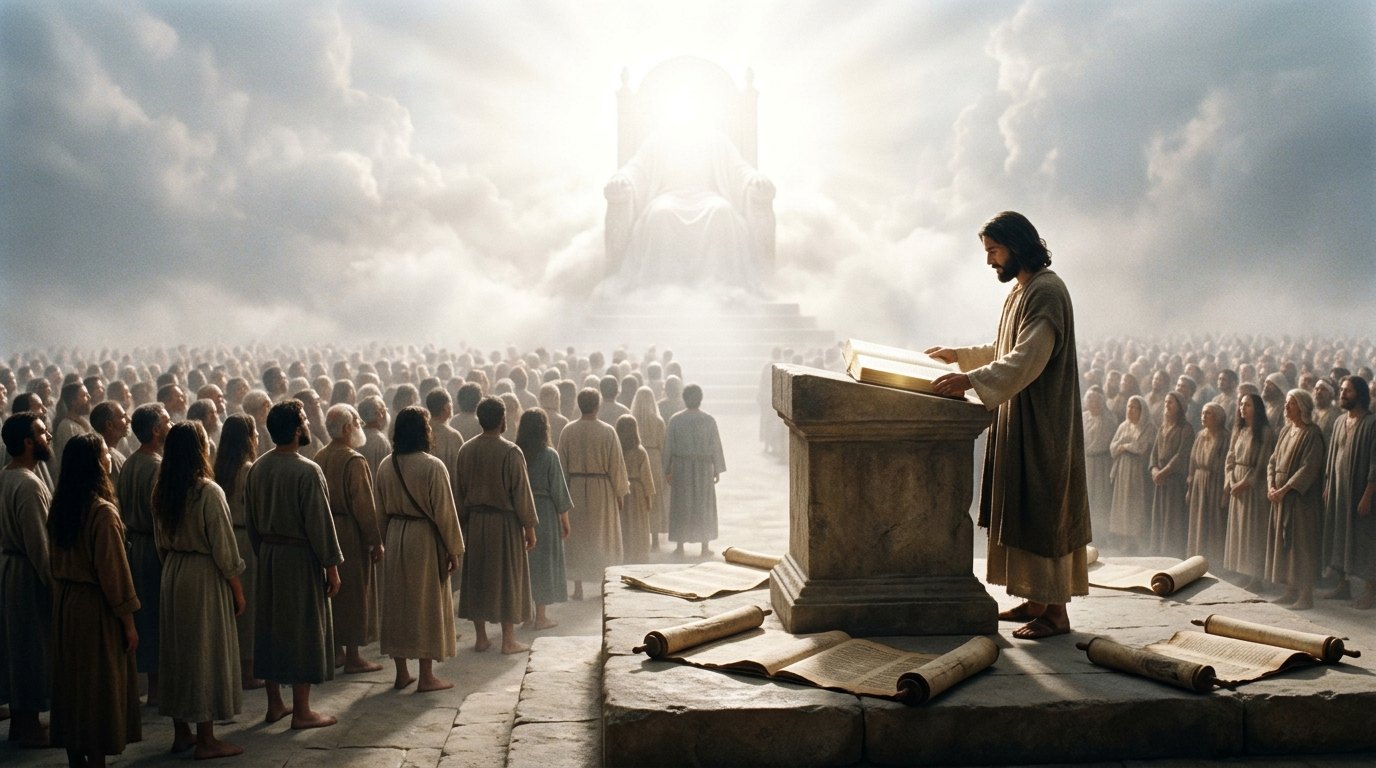
Revelation 20:11-15
11 Then I saw a great white throne and him who was seated on it. The earth and the heavens fled from his presence, and there was no place for them.
12 And I saw the dead, great and small, standing before the throne, and books were opened. Another book was opened, which is the book of life. The dead were judged according to what they had done as recorded in the books.
13 The sea gave up the dead that were in it, and death and Hades gave up the dead that were in them, and each person was judged according to what they had done.
14 Then death and Hades were thrown into the lake of fire. The lake of fire is the second death.
15 Anyone whose name was not found written in the book of life was thrown into the lake of fire.
New International Version (NIV)
The answer
The great white throne judgment is God’s final judgment of the dead, when their works are brought into the open and anyone whose name is not written in the book of life is cast into the lake of fire (Revelation 20:11-15). It follows the thousand years and Satan’s final defeat, and it comes immediately before the new heaven and new earth (Revelation 20:7-10; Revelation 21:1).
What happens at the throne
- The Judge sits in absolute authority. The throne is “great” and “white,” displaying the majesty and perfect holiness of the One who judges. Revelation 20:11 says that even earth and heaven flee from His face. Matthew 25:31 associates the throne of glory with the Son of Man, Jesus Christ.
- The dead stand before God. Both “the great and the small” appear, and the sea, death and Hades give up their dead. Social position, power or obscurity makes no difference (Revelation 20:12-13).
- Books are opened. The dead are judged according to what is written concerning their works. Nothing is concealed or overlooked (Revelation 20:12-13).
- Another book—the book of life—is opened. The passage distinguishes the record of works from this book containing names. Its decisive question is whether each person is found written in the book of life (Revelation 20:12,15).
- The sentence is final. Death and Hades are thrown into the lake of fire, which is expressly called “the second death.” Anyone not found written in the book of life is also cast into it (Revelation 20:14-15).
The passage does not describe a contest in which good deeds are weighed against bad deeds until salvation is earned. It declares judgment according to works, while making inclusion in the book of life decisive for escaping the second death. The great white throne therefore reveals both God’s complete justice and the terrible, everlasting consequence of facing that judgment without one’s name written there.
Answered from Scripture · reviewed November 12, 2026
The great white throne judgment is God's final, climactic courtroom where the resurrected dead stand before their holy Creator to give an account of every deed. In this solemn scene, the present heavens and earth flee away, the records of human works are laid bare, and the book of life determines each soul's eternal destiny. Understanding this judgment reveals the absolute perfection of God's justice and underscores our desperate need for salvation through Jesus Christ.
The Holy Judge
God Sits in Sovereign Splendor and Holiness
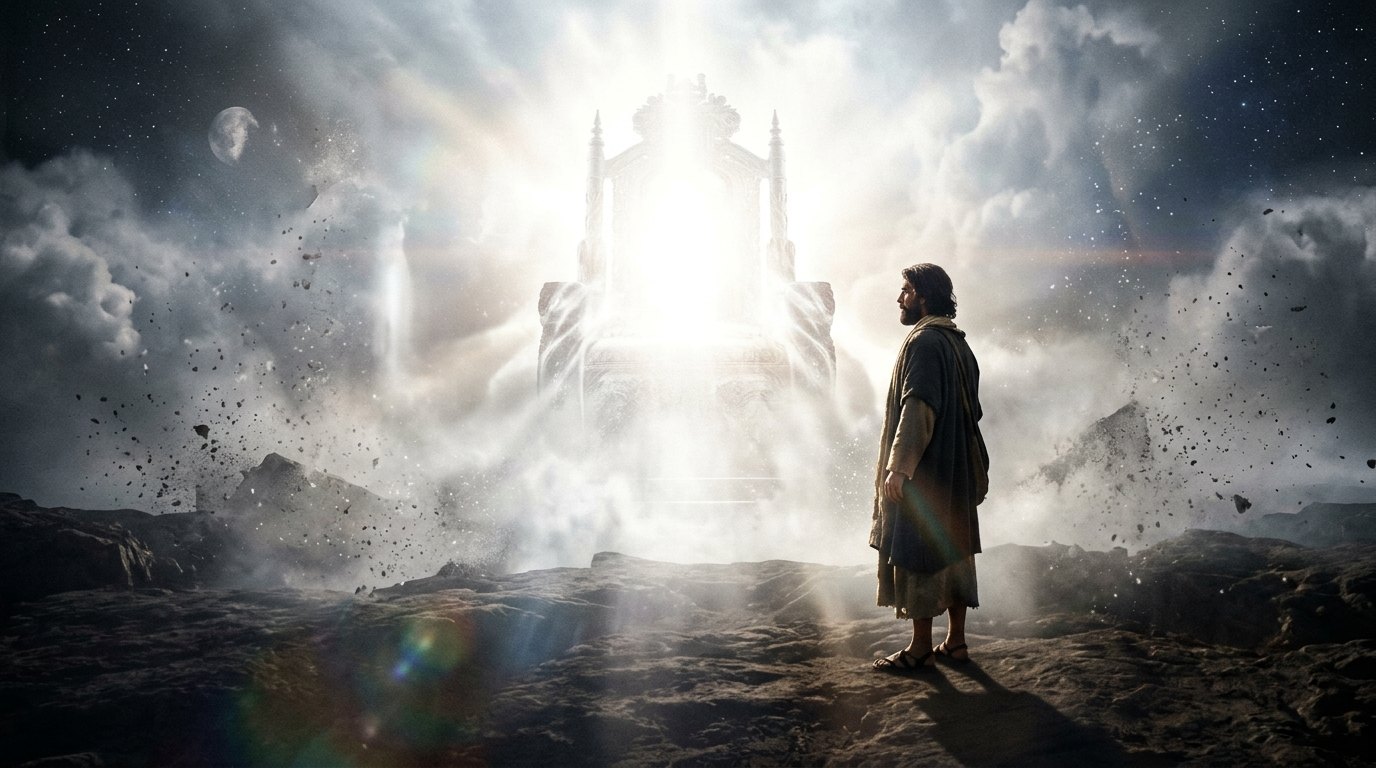
Then I saw a great white throne and him who was seated on it. The earth and the heavens fled from his presence, and there was no place for them.
Revelation 20:11 (NIV)
It depicts the overwhelming holiness and majesty of the enthroned Judge, before whom the physical cosmos flees.
In Revelation 20:11, the apostle John beholds an awe-inspiring sight: a great white throne and Him who sat on it, before whose face the earth and the sky flee away, leaving no place found for them. This vision demonstrates the terrifying holiness and unquestioned authority of God. The throne is vast, white in unblemished purity, and unyielding in righteousness. As Daniel 7:9 envisioned centuries prior, the Ancient of Days takes His seat amidst garment white as snow and wheels of burning flame. Earthly powers crumble, and the present cosmos cannot endure the unveiled radiance of divine justice. As warned in 2 Peter 3:7 and 2 Peter 3:10, the present heavens and earth are kept in store for fire, dissolving as the day of the Lord arrives to judge ungodliness. God does not delegate this final reckoning to an imperfect tribunal; rather, as Jesus states in John 5:22, the Father has committed all judgment entirely to the Son. The glorified Lord Jesus, who once stood condemned before Pontius Pilate, now presides as the sovereign arbiter of all creation. He comes in majesty, exactly as He foretold in Matthew 25:31, surrounded by holy angels to sit on His glorious throne. Paul confirmed this inescapable reality in Acts 17:31, declaring that God has appointed a day in which He will judge the inhabited world in absolute righteousness by the Man He ordained, having raised Him from the dead. Therefore, 2 Timothy 4:1 charges believers before Christ Jesus, who will judge the living and the dead at His appearing. Those who persist in rebellion merely store up wrath for themselves, according to Romans 2:5, awaiting the revelation of God's righteous verdict. As the psalmist declared in Psalms 9:7-8, the Lord has prepared His throne for judgment and will minister true justice to the nations without partiality.
| Passage | What it says |
|---|---|
| Revelation 20:11 | John sees a great white throne and the One seated on it, before whose face earth and sky flee away. |
| Matthew 25:31 | The Son of Man arrives in glory with all His holy angels and sits on the throne of His glory. |
| Daniel 7:9 | Thrones are placed and the Ancient of Days takes His seat with clothing white as snow and wheels of burning fire. |
| John 5:22 | Jesus declares that the Father judges no one, but has committed all judgment entirely to the Son. |
| Acts 17:31 | God has fixed a day in which He will judge the world in righteousness by the Man He appointed. |
| Romans 2:5 | The unrepentant heart stores up wrath for the day of wrath and revelation of God's righteous judgment. |
| 2 Peter 3:7 | The present heavens and earth are reserved for fire against the day of judgment and perdition of ungodly men. |
| 2 Peter 3:10 | The day of the Lord comes like a thief, wherein heavens pass away and elements melt with fervent heat. |
| Psalms 9:7-8 | The Lord establishes His throne for judgment and will judge the world in righteousness. |
| 2 Timothy 4:1 | Christ Jesus will judge the living and the dead at His appearing and His kingdom. |
Universal Summons
All the Unsaved Dead Are Brought to Stand
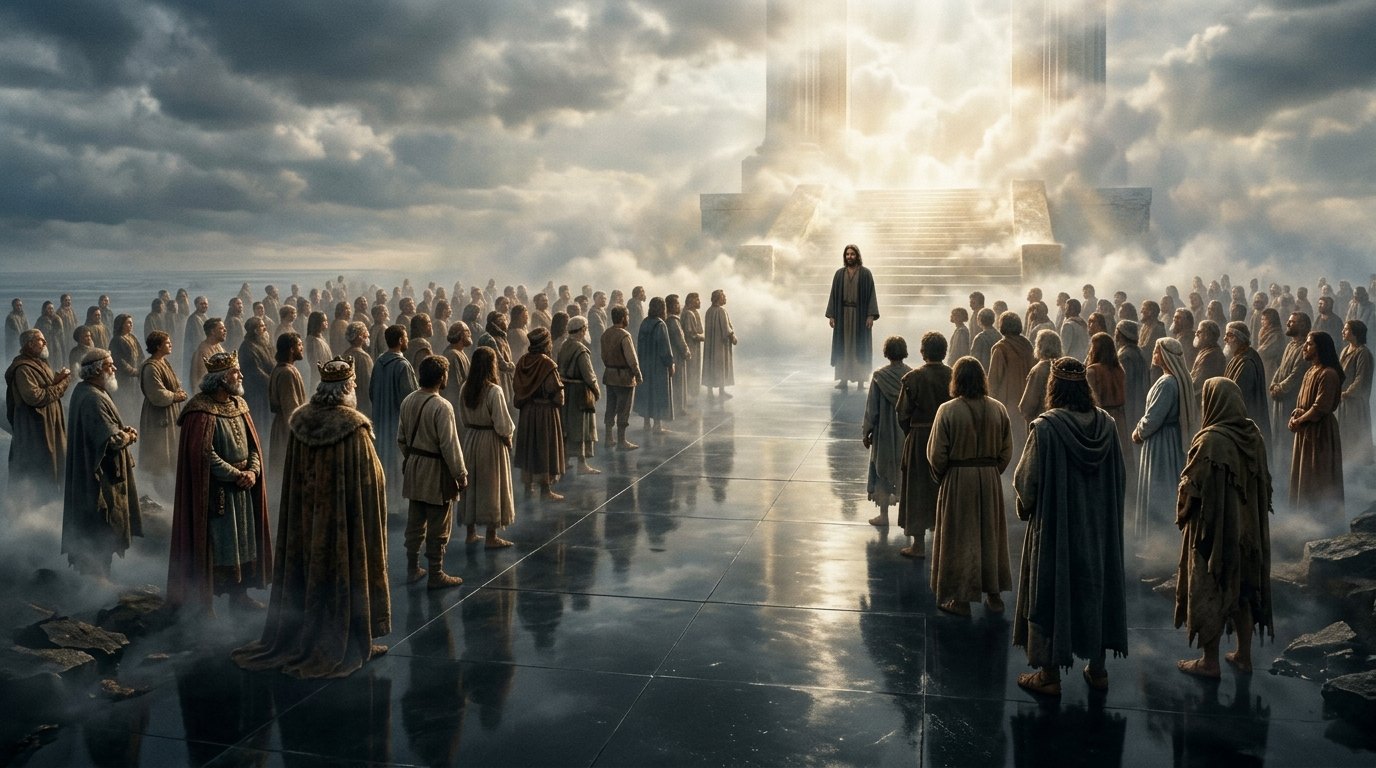
The sea gave up the dead that were in it, and death and Hades gave up the dead that were in them, and each person was judged according to what they had done.
Revelation 20:13 (NIV)
It shows that no realm of the dead can conceal anyone from God's inescapable universal summons.
In Revelation 20:13, the total and inescapable reach of divine justice is revealed as the sea gave up the dead who were in it, and Death and Hades delivered up the dead who were in them. Not a single individual who has ever drawn breath escapes this final summoning. The depths of the ocean, the hidden caverns of the earth, and the intermediate realm of the dead surrender every soul held in their grasp. Revelation 20:12 emphasizes that John saw the dead, small and great, standing before God. Earthly rank, social influence, immense riches, and utter obscurity vanish before the bar of heaven. Kings stand beside beggars, and generals beside servants, stripped of every worldly distinction. This climactic moment fulfills Christ's solemn promise in John 5:28-29, where He declared that an hour is coming when all who are in the graves will hear His voice and come forth—those who have done good to the resurrection of life, and those who have done evil to the resurrection of condemnation. It echoes the prophecy of Daniel 12:2, where the sleeping multitudes awake from the dust, some to everlasting life and others to shame and everlasting contempt. Human philosophy often attempts to deny an afterlife or minimize personal accountability, but Hebrews 9:27 stands as an immovable statutory decree: it is appointed for man to die once, and after that comes judgment. In this universal assembly, Romans 14:10-12 proves true: every knee shall bow, every tongue shall confess to God, and each person must render an exhaustive account of their own life. As 2 Corinthians 5:10 confirms, all must appear to receive the recompense for what was done in the body.
| Passage | What it says |
|---|---|
| Revelation 20:12 | The dead, both great and small, stand before the throne as the heavenly court convenes. |
| Revelation 20:13 | The sea, Death, and Hades surrender all their dead so that each person may be judged according to works. |
| John 5:28-29 | An hour is coming when all in the graves hear His voice and come out to resurrection. |
| Daniel 12:2 | Multitudes who sleep in the dust awake, some to everlasting life and others to shame and everlasting contempt. |
| Hebrews 9:27 | It is appointed unto man once to die, and after this the judgment. |
| Romans 14:10-12 | Every person shall give account of himself to God, as every knee bows and every tongue confesses. |
| 2 Corinthians 5:10 | All must appear to receive what is due for the deeds done in the body. |
Opened Records
Every Secret Work and Deed Laid Bare

And I saw the dead, great and small, standing before the throne, and books were opened. Another book was opened, which is the book of life. The dead were judged according to what they had done as recorded in the books.
Revelation 20:12 (NIV)
It records the formal unsealing of the books containing the precise account of every human deed.
The terrifying precision of divine omnipotence is made manifest in Revelation 20:12, where John records that books were opened, and the dead were judged according to their works, by the things which were written in the books. Nothing in human existence has escaped the meticulous notice of the Creator. This heavenly courtroom scene fulfills the ancient vision of Daniel 7:10, where a river of fire poured out, ten thousand times ten thousand stood before Him, the court sat, and the books were unsealed. Earthly courts depend on fallible witnesses, circumstantial evidence, and clever rhetoric, but the throne of God requires neither investigation nor cross-examination. God knows all things completely. In Ecclesiastes 12:14, Solomon warned that God will bring every work into judgment, including every secret thing, whether it be good or evil. No hypocritical facade can endure this exposure. The spoken word is preserved in indelible testimony; as Jesus cautioned in Matthew 12:36, people will give an account on the day of judgment for every idle and careless word they have uttered. Furthermore, Romans 2:16 proclaims that God will judge the secrets of men through Jesus Christ in accordance with the gospel. The internal motives, selfish thoughts, and deceitful desires of the heart are exposed, matching 1 Corinthians 4:5, which states that the Lord will bring to light what is hidden in darkness and make manifest the counsels of hearts. As Hebrews 4:13 makes clear, there is no creature hidden from His sight, but all things are naked and open to the eyes of Him to whom we must give account. The Lord searches the heart and tests the mind, as Jeremiah 17:10 affirms, to give to every man according to his ways.
| Passage | What it says |
|---|---|
| Daniel 7:10 | A river of fire flows from the Ancient of Days, thousands serve Him, and the books are opened. |
| Ecclesiastes 12:14 | God brings every deed into judgment, including every hidden thing, whether good or evil. |
| Matthew 12:36 | Men will give an account on the day of judgment for every careless or idle word spoken. |
| Romans 2:16 | God will judge the secrets of men through Jesus Christ in accordance with the gospel. |
| 1 Corinthians 4:5 | The Lord brings to light the hidden things of darkness and discloses the motives of human hearts. |
| Hebrews 4:13 | No creature is hidden from His sight, but all are naked and exposed before His eyes. |
| Jeremiah 17:10 | The Lord searches the heart and tests the mind to give to each according to his ways. |
Book of Life
Grace Alone Spares the Sinner from Ruin
Anyone whose name was not found written in the book of life was thrown into the lake of fire.
Revelation 20:15 (NIV)
It declares that inclusion in the book of life is the sole decisive factor escaping eternal destruction.
The final verdict of the ages hangs upon Revelation 20:15, which states with chilling finality that anyone not found written in the Book of Life was cast into the lake of fire. While the other books record works and condemn human self-righteousness, the Book of Life records the recipients of God's sovereign grace. As Revelation 13:8 reveals, this register is the Lamb's Book of Life, belonging to the Savior who was slain from the foundation of the world. No human being can survive the scrutiny of their own record; salvation is by grace through faith in the crucified and risen Christ. Revelation 21:27 confirms that nothing unclean or detestable will ever enter the New Jerusalem, but only those whose names are inscribed in the Lamb's book. Jesus urged His followers in Luke 10:20 not to rejoice merely in spiritual power, but rather to rejoice because your names are written in heaven. Paul likewise celebrated his fellow workers in Philippians 4:3, noting that their names were recorded in the book of life. For those outside of Christ, John 3:18 warns that he who does not believe is condemned already, because he has not believed in the name of the only begotten Son of God. Yet for the believer who rests entirely in the finished work of the Cross, the promise of Romans 8:1 stands inviolable: there is now no condemnation for those who are in Christ Jesus. While Exodus 32:32-33 recounts Moses pleading before God where the Lord declares that whoever sins will be blotted out, Christ promises the believer in Revelation 3:5 that the one who overcomes through faith will never have their name blotted out of the Book of Life, but confessed before the Father.
| Passage | What it says |
|---|---|
| Revelation 20:15 | Anyone whose name is not found written in the book of life is cast into the lake of fire. |
| Revelation 13:8 | The book of life belongs from the foundation of the world to the Lamb who was slain. |
| Revelation 21:27 | Nothing unclean enters the holy city, but only those written in the Lamb's book of life. |
| Luke 10:20 | Jesus instructs His disciples to rejoice that their names are written in heaven. |
| Philippians 4:3 | Paul refers to his fellow laborers whose names are recorded in the book of life. |
| John 3:18 | Whoever believes in Him is not condemned, but whoever does not believe stands condemned already. |
| Romans 8:1 | There is now no condemnation for those who are in Christ Jesus. |
| Revelation 3:5 | The one who conquers will not have his name blotted out from the book of life. |
| Exodus 32:32-33 | Whoever has sinned against the Lord is blotted out of His book. |
The Second Death
The Lake of Fire and Final Retribution
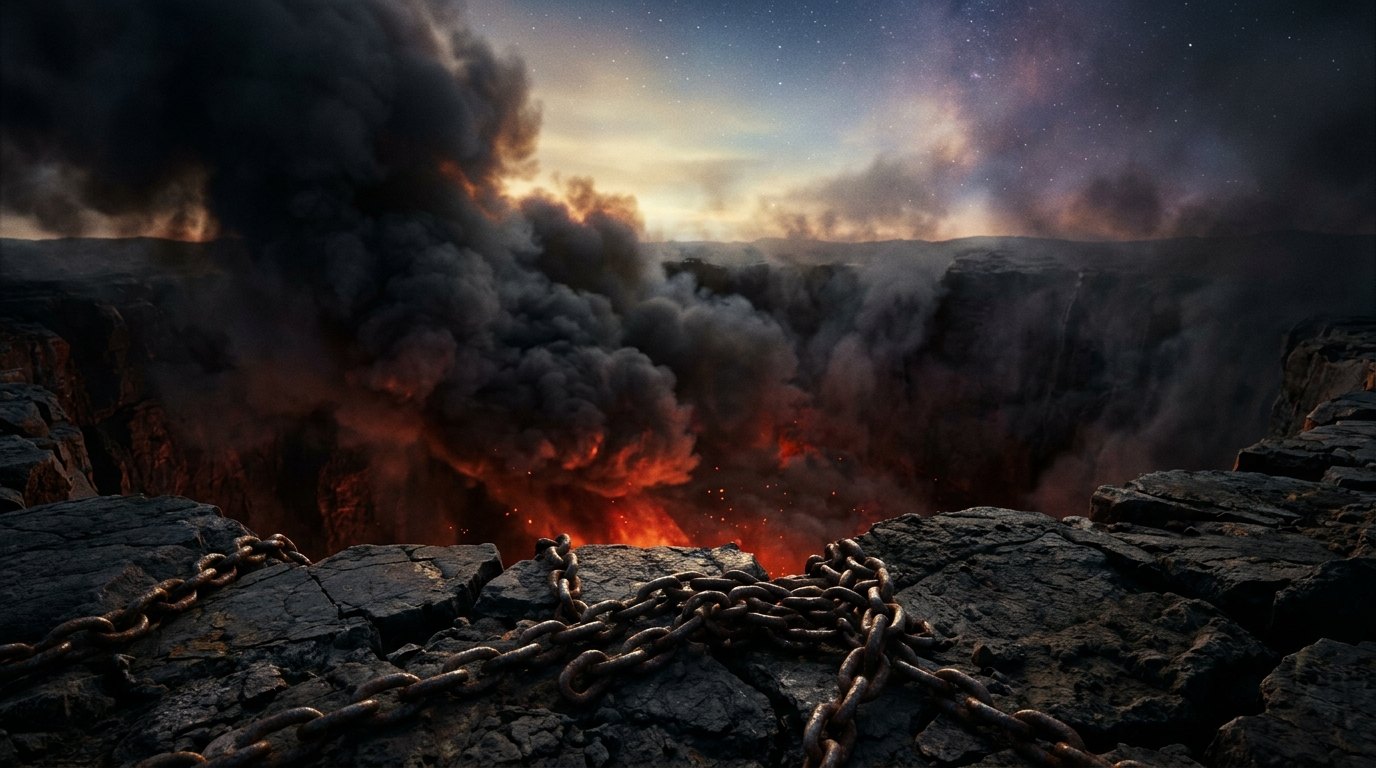
Then death and Hades were thrown into the lake of fire. The lake of fire is the second death.
Revelation 20:14 (NIV)
It defines the lake of fire as the second death and shows the final eradication of death and Hades.
The sobering climax of the great white throne judgment is articulated in Revelation 20:14: "Then Death and Hades were thrown into the lake of fire. This is the second death, the lake of fire." Here, the final enemy is comprehensively destroyed, swallowed up forever in the consuming, holy retribution of God. This judgment is neither symbolic fiction nor a temporary purgatory; it is the absolute, permanent sentencing of all cosmic and human rebellion.
Scripture details that this catastrophic destiny was initially prepared for the demonic realm. As Jesus declared in Matthew 25:41, the unrighteous depart into the eternal fire prepared specifically for the devil and his angels. Long before the general resurrection, Revelation 19:20 records the beast and the false prophet being seized and hurled alive into this lake of burning sulfur. Then, as Revelation 20:10 states, Satan himself is finally cast into this same lake, joining the deceivers in unceasing torment. The smoke of their agony ascends forever and ever, granting no rest day or night to those who aligned themselves with the beast (Revelation 14:10-11).
Tragically, all human beings who refuse the gospel of grace join in this verdict. As Paul warns in 2 Thessalonians 1:8-9, those who do not know God and do not obey the gospel of our Lord Jesus will suffer the punishment of eternal destruction, forever cut off from the presence of the Lord and the glory of His might. Christ warned repeatedly of this dreadful reality, describing Gehenna as a place where the worm never dies and the fire is never quenched (Mark 9:43-48). The wicked enter into conscious, irreversible, eternal punishment, balanced by the righteous entering into eternal life (Matthew 25:46).
Revelation 21:8 catalogs those whose portion is this second death: the cowardly, the faithless, the detestable, murderers, the sexually immoral, sorcerers, idolaters, and all liars. Yet when this righteous verdict is fully accomplished and evil is forever purged, John immediately sees a new heaven and a new earth, for the first heaven and the first earth have passed away (Revelation 21:1).
| Passage | What it says |
|---|---|
| Revelation 20:14 | Death and Hades are thrown into the lake of fire, which is the second death. |
| Revelation 20:10 | The devil who deceived them is thrown into the lake of fire and sulfur for eternal torment. |
| Revelation 21:8 | The cowardly, unbelieving, sexually immoral, and unrepentant have their portion in the lake of fire. |
| Matthew 25:41 | The cursed depart into the eternal fire prepared for the devil and his fallen angels. |
| Matthew 25:46 | The wicked go away into eternal punishment, but the righteous enter into eternal life. |
| 2 Thessalonians 1:8-9 | Those who do not obey the gospel suffer the penalty of eternal destruction from the Lord's presence. |
| Revelation 21:1 | John sees a new heaven and a new earth after the first heaven and earth pass away. |
| Mark 9:43-48 | The unquenchable fire where the worm does not die and the fire is not quenched. |
| Revelation 19:20 | The beast and false prophet are captured and thrown alive into the lake of fire. |
| Revelation 14:10-11 | The smoke of torment ascends forever for those who worship the beast and receive his mark. |
Where in the Bible
| Book | Passages |
|---|---|
| Exodus | 1 · Exodus 32:32-33 |
| Psalms | 1 · Psalms 9:7-8 |
| Ecclesiastes | 1 · Ecclesiastes 12:14 |
| Jeremiah | 1 · Jeremiah 17:10 |
| Daniel | 3 · Daniel 7:9, Daniel 12:2, Daniel 7:10 |
| Matthew | 4 · Matthew 25:31, Matthew 12:36, Matthew 25:41, Matthew 25:46 |
| Mark | 1 · Mark 9:43-48 |
| Luke | 1 · Luke 10:20 |
| John | 3 · John 5:22, John 5:28-29, John 3:18 |
| Acts | 1 · Acts 17:31 |
| Romans | 4 · Romans 2:5, Romans 14:10-12, Romans 2:16, Romans 8:1 |
| 1 Corinthians | 1 · 1 Corinthians 4:5 |
| 2 Corinthians | 1 · 2 Corinthians 5:10 |
| Philippians | 1 · Philippians 4:3 |
| 2 Thessalonians | 1 · 2 Thessalonians 1:8-9 |
| 2 Timothy | 1 · 2 Timothy 4:1 |
| Hebrews | 2 · Hebrews 9:27, Hebrews 4:13 |
| 2 Peter | 2 · 2 Peter 3:7, 2 Peter 3:10 |
| Revelation | 13 · Revelation 20:11, Revelation 20:12, Revelation 20:13, Revelation 20:15, Revelation 13:8, Revelation 21:27, Revelation 3:5, Revelation 20:14, Revelation 20:10, Revelation 21:8, Revelation 21:1, Revelation 19:20, Revelation 14:10-11 |
The story in order
- God establishes His throne for judgment (c. 1000 BC) · Psalms 9:7-8 · The Lord will judge the world in righteousness.
- Thrones are placed, Ancient of Days sits (c. 600 BC) · Daniel 7:9 · Sets the scene for divine judgment.
- God brings deeds into judgment (c. 950 BC) · Ecclesiastes 12:14 · Every deed, hidden or known, will be judged.
- The Father commits judgment to the Son (c. AD 30) · John 5:22 · Jesus is the appointed judge.
- All must appear to receive deeds' due (c. AD 55) · 2 Corinthians 5:10 · Accountability for actions in the body.
- God will judge secrets of men (c. AD 57) · Romans 2:16 · Judgment based on the gospel and hidden motives.
- Christ Jesus will judge the living and dead (c. AD 67) · 2 Timothy 4:1 · Judgment at His appearing and kingdom.
- The present heavens and earth reserved for fire (c. AD 67) · 2 Peter 3:7 · Destruction awaits the ungodly.
- The dead stand before the throne (c. AD 95) · Revelation 20:12 · All the dead are summoned for judgment.
- Death and Hades surrender their dead (c. AD 95) · Revelation 20:13 · All are released for judgment.
- Lake of fire is the second death (c. AD 95) · Revelation 20:14 · Final retribution for the unsaved.
- New heaven and new earth (c. AD 95) · Revelation 21:1 · After the judgment, a new creation.
Eternal Destinies
| Group | Destination | Description | Passage |
|---|---|---|---|
| Unrepentant heart | Day of wrath | Stores up wrath | Romans 2:5 |
| Ungodly men | Day of judgment and perdition | Present heavens and earth reserved for fire | 2 Peter 3:7 |
| Dead, great and small | Judgment according to works | Stand before the throne | Revelation 20:12 |
| Anyone not in book of life | Lake of fire | Second death | Revelation 20:15 |
| Devil and fallen angels | Lake of fire and sulfur | Eternal torment | Revelation 20:10 |
| Cowardly, unbelieving, sexually immoral, unrepentant | Lake of fire | Their portion | Revelation 21:8 |
| The cursed | Eternal fire | Prepared for the devil and his angels | Matthew 25:41 |
| The wicked | Eternal punishment | N/A | Matthew 25:46 |
| Those who do not obey the gospel | Eternal destruction | From the Lord's presence | 2 Thessalonians 1:8-9 |
| Worship the beast and receive his mark | Lake of fire | Torment ascends forever | Revelation 14:10-11 |
Key words
- Judgment (krima, κρίμα)
- God's righteous evaluation of all deeds and motives. · Romans 2:5
- Book of Life (biblos tēs zōēs, βίβλος τῆς ζωῆς)
- Heavenly record of those whose names are written by God. · Revelation 20:15
- Second Death (thanatos deύτεros, θάνατος δεύτερος)
- Eternal punishment in the lake of fire. · Revelation 20:14
- Eternal Punishment (timōria aiṓnios, τιμωρία αἰώνιος)
- Everlasting penalty for the wicked. · Matthew 25:46
- Works (erga, ἔργα)
- Deeds done by individuals during their earthly life. · Revelation 20:12
The vision of the great white throne is both a solemn warning of impending justice and a profound summons to seek mercy while it may be found. Those who trust in Christ need not fear condemnation, for their names are securely inscribed by grace in the Lamb's book of life. Let the certainty of this coming day compel us to live in reverent holiness and boldly proclaim the gospel that rescues sinners from the second death.
43 passages, each cited once.
How the major Christian traditions read this
All Christian traditions confess that God will judge all humanity in righteousness through Jesus Christ at the end of the age, consigning the unrepentant to eternal punishment and delivering the redeemed into everlasting life (Matthew 25:31-46; Revelation 20:11-15).
Catholic
We confess the Great White Throne as the depiction of the Last Judgment (universale iudicium), which coincides with the return of Christ and the general resurrection of all the dead, both righteous and wicked (John 5:28-29; Acts 24:15). There is no thousand-year gap separating multiple resurrections or judgments. When Christ appears in glory, every secret thought and deed is laid bare before God (Matthew 25:31-32; Romans 2:16). Those whose names are inscribed in the book of life enter into beatific vision and eternal joy, while those who persisted in mortal sin and rejected divine mercy depart into everlasting damnation (Revelation 20:12-15).
Scripture: John 5:28-29, Acts 24:15, Matthew 25:31-32, Romans 2:16, Revelation 20:12-15
Orthodox
We see Revelation 20:11-15 as the holy icon of the Dread Judgment Seat of Christ, the singular, universal judgment that occurs when our Lord returns in glory at the general resurrection (Matthew 25:31-46). We reject chiliasm or any literal temporal millennium separating distinct judgments. At this final reckoning, heaven and earth pass away, books recording all human works are opened, and the book of life reveals the faithful (Revelation 20:11-12). For those who love God, His uncreated presence is light and joy; for those who have hardened their hearts against Him, that same holiness is experienced as torment and the lake of fire (Hebrews 12:29).
Scripture: Matthew 25:31-46, Revelation 20:11-12, Hebrews 12:29, Revelation 20:11-15
Lutheran
We confess with Augsburg Confession XVII that at the consummation of the world, Christ will appear once for judgment and raise up all the dead (John 5:28-29). The Great White Throne depicts this singular general judgment at Christ's return (Revelation 20:11-15). We reject millenarian ideas of divided judgments or intermediate dispensations. Christ judges all people according to their works, which visibly demonstrate whether their hearts possessed living faith or unbelief (Matthew 25:31-46; Romans 2:5-6). The elect, whose names are preserved in the book of life solely by God's grace in Christ, receive eternal life, while the ungodly and the devils are sentenced to endless torment.
Scripture: John 5:28-29, Revelation 20:11-15, Matthew 25:31-46, Romans 2:5-6
Reformed & Presbyterian
We confess with the Westminster Confession (33.1) that God has appointed a single day in which He will judge the entire world in righteousness by Jesus Christ (Acts 17:31). The Great White Throne (Revelation 20:11-15) is that universal day of judgment. All people who have lived upon the earth will appear before Christ's tribunal to give account of every thought, word, and deed (Ecclesiastes 12:14; 2 Corinthians 5:10). The opening of the books demonstrates God's immaculate justice, while the book of life manifests His sovereign, electing grace (Ephesians 1:4-5). The righteous are publicly vindicated and received into glory, while the reprobate are cast into eternal fire.
Scripture: Acts 17:31, Revelation 20:11-15, Ecclesiastes 12:14, 2 Corinthians 5:10, Ephesians 1:4-5
Anglican & Episcopal
We hold that Scripture teaches a universal, general judgment at the second coming of our Lord Jesus Christ, captured in the imagery of the Great White Throne (Revelation 20:11-15; 2 Peter 3:10-12). All nations and generations stand together before the judge of all the earth (Matthew 25:31-32; Genesis 18:25). While works cannot put away our sins (Article XII), they openly witness to the presence of a living faith. The books record the reality of every human heart and life, but deliverance from the lake of fire rests entirely on being found in the Lamb’s book of life, through the mercy of Christ our Redeemer.
Scripture: Revelation 20:11-15, 2 Peter 3:10-12, Matthew 25:31-32, Genesis 18:25
Baptist
Historically, our confessions describe one final, appointed day when Christ judges all men and fallen angels (Second London Confession 32.1; Acts 17:31). In that covenantal view, the Great White Throne encompasses all humanity, revealing the justice of God toward the wicked and His grace toward believers written in the book of life (Revelation 20:11-15). However, many Baptists holding premillennial convictions distinguish this throne from the judgment seat of Christ for believers (2 Corinthians 5:10). In that reading, the Great White Throne occurs after the millennium and deals exclusively with the unsaved dead, who are condemned according to their works and cast into the lake of fire.
Scripture: Acts 17:31, Revelation 20:11-15, 2 Corinthians 5:10
Methodist & Wesleyan
We confess the Great White Throne judgment as the culmination of history, where Christ renders to every soul according to their works (Romans 2:6-8; Revelation 20:11-15). It represents the single, general judgment at the close of time. Works are examined not because they purchase salvation, but because true faith necessarily produces holiness of heart and life (Galatians 5:6; James 2:14-17). Those who yielded to God’s transforming grace have their names in the book of life and enter everlasting blessedness, while those who obstinately rejected the Spirit's drawing and lived in willful ungodliness reap the wages of eternal death.
Scripture: Romans 2:6-8, Revelation 20:11-15, Galatians 5:6, James 2:14-17
Pentecostal & Charismatic
We generally hold a premillennial perspective wherein the Great White Throne is the final judgment reserved primarily for the unsaved dead at the close of the millennial reign (Revelation 20:5, 11-15). Believers will have already been resurrected at the Rapture and appeared before the judgment seat of Christ (bema) to receive rewards for their service (1 Thessalonians 4:16-17; 2 Corinthians 5:10). At the Great White Throne, the remaining dead are raised, the books of their deeds are opened to show their guilt, and all whose names are absent from the book of life are consigned forever to the lake of fire.
Scripture: Revelation 20:5, Revelation 20:11-15, 1 Thessalonians 4:16-17, 2 Corinthians 5:10
Non-denominational & Evangelical
We often interpret the Great White Throne in a dispensational framework, separating it from the earlier judgment seat of Christ where believers are evaluated for rewards (2 Corinthians 5:10; Revelation 20:11-15). At this final throne after the millennium, only the unregenerate dead stand before God to face judgment according to their deeds (Revelation 20:12-13). Because their names are not found in the Lamb’s book of life through faith in Christ's finished work, their works cannot justify them, and they are cast into the lake of fire. Other evangelicals hold the classic view of one general judgment for all.
Scripture: 2 Corinthians 5:10, Revelation 20:11-15, Revelation 20:12-13
Where they differ
Who stands before the throne
- Catholic
- All human beings who ever lived, both the righteous and the wicked.
- Orthodox
- All mankind together at the universal resurrection and dread judgment of Christ.
- Lutheran
- All the dead without exception, gathered together before Christ at His return.
- Reformed & Presbyterian
- All humanity and fallen angels, appearing collectively before Christ's final tribunal.
- Anglican & Episcopal
- All people of all generations gathered together for the general judgment.
- Baptist
- Historically all people; in widespread premillennial teaching, solely the unsaved dead.
- Methodist & Wesleyan
- Every individual standing together at the final general judgment of humanity.
- Pentecostal & Charismatic
- Only the wicked dead, believers having already been judged for rewards.
- Non-denominational & Evangelical
- Primarily the unsaved dead whose names are omitted from life's book.
Scripture: Matthew 25:31-32, 2 Corinthians 5:10, Revelation 20:12
Timing and number of judgments
- Catholic
- One singular general judgment occurring at Christ's final return.
- Orthodox
- One ultimate judgment occurring at the single general resurrection.
- Lutheran
- A single day of judgment at the end of the world.
- Reformed & Presbyterian
- One appointed day of universal judgment when history concludes.
- Anglican & Episcopal
- A single comprehensive judgment taking place at the second coming.
- Baptist
- Historically one judgment; widely taught as distinct from believers' prior evaluation.
- Methodist & Wesleyan
- One universal day of reckoning concluding the present age.
- Pentecostal & Charismatic
- Distinct judgments separated by a thousand-year earthly millennial reign.
- Non-denominational & Evangelical
- Often separated into the judgment seat of Christ and this later throne.
Scripture: Acts 17:31, Revelation 20:4-6, Revelation 20:11
Your pastor can tell you where your church stands.
Scripture cited
- Revelation 20:11-15
- Revelation 21:1
- Matthew 25:31
- Revelation 20:7-15