What are the signs of the end times?

Matthew 24:3-14
3 As Jesus was sitting on the Mount of Olives, the disciples came to him privately. “Tell us,” they said, “when will this happen, and what will be the sign of your coming and of the end of the age?”
4 Jesus answered: “Watch out that no one deceives you.
5 For many will come in my name, claiming, ‘I am the Messiah,’ and will deceive many.
6 You will hear of wars and rumors of wars, but see to it that you are not alarmed. Such things must happen, but the end is still to come.
7 Nation will rise against nation, and kingdom against kingdom. There will be famines and earthquakes in various places.
8 All these are the beginning of birth pains.
9 “Then you will be handed over to be persecuted and put to death, and you will be hated by all nations because of me.
10 At that time many will turn away from the faith and will betray and hate each other,
11 and many false prophets will appear and deceive many people.
12 Because of the increase of wickedness, the love of most will grow cold,
13 but the one who stands firm to the end will be saved.
14 And this gospel of the kingdom will be preached in the whole world as a testimony to all nations, and then the end will come.
New International Version (NIV)
The answer
Scripture gives real signs of Christ’s return, but no date. Jesus’ fullest summary is Matthew 24:3-31: spiritual deception, wars and disasters, persecution and apostasy, worldwide gospel witness, severe suffering, and cosmic signs culminating in His visible coming. His governing warning is that “no one knows of that day and hour” (Matthew 24:36).
Signs Jesus names
- False christs, false prophets, and religious deception: Many will claim to represent Christ, and some will perform impressive signs and wonders. Miraculous claims therefore do not, by themselves, prove that a message is from God (Matthew 24:4-5, Matthew 24:23-25).
- Wars, famines, plagues, and earthquakes: These are “the beginning of birth pains,” not evidence that every new crisis means the end has arrived. Jesus expressly says, “the end is not yet” (Matthew 24:6-8).
- Persecution, betrayal, apostasy, and cold love: Christ’s followers will be hated, many will stumble, wickedness will multiply, and many people’s love will grow cold. Endurance is essential (Matthew 24:9-13).
- Worldwide proclamation of the gospel: The Good News of the Kingdom will be preached throughout the world as a testimony to all nations, “and then the end will come” (Matthew 24:14).
- The abomination of desolation and unparalleled suffering: Jesus points to the sign spoken of through Daniel, followed by suffering so severe that those days must be shortened (Matthew 24:15-22).
- Cosmic upheaval and Christ’s visible return: The sun and moon will be darkened, the powers of the heavens shaken, and the Son of Man will come on the clouds with power and glory. His angels will gather His chosen ones (Matthew 24:29-31).
Other biblical descriptions
Paul describes the last days as grievous times marked by self-love, greed, pride, disobedience, brutality, pleasure-seeking, and an outward form of godliness without its power (2 Timothy 3:1-5). Peter adds that mockers will ridicule the promise of Christ’s coming and follow their own desires (2 Peter 3:3-4). Paul also warns that declarations of “Peace and safety” can precede sudden destruction (1 Thessalonians 5:2-3).
How these signs should be read
- Do not set dates or chase sensational claims: The times and seasons remain under the Father’s authority (Acts 1:7).
- Do not panic at every disaster: Jesus specifically tells His disciples not to be troubled by wars and rumors of wars (Matthew 24:6).
- Watch, endure, and remain faithful: Readiness means continuing as Christ’s faithful servant, not merely constructing a prophetic timetable (Matthew 24:42-46).
- Pursue holiness and hope: God’s patience gives opportunity for repentance; believers are called to holy living while looking for new heavens and a new earth where righteousness dwells (2 Peter 3:9-13).
- Rest in salvation through Christ: Watchfulness is joined to faith, love, and the hope of salvation through the Lord Jesus, who died so that His people might live with Him (1 Thessalonians 5:6-10).
Answered from Scripture · reviewed November 11, 2026
When the disciples asked Jesus on the Mount of Olives what sign would mark His coming and the close of the age, our Lord answered not with a speculative calendar, but with a sober portrait of global turmoil, spiritual peril, and steadfast mission. Rather than pointing to a isolated event, Scripture frames these signs as escalating birth pains that characterize the age while summoning the church to unshakeable vigilance. Grasping what Jesus and His apostles explicitly taught guards believers against deception, steadies the heart in times of trial, and clarifies our enduring calling.
The Question
The disciples ask on the Mount of Olives
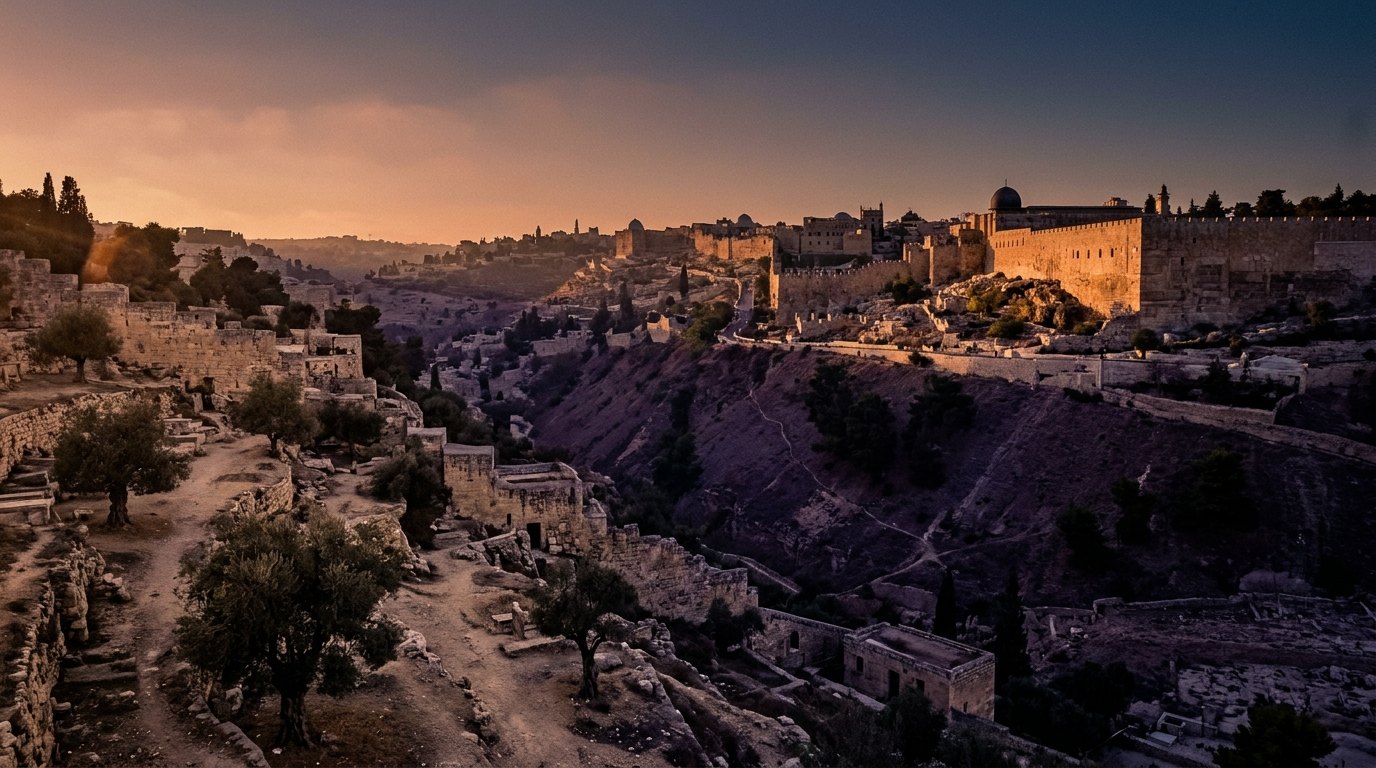
As Jesus was sitting on the Mount of Olives, the disciples came to him privately. “Tell us,” they said, “when will this happen, and what will be the sign of your coming and of the end of the age?”
Matthew 24:3 (NIV)
The disciples link the temple's foretold destruction directly to Christ's return and the consummation of the age.
In Matthew 24:3, the disciples come to Jesus privately on the Mount of Olives and ask the question that anchors the entire discourse: "Tell us, when will these things be, and what will be the sign of your coming and of the end of the age?" Standing opposite the temple complex, they naturally connected Jesus' solemn prediction of its stone-by-stone destruction with the ultimate consummation of history. Mark notes that Peter, James, John, and Andrew formed this inner circle seeking clarification (Mark 13:3), pressing the Lord regarding the precise indicator that all these impending judgments were about to unfold (Mark 13:4). In Luke's account, they similarly ask what sign will appear when these cataclysmic events are on the brink of taking place (Luke 21:7).
This earnest longing to comprehend the prophetic timeline is not unique to the New Testament disciples. Centuries earlier, Daniel witnessed celestial watchers conversing above the waters of the Tigris, where one asked how long it would be until the end of those astonishing wonders (Daniel 12:6). Daniel himself heard the answer yet admitted his lack of understanding, crying out to know the ultimate outcome of the visions granted to him (Daniel 12:8). Jesus does not condemn the disciples for asking. Instead, He uses their question to lift their eyes from local architecture to the grand arc of redemptive history, pivoting immediately from speculative curiosity to urgent spiritual preparedness.
| Passage | What it says |
|---|---|
| Matthew 24:3 | Disciples privately ask Jesus about the timing of these events and the sign of His coming and the end of the age. |
| Mark 13:3 | Peter, James, John, and Andrew sit with Jesus overlooking the temple and ask when these things will take place. |
| Mark 13:4 | The disciples ask what specific sign will signify that all these foretold destructions are about to be fulfilled. |
| Luke 21:7 | The disciples inquire what sign will appear when the temple's destruction and associated events are imminent. |
| Daniel 12:6 | An inquiring voice asks the linen-clothed man over the river waters how long it will be until the end of wonders. |
| Daniel 12:8 | Daniel hears the vision but admits lack of understanding, asking what the ultimate outcome of these events will be. |
Spiritual Deception
False christs and prophets lead many astray

Jesus answered: “Watch out that no one deceives you.
Matthew 24:4 (NIV)
Jesus' very first response to end-times inquiry is a direct command to guard against being led astray.
Before naming earthquakes or wars, Jesus commands His followers to take heed in Matthew 24:4: "See that no one leads you astray." Spiritual deception is the chief danger of the last days, beginning within religious spheres and advancing through seductive counterfeits. Jesus warns that impostors will arrive claiming His very identity, successfully beguiling multitudes (Matthew 24:5; Mark 13:5-6; Luke 21:8). Throughout this age, false prophets multiply to propagate soul-destroying lies (Matthew 24:11; 2 Peter 2:1). Believers must not chase fevered reports of secret messianic appearances in desert wastes or private inner rooms (Matthew 24:23), because demonic counterfeiters will perform astounding signs and wonders designed to mislead even the elect if that were possible (Matthew 24:24; Mark 13:22).
Paul reveals that this rising deception culminates in a climactic apostasy, "the rebellion," spearheaded by the "man of lawlessness" (2 Thessalonians 2:3). This figure arrogantly exalts himself above every object of worship, taking his seat in God's temple (2 Thessalonians 2:4). His coming aligns with Satan’s working through counterfeit power, signs, and lying wonders (2 Thessalonians 2:9), ensnaring those who refuse the love of the truth (2 Thessalonians 2:10). In the Apocalypse, the false prophet mirrors this activity, summoning fire from heaven and persuading earth-dwellers to construct an idolatrous image to the beast (Revelation 13:13-14). John therefore urges the church to test every spirit (1 John 4:1), reminding believers that the presence of many active antichrists already confirms the arrival of the last hour (1 John 2:18).
| Passage | What it says |
|---|---|
| Matthew 24:4 | Jesus warns the disciples to take care that no one deceives or misleads them as the end approaches. |
| Matthew 24:5 | Jesus warns that many impostors will arrive claiming to be the Christ, successfully misleading great crowds. |
| Matthew 24:11 | Jesus foretells that numerous false prophets will arise within the religious sphere to propagate destructive deceit. |
| Matthew 24:23 | Believers are warned not to believe rumors asserting Christ has appeared privately here in the desert or there in rooms. |
| Matthew 24:24 | False messiahs and false prophets perform great signs and wonders attempting to deceive even the elect, if possible. |
| 2 Thessalonians 2:3 | Paul cautions that the day will not arrive until the great rebellion happens and the man of lawlessness is revealed. |
| 2 Thessalonians 2:9 | The lawless one comes by Satan's working with deceptive displays of power, counterfeit signs, and lying wonders. |
| 1 John 2:18 | John declares the last hour has arrived, evidenced by the presence and work of many antichrists in the world. |
| Mark 13:5 | Jesus warns the disciples not to let anyone mislead them regarding coming events. |
| Mark 13:6 | Many will come claiming his name and identity, deceiving many people. |
| Mark 13:22 | False christs and prophets will perform signs and wonders to lead astray the elect. |
| Luke 21:8 | Jesus warns not to follow those claiming the time is at hand. |
| 2 Thessalonians 2:4 | The man of lawlessness exalts himself above every god and sits in God's temple. |
| 2 Thessalonians 2:10 | The coming deception deceives those who refuse the love of the truth. |
| 2 Peter 2:1 | False teachers will secretly introduce destructive heresies into the believing community. |
| 1 John 4:1 | Believers must test spirits because many false prophets have gone out into the world. |
| Revelation 13:13 | The false prophet performs great signs, even making fire come down from heaven. |
| Revelation 13:14 | Earth dwellers are deceived by miraculous signs into making an image to the beast. |
Global Turmoil
Wars, rumors, and global upheaval begin the pains

You will hear of wars and rumors of wars, but see to it that you are not alarmed. Such things must happen, but the end is still to come.
Matthew 24:6 (NIV)
Jesus commands believers not to be alarmed by wars because turmoil is necessary, yet does not signal the immediate end.
When international conflict erupts, Matthew 24:6 sounds a steadying bell: "And you will hear of wars and rumors of wars. See that you are not alarmed, for this must take place, but the end is not yet." Believers must not mistake geopolitical upheaval for the immediate consummation. Human kingdoms and sovereign nations will rise up in violent collision (Matthew 24:7; Mark 13:7-8; Luke 21:9-10). Earthquakes will rend diverse regions while famines and virulent pestilences stalk human populations, accompanied by terrifying portents in the skies (Luke 21:11). Yet Jesus characterizes all these distressing catastrophes as merely "the beginning of the birth pains" (Matthew 24:8)—convulsive contractions signaling the coming renewal of creation, but not yet the delivery itself.
This cascading turmoil mirrors the prophetic seals opened by the Lamb in the Apocalypse. The white horse rider gallops forth bent on military conquest (Revelation 6:2), quickly followed by the rider on the fiery red horse, granted authority to take peace from the earth so that men slaughter one another (Revelation 6:4). Economic collapse and severe food scarcity inevitably trail behind in the wake of war, portrayed by the black horse whose rider holds measuring scales while basic grains skyrocket in price (Revelation 6:5-6). Finally, the pale horse rides out, bearing Death and Hades to consume a fourth of the earth with sword, starvation, and predatory beasts (Revelation 6:8). These catastrophic tremors testify that a fallen world cannot sustain itself, pointing past human chaos to the sovereign King who alone rules history.
| Passage | What it says |
|---|---|
| Matthew 24:6 | Believers will hear of active battles and looming conflict, but must not panic as the end remains yet future. |
| Matthew 24:7 | Nations and sovereign kingdoms rise against each other alongside widespread famines, deadly plagues, and earthquakes. |
| Matthew 24:8 | Jesus identifies these widespread geopolitical and natural calamities as merely the initial birth pains of the age. |
| Luke 21:9 | Jesus tells His listeners not to be terrified by wars and insurrections, which must take place first. |
| Luke 21:11 | Great earthquakes, diverse famines, pestilences, terrors, and extraordinary signs from heaven will shake the earth. |
| Revelation 6:4 | A red horse rider is permitted to take peace from the earth so men slaughter one another with great swords. |
| Revelation 6:8 | A pale horse rider named Death claims authority over a fourth of the earth with sword, famine, and wild beasts. |
| Mark 13:7 | Wars and rumors of wars must happen, but the end is not yet. |
| Mark 13:8 | Nations rise against nations, with earthquakes and famines marking birth pangs. |
| Luke 21:10 | Nation will rise against nation and kingdom against kingdom in widespread conflict. |
| Revelation 6:2 | A rider on a white horse goes out bent on military conquest. |
| Revelation 6:5 | A rider on a black horse carries scales signifying severe food scarcity. |
| Revelation 6:6 | Famine pricing makes daily staples exorbitant while luxury goods remain untouched. |
Costly Discipleship
Persecution, betrayal, and love growing cold
Because of the increase of wickedness, the love of most will grow cold,
Matthew 24:12 (NIV)
This verse reveals that widespread lawlessness has a chilling effect on the spiritual affections of the covenant community.
The outward convulsions of nature and warfare are matched by an inward spiritual crisis, epitomized in Matthew 24:12: "And because lawlessness will be increased, the love of many will grow cold." Unrestrained moral decay corrodes the affections of the covenant community, producing spiritual numbness and cynical apathy. Hand in hand with this moral decay comes severe persecution: believers will be delivered over to affliction, dragged before synagogues and secular courts, and universally hated across all nations on account of Jesus' name (Matthew 24:9; Mark 13:9; Luke 21:12, 17). Under this crushing heat, many professing followers will stumble into apostasy, betraying former brethren in vicious mutual malice (Matthew 24:10; Mark 13:12; Luke 21:16).
Paul paints a matching portrait of the cultural decay marking the final days, warning Timothy that perilous times will arrive (2 Timothy 3:1). Human hearts will be consumed by self-absorption and greed (2 Timothy 3:2), characterized by callous brutality, slander, treachery, and unchecked hedonism (2 Timothy 3:3-4). Society will maintain a hollow facade of external piety while actively denying the sanctifying power of God (2 Timothy 3:5). Under the heavenly altar, martyred saints cry out for divine justice (Revelation 6:9), yet are told to rest until the full tally of their suffering brethren is complete (Revelation 6:11). In the midst of universal hostility, the Master's promise shines as an unyielding beacon: "The one who endures to the end will be saved" (Matthew 24:13; Mark 13:13).
| Passage | What it says |
|---|---|
| Matthew 24:9 | Christians will be handed over to tribulation, executed, and universally hated across all nations for Christ's name. |
| Matthew 24:10 | Many professing believers will fall away from faith, betraying former companions and harboring vicious mutual hatred. |
| Matthew 24:12 | The unchecked multiplication of moral lawlessness causes the active love of many people to become cold. |
| Matthew 24:13 | Jesus promises that whoever patiently perseveres and endures through these hardships to the end will be saved. |
| Luke 21:16 | Jesus warns disciples of intimate betrayal by parents, siblings, relatives, and friends, leading some to execution. |
| 2 Timothy 3:1 | Paul instructs Timothy to understand that distressing and perilous times will mark the final days. |
| 2 Timothy 3:2 | People will become self-lovers, greedy, arrogant, abusive, disobedient to parents, ungrateful, and unholy. |
| 2 Timothy 3:3 | Society will feature callousness, unappeasable malice, slander, lack of self-control, brutality, and hatred of good. |
| 2 Timothy 3:4 | People will be treacherous, reckless, swollen with conceit, and lovers of personal pleasure rather than lovers of God. |
| 2 Timothy 3:5 | Unbelievers maintain an outward appearance of godliness while actively denying its true transforming power. |
| Mark 13:9 | Believers will be beaten in synagogues and stand trial before rulers. |
| Mark 13:12 | Brothers, parents, and children will betray one another to death. |
| Mark 13:13 | Disciples will be hated by all, but endurance brings final salvation. |
| Luke 21:12 | Persecution and imprisonment occur before the culmination of world judgments. |
| Luke 21:17 | All men will hate Christ's followers on account of his name. |
| Revelation 6:9 | Martyred souls beneath the altar cry out for divine justice and vindication. |
| Revelation 6:11 | Martyrs rest until the full number of fellow servants is killed. |
The Great Commission
Worldwide gospel witness precedes the end

And this gospel of the kingdom will be preached in the whole world as a testimony to all nations, and then the end will come.
Matthew 24:14 (NIV)
Jesus names the universal proclamation of the gospel as the explicit global benchmark before the final end arrives.
In Matthew 24:14, Jesus gives the singular global sign of human agency before the consummation: this gospel of the kingdom will be proclaimed throughout the whole world as a testimony to all nations, and then the end will come. While natural disasters and human wickedness signal the groaning of a fallen creation, God’s sovereign timetable is tied directly to the worldwide advance of His redemptive word. Mark 13:10 repeats this absolute necessity, declaring that the gospel must first be heralded to every ethnic group prior to the close of the age.
This global mandate is no passive prediction; it forms the supreme commission entrusted to the body of Christ. In Matthew 28:19, the risen Lord directs His disciples to make disciples of all nations, marking them through baptism in the triune Name. He reinforces this ongoing mission in Matthew 28:20 by commanding the church to teach full obedience to His precepts, sealing the charge with the unfailing promise of His presence to the end of the age.
The triumph of this missionary imperative is not left in doubt. John’s apocalyptic vision in Revelation 7:9 unveils the consummated harvest: an innumerable company from every tribe, nation, people, and language standing victorious before the throne and before the Lamb. Even amid final cosmological distress, Revelation 14:6 shows an angel flying directly overhead carrying an eternal gospel to proclaim to every inhabitant of the earth. The gospel's reach remains God's unstoppable herald.
| Passage | What it says |
|---|---|
| Matthew 24:14 | The good news of the kingdom must be preached worldwide as a testimony to all nations before the end comes. |
| Mark 13:10 | Jesus emphasizes that the gospel must first be announced to all ethnic peoples prior to the consummation. |
| Matthew 28:19 | Jesus commands the apostles to disciple all nations, baptizing them into the triune Name of the Godhead. |
| Matthew 28:20 | Jesus instructs the church to teach obedience to all His commands, promising His perpetual presence until age's end. |
| Revelation 7:9 | John sees a countless multitude from every nation, tribe, people, and language standing victorious before the Lamb's throne. |
| Revelation 14:6 | An angel flies across mid-heaven carrying an eternal gospel to proclaim to every earth-dwelling nation and tongue. |
The Unknown Hour
Unexpected arrival calls for sober watchfulness

He said to them: “It is not for you to know the times or dates the Father has set by his own authority.
Acts 1:7 (NIV)
Jesus decisively forbids speculative date-setting, affirming that sovereign times belong exclusively to the Father.
When disciples seek to chart the calendar of glory, Jesus halts all speculation in Acts 1:7, stating plainly that it is not for you to know times or seasons that the Father has fixed by His own authority. The timing of Christ's return is an unshared divine secret. Matthew 24:36 confirms that concerning that day and hour no one knows, not even the angels of heaven nor the Son in His earthly limitation, but the Father alone, a truth repeated verbatim in Mark 13:32. Matthew 24:37 warns that the arrival will mirror the days of Noah, when ordinary life continued unawares until sudden judgment fell. Consequently, Matthew 24:42 commands constant vigilance because believers cannot predict the day their Lord arrives.
The apostolic epistles reinforce this posture of steady watchfulness. Paul notes in 1 Thessalonians 5:1 that the church needs no speculative calendar, because 1 Thessalonians 5:2 establishes that the day of the Lord comes like a thief in the night. While 1 Thessalonians 5:3 warns that sudden destruction falls upon those resting in false security, 1 Thessalonians 5:6 calls believers to remain sober and spiritually awake. Jesus reinforces this urgency through Mark 13:33 and Mark 13:35, warning servants to watch since the master could return at evening, midnight, or dawn. Luke 12:40 similarly cautions that the Son of Man arrives at an unexpected hour, while Luke 21:34 warns against hearts weighed down by dissipation. Luke 21:36 urges ceaseless prayer to stand blameless before the Son of Man. When that day arrives, 2 Peter 3:10 declares the heavens will pass away with a roar, and Matthew 13:49 reveals that angels will sever the wicked from the righteous.
| Passage | What it says |
|---|---|
| Acts 1:7 | Jesus affirms it is not given for disciples to know fixed times or seasons established by the Father's authority. |
| Matthew 24:36 | Jesus reveals that no created being knows that final day or hour, but the Father alone. |
| Matthew 24:37 | The coming of the Son of Man will catch humanity unaware just as the days of Noah did. |
| Matthew 24:42 | Disciples are commanded to stay alert because they do not know what day their Lord will return. |
| 1 Thessalonians 5:1 | Paul notes the church has no necessity for written instruction regarding precise dates and calendar times. |
| 1 Thessalonians 5:2 | The day of the Lord will come suddenly and without warning, like a thief breaking in at night. |
| 1 Thessalonians 5:6 | Believers are exhorted not to sleep spiritually like the rest of the world, but to remain awake and sober. |
| Matthew 13:49 | At the close of the age, holy angels will go out and separate the wicked from the righteous. |
| Mark 13:32 | No one knows the day or hour, not even the angels. |
| Mark 13:33 | Disciples are commanded to stay alert because the precise time is unknown. |
| Mark 13:35 | Watchfulness is required as the master may return at any watch. |
| Luke 12:40 | The Son of Man arrives at an hour unexpected by his servants. |
| Luke 21:34 | Hearts must not be weighed down by dissipation lest the day closes suddenly. |
| Luke 21:36 | Pray always for strength to escape coming trials and stand before Christ. |
| 1 Thessalonians 5:3 | Sudden destruction falls on those claiming peace and safety without warning. |
| 2 Peter 3:10 | The day of the Lord arrives like a thief, dissolving the elements. |
The Abomination
Desolation desecrates the holy sanctuary
“So when you see standing in the holy place ‘the abomination that causes desolation,’ spoken of through the prophet Daniel—let the reader understand—
Matthew 24:15 (NIV)
Jesus explicitly roots end-times expectations in Daniel's prophetic vision of the desecrated temple.
In Matthew 24:15, Jesus directs His disciples to prophetic Scripture: when you see the abomination of desolation spoken of by the prophet Daniel standing in the holy place, let the reader understand. This terrible sacrilege is rooted in Daniel’s visions, where Daniel 9:27 speaks of a prince who puts an end to sacrifice and sets up an appalling desolation upon the temple. Daniel 11:31 foretells foreign forces profaning the temple fortress and erecting this offensive idolatry, while Daniel 12:11 establishes a fixed duration from the removal of regular worship to the full manifestation of this horror.
Our Lord treats Daniel’s prophecy as historical and prophetic reality. In Matthew 24:16, He instructs anyone residing in Judea to flee into the mountains immediately upon seeing this desecration. Mark 13:14 echoes this dire counsel, warning of the abomination standing where it ought not to be and urging instant departure without looking back.
Luke provides historical texture to these warnings in Luke 21:20, noting that when Jerusalem is surrounded by hostile armies, believers must recognize that its desolation is at hand. Luke 21:24 further reveals that the city would fall by the edge of the sword and endure prolonged trampling by foreign nations until the times of the Gentiles are fulfilled. The defilement of holy space signals impending, decisive judgment.
| Passage | What it says |
|---|---|
| Daniel 9:27 | A ruler puts an end to sacrifice and sets up an abomination. |
| Daniel 11:31 | Forces profane the fortress and set up the abomination of desolation. |
| Daniel 12:11 | A set duration follows the removal of sacrifice and the abomination. |
| Matthew 24:15 | Jesus points readers to Daniel's abomination of desolation in the holy place. |
| Matthew 24:16 | Those in Judea must flee into the mountains when it appears. |
| Mark 13:14 | The abomination stands where it ought not, signaling immediate flight. |
| Luke 21:20 | Jerusalem surrounded by armies signals that its desolation has drawn near. |
| Luke 21:24 | Jerusalem will be trampled by Gentiles until the Gentile times are fulfilled. |
Great Tribulation
Unprecedented suffering engulfs the earth

For then there will be great distress, unequaled from the beginning of the world until now—and never to be equaled again.
Matthew 24:21 (NIV)
Christ announces an unequaled period of distress that defines the final distress of history.
Jesus warns the church of an impending trial without parallel in Matthew 24:21: for then there will be great tribulation, such as has not been from the beginning of the world until now, no, and never will be. This severe judgment fulfills ancient prophecy. Daniel 12:1 spoke of a coming season of distress worse than any since nations first arose, while Jeremiah 30:7 lamented that singular day of agony known as the time of Jacob's trouble, out of which God’s people will ultimately be saved.
The intensity of this suffering is absolute. In Matthew 24:22, Jesus makes clear that unless God in His mercy cut those catastrophic days short, no human life would survive, but for the sake of the elect, those days will be shortened. Mark 13:19 underscores that this unequaled anguish reaches across the entire span of creation, and Mark 13:20 confirms that the Lord's sovereign restraint alone preserves His chosen ones through it.
Yet this crucible does not end in defeat for God’s saints. In Revelation 7:14, the elder identifies the glorious company gathered in white robes before the throne as those who have come out of the great tribulation, having washed their garments and made them white in the blood of the Lamb. Unprecedented suffering is swallowed up by everlasting victory.
| Passage | What it says |
|---|---|
| Daniel 12:1 | A time of trouble occurs such as never happened since nations began. |
| Jeremiah 30:7 | The day is uniquely terrible, known as the time of Jacob's trouble. |
| Matthew 24:21 | Great tribulation strikes, unequaled from the world's beginning until now. |
| Matthew 24:22 | Unless those days were cut short, no human flesh would survive. |
| Mark 13:19 | Tribulation in those days has had no equal since creation began. |
| Mark 13:20 | The Lord shortens the days for the sake of his chosen elect. |
| Revelation 7:14 | A vast multitude emerges out of the great tribulation washed in blood. |
Cosmic Wonders
Cosmic disturbances convulse the heavens

“Immediately after the distress of those days “ ‘the sun will be darkened, and the moon will not give its light; the stars will fall from the sky, and the heavenly bodies will be shaken.’
Matthew 24:29 (NIV)
The collapse of celestial order immediately heralds the visible return of Christ.
In Matthew 24:29, the Lord declares that immediately following the tribulation of those days, the collapse of the celestial order heralds the climax of world history. The created cosmos itself will testify to the terrifying approach of divine judgment. This cataclysmic imagery draws directly upon the Old Testament prophets, who warned that the Day of the Lord would strip creation of its customary light. Isaiah 13:10 foretells that the stars of heaven and their constellations will refuse to shine, the sun will be dark at its rising, and the moon will withhold its gleam. In identical terms, Joel 2:30 announces wonders in the heavens and on the earth, marked by blood, fire, and columns of smoke, while Joel 2:31 warns that the sun will be turned to darkness and the moon to blood before the great and awesome day arrives.
The Synoptic Gospels reaffirm this severe unraveling of the physical universe. In Mark 13:24, the sun darkens and the moon ceases to give light, followed immediately in Mark 13:25 by the stars falling from heaven and the shaking of cosmic powers. Luke 21:25 broadens the scope to show the terrestrial response, describing signs in sun, moon, and stars accompanied by earthly perplexity at the roaring and tossing of the sea. Consequently, Luke 21:26 notes that human hearts will fail from sheer terror and apprehension of what is sweeping over the inhabited earth. When John witnesses the opening of the sixth seal in Revelation 6:12, a colossal earthquake strikes, the sun turns black like sackcloth, and the full moon becomes like blood. In Revelation 6:13, the stars of the sky plunge to the earth as winter figs drop from a tree shaken by a gale, demonstrating that God alone remains unshakable as the present heavens give way.
| Passage | What it says |
|---|---|
| Isaiah 13:10 | The sun, moon, and stars refuse to give their light in judgment. |
| Joel 2:30 | Wonders appear in heavens and earth, with blood, fire, and smoke. |
| Joel 2:31 | The sun turns dark and the moon to blood before the day. |
| Matthew 24:29 | After tribulation, the sun darkens, the moon dims, and stars fall. |
| Mark 13:24 | The sun darkens and the moon will not give its light. |
| Mark 13:25 | Stars fall from heaven and celestial powers will be shaken. |
| Luke 21:25 | Signs appear in sun, moon, and stars with roaring seas on earth. |
| Luke 21:26 | People faint from fear anticipating what is coming upon the world. |
| Revelation 6:12 | A great earthquake occurs; the sun turns black and moon like blood. |
| Revelation 6:13 | The stars of the sky fall to earth like late figs. |
The Son's Return
The Son of Man arrives in glory
“Then will appear the sign of the Son of Man in heaven. And then all the peoples of the earth will mourn when they see the Son of Man coming on the clouds of heaven, with power and great glory.
Matthew 24:30 (NIV)
The ultimate sign of the end times is the personal, visible return of Jesus Christ.
According to Matthew 24:30, the ultimate sign of the consummation is not a riddle or an earthly disaster, but the visible, personal appearance of the Son of Man in supreme glory. There will be no ambiguity when the King returns; every tribe of the earth will mourn as they behold Him descending upon the clouds of heaven with power and great splendor. In Matthew 24:31, He sends out His angels with a great trumpet call to gather His chosen people from the four winds, from one end of heaven to the other. This triumphant manifestation directly fulfills Daniel 7:13, where the prophet beheld one like a son of man coming with the clouds of heaven to receive an everlasting kingdom from the Ancient of Days.
This glorious arrival evokes both profound contrition and immense deliverance. Zechariah 12:10 foretells that the inhabitants of Jerusalem will look upon the One whom they pierced and mourn bitterly for Him as one grieves for an only child. In Mark 13:26, all people see the Son of Man arriving in clouds with majestic authority, followed in Mark 13:27 by the angelic gathering of His redeemed from the uttermost parts of the earth. Luke 21:27 emphasizes this same magnificent descent in a cloud, prompting Jesus to exhort His followers in Luke 21:28 to stand erect and lift up their heads, because their redemption is drawing near. The Apostle John crowns this testimony in Revelation 1:7, declaring that He is coming with the clouds and every eye will see Him, even those who pierced Him. Finally, Revelation 19:11 unveils heaven standing open to reveal Christ seated on a white horse, judged and waging war in absolute righteousness as Faithful and True.
| Passage | What it says |
|---|---|
| Daniel 7:13 | One like a son of man arrives with the clouds of heaven. |
| Zechariah 12:10 | Inhabitants of Jerusalem look on the one they pierced and mourn bitterly. |
| Matthew 24:30 | The sign of the Son of Man appears and tribes mourn. |
| Matthew 24:31 | Angels gather the elect with a loud trumpet call from all winds. |
| Mark 13:26 | People see the Son of Man coming in clouds with power. |
| Mark 13:27 | He sends his angels to gather the elect from heaven's ends. |
| Luke 21:27 | They will see the Son of Man coming in a cloud. |
| Luke 21:28 | Believers straighten up and raise heads because their redemption draws near. |
| Revelation 1:7 | He comes with clouds, every eye sees him, and tribes wail. |
| Revelation 19:11 | Heaven stands open to reveal a white horse ridden by Faithful and True. |
Where in the Bible
| Book | Passages |
|---|---|
| Isaiah | 1 · Isaiah 13:10 |
| Jeremiah | 1 · Jeremiah 30:7 |
| Daniel | 7 · Daniel 12:6, Daniel 12:8, Daniel 9:27, Daniel 11:31, Daniel 12:11, Daniel 12:1, Daniel 7:13 |
| Joel | 2 · Joel 2:30, Joel 2:31 |
| Zechariah | 1 · Zechariah 12:10 |
| Matthew | 27 · Matthew 24:3, Matthew 24:4, Matthew 24:5, Matthew 24:11, Matthew 24:23, Matthew 24:24, Matthew 24:6, Matthew 24:7, Matthew 24:8, Matthew 24:9, Matthew 24:10, Matthew 24:12, Matthew 24:13, Matthew 24:14, Matthew 28:19, Matthew 28:20, Matthew 24:36, Matthew 24:37, Matthew 24:42, Matthew 13:49, Matthew 24:15, Matthew 24:16, Matthew 24:21, Matthew 24:22, Matthew 24:29, Matthew 24:30, Matthew 24:31 |
| Mark | 21 · Mark 13:3, Mark 13:4, Mark 13:5, Mark 13:6, Mark 13:22, Mark 13:7, Mark 13:8, Mark 13:9, Mark 13:12, Mark 13:13, Mark 13:10, Mark 13:32, Mark 13:33, Mark 13:35, Mark 13:14, Mark 13:19, Mark 13:20, Mark 13:24, Mark 13:25, Mark 13:26, Mark 13:27 |
| Luke | 17 · Luke 21:7, Luke 21:8, Luke 21:9, Luke 21:11, Luke 21:10, Luke 21:16, Luke 21:12, Luke 21:17, Luke 12:40, Luke 21:34, Luke 21:36, Luke 21:20, Luke 21:24, Luke 21:25, Luke 21:26, Luke 21:27, Luke 21:28 |
| Acts | 1 · Acts 1:7 |
| 1 Thessalonians | 4 · 1 Thessalonians 5:1, 1 Thessalonians 5:2, 1 Thessalonians 5:6, 1 Thessalonians 5:3 |
| 2 Thessalonians | 4 · 2 Thessalonians 2:3, 2 Thessalonians 2:9, 2 Thessalonians 2:4, 2 Thessalonians 2:10 |
| 2 Timothy | 5 · 2 Timothy 3:1, 2 Timothy 3:2, 2 Timothy 3:3, 2 Timothy 3:4, 2 Timothy 3:5 |
| 2 Peter | 2 · 2 Peter 2:1, 2 Peter 3:10 |
| 1 John | 2 · 1 John 2:18, 1 John 4:1 |
| Revelation | 16 · Revelation 13:13, Revelation 13:14, Revelation 6:4, Revelation 6:8, Revelation 6:2, Revelation 6:5, Revelation 6:6, Revelation 6:9, Revelation 6:11, Revelation 7:9, Revelation 14:6, Revelation 7:14, Revelation 6:12, Revelation 6:13, Revelation 1:7, Revelation 19:11 |
The story in order
- Daniel's vision of end-time wonders (c. 550 BC) · Daniel 12:6 · An angel describes future events and their duration.
- Jesus predicts temple destruction and signs (AD 30) · Matthew 24:3 · Disciples ask Jesus about the end of the age.
- Wars and natural disasters begin (AD 30) · Matthew 24:6 · Jesus describes the initial 'birth pains' of the end times.
- Persecution and betrayal increase (AD 30) · Matthew 24:9 · Christians face hatred and tribulation for Jesus' name.
- Gospel preached to all nations (AD 30) · Matthew 24:14 · The good news of the kingdom is proclaimed worldwide.
- The abomination of desolation (AD 30) · Matthew 24:15 · Jesus refers to Daniel's prophecy of desecration.
- Great tribulation begins (AD 30) · Matthew 24:21 · Unprecedented suffering engulfs the earth.
- Cosmic disturbances in the heavens (AD 30) · Matthew 24:29 · Sun, moon, and stars are affected before the end.
- The Son of Man returns in glory (AD 30) · Matthew 24:30 · Jesus appears in the clouds with angels.
- The elect are gathered (AD 30) · Matthew 24:31 · Angels gather believers with a trumpet call.
- The day and hour are unknown (AD 30) · Matthew 24:36 · Only the Father knows the exact time of the end.
- False teachers arise (c. AD 67) · 2 Peter 2:1 · Destructive heresies are secretly introduced.
- The man of lawlessness revealed (c. AD 52) · 2 Thessalonians 2:3 · A rebellion precedes the revealing of the lawless one.
- John sees the end-time multitude (c. AD 95) · Revelation 7:9 · A vast number from all nations stand before God.
Key words
- End of the age (συντέλεια τοῦ αἰῶνος (sunteleia tou aiōnos))
- The culmination of human history and the present world order. · Matthew 24:3
- Sign (σημεῖον (sēmeion))
- A mark or indication pointing to a future event. · Matthew 24:3
- Deception (πλανάω (planaō))
- The act of misleading or being misled, especially by false claims or wonders. · Matthew 24:4
- Birth pains (ὠδῖνες (ōdines))
- Intensifying troubles that precede a major event, like labor pains. · Matthew 24:8
- Tribulation (θλῖψις (thlipsis))
- Great suffering, affliction, or distress. · Matthew 24:9
- Lawlessness (ἀνομία (anomia))
- Disregard for or violation of the law, especially divine law. · Matthew 24:12
- Great Commission (μαθητεύσατε πάντα τὰ ἔθνη (mathēteusate panta ta ethnē))
- The command to disciple all nations. · Matthew 28:19
- Abomination of Desolation (βδέλυγμα τῆς ἐρημώσεως (bdelygma tēs erēmōseōs))
- A desecrating object or act that causes ruin. · Matthew 24:15
Scripture never gives signs of the end to feed idle curiosity or date-setting, but to anchor our endurance in a sovereign God who governs every sorrow and season. As lawlessness spreads and false promises multiply, our calling remains simple and urgent: stand firm in the truth, let love burn brightly, and proclaim Christ's kingdom to every creature. The Lord who foretold the labor pains has already secured the victory, and He will unfailingly preserve those who trust Him until the day He returns.
111 passages, each cited once.
How the major Christian traditions read this
All major Christian traditions confess that Jesus Christ will return visibly in glory to judge the living and the dead and establish His eternal kingdom, and that Scripture gives sober signs—such as spiritual deception, tribulations, and the global preaching of the gospel—to call believers to watchfulness rather than speculative date-setting (Matthew 24:14; Matthew 24:36; Acts 1:7).
Catholic
We look forward to Christ's second coming in glory to consummate His kingdom, but we reject all attempts to calculate dates or construct millenarian timetables. The Church teaches that before Christ's return, she must pass through a final trial that will shake the faith of many believers, marked by a supreme religious deception led by the Antichrist (2 Thessalonians 2:3-4). The signs given by our Lord in Matthew 24:4-14—wars, persecutions, and cosmic trials—remind us that history remains a spiritual battlefield. These signs call every Christian to constant vigilance, prayer, and fidelity within the sacramental life of the Church until He comes.
Scripture: Matthew 24:4-14, 2 Thessalonians 2:3-4
Orthodox
In the Holy Orthodox Church, we confess in the Nicene Creed that Christ will come again with glory to judge the living and the dead. We understand the end times not as a distant puzzle, but as a reality initiated at Pentecost and lived out in every Divine Liturgy. The signs Jesus sets forth—apostasy, wars, natural disasters, and the rising of false prophets (Matthew 24:6-12)—are spiritual realities that test and purify the Church in every age. We are called to watchful asceticism, continuous repentance, and steadfast endurance rather than apocalyptic speculation, waiting in hope for the ultimate unveiling of the Kingdom of God (Matthew 24:13).
Scripture: Matthew 24:6-12, Matthew 24:13
Lutheran
We confess with Augsburg Confession XVII that at the consummation of the world Christ will appear to judge all people, raising the dead to everlasting life or eternal punishment, and we reject all forms of millenarianism. The signs of the end—deception, conflicts, distress in the nations, and persecutions (Matthew 24:7-13)—serve to strip away our worldly security and anchor our trust solely in God's promises in Word and Sacrament. The signs warn us that this fallen world is passing away. Rather than reading newspapers into biblical prophecy, we rest in the sure comfort of Christ’s promise that His Word will never pass away (Matthew 24:35).
Scripture: Matthew 24:7-13, Matthew 24:35
Reformed & Presbyterian
We hold that Christ currently reigns at the right hand of the Father and will return bodily and visibly at the last day to consummate His sovereign rule (Heidelberg Catechism Q. 47). Scripture presents the signs of the end—tribulations, apostasy, the preaching of the gospel to all nations, and the revelation of the man of lawlessness (Matthew 24:14; 2 Thessalonians 2:3-8)—as characteristics of the entire inter-advent age, intensifying toward the end. These signs vindicate God's righteous judgment and assure believers that history unfolds entirely under His providential decree. They urge the church toward patient endurance, covenant faithfulness, and tireless missionary work.
Scripture: Matthew 24:14, 2 Thessalonians 2:3-8
Anglican & Episcopal
Anglicans affirm the historic creeds: Christ ascended into heaven and will return to judge the living and the dead. The signs He outlined on the Mount of Olives—strife among nations, false leaders, earthquakes, and gospel witness (Matthew 24:5-14)—frame the life of the Church between His two comings. We read these signs through the lens of pastoral sobriety and liturgical hope, as voiced in our collects for Advent. They remind us to cast away the works of darkness and put on the armor of light (Romans 13:12), keeping watch in faithful service without succumbing to sensationalism or fear.
Scripture: Matthew 24:5-14, Romans 13:12
Baptist
We uphold the clear teaching of Scripture that Jesus is returning bodily and visibly to judge the world and reward His saints (Baptist Confession 32.1; 1 Thessalonians 4:16-17). The signs Christ provided in Matthew 24:4-14, including deceitful prophets, increasing wickedness, and persecution, emphasize both the reality of the end and the impossibility of knowing the day or hour (Matthew 24:36). While Baptists encompass both premillennial and amillennial understandings of the prophetic timeline, we stand united on the urgent priority of the Great Commission: the gospel must be proclaimed to every creature before the end comes (Matthew 24:14).
Scripture: Matthew 24:4-14, Matthew 24:36, 1 Thessalonians 4:16-17, Matthew 24:14
Methodist & Wesleyan
Following our Articles of Religion, we believe Christ ascended to heaven and sits there until He returns to judge all men at the last day. The signs of the last days—growing coldness of love, lawlessness, and trials (Matthew 24:12-13)—are sober warnings against spiritual slumber and backsliding. For us, the signs call the Church to earnest holiness of heart and life, active works of mercy, and urgent evangelism. Knowing that the Lord comes like a thief in the night (1 Thessalonians 5:2), we are called to walk as children of the day, abounding in holy love until He appears.
Scripture: Matthew 24:12-13, 1 Thessalonians 5:2
Pentecostal & Charismatic
We believe Christ's return is imminent and represents the blessed hope of the Church (Titus 2:13). As Pentecostals, we view the signs of Matthew 24—wars, plagues, global apostasy, and spiritual delusion—as rapidly aligning birth pains that signal Christ's approaching return (Matthew 24:8; 2 Timothy 3:1-5). Simultaneously, we emphasize the outpouring of the Holy Spirit in the last days upon all flesh to empower world evangelism before the end (Joel 2:28-29; Acts 2:17). The convergence of moral decay and Holy Spirit revival signals that the midnight hour is near, calling the Church to expectant prayer and fervent witness.
Scripture: Matthew 24:8, Acts 2:17, Titus 2:13, 2 Timothy 3:1-5, Matthew 24
Non-denominational & Evangelical
We look directly to the plain words of Scripture regarding the last days. Jesus explicitly cautioned us to recognize the signs—such as deceptive teachers, wars, famines, and the darkening of the sun and moon (Matthew 24:4-8; Matthew 24:29-30)—while refusing any date-setting formulas (Matthew 24:36). Many of us emphasize the pretribulational rapture and literal fulfillment of end-times prophecy, while others see these signs as descriptive of the entire church age. Above all, we emphasize that these biblical warnings exist to foster personal holiness, urgent gospel sharing, and a heart prepared to meet Jesus face to face.
Scripture: Matthew 24:4-8, Matthew 24:29-30, Matthew 24:36
Where they differ
Chronology of signs and the return
- Catholic
- All signs culminate in one general resurrection and final judgment without millenarian phases.
- Orthodox
- Signs mark the present church age, leading directly to Christ's single glorious return.
- Lutheran
- Signs warn of the end of the world, followed immediately by final judgment.
- Reformed & Presbyterian
- Signs characterize the entire inter-advent age, ending in one general resurrection.
- Anglican & Episcopal
- Signs summon believers to watchfulness before Christ's single, final visible return.
- Baptist
- Views differ: some hold a pretribulational rapture, others a single post-tribulational return.
- Methodist & Wesleyan
- Signs warn against falling away prior to the single final judgment day.
- Pentecostal & Charismatic
- Signs precede an imminent, pretribulational rapture before the final millennial reign.
- Non-denominational & Evangelical
- Commonly interprets signs as pointing toward an imminent rapture and subsequent tribulation.
Scripture: Matthew 24:29-31, 1 Thessalonians 4:16-17, Revelation 20:1-6
Role of miraculous signs today
- Catholic
- Miracles occur, yet warnings against false signs and deception require ecclesiastical discernment.
- Orthodox
- Miracles continue in holy tradition, but spiritual discernment guards against end-time deception.
- Lutheran
- Scripture warns that deceptive signs and wonders will proliferate in the end.
- Reformed & Presbyterian
- Scripture cautions that late-age signs include deceptive wonders by false christs.
- Anglican & Episcopal
- Christians must test every spirit against Scripture because false signs will mislead.
- Baptist
- Jesus warns that end-times deception will involve counterfeit signs and wonders.
- Methodist & Wesleyan
- Holy living and truth matter most, as deceptive wonders will arise.
- Pentecostal & Charismatic
- End times bring both deceptive false wonders and genuine Holy Spirit power.
- Non-denominational & Evangelical
- Believers must watch carefully, knowing the enemy will produce lying signs.
Scripture: Matthew 24:24, Acts 2:17-18, 2 Thessalonians 2:9
Your pastor can tell you where your church stands.
Scripture cited
- Acts 1:7
- 1 Thessalonians 5:1-11
- Matthew 24
- 2 Timothy 3:1-5
- 2 Peter 3:3-13
- Acts 1:6-8