What does it mean that Jesus is the Word?

John 1:1-5
1 In the beginning was the Word, and the Word was with God, and the Word was God.
2 He was with God in the beginning.
3 Through him all things were made; without him nothing was made that has been made.
4 In him was life, and that life was the light of all mankind.
5 The light shines in the darkness, and the darkness has not overcome it.
New International Version (NIV)
The answer
Jesus is called the Word because he is God’s eternal, personal revelation of himself: the Son who perfectly makes the Father known. He is not merely a spoken message, a created being, or a name for Jesus’ teachings. He is a divine Person who became man.
What John 1:1 establishes
- He is eternal: “In the beginning was the Word” (John 1:1). He already existed when creation began; John 17:5 likewise speaks of the glory he had with the Father before the world existed.
- He is distinct from the Father: “the Word was with God” (John 1:1). The Son is not the Father.
- He is fully God: “the Word was God” (John 1:1). He is neither a lesser god nor part of creation.
Why “Word” fits Jesus
The Greek word logos in John 1:1 means word, speech, or message, including the thought expressed. Just as speech communicates what is within a person, the Son perfectly communicates God. Yet this comparison does not reduce Jesus to a sound or sentence: John 1:3 says that all things were made through him, and John 1:4-5 says that life and unconquered light are in him. These are the works of God, not of a created messenger.
The Word came near
John 1:14 says, “The Word became flesh and lived among us.” The eternal Son truly took human nature without ceasing to be God. John 1:18 then explains why this title matters: the Son “has declared” the Father. Jesus reveals God not only through what he says, but through who he is—his glory, grace, truth, life, and light. Revelation 19:13 continues to name him “The Word of God.”
In short: Jesus is the Word because God is fully and personally made known in him. To hear and receive Jesus is to receive God’s own revelation.
Answered from Scripture · reviewed November 11, 2026
To say that Jesus is the Word is to confess that He is God's eternal, personal self-expression, the uncreated Son through whom all things were framed and by whom the Father is fully known. John borrows no mere philosophical abstraction but reveals the living speech of God made flesh to bring light and eternal life to fallen humanity. Understanding this supreme title opens up the unified witness of Scripture regarding Christ's eternal deity, His creative power, and His redeeming grace.
Eternal Deity
The Word was in the beginning and was God

In the beginning was the Word, and the Word was with God, and the Word was God.
John 1:1 (NIV)
This verse establishes that the Word existed before creation, shared intimate personal communion with the Father, and possessed full, uncreated deity.
When the apostle opens his Gospel with John 1:1, he establishes that the Word was never an afterthought or a created being: in the beginning the Word already was, was personally with God, and was fully God. This simple sentence shatters any notion that the Son had a beginning. John 1:2 deliberately reiterates this communion, grounding the identity of the Son in eternal, face-to-face fellowship with the Father before anything else existed. When the Lord Jesus faced the cross in John 17:5, He prayed to be glorified with that very same heavenly glory He shared with the Father before the foundation of the world. He was not acquiring a new dignity; He was resuming the open manifestation of His unoriginated majesty.
The rest of the New Testament echoes this unbending truth. In Colossians 1:17, Paul declares that Christ is before all things, and that in Him all created realities hold together. He did not emerge out of nothingness; He antedates creation because He is its eternal Lord. Likewise, Philippians 2:6 insists that our Lord existed from the start in the very form of God, possessing every divine attribute by right rather than by robbery. This ancient reality was already foretold in the Old Testament: the prophet in Micah 5:2 announced that the Ruler born in humble Bethlehem possessed goings forth from long ago, even from the days of eternity—a prophecy fulfilled when Christ was brought forth into human history as recorded in Matthew 2:6 and John 7:42. To confess Jesus as the Word is therefore to bow before the uncreated, eternal God who has no beginning of days.
| Passage | What it says |
|---|---|
| John 1:1 | Affirms the Word was in the beginning, was distinct with God, and was fully God in essence. |
| John 1:2 | Reiterates the eternal coexistence of the Word with God prior to any act of creation. |
| John 17:5 | Jesus asks the Father to glorify Him with the shared heavenly glory He possessed before the world existed. |
| Colossians 1:17 | Declares that Christ is before all created things and that in Him all things hold together. |
| Philippians 2:6 | Christ Jesus existed eternally in the very form of God before taking human nature. |
| Micah 5:2 | The Ruler to come forth from Bethlehem has origins from ancient times, from eternity. |
Agent of Creation
All things were created through God's personal speech

Through him all things were made; without him nothing was made that has been made.
John 1:3 (NIV)
It names the Word as the active agent through whom every creature and element in the universe was brought into being.
Creation is the direct work of the Word: John 1:3 declares that all things were made through Him, and without Him not even one created thing came into being. When the Genesis record opens with God creating the heavens and the earth in Genesis 1:1, creation proceeds through divine utterance: Genesis 1:3 records God speaking light into the void. God did not work through an impersonal force, but through His living Word. As Psalms 33:6 celebrates, the heavens were formed by the word of the Lord and their entire host by the breath of His mouth. Psalms 33:9 adds that He spoke, and it came to be; He commanded, and it stood firm.
The New Testament confirms that this creative speech is the Son Himself. In Colossians 1:16, Paul reveals that whether visible or invisible, thrones, dominions, rulers, or authorities, all things were created through Christ and for Christ. Similarly, Hebrews 1:2 identifies Jesus as the Son through whom God framed the ages, while 1 Corinthians 8:6 confesses one Lord, Jesus Christ, through whom are all things and through whom we live. Even the ordering of the physical realm in 2 Peter 3:5 reminds us that the ancient world was formed out of water and by the word of God. This same authoritative word brought physical deliverance and restoration: in Psalms 107:20, God sent His word to heal the afflicted and rescue them from destruction, a reality fulfilled in Matthew 8:8 and Matthew 8:16 when Jesus healed the sick and cast out demons with a single command. The Word who spoke the universe into existence is the very One who restores it.
| Passage | What it says |
|---|---|
| Genesis 1:1 | Records God's original creation of the heavens and the earth at the beginning of time. |
| Genesis 1:3 | Demonstrates God calling light into existence by speaking His sovereign word. |
| Psalms 33:6 | Attests that the heavens and all their host were made by the Word of the Lord. |
| John 1:3 | States comprehensively that all things were made through the Word and nothing exists without Him. |
| Colossians 1:16 | Confirms that all visible and invisible realities were created through Christ and for Christ. |
| Hebrews 1:2 | Identifies the appointed Son as the one through whom God made the entire universe. |
| Psalms 33:9 | God spoke and the world came into being; He commanded and it stood firm. |
| Psalms 107:20 | The Lord sent forth His word to heal afflicted people and rescue them from destruction. |
| 1 Corinthians 8:6 | There is one Lord Jesus Christ, through whom are all things and through whom we exist. |
| 2 Peter 3:5 | The heavens and the earth were formed out of water and by the word of God. |
Incarnation and Light
The Word became flesh to bring life to men
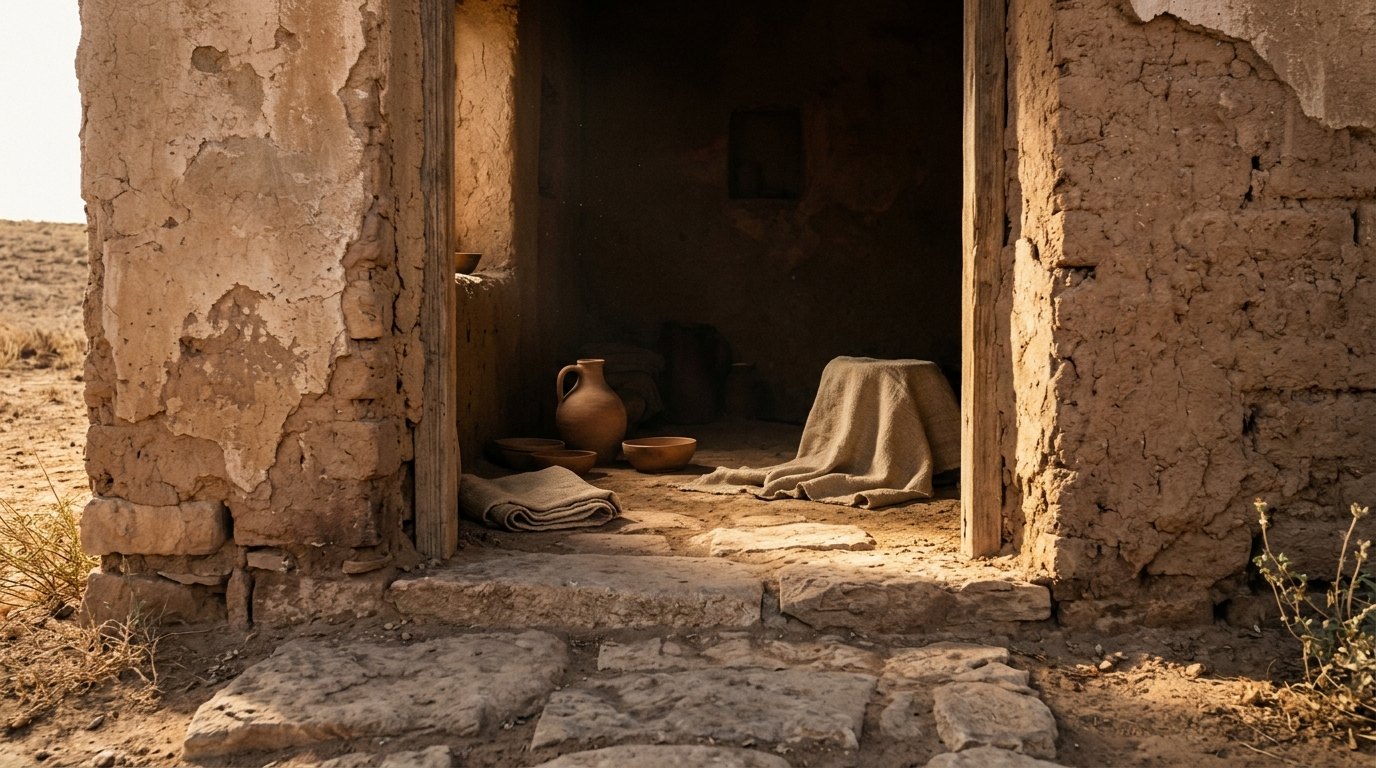
The Word became flesh and made his dwelling among us. We have seen his glory, the glory of the one and only Son, who came from the Father, full of grace and truth.
John 1:14 (NIV)
This verse reveals the mystery of the incarnation, where the uncreated Word took on human nature and tabernacled among us.
The unfathomable wonder of the gospel is announced in John 1:14, where the apostle records that the Word became flesh and tabernacled among us, displaying a glory full of grace and truth. The infinite Creator assumed real, sinless humanity without relinquishing His divine nature. According to John 1:4, life was inherent in Him, and that life was the light of mankind. That light entered an antagonistic world: John 1:5 assures us that the light shines in the darkness, and the darkness has not overcome it. As John 1:9 explains, the true Light had entered human history to enlighten every person, confronting our blindness with divine reality.
Because the Word took on human flesh, the invisible God was made visible to human eyes. As John 1:18 reveals, no one has ever seen God at any time, but the only begotten Son, who is in the bosom of the Father, has made Him fully known. This was not a vision or a myth; the apostle testifies in 1 John 1:1 that their hands had touched, their eyes had seen, and their ears had heard the Word of life. In 1 John 1:2, this eternal life was manifested in history so that believers might have fellowship with God. Jesus Himself proclaimed in John 8:12 that He is the Light of the world, guaranteeing that whoever follows Him will never walk in darkness, a truth He reaffirmed in John 12:46 by stating He came so that no believer would remain in shadows. Paul sums up this wonder in 1 Timothy 3:16: great is the mystery of godliness, for God was manifested in the flesh.
| Passage | What it says |
|---|---|
| John 1:4 | Declares that life resided in the Word and that this life was the light of mankind. |
| John 1:5 | Proclaims that the Word's light shines in darkness and cannot be overcome by it. |
| John 1:14 | Testifies that the Word became flesh, dwelt among people, and displayed divine glory full of grace. |
| John 1:18 | Explains that the only begotten Son in the Father's bosom has fully declared and revealed God. |
| 1 John 1:1 | Recounts apostolic eyewitness testimony concerning the Word of life who was heard, seen, and handled. |
| 1 John 1:2 | Affirms that eternal life was manifested in the Son and testified to the believers. |
| John 1:9 | The true Light coming into the world enlightens every human being. |
| John 8:12 | Jesus declares Himself the Light of the world whose followers will possess life. |
| John 12:46 | Christ came as light into the world so that believers would not remain in darkness. |
| 1 Timothy 3:16 | The great mystery of godliness is that Christ was manifested in human flesh. |
Final Revelation and Rule
God speaks finally and judges through His Word

In the past God spoke to our ancestors through the prophets at many times and in various ways,
Hebrews 1:1 (NIV)
It contrasts God's partial ancient revelations through prophets with His definitive, ultimate self-disclosure in His Son.
Throughout redemptive history, God communicated through multiple means, but Hebrews 1:1 reminds us that in these last days He has spoken to us definitively in His Son. Christ is the final, supreme word of God to humanity, leaving no need for further revelation. As Hebrews 1:3 declares, He is the radiant imprint of God's very essence, sustaining the universe by the word of His power and purifying our sins. Jesus makes clear in John 5:24 that listening to His word and trusting the Father who sent Him delivers the sinner from judgment into eternal life. His word carries infallible power, fulfilling Isaiah 55:11, which promised that God's word would never return void but accomplish all His divine pleasure—a mission Jesus brought to full completion in John 17:4.
Yet the Word that offers mercy will also execute righteous judgment upon those who reject Him. In John 12:48, Jesus warns that the very word He spoke will stand as the judge on the last day. The final book of Scripture draws this reality into terrifying focus: in Revelation 19:13, the returning King of kings appears clothed in a robe dipped in blood, bearing the holy name The Word of God. As Revelation 19:15 shows, from His mouth proceeds a sharp, two-edged sword with which to strike the rebellious nations. To say that Jesus is the Word is to recognize that He is God's first speech in creation, His dearest speech in the incarnation, and His final, sovereign speech in the judgment of the world.
| Passage | What it says |
|---|---|
| Hebrews 1:1 | Recalls how God previously spoke to the ancestors in fragments through the prophets. |
| Hebrews 1:3 | Describes Christ as the radiance of God's glory who upholds the universe by His powerful word. |
| John 5:24 | Promises that whoever hears Christ's word and believes passes out of death into eternal life. |
| Revelation 19:13 | Depicts Christ returning in victorious triumph, clothed in blood-dipped garments, named The Word of God. |
| Isaiah 55:11 | God's word goes forth from His mouth and never returns void without accomplishing His purpose. |
| John 12:48 | The word spoken by Jesus will stand as the judge on the last day. |
| Revelation 19:15 | From the mouth of the Word of God comes a sharp sword to strike the nations. |
Divine Wisdom
Christ embodies the eternal wisdom by which God ordered all things

but to those whom God has called, both Jews and Greeks, Christ the power of God and the wisdom of God.
1 Corinthians 1:24 (NIV)
Paul identifies Christ Himself as the personal wisdom of God revealed to the world.
In 1 Corinthians 1:24, the apostle Paul proclaims that to those who are called, Christ is the power of God and the wisdom of God. When the New Testament identifies Jesus as the Word (Logos), it draws upon the rich Old Testament revelation of divine Wisdom, demonstrating that what was once poetically personified has now entered human history as a living Person. Long before the incarnation, Proverbs 8 depicted Wisdom not as an impersonal cosmic force, but as an intimate companion of Yahweh. In Proverbs 8:22, Wisdom declares, "The Lord possessed me at the beginning of His way, before His works of old," an ancient utterance that finds its ultimate antitype in John 1:1, where the eternal Word is revealed as being with God in the unbeginning beginning.
This intimacy deepens in Proverbs 8:30, where Wisdom describes standing beside the Creator as a master craftsman, daily His absolute delight and constantly rejoicing before Him. John takes up this exact testimony in John 1:1-3, declaring that all things were made through Christ, and without Him was not anything made that was made. The Son is not merely an instrument of design; He is the Father's eternal artisan, the living blueprint of all created reality. Because Christ embodies this divine mind, Paul later writes in Colossians 2:3 that in Him are hidden all the treasures of wisdom and knowledge. To know Christ as the Word is therefore to receive the boundless depth of God's counsel made accessible to redeemed hearts.
| Passage | What it says | Fulfilled |
|---|---|---|
| Proverbs 8:22 | Divine Wisdom was possessed by the Lord at the beginning of His work. | John 1:1 |
| Proverbs 8:30 | Wisdom stood beside God like a master craftsman, daily His delight, rejoicing before Him. | John 1:1-3 |
| 1 Corinthians 1:24 | Christ crucified is proclaimed as the very power of God and the wisdom of God. | |
| Colossians 2:3 | In Christ are hidden all the treasures of divine wisdom and knowledge. |
Where in the Bible
| Book | Passages |
|---|---|
| Genesis | 2 · Genesis 1:1, Genesis 1:3 |
| Psalms | 3 · Psalms 33:6, Psalms 33:9, Psalms 107:20 |
| Proverbs | 2 · Proverbs 8:22, Proverbs 8:30 |
| Isaiah | 1 · Isaiah 55:11 |
| Micah | 1 · Micah 5:2 |
| John | 13 · John 1:1, John 1:2, John 17:5, John 1:3, John 1:4, John 1:5, John 1:14, John 1:18, John 1:9, John 8:12, John 12:46, John 5:24, John 12:48 |
| 1 Corinthians | 2 · 1 Corinthians 8:6, 1 Corinthians 1:24 |
| Philippians | 1 · Philippians 2:6 |
| Colossians | 3 · Colossians 1:17, Colossians 1:16, Colossians 2:3 |
| 1 Timothy | 1 · 1 Timothy 3:16 |
| Hebrews | 3 · Hebrews 1:2, Hebrews 1:1, Hebrews 1:3 |
| 2 Peter | 1 · 2 Peter 3:5 |
| 1 John | 2 · 1 John 1:1, 1 John 1:2 |
| Revelation | 2 · Revelation 19:13, Revelation 19:15 |
The story in order
- Creation of the world (c. 4000 BC) · Genesis 1:1 · God speaks the universe into existence.
- Wisdom beside God (c. 700 BC) · Proverbs 8:30 · Wisdom rejoices with God before creation.
- Messianic prophecy (c. 700 BC) · Micah 5:2 · The coming ruler has eternal origins.
- Jesus' eternal glory (AD 30) · John 17:5 · Jesus prays to restore His pre-incarnate glory.
- The Word becomes flesh (c. AD 30) · John 1:14 · God's eternal Word takes human form.
- Jesus is the Light (c. AD 30) · John 8:12 · Jesus claims to be the world's light.
- Christ's divine nature (c. AD 60) · Colossians 1:17 · Christ existed before all things.
- Christ's pre-existence (c. AD 60) · Philippians 2:6 · Jesus was in God's form before incarnation.
- Apostolic testimony (c. AD 90) · 1 John 1:1 · Witness to the eternal Word of life.
- Christ's final judgment (c. AD 30) · John 12:48 · Jesus' word will judge humanity.
- Christ's triumphant return (c. AD 95) · Revelation 19:13 · Christ is revealed as The Word of God.
The Word as Light and Life
| Source of Life | Brings Light | Overcomes Darkness | Passage |
|---|---|---|---|
| Life was in Him | The light of men | Light shines in darkness | John 1:4 |
| Eternal life | Enlightens every man | Cannot be overcome | John 1:9 |
| Possess eternal life | Light of the world | Believers not in darkness |
God's Word: Past and Final Revelation
| Past Revelation | Final Revelation | Passage |
|---|---|---|
| Spoke through prophets | Appointed Son | Hebrews 1:1 |
| In fragments | Radiance of glory | Hebrews 1:3 |
| Old Testament | Christ's word | John 5:24 |
| The Word spoken | The Word of God |
Key words
- Word (Logos, λόγος)
- God's eternal, personal self-expression, made flesh in Jesus. · John 1:1
- Beginning (Archē, ἀρχή)
- Refers to the eternal pre-existence of the Word before creation. · John 1:1
- God (Theos, θεός)
- The divine essence and nature shared by the Word. · John 1:1
- Life (Zōē, ζωή)
- The source of existence and spiritual vitality found in the Word. · John 1:4
- Light (Phōs, φῶς)
- Spiritual illumination, truth, and guidance provided by the Word. · John 1:5
- Became flesh (Sarx egeineto, σάρξ ἐγένετο)
- The incarnation; the eternal Word taking on human nature. · John 1:14
Because Jesus is the Word, knowing Him is knowing God directly, truly, and without ambiguity. The eternal speech who commanded the universe into being has drawn near in human flesh to redeem and restore. To hear Christ and abide in Him is to step out of darkness and possess the very life of God.
37 passages, each cited once.
Scripture cited
- John 17:5
- Revelation 19:13
- John 1:14
- John 1:1-18