What does 'judge not, lest you be judged' mean?

Matthew 7:1-5
1 “Do not judge, or you too will be judged.
2 For in the same way you judge others, you will be judged, and with the measure you use, it will be measured to you.
3 “Why do you look at the speck of sawdust in your brother’s eye and pay no attention to the plank in your own eye?
4 How can you say to your brother, ‘Let me take the speck out of your eye,’ when all the time there is a plank in your own eye?
5 You hypocrite, first take the plank out of your own eye, and then you will see clearly to remove the speck from your brother’s eye.
New International Version (NIV)
The answer
It forbids hypocritical, self-righteous judgment — condemning others for sins we excuse in ourselves — not all moral evaluation. That is the point of the beam and the speck that frame the verse (Matthew 7:3-5).
What Jesus is forbidding
- The condemning spirit. Matthew 7:1-2 warns that the standard you use on others is the standard God will use on you. This is not a warning against discernment; it is a warning against playing judge while ignoring your own sin.
- The double standard. Luke 6:41-42 pairs the same picture: notice the speck in your brother's eye while a beam is in your own. The Greek uses mokos (a small twig) for the speck and dokos (a roof beam) for yours — a deliberate, comic mismatch. The point is not that you have no sin; the point is that yours is the bigger problem.
- Hypocrisy. That is the exact word Jesus uses in Matthew 7:5: hypokritēs, an actor wearing a mask. You cannot honestly rebuke what you are practicing.
What it does not forbid
- Righteous judgment. John 7:24 says, "Judge not according to appearance, but judge righteous judgment." The rest of Scripture commands believers to mark false teachers (Romans 16:17), warn a brother (Leviticus 19:17), and discipline sin in the church (1 Corinthians 5).
- Helping a brother with his sin. Matthew 7:5 ends, then you can see clearly to remove the speck from your brother's eye. The goal of the passage is not silence — it is self-examination first, then restoration.
The corresponding warnings
- Romans 2:1-2 — "Thou art inexcusable, O man, whosoever thou art that judgest: for wherein thou judgest another, thou condemnest thyself; for thou that judgest doest the same things."
- James 4:11-12 — speaking evil of a brother and judging the law puts you in God's place as Lawgiver.
- Romans 14:10-13 — we will all stand before the judgment seat of Christ, so leave judgment to Him.
How to take it
When you are about to call out a brother's sin, do three things in order: examine yourself first, confess your own sin, and only then come beside him to help. If you skip the first two, your rebuke is theater, not love.
Answered from Scripture · reviewed November 7, 2026
Jesus' command to 'judge not' in the Sermon on the Mount is often quoted to forbid all moral discernment, but Christ never called His followers to moral blindness. Context reveals that Jesus forbids hypocritical, self-righteous condemnation—judging others by standards we refuse to apply to ourselves. Understanding the biblical scope of judgment restores both necessary self-examination and humble, redemptive discernment.
The Condemning Spirit
Christ Warns That Our Standards Recoil Upon Us
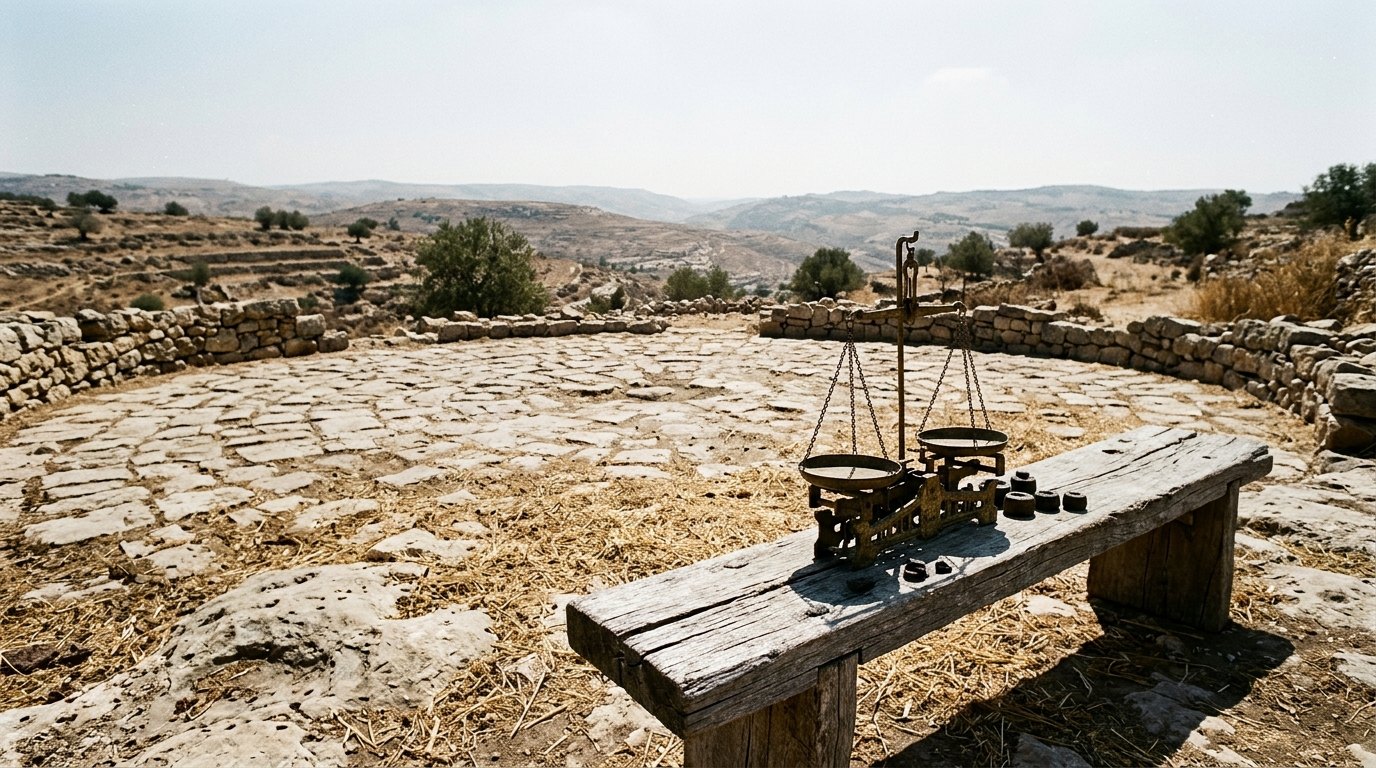
“Do not judge, or you too will be judged.
Matthew 7:1 (NIV)
It establishes the prohibition against usurping God's judicial throne with an unmerciful, fault-finding posture toward others.
In Matthew 7:1, Jesus issues the plain warning: "Judge not, that you be not judged." Far from advocating moral apathy or refusing to distinguish good from evil, Christ confronts a hypercritical posture that presumes to usurp God's supreme authority. As He immediately clarifies in Matthew 7:2, the standard we mete out recoils upon us: "For with the judgment you pronounce you will be judged, and with the measure you use it will be measured to you." Men naturally operate with asymmetric weights, offering leniency to themselves while demanding strict retributive justice for their neighbors.
Our Lord reinforces this identical principle across the Gospels. In Luke 6:37, Jesus commands, "Judge not, and you will not be judged; condemn not, and you will not be condemned; forgive, and you will be forgiven." He follows this in Luke 6:38 with the vibrant promise that a good measure, "pressed down, shaken together, running over," will be given back to those who practice radical mercy and pardon. The warnings of Mark 4:24 underscore that spiritual hearing and judgment determine the reciprocal measure God renders to the soul. When an unbending, fault-finding temper governs a disciple, that person invites the severe inspection of an unyielding divine court. As James 2:13 soberly concludes, judgment is utterly without mercy to the one who shows no mercy, yet sovereign mercy triumphs over judgment.
| Passage | What it says |
|---|---|
| Matthew 7:1 | Jesus warns His disciples not to judge so that they will not face judgment themselves. |
| Matthew 7:2 | The standard and measure applied to others will be the exact measure God applies in return. |
| Luke 6:37 | Christ pairs the command not to judge or condemn with the promise of pardon and forgiveness. |
| Luke 6:38 | A generous, merciful measure will be poured back into the lap of those who forgive. |
| Mark 4:24 | Jesus warns that the measure we use will be measured back to us, and still more will be added. |
| James 2:13 | Judgment is without mercy to one who has shown no mercy, yet mercy triumphs over judgment. |
The Beam and Speck
Hypocrisy Blinds Us to Our Own Transgressions

You hypocrite, first take the plank out of your own eye, and then you will see clearly to remove the speck from your brother’s eye.
Matthew 7:5 (NIV)
Jesus exposes the actor's mask of hypocrisy, ordering self-examination before any attempt to aid a brother.
The core problem exposed in the Sermon on the Mount is not correction itself, but hypocritical blindness. In Matthew 7:5, Christ delivers His piercing indictment: "You hypocrite, first take the log out of your own eye, and then you will see clearly to take the speck out of your brother's eye." Jesus does not forbid helping a brother with his speck; He insists that true redemptive assistance requires deep personal repentance first. Hypocrisy disqualifies the corrector because it projects righteousness while harboring unaddressed wickedness.
In Matthew 7:3, Jesus employs an intentionally vivid contrast, asking why one stares at the tiny fleck of dust in a brother’s eye while ignoring the massive rafter lodged in one's own vision. He presses the absurdity in Matthew 7:4: how can an unrepentant, blind guide presume to perform delicate ophthalmic surgery on another person? In parallel accounts, Luke 6:41 exposes the severe moral delusion that obsessively critiques minor peripheral failings while remaining totally oblivious to one's own staggering guilt. As Luke 6:42 reminds us, the timber must be identified, confessed, and cast out before anyone possesses the clear, humble vision needed to restore a struggling fellow believer.
| Passage | What it says |
|---|---|
| Matthew 7:3 | Jesus questions why someone notices a brother's speck while ignoring the plank blinding their own eye. |
| Matthew 7:4 | A person cannot effectively offer eye surgery to another while obstructed by their own blindness. |
| Matthew 7:5 | Removing one's own beam brings clear sight to properly help remove a brother's speck. |
| Luke 6:41 | Jesus highlights the absurdity of scrutinizing another's flaw while unmindful of one's own greater failure. |
| Luke 6:42 | Addressing personal sin first enables genuine, constructive help for a fellow believer. |
Usurping God's Law
Passing Sentence on Others Replaces God's Throne

You, therefore, have no excuse, you who pass judgment on someone else, for at whatever point you judge another, you are condemning yourself, because you who pass judgment do the same things.
Romans 2:1 (NIV)
Paul shows that judging another while practicing the same sins renders a person completely without excuse.
To condemn others while practicing rebellion is to presume to replace God. In Romans 2:1, Paul writes, "Therefore you have no excuse, O man, every one of you who judges. For in passing judgment on another you condemn yourself, because you, the judge, practice the very same things." Paul establishes in Romans 2:2 that God's judgment is according to objective truth, and in Romans 2:3 he questions the sheer folly of thinking that anyone passing sentence on others will somehow evade the righteous sentence of the Almighty.
Human judgment is limited, self-deceived, and provisional. As Paul asks in Romans 14:4, "Who are you to pass judgment on the servant of another? It is before his own master that he stands or falls." The apostle reminds the church in Romans 14:10 that we must not despise or judge our brother, for all believers will stand before the judgment seat of Christ. Citing the prophets in Romans 14:11, he shows that every knee shall bow to God alone, and in Romans 14:12 that each person will give an individual account of their own life. Therefore, Romans 14:13 exhorts us to decide never to place an obstacle or stumbling block before another.
James echoes this sobriety in James 4:11 and James 4:12, warning that speaking evil of a brother is an attack on God's law: "There is only one lawgiver and judge, he who is able to save and to destroy. But who are you to judge your neighbor?" In 1 Corinthians 4:3, Paul treats human scrutiny as trivial, declaring in 1 Corinthians 4:4 that even a clean conscience does not acquit him, because only the Lord judges. In 1 Corinthians 4:5, he urges believers not to pronounce final judgment before the appointed time when the Lord brings hidden motives to light. Finally, James 5:9 warns against grumbling among brethren, for the supreme Judge stands right at the door.
| Passage | What it says |
|---|---|
| Romans 2:1 | The one judging another condemns himself because he commits the very same offenses. |
| Romans 2:2 | God's judgment against those who practice such unrighteous deeds is grounded strictly in truth. |
| Romans 2:3 | Paul questions how anyone expecting to judge others expects to escape God's righteous penalty. |
| Romans 14:10 | Believers must not despise or judge their brethren, because all will stand before Christ's judgment seat. |
| Romans 14:11 | Scripture declares every knee shall bow and every tongue confess allegiance directly to God. |
| Romans 14:12 | Each individual believer will give an account of their own life personally to God. |
| Romans 14:13 | Christians are exhorted to resolve never to put a stumbling block in a brother's path. |
| James 4:11 | Speaking evil of or judging a brother constitutes judging and violating the law itself. |
| James 4:12 | There is only one Lawgiver and Judge with power to save or destroy. |
| Romans 14:4 | Paul asks who we are to judge another's servant, since he stands or falls before his own master. |
| 1 Corinthians 4:3 | Paul considers it a very small thing to be judged by human courts or even by himself. |
| 1 Corinthians 4:4 | Though conscience is clear, that does not acquit; the Lord is the one who judges. |
| 1 Corinthians 4:5 | Believers must not pronounce judgment before the time, prior to the Lord disclosing the heart's purposes. |
| James 5:9 | Brethren must not grumble against one another so they will not be judged; the Judge stands at the door. |
Righteous Discernment
Scripture Demands Spiritual Discernment and Loving Correction

Stop judging by mere appearances, but instead judge correctly.”
John 7:24 (NIV)
Jesus explicitly commands righteous judgment rather than superficial evaluation based on outward appearances.
While forbidding hypocritical condemnation, Scripture explicitly commands righteous discernment. In John 7:24, Jesus issues a direct command: "Do not judge by appearances, but judge with right judgment." True judgment is not arbitrary or malicious; it is the humble application of God's Word to protect truth and pursue holiness. Even in the Law, Leviticus 19:17 orders believers to frankly reason with their neighbor rather than incur sin because of unexpressed hatred, matching Proverbs 27:6, which declares, "Faithful are the wounds of a friend; profuse are the kisses of an enemy."
Jesus Himself mandates discernment immediately after forbidding hypocrisy: in Matthew 7:6, He warns not to give holy things to dogs or cast pearls before swine, which requires distinguishing who is receptive and who is contemptuous. In Matthew 7:15 and Matthew 7:16, Christ warns us to beware of false prophets coming in sheep's clothing, commanding disciples to evaluate their fruit. When personal offense occurs, Matthew 18:15 outlines loving, private confrontation to win a brother back. Paul instructs in Galatians 6:1 that those who are spiritual must restore a caught transgressor in a spirit of gentleness, keeping watch over themselves.
Within the assembly, moral discernment is indispensable. Paul insists in 1 Corinthians 5:12 and 1 Corinthians 5:13 that while God judges those outside, the local church must judge its own members and purge willful, unrepentant wickedness. In 1 Corinthians 6:2 and 1 Corinthians 6:3, he notes that since the saints will judge the world and even angels, they are fully competent to settle everyday disputes. Paul instructs the church in Romans 16:17 to watch out for those causing divisions contrary to sound doctrine, while commanding in 1 Thessalonians 5:21 to test everything and hold fast to the good. Finally, 1 John 4:1 calls every Christian to test the spirits, refusing credulity in a world full of false teachers.
| Passage | What it says |
|---|---|
| John 7:24 | Jesus instructs the crowds to stop judging by appearances and to judge righteous judgment. |
| Leviticus 19:17 | The law commands honest rebuke of one's neighbor so as not to share in guilt. |
| Proverbs 27:6 | Faithful are the wounds of a friend, while deceitful are the kisses of an enemy. |
| Matthew 7:6 | Jesus directs disciples not to give what is holy to dogs or swine. |
| Matthew 18:15 | Christ lays out the process for private confrontation when a brother sins against you. |
| Romans 16:17 | Paul urges the church to mark and avoid those who cause divisions contrary to sound doctrine. |
| 1 Corinthians 5:12 | Paul explains that the church is tasked with judging those inside its fellowship, not outsiders. |
| Galatians 6:1 | Spiritual believers are instructed to restore a trespasser gently, keeping watch over themselves. |
| Matthew 7:15 | Jesus warns to beware of false prophets who come in sheep's clothing but are ravenous wolves. |
| Matthew 7:16 | Disciples will recognize false teachers by their fruits, distinguishing thorns from grapes. |
| 1 Corinthians 5:13 | God judges those outside the church, while believers are commanded to purge the evil person from their midst. |
| 1 Corinthians 6:2 | The saints will judge the world, so they are competent to judge small matters among themselves. |
| 1 Corinthians 6:3 | Believers will judge angels, meaning everyday disputes should be settled within the church. |
| 1 Thessalonians 5:21 | Paul commands believers to test all things and hold fast to what is good. |
| 1 John 4:1 | Believers are instructed not to believe every spirit, but to test the spirits to see if they are from God. |
Where in the Bible
| Book | Passages |
|---|---|
| Leviticus | 1 · Leviticus 19:17 |
| Proverbs | 1 · Proverbs 27:6 |
| Matthew | 9 · Matthew 7:1, Matthew 7:2, Matthew 7:3, Matthew 7:4, Matthew 7:5, Matthew 7:6, Matthew 18:15, Matthew 7:15, Matthew 7:16 |
| Mark | 1 · Mark 4:24 |
| Luke | 4 · Luke 6:37, Luke 6:38, Luke 6:41, Luke 6:42 |
| John | 1 · John 7:24 |
| Romans | 9 · Romans 2:1, Romans 2:2, Romans 2:3, Romans 14:10, Romans 14:11, Romans 14:12, Romans 14:13, Romans 14:4, Romans 16:17 |
| 1 Corinthians | 7 · 1 Corinthians 4:3, 1 Corinthians 4:4, 1 Corinthians 4:5, 1 Corinthians 5:12, 1 Corinthians 5:13, 1 Corinthians 6:2, 1 Corinthians 6:3 |
| Galatians | 1 · Galatians 6:1 |
| 1 Thessalonians | 1 · 1 Thessalonians 5:21 |
| James | 4 · James 2:13, James 4:11, James 4:12, James 5:9 |
| 1 John | 1 · 1 John 4:1 |
The story in order
- The Law given to Israel (c. 1400 BC) · Leviticus 19:17 · The Law commands rebuke to prevent sin and guilt.
- Wisdom for discernment (c. 900 BC) · Proverbs 27:6 · A friend's honest wounds are better than deceitful kisses.
- Jesus teaches on judgment (c. AD 30) · Matthew 7:1 · Do not judge, or you will be judged by the same standard.
- Jesus warns against hypocrisy (c. AD 30) · Matthew 7:3 · Remove your own sin before correcting others.
- Jesus teaches mercy (c. AD 30) · Luke 6:37 · Do not condemn, and you will not be condemned; forgive, and you will be forgiven.
- Jesus warns about measure (c. AD 30) · Mark 4:24 · The measure you use will be measured back to you.
- Jesus warns of false prophets (c. AD 30) · Matthew 7:15 · Beware of false prophets; you will recognize them by their fruits.
- Paul on standing before God (c. AD 55) · Romans 14:10 · We all stand before the judgment seat of God.
- Paul on judging within the church (c. AD 55) · 1 Corinthians 5:12 · The church judges those within, not those outside.
- James on judging others (c. AD 45) · James 4:11 · Do not speak evil of or judge a brother.
- John on testing spirits (c. AD 90) · 1 John 4:1 · Test the spirits to see if they are from God.
- James on mercy and judgment (c. AD 45) · James 2:13 · Mercy triumphs over judgment for the one who has shown no mercy.
The Measure of Judgment
| Measure Given | Measure Received | Passage |
|---|---|---|
| Do not judge | You will not be judged | Luke 6:37 |
| The standard you use | It will be measured to you | Matthew 7:2 |
| The measure you use | It will be measured back to you | Mark 4:24 |
| Forgiveness and a generous measure | Pardon and forgiveness will be poured back | Luke 6:38 |
| No mercy shown | Judgment without mercy | James 2:13 |
The Beam and the Speck
| Hypocritical Judgment | Righteous Action | Passage |
|---|---|---|
| Noticing a speck in a brother's eye | Ignoring the plank in your own eye | Matthew 7:3 |
| Attempting to remove a speck while blinded | Unable to help effectively | Matthew 7:4 |
| Removing the plank from your own eye | Then you can help remove the speck | Matthew 7:5 |
| Scrutinizing another's flaw | Ignoring your own greater failure | Luke 6:41 |
| Addressing your own sin first | Enables genuine help for others | Luke 6:42 |
Judging Others vs. God's Judgment
| Human Judgment | God's Judgment | Passage |
|---|---|---|
| Judging another | Condemning yourself for the same deeds | Romans 2:1 |
| Judging others | God's judgment is according to truth | Romans 2:2 |
| Judging others | You expect to escape God's penalty? | Romans 2:3 |
| Judging a brother | He stands or falls to his own master | Romans 14:4 |
| Judging before the time | The Lord will disclose purposes and judge | 1 Corinthians 4:5 |
| Grumbing against one another | The Judge stands at the door | James 5:9 |
Key words
- judge (krino, κρίνω)
- To form an opinion or estimation of; to discern, discriminate, condemn. · Matthew 7:1
- hypocrisy (hypokrisis, ὑπόκρισις)
- Pretense of having virtues, beliefs, or feelings one does not actually possess. · Matthew 7:5
- mercy (eleos, ἔλεος)
- Compassion or kindness shown toward someone whom it is within one's power to punish or harm. · Luke 6:37
- righteous judgment (krisis dikaia, κρίσις δικαία)
- Judgment based on truth and divine standards, not on outward appearance. · John 7:24
- discernment (diakrisis, διακρίσις)
- The ability to judge well; the quality of being able to assess situations or people accurately. · 1 Thessalonians 5:21
Christ does not silence moral truth; He disarms human self-righteousness. Before attempting to correct a brother or sister, believers are called to stand before God in rigorous personal repentance, allowing grace to clear our vision so we can help others in love.
40 passages, each cited once.
Scripture cited
- Matthew 7:1-5
- Luke 6:37
- Romans 2:1-2
- James 4:11-12
- Luke 6:41
- Romans 14:10-13
- Matthew 7:5