What does 'maranatha' mean?

1 Corinthians 16:22
22 If anyone does not love the Lord, let that person be cursed! Come, Lord!
New International Version (NIV)
The answer
“Maranatha” means “Come, Lord!” or “Our Lord, come!” It is an Aramaic expression used by early Christians as a prayer for Christ’s return.
In 1 Corinthians 16:22, Paul closes with the warning, “If any man doesn’t love the Lord Jesus Christ, let him be cursed. Come, Lord!” The Aramaic phrase directly addresses Jesus: “Our Lord, come!” It expresses both the church’s hope for his return and its readiness to meet him. John uses the same spirit of prayer in Revelation 22:20: “Yes, come, Lord Jesus!”
So, in one sentence: maranatha is an early Christian prayer asking Jesus Christ to return.
Answered from Scripture · reviewed November 10, 2026
"Maranatha" is an ancient Aramaic invocation preserved by the early church that cries out, "Our Lord, come!" Embedded within the closing greetings of Paul's first letter to Corinth, it encapsulates the posture of the apostolic church: a deep love for Jesus Christ coupled with an eager, vigilant expectation of His physical return.
The Apostolic Greeting
An Aramaic Cry Preserved in Greek Scripture

If anyone does not love the Lord, let that person be cursed! Come, Lord!
1 Corinthians 16:22 (NIV)
This is the sole biblical occurrence of the transliterated Aramaic phrase 'Maranatha', set directly alongside a sobering call to love Christ.
In 1 Corinthians 16:22, the apostle Paul writes in his own hand a startling transliteration directly from the vernacular of the earliest Judean disciples: 'If any man love not the Lord Jesus Christ, let him be Anathema Maranatha.' Rather than translating the expression into Greek, Paul preserves the sacred Aramaic cry marana tha ('Our Lord, come!') or maran atha ('Our Lord has come' or 'Our Lord is coming'). In the setting of the early church's worship and eucharistic gatherings, this phrase was not a casual slogan but a solemn watchword binding fellowship and sober warning together.
The expectation embedded in maranatha saturates the entire apostolic corpus. When Paul instructs the church in Philippians 4:5 to let their reasonableness and gentle spirit be known to all men, his ground is identical: 'The Lord is at hand.' The imminent presence and return of the Master governed daily Christian ethics, calming anxious hearts and driving holy conduct. Believers lived in the tension between present affliction and future consummation, as Paul details in Romans 8:23, where even those with the firstfruits of the Spirit groan inwardly while awaiting the redemption of our bodies.
This eschatological wakefulness meant the early church viewed history through a lens of profound urgency. Romans 13:12 warns that 'the night is far spent, the day is at hand,' calling every disciple to cast off darkness and put on the armor of light. James 5:8 sounds the exact same note to persecuted believers scattered among the nations, commanding them to establish their hearts because the coming of the Lord draws near. Maranatha was therefore the instinctive posture of the church—an unrelenting cry of hope that measured every trial against the swift return of the King.
| Passage | What it says |
|---|---|
| 1 Corinthians 16:22 | Paul pronounces an anathema on anyone who does not love the Lord, immediately followed by the invocation 'Maranatha' ('Our Lord, come!'). |
| Philippians 4:5 | Paul reminds believers that their gentleness should be evident to all because the Lord is near, mirroring the Maranatha expectation. |
| Romans 8:23 | Paul describes believers groaning inward as they await their full adoption and the redemption of their bodies at Christ's coming. |
| Romans 13:12 | Proclaims that the night is far spent and the day is at hand, echoing the imminence conveyed by maranatha. |
| James 5:8 | Urges patience and steadfast hearts because the coming of the Lord is near. |
The Call to Love
Devotion to Christ as the Necessary Precondition
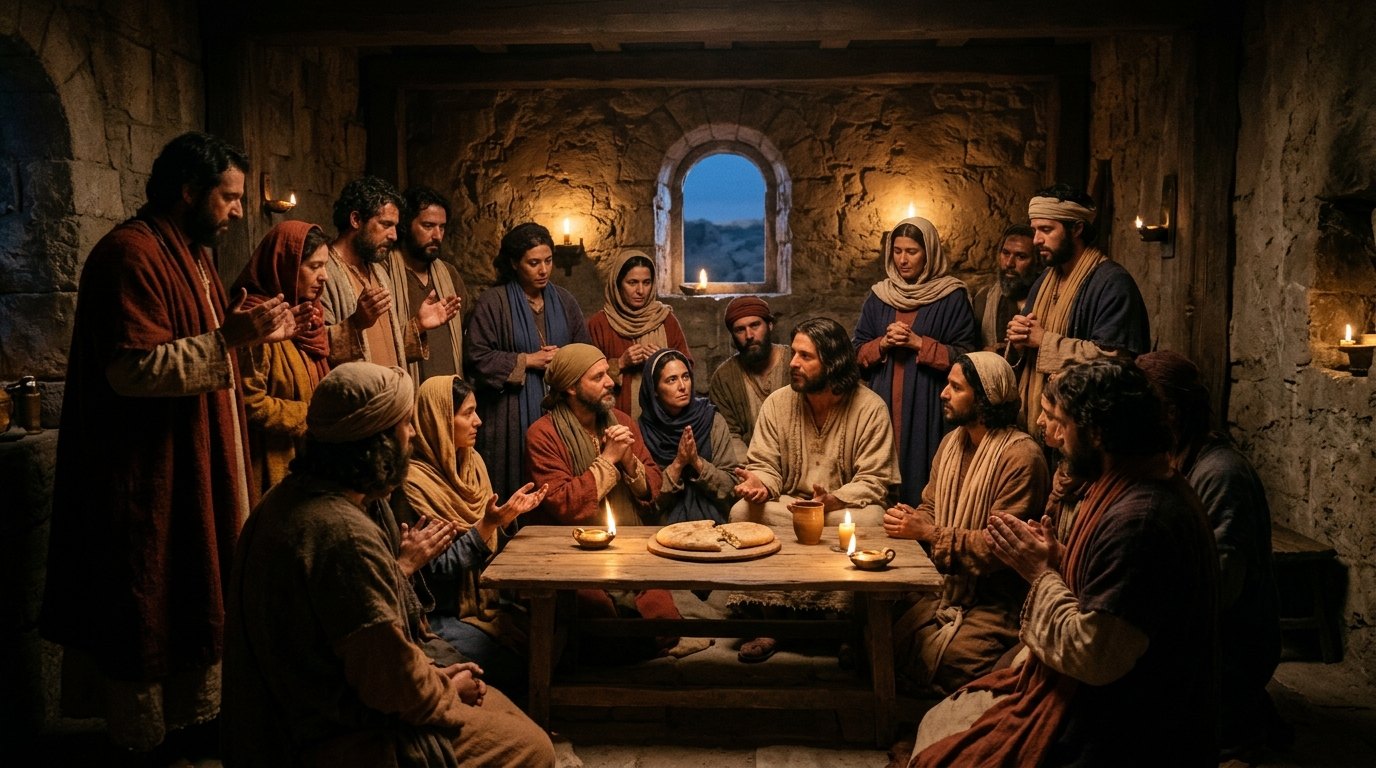
Grace to all who love our Lord Jesus Christ with an undying love.
Ephesians 6:24 (NIV)
It shows that divine grace rests upon all who love Jesus Christ with an undying, incorruptible love.
Paul concludes his letter to Ephesus with a sweeping benediction in Ephesians 6:24: 'Grace be with all them that love our Lord Jesus Christ in sincerity.' The proximity of this uncorrupted affection to the cry of maranatha in 1 Corinthians 16:22 reveals that longing for Christ's arrival can never be severed from genuine, passionate devotion to His person. The phrase anathema maranatha issues a severe boundary: to claim membership in God's covenant people while harboring no actual love for the Lord Jesus leaves a person under judgment when the King arrives.
Scripture makes plain that this devotion is neither manufactured nor sentimental. According to 1 John 4:19, 'we love him, because he first loved us.' Our longing for His face is the answering echo of His prior redemption at the cross. True love for Christ is demonstrated not merely through verbal anticipation, but through concrete submission; in John 14:21, the Lord states unequivocally that whoever holds and keeps His commandments is the one who truly loves Him, receiving in return the abiding love and manifest presence of both Father and Son.
Because Jesus is Lord, this devotion must take absolute precedence over every competing earthly loyalty. In Matthew 10:37, Christ demands supremacy, declaring that anyone who loves father, mother, son, or daughter more than Him is not worthy of Him. When the heart is rightly captured by this truth, duty gives way to affection. As Paul declares in 2 Corinthians 5:14, 'the love of Christ constraineth us'—it controls, directs, and fuels the church's eager prayer for the Bridegroom's return.
| Passage | What it says |
|---|---|
| Ephesians 6:24 | Grace is pronounced upon all who love our Lord Jesus Christ with sincerity and incorruptible devotion. |
| 1 John 4:19 | John explains that human love for God is grounded entirely in the fact that He first loved us. |
| John 14:21 | Jesus defines love for Him as keeping His commandments, promising personal fellowship and divine manifestation to the obedient disciple. |
| Matthew 10:37 | Jesus demands supreme love and loyalty above the closest familial bonds as the benchmark of true discipleship. |
| 2 Corinthians 5:14 | The love of Christ controls and compels believers who recognize that Christ died for all so they might live for Him. |
The Eschatological Hope
The Final Prayer of the New Testament

He who testifies to these things says, “Yes, I am coming soon.” Amen. Come, Lord Jesus.
Revelation 22:20 (NIV)
It is the direct Greek translation and theological equivalent of 'Maranatha', closing the entire biblical canon with an ardent prayer for Christ's return.
The entire canon of Christian Scripture concludes with the Greek equivalent of the Aramaic maranatha. In Revelation 22:20, the glorified Lord issues His final recorded promise: 'Surely I come quickly.' To this, the aged apostle John responds on behalf of all creation and the redeemed bride: 'Amen. Even so, come, Lord Jesus.' The prayer of maranatha is nothing less than the definitive heartbeat of biblical eschatology, fixing the hope of the saints not upon an abstract end of time, but upon the personal, bodily arrival of their Savior.
This expectant outlook defines the daily walk of faith. In Titus 2:13, Paul describes believers as 'looking for that blessed hope, and the glorious appearing of the great God and our Saviour Jesus Christ.' Such expectation does not foster paralysis; it purifies and invigorates the soul. In 2 Timothy 4:8, Paul, facing imminent execution, rejoices that the crown of righteousness is laid up not only for him, but for all who have fixed their love upon Christ's appearing. Hebrews 9:28 reinforces that while Jesus came first to bear sins, He will appear a second time, apart from sin, for the final salvation of those who eagerly wait for Him.
This great day of arrival will be public, catastrophic, and victorious. In 1 Thessalonians 4:16-17, the apostle details how the Lord Himself will descend from heaven with a shout, the voice of the archangel, and the trump of God, gathering His living and resurrected people together into the clouds. As 2 Peter 3:12 commands, the church lives looking for and even hastening the coming day of God, crying maranatha until faith turns to sight.
| Passage | What it says |
|---|---|
| Revelation 22:20 | Jesus affirms He is coming quickly, to which John responds with the climactic petition: 'Amen. Even so, come, Lord Jesus.' |
| Titus 2:13 | Believers are instructed to look forward expectantly to the blessed hope and glorious appearing of our great God and Savior, Jesus Christ. |
| 2 Timothy 4:8 | Paul promises the crown of righteousness to all who have loved and longingly anticipated Christ's appearing. |
| Hebrews 9:28 | Christ will appear a second time, not to bear sin, but to bring final salvation to those who eagerly wait for Him. |
| 1 Thessalonians 4:16-17 | Describes the physical descent of the Lord from heaven with a shout, which the cry maranatha anticipates. |
| 2 Peter 3:12 | Speaks of looking for and hastening the coming of the day of God. |
Where in the Bible
| Book | Passages |
|---|---|
| Matthew | 1 · Matthew 10:37 |
| John | 1 · John 14:21 |
| Romans | 2 · Romans 8:23, Romans 13:12 |
| 1 Corinthians | 1 · 1 Corinthians 16:22 |
| 2 Corinthians | 1 · 2 Corinthians 5:14 |
| Ephesians | 1 · Ephesians 6:24 |
| Philippians | 1 · Philippians 4:5 |
| 1 Thessalonians | 1 · 1 Thessalonians 4:16-17 |
| 2 Timothy | 1 · 2 Timothy 4:8 |
| Titus | 1 · Titus 2:13 |
| Hebrews | 1 · Hebrews 9:28 |
| James | 1 · James 5:8 |
| 2 Peter | 1 · 2 Peter 3:12 |
| 1 John | 1 · 1 John 4:19 |
| Revelation | 1 · Revelation 22:20 |
The story in order
- Jesus' earthly ministry and ascension (c. AD 30) · John 14:21 · Jesus defines love for Him as keeping His commandments.
- The early church's expectation of Christ's return (c. AD 50) · 1 Thessalonians 4:16-17 · Describes the physical descent of the Lord from heaven.
- Paul's instruction on Christ's imminent return (c. AD 57) · Romans 13:12 · Proclaims that the night is far spent and the day is at hand.
- Paul's warning and the cry 'Maranatha' (c. AD 57) · 1 Corinthians 16:22 · Paul pronounces an anathema and immediately follows with 'Maranatha'.
- Believers groaning for redemption (c. AD 57) · Romans 8:23 · Believers await their full adoption and redemption.
- The Lord is near (c. AD 61) · Philippians 4:5 · Believers' gentleness should be evident because the Lord is near.
- Christ's appearing for salvation (c. AD 65) · Hebrews 9:28 · Christ will appear a second time to bring final salvation.
- Paul's promise of a crown of righteousness (c. AD 67) · 2 Timothy 4:8 · For those who have loved and anticipated Christ's appearing.
- James' call for patience (c. AD 45) · James 5:8 · Urges steadfast hearts because the coming of the Lord is near.
- Looking for the day of God (c. AD 67) · 2 Peter 3:12 · Speaks of looking for and hastening the coming of the day of God.
- The blessed hope of Christ's appearing (c. AD 65) · Titus 2:13 · Believers are to look forward to Christ's glorious appearing.
- John's final prayer for Christ's return (c. AD 95) · Revelation 22:20 · Jesus affirms He is coming quickly; John responds, 'Come, Lord Jesus.'
The Expectation of Christ's Coming
| Statement of Imminence | Believer's Response | Passage |
|---|---|---|
| The night is far spent, the day is at hand. | Put on the armor of light. | Romans 13:12 |
| The coming of the Lord is near. | Be patient; strengthen your hearts. | James 5:8 |
| The Lord is near. | Let your reasonableness be known to everyone. | Philippians 4:5 |
| He is coming quickly. | Amen. Even so, come, Lord Jesus! | Revelation 22:20 |
| Looking for and hastening the coming of the day of God. | Live godly lives. | 2 Peter 3:12 |
Love for Christ as the Precondition for Discipleship
| Command/Statement | Condition for Discipleship | Promise/Consequence | Passage |
|---|---|---|---|
| If you love me, you will keep my commandments. | Keeping His commandments | Jesus will show Himself to the disciple. | John 14:21 |
| Anyone who does not love the Lord is accursed. | Loving the Lord | Maranatha ('Our Lord, come!') | 1 Corinthians 16:22 |
| The love of Christ controls us. | Recognizing Christ died for all | Live for Him who died for us. | 2 Corinthians 5:14 |
| Grace to all who love our Lord Jesus Christ with incorruptible devotion. | Loving Christ with sincere, incorruptible devotion | Receiving grace. | Ephesians 6:24 |
| We love because He first loved us. | God's prior love for us | Our love for God. | 1 John 4:19 |
Key words
- Maranatha (מָרָנָתָא (maranatha))
- An Aramaic invocation meaning 'Our Lord, come!' expressing eager expectation of Christ's return. · 1 Corinthians 16:22
- Love for the Lord (ἀγάπη (agapē))
- Supreme devotion and obedience to Jesus Christ, a foundational requirement for true discipleship. · 1 John 4:19
- Nearness of the Lord (ἐγγύς (engys))
- The imminent presence or soon coming of Christ, encouraging believers to live in readiness. · Philippians 4:5
- Blessed Hope (ἐλπίς (elpis))
- The joyful and certain expectation of the glorious appearing of Jesus Christ. · Titus 2:13
- Crown of Righteousness (στέφανος (stephanos))
- A reward promised by Christ to those who have loved and longed for His appearing. · 2 Timothy 4:8
To utter "Maranatha" is to align one's heart with the deepest longing of the Bride of Christ throughout the ages. It calls every believer to live with an undivided heart, loving the Lord sincerely and watching expectantly for the day He appears.
16 passages, each cited once.
Scripture cited
- 1 Corinthians 16:22
- Revelation 22:20