What is the Body of Christ?

1 Corinthians 12:12-27
12 Just as a body, though one, has many parts, but all its many parts form one body, so it is with Christ.
13 For we were all baptized by one Spirit so as to form one body—whether Jews or Gentiles, slave or free—and we were all given the one Spirit to drink.
14 Even so the body is not made up of one part but of many.
15 Now if the foot should say, “Because I am not a hand, I do not belong to the body,” it would not for that reason stop being part of the body.
16 And if the ear should say, “Because I am not an eye, I do not belong to the body,” it would not for that reason stop being part of the body.
17 If the whole body were an eye, where would the sense of hearing be? If the whole body were an ear, where would the sense of smell be?
18 But in fact God has placed the parts in the body, every one of them, just as he wanted them to be.
19 If they were all one part, where would the body be?
20 As it is, there are many parts, but one body.
21 The eye cannot say to the hand, “I don’t need you!” And the head cannot say to the feet, “I don’t need you!”
22 On the contrary, those parts of the body that seem to be weaker are indispensable,
23 and the parts that we think are less honorable we treat with special honor. And the parts that are unpresentable are treated with special modesty,
24 while our presentable parts need no special treatment. But God has put the body together, giving greater honor to the parts that lacked it,
25 so that there should be no division in the body, but that its parts should have equal concern for each other.
26 If one part suffers, every part suffers with it; if one part is honored, every part rejoices with it.
27 Now you are the body of Christ, and each one of you is a part of it.
New International Version (NIV)
The answer
The Body of Christ is the church—all who belong to Jesus Christ, made one by the Holy Spirit and living under Christ as their head (Ephesians 1:22-23; Colossians 1:18).
Scripture uses the picture of a human body to show that Christians are genuinely united without all being identical:
- One Spirit makes one people. “For in one Spirit we were all baptized into one body” (1 Corinthians 12:13). Ethnic and social differences—Jew or Greek, slave or free—do not produce separate bodies or determine a believer’s worth.
- Christ is the head. Colossians 1:18 calls Him “the head of the body, the assembly” and says that He has preeminence in all things. The church depends on Him, follows Him, and grows from Him (Ephesians 4:15-16).
- Every member has a God-given place. God sets the members in the body according to His desire, and even those who seem weaker are necessary (1 Corinthians 12:18,22). Different functions are therefore no reason for envy, pride, or declaring another believer unnecessary.
- The members share one another’s lives. God’s design excludes division and requires mutual care: when one suffers, all suffer; when one is honored, all rejoice (1 Corinthians 12:25-26).
Paul applies this directly to believers gathered as the church: “Now you are the body of Christ, and members individually” (1 Corinthians 12:27). Belonging to Christ therefore means more than attending an institution: each Christian belongs to His people, contributes to their growth, and shares their burdens and joys (Ephesians 4:16; 1 Corinthians 12:26).
Answered from Scripture · reviewed November 11, 2026
Scripture reveals that the Body of Christ is the church itself: every born-again believer joined together across the earth and across time under the living headship of Jesus Christ. Through the baptism of the Holy Spirit, individuals of diverse backgrounds are formed into an organic, mutually dependent whole whose life and purpose flow entirely from its divine Head.
The Spirit's Union
One Living Body Formed by the Holy Spirit

For we were all baptized by one Spirit so as to form one body—whether Jews or Gentiles, slave or free—and we were all given the one Spirit to drink.
1 Corinthians 12:13 (NIV)
It declares that the Holy Spirit Himself baptizes every believer into one spiritual organism, transcending every earthly division.
In 1 Corinthians 12:13, the apostle Paul reveals the divine origin of the church: believers are forged into one living organism through the baptism of the Holy Spirit. This is not an earthly club or a mere association of like-minded individuals, but a profound supernatural reality wherein people from every conceivable background—Jew and Greek, slave and free—are immersed into a single spiritual life. The apostle establishes in 1 Corinthians 12:12 that the church mirrors the unity and diversity of the human frame; though the body comprises many parts, it remains one singular body, and 'so also is Christ.' In this striking formulation, Paul even refers to the corporate community as Christ Himself, reflecting the unshakeable union between the Savior and His redeemed people.
The same foundational reality appears in Romans 12:4, where Paul notes that just as our physical bodies contain many members that do not share identical tasks, so the spiritual reality functions in holy harmony. Romans 12:5 underscores that though we are individually distinct and numerous, we are one body in Christ and individually members one of another. To belong to Jesus Christ is necessarily to belong to every other brother and sister in Him. The Spirit does not merely save individuals in isolation; He knits them into a living, interconnected communion where life is shared, differences are redeemed, and Christ's presence is made visible to the watching world.
| Passage | What it says |
|---|---|
| 1 Corinthians 12:12 | Affirms that just as a human body has many members yet remains one, so also is Christ in His church. |
| 1 Corinthians 12:13 | States that all believers were baptized by one Spirit into one body and made to drink of one Spirit. |
| Romans 12:4 | Observes that a physical body has many members, yet all members do not share the exact same function. |
| Romans 12:5 | Teaches that though believers are many, they form one body in Christ and belong individually to one another. |
Divine Sovereignty
God Arranges Every Member by His Own Design
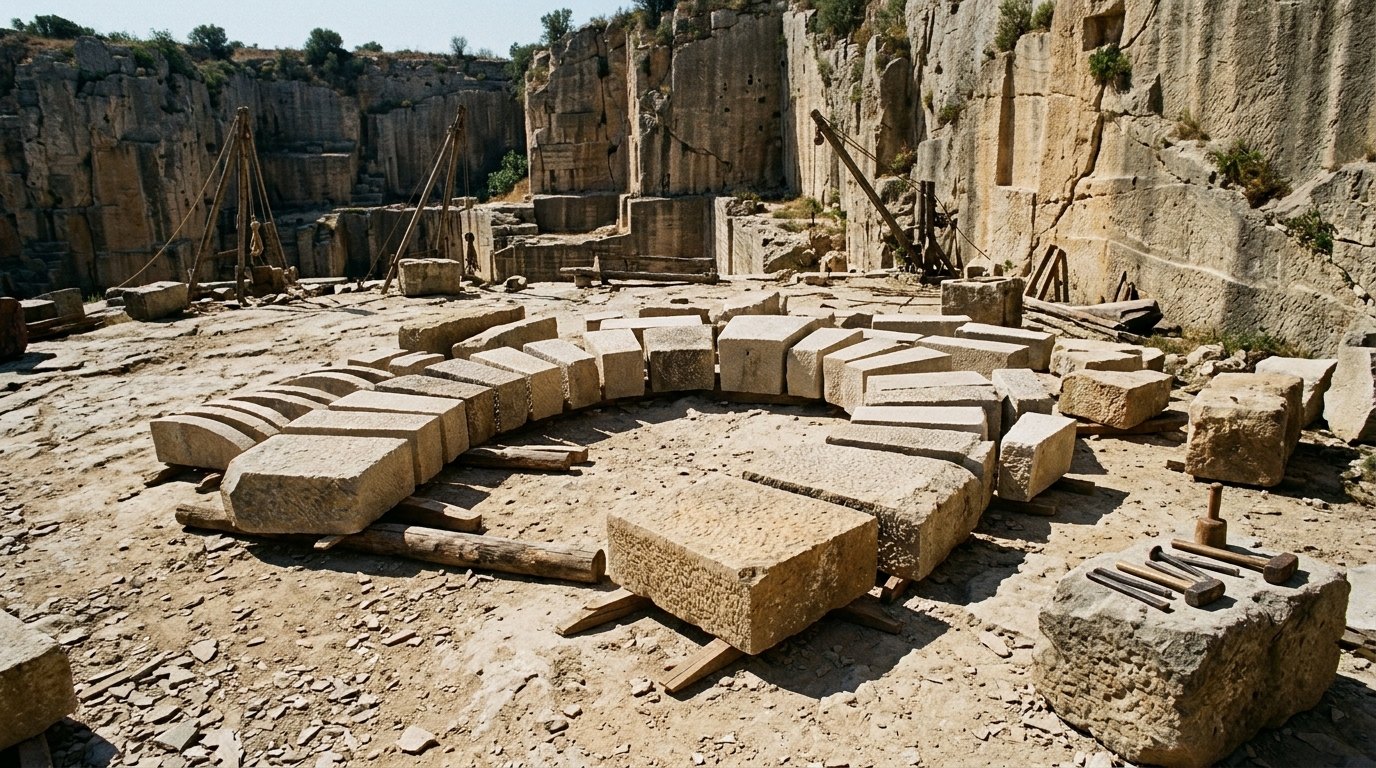
But in fact God has placed the parts in the body, every one of them, just as he wanted them to be.
1 Corinthians 12:18 (NIV)
It reveals that a believer's distinct place and role in the church stems entirely from God's deliberate pleasure.
The architecture of the church is never an accident of human effort, for 1 Corinthians 12:18 proclaims that God Himself has arranged each member in the body just as He desired. Every believer's specific gifting, placement, and background originate in the sovereign pleasure of the Creator. Paul presses this truth home in 1 Corinthians 12:14 by noting that a body does not consist of one member, but many. When a believer falls into comparison or self-pity, the absurdity of the complaint becomes obvious: as 1 Corinthians 12:15 points out, a foot cannot disqualify itself from the body simply because it is not a hand. Nor can an ear, according to 1 Corinthians 12:16, renounce its place because it lacks the sight of an eye.
Uniformity would be the death of the organism. In 1 Corinthians 12:17, Paul asks what would happen if the entire body were an eye; the vital faculty of hearing would be lost, and if the whole were an ear, the sense of smell would vanish. This diversity is intentional. In 1 Corinthians 12:19-20, Scripture drives home that if all members were identical, there could be no body at all, yet God has fashioned many distinct members to constitute one single body. Resentment of another's gifts or disdain for one's own calling is ultimately a rejection of God's perfect craftsmanship. He assigns our places with infinite wisdom, ensuring that the church lacks no necessary grace.
| Passage | What it says |
|---|---|
| 1 Corinthians 12:14 | Clarifies that the corporate body does not consist of merely one single member, but many diverse parts. |
| 1 Corinthians 12:15 | Shows that a foot cannot disqualify itself from the body simply because it is not a hand. |
| 1 Corinthians 12:16 | Explains that an ear remains part of the body even though it does not possess the sight of an eye. |
| 1 Corinthians 12:17 | Argues that if the whole body were an eye or an ear, faculties like hearing and smelling would be lost. |
| 1 Corinthians 12:18 | Affirms that God Himself has arranged every individual member in the body exactly as He desired. |
| 1 Corinthians 12:19 | Points out that if all components were identical, no true body could exist. |
| 1 Corinthians 12:20 | Reiterates the fundamental balance: there are indeed many distinct members, yet only one unified body. |
Mutual Dependence
Every Part Is Necessary and Worthy of Honor

On the contrary, those parts of the body that seem to be weaker are indispensable,
1 Corinthians 12:22 (NIV)
It establishes that parts of the church perceived as weak or obscure are indispensable to the whole.
Because God has built the church with such varied parts, mutual dependence is woven into its very fabric. In 1 Corinthians 12:22, the Holy Spirit establishes that the members of the body that appear comparatively weaker are thoroughly indispensable. Pride is dismantled in 1 Corinthians 12:21, where the eye is forbidden from saying to the hand, 'I have no need of you,' nor may the head dismiss the feet. In human society, honor is lavished on the prominent and the loud; yet 1 Corinthians 12:23-24 reveals that God has tempered the body together so that unpresentable parts receive greater modesty and those lacking natural prestige are granted special honor.
This divine arrangement exists to prevent division and cultivate genuine, selfless care among believers, as 1 Corinthians 12:25 instructs. The corporate life of the church is so real that, according to 1 Corinthians 12:26, when one member suffers, every member suffers with it, and when one member is honored, all share in the joy. Addressing the local gathering, Paul concludes in 1 Corinthians 12:27: 'Now you are the body of Christ and individually members of it.' This shared identity demands practical brotherly love. As Colossians 3:15 commands, believers must let the peace of Christ rule in their hearts, remembering that they were summoned to that very peace as one body.
| Passage | What it says |
|---|---|
| 1 Corinthians 12:21 | Forbids the eye from dismissing the hand, or the head from dismissing the feet as unneeded. |
| 1 Corinthians 12:22 | Asserts that those members of the body that appear comparatively weaker are thoroughly necessary. |
| 1 Corinthians 12:23 | Explains that less honorable parts are treated with special honor, and less presentable parts receive greater modesty. |
| 1 Corinthians 12:24 | Notes that God tempered the body together, granting greater honor to those parts that seemed to lack it. |
| 1 Corinthians 12:25 | States God's design: preventing division and prompting members to demonstrate the exact same mutual care. |
| 1 Corinthians 12:26 | Describes corporate sympathy: when one member suffers, all suffer, and when one is honored, all rejoice. |
| 1 Corinthians 12:27 | Declares directly to the local congregation that they are the body of Christ and individually His members. |
| Colossians 3:15 | Commands believers to let God's peace rule their hearts, since they were called to that peace in one body. |
The Living Head
Christ Supplies Growth and Life to the Whole

They have lost connection with the head, from whom the whole body, supported and held together by its ligaments and sinews, grows as God causes it to grow.
Colossians 2:19 (NIV)
It shows that the entire body derives its nourishment, structural cohesion, and spiritual increase straight from Christ the Head.
The church cannot exist independently of its living Lord; Colossians 2:19 warns against losing connection to the Head, from whom the entire body is nourished and knit together, growing with a growth that is from God. Christ is not merely the ruler of the church; He is its vital life source. Apart from continuous communion with Him through His Word and Spirit, the organism withers. In Ephesians 4:15, believers are exhorted to speak the truth in love and grow up in every way into Him who is the Head, Jesus Christ, making His holy character the standard and goal of their shared maturity.
From that divine Head, the entire structure receives its cohesion and strength. Ephesians 4:16 explains how the whole body grows and builds itself up in love as each joint supplies support and every part works properly. When individual members abide in Christ and serve faithfully in their local callings, His life pulses through the joints and ligaments of the church, producing spiritual health and fruitfulness. The apostle reaches the height of this mystery in Ephesians 5:30, declaring plainly that 'we are members of His body.' Christ loves the church as His own flesh, sustaining her, cleansing her, and guaranteeing that the gates of hell will never prevail against His living people.
| Passage | What it says |
|---|---|
| Colossians 2:19 | Warns against losing connection to the Head, from whom the entire body is nourished, knit together, and grows. |
| Ephesians 4:15 | Exhorts believers to speak truth in love and grow up in all respects into Him who is the Head, Christ. |
| Ephesians 4:16 | Describes how the body builds itself up in love as each joint supplies support and each part works properly. |
| Ephesians 5:30 | Declares the profound intimate reality that believers are living members of Christ's physical body, flesh, and bones. |
Identity and Headship
The Church Defined as the Body and Fullness of Christ

And God placed all things under his feet and appointed him to be head over everything for the church, which is his body, the fullness of him who fills everything in every way.
Ephesians 1:22-23 (NIV)
This foundational text explicitly defines the church as the body of Christ, His very fullness on earth under His sovereign headship.
In Ephesians 1:22-23, the apostle Paul provides the definitive declaration of what the church is in relation to its Lord: God "put all things under his feet and gave him as head over all things to the church, which is his body, the fullness of him who fills all in all." The church is neither a human organization nor a mere assembly of like-minded individuals; the church is the living, organic body of Christ on earth, animated by His Spirit and sustained under His sovereign rule. In Ephesians 1:22, the Father exalts the risen Jesus over every power and dominion, placing all created reality beneath His feet and designating Him head over everything specifically for the benefit of the church. Verse 23 deepens this mystery by identifying the assembly as Christ's bodily fullness—the earthly locus through which His life and witness are displayed before a watching universe.
This same corporate identity is confirmed in Paul's letter to the Colossians. Colossians 1:18 declares that Christ is the head of the body, the church, the beginning and the firstborn from among the dead, so that in everything He might hold preeminence. As the physical head directs, nourishes, and coordinates the natural frame, so Christ governs His people, supplying their spiritual vitality. Far from an abstract metaphor, this union is so genuine that Paul speaks in Colossians 1:24 of rejoicing in his afflictions for the sake of "his body, that is, the church." What is done to or for the church touches the Lord Himself, because the body and the Head share an indivisible, eternal life.
| Passage | What it says |
|---|---|
| Ephesians 1:22 | God placed all things under Christ's feet and appointed Him head over all things for the church. |
| Ephesians 1:23 | The church is explicitly defined as Christ's body, the fullness of Him who fills everything in every way. |
| Colossians 1:18 | Christ is the head of the body, the church, having supremacy as the firstborn from the dead. |
| Colossians 1:24 | Paul rejoices in suffering for the sake of Christ's body, which is identified directly as the church. |
One New Humanity
Reconciliation of Jew and Gentile into One New Body

and in one body to reconcile both of them to God through the cross, by which he put to death their hostility.
Ephesians 2:16 (NIV)
Christ's sacrificial death put hostility to death in order to reconcile disparate peoples into one singular spiritual body before God.
At the cross of Jesus Christ, God accomplished the miraculous abolition of humanity's deepest spiritual and ethnic divisions. In Ephesians 2:16, the apostle reveals that Christ died in order that He "might reconcile us both to God in one body through the cross, thereby killing the hostility." Through His sacrificial death, Jesus did not merely negotiate a truce between estranged parties; He forged one brand-new humanity out of divided peoples, uniting Jew and Gentile directly to God within a single spiritual frame. In Ephesians 2:14, Christ Himself is declared our peace, having torn down the dividing wall of partition that historically separated the nations from the commonwealth of Israel.
Paul explains in Ephesians 2:15 that by abolishing the ceremonial enmity in His flesh, Jesus established "one new man in place of the two," creating a reconciled community governed by grace. This was the long-hidden mystery now unveiled to the world: Ephesians 3:6 teaches that through the gospel, "the Gentiles are fellow heirs, members of the same body, and partakers of the promise in Christ Jesus." This is not an alliance of distinct groups keeping separate identities, but a profound spiritual oneness. As Ephesians 4:4 unalterably states, there is one body and one Spirit, just as believers are summoned to the one hope belonging to their eternal call.
| Passage | What it says |
|---|---|
| Ephesians 2:14 | Christ has broken down the dividing wall of hostility between Jew and Gentile through His flesh. |
| Ephesians 2:15 | Jesus abolished the legal enmity to create in Himself one new man from the two groups. |
| Ephesians 2:16 | Christ reconciled both Jew and Gentile to God in one single body through the cross. |
| Ephesians 3:6 | The mystery revealed is that Gentiles are fellow heirs and members of the exact same body in Christ. |
| Ephesians 4:4 | Scripture declares there is one body and one Spirit, just as believers are called to one hope. |
Communion and Discernment
The Table Expresses and Discerns the Unity of the Body
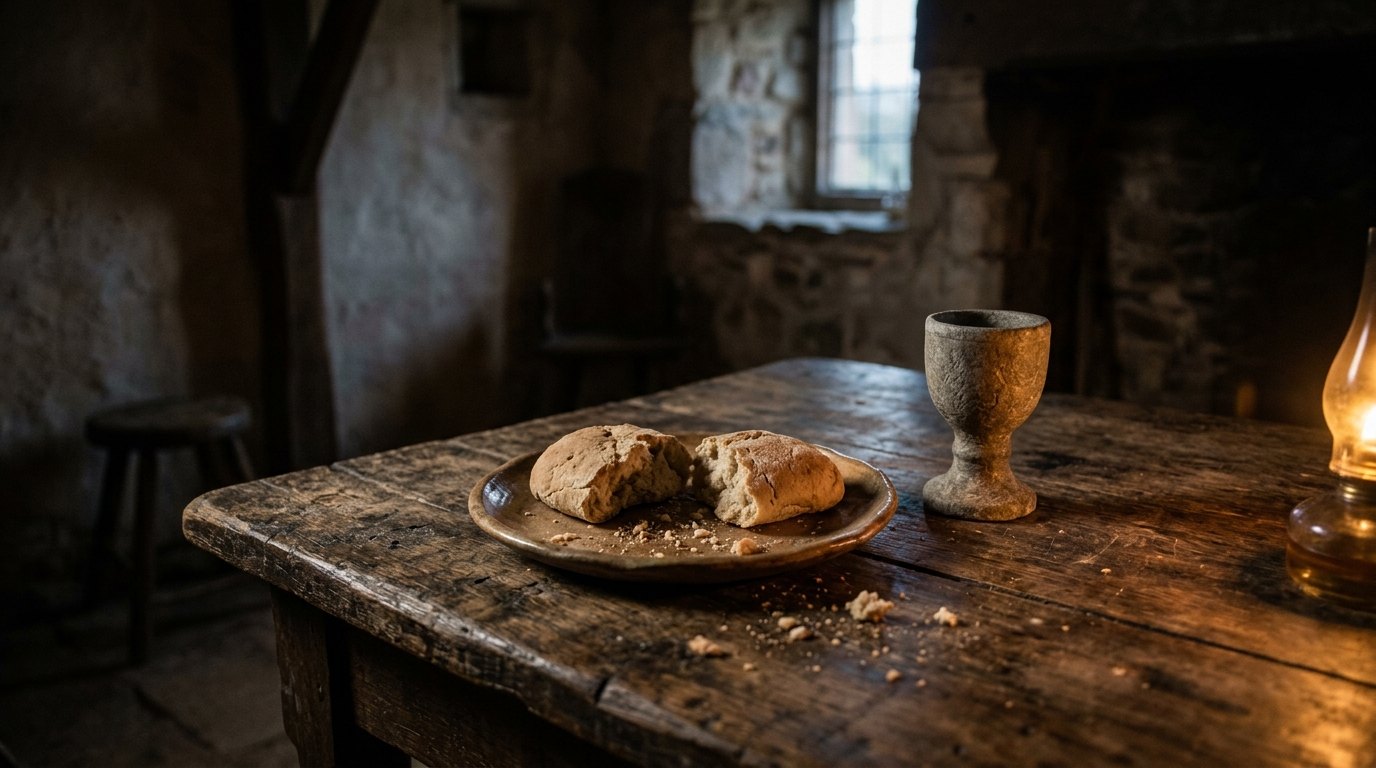
Because there is one loaf, we, who are many, are one body, for we all share the one loaf.
1 Corinthians 10:17 (NIV)
Corporate communion in the bread demonstrates and solidifies the organic reality that the many believers constitute one single body.
The unity of the church is visibly enacted and sustained at the Lord’s Table. In 1 Corinthians 10:17, Paul lays bare the corporate reality of the sacrament: "Because there is one bread, we who are many are one body, for we all partake of the one bread." When believers gather to eat the bread and drink the cup, the communion meal actively manifests the shared life of the one body. As 1 Corinthians 10:16 reminds us, the cup of blessing is a participation in the blood of Christ, and the bread we break is a participation in the body of Christ. The physical loaf shared among many distinct persons mirrors the spiritual truth that they belong to one unbroken spiritual entity.
This sacred meal carries solemn weight. In 1 Corinthians 11:24, the Lord Jesus institutes the supper, commanding His followers to eat the bread in remembrance of His physical body broken on their behalf. To approach the table flippantly or in divisive arrogance is a grave offense: 1 Corinthians 11:27 warns that whoever partakes unworthily becomes guilty of the body and blood of the Lord. Paul adds in 1 Corinthians 11:29 that anyone who eats and drinks without discerning the Lord's body drinks judgment upon himself. To discern the body means not only honoring Christ's historical sacrifice, but recognizing His living presence in the brothers and sisters gathered at the table.
| Passage | What it says |
|---|---|
| 1 Corinthians 10:16 | The bread broken in the Lord's Supper is a direct participation in the physical and spiritual body of Christ. |
| 1 Corinthians 10:17 | Because there is one bread, we who are many are one body, for we all partake of the one bread. |
| 1 Corinthians 11:24 | Jesus institutes the covenant meal, declaring the broken bread to be His physical body given for His people. |
| 1 Corinthians 11:27 | Partaking of the cup and bread unworthily incurs guilt concerning the body and blood of the Lord. |
| 1 Corinthians 11:29 | Anyone who eats and drinks without discerning the Lord's body eats and drinks judgment upon himself. |
Edification and Gifts
Spiritual Gifts Given to Build Up the Entire Body

to equip his people for works of service, so that the body of Christ may be built up
Ephesians 4:12 (NIV)
Every equipped saint and gifted leader exists for the singular purpose of building up the body of Christ into maturity.
Spiritual gifts are not private badges of honor, but divine endowments distributed to nurture the entire church. In Ephesians 4:12, Scripture defines the central aim of all gospel ministry: the leaders given by Christ are tasked with "equipping the saints for the work of ministry, for building up the body of Christ." God intends every local assembly to grow into an interconnected, mature reflection of its Savior. In Ephesians 4:11, Paul notes that the ascended Lord gave specific servants—apostles, prophets, evangelists, shepherds, and teachers—to anchor and instruct His flock, ensuring that the whole body is continuously strengthened and edified through sound truth.
This growth has an ultimate horizon. According to Ephesians 4:13, these ministry labors must continue until all believers "attain to the unity of the faith and of the knowledge of the Son of God, to mature manhood, to the measure of the stature of the fullness of Christ." This edification requires the active participation of every member. As 1 Corinthians 12:28 records, God has deliberately appointed diverse gifts, administrations, and workings within the body so that no necessity goes unmet. Romans 12:6 confirms that believers possess gifts that differ according to the grace given to them, each functioning as an indispensable part of the living whole.
| Passage | What it says |
|---|---|
| Ephesians 4:11 | Christ gave apostles, prophets, evangelists, shepherds, and teachers as gifts to His church. |
| Ephesians 4:12 | These ministry gifts equip the saints for the work of ministry, building up the body of Christ. |
| Ephesians 4:13 | The body is built up until all attain unity of faith and mature manhood to the measure of Christ's fullness. |
| 1 Corinthians 12:28 | God has appointed various gifts and roles within the body to minister to the whole. |
| Romans 12:6 | Members of the body have gifts that differ according to the sovereign grace given to each. |
Nourished and Cherished
The Intimate Marital Union of Christ and His Flesh

After all, no one ever hated their own body, but they feed and care for their body, just as Christ does the church— for we are members of his body.
Ephesians 5:29-30 (NIV)
Christ cherishes, nourishes, and protects the church because believers are living members of His very body and flesh.
In Ephesians 5:29-30, the apostle Paul unveils the astonishing tenderness of Christ’s relationship to His people, declaring that believers are members of His body, of His flesh and of His bones. Far from an abstract metaphor or bureaucratic organization, the church is Christ’s own beloved body, which He ceaselessly feeds, shelters, and sustains with divine care. Paul establishes this truth upon Christ's covenantal headship in Ephesians 5:23, identifying Him as the head of the church and the Savior of the body. Because no person naturally despises their own physical frame, Ephesians 5:29 reminds us that the Lord instinctively nourishes and cherishes the church as His very self. Reaching all the way back to the garden of Eden, Ephesians 5:31 quotes the primal ordinance of marriage, wherein a husband leaves father and mother to hold fast to his wife so that two become one flesh. In Ephesians 5:32, the veil is drawn back: this primordial institution was designed from the dawn of creation to foreshadow the great mystery of Christ and the church. Because this spiritual union is an absolute, organic reality, it extends down into the physical lives of individual saints. In 1 Corinthians 6:15, Paul warns that our physical bodies are authentic members of Christ, making personal immorality an unthinkable offense against the Lord Himself. As 1 Corinthians 6:17 concludes, whoever is joined to the Lord becomes one spirit with Him, anchored forever in an unbreakable, holy oneness.
| Passage | What it says |
|---|---|
| Ephesians 5:23 | Christ is the head of the church, His body, and is Himself its Savior. |
| Ephesians 5:29 | No one hates his own flesh, but nourishes and cherishes it, just as Christ does the church. |
| Ephesians 5:31 | The creation mandate of two becoming one flesh prefigures the profound union of Christ and His church. |
| Ephesians 5:32 | Paul unveils the marital union as a great mystery that refers directly to Christ and the church. |
| 1 Corinthians 6:15 | Believers' individual physical bodies are members of Christ, making sexual immorality a defilement of Christ's members. |
| 1 Corinthians 6:17 | He who is joined to the Lord becomes one spirit with Him. |
Where in the Bible
| Book | Passages |
|---|---|
| Romans | 3 · Romans 12:4, Romans 12:5, Romans 12:6 |
| 1 Corinthians | 24 · 1 Corinthians 12:12, 1 Corinthians 12:13, 1 Corinthians 12:14, 1 Corinthians 12:15, 1 Corinthians 12:16, 1 Corinthians 12:17, 1 Corinthians 12:18, 1 Corinthians 12:19, 1 Corinthians 12:20, 1 Corinthians 12:21, 1 Corinthians 12:22, 1 Corinthians 12:23, 1 Corinthians 12:24, 1 Corinthians 12:25, 1 Corinthians 12:26, 1 Corinthians 12:27, 1 Corinthians 10:16, 1 Corinthians 10:17, 1 Corinthians 11:24, 1 Corinthians 11:27, 1 Corinthians 11:29, 1 Corinthians 12:28, 1 Corinthians 6:15, 1 Corinthians 6:17 |
| Ephesians | 17 · Ephesians 4:15, Ephesians 4:16, Ephesians 5:30, Ephesians 1:22, Ephesians 1:23, Ephesians 2:14, Ephesians 2:15, Ephesians 2:16, Ephesians 3:6, Ephesians 4:4, Ephesians 4:11, Ephesians 4:12, Ephesians 4:13, Ephesians 5:23, Ephesians 5:29, Ephesians 5:31, Ephesians 5:32 |
| Colossians | 4 · Colossians 3:15, Colossians 2:19, Colossians 1:18, Colossians 1:24 |
The story in order
- Creation of humanity (c. 4000 BC) · Genesis 1:27 · God made mankind in His image, male and female.
- Abrahamic Covenant (c. 2000 BC) · Genesis 12:3 · God promised to bless all nations through Abraham's seed.
- Exodus and Law (c. 1450 BC) · Exodus 19:5-6 · Israel called to be God's own possession, a kingdom of priests.
- Davidic Kingdom (c. 1000 BC) · 2 Samuel 7:12-13 · God promised David an everlasting dynasty.
- Prophetic visions of new creation (c. 700 BC) · Isaiah 11:1-10 · A shoot from Jesse would rule with righteousness and peace.
- Jesus' Ministry Begins (c. AD 27) · Luke 3:22 · The Spirit descended on Jesus at His baptism.
- Jesus' Death and Resurrection (AD 30) · 1 Corinthians 15:3-4 · Christ died for our sins and was raised.
- Pentecost: Spirit Baptizes Believers (AD 30) · Acts 2:1-4 · The Holy Spirit empowered believers, forming the church.
- Gentiles Included (c. AD 60) · Ephesians 2:14-16 · Christ broke down barriers, creating one new humanity.
- Paul's Epistles on the Church (c. AD 55) · 1 Corinthians 12:12-27 · The church is the body of Christ, with diverse members.
- Church's Growth and Edification (c. AD 60) · Ephesians 4:11-16 · Christ gives gifts to build up the body in love.
- Christ's Headship Affirmed (c. AD 60) · Colossians 1:18 · Christ is the head of the body, the church.
The Church as Christ's Body
| Human Body Analogy | Spiritual Reality | Reference | Passage |
|---|---|---|---|
| Many members, one body | Many believers, one church in Christ | 1 Corinthians 12:12 | 1 Corinthians 12:12 |
| Members have different functions | Believers have different gifts | Romans 12:4 | Romans 12:4 |
| No part is insignificant | All members are necessary and honored | 1 Corinthians 12:21-24 | 1 Corinthians 12:22 |
| Body nourished by head | Church nourished by Christ | Colossians 2:19 | Colossians 2:19 |
| Body grows from the head | Church grows into Christ | Ephesians 4:15 | Ephesians 4:15 |
Key words
- Body of Christ (sōma Christou, σῶμα Χριστοῦ)
- The church, composed of all believers united under Christ's headship, formed by the Holy Spirit. · 1 Corinthians 12:12
- Baptism of the Spirit (baptisthentes, βαπτισθέντες)
- The Spirit's work uniting believers to Christ and to each other in His body. · 1 Corinthians 12:13
- Head (kephalē, κεφαλή)
- Christ, who is supreme over the church, His body, from whom all nourishment and growth come. · Ephesians 1:22
- Members (melē, μέλη)
- Individual believers who are distinct parts of the one body of Christ, each with unique functions. · Romans 12:5
- One New Humanity (heis kainos anthrōpos, εἷς καινὸς ἄνθρωπος)
- The reconciliation of Jew and Gentile into a single new creation in Christ. · Ephesians 2:15
- Edification (oikodomē, οἰκοδομή)
- The building up of the church in love and maturity through the proper functioning of its members. · Ephesians 4:12
Belonging to the Body of Christ means that no Christian exists in isolation or without divine purpose. You are sustained by Christ your Head, deliberately placed by God to supply what others lack, and called to live out this supernatural unity within a local gathering of fellow believers.
48 passages, each cited once.
Scripture cited
- 1 Corinthians 12:12-27
- 1 Corinthians 12:27
- Ephesians 4:15-16
- Colossians 1:18
- Ephesians 1:22-23