What does 'no weapon formed against you shall prosper' mean?
Isaiah 54:17
17 no weapon forged against you will prevail, and you will refute every tongue that accuses you. This is the heritage of the servants of the LORD, and this is their vindication from me,” declares the LORD.
New International Version (NIV)
The answer
It means that no attack against God’s servants will ultimately succeed in defeating God’s purpose or destroying their security with Him. “Prosper” is older English for “succeed”; Isaiah 54:17 says, “No weapon that is formed against you will prevail.” The promise is not that weapons will never be formed, nor that believers will never suffer harm.
The words in their setting
Isaiah 54 addresses afflicted Zion, pictured as barren, widowed and storm-tossed. God promises to gather His people with mercy and establish an enduring covenant of peace with them (Isaiah 54:7-10). The assurance therefore rests on God’s covenant love, not on favourable circumstances.
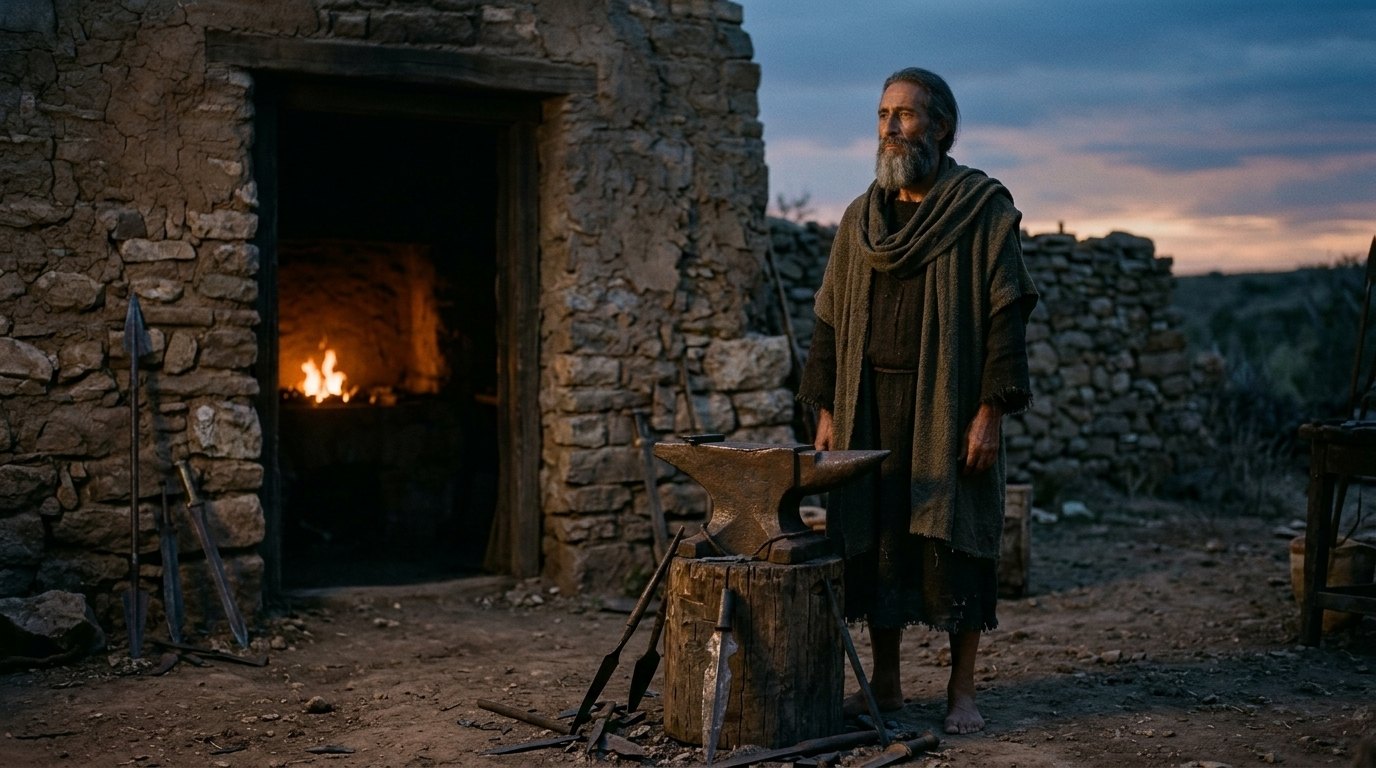
- “Weapon” includes hostile instruments and plans. Isaiah 54:16 says God created the blacksmith who forges the weapon. Even the weapon-maker exists under God’s sovereignty; an attacker cannot operate outside His rule.
- “Every tongue” concerns hostile accusation. The second half of Isaiah 54:17 moves from weapons to tongues rising “in judgment.” God’s servants will ultimately be vindicated against condemnation and false accusation. This is not permission to take personal vengeance or dismiss every correction as persecution.
- The promise belongs to Yahweh’s servants. It is not a universal guarantee that every human plan, dispute or ambition will succeed.
Why the promise is secure
The decisive words are: “This is the heritage of Yahweh’s servants, and their righteousness is of me” (Isaiah 54:17). Their standing comes from God, not from their own strength, innocence or ability to speak the right formula.
Romans 8:33-34 gives the same security in Christ: “It is God who justifies.” Charges cannot finally overthrow God’s verdict because Christ died, was raised and intercedes for His people. The promise therefore rests on God’s saving work, not on a believer’s power to control events.
Victory does not mean exemption from suffering
Romans 8:35-36 expressly includes oppression, persecution, famine, danger, sword and even being killed. Yet Romans 8:37 declares, “No, in all these things we are more than conquerors through him who loved us.” Nothing—not even death—can separate God’s people from His love in Christ (Romans 8:38-39).
An enemy may therefore wound, slander, impoverish or kill, but cannot finally overturn God’s justification, cancel His covenant or separate His servants from His love. Isaiah 54:17 can be prayed during genuine danger and opposition with confidence that the attacker does not determine the final outcome; God does.
Answered from Scripture · reviewed November 11, 2026
Isaiah 54:17 declares that every hostile weapon and slanderous accusation raised against God's covenant servants is ultimately doomed to fail. Far from promising an easy life free from conflict, Scripture guarantees that while enemies may assemble and attack, they can never overturn the eternal vindication and security God provides. Understanding this passage unlocks the rich biblical truth of divine preservation, rooted not in human performance, but in the unassailable righteousness of God.
Covenant Context
The Sovereign Maker Restores His Beloved People
no weapon forged against you will prevail, and you will refute every tongue that accuses you. This is the heritage of the servants of the LORD, and this is their vindication from me,” declares the LORD.
Isaiah 54:17 (NIV)
This climactic verse establishes that no forged instrument of war or courtroom accusation can overcome those whose vindication originates in Yahweh.
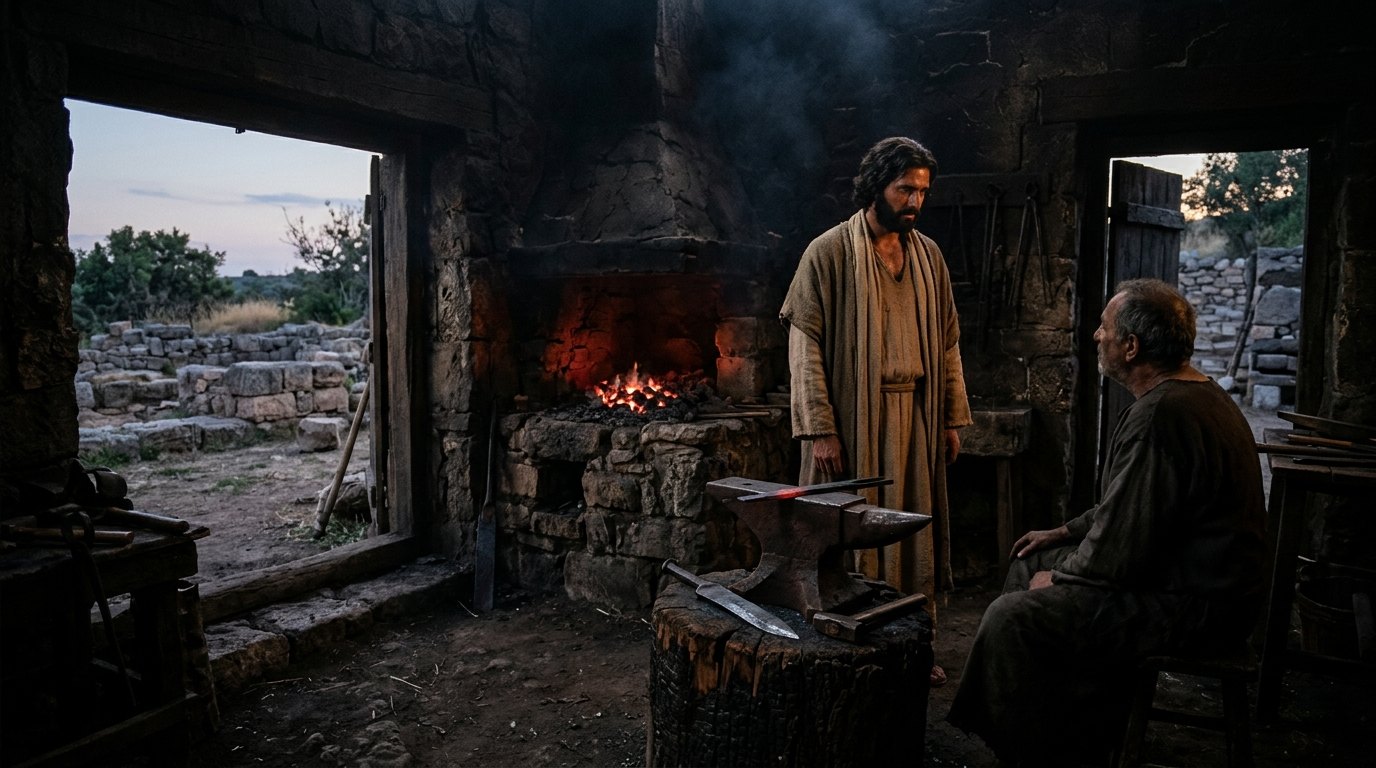
The climactic promise of Isaiah 54:17 anchors the defense of God's servants not in their own strength, but in the unyielding sovereignty of their Redeemer. Before declaring that no weapon forged against them will succeed, Scripture frames this security within marital and covenant faithfulness. In Isaiah 54:5, the prophet reminds a battered people that their Maker is their husband, the Lord of hosts, who possesses both the tender heart and the cosmic authority to restore them. Human security flinches before earthly upheavals, but Isaiah 54:10 confirms that though mountains shake and hills collapse, God's steadfast kindness and covenant of peace remain forever immovable. Troubles will certainly arise, yet Isaiah 54:15 clarifies that when hostile forces gather, they do so entirely apart from God's commission, guaranteeing their eventual ruin. Crucially, Isaiah 54:16 reveals why weapons fail: the Lord himself created the blacksmith who fans the coals and hammers the blade, just as He created the ravager to destroy. Because the weapon-maker is completely under divine decree, no instrument crafted in his workshop can ever thwart the purpose of God. The resulting heritage in Isaiah 54:17 is comprehensive: physical weapons lose their deadly intent, legal slanders are silenced in judgment, and the believer's vindication is sealed forever by the Lord.
| Passage | What it says |
|---|---|
| Isaiah 54:5 | Proclaims that Israel's Maker is her husband, the Lord of hosts and the Redeemer of the whole earth. |
| Isaiah 54:10 | Affirms that though mountains depart and hills shake, God's steadfast kindness and covenant of peace shall not be removed. |
| Isaiah 54:15 | Acknowledges that enemies will certainly gather against God's people, but without divine commission, ensuring their eventual fall. |
| Isaiah 54:16 | Reminds Israel that the Lord created the smith who blows the coals and fashion weapons, holding absolute control over instruments of war. |
| Isaiah 54:17 | Guarantees that no forged weapon will prosper, that every accuser will be condemned, and names this the heritage of Yahweh's servants. |
Silencing the Accuser
Vindication in the Heavenly Courtroom
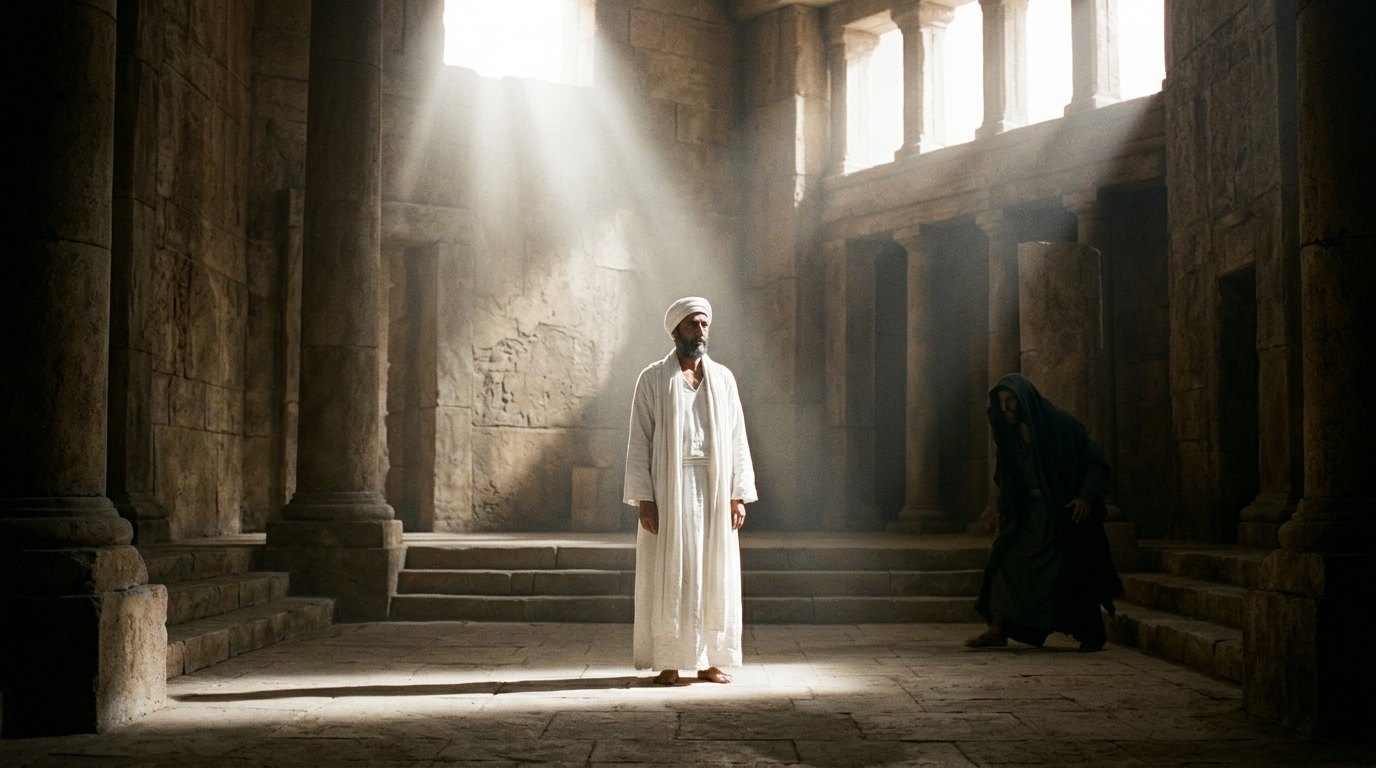
He who vindicates me is near. Who then will bring charges against me? Let us face each other! Who is my accuser? Let him confront me!
Isaiah 50:8 (NIV)
The Servant of the Lord boldly demands who can contend with Him, confident that the God who justifies is immediately near.
The courtroom imagery of Isaiah 50:8 shows the Servant of the Lord facing every legal adversary with calm defiance, confident that the God who justifies stands near. The second half of Isaiah 54:17 explicitly promises that every tongue rising in judgment will be refuted, moving the conflict from the open battlefield to the celestial bar of justice. This divine acquittal is vividly portrayed in Zechariah 3:1-2, where the high priest Joshua stands dressed in filthy rags before the angel of the Lord while Satan levels accusations against him; the Lord rebukes the accuser, snatching His servant like a burning stick from the fire. In the New Covenant, this vindication reaches its absolute peak in Romans 8:1, which announces that there is now no condemnation for anyone united to Christ Jesus. The Apostle echoes the Servant's ancient courtroom challenge in Romans 8:33-34, asking who can possibly bring a charge against God's elect when the supreme Judge Himself has pronounced them righteous and Christ ever lives to intercede. The final collapse of hostile accusations culminates in Revelation 12:10-11, where the ancient accuser of the brethren is hurled down, permanently conquered by the blood of the Lamb and the unwavering witness of the saints.
| Passage | What it says |
|---|---|
| Isaiah 50:8 | Declares that the Lord who justifies is near, silencing every legal adversary and challenger. |
| Zechariah 3:1-2 | Shows Yahweh rebuking Satan as the adversary stands to accuse Joshua the high priest before the angel of the Lord. |
| Romans 8:1 | Announces that there is now no condemnation for those who are in Christ Jesus. |
| Romans 8:33-34 | Asks who can bring any charge against God's elect, since it is God who justifies and Christ who intercedes. |
| Revelation 12:10-11 | Records the final casting down of the accuser of the brethren, conquered by the blood of the Lamb and the word of testimony. |
The Imputed Righteousness
Their Righteousness Is of Me

God made him who had no sin to be sinfor us, so that in him we might become the righteousness of God.
2 Corinthians 5:21 (NIV)
This verse reveals the divine transaction where Christ bore human sin so believers might become the righteousness of God in Him.
The divine heartbeat of Isaiah 54:17 rests in its final clause: 'their righteousness is of me, saith the Lord.' Believers do not overcome accusations through moral perfection or self-derived merit, but through the glorious exchange revealed in 2 Corinthians 5:21, where the sinless Christ was made sin for us so that we might become the very righteousness of God in Him. Long before the cross, the prophets proclaimed this foundational truth. In Isaiah 45:24-25, the nations discover that only in Yahweh do His servants possess genuine righteousness and strength, finding their eternal justification in His person. The prophet sings aloud in Isaiah 61:10, rejoicing that God does not merely overlook guilt, but covers the soul with the garments of salvation and wraps it in a majestic robe of righteousness like a bridegroom adorns himself. Looking to David's royal line, Jeremiah 23:6 identifies the coming King by His defining covenant title, Yahweh Tsidkenu, the Lord Our Righteousness. The Apostle Paul willingly discards every badge of pedigree and law-keeping in Philippians 3:9, desiring only that foreign righteousness which comes by faith in Christ. Because this covering belongs to God Himself, no accusation against it can ever stand.
| Passage | What it says |
|---|---|
| Isaiah 45:24-25 | Asserts that only in the Lord do His servants possess true righteousness and strength, finding their eternal justification in Him. |
| Isaiah 61:10 | Celebrates the soul's joy in God, who clothes the believer with garments of salvation and covers them with the robe of righteousness. |
| Jeremiah 23:6 | Names the coming Branch of David as Yahweh Tsidkenu, which translates as the Lord Our Righteousness. |
| Philippians 3:9 | Rejects any righteousness stemming from the law in favor of the righteousness that comes from God through faith in Christ Jesus. |
| 2 Corinthians 5:21 | Explains that God made the sinless Christ to be sin for us, that we might become the righteousness of God in Him. |
Divine Preservation
Unshakable Security in the Savior's Hand
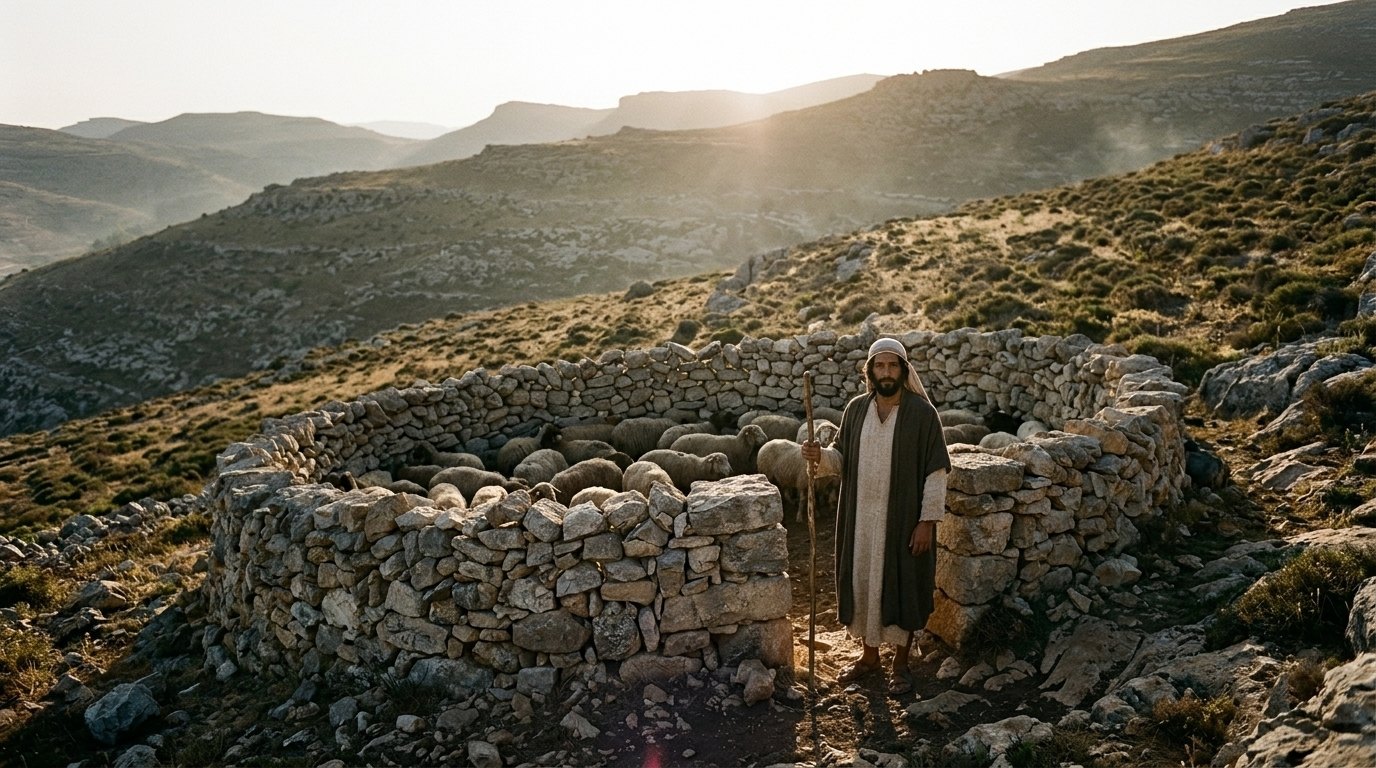
I give them eternal life, and they shall never perish; no one will snatch them out of my hand. My Father, who has given them to me, is greater than all; no one can snatch them out of my Father’s hand.
John 10:28-29 (NIV)
Jesus provides the ultimate guarantee that no force or predator can ever pluck His sheep from His or His Father's hands.
The promise that no weapon can prosper is ultimately fulfilled in the eternal security of Christ's flock, demonstrated in John 10:28-29 where Jesus promises eternal life to His sheep and insists that no power can pluck them from His or His Father's hands. The Old Testament regularly celebrates this sheltering power. In Psalms 32:6-7, David proclaims that though mighty waters burst their banks, they cannot reach the godly man who hides within God's presence, hemmed in by songs of deliverance. Similarly, Psalms 91:3-7 describes the believer shielded beneath divine pinions from deadly traps, noisome pestilence, and flying arrows, remaining secure though ten thousand perish at his right hand. The ultimate question of perseverance is framed in Romans 8:31: if the sovereign Creator is for us, who can ever successfully prevail against us? Paul brings this theological assurance to its glorious summit in Romans 8:38-39, affirming with unwavering conviction that neither death, life, angels, rulers, present realities, future threats, nor any created entity can sever believers from the indomitable love of God revealed in Christ Jesus our Lord.
| Passage | What it says |
|---|---|
| Psalms 32:6-7 | Promises that mighty floods of trouble will not reach the godly man, who is sheltered in God and surrounded with songs of deliverance. |
| Psalms 91:3-7 | Pledges protection from the snare, pestilence, and flying arrows, promising that thousands may fall beside you without touching your soul. |
| John 10:28-29 | Guarantees eternal life to the sheep and affirms that no one can snatch them out of the Father's omnipotent hand. |
| Romans 8:31 | Asks the definitive rhetorical question: If God is for us, who can successfully stand against us? |
| Romans 8:38-39 | Proclaims that neither death, life, powers, things present, nor things to come can separate believers from the love of God in Christ. |
The Believer's Warfare
Standing Firm Against the Fiery Darts
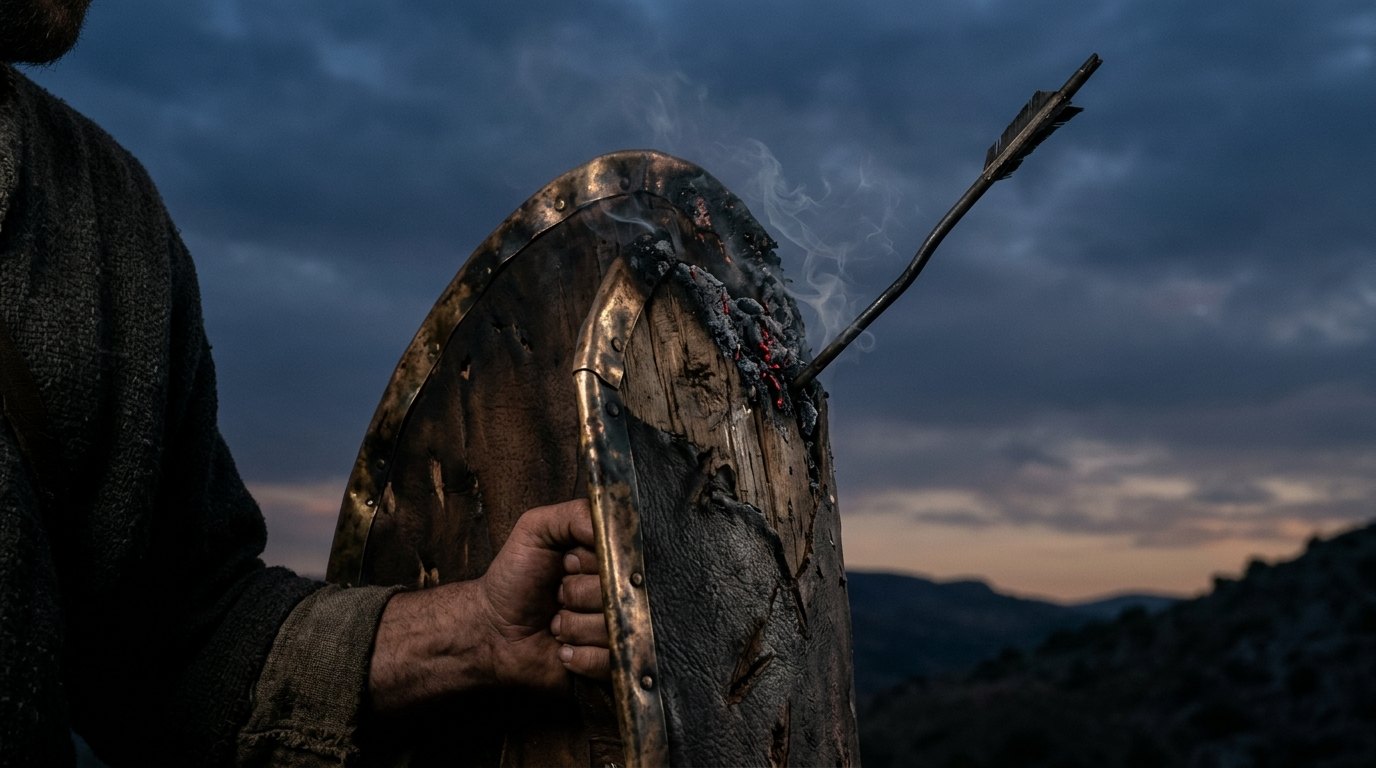
In addition to all this, take up the shield of faith, with which you can extinguish all the flaming arrows of the evil one.
Ephesians 6:16 (NIV)
This instruction commands taking up the shield of faith, which uniquely possesses power to extinguish every flaming missile of the evil one.
In Ephesians 6:16, the Apostle Paul instructs Christians above all to take up the shield of faith, with which you can extinguish all the flaming darts of the evil one. The weapon formed against the believer in spiritual warfare is real and deadly, yet God provides defense capable of quenching every fiery missile before it strikes the heart. This victory does not come from reckless self-confidence; rather, Proverbs 15:22 reminds us that plans fail without counsel, but with many advisers purposes are firmly established, showing that God's people stand guarded within the wisdom and mutual accountability of the body of Christ.
Because the assault is spiritual, human strength remains entirely useless. Paul writes in 2 Corinthians 10:4 that the weapons of our warfare are not carnal but mighty through God to the pulling down of strongholds. The world answers hostility with force, anger, or political leverage, but the Christian overthrows deceptive arguments and demonic fortresses through prayer, biblical truth, and gospel proclamation.
Therefore, Ephesians 6:10-11 urges us to be strong in the Lord and to put on the whole armor of God, that we may stand firm against the schemes of the devil. Knowing the enemy is cunning, 1 Peter 5:8-9 commands believers to remain clear-minded and vigilant, because our adversary the devil prowls like a roaring lion seeking someone to devour. We do not flee in panic, nor do we compromise: we resist him, steadfast in the faith, fully assured that Christ has already disarmed the powers of darkness and guaranteed our ultimate triumph.
| Passage | What it says |
|---|---|
| Proverbs 15:22 | Warns that plans fail where counsel is absent, but with many wise advisers purposes are firmly established. |
| 2 Corinthians 10:4 | Teaches that the weapons of Christian warfare are not carnal, but divinely powerful for pulling down strongholds. |
| Ephesians 6:10-11 | Exhorts believers to be strong in the Lord's power and put on the whole armor of God to stand against devilish schemes. |
| Ephesians 6:16 | Instructs believers to raise the shield of faith to quench every flaming arrow launched by the wicked one. |
| 1 Peter 5:8-9 | Commands believers to remain sober and watchful, resisting the roaring lion by standing firm in the faith. |
Where in the Bible
| Book | Passages |
|---|---|
| Psalms | 2 · Psalms 32:6-7, Psalms 91:3-7 |
| Proverbs | 1 · Proverbs 15:22 |
| Isaiah | 8 · Isaiah 54:5, Isaiah 54:10, Isaiah 54:15, Isaiah 54:16, Isaiah 54:17, Isaiah 50:8, Isaiah 45:24-25, Isaiah 61:10 |
| Jeremiah | 1 · Jeremiah 23:6 |
| Zechariah | 1 · Zechariah 3:1-2 |
| John | 1 · John 10:28-29 |
| Romans | 4 · Romans 8:1, Romans 8:33-34, Romans 8:31, Romans 8:38-39 |
| 2 Corinthians | 2 · 2 Corinthians 5:21, 2 Corinthians 10:4 |
| Ephesians | 2 · Ephesians 6:10-11, Ephesians 6:16 |
| Philippians | 1 · Philippians 3:9 |
| 1 Peter | 1 · 1 Peter 5:8-9 |
| Revelation | 1 · Revelation 12:10-11 |
The story in order
- Creation of the world and instruments of war (c. 700 BC) · Isaiah 54:16 · God's absolute control over all things, including weapons.
- God's covenant of peace is established (c. 700 BC) · Isaiah 54:10 · God's enduring faithfulness to His people.
- Enemies gather, but will fall (c. 700 BC) · Isaiah 54:15 · Opposition is inevitable but divinely limited.
- No weapon shall prosper (c. 700 BC) · Isaiah 54:17 · Divine protection against all hostile forces.
- Joshua accused by Satan (c. 500 BC) · Zechariah 3:1-2 · God rebukes the accuser of His servants.
- The Lord our righteousness (c. 600 BC) · Jeremiah 23:6 · The promised Messiah is our justification.
- No condemnation in Christ (c. AD 55) · Romans 8:1 · Freedom from guilt for believers.
- Who can condemn God's elect? (c. AD 55) · Romans 8:33-34 · God's justification and Christ's intercession secure us.
- Righteousness through faith in Christ (c. AD 60) · Philippians 3:9 · True righteousness comes from God, not law.
- Made the righteousness of God (c. AD 56) · 2 Corinthians 5:21 · Christ's sin bearing imputes righteousness to us.
- Eternal life and security (c. AD 30) · John 10:28-29 · Unshakeable security in the Father's hand.
- Standing against devilish schemes (c. AD 60) · Ephesians 6:11 · Believers are equipped for spiritual warfare.
- The accuser is cast down (c. AD 95) · Revelation 12:10-11 · The final defeat of Satan by Christ's work.
Divine Vindication Against Accusation
| The Accusation | The Divine Response | The Outcome | Passage |
|---|---|---|---|
| Satan stands to accuse Joshua | Yahweh rebukes Satan | Joshua is vindicated | Zechariah 3:1-2 |
| Who can bring a charge against God's elect? | God justifies and Christ intercedes | No condemnation | Romans 8:33-34 |
| Every hostile weapon and slanderous accusation | God's servants are protected and vindicated | They shall not prosper | Isaiah 54:17 |
| The accuser of the brethren | Conquered by the Lamb's blood and word | Cast down | Revelation 12:10-11 |
The Source of True Righteousness
| Human Effort/Law | Divine Provision | Result | Passage |
|---|---|---|---|
| Righteousness from the law | Righteousness from God through faith in Christ | Found in Him | Philippians 3:9 |
| Sin | Christ made sin for us | Become the righteousness of God in Him | 2 Corinthians 5:21 |
| No inherent righteousness | Righteousness and strength in the Lord | Eternal justification | Isaiah 45:24-25 |
| Sinful soul | Garments of salvation and robe of righteousness | Joy in God | Isaiah 61:10 |
Divine Preservation
| Threat | Divine Promise/Action | Security | Passage |
|---|---|---|---|
| Mountains depart, hills shake | God's covenant of peace shall not be removed | Unshakable peace | Isaiah 54:10 |
| Floods of trouble | God shelters the godly | Not reach them | Psalms 32:6-7 |
| Snare, pestilence, thousands falling | Protection under His wings | Not touch your soul | Psalms 91:3-7 |
| Being snatched out of the Father's hand | Jesus gives eternal life | No one can snatch them | John 10:28-29 |
| Who can stand against us? | God is for us | Victory assured | Romans 8:31 |
| Death, life, powers, present, future | Nothing can separate from God's love | Unbreakable bond | Romans 8:38-39 |
Key words
- Prosper (tsalach, צָלַח)
- To succeed, to be successful, to have success, to be profitable, to be fruitful, to be effective. · Isaiah 54:17
- Righteousness (tsedeq, צֶדֶק)
- The quality of being right with God, often imputed by God through faith in Christ. · Isaiah 45:24
- Justify (tsadaq, צָדַק)
- To declare righteous, to acquit, to vindicate. · Isaiah 50:8
- Accuser (diabolos, διάβολος)
- One who brings charges or allegations against another. · Revelation 12:10
- Condemnation (katakrima, κατάκριμα)
- A sentence of punishment; the state of being judged guilty. · Romans 8:1
- Preservation (shamar, שָׁמַר)
- The act of keeping safe from harm or destruction; divine protection. · Psalms 91:3
- Armor of God (panoplia tou theou, πανοπλία τοῦ θεοῦ)
- Spiritual protection provided by God for believers to withstand spiritual attacks. · Ephesians 6:11
Resting in Isaiah 54:17 delivers the believer from the crippling fear of human hostility, demonic opposition, and paralyzing self-condemnation. Because your standing rests on God's declared righteousness rather than your own strength, you can face seasons of fierce testing with sober courage and unwavering praise. Trusting His covenant pledge, stand firm in the armor of God, assured that no earthly or spiritual assault can ever separate you from His eternal love.
25 passages, each cited once.
Scripture cited
- Isaiah 54:17
- Romans 8:28-39
- Isaiah 54