What does the Bible say about a father's role?
Ephesians 6:4
4 Fathers, do not exasperate your children; instead, bring them up in the training and instruction of the Lord.
New International Version (NIV)
The answer
The Bible gives fathers a God-ordained responsibility: to train their children in the Lord’s ways and correct them without provoking them to wrath. Ephesians 6:4 says, “You fathers, don’t provoke your children to wrath, but nurture them in the discipline and instruction of the Lord.”
This means a father’s authority is not to rule through anger, intimidation, or humiliation. His authority is to guide the child toward holiness and wisdom. Colossians 3:21 gives the reason: “Fathers, provoke not your children to anger, lest they be discouraged.”
A father’s responsibilities
- Teach: “Train up a child in the way he should go: and when he is old, he will not depart from it” (Proverbs 22:6).
- Correct with purpose: “The rod and reproof give wisdom” (Proverbs 29:15). Discipline is not uncontrolled harshness; it is correction that leads the child toward wisdom.
- Correct while correction can still help: “Chasten thy son while there is hope” (Proverbs 19:18).
- Be involved in the child’s everyday life: “You shall teach them diligently unto your children” through the ordinary rhythms of home and daily life (Deuteronomy 6:7).
- Lead by example: The father’s conduct must model the instruction he gives. A child learns not only what his father says but how his father lives.
The heart of the teaching
Correction must be joined to instruction, and both must be rooted in the Lord. Ephesians 6:4 does not reject parental correction; it rejects a harshness that provokes anger. The father corrects what is wrong while preserving his child’s heart and pointing him toward God.
Proverbs 29:17 expresses the hoped-for result: “Correct thy son, and he shall give thee rest; yea, he shall give delight unto thy soul.” Proverbs 19:18 similarly distinguishes loving guidance from merely sparing the child while wrongdoing continues.
Applied today, this calls for fathers to set a firm standard, correct the behavior rather than attacking the child’s character, speak without sarcasm or humiliation, and pursue reconciliation after correction. A father should ask God for wisdom and the Spirit of God, especially when he feels anger. If personal anger is driving the correction, he should pause, calm himself, and deal with the issue in a way that builds up the child rather than discouraging him.
In short, the Bible’s picture is neither negligent parenting nor domineering harshness: a father leads by example, teaches the way of the Lord, corrects lovingly, and protects his child’s heart.
Answered from Scripture · reviewed November 10, 2026
Scripture presents fatherhood not as an exercise of harsh dominion or passive neglect, but as a sacred stewardship under God. Across the Old and New Testaments, God calls fathers to model His character, instruct their households diligently in His truth, and correct their children with tender, patient wisdom. Understanding this biblical mandate equips fathers to shepherd their families with steadfast love while safeguarding their children's hearts.
Spiritual Instruction
Teaching God's Truth Through Daily Rhythms
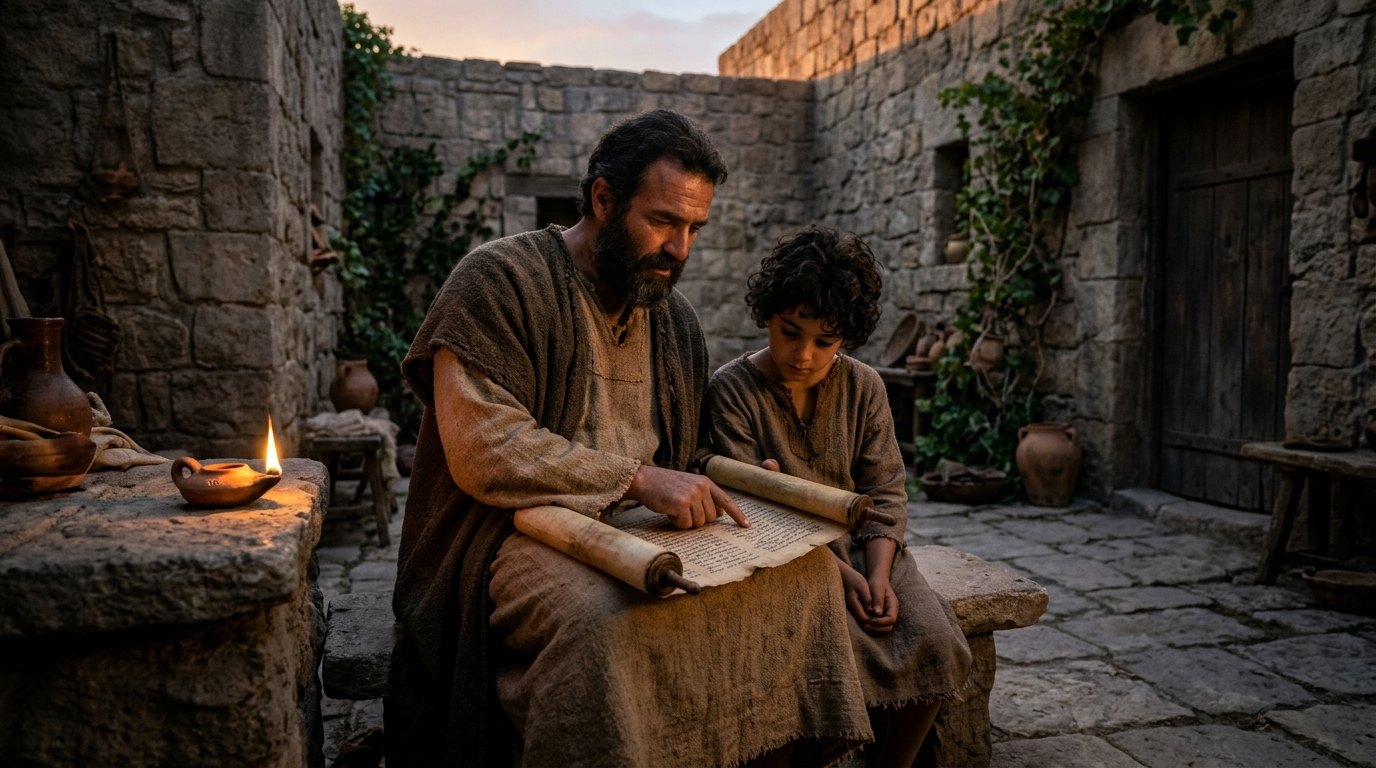
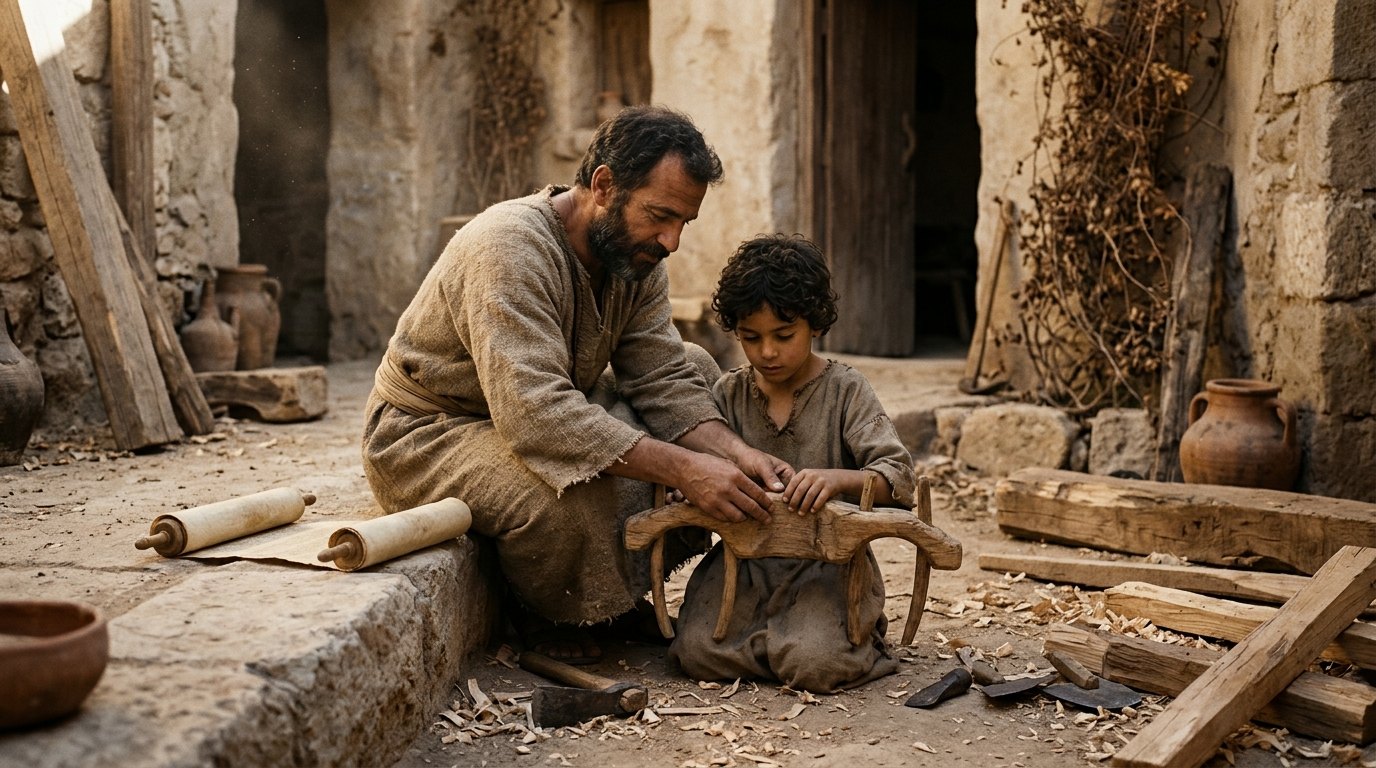
Impress them on your children. Talk about them when you sit at home and when you walk along the road, when you lie down and when you get up.
Deuteronomy 6:7 (NIV)
This verse anchors parental instruction not in occasional lectures, but in the continual, organic fabric of daily domestic life.
Deuteronomy 6:7 establishes that spiritual instruction belongs in the ordinary rhythms of the household, rather than being relegated to isolated rituals or formal assemblies. In Deuteronomy 6:6-9, Moses charges fathers to imprint God's statutes onto their own hearts before speaking them diligently to their sons, whether sitting at home, walking along the road, lying down at dusk, or rising at dawn. Deuteronomy 11:18-21 renews this domestic mandate, promising that faithful parental transmission yields enduring blessing under God's covenant. This calling reaches back to Genesis 18:19, where the Lord chose Abraham precisely so that he would direct his children and his household to keep the way of the Lord by doing justice and righteousness.
Psalm 78:3-7 calls fathers to recount the glorious deeds and wonders of God to coming generations, ensuring that young hearts do not repeat the stubborn unbelief of their ancestors but place their ultimate hope in the living God. Moses reinforces this vigilance in Deuteronomy 4:9 and Deuteronomy 32:46, pleading with fathers never to let divine works slip from memory, but to solemnly command them to their children and grandchildren. In Proverbs 1:8 and Proverbs 4:1-4, Solomon remembers how his father David tenderly guided him, emphasizing that listening to a father's instruction is life itself. King Hezekiah rejoices in Isaiah 38:19 that the living father makes known God's truth, while Joel 1:3 commands successive generations to pass down the memory of God's sovereign interventions, preserving the household of faith.
| Passage | What it says |
|---|---|
| Deuteronomy 6:6-9 | Fathers must lay God's commandments on their own hearts and teach them diligently at home and on the road. |
| Deuteronomy 11:18-21 | Parents are commanded to teach God's statutes continually so their household may flourish in the promised land. |
| Genesis 18:19 | God chose Abraham specifically so that he would direct his children and household to keep the way of the Lord. |
| Psalms 78:3-7 | Fathers are appointed to tell the glorious deeds of the Lord to the next generation so they set their hope in God. |
| Proverbs 22:6 | Directs parents to train up a child in his appointed path so that mature years will not depart from it. |
| Deuteronomy 4:9 | Moses charges fathers not to forget God's works but make them known to children and grandchildren. |
| Deuteronomy 32:46 | Moses commands fathers to fix their hearts on God's words and command their children to observe them. |
| Proverbs 1:8 | A son is instructed to hear his father's instruction and not forsake his mother's law. |
| Proverbs 4:1-4 | Solomon recounts how his own father taught him tenderly to keep God's commandments and live. |
| Isaiah 38:19 | Hezekiah declares that living fathers make known God's enduring faithfulness to their children. |
| Joel 1:3 | Fathers are commanded to recount God's sovereign work to their children across successive generations. |
Gentle Authority
Nurturing Children Without Provoking Their Wrath
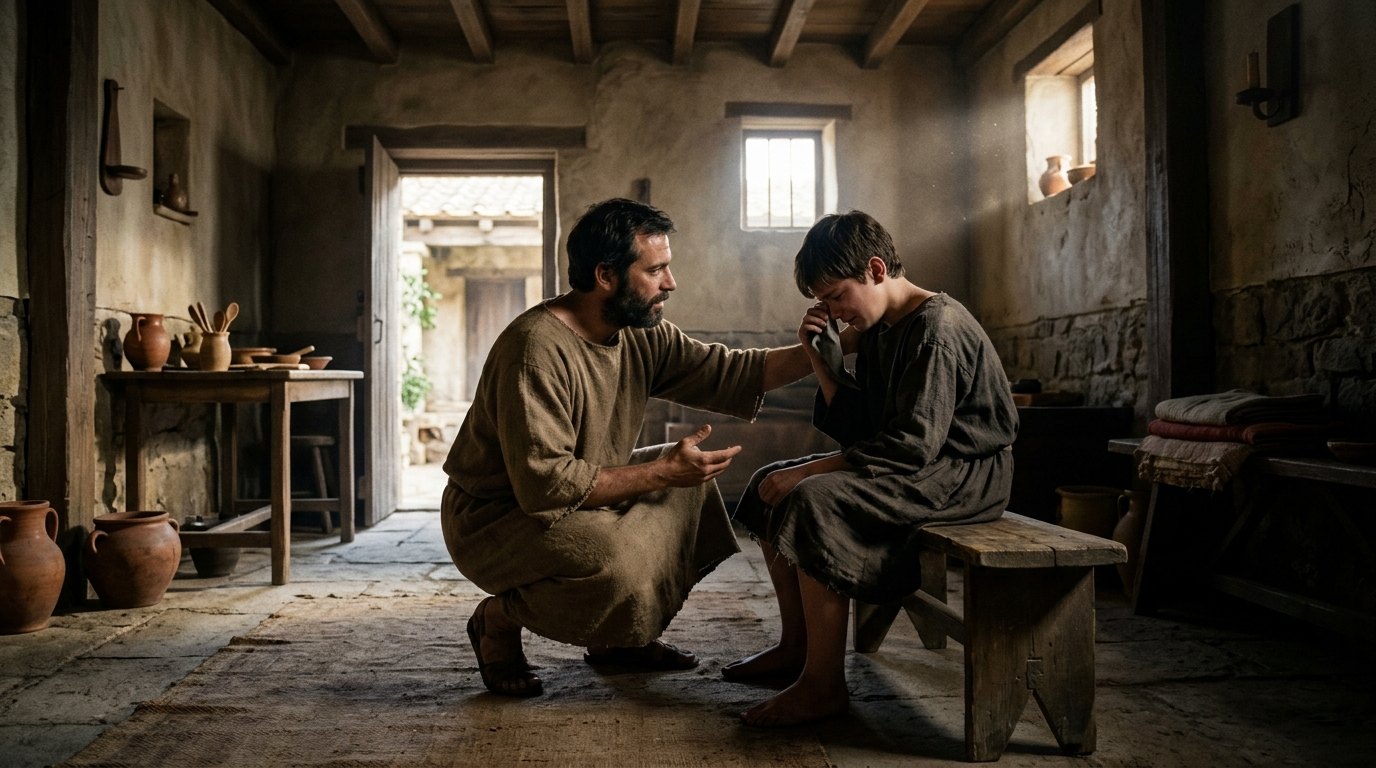
Fathers, do not exasperate your children; instead, bring them up in the training and instruction of the Lord.
Ephesians 6:4 (NIV)
Paul sets the positive duty of Christian nurture directly against the destructive danger of provoking a child to exasperation.
Ephesians 6:4 establishes the delicate balance of biblical fatherhood, commanding men not to provoke their children to wrath but to bring them up in the discipline and instruction of the Lord. The New Testament strips away the harsh authoritarianism of ancient domestic codes, placing a holy restraint upon a father’s strength. Harsh outbursts, arbitrary demands, and crushing sarcasm do not instill righteousness; they breed bitterness. Colossians 3:21 warns fathers explicitly against embittering their children, lest the young grow weary, disheartened, and lose their courage under unreasonable burdens.
Instead, Scripture calls fathers to mirror apostolic pastoral tenderness. In 1 Thessalonians 2:11-12, Paul models godly leadership on the character of a faithful father who does not tyrannize his home, but instead encourages, comforts, and earnestly implores his children. True authority in the home is neither passive surrender nor abusive domination; it is an active, sacrificial strength that creates safety, inviting children toward a life worthy of God and His kingdom.
| Passage | What it says |
|---|---|
| Ephesians 6:4 | Fathers are explicitly forbidden from provoking their children to anger and commanded to nurture them in the Lord's instruction. |
| Colossians 3:21 | Fathers are instructed not to embitter or nag their children, lest they lose heart and become discouraged. |
| 1 Thessalonians 2:11-12 | Paul compares his apostolic ministry to a father encouraging, comforting, and urging his children to walk worthily of God. |
Loving Correction
Disciplining Wisely While There Is Hope
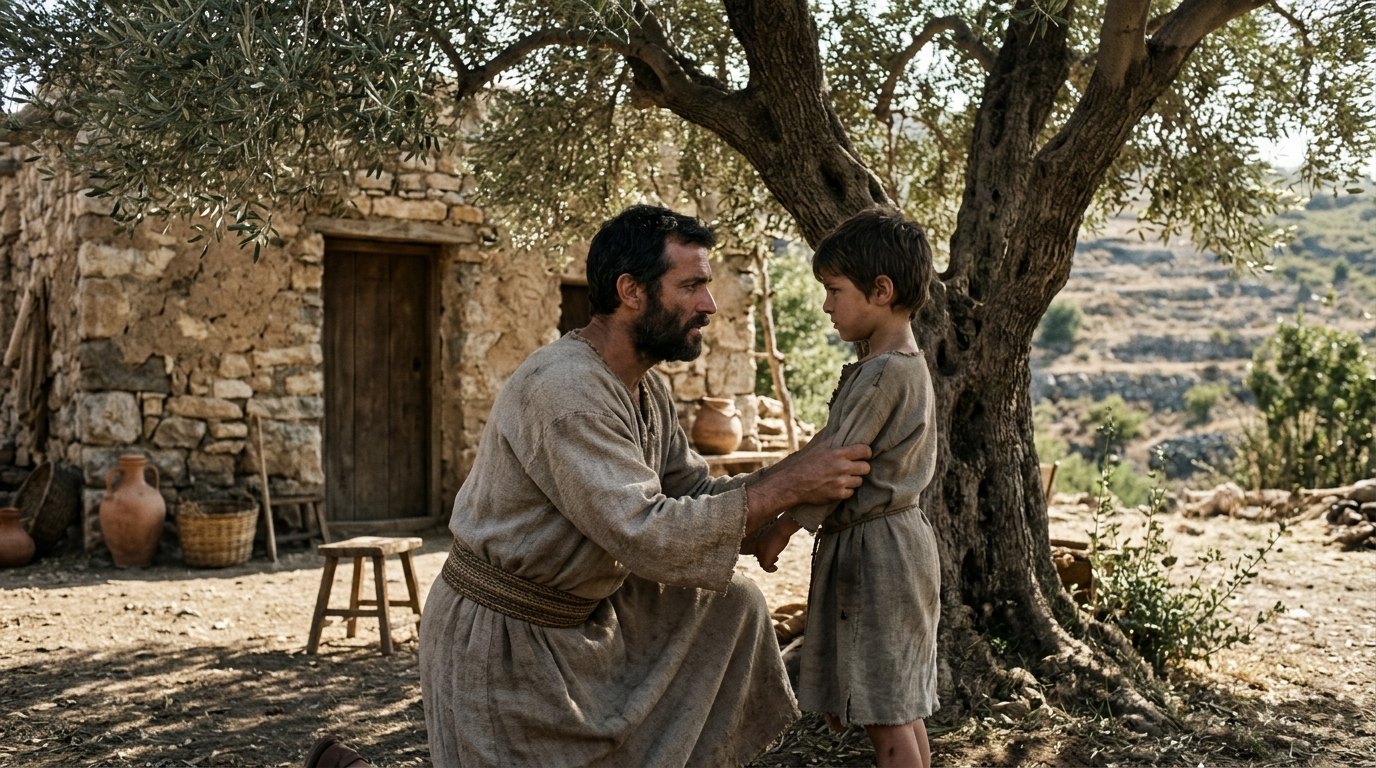
Discipline your children, for in that there is hope; do not be a willing party to their death.
Proverbs 19:18 (NIV)
This proverb underlines the urgency of early, proactive correction motivated by rescue rather than retaliation.
Proverbs 19:18 demands timely action: discipline your son while there is hope, warning that neglecting early correction is equivalent to desiring his ruin. The book of Proverbs views godly correction not as an outlet for paternal frustration, but as an act of courageous rescue. Proverbs 13:24 directly counters human sentimentality, stating that the father who spares the rod hates his son, whereas the one who loves him is diligent to chasten him early. Proverbs 23:13-14 and Proverbs 29:15 declare that reproof imparts wisdom and delivers a child's soul from death, whereas an undisciplined child left to himself eventually brings deep sorrow and public shame to his parents. Faithful discipline bears sweet fruit; Proverbs 29:17 promises that a corrected child gives his father rest and delight of heart.
This pattern reflects the heavenly Father's own redemptive love. Hebrews 12:7-11 explains that human fathers discipline their children for a brief time as seems best to them, which serves as a living shadow of God’s sanctifying chastisement, producing the peaceful fruit of righteousness in those who are trained by it. Moses recalls in Deuteronomy 8:5 that the Lord chastens His people just as a man disciplines his son, and Proverbs 3:11-12 confirms that divine reproof reveals God's delight in His children. The tragic alternative is recorded in 1 Samuel 3:13, where God executed severe judgment on Eli's priestly house because Eli knew his sons were blaspheming God, yet failed to restrain them.
| Passage | What it says |
|---|---|
| Proverbs 19:18 | Commands chastening a child while there is still hope, refusing to be a willing party to his ruin. |
| Proverbs 13:24 | Declares that withholding correction harms a child, while true parental love is diligent to discipline. |
| Proverbs 23:13-14 | Encourages faithful correction as a rescue of a youth's soul from destructive paths and death. |
| Proverbs 29:15 | Observes that a rod of discipline and reproof imparts wisdom, while an undisciplined child brings shame. |
| Proverbs 29:17 | Promises that faithful discipline produces peace of mind and personal delight for the parents. |
| Hebrews 12:7-11 | Points to human fathers disciplining their children as an earthly picture of God's loving, sanctifying discipline. |
| Deuteronomy 8:5 | God's chastening of Israel is patterned directly on a father disciplining his son. |
| Proverbs 3:11-12 | The Lord's correction reflects a loving father who delights in the son he disciplines. |
| 1 Samuel 3:13 | God judges Eli's house because he failed to restrain his sons from blasphemous wickedness. |
Godly Provision
Providing, Protecting, and Compassionate Care

As a father has compassion on his children, so the LORD has compassion on those who fear him;
Psalms 103:13 (NIV)
Scripture models an earthly father's primary posture on the compassionate, tender mercy of the Lord Himself toward those who fear Him.
Psalm 103:13 anchors paternal affection in the character of the Almighty: as a father shows compassion to his children, so the Lord shows compassion to those who fear Him. Scripture reveals that a father's presence must be marked by profound tenderness, protective strength, and reliable provision. In Proverbs 20:7, the righteous man who walks with integrity leaves behind children who are blessed after him, protected by the shelter of his upright life. This shelter is practical and tangible; 1 Timothy 5:8 warns that any man who refuses to provide for his relatives and immediate family has denied the faith and is worse than an unbeliever. Paul affirms this basic duty in 2 Corinthians 12:14, noting that children should not have to save up for their parents, but parents for their children.
Our Lord Jesus appeals directly to this common paternal instinct in Luke 11:11-13, observing that even flawed human fathers know how to give good, nourishing gifts like bread and fish to their hungry children. Beyond physical food, a godly father exercises spiritual headship over the destiny of his household. In Joshua 24:15, Joshua stands before all Israel and declares his holy resolve: as for me and my house, we will serve the Lord. Moses recalls in Deuteronomy 1:31 how God carried Israel through the barren desert just as a father carries his young son along a treacherous road. Grounded in the reverent fear of God, a father provides a stronghold and refuge for his family (Proverbs 14:26), knowing that while grandchildren are the crown of aged men, the ultimate glory and pride of children is their fathers (Proverbs 17:6).
| Passage | What it says |
|---|---|
| Psalms 103:13 | Compares the Lord's tender compassion toward those who fear Him to a father's pity on his children. |
| Proverbs 20:7 | Pronounces a blessing on the children of a righteous father who walks blamelessly in his personal integrity. |
| 1 Timothy 5:8 | States that anyone who fails to provide for his relatives and immediate household has denied the faith. |
| Luke 11:11-13 | Jesus notes that human fathers naturally desire to give good and nourishing gifts to their asking children. |
| Joshua 24:15 | Joshua takes personal headship in dedicating himself and his entire household to serve the Lord. |
| Deuteronomy 1:31 | Moses recalls how God carried Israel in the wilderness just as a father carries his son. |
| Proverbs 14:26 | The fear of the Lord provides strong confidence and a refuge for a father's children. |
| Proverbs 17:6 | Children are the crown of old men, and the glory of children is their fathers. |
| 2 Corinthians 12:14 | Paul notes the natural duty of parents to store up and provide for their children. |
Blessing and Intercession
Pronouncing Blessing and Interceding for the Generations
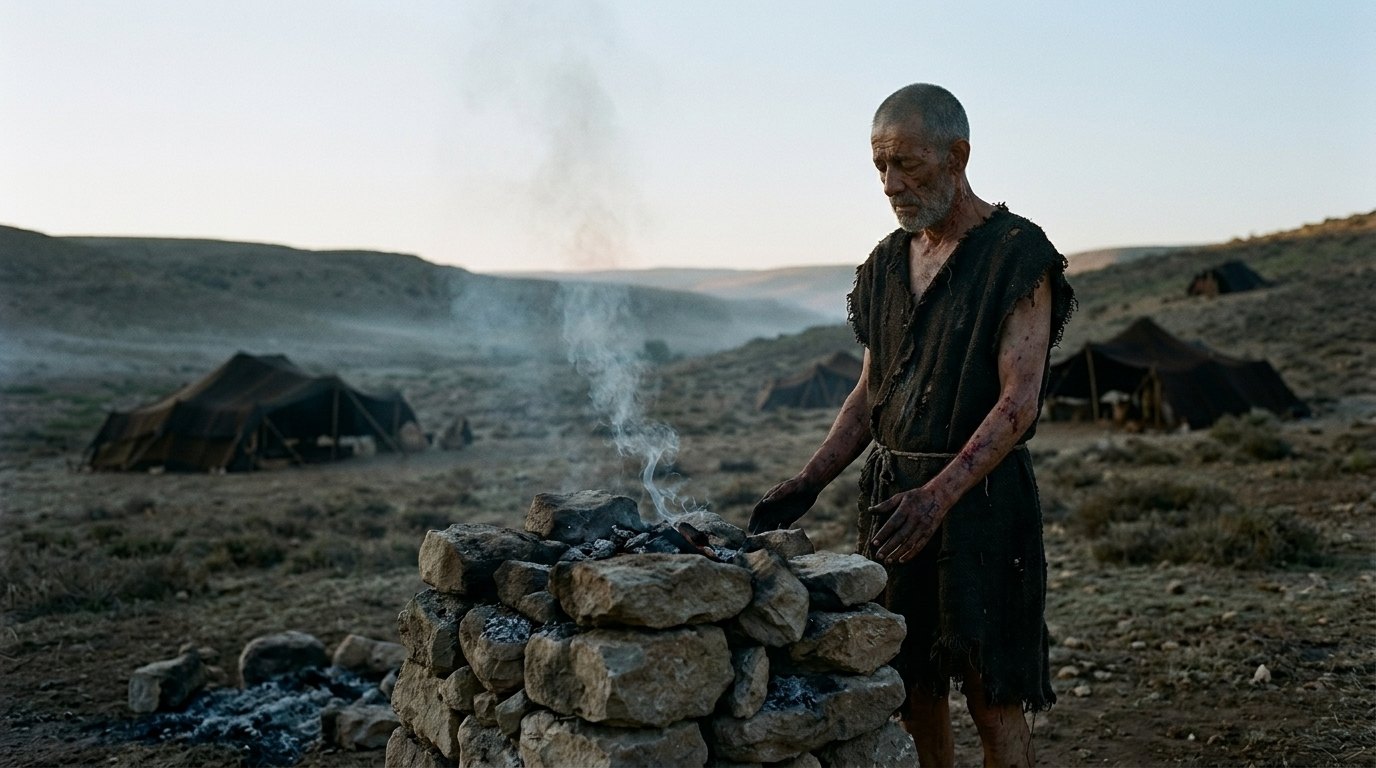
When a period of feasting had run its course, Job would make arrangements for them to be purified. Early in the morning he would sacrifice a burnt offering for each of them, thinking, “Perhaps my children have sinned and cursed God in their hearts.” This was Job’s regular custom.
Job 1:5 (NIV)
It shows a father operating as his home's vigilant spiritual intercessor, continually offering prayers for his children's purity.
In Job 1:5, Scripture provides a striking portrait of a father who acts as a vigilant priest and intercessor within his home. Rising early after his sons' days of feasting, Job offered burnt offerings according to the number of them all, actively guarding against the hidden sins of their hearts. A biblical father does not merely watch over external behavior; he carries his children before the throne of God in deliberate, daily prayer, interceding for their spiritual preservation.
This pastoral instinct also shines when patriarchal fathers spoke prophetic benedictions over the coming generations. When Isaac prepared to die, he declared words of covenant fruitfulness in Genesis 27:27-29, invoking God's abundance, sustained honor, and dominion upon his son. Decades later, Jacob called his sons to assemble around his bed in Genesis 49:1-2 to hear what would befall them in the days to come. As Genesis 49:28 summarizes, Jacob addressed each son individually, blessing each with the blessing suitable to him rather than offering generic platitudes. Toward the end of his life, King David demonstrated this same priestly affection in 1 Chronicles 29:19, begging God to grant Solomon an undivided heart to keep the divine commandments, testimonies, and statutes. A godly father exercises his role by speaking life, declaring God's promises, and consistently praying for the integrity of his descendants.
| Passage | What it says |
|---|---|
| Genesis 27:27-29 | Isaac confers covenant blessing, sustained abundance, and familial leadership upon his son. |
| Genesis 49:1-2 | Jacob gathers his twelve sons to hear his prophetic blessings and declarations before his death. |
| Genesis 49:28 | Jacob blesses each son according to the blessing suitable to him. |
| 1 Chronicles 29:19 | David prays for Solomon to have a whole heart to keep God's commands and build the temple. |
| Job 1:5 | Job regularly offers sacrifices for his children to intercede in case they sinned in their hearts. |
Household Leadership
Orderly Household Leadership and Lasting Spiritual Legacy

He must manage his own family well and see that his children obey him, and he must do so in a manner worthy of full respect. (If anyone does not know how to manage his own family, how can he take care of God’s church?)
1 Timothy 3:4-5 (NIV)
It demonstrates that faithful, dignified oversight of one's own family is God's proving ground for spiritual responsibility.
In 1 Timothy 3:4-5, the Apostle Paul reveals that a father's management of his household serves as the testing ground for spiritual leadership. A man must govern his own family with dignity, keeping his children respectful and orderly, because failure to care for one's own house disqualifies him from shepherding the broader household of God. Biblical fatherhood requires an affectionate, firm stewardship that cultivates reverence and honor in the home. Titus 1:6 reinforces this foundational standard for elders, establishing that a faithful father’s home is marked by believing children who are free from charges of reckless dissipation or rebellion.
This practical oversight is fundamentally spiritual, passed down through intentional, face-to-face instruction. As King David drew near to the grave, he gathered his young successor in 1 Kings 2:1-4 and charged him plainly: be strong, act like a man, and keep the charge of the Lord. David knew that outward authority without inward obedience would end in disaster. He deepened this counsel in 1 Chronicles 28:9-10, urging Solomon to know the God of his father intimately and serve Him with a loyal heart and willing mind, since the Lord searches every heart and understands every plan. Godly fathers lead by personal example, imparting enduring wisdom and establishing a legacy of courageous obedience that outlives their own generation.
| Passage | What it says |
|---|---|
| 1 Kings 2:1-4 | David charges his son Solomon at his death to be strong, act like a man, and obey God. |
| 1 Chronicles 28:9-10 | David counsels Solomon to know the God of his father and serve Him with an upright heart. |
| 1 Timothy 3:4-5 | A leader must manage his own household well, keeping his children submissive with all dignity. |
| Titus 1:6 | A church elder must have faithful children who are not open to the charge of insubordination. |
Where in the Bible
| Book | Passages |
|---|---|
| Genesis | 4 · Genesis 18:19, Genesis 27:27-29, Genesis 49:1-2, Genesis 49:28 |
| Deuteronomy | 6 · Deuteronomy 6:6-9, Deuteronomy 11:18-21, Deuteronomy 4:9, Deuteronomy 32:46, Deuteronomy 8:5, Deuteronomy 1:31 |
| Joshua | 1 · Joshua 24:15 |
| 1 Samuel | 1 · 1 Samuel 3:13 |
| 1 Kings | 1 · 1 Kings 2:1-4 |
| 1 Chronicles | 2 · 1 Chronicles 29:19, 1 Chronicles 28:9-10 |
| Job | 1 · Job 1:5 |
| Psalms | 2 · Psalms 78:3-7, Psalms 103:13 |
| Proverbs | 12 · Proverbs 22:6, Proverbs 1:8, Proverbs 4:1-4, Proverbs 19:18, Proverbs 13:24, Proverbs 23:13-14, Proverbs 29:15, Proverbs 29:17, Proverbs 3:11-12, Proverbs 20:7, Proverbs 14:26, Proverbs 17:6 |
| Isaiah | 1 · Isaiah 38:19 |
| Joel | 1 · Joel 1:3 |
| Luke | 1 · Luke 11:11-13 |
| 2 Corinthians | 1 · 2 Corinthians 12:14 |
| Ephesians | 1 · Ephesians 6:4 |
| Colossians | 1 · Colossians 3:21 |
| 1 Thessalonians | 1 · 1 Thessalonians 2:11-12 |
| 1 Timothy | 2 · 1 Timothy 5:8, 1 Timothy 3:4-5 |
| Titus | 1 · Titus 1:6 |
| Hebrews | 1 · Hebrews 12:7-11 |
The story in order
- Abraham called to lead his household (c. 2000 BC) · Genesis 18:19 · God chose Abraham to direct his household in God's ways.
- Jacob blesses his sons (c. 1805 BC) · Genesis 49:1-2 · Jacob gave prophetic blessings to his twelve sons.
- Moses instructs Israel on teaching children (c. 1406 BC) · Deuteronomy 6:6-9 · Fathers must diligently teach God's commands at home and on the road.
- God's chastening like a father's (c. 1406 BC) · Deuteronomy 8:5 · God's discipline of Israel is patterned on a father's discipline of his son.
- Eli's failure to restrain his sons (c. 1100 BC) · 1 Samuel 3:13 · God judged Eli for not restraining his wicked sons.
- David charges Solomon to lead (c. 970 BC) · 1 Kings 2:1-4 · David charged his son to be strong and obey God.
- Solomon teaches about instruction (c. 950 BC) · Proverbs 1:8 · A son is instructed to hear his father's instruction.
- Hezekiah's testimony of faithfulness (c. 716 BC) · Isaiah 38:19 · Living fathers make known God's faithfulness to their children.
- Joel commands recounting God's work (c. 800 BC) · Joel 1:3 · Fathers are to tell their children about God's sovereign work.
- Jesus on good gifts from fathers (c. AD 30) · Luke 11:11-13 · Human fathers desire to give good gifts to their children.
- Paul on fatherly encouragement (c. AD 51) · 1 Thessalonians 2:11-12 · Apostolic ministry is like a father encouraging his children.
- Paul on nurturing children (c. AD 60) · Ephesians 6:4 · Fathers must nurture children in the Lord's instruction, not provoke them.
- Hebrews on God's fatherly discipline (c. AD 65) · Hebrews 12:7-11 · God's discipline is like a loving father's, for our good.
Parental Instruction and God's Word
| Instruction | Purpose | Biblical Basis | Passage |
|---|---|---|---|
| Lay God's commandments on hearts | Teach them diligently at home and on the road | Deuteronomy 6:6-9 | Deuteronomy 6:6-9 |
| Teach statutes continually | Household may flourish in the land | Deuteronomy 11:18-21 | Deuteronomy 11:18-21 |
| Direct household to keep God's way | Ensure obedience to God's commands | Genesis 18:19 | Genesis 18:19 |
| Tell glorious deeds of the Lord | Next generation sets hope in God | Psalms 78:3-7 | Psalms 78:3-7 |
| Train up a child in his path | Child will not depart from it in maturity | Proverbs 22:6 | Proverbs 22:6 |
| Make God's works known | Children and grandchildren remember God | Deuteronomy 4:9 | Deuteronomy 4:9 |
| Fix hearts on God's words | Command children to observe them | Deuteronomy 32:46 | Deuteronomy 32:46 |
| Hear father's instruction | Do not forsake mother's law | Proverbs 1:8 | Proverbs 1:8 |
| Keep God's commandments | Live according to them | Proverbs 4:1-4 | Proverbs 4:1-4 |
| Make known God's faithfulness | Children experience God's enduring love | Isaiah 38:19 | Isaiah 38:19 |
Loving Correction vs. Harmful Neglect
| Action | Outcome | Biblical Basis | Passage |
|---|---|---|---|
| Chasten a child | He is corrected and saved from ruin | Proverbs 19:18 | Proverbs 19:18 |
| Withhold correction | Child is harmed and suffers | Proverbs 13:24 | Proverbs 13:24 |
| Faithful correction | Soul is rescued from destructive paths | Proverbs 23:13-14 | Proverbs 23:13-14 |
| Rod of discipline and reproof | Imparts wisdom and brings delight | Proverbs 29:15, 29:17 | Proverbs 29:15 |
| Nurture in the Lord's instruction | Children do not lose heart or become discouraged | Ephesians 6:4; Colossians 3:21 | Ephesians 6:4 |
| God's sanctifying discipline | Produces righteousness and peace | Hebrews 12:7-11 | Hebrews 12:7-11 |
God's Fatherly Care and Human Provision
| Divine Fatherhood | Human Fatherhood | Biblical Basis | Passage |
|---|---|---|---|
| Lord's tender compassion | Father's pity on his children | Psalms 103:13 | Psalms 103:13 |
| Carries His children | Carries His son in the wilderness | Deuteronomy 1:31 | Deuteronomy 1:31 |
| Gives good and nourishing gifts | Human fathers give good gifts | Luke 11:11-13 | Luke 11:11-13 |
| Provides refuge and confidence | Fear of the Lord provides refuge | Proverbs 14:26 | Proverbs 14:26 |
| Disciplines for sanctification | Disciplines to rescue from death | Hebrews 12:7-11; Proverbs 23:13-14 | Hebrews 12:7-11 |
| Blesses the righteous | Blessing on children of a righteous father | Proverbs 20:7 | Proverbs 20:7 |
| Establishes His people | Fathers manage households well | 1 Timothy 3:4-5 | 1 Timothy 3:4-5 |
| Fails to provide for household | Denied the faith | 1 Timothy 5:8 | 1 Timothy 5:8 |
Key words
- Instruction (Hebrew: musar (מוּסָר))
- Teaching and guiding children in God's ways and commands. · Proverbs 22:6
- Nurture (Greek: en paideia (ἐν παιδείᾳ))
- To bring up, educate, and train in the discipline and instruction of the Lord. · Ephesians 6:4
- Correction (Hebrew: yasar (יָסַר))
- Discipline or chastening intended to guide and save from ruin. · Proverbs 19:18
- Stewardship (Greek: oikonomia (οἰκονομία))
- Responsibility to manage or care for something entrusted to one by God. · 1 Timothy 3:4-5
- Legacy (Hebrew: zikaron (זִכָּרוֹן))
- Spiritual heritage passed down through generations by godly example and teaching. · Deuteronomy 4:9
- Compassion (Hebrew: raḥam (רַחַם))
- Tender mercy and pity, like a father's heart towards his children. · Psalms 103:13
God entrusts fathers with the high calling of representing His own heavenly care, guidance, and righteous discipline to their children. When fathers trade anger and passivity for patient instruction and holy example, their homes become sanctuaries of grace. Trusting the Lord for strength, a faithful father leaves an enduring legacy of peace, righteousness, and eternal hope.
41 passages, each cited once.
Scripture cited
- Ephesians 6:4
- Colossians 3:21
- Proverbs 22:6
- Proverbs 29:15
- Proverbs 19:18
- Deuteronomy 6:7
- Proverbs 29:17