What does the Bible say about a husband loving his wife?
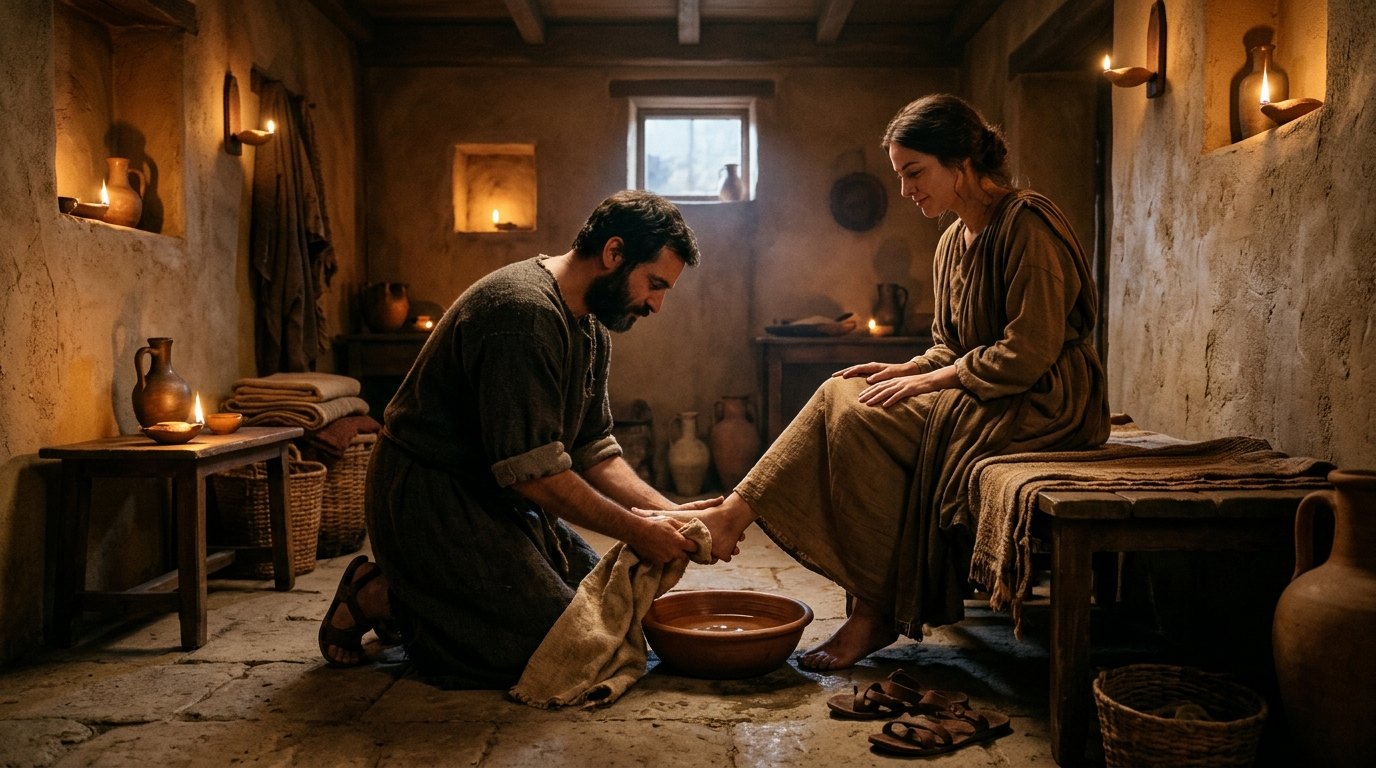
Ephesians 5:25-33
25 Husbands, love your wives, just as Christ loved the church and gave himself up for her
26 to make her holy, cleansing her by the washing with water through the word,
27 and to present her to himself as a radiant church, without stain or wrinkle or any other blemish, but holy and blameless.
28 In this same way, husbands ought to love their wives as their own bodies. He who loves his wife loves himself.
29 After all, no one ever hated their own body, but they feed and care for their body, just as Christ does the church—
30 for we are members of his body.
31 “For this reason a man will leave his father and mother and be united to his wife, and the two will become one flesh.”
32 This is a profound mystery—but I am talking about Christ and the church.
33 However, each one of you also must love his wife as he loves himself, and the wife must respect her husband.
New International Version (NIV)
The answer
A husband is to love his wife as Christ loved the church: sacrificially, deeply, and in a way that helps her become holy. The Bible does not describe marriage as a partnership of two self-focused people, but as a relationship where the husband takes responsibility for his wife’s flourishing and spiritual growth.
What husband’s love looks like
- Christlike and sacrificial: “Husbands, love your wives, even as Christ also loved the assembly and gave himself up for her” (Ephesians 5:25). Christ’s love was willing self-giving, not convenience or selfishness.
- Deep and nurturing: A husband should love his wife “as his own bodies” and nourish and cherish her, “even as the Lord also does the assembly” (Ephesians 5:28-29). The wife is not treated as an object or servant, but as someone to be cared for.
- Rooted in covenant: The passage connects this love with the husband leaving father and mother, cleaving to his wife, and the two becoming one flesh (Ephesians 5:31; Genesis 2:24).
- Practical and protective: 1 Peter 3:7 calls husbands to live with their wives according to knowledge, give them honor, and recognize them as “heirs together of the grace of life,” so that their prayers are not hindered.
- Free from bitterness: “Husbands, love your wives, and be not bitter against them” (Colossians 3:19). Love is not a warm feeling alone; it rules out harshness, resentment, and controlling harshness.
The wife’s response
Ephesians 5:33 also says that the wife is to respect her husband. This is given within the passage as a reciprocal calling: the husband’s sacrificial love and the wife’s respect belong together.
In short, the Bible’s standard for a husband is not simply to feel affection, but to love covenantally—sacrificially, tenderly, respectfully, and in a way that serves his wife’s holiness. No husband can do this perfectly; Christ is the model, and his Spirit enables believers to love this way (Ephesians 5:25-33).
Answered from Scripture · reviewed November 10, 2026
Scripture commands a husband to love his wife with the very love Jesus Christ poured out on the church: sacrificial, purifying, and enduring. Far from granting license for self-indulgence or tyranny, God calls a husband to take joyful responsibility for his wife's flourishing and holiness. Understanding this divine design reveals marriage not merely as a social contract, but as a living reflection of the gospel itself.
The Christlike Pattern
Husbands Are Called to Love Sacrificially Like Christ

Husbands, love your wives, just as Christ loved the church and gave himself up for her
Ephesians 5:25 (NIV)
It establishes Christ's self-giving sacrifice on the cross as the definitive standard and measure for a husband's love.
The standard Scripture establishes for marital love surpasses human romanticism, anchoring the husband's calling directly in the gospel. In Ephesians 5:25, Paul commands: "Husbands, love your wives, as Christ loved the church and gave himself up for her." The benchmark is not cultural custom or personal feeling, but Christ's total self-giving sacrifice on the cross. This calling echoes Ephesians 5:2, where believers are exhorted to "walk in love, as Christ loved us and gave himself up for us, a fragrant offering and sacrifice to God."
Such love is active and sanctifying. Christ gave Himself up for the church "that he might sanctify her, having cleansed her by the washing of water with the word" (Ephesians 5:26). His ultimate purpose is redemptive beauty and holiness: "so that he might present the church to himself in splendor, without spot or wrinkle or any such thing, that she might be holy and without blemish" (Ephesians 5:27). A husband is therefore summoned to labor patiently for his wife’s spiritual well-being, protecting her soul, encouraging her growth in grace, and covering her in prayer.
This demands the deliberate laying down of pride. In John 15:13, Jesus declared, "Greater love has no one than this, that someone lay down his life for his friends." Far from establishing an autocratic privilege, biblical headship models the servant posture of Jesus described in Philippians 2:3-5, where Paul urges believers in humility to "count others more significant than yourselves" and look to the interests of others. A husband loves rightly only when his desires are continually surrendered to serve, protect, and build up his wife.
| Passage | What it says |
|---|---|
| Ephesians 5:2 | Commands believers to walk in love just as Christ gave Himself as an offering and fragrant sacrifice to God. |
| Ephesians 5:25 | Directs husbands to love their wives precisely as Christ loved the church and gave Himself up for her. |
| Ephesians 5:26 | States Christ gave Himself to sanctify and cleanse the church by the washing of water with the word. |
| Ephesians 5:27 | Describes Christ's ultimate goal to present the church to Himself holy, glorious, and without spot or wrinkle. |
| John 15:13 | Jesus defines the greatest love as laying down one's life for one's friends, establishing the supreme standard of self-giving love. |
| Philippians 2:3-5 | Paul exhorts believers to humble selflessness, counting others more significant than themselves in imitation of Christ's mind. |
One-Flesh Care
A Husband Nourishes and Cherishes His Wife as His Own Body

After all, no one ever hated their own body, but they feed and care for their body, just as Christ does the church—
Ephesians 5:29 (NIV)
It shows that marital love is expressed through tender, continuous physical and emotional nourishment, mirroring Christ's care for His church.
Scripture grounds marital care in the foundational reality of the one-flesh union. In Ephesians 5:29, Paul writes: "For no one ever hated his own flesh, but nourishes and cherishes it, just as Christ does the church." The terms Paul selects—nourishing and cherishing—convey tender, warm, and attentive daily physical and emotional care. Just as a person naturally tends to the needs of his own body, a husband must look after his wife's needs as inseparable from his own.
This principle traces directly to Creation. In Genesis 2:23, Adam proclaimed of Eve, "This at last is bone of my bones and flesh of my flesh," followed by the foundational law of marriage in Genesis 2:24: "Therefore a man shall leave his father and his mother and hold fast to his wife, and they shall become one flesh." Paul points back to this truth in Ephesians 5:28, noting that "he who loves his wife loves himself," and reminds believers in Ephesians 5:30-31 that we are members of Christ's body before citing Genesis once more.
Paul reveals the grand purpose behind this union in Ephesians 5:32: "This mystery is profound, and I am saying that it refers to Christ and the church." Earthly marriage was designed from the beginning as a living portrait of the Savior's eternal devotion to His bride. Consequently, this covenant reshapes daily rights and desires. In 1 Corinthians 7:3-4, Paul teaches that husband and wife yield authority over their own bodies to one another in mutual affection, while 1 Corinthians 7:33 observes that the married man rightly dedicates practical energy to "how to please his wife."
| Passage | What it says |
|---|---|
| Genesis 2:24 | Establishes that a man shall leave his parents, hold fast to his wife, and become one flesh. |
| Ephesians 5:28 | Instructs husbands to love their wives as their own bodies, noting that loving one's wife is loving oneself. |
| Ephesians 5:29 | Affirms that no one ever hated his own flesh, but nourishes and cherishes it as Christ does the church. |
| Ephesians 5:30 | Explains that believers are living members of Christ's body, of His flesh and of His bones. |
| Ephesians 5:31 | Reiterates Genesis 2:24 regarding leaving father and mother to be joined as one flesh. |
| Ephesians 5:32 | Identifies the one-flesh union of marriage as a profound mystery pointing directly to Christ and the church. |
| Genesis 2:23 | Adam rejoices over his wife as bone of his bones and flesh of his flesh, marking primal identification and affection. |
| 1 Corinthians 7:3-4 | A husband does not have exclusive authority over his own body but yields mutual marital affection and care to his wife. |
| 1 Corinthians 7:33 | The married man is concerned with worldly affairs and how to please his wife, acknowledging marital devotion. |
Daily Conduct and Honor
Honor, Understanding, and Gentleness Govern the Husband's Heart

Husbands, in the same way be considerate as you live with your wives, and treat them with respect as the weaker partner and as heirs with you of the gracious gift of life, so that nothing will hinder your prayers.
1 Peter 3:7 (NIV)
It warns husbands that failing to honor and understand their wives will actively hinder their personal prayer life before God.
Biblical love must be lived out in the ordinary texture of daily interaction. The apostle Peter delivers a striking imperative in 1 Peter 3:7: "Likewise, husbands, live with your wives in an understanding way, showing honor to the woman as the weaker vessel, since they are heirs with you of the grace of life, so that your prayers may not be hindered." To live considerately requires a husband to study his wife with patient discernment and honor her as a co-heir of eternal life. Peter’s warning is sobering: a husband who mistreats or ignores his wife will find his communion with God disrupted at the throne of grace.
Gentleness must govern every tone and action. In Colossians 3:19, Paul instructs: "Husbands, love your wives, and do not be harsh with them." The Greek term forbids embittered speech, simmering resentment, or domestic severity. Authority in Christ’s kingdom is never exercised through intimidation, anger, or cold indifference, but through the enduring sweetness of grace.
Paul summarizes this divine balance in Ephesians 5:33: "However, let each one of you love his wife as himself, and let the wife see that she respects her husband." The standard that governs the husband’s attitude is unveiled in 1 Corinthians 13:4-7: love is patient, kind, not envious or boastful, not irritable, and keeps no record of wrongs. When a husband cultivates this forbearing spirit, he creates an atmosphere where his wife can feel secure, honored, and deeply cherished.
| Passage | What it says |
|---|---|
| Colossians 3:19 | Exhorts husbands to love their wives unconditionally and expressly forbids being harsh or bitter toward them. |
| 1 Peter 3:7 | Commands husbands to live considerately with their wives, giving them honor as fellow heirs of grace so prayers remain unhindered. |
| Ephesians 5:33 | Summarizes the mutual calling for every husband to love his wife as himself and the wife to respect her husband. |
| 1 Corinthians 13:4-7 | Paul outlines love as patient, kind, not irritable or resentful, providing the definitive pattern for loving a spouse. |
Delight and Praise
Joy, Delight, and Lifelong Devotion Bless the Marriage

May your fountain be blessed, and may you rejoice in the wife of your youth. A loving doe, a graceful deer— may her breasts satisfy you always, may you ever be intoxicated with her love.
Proverbs 5:18-19 (NIV)
Scripture explicitly commands the husband to find lifelong delight, satisfaction, and romantic joy in his wife.
God’s design for marriage is not a grim assignment of duty, but a fountain of profound affection, romantic delight, and lifelong joy. In Proverbs 5:18-19, wisdom counsels the husband: "Let your fountain be blessed, and rejoice in the wife of your youth... be intoxicated always in her love." The text explicitly commands exuberant, captivated, and exclusive marital fascination, directing the husband’s romantic passion entirely toward the bride God has granted him.
Scripture portrays a godly wife as a precious gift of divine grace. Proverbs 18:22 states, "He who finds a wife finds a good thing and obtains favor from the Lord." Far from treating marriage as a mundane burden, the husband who embraces God’s wisdom recognizes his wife as evidence of the Lord’s generous kindness toward him. In Ecclesiastes 9:9, the preacher commands, "Enjoy life with the wife whom you love, all the days of your vain life that he has given you under the sun."
This joy naturally overflows into vocal, unashamed praise. In Proverbs 31:28-29, the husband of the virtuous woman "rises up and praises her: 'Many women have done excellently, but you surpass them all.'" He does not keep admiration silent; he honors her before their family and community. This celebratory devotion mirrors the lover’s pure acclaim in Song of Solomon 4:7: "You are altogether beautiful, my love; there is no flaw in you." Through lifelong fidelity and heartfelt praise, the husband reflects God's unfailing gladness over His people.
| Passage | What it says |
|---|---|
| Proverbs 5:18-19 | The husband is commanded to rejoice in the wife of his youth and be continually intoxicated by her love. |
| Proverbs 18:22 | He who finds a wife finds a good thing and obtains favor from the Lord. |
| Proverbs 31:28-29 | A god-fearing husband rises up and praises his wife, declaring her excellence above all others. |
| Ecclesiastes 9:9 | The husband is instructed to enjoy life with the wife whom he loves through all his fleeting days. |
| Song of Solomon 4:7 | The bridegroom affirms his bride's beauty and worth, declaring there is no flaw in her. |
Covenant Fidelity
A Husband Guarantees Covenant Faithfulness and Protection

You ask, “Why?” It is because the LORD is the witness between you and the wife of your youth. You have been unfaithful to her, though she is your partner, the wife of your marriage covenant.
Malachi 2:14 (NIV)
God declares himself the witness between a husband and his wife, binding the man to unbreakable covenant loyalty.
In Malachi 2:14, the prophet delivers a sobering word to men who wondered why God turned away from their offerings: the Lord himself stood as the witness between a husband and the wife of his youth. Marriage is never a private contract that two people may renegotiate or abandon when affection cools. God stands at the altar as the solemn guarantor of the pledge, making treacherous dealing toward a spouse an offense directly against heaven. As Malachi 2:14–16 continues, the Lord confronts the men of Israel for covering their garments with violence and discarding their wives through casual divorce. God explicitly declares that he hates divorce because it ruptures the very oneness he designed to produce godly offspring. A husband’s love is therefore measured first by fierce, unwavering faithfulness; he guards his spirit so that he does not deal treacherously with the companion bound to him by covenant.
This call to absolute fidelity carries directly into the New Testament. In Hebrews 13:4, the author commands that marriage be held in honor among all, and that the marriage bed remain entirely undefiled, warning that God will judge the sexually immoral and adulterous. A husband who loves his wife protects the sacred sanctuary of their union. He refuses to allow wandering eyes, wandering affections, or secret betrayals to erode the trust placed in his keeping. True marital love is a fortress: it rejects cultural excuses for unfaithfulness, honors the vows spoken before God, and actively shields the wife’s dignity, security, and peace of heart under the safe shelter of an enduring, lifelong commitment.
| Passage | What it says |
|---|---|
| Malachi 2:14-16 | The Lord warns husbands against faithlessness toward the wife of their youth, condemning treachery and divorce. |
| Hebrews 13:4 | The marriage bed is to be held in honor by all and kept undefiled, binding husbands to steadfast fidelity. |
Where in the Bible
| Book | Passages |
|---|---|
| Genesis | 2 · Genesis 2:24, Genesis 2:23 |
| Proverbs | 3 · Proverbs 5:18-19, Proverbs 18:22, Proverbs 31:28-29 |
| Ecclesiastes | 1 · Ecclesiastes 9:9 |
| Song of Solomon | 1 · Song of Solomon 4:7 |
| Malachi | 1 · Malachi 2:14-16 |
| John | 1 · John 15:13 |
| 1 Corinthians | 3 · 1 Corinthians 7:3-4, 1 Corinthians 7:33, 1 Corinthians 13:4-7 |
| Ephesians | 10 · Ephesians 5:2, Ephesians 5:25, Ephesians 5:26, Ephesians 5:27, Ephesians 5:28, Ephesians 5:29, Ephesians 5:30, Ephesians 5:31, Ephesians 5:32, Ephesians 5:33 |
| Philippians | 1 · Philippians 2:3-5 |
| Colossians | 1 · Colossians 3:19 |
| Hebrews | 1 · Hebrews 13:4 |
| 1 Peter | 1 · 1 Peter 3:7 |
The story in order
- Creation of Woman (c. 4000 BC) · Genesis 2:23 · Adam's immediate identification and affection for Eve sets the pattern for marital connection.
- The One-Flesh Union (c. 4000 BC) · Genesis 2:24 · Establishes marriage as a profound union where a man leaves all others to cleave to his wife.
- Israel's Covenant Faithlessness (c. 450 BC) · Malachi 2:14-16 · God warns against treachery and divorce, condemning husbands who are unfaithful to their wives.
- Jesus Defines Supreme Love (c. AD 30) · John 15:13 · Jesus sets the ultimate standard of love: laying down one's life for friends.
- Christ's Self-Sacrificing Love (c. AD 60) · Ephesians 5:25 · Husbands are called to love their wives as Christ loved the church and gave Himself for her.
- The Mystery of Marriage (c. AD 60) · Ephesians 5:32 · The one-flesh union of marriage is a profound mystery pointing to Christ and the church.
- Mutual Marital Devotion (c. AD 55) · 1 Corinthians 7:3-4 · A husband's body is not his own but subject to his wife's needs and affections.
- Honoring the Marriage Bed (c. AD 65) · Hebrews 13:4 · Marriage is honorable and the marriage bed undefiled, demanding fidelity from husbands.
- Gentle and Considerate Conduct (c. AD 60) · 1 Peter 3:7 · Husbands must live considerately with their wives, giving them honor as co-heirs.
Christ's Love for the Church as a Pattern for Husbands
| Christ's Action | Husband's Calling | Purpose/Result | Passage |
|---|---|---|---|
| Gave Himself as an offering and sacrifice | Love your wives sacrificially | Reflect Christ's love | Ephesians 5:2 |
| Loved the church and gave Himself up for her | Love your wives as Christ loved the church | Demonstrate Christ's self-giving love | Ephesians 5:25 |
| Sanctified and cleansed her by the word | Sanctify and cleanse her | Present her holy and glorious | Ephesians 5:26-27 |
| Nourishes and cherishes His body | Nourish and cherish your wife as your own body | Reflect the one-flesh union | Ephesians 5:28-29 |
The Husband's Devotion: From Identification to Delight
| Biblical Basis | Husband's Response | Outcome | Passage |
|---|---|---|---|
| Adam rejoices over Eve: bone of my bones, flesh of my flesh | Identify with her as part of himself | Primal affection and connection | Genesis 2:23 |
| Man shall leave parents, hold fast to wife, become one flesh | Hold fast and become one flesh | Intimate union and devotion | |
| Love your wife as your own body | Nourish and cherish her | Mutual care and self-love reflected | Ephesians 5:28-29 |
| Rejoice in the wife of your youth | Be continually intoxicated by her love | Joyful and passionate marriage | Proverbs 5:18-19 |
| He who finds a wife finds a good thing | Recognize her as a gift from the Lord | Divine favor and blessing | Proverbs 18:22 |
| Enjoy life with the wife you love | Find delight and enjoyment in her | Lifelong happiness and fulfillment | Ecclesiastes 9:9 |
Love Defined: The Character of Christlike Affection
| Attribute | Description | Application for Husband | Passage |
|---|---|---|---|
| Patient | Slow to anger, enduring hardship | Be patient with your wife | 1 Corinthians 13:4 |
| Kind | Benevolent, gracious, helpful | Act kindly and helpfully towards her | 1 Corinthians 13:4 |
| Not irritable or resentful | Does not easily become angry or hold grudges | Avoid harshness and bitterness | |
| Honoring | Giving respect and high regard | Give her honor as a co-heir | 1 Peter 3:7 |
| Self-sacrificing | Puts others' needs before one's own | Love her as yourself, even as Christ did |
Key words
- Love (agape, ἀγάπη)
- Self-giving, sacrificial, patient, kind, and enduring affection, mirroring Christ's love for the church. · Ephesians 5:25
- One Flesh (basar echad, בָּשָׂר אֶחָד)
- The profound marital union where husband and wife become a single entity, reflecting Christ and the church. · Genesis 2:24
- Sanctify (hagiazo, ἁγιάζω)
- To set apart for God's purposes, making holy through Christ's work and the Word. · Ephesians 5:26
- Cherish (ektrepho, ἐκτρέφω)
- To nourish, protect, and care for tenderly, as Christ does the church. · Ephesians 5:29
- Honor (timē, τιμή)
- To give high regard, respect, and value, especially to one's wife as a fellow heir. · 1 Peter 3:7
- Fidelity (malach, מָלַח (faithlessness))
- Unwavering loyalty and faithfulness within the marriage covenant, keeping the marriage bed undefiled.
Loving a wife by the biblical pattern is impossible in human strength alone, yet the Holy Spirit equips Christian husbands to walk in this high calling. When a husband gives himself up in tender, sacrificial care, he displays the beauty of Christ's covenant faithfulness to a watching world.
26 passages, each cited once.
Scripture cited
- Ephesians 5:25-33
- 1 Peter 3:7
- Colossians 3:19
- Genesis 2:24
- Ephesians 5:33