What does the Bible say about budgeting?
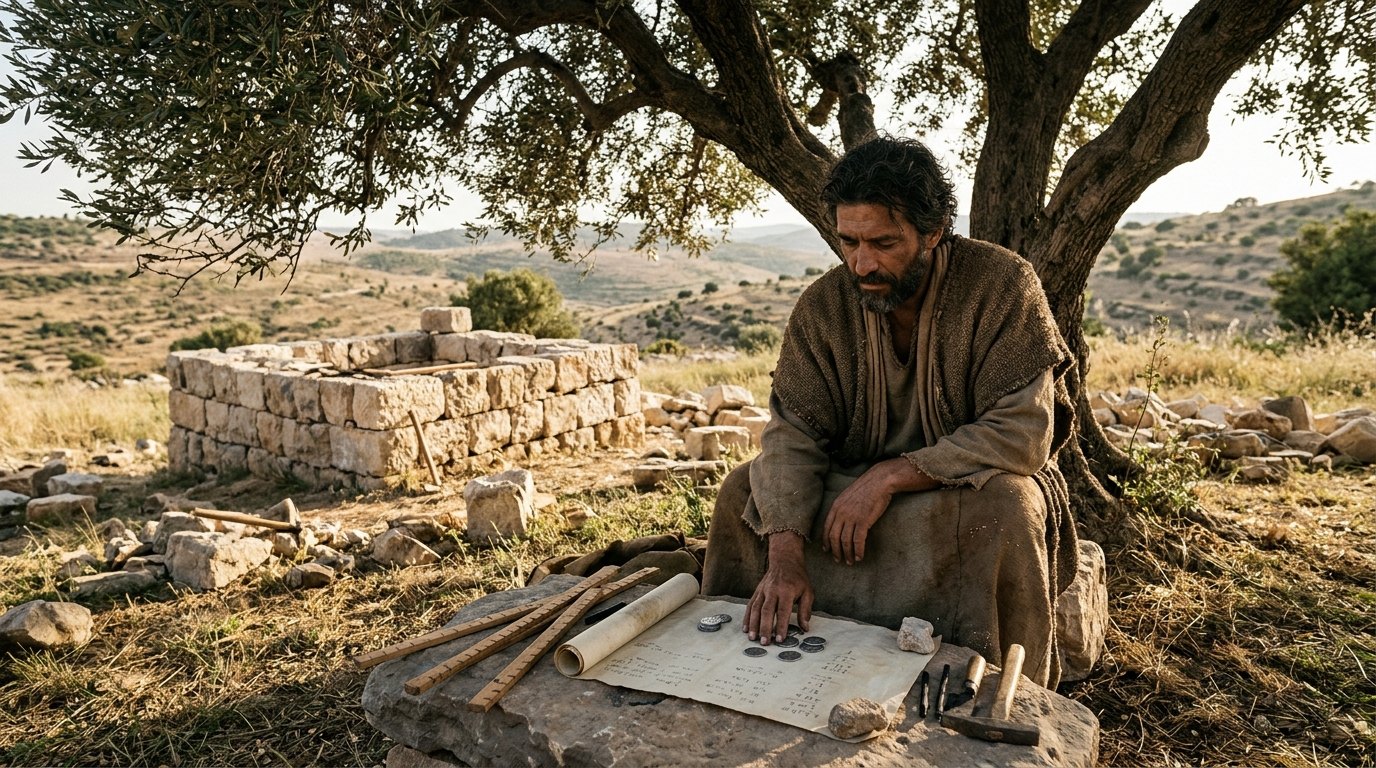
Luke 14:28-30
28 “Suppose one of you wants to build a tower. Won’t you first sit down and estimate the cost to see if you have enough money to complete it?
29 For if you lay the foundation and are not able to finish it, everyone who sees it will ridicule you,
30 saying, ‘This person began to build and wasn’t able to finish.’
New International Version (NIV)
The answer
The Bible treats budgeting as prudent planning for faithful stewardship, not as a means of hoarding. Jesus says to count the cost before committing to a major undertaking, so that one does not begin something and leave it unfinished (Luke 14:28-30). The same principle applies to personal and household finances: understand what you can responsibly manage before making commitments.
Scripture also teaches that money is entrusted by God rather than owned as a right. Christians should earn honestly, give generously, save prudently, avoid unnecessary debt, and live contentedly. Proverbs 24:27 counsels, “Prepare thy work without, and make it fit for thyself in the field; and afterwards build thine house,” while Proverbs 22:7 warns, “The borrower is servant to the lender.” Paul tells believers that “godliness with contentment is great wealth” (1 Timothy 6:6-7).
A biblical budget therefore has several purposes:
- Planning: Count the cost before committing (Luke 14:28).
- Stewardship: Manage what God has entrusted to you as faithfully as possible (Matthew 25:14-30).
- Generosity: Give as God has promised, especially to those in need (Matthew 25:31-40; 2 Corinthians 9:7).
- Contentment: Do not let greed make security and accumulation into gods (Ecclesiastes 5:10; 1 Timothy 6:6-10).
- Resilience: Prepare for hardship and avoid being crushed by uncontrolled debt (Proverbs 22:7).
The parable in Luke 14:28-33 also carries a spiritual warning: partial discipleship is inadequate. After describing the danger of beginning a tower without enough resources to finish, Jesus says that anyone who does not forsake all he has cannot be His disciple (Luke 14:33). In its context, this concerns wholehearted commitment to Christ; applied to budgeting, it warns that financial plans must reflect genuine obedience rather than merely securing personal comfort.
In practical terms, make a budget, give as God has instructed, pay necessary debts, save for future needs, provide responsibly for others, and remain content rather than making money the measure of faithfulness. The amount itself is not the whole answer: Jesus says that even where the Son of Man has no place to lay His head, the decisive question is allegiance to Him (Matthew 8:20; Luke 14:26-27).
Answered from Scripture · reviewed November 11, 2026
Scripture presents budgeting not as an anxious exercise in hoarding wealth, but as an essential practice of godly stewardship, foresight, and self-control. By ordering resources carefully, believers honor God as the true owner of all things, guard against ruinous debt, and free themselves to give generously. From the wisdom literature to the teachings of Jesus, God calls His people to count the cost and manage what is entrusted to them with purposeful integrity.
Prudent Calculation
Counting the Cost Before We Build
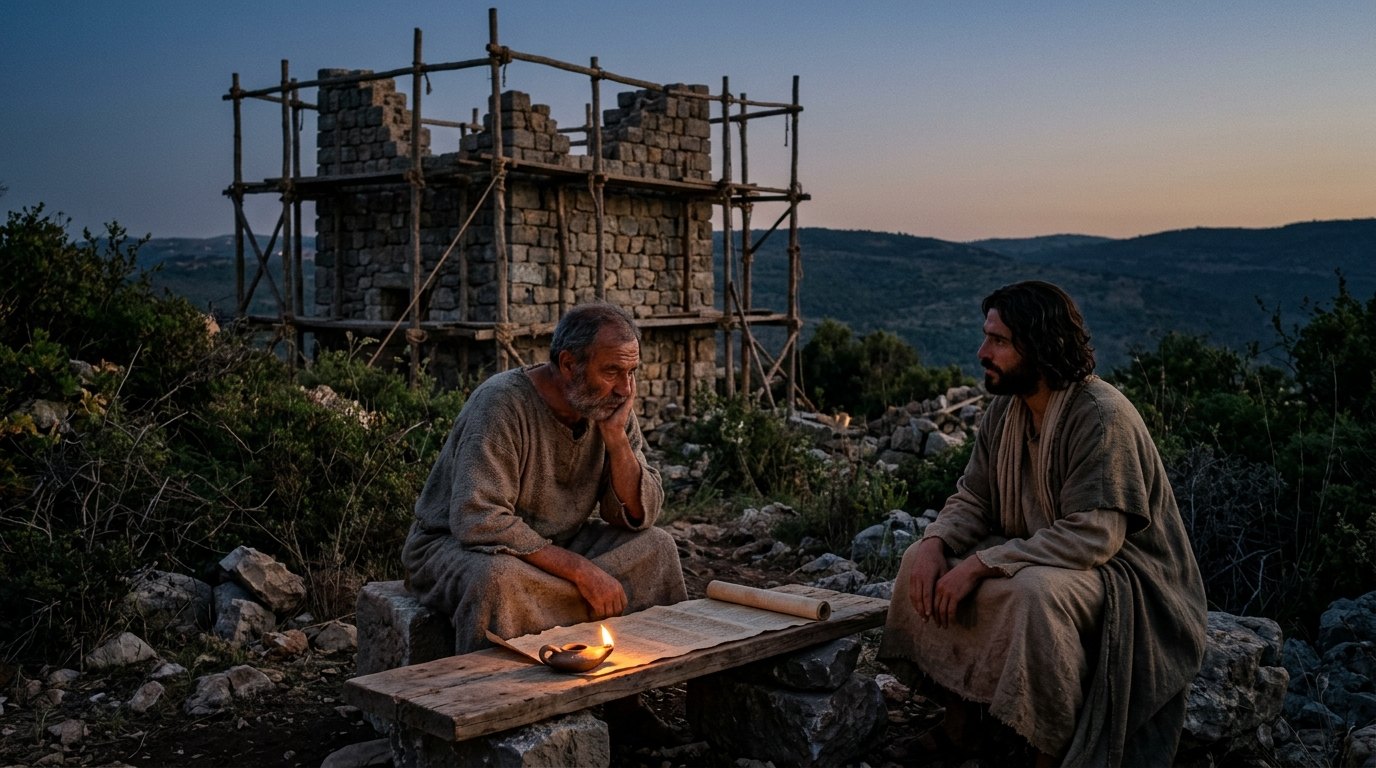
“Suppose one of you wants to build a tower. Won’t you first sit down and estimate the cost to see if you have enough money to complete it?
Luke 14:28 (NIV)
Jesus identifies deliberate forethought and financial assessment as basic wisdom to avoid failure and shame.
In Luke 14:28, the Lord Jesus asks, "For which of you, intending to build a tower, does not sit down first and count the cost, whether he has enough to finish it?" Far from treating financial calculation as worldly distraction, Christ uses it as an obvious, baseline standard of human prudence. To lay a foundation without calculating the means to complete the structure invites visible ruin and public mockery (Luke 14:29-30). In the same breath, He points to a king who must sit down deliberately to deliberate whether ten thousand troops can withstand an approaching army of twenty thousand (Luke 14:31). Prudence requires that a person honestly assess their resources before making commitments.
This principle of ordered sequencing permeates the wisdom literature. Solomon instructs in Proverbs 24:27, "Prepare your outside work, make it fit for yourself in the field; and afterward build your house." Productive labor and reliable income must precede consumption and long-term construction. A sound budget enforces this divine order: it obliges a household to establish productive stability before spending on comforts or expanding possessions.
Yet Scripture never allows planning to degenerate into self-sufficient presumption. Believers are called to commit their works to the Lord so that their thoughts will be established (Proverbs 16:3). While a man's heart plans his course, it is the Lord who establishes his steps (Proverbs 16:9). A biblical budget is therefore an act of prayerful obedience, acknowledging God's sovereign direction while faithfully counting the cost every step of the way.
| Passage | What it says |
|---|---|
| Luke 14:28 | Jesus asks who begins building a tower without first sitting down to calculate the expenses and ensure completion. |
| Luke 14:29 | Laying a foundation without the means to finish invites open mockery from onlookers. |
| Luke 14:30 | Observers ridicule the builder who began an undertaking without having sufficient resources to complete the work. |
| Luke 14:31 | A king considering war sits down first to evaluate whether his army can withstand his opponent. |
| Proverbs 24:27 | Wisdom instructs one to complete field preparations and establish income before constructing a household. |
| Proverbs 16:3 | Committing one's works and plans to the Lord so that thoughts and preparations are established. |
| Proverbs 16:9 | A person plans their way in the heart, while the Lord directs their steps. |
Diligence and Order
Orderly Planning Produces Abundance
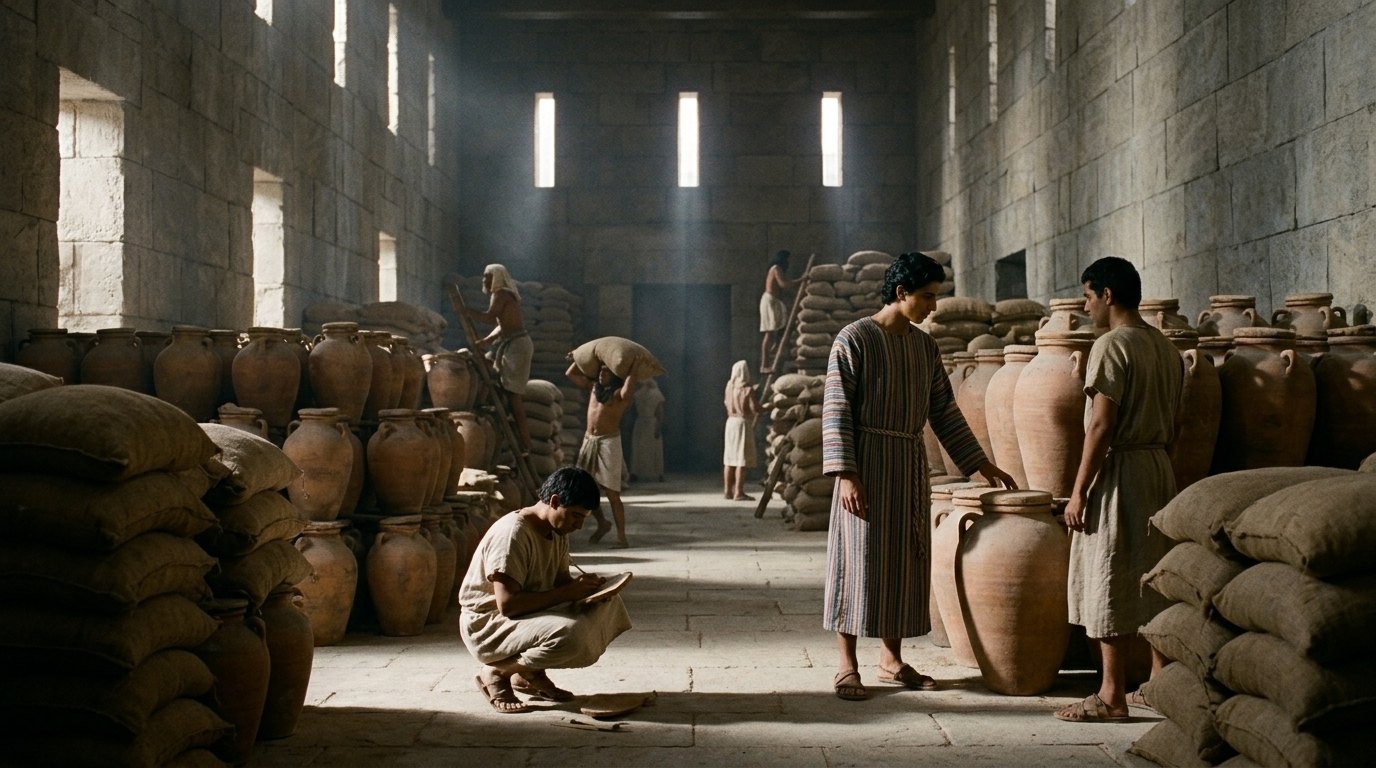
The plans of the diligent lead to profit as surely as haste leads to poverty.
Proverbs 21:5 (NIV)
Scripture explicitly links methodical planning with plenty, while contrasting it with reckless haste that leads to poverty.
Proverbs 21:5 states plainly: "The plans of the diligent lead surely to abundance, but everyone who is hasty comes only to poverty." God establishes a moral connection between deliberate order and material stability. Wealth is not gathered by impulsive shortcuts or anxious scrambling, but by steady discipline. Proverbs 13:11 reinforces this: wealth gained hastily will dwindle, but whoever gathers little by little will increase it. Conversely, a fool devours everything he acquires, leaving nothing in reserve (Proverbs 21:20).
God calls His people to constant, attentive awareness of their material affairs. In Proverbs 27:23, Scripture commands, "Be diligent to know the state of your flocks, and attend to your herds." Because earthly riches do not endure forever (Proverbs 27:24), passive ignorance in financial management brings ruin. A working budget is simply the modern equivalent of knowing the condition of one's flocks—tracking every asset and expenditure so nothing drifts away unawares.
The animal kingdom confirms this duty. Solomon points the sluggard to the tiny ant, which has no overseer, guide, or ruler, yet prepares its bread in summer and gathers its food in harvest (Proverbs 6:6-8). When God revealed coming famine to Pharaoh, Joseph implemented this exact wisdom: he taxed and stored one-fifth of the harvest across seven years of plenty to preserve the nation during seven years of drought (Genesis 41:34-36). Budgeting honors God by setting aside provisions in times of surplus for times of future need.
| Passage | What it says |
|---|---|
| Proverbs 21:5 | The plans of the diligent lead surely to abundance, but hasty shortcuts lead straight to poverty. |
| Proverbs 27:23 | A diligent steward must know the condition of his flocks and give close attention to his herds. |
| Proverbs 27:24 | Riches do not endure forever, nor does a crown last securely through all generations without care. |
| Proverbs 6:6 | The sluggard is directed to observe the ant to gain wisdom regarding work and preparation. |
| Proverbs 6:7 | The ant operates without an overseer, ruler, or master compelling its daily labor. |
| Proverbs 6:8 | The ant gathers provisions in summer and stores up food during harvest to prepare for winter. |
| Genesis 41:34 | Joseph advises Pharaoh to collect and store a fifth of the harvest during abundant years. |
| Genesis 41:35 | Gathering food reserves in cities under central authority to prepare for famine. |
| Genesis 41:36 | The stored reserve ensures the land does not perish during the subsequent years of shortage. |
| Proverbs 13:11 | Wealth gained quickly dwindles, but gathering little by little through steady discipline increases. |
| Proverbs 21:20 | Precious treasure and oil remain in the dwelling of the wise, but a fool devours it. |
Faithful Stewardship
Managing What Belongs to God
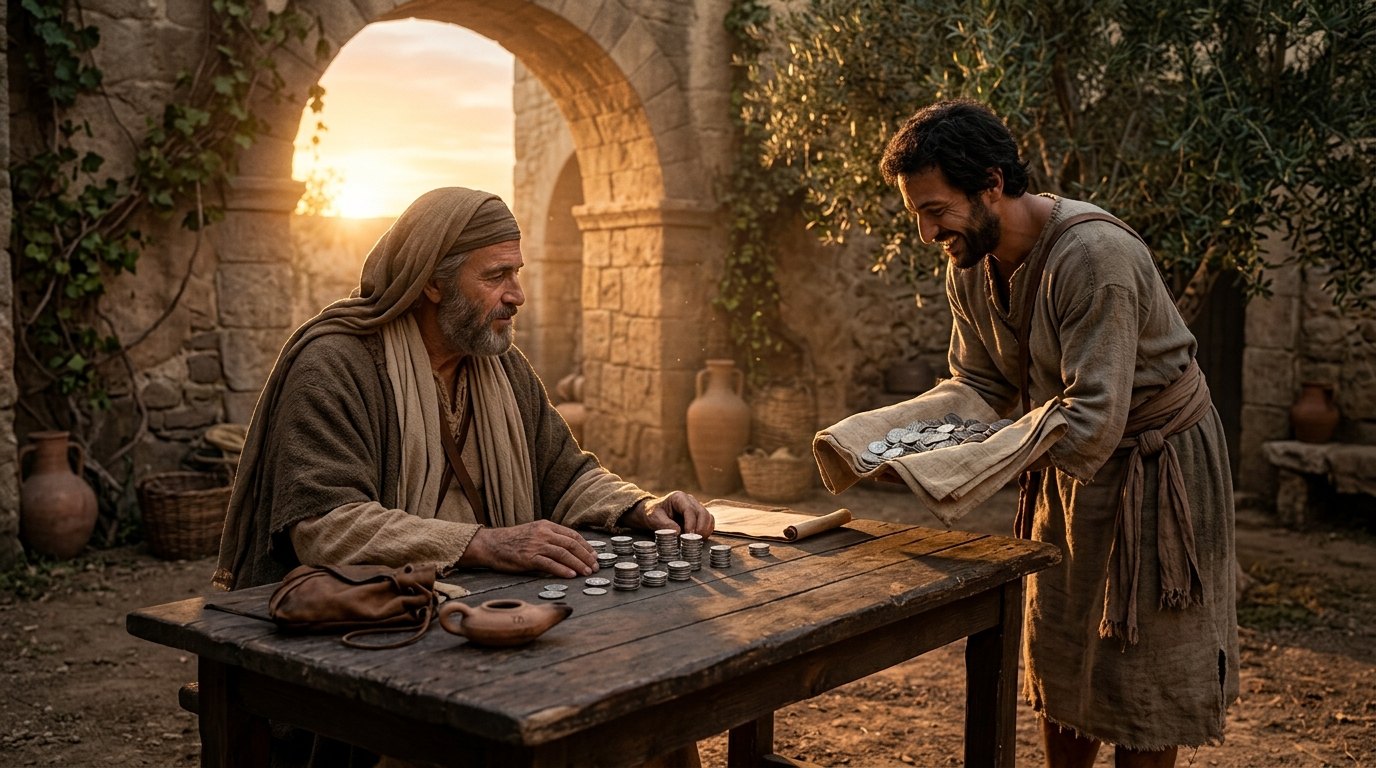
“His master replied, ‘Well done, good and faithful servant! You have been faithful with a few things; I will put you in charge of many things. Come and share your master’s happiness!’
Matthew 25:21 (NIV)
Faithfulness over material resources in this life leads to greater eternal responsibilities in God's kingdom.
The starting point of all biblical budgeting is the absolute ownership of God. "The earth is the Lord's, and all its fullness, the world and those who dwell therein" (Psalm 24:1). The silver and the gold belong entirely to the Lord of hosts (Haggai 2:8). When David and Israel gave lavishly for the building of the temple, David confessed, "All things come from You, and of Your own we have given You" (1 Chronicles 29:14). Man is never an independent owner; he is a trustee accountable to his Creator.
In the Parable of the Talents, Jesus shows a master delivering goods to his servants according to their several ability (Matthew 25:14). When the master returns to settle accounts (Matthew 25:19), the servant who traded wisely receives high commendation: "Well done, good and faithful servant; you were faithful over a few things, I will make you ruler over many things" (Matthew 25:21). The master expected an active, diligent management of capital, not passive neglect.
Faithfulness in material things is a direct gauge of spiritual integrity. Jesus warns, "He who is faithful in what is least is faithful also in much; and he who is unjust in what is least is unjust also in much" (Luke 16:10). If someone cannot handle unrighteous mammon with honesty and discipline, who will entrust them with true spiritual riches (Luke 16:11)? A steward is required above all to be found faithful (1 Corinthians 4:2; Luke 12:42). A sound budget is the practical tool by which a believer manages the Master's goods with transparent fidelity.
| Passage | What it says |
|---|---|
| Psalms 24:1 | The earth and everything in it belongs to the Lord, establishing that humans are managers, not absolute owners. |
| Matthew 25:14 | A master entrusts his property to his servants according to their abilities before departing on a journey. |
| Matthew 25:19 | After a long time, the master returns to settle accounts and review how his servants managed his funds. |
| Matthew 25:21 | The faithful servant who multiplied his master's resources is commended and rewarded with greater responsibility. |
| Luke 16:10 | Whoever is faithful in very little is faithful also in much, and dishonesty in small matters corrupts larger duties. |
| Luke 16:11 | Unfaithfulness in handling worldly wealth prevents one from being entrusted with true spiritual riches. |
| 1 Corinthians 4:2 | It is required of every steward that he be found trustworthy and faithful in what he oversees. |
| 1 Chronicles 29:14 | All earthly wealth belongs to God, and offerings given to Him come entirely from His hand. |
| Haggai 2:8 | The declaration of the Lord Almighty that all silver and gold belong to Him. |
| Luke 12:42 | The faithful manager is appointed to dispense rations and resources at the proper time. |
Debt and Bondage
Guarding Against Financial Servitude
The rich rule over the poor, and the borrower is slave to the lender.
Proverbs 22:7 (NIV)
The Holy Spirit warns that taking on unmanaged debt surrenders personal freedom to the lender.
Scripture gives stark and sobering warnings about the spiritual and practical danger of debt. In Proverbs 22:7, the Holy Spirit declares, "The rich rules over the poor, and the borrower is servant to the lender." Indebtedness robs the believer of liberty, subjecting future labor, income, and decisions to the demands of creditors. For this reason, the apostle Paul gives a direct moral command in Romans 13:8: "Owe no one anything except to love one another."
When a household spends without a budget, debt quickly becomes an ensnaring trap. God warned Israel that national covenant blessing would enable them to lend to many and borrow from none (Deuteronomy 28:12), whereas covenant disobedience would reverse this order, leaving the alien as the lender and Israel as the debtor (Deuteronomy 28:44). To borrow without the ability or intent to repay is identified as wickedness: "The wicked borrows and does not repay, but the righteous shows mercy and gives" (Psalm 37:21).
Wisdom literature warns repeatedly against presumptuous financial entanglements. Solomon admonishes against striking hands in pledge or co-signing for another person's debts (Proverbs 22:26; 17:18). If you lack the means to pay, your very bed will be seized from under you (Proverbs 22:27). A rigorous budget guards against these disasters: it reins in impulse buying, keeps spending strictly within actual income, and preserves the believer's freedom to serve God and love their neighbor unhindered by bondage.
| Passage | What it says |
|---|---|
| Proverbs 22:7 | The rich rule over the poor, and the borrower becomes a servant to the lender. |
| Romans 13:8 | Believers are commanded to owe no one anything, except the continuing debt to love one another. |
| Proverbs 22:26 | Scripture warns against striking hands in pledge or putting up security for another person's debts. |
| Proverbs 22:27 | Lacking the means to pay ensures that creditors will seize the very bed beneath the borrower. |
| Psalms 37:21 | The wicked borrows and does not repay, but the righteous person is generous and gives. |
| Deuteronomy 28:12 | God promises blessing such that His people will lend to many nations and not borrow. |
| Deuteronomy 28:44 | The judgment of debt and economic subservience resulting from turning away from God. |
| Proverbs 17:18 | A person lacking sense shakes hands in pledge and puts up security for a neighbour. |
Generosity and Provision
Budgeting to Give and Provide
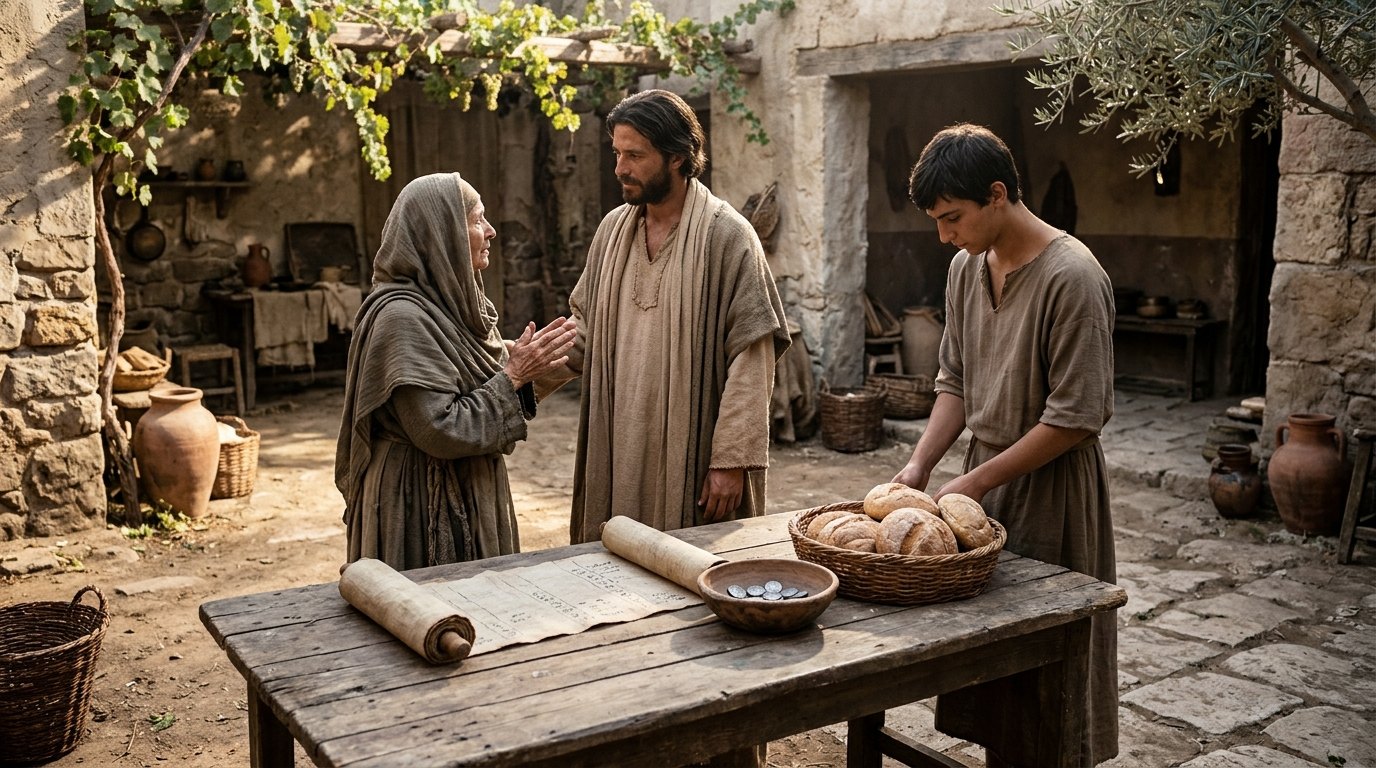
Each of you should give what you have decided in your heart to give, not reluctantly or under compulsion, for God loves a cheerful giver.
2 Corinthians 9:7 (NIV)
Intentional, purposeful planning of giving enables cheerful generosity rather than reluctant or pressured compliance.
In 2 Corinthians 9:7, the Apostle Paul reveals the spiritual engine of Christian stewardship: each one must give as he has decided in his heart, not reluctantly or under compulsion, for God loves a cheerful giver. Cheerful giving does not happen by accident; it is the deliberate result of intentional forethought and planned allocation. The biblical discipline of budgeting exists not merely to curb spending, but to ensure that honouring God and providing for others remain primary obligations rather than secondary afterthoughts.
Scripture establishes that basic financial responsibility begins at home with family care. In 1 Timothy 5:8, Paul delivers a searing assessment: anyone who does not provide for relatives, and especially for members of his household, has denied the faith and is worse than an unbeliever. Fulfilling this solemn mandate requires ordering one's household income so that foundational needs are faithfully met. Alongside domestic provision, God's people are called to consecrate their wealth directly to the Lord. Proverbs 3:9 commands us to honor the Lord with our wealth and the firstfruits of all our produce, accompanied by the promise in Proverbs 3:10 that our barns will be filled with plenty. In Malachi 3:10, God summons His covenant community to bring the full tithe into the storehouse, proving His gracious provision.
The New Testament embeds this discipline directly into practical budgeting rhythms. In 1 Corinthians 16:2, Paul directs believers to set aside an intentional sum on the first day of every week in keeping with how they prosper, preventing hurried, haphazard collections. Similarly, Paul urges in Ephesians 4:28 that the believer labor honestly with his own hands so that he may have something to share with anyone in need. Sowing generously within one's means brings spiritual fruit, as 2 Corinthians 9:6 reminds us that whoever sows bountifully will also reap bountifully.
| Passage | What it says |
|---|---|
| 1 Timothy 5:8 | Anyone who fails to provide for relatives and household members has denied the faith and is worse than an unbeliever. |
| Proverbs 3:9 | Honor the Lord with your substance and with the firstfruits of all your produce. |
| 1 Corinthians 16:2 | Paul instructs believers to set aside an intentional sum on the first day of each week in keeping with income. |
| 2 Corinthians 9:7 | Each person should give what has been decided in the heart, not reluctantly or under compulsion, for God loves a cheerful giver. |
| Ephesians 4:28 | A former thief must labor honestly with his hands so that he has something to share with those in need. |
| Proverbs 3:10 | Honouring God with the firstfruits leads to barns filled with plenty and vats overflowing. |
| Malachi 3:10 | Bringing the full tithe into the storehouse so that provision exists in God's house. |
| 2 Corinthians 9:6 | Whoever sows sparingly will reap sparingly, and whoever sows bountifully will reap bountifully. |
Contentment and Discipleship
Foresight Without Idolatrous Greed
But godliness with contentment is great gain.
1 Timothy 6:6 (NIV)
True prosperity is defined by spiritual contentment, which protects financial planning from turning into covetous hoarding.
In 1 Timothy 6:6, Scripture lays down the true measure of wealth: godliness with contentment is great gain. Budgeting without contentment degenerates into anxious hoarding or greedy accumulation. The Christian counts costs and plans ahead not out of panic or worldly ambition, but with the quiet confidence of a disciple who understands that worldly wealth is temporary and God alone is sovereign.
Paul underscores this eternal perspective in 1 Timothy 6:7–8, reminding us that we brought nothing into this world and cannot take anything out; having food and clothing, we ought to be content. A budget that chases luxury flirts with disaster, for 1 Timothy 6:9–10 warns that those who desire to be rich fall into temptation, into a snare, into many senseless and harmful desires that plunge people into ruin and destruction, because the love of money is a root of all kinds of evil. Jesus delivers a parallel warning in Luke 12:15, urging us to take care and be on guard against all covetousness, for life does not consist in the abundance of possessions. True discipleship demands unseating wealth from the throne of the heart, as Luke 14:33 insists that any disciple must renounce supreme allegiance to his possessions, and Hebrews 13:5 commands us to keep our lives free from the love of money, resting on God's unfailing promise never to leave or forsake us.
Wisdom teaches the fragility of earthly assets. Proverbs 23:4–5 admonishes us not to wear ourselves out to get rich, for riches suddenly sprout wings and fly away like eagles. In Luke 12:16–21, Jesus illustrates the folly of the rich fool who budgeted for bigger barns without ever being rich toward God, only to lose his soul that very night. Similarly, James 4:13–15 rebukes arrogant merchants who boast of tomorrow's trade without acknowledging that life is a fleeting vapor. All planning must be held in submission to God's sovereign rule: if the Lord wills, we will live and do this or that.
| Passage | What it says |
|---|---|
| 1 Timothy 6:6 | Godliness combined with contentment is itself great gain. |
| 1 Timothy 6:7 | We brought nothing into the world, and it is certain we can carry nothing out. |
| 1 Timothy 6:8 | Having food and clothing, believers are commanded to be content. |
| 1 Timothy 6:9 | Those who desire to be rich fall into temptation, a snare, and harmful passions that plunge people into ruin. |
| 1 Timothy 6:10 | The love of money is a root of all kinds of evil, leading some to wander from the faith. |
| Luke 12:15 | Jesus warns to beware of all covetousness, for one's life does not consist in the abundance of possessions. |
| Luke 14:33 | Anyone who does not renounce all possessions cannot be a disciple of Jesus Christ. |
| Hebrews 13:5 | Keep your life free from the love of money and be content with what you have, resting on God's promise never to forsake you. |
| Proverbs 23:4 | An admonition not to wear oneself out to get rich, having the wisdom to show restraint. |
| Proverbs 23:5 | Earthly riches suddenly sprout wings and fly away like an eagle toward heaven. |
| Luke 12:16 | The parable of the rich fool whose land produced a bountiful harvest. |
| Luke 12:20 | God rebukes the hoarder who planned only for his own soul without being rich toward God. |
| Luke 12:21 | The verdict on anyone who stores up treasure for himself but is not rich toward God. |
| James 4:13 | A warning to those who boast of doing business and making profit without submitting to God's will. |
| James 4:14 | Life is a vapour, reminding the planner that human life and foresight are frail. |
| James 4:15 | The instruction to condition all planning upon the phrase 'If the Lord wills, we will live and do this.' |
Where in the Bible
| Book | Passages |
|---|---|
| Genesis | 3 · Genesis 41:34, Genesis 41:35, Genesis 41:36 |
| Deuteronomy | 2 · Deuteronomy 28:12, Deuteronomy 28:44 |
| 1 Chronicles | 1 · 1 Chronicles 29:14 |
| Psalms | 2 · Psalms 24:1, Psalms 37:21 |
| Proverbs | 19 · Proverbs 24:27, Proverbs 16:3, Proverbs 16:9, Proverbs 21:5, Proverbs 27:23, Proverbs 27:24, Proverbs 6:6, Proverbs 6:7, Proverbs 6:8, Proverbs 13:11, Proverbs 21:20, Proverbs 22:7, Proverbs 22:26, Proverbs 22:27, Proverbs 17:18, Proverbs 3:9, Proverbs 3:10, Proverbs 23:4, Proverbs 23:5 |
| Haggai | 1 · Haggai 2:8 |
| Malachi | 1 · Malachi 3:10 |
| Matthew | 3 · Matthew 25:14, Matthew 25:19, Matthew 25:21 |
| Luke | 12 · Luke 14:28, Luke 14:29, Luke 14:30, Luke 14:31, Luke 16:10, Luke 16:11, Luke 12:42, Luke 12:15, Luke 14:33, Luke 12:16, Luke 12:20, Luke 12:21 |
| Romans | 1 · Romans 13:8 |
| 1 Corinthians | 2 · 1 Corinthians 4:2, 1 Corinthians 16:2 |
| 2 Corinthians | 2 · 2 Corinthians 9:7, 2 Corinthians 9:6 |
| Ephesians | 1 · Ephesians 4:28 |
| 1 Timothy | 6 · 1 Timothy 5:8, 1 Timothy 6:6, 1 Timothy 6:7, 1 Timothy 6:8, 1 Timothy 6:9, 1 Timothy 6:10 |
| Hebrews | 1 · Hebrews 13:5 |
| James | 3 · James 4:13, James 4:14, James 4:15 |
The story in order
- Joseph plans for famine (c. 1450 BC) · Genesis 41:34-36 · Diligence and orderly planning lead to abundance and survival.
- Wisdom on preparing fields (c. 950 BC) · Proverbs 24:27 · Prudent calculation: complete preparations before building.
- The Lord directs our steps (c. 950 BC) · Proverbs 16:9 · God establishes our plans and directs our way.
- Borrower is servant to lender (c. 950 BC) · Proverbs 22:7 · Debt creates financial servitude and bondage.
- Earth and its fullness belong to God (c. 900 BC) · Psalms 24:1 · Faithful stewardship: God owns all, we manage.
- King evaluates war strength (AD 30) · Luke 14:31 · Prudent calculation: count the cost before undertaking.
- Builder counts the cost (AD 30) · Luke 14:28 · Prudent calculation: ensure completion before building.
- Faithful in little, faithful in much (AD 30) · Luke 16:10 · Faithful stewardship in worldly matters leads to spiritual riches.
- Do not love money (AD 60) · 1 Timothy 6:10 · The love of money is a root of evil.
- Set aside income for giving (AD 55) · 1 Corinthians 16:2 · Intentional, regular giving based on income.
- God's people will lend, not borrow (c. 1400 BC) · Deuteronomy 28:12 · Blessing includes financial independence and lending.
- God's judgment on hoarders (AD 30) · Luke 12:16-21 · Foresight without godliness leads to ruin.
Key words
- Stewardship (oikonomos (οἰκονόμος))
- Managing resources entrusted by the true owner (God). · Luke 16:10
- Diligence (charutz (חָרוּץ))
- Steady, careful, and persistent effort in work and planning. · Proverbs 21:5
- Foresight (cheshbon (חֶשְׁבּוֹן))
- Planning and preparation for the future, counting the cost. · Luke 14:28
- Debt (malveh (מַלְוֶה))
- An obligation to repay borrowed money or goods. · Proverbs 22:7
- Contentment (autarkes (αὐτάρκης))
- Satisfaction with what one has, free from greedy desire. · 1 Timothy 6:6
Biblical budgeting ultimately frees the believer from the tyranny of money to serve the living God with gladness and generosity. When we plan our resources under the Lordship of Christ, our ledgers reflect repentance, contentment, and faith rather than worldly anxiety. Faithful stewardship prepares us to handle earthly goods in light of eternity, laying up treasure that will never perish.
60 passages, each cited once.
Scripture cited
- Luke 14:28-30
- Proverbs 24:27
- Luke 14:33
- Matthew 8:20