What does the Bible say about cremation?
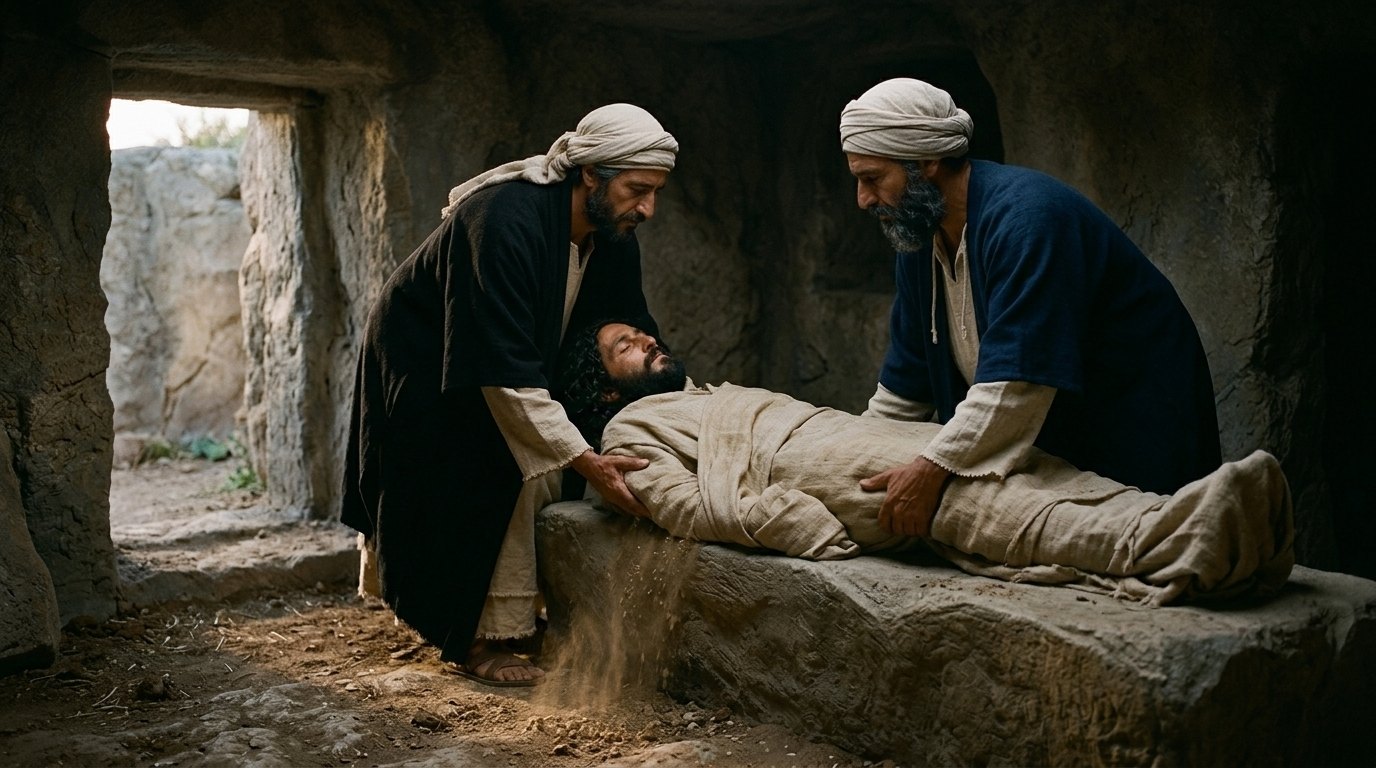
Genesis 3:19
19 By the sweat of your brow you will eat your food until you return to the ground, since from it you were taken; for dust you are and to dust you will return.”
New International Version (NIV)
The answer
Respectful cremation is not sinful in itself. Scripture records burial as its consistent practice, but it never forbids cremation or makes burial a universal command. The governing principles are reverence for the dead, rejection of false religious meaning, and doing everything to God’s glory (1 Corinthians 10:31).
Burial is the biblical pattern
God formed man from dust, and after the fall he declared that man would return to dust (Genesis 2:7; Genesis 3:19). Jesus’ body was wrapped with spices and laid in a tomb according to Jewish burial custom (John 19:40-42). Burial therefore follows the biblical pattern and fittingly expresses reverence for the body and hope of resurrection. A consistent pattern, however, is not the same as a command.
The accounts of burning have different purposes
- Achan: His remains were burned following God’s judgment on his sin, not as an ordinary funeral practice (Joshua 7:24-26).
- Josiah: He burned bones on idolatrous altars specifically to defile those altars (2 Kings 23:16; 2 Kings 23:20).
- Moab: Burning the king of Edom’s bones into lime was condemned as a transgression—an act of desecration, not a respectful family funeral (Amos 2:1-2).
- Saul and his sons: The men of Jabesh Gilead recovered their bodies, burned them, buried their bones, and fasted for seven days. The account records no condemnation of their actions (1 Samuel 31:12-13). It does not establish cremation as a command, but it shows that burning remains was not invariably an act of desecration.
Resurrection does not depend on an intact body
At death, the body returns to the earth and the spirit returns to God who gave it (Ecclesiastes 12:7). Resurrection then depends entirely on God’s power, not on preserving bodily remains. God gives the resurrection body as he pleases (1 Corinthians 15:38): what is perishable is raised imperishable, and what is weak is raised in power (1 Corinthians 15:42-44).
A buried body ordinarily decomposes; neither decomposition nor fire places remains beyond God’s power. Cremation cannot prevent the dead in Christ from rising when he comes (1 Thessalonians 4:16).
Choosing burial or cremation
Burial remains a good and meaningful Christian choice. Cremation may also be chosen when it is done reverently and without idolatrous worship or a deliberate denial of resurrection. Because no command settles the method, Christians should not judge or despise one another over it; each person gives account to God (Romans 14:10; Romans 14:12). The living and the dead belong to the Lord (Romans 14:7-8), and Christian comfort rests in Jesus’ death and resurrection, not in the condition of earthly remains (1 Thessalonians 4:14).
Answered from Scripture · reviewed November 11, 2026
Scripture nowhere prescribes cremation as an ordinary or honorable practice for the people of God. Across both Testaments, the uniform pattern for honoring the deceased is bodily burial, while fire applied to a human body consistently signifies divine judgment, desecration, or severe curse.
Creation and Dust
The Body Is Appointed to Return to the Ground
By the sweat of your brow you will eat your food until you return to the ground, since from it you were taken; for dust you are and to dust you will return.”
Genesis 3:19 (NIV)
God explicitly declares that fallen man shall return to the dust of the ground from which he was taken.
In Genesis 3:19, God decrees the natural trajectory of physical humanity after the fall: "for dust you are, and to dust you shall return." From the dawn of human history, God establishes an organic continuity between the soil of the earth and the physical constitution of human beings. When God formed Adam in Genesis 2:7, He fashioned him from the dust of the ground before breathing into his nostrils the breath of life. Death reverses this animation, yet God ordained that the physical frame should return gently and naturally to the earth from which it came.
This pattern echo throughout the Old Testament wisdom literature and poetic texts. In Job 34:15, Elihu underscores the shared mortality of mankind, declaring that all flesh would perish together and man would return to dust. Moses prays in Psalms 90:3, observing that the Lord turns man back to dust, bidding the children of men to return. The psalmist similarly recognizes in Psalms 104:29 that when God hides His face and withdraws His breath, creatures die and return directly to their native dust. Finally, Solomon summarizes the natural conclusion of life under the sun in Ecclesiastes 12:7, noting that at death "the dust returns to the earth as it was, and the spirit returns to God who gave it." The biblical witness consistently portrays dissolution into the earth—not rapid vaporization by flame—as God's appointed physical resting place for mankind.
| Passage | What it says |
|---|---|
| Genesis 2:7 | God formed man of the dust of the ground and breathed into his nostrils the breath of life. |
| Genesis 3:19 | The divine sentence upon fallen Adam decreeing his return to the ground as dust. |
| Job 34:15 | Elihu observes that all flesh perishes together and man turns again unto dust. |
| Psalms 90:3 | Moses confesses that God turns man back to dust, commanding humanity to return. |
| Psalms 104:29 | When God takes away their breath, creatures die and return to their native dust. |
| Ecclesiastes 12:7 | At death the dust returns to the earth as it was, while the spirit returns to God. |
The Patriarchal Pattern
The Covenant People Honored the Dead by Burial
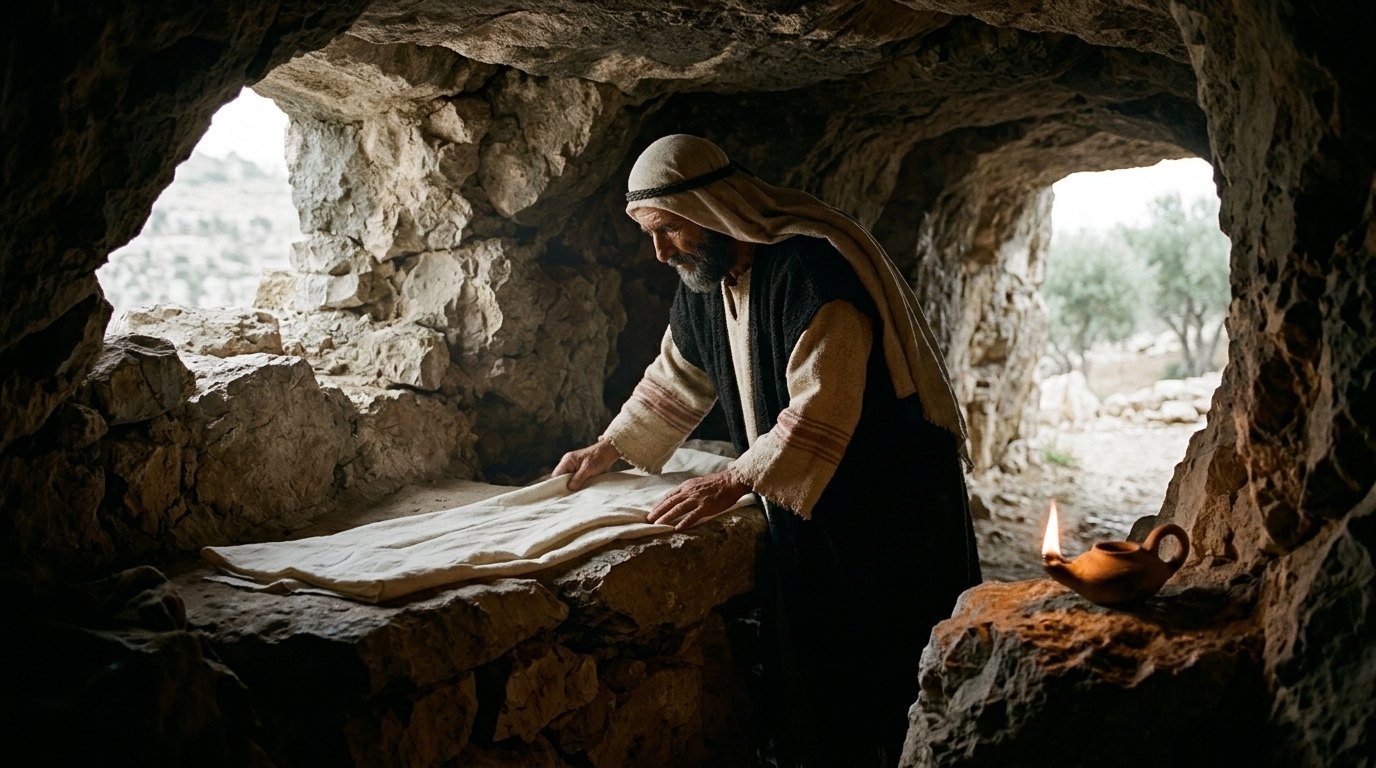
Afterward Abraham buried his wife Sarah in the cave in the field of Machpelah near Mamre (which is at Hebron) in the land of Canaan.
Genesis 23:19 (NIV)
Abraham purchased the cave of Machpelah specifically to establish a permanent burying place for his family in faith.
In Genesis 23:19, Abraham carefully purchased the cave of Machpelah to bury Sarah, establishing a generational witness of faith in God's promises. The patriarchs did not discard or burn the deceased; they reverently laid their dead in the earth in anticipation of God's covenant fulfilment. Abraham himself was laid to rest in that same cave by Isaac and Ishmael (Genesis 25:9), and Isaac in turn was buried by Esau and Jacob (Genesis 35:29). Jacob charged his sons on his deathbed in Genesis 49:29-31 to carry his bones back to Canaan to rest alongside his ancestors, a command Joseph faithfully executed in Genesis 50:13. Even Joseph, dying in Egypt, requested that his bones be embalmed and preserved for eventual reburial in the Promised Land (Genesis 50:26).
This devotion to bodily interment permeates the entire covenant community. In Deuteronomy 34:6, God Himself tenderly buries Moses in the valley of Moab opposite Beth-peor, setting the divine seal upon burial. Even the corpse of a condemned criminal was protected under Mosaic law: Deuteronomy 21:22-23 required that an executed body be buried before nightfall, affirming that human flesh bears God's image and must not be treated with wanton contempt. Ruth pledged covenant fidelity to Naomi unto the grave, vowing in Ruth 1:17 that where Naomi was buried, she too would be buried. David pronounced a formal blessing upon the men of Jabesh-gilead in 2 Samuel 2:4-5 precisely because they showed lovingkindness in retrieving and burying Saul. Conversely, the denial of burial was considered a horrific curse, as seen when Jeremiah warned King Jehoiakim that he would be given the shameful "burial of a donkey" in Jeremiah 22:18-19.
| Passage | What it says |
|---|---|
| Genesis 23:19 | Abraham buries Sarah his wife in the cave of Machpelah in the land of Canaan. |
| Genesis 25:9 | Isaac and Ishmael bury their father Abraham in the cave of Machpelah beside Sarah. |
| Genesis 35:29 | Isaac breathes his last and is gathered to his people, buried by Esau and Jacob. |
| Genesis 49:29-31 | Jacob charges his sons to bury him with his fathers in Machpelah where earlier patriarchs rested. |
| Genesis 50:13 | Joseph and his brothers carry Jacob into Canaan to bury him in the ancestral tomb. |
| Genesis 50:26 | Joseph dies, is embalmed, and placed in a coffin in Egypt awaiting eventual reburial in Canaan. |
| Deuteronomy 34:6 | The Lord Himself buries Moses in the valley of Moab opposite Beth-peor. |
| Deuteronomy 21:22-23 | God commands that even an executed criminal must receive an honorable burial on the day of death. |
| Ruth 1:17 | Ruth pledges lifelong covenant loyalty to Naomi, including being buried beside her. |
| 2 Samuel 2:4-5 | David blesses the men of Jabesh-gilead for showing covenant kindness by burying the corpse of Saul. |
| Jeremiah 22:18-19 | Denial of a proper lament and burial is pronounced as a terrifying divine judgment upon Jehoiakim. |
Fire as Judgment
Burning the Human Body Signifies Desecration and Curse
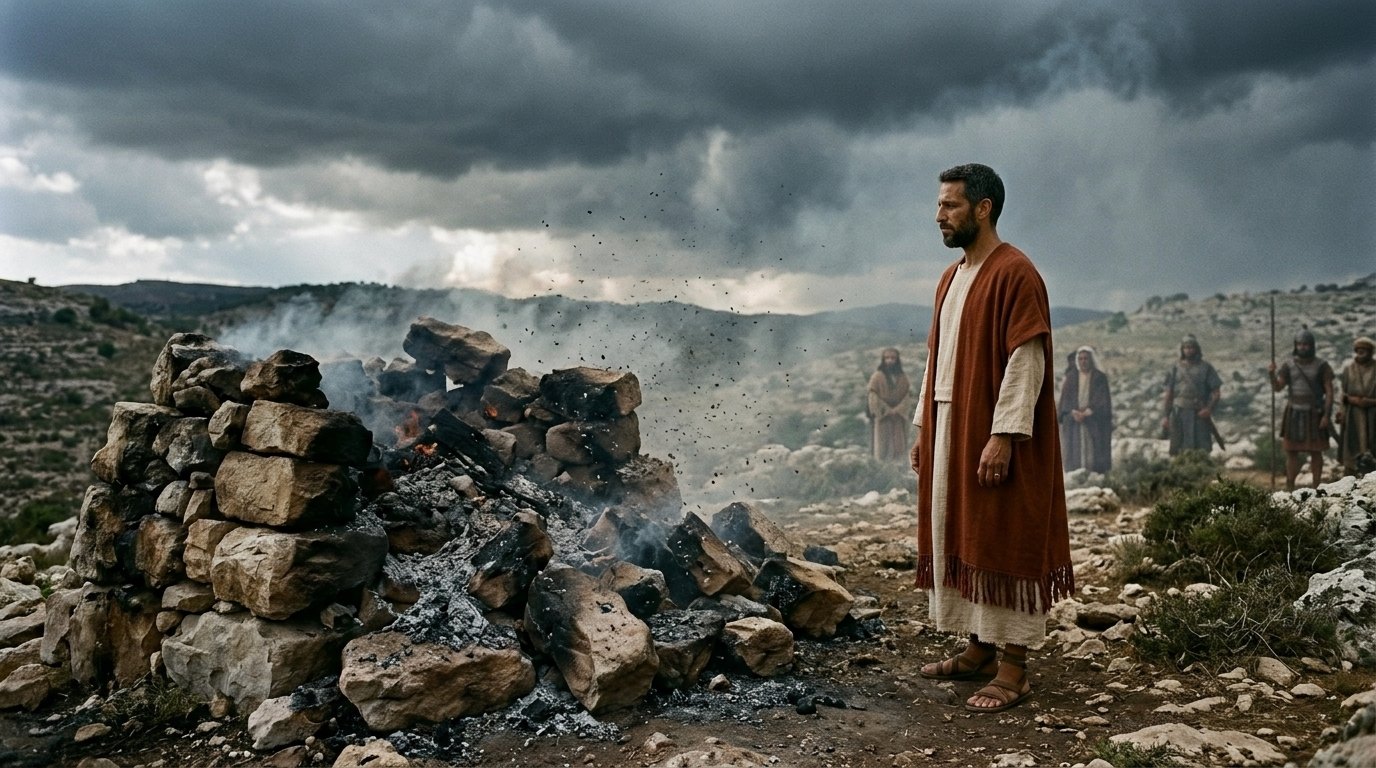
This is what the LORD says: “For three sins of Moab, even for four, I will not relent. Because he burned to ashes the bones of Edom’s king,
Amos 2:1 (NIV)
God proclaims severe judgment upon Moab specifically for burning the bones of Edom's king into lime.
In Amos 2:1, the Lord pronounces relentless judgment upon the nation of Moab "because he burned the bones of the king of Edom into lime." Across the Old Testament, the deliberate burning of a human corpse was never treated as an act of family honor or sacred memory; it served as a terrifying sign of divine wrath, judicial execution, or ritual desecration. Under the Mosaic judicial system, burning was reserved solely for the most egregious abominations, such as extreme sexual incest (Leviticus 20:14) or the harlotry of a high priest's daughter (Leviticus 21:9). When Achan committed high treason against the covenant community at Jericho, he and his plunder were stoned and then consumed with fire to purge the curse from Israel (Joshua 7:25).
Furthermore, the burning of human bones was used explicitly to defile pagan places of worship. King Josiah purged apostate altars in 2 Kings 23:16 and 2 Kings 23:20 by excavating human bones and burning them directly upon the altars to render them permanently unclean. Even when Israelites applied fire to their own dead, it occurred only under horrific, extraordinary circumstances: in 1 Samuel 31:12, the valiant men of Jabesh-gilead burned the mutilated, decaying flesh of Saul and his sons to rescue them from Philistine desecration before burying their bones, while Amos 6:9-10 depicts a sole survivor forced to burn pestilence-ridden corpses during a catastrophic plague. Scripture consistently pairs the incineration of human remains with severe devastation, judgment, and defilement.
| Passage | What it says |
|---|---|
| Leviticus 20:14 | The Mosaic law commands that severe sexual immorality be punished by burning both parties with fire. |
| Leviticus 21:9 | A priest's daughter who profanes herself by whoredom must be burned with fire. |
| Joshua 7:25 | Achan and his family are stoned and burned with fire for breaking covenant at Jericho. |
| 1 Samuel 31:12 | The men of Jabesh-gilead retrieve the mutilated bodies of Saul and his sons and burn them before burying the bones. |
| 2 Kings 23:16 | King Josiah takes bones from sepulchres and burns them on the altar to defile it. |
| 2 Kings 23:20 | Josiah slaughters idolatrous priests on the high places and burns men's bones upon them. |
| Amos 2:1 | God judges Moab because he burned the bones of the king of Edom into lime. |
| Amos 6:9-10 | A surviving relative removes and burns bodies during severe calamity and pestilence. |
Christ and Resurrection
The Gospel Witness Centers on Bodily Burial and Sowing
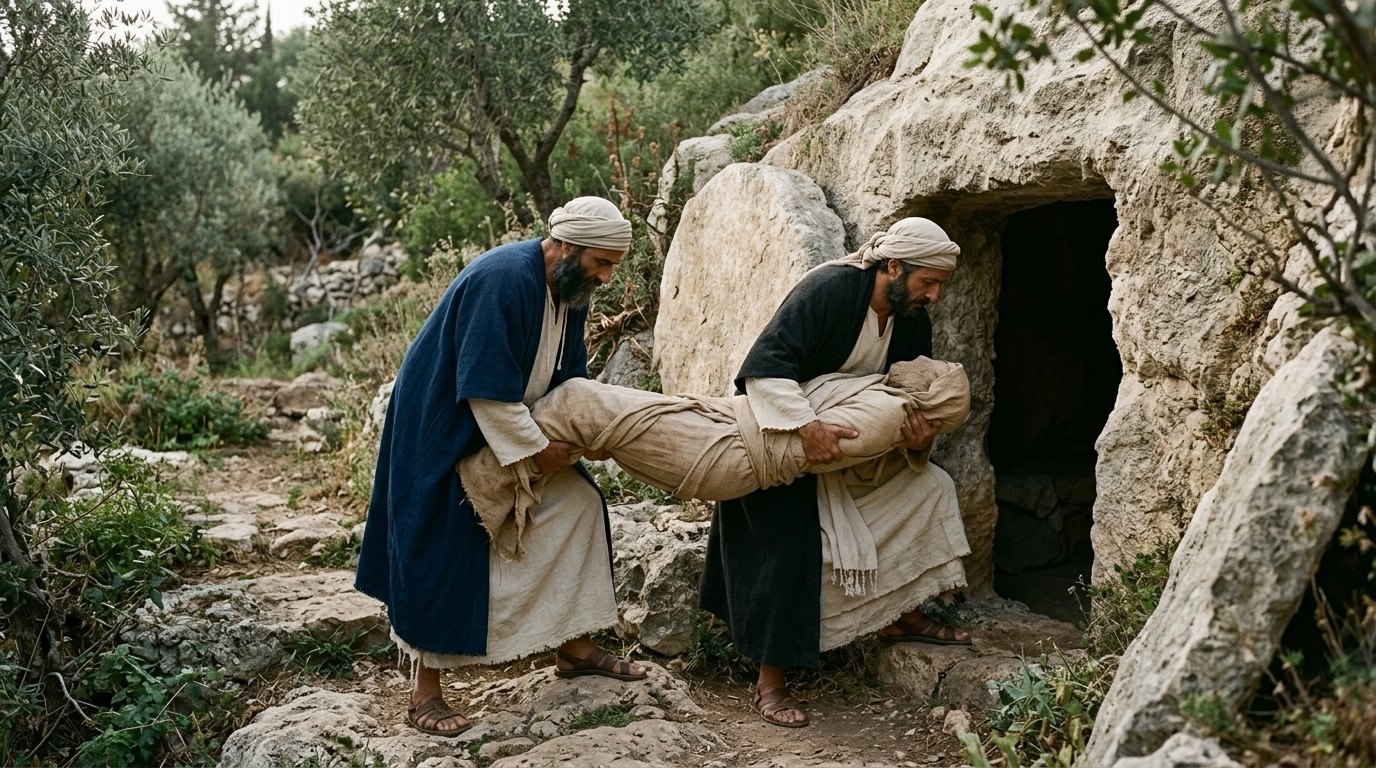
So will it be with the resurrection of the dead. The body that is sown is perishable, it is raised imperishable; it is sown in dishonor, it is raised in glory; it is sown in weakness, it is raised in power; it is sown a natural body, it is raised a spiritual body. If there is a natural body, there is also a spiritual body.
1 Corinthians 15:42-44 (NIV)
Paul describes physical burial as the sowing of a seed that will be raised in incorruption and glory.
In 1 Corinthians 15:42-44, the Apostle Paul articulates the theology of the resurrection by comparing Christian burial to the sowing of seed: "So is the resurrection of the dead: what is sown in corruption is raised in incorruption." The Christian practice of burial is an act of hope, planting the natural body in the earth in expectation of the harvest when Christ returns. This theological meaning is grounded in the burial of the Lord Jesus Christ Himself. In Matthew 26:12, Jesus explicitly commended the woman who anointed Him, declaring that she prepared His physical body for burial. Following the crucifixion, Joseph of Arimathea wrapped the Lord's body in clean linen and laid it in a newly carved tomb (Matthew 27:59-60), joined by Nicodemus who brought an immense weight of myrrh and aloes according to Jewish custom (John 19:39-40).
The early church continued this tender practice of burial for its saints, as when devout men carried the martyred Stephen to his grave with great lamentation (Acts 8:2). The Apostle Paul reminds the church that our bodies are temples of the Holy Spirit, purchased at a price, and destined to glorify God (1 Corinthians 6:19-20). Therefore, deceased believers are spoken of not as extinguished, but as having "fallen asleep" in Jesus, awaiting the trumpet call (1 Thessalonians 4:13-14). While Romans 6:3-4 illustrates that Christian baptism itself visually dramatizes burial and resurrection, Scripture also gives comfort to those whose bodies suffer tragic dispersal: Revelation 20:13 shows that the sea and death yield up all their dead, proving that God's sovereign power to raise the body is never thwarted by fire, beasts, or deep waters.
| Passage | What it says |
|---|---|
| Matthew 27:59-60 | Joseph of Arimathea wraps Christ's body in clean linen and lays it in his new rock tomb. |
| John 19:39-40 | Nicodemus brings spices to bind the Lord's body in linen strips according to Jewish burial customs. |
| Acts 8:2 | Devout men carry the martyred Stephen to his burial and make great lamentation over him. |
| 1 Corinthians 6:19-20 | Believers are reminded that their bodies are temples of the Holy Spirit to be glorified. |
| 1 Corinthians 15:42-44 | The natural body is sown in corruption, dishonor, and weakness to be raised spiritual, glorious, and powerful. |
| 1 Thessalonians 4:13-14 | Believers who have fallen asleep in Jesus will be brought with Him when He returns in glory. |
| Matthew 26:12 | Jesus affirms the woman who poured fragrant oil upon His body as preparing Him for His burial. |
| Romans 6:3-4 | Christian baptism pictures spiritual death and new life through burial and resurrection with Jesus Christ. |
| Revelation 20:13 | The sea, death, and Hades surrender their dead, showing God effortlessly raises any dispersed physical remains. |
Where in the Bible
| Book | Passages |
|---|---|
| Genesis | 8 · Genesis 2:7, Genesis 3:19, Genesis 23:19, Genesis 25:9, Genesis 35:29, Genesis 49:29-31, Genesis 50:13, Genesis 50:26 |
| Leviticus | 2 · Leviticus 20:14, Leviticus 21:9 |
| Deuteronomy | 2 · Deuteronomy 34:6, Deuteronomy 21:22-23 |
| Joshua | 1 · Joshua 7:25 |
| Ruth | 1 · Ruth 1:17 |
| 1 Samuel | 1 · 1 Samuel 31:12 |
| 2 Samuel | 1 · 2 Samuel 2:4-5 |
| 2 Kings | 2 · 2 Kings 23:16, 2 Kings 23:20 |
| Job | 1 · Job 34:15 |
| Psalms | 2 · Psalms 90:3, Psalms 104:29 |
| Ecclesiastes | 1 · Ecclesiastes 12:7 |
| Jeremiah | 1 · Jeremiah 22:18-19 |
| Amos | 2 · Amos 2:1, Amos 6:9-10 |
| Matthew | 2 · Matthew 27:59-60, Matthew 26:12 |
| John | 1 · John 19:39-40 |
| Acts | 1 · Acts 8:2 |
| Romans | 1 · Romans 6:3-4 |
| 1 Corinthians | 2 · 1 Corinthians 6:19-20, 1 Corinthians 15:42-44 |
| 1 Thessalonians | 1 · 1 Thessalonians 4:13-14 |
| Revelation | 1 · Revelation 20:13 |
The story in order
- God creates man from dust (c. 4000 BC) · Genesis 2:7 · Establishes the physical origin of humanity.
- Man returns to dust (c. 4000 BC) · Genesis 3:19 · The consequence of sin is mortality and return to the ground.
- Abraham buries Sarah (c. 2000 BC) · Genesis 23:19 · Patriarchal practice of honorable burial in the land.
- Jacob buried in Machpelah (c. 1800 BC) · Genesis 50:13 · Continuing the ancestral burial tradition.
- Moses' burial (c. 1406 BC) · Deuteronomy 34:6 · Even Moses receives a burial from God.
- Law: Burning for immorality (c. 1400 BC) · Leviticus 20:14 · Fire signifies severe divine judgment and desecration.
- Achan burned for sin (c. 1400 BC) · Joshua 7:25 · Covenant violation punished by fire.
- Saul's bones burned (c. 1050 BC) · 1 Samuel 31:12 · After mutilation, burning signifies extreme desecration.
- Josiah defiles altars (c. 621 BC) · 2 Kings 23:16 · Burning bones on altars is an act of defilement.
- Moab burns Edom's king (c. 750 BC) · Amos 2:1 · Burning bones is a grave insult and curse.
- Christ's burial (AD 30) · Matthew 27:59-60 · Jesus is laid in a tomb, not burned.
- Stephen's burial (c. AD 35) · Acts 8:2 · Devout men bury Stephen with lamentation.
- Resurrection of the body (c. AD 55) · 1 Corinthians 15:42-44 · The body is sown and raised, not incinerated.
- Resurrection of all dead (c. AD 95) · Revelation 20:13 · God raises all bodies, regardless of their state.
Burial vs. Burning
| Honoring the Dead | Signifying Judgment/Desecration | Passage |
|---|---|---|
| Abraham buries Sarah | Leviticus 20:14: Burning for immorality | Genesis 23:19 |
| Isaac and Ishmael bury Abraham | Joshua 7:25: Burning Achan for sin | Genesis 25:9 |
| Jacob buried with fathers | 1 Samuel 31:12: Burning Saul's mutilated body | Genesis 49:29-31 |
| Moses buried by God | 2 Kings 23:16: Burning bones on altars | Deuteronomy 34:6 |
| Honorable burial for executed criminal | Amos 2:1: Moab burns bones of Edom's king | Deuteronomy 21:22-23 |
| Ruth to be buried with Naomi | Amos 6:9-10: Burning bodies in calamity | Ruth 1:17 |
| Saul's body buried by Jabesh-gilead | Leviticus 21:9: Burning priest's daughter | 2 Samuel 2:4-5 |
| Christ buried in a tomb | Jeremiah 22:18-19: Denial of burial as judgment | Matthew 27:59-60 |
| Stephen buried with lamentation | Amos 2:1: Moab burns bones of Edom's king | Acts 8:2 |
Key words
- Dust (עָפָר (ʿāp̄ār))
- The material from which man was formed and to which he returns upon death. · Genesis 3:19
- Burial (קְבוּרָה (qəḇûrāh))
- The act of placing a deceased person in the ground, a practice of honor and custom. · Genesis 23:19
- Burning (שָׂרַף (śārap̄))
- Applied to human bodies, it signifies extreme desecration, curse, or divine judgment. · Leviticus 20:14
- Sown (σπείρω (speírō))
- Metaphor for the body's burial, implying future resurrection and transformation. · 1 Corinthians 15:42
- Resurrection (ἀνάστασις (anástasis))
- The act of God raising the dead, restoring bodies to life. · 1 Corinthians 15:42
While modern Christians sometimes choose cremation due to cost or circumstance—and God's sovereign power to raise the dead remains unhindered—Scripture consistently models burial as an act of faith. Laying the body in the earth honors the vessel God made, witnesses to Christ's own entombment, and awaits the bodily resurrection promised at the last day.
34 passages, each cited once.
How the major Christian traditions read this
All Christian traditions affirm that the human body is created by God, remains a temple of the Holy Spirit, and will be raised in glory on the last day through the sovereign power of Christ (1 Corinthians 15:42-44; Romans 8:11).
Catholic
We strongly recommend traditional burial following the example of Christ's entombment (John 19:40-42). Burial honors the dignity of the physical body as an essential part of the human person. However, the Church does not forbid cremation provided it is not chosen to express disbelief in the bodily resurrection (1 Corinthians 15:12-14). When cremation occurs, the remains must be treated with reverence and laid to rest in sacred ground rather than scattered or kept at home.
Scripture: John 19:40-42, 1 Corinthians 15:12-14
Orthodox
We uphold bodily burial as the only fitting Christian departure and strictly prohibit cremation under normal circumstances. Man was formed from the earth and returns to the earth in anticipation of the resurrection (Genesis 3:19). The body is sanctified by the Holy Spirit and redeemed alongside the soul (1 Corinthians 6:19-20). In Scripture, burning human remains frequently signaled judgment or desecration (Amos 2:1-2), whereas burial honors the seed awaiting bodily renewal (1 Corinthians 15:36-38).
Scripture: Genesis 3:19, 1 Corinthians 6:19-20, 1 Corinthians 15:36-38, Amos 2:1-2
Lutheran
We prefer traditional earth burial as a visible sign of Christian hope in the resurrection, just as seed is sown in the earth to rise again (1 Corinthians 15:42-44). Nevertheless, we recognize that Scripture contains no direct commandment against cremation. While the burning of bodies often carried connotations of judgment in the Old Testament, the power of Christ to raise the dead is never limited by physical ashes (1 Thessalonians 4:16). Cremation is therefore permitted as an adiaphoron.
Scripture: 1 Corinthians 15:42-44, 1 Thessalonians 4:16
Reformed & Presbyterian
We honor the biblical precedent of burial, observing how Abraham, the patriarchs, and our Lord Jesus were committed to the ground (Genesis 23:19; John 19:40-42). Burial serves as a rich symbol of being planted in expectation of the harvest at Christ's return (1 Corinthians 15:37-38). Yet because Scripture nowhere expressly bans cremation, we do not bind consciences where God has left liberty. The Almighty effortlessly gathers and glorifies His elect regardless of the body's final state.
Scripture: Genesis 23:19, John 19:40-42, 1 Corinthians 15:37-38
Anglican & Episcopal
We hold burial to be the venerable and ancient pattern of the Church, reflecting our Lord's own burial and resting in the soil (Matthew 27:59-60). At the same time, we fully allow cremation, acknowledging that our return to dust takes many forms (Genesis 3:19; Ecclesiastes 12:7). The Anglican burial office commits the remains to the ground, the elements, or the fire with the same confident prayer in the sure and certain hope of the resurrection.
Scripture: Matthew 27:59-60, Genesis 3:19, Ecclesiastes 12:7
Baptist
We look to the Scriptures as our sole rule of faith and practice. The Bible records burial as the customary pattern among God's people (Genesis 25:9-10; Acts 8:2), yet it lays down no universal law against cremation. Our resurrection does not depend on preserving bodily dust, for God gives a body as He pleases (1 Corinthians 15:38). A Christian may choose cremation in good faith, provided it is done with modesty, dignity, and a pure conscience before God.
Scripture: Genesis 25:9-10, Acts 8:2, 1 Corinthians 15:38
Methodist & Wesleyan
We teach that the Christian's ultimate assurance lies in God's grace and the promise of bodily resurrection (Romans 8:23). While burial reverently mirrors Christ's entombment, cremation is an acceptable and often stewardship-minded choice for believers. The physical manner of return to dust does not diminish God's ability to raise imperishable bodies (1 Corinthians 15:52-54). What matters is that the deceased is remembered with honor, thanksgiving, and unfailing confidence in eternal life.
Scripture: Romans 8:23, 1 Corinthians 15:52-54
Pentecostal & Charismatic
We believe the physical body is the temple of the Holy Spirit (1 Corinthians 6:19) and will be transformed at the trumpet of the Lord (1 Thessalonians 4:16-17). Because Scripture does not prohibit cremation, believers are free in the Spirit to choose either burial or cremation. No natural process can withstand the miraculous power of God when He calls forth His saints; the dead in Christ will rise in glorious, glorified power regardless of their physical remains.
Scripture: 1 Corinthians 6:19, 1 Thessalonians 4:16-17
Non-denominational & Evangelical
We look directly to the Word of God, noting that burial was standard across biblical history (John 11:17; John 19:40) while cremation was never explicitly condemned as sin. Our standing before God rests in Christ's finished work, and our resurrection body will be given directly by Him (Philippians 3:20-21). Families have Christian freedom to choose cremation or burial, focusing their hearts on Christ's victory over the grave rather than bodily decay (1 Corinthians 15:55-57).
Scripture: John 11:17, Philippians 3:20-21, 1 Corinthians 15:55-57, John 19:40
Where they differ
The permissibility of cremation
- Catholic
- Permitted if not chosen to deny the bodily resurrection.
- Orthodox
- Prohibited as a rejection of bodily sanctity and church practice.
- Lutheran
- Permitted as a matter indifferent where Scripture leaves liberty.
- Reformed & Presbyterian
- Permitted, though earth burial remains the preferred biblical model.
- Anglican & Episcopal
- Fully permitted and accommodated in traditional liturgical burial rites.
- Baptist
- Permitted as a matter of personal and familial conscience.
- Methodist & Wesleyan
- Permitted as a responsible stewardship decision in good faith.
- Pentecostal & Charismatic
- Permitted freely, trusting God's supernatural power to resurrect all.
- Non-denominational & Evangelical
- Permitted, since the Bible contains no prohibition against it.
Scripture: Genesis 3:19, 1 Corinthians 15:42-44
The handling of cremated remains
- Catholic
- Must be entombed in consecrated ground; scattering is forbidden.
- Orthodox
- Not applicable, since cremation itself is disallowed.
- Lutheran
- Interred reverently in the earth or placed in mausoleums.
- Reformed & Presbyterian
- Handled with sober dignity and respect for the deceased.
- Anglican & Episcopal
- Committed reverently to consecrated soil, water, or columbarium.
- Baptist
- Decided by the family with modesty and Christian decorum.
- Methodist & Wesleyan
- Laid to rest or scattered with prayers of resurrection.
- Pentecostal & Charismatic
- Handled according to family discretion with honor and prayer.
- Non-denominational & Evangelical
- Left to family conscience with respectful memorialization.
Scripture: 1 Corinthians 6:19-20, John 19:40
Your pastor can tell you where your church stands.
Scripture cited
- Genesis 3:19
- Ecclesiastes 12:7
- Genesis 2:7
- 1 Samuel 31:8-13
- Amos 2:1-3
- Joshua 7:24-26
- 2 Kings 23:15-20
- John 19:38-42
- 1 Corinthians 15:35-44
- 1 Corinthians 15:50-58
- Romans 14:5-12
- 1 Corinthians 10:31