What does the Bible say about gratitude?

Psalms 107:1
1 Give thanks to the LORD, for he is good; his love endures forever.
New International Version (NIV)
The answer
Scripture commands God's people to give thanks — and it always ties that thanks to who God is. Psalm 107:1 opens with the line that runs through the whole Bible's teaching on gratitude: "Give thanks to Yahweh, for he is good, for his loving kindness endures forever."
The reason for thanks
God's people thank Him because He is good and His mercy is everlasting. The same line repeats almost word-for-word across the Old Testament — Psalm 107:1, 1 Chronicles 16:34, Psalm 106:1, and Psalm 100:5 all say it. This isn't a polite courtesy. God's mercy is part of His own character — great (Numbers 14:18), rich (Ephesians 2:4), manifold (Nehemiah 9:27; Lamentations 3:32) — and it extends "to them that fear him from generation to generation" (Luke 1:50). The thanks we offer is measured against the mercy we've received.
It is commanded, not optional
"Offer unto God thanksgiving" (Psalm 50:14). "O give thanks unto the LORD; call upon his name: make known his deeds among the people" (Psalm 105:1). Thanking God is not a feeling that comes and goes — it's a duty He lays on His people.
It is what God's people have always done
When the fire fell and the glory of the LORD filled the temple at the dedication, "all the children of Israel saw how the fire came down, and the glory of the LORD upon the house, and bowed themselves with their faces to the ground upon the pavement, and worshipped, and praised the LORD, saying, For he is good; for his mercy endureth for ever" (2 Chronicles 7:3). The line keeps surfacing because it captures what every redeemed person has to say.
Jesus sets the pattern
Jesus Himself gives thanks — Matthew 11:25, Matthew 26:27 and John 11:41 each name Him offering thanksgiving. Gratitude in Scripture isn't polite afterthought; it's the shape of a life that trusts the Father.
It runs all the way into heaven
Scripture pictures the heavenly host giving thanks — Revelation 4:9, Revelation 7:11-12, Revelation 11:16-17. The creatures around the throne, the redeemed multitude, the elders before the Lamb — all of them rendered "thanks" to God. Thanksgiving is heaven's song.
How this lands today
Give thanks because He is good, because His mercy is everlasting, and because He has shown it in Christ. Make it known among the people — tell someone. The command stands whether or not you feel it; obedience is what builds the feeling.
Answered from Scripture · reviewed November 7, 2026
Scripture does not treat gratitude as a fleeting mood or polite social custom, but as a direct command rooted in who God is and what He has done. Across the Old and New Testaments, God calls His people to give thanks continuously because His goodness is unchanging and His steadfast mercy endures forever. Tracing the Bible's teaching on thanksgiving shows that gratitude is the vital heartbeat of covenant worship, Christian discipleship, and eternal praise.
The Unchanging Ground
Thanksgiving Rests on God's Eternal Goodness

Give thanks to the LORD, for he is good; his love endures forever.
Psalms 107:1 (NIV)
This verse articulates the enduring theological foundation for all biblical gratitude: Yahweh's intrinsic goodness and everlasting covenant love.
The bedrock of Christian gratitude is not human circumstance but divine character. Psalm 107:1 establishes the foundation of all biblical worship: "O give thanks unto the Lord, for he is good: for his mercy endureth for ever." Because God is inherently good, thanksgiving can never be an occasional impulse; it is the rightful reflex of a creature gazing upon an unchangeable Creator. David fixed this truth into Israel's liturgical memory when the ark was brought to Zion (1 Chronicles 16:34), anchoring community song in the Lord's everlasting mercy.
This refrain echoes across the Psalter as an unshakable confession. Psalm 106:1 opens with the same call, while Psalm 100:5 reminds us that His truth endures to all generations. In Psalm 136:1, this truth becomes the antiphonal heartbeat of redemption history, repeating twenty-six times that His steadfast love endures forever. Scriptural gratitude does not invent reasons to praise; it recalls how the Lord revealed Himself to Moses as "slow to anger, and of great mercy" (Numbers 14:18).
Old Testament history confirms this enduring compassion. In Nehemiah 9:27, Israel confesses that God delivered them repeatedly according to His manifold mercies, while the prophet Jeremiah clings to the truth that the Lord "will have compassion according to the multitude of his mercies" (Lamentations 3:32). That same merciful character shines through the New Testament. In the Magnificat, Mary rejoices that "his mercy is on them that fear him from generation to generation" (Luke 1:50), and Paul anchors our salvation in a God who is "rich in mercy" (Ephesians 2:4).
Personal thanksgiving requires actively remembering these acts of grace. David commands his own heart, "Bless the Lord, O my soul, and forget not all his benefits" (Psalm 103:2). Psalm 118:1 reiterates that divine goodness is worthy of unending thanks. Ultimately, every stream of provision flows from this single source: as James 1:17 declares, every good and perfect gift descends from the unchanging Father of lights.
| Passage | What it says |
|---|---|
| Psalms 107:1 | Exhorts all people to give thanks to the Lord because He is good and His steadfast love endures forever. |
| 1 Chronicles 16:34 | David charges Israel to give thanks unto the Lord on the ground of His everlasting mercy. |
| Psalms 106:1 | Opens with praise and a call to give thanks for the Lord's goodness and everlasting mercy. |
| Psalms 100:5 | Declares that the Lord is good, His mercy everlasting, and His truth enduring to all generations. |
| Psalms 136:1 | Commands thanksgiving to Yahweh because He is good and His mercy endures forever, setting the refrain for redemption history. |
| Numbers 14:18 | Proclaims the Lord as slow to anger, abundant in loving kindness, and forgiving iniquity. |
| Nehemiah 9:27 | Recounts how God, according to His manifold mercies, delivered His people from their oppressors. |
| Lamentations 3:32 | Affirms that although God causes grief, He will show compassion according to the multitude of His mercies. |
| Luke 1:50 | Mary rejoices that God's mercy extends to those who fear Him from generation to generation. |
| Ephesians 2:4 | Celebrates God who is rich in mercy because of His great love with which He loved us. |
| Psalms 103:2 | David commands his soul to bless the Lord and remember all His generous benefits. |
| Psalms 118:1 | A call to give thanks because the Lord is inherently good and His steadfast love endures forever. |
| James 1:17 | Every good and perfect gift comes from above from the unchanging Father of lights. |
The Divine Requirement
Gratitude Is Commanded, Never Optional
“Sacrifice thank offerings to God, fulfill your vows to the Most High,
Psalms 50:14 (NIV)
God explicitly commands a sacrifice of thanksgiving, demonstrating that gratitude is a direct covenant obligation rather than an optional feeling.
Scripture never frames thanksgiving as an optional devotional extra or an emotional luxury. Psalm 50:14 delivers a direct divine summons: "Offer unto God thanksgiving; and pay thy vows unto the most High." When the Lord addresses His covenant people, He makes clear that external rituals without genuine gratitude are hollow. Thanksgiving is a solemn covenant obligation, commanded by God and owed to Him by right of His sovereign majesty.
The Psalms repeatedly issue this call as a joyful imperative. Psalm 105:1 commands the assembly to "give thanks unto the Lord; call upon his name: make known his deeds among the people." We are instructed in Psalm 95:2 to "come before his presence with thanksgiving," and in Psalm 100:4 to "enter into his gates with thanksgiving, and into his courts with praise." Worship is not an aimless wandering into God's presence; thanksgiving is the appointed doorway through which His people enter sacred fellowship. Furthermore, Psalm 92:1 affirms that giving thanks is inherently fitting and right, while Psalm 147:7 commands the congregation to sing unto the Lord with thanksgiving upon the harp.
This mandate was woven into the very structure of the Mosaic law. In Leviticus 7:12, God instituted the sacrifice of thanksgiving as a specific peace offering, providing a tangible way for an Israelite to express gratitude through an altar sacrifice.
In the New Testament, this requirement is intensified rather than relaxed. The Apostle Paul leaves no room for selective obedience, commanding the church in Colossians 3:15, "and be ye thankful," as Christ's peace rules their hearts. In 1 Thessalonians 5:18, the command reaches its full weight: "In every thing give thanks: for this is the will of God in Christ Jesus concerning you." Gratitude is not dependent on pleasant conditions; it is the revealed will of God for every believer.
| Passage | What it says |
|---|---|
| Psalms 50:14 | Commands God's people to offer thanksgiving to God and perform their vows unto the Most High. |
| Psalms 105:1 | Commands giving thanks to the Lord, calling upon His name, and making His deeds known among the nations. |
| Psalms 95:2 | Bids the congregation to come before His presence with thanksgiving and make a joyful noise with psalms. |
| Psalms 100:4 | Instructs worshippers to enter His gates with thanksgiving and His courts with praise. |
| Colossians 3:15 | Instructs the body of Christ to let His peace rule their hearts and explicitly commands, 'be ye thankful.' |
| 1 Thessalonians 5:18 | Commands believers to give thanks in everything, identifying gratitude as God's will in Christ Jesus. |
| Leviticus 7:12 | The law prescribes the thanksgiving sacrifice as a specific freewill expression of gratitude. |
| Psalms 92:1 | Declares that giving thanks to the Lord and singing praises to His name is good. |
| Psalms 147:7 | Commands singing to the Lord with thanksgiving and playing the lyre to God. |
Israel's Living Testimony
God's Redeemed Community Has Always Given Thanks
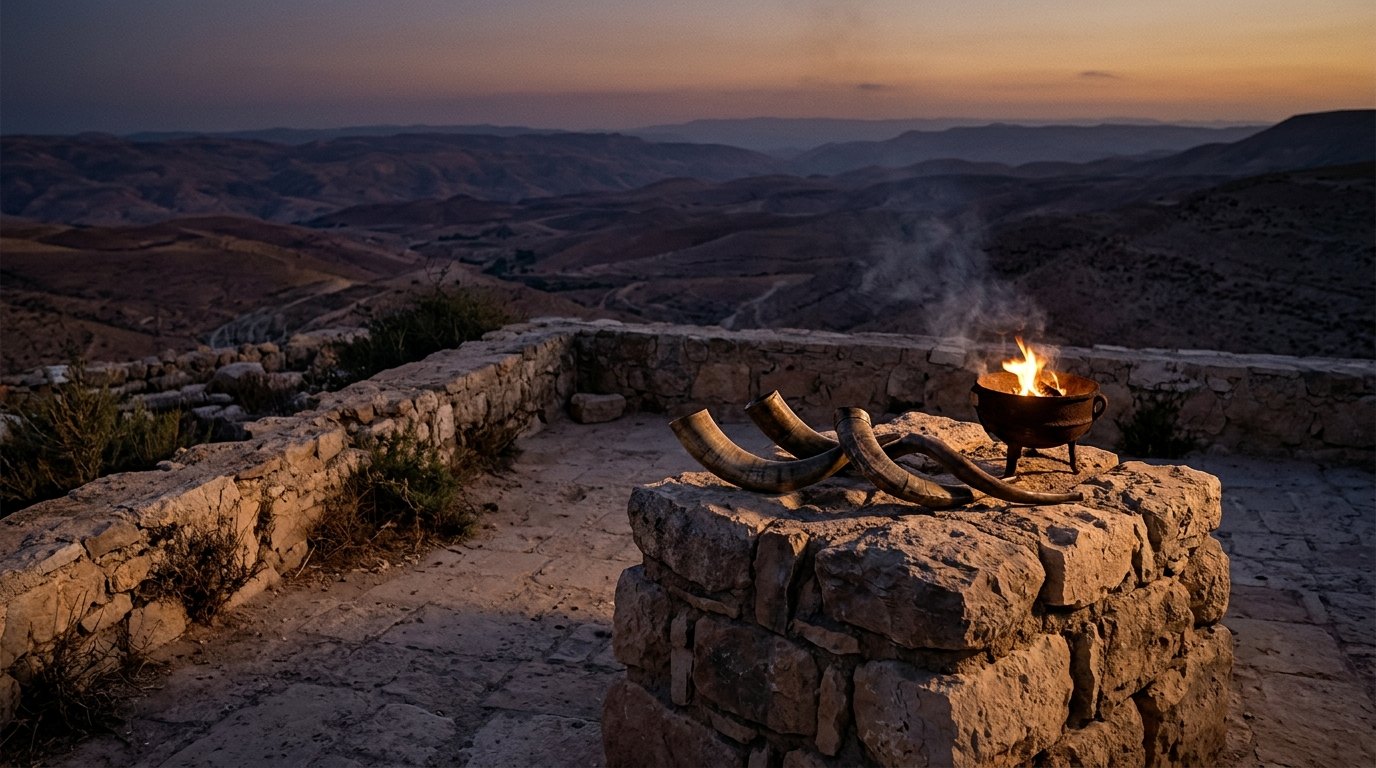
When all the Israelites saw the fire coming down and the glory of the LORD above the temple, they knelt on the pavement with their faces to the ground, and they worshiped and gave thanks to the LORD, saying, “He is good; his love endures forever.”
2 Chronicles 7:3 (NIV)
At the dedication of the temple, the entire assembly falls on their faces to proclaim God's goodness and everlasting mercy when His glory descends.
The history of God's people is a living record of gratitude voiced in every conceivable human condition. 2 Chronicles 7:3 captures the pinnacle of national worship at the dedication of Solomon's temple: when the fire descended and the glory of the Lord filled the house, the children of Israel bowed their faces to the pavement and "worshipped, and praised the Lord, saying, For he is good; for his mercy endureth for ever." Their immediate reaction to God's manifested majesty was reverent, prostrate thanksgiving. This mirrored the earlier moment when the ark arrived, where singers and trumpeters sounded as one voice to thank and praise the Lord (2 Chronicles 5:13).
Gratitude among God's people was never reserved solely for moments of peace. In 2 Chronicles 20:21, King Jehoshaphat appointed singers to go before the army into mortal combat, commanding them to praise the beauty of holiness and declare, "Praise the Lord; for his mercy endureth for ever." Thanksgiving was deployed as a weapon of faith before the victory was even seen. Generations later, when the exiled remnant laid the foundation of the second temple amid tears and rubble, they sang responsively with praise and thanks unto the Lord (Ezra 3:11).
Individual saints demonstrated this same unwavering resolve. When an edict made prayer punishable by death in a den of lions, Daniel retreated to his upper room, knelt three times a day, and "prayed, and gave thanks before his God, as he did aforetime" (Daniel 6:10). From the belly of Sheol, Jonah cried out, "I will sacrifice unto thee with the voice of thanksgiving" (Jonah 2:9). Whether David is establishing continual Levite thanksgiving (1 Chronicles 16:8), declaring that his tongue will not be silent (Psalm 30:12), resolving that God's praise shall continually be in his mouth (Psalm 34:1), or offering the sacrifice of thanksgiving after deliverance from death (Psalm 116:17), the redeemed community has always borne witness that God is worthy of ceaseless gratitude.
| Passage | What it says |
|---|---|
| 2 Chronicles 7:3 | Records Israel bowing with faces to the pavement to worship and thank God for His enduring mercy. |
| 2 Chronicles 5:13 | Recounts the trumpeters and singers offering unified thanks for God's goodness and enduring mercy as the cloud fills the house. |
| 2 Chronicles 20:21 | Shows Jehoshaphat appointing singers to praise God's holy beauty and give thanks before the army went into battle. |
| Ezra 3:11 | Describes the priests and Levites singing responsively with praise and thanks as the temple foundation was laid. |
| Daniel 6:10 | Records Daniel kneeling three times daily to pray and give thanks to God despite the royal prohibition. |
| Jonah 2:9 | Jonah vows to sacrifice unto the Lord with the voice of thanksgiving from the belly of the fish. |
| 1 Chronicles 16:8 | David appoints Levites to give thanks to the Lord and proclaim His deeds among the peoples. |
| Psalms 30:12 | The psalmist vows to give thanks to God forever after being delivered from death. |
| Psalms 34:1 | David resolves that God's praise shall continually be in his mouth regardless of circumstances. |
| Psalms 116:17 | The redeemed vows to offer the sacrifice of thanksgiving and call on the Lord's name. |
The Incarnate Example
Jesus Modeled Constant Gratitude to the Father

So they took away the stone. Then Jesus looked up and said, “Father, I thank you that you have heard me.
John 11:41 (NIV)
Before raising Lazarus, Jesus thanks the Father in public, showing that thanksgiving stems from unbroken communion and trust.
The highest pattern of gratitude is found in the life of Jesus Christ. John 11:41 reveals His intimate posture of praise before the tomb of Lazarus: "And Jesus lifted up his eyes, and said, Father, I thank thee that thou hast heard me." Before performing one of His greatest public miracles, Jesus did not plead in desperation; He openly gave thanks to the Father out of complete confidence and unbroken communion. For our Lord, thanksgiving was not a reaction to a completed miracle, but the natural expression of total trust in the Father's will.
Throughout His earthly ministry, Jesus continually offered thanks. In Matthew 11:25 and Luke 10:21, He rejoiced in the Holy Spirit and prayed, "I thank thee, O Father, Lord of heaven and earth, because thou hast hid these things from the wise and prudent, and hast revealed them unto babes." His gratitude celebrated the Father's sovereign wisdom in the work of redemption.
Our Lord also sanctified the daily reception of sustenance with thanksgiving. When feeding the five thousand, He looked up to heaven and blessed the loaves (Matthew 14:19; John 6:11). When feeding the four thousand, He "took the seven loaves and the fishes, and gave thanks, and brake them" (Matthew 15:36). Christ received physical bread as a divine gift, hallowing common provision through grateful prayer.
Most solemnly, on the night He was betrayed, Jesus instituted the sacrament of His body and blood with thanksgiving. In Matthew 26:27 and Luke 22:19, facing the agonizing reality of the cross, He took the bread and the cup, gave thanks, and distributed them to His disciples. Furthermore, Jesus highlighted the necessity of personal gratitude when ten lepers were cleansed and only one—a Samaritan—returned, falling on his face at Jesus' feet to give Him thanks (Luke 17:15). In Christ, gratitude is revealed as the very breath of divine obedience and true worship.
| Passage | What it says |
|---|---|
| John 11:41 | Jesus lifts up His eyes and thanks the Father for hearing Him before calling Lazarus from the grave. |
| Matthew 11:25 | Jesus thanks the Father, Lord of heaven and earth, for revealing divine truth unto babes. |
| Matthew 15:36 | Jesus takes the seven loaves and fishes, gives thanks, breaks them, and feeds the multitude. |
| Matthew 26:27 | Jesus takes the cup at the Last Supper and gives thanks before offering it to His disciples. |
| Luke 22:19 | Jesus takes bread, gives thanks, breaks it, and institutes the Lord's Supper in remembrance of Him. |
| Luke 17:15 | One cleansed Samaritan leper turns back and with a loud voice glorifies God and gives thanks at Jesus' feet. |
| Matthew 14:19 | Jesus looks up to heaven, says a blessing, and distributes the bread to the five thousand. |
| John 6:11 | Jesus takes the loaves, gives thanks, and distributes them to the seated multitude. |
| Luke 10:21 | Jesus rejoices in the Holy Spirit and thanks the Father for revealing truth to babes. |
The Apostolic Pattern
The New Testament Church Walks in Thankfulness

Do not be anxious about anything, but in every situation, by prayer and petition, with thanksgiving, present your requests to God.
Philippians 4:6 (NIV)
Apostolic instruction directs believers to bring every prayer and supplication before God with thanksgiving, which guards against anxiety.
In Philippians 4:6, the Apostle Paul provides the definitive remedy for a troubled heart: bring every need to God by prayer and supplication with thanksgiving. Gratitude is not an optional garnish added to our requests; it is the atmosphere in which faith breathes, shifting our focus from overwhelming circumstances to God's proven faithfulness. A life surrendered to Christ is characterized by perpetual gratitude. Paul commands the church to give thanks always for all things unto God the Father in the name of our Lord Jesus Christ (Ephesians 5:20), and urges believers to be firmly rooted, built up, and abounding in thankfulness (Colossians 2:7). Steadfast vigilance in prayer must always be mingled with thanksgiving (Colossians 4:2), while every word and deed is sanctified when offered in Christ's name with an appreciative heart (Colossians 3:17).
Scripture reveals that an ungrateful heart lies at the very root of spiritual ruin. In Romans 1:21, Paul diagnoses humanity's downward descent into idolatry and darkness: although they knew God, they neither glorified Him as God nor were thankful. Conversely, the regenerate life consecrates every ordinary mercy. The believer eats to the Lord, giving God thanks for his daily bread (Romans 14:6), receiving every good creature of God with gratitude and prayer (1 Timothy 4:4). Above all temporal blessings, gratitude overflows because of redemptive victory: God gives us absolute triumph over sin and death through Jesus Christ (1 Corinthians 15:57), moving the apostle to cry out, "Thanks be to God for His inexpressible gift!" (2 Corinthians 9:15). Therefore, the New Testament exhorts us to continually offer up a sacrifice of praise, which is the fruit of lips acknowledging His name (Hebrews 13:15).
| Passage | What it says |
|---|---|
| Philippians 4:6 | Exhorts believers to be anxious for nothing, but in everything by prayer and supplication with thanksgiving make requests known to God. |
| Ephesians 5:20 | Directs believers to give thanks always for all things unto God the Father in the name of our Lord Jesus Christ. |
| Colossians 2:7 | Urges believers to be rooted and built up in Christ, established in the faith, and abounding with thanksgiving. |
| Colossians 4:2 | Commands steadfast continuation in prayer, watching therein with thanksgiving. |
| Hebrews 13:15 | Exhorts Christians to offer the sacrifice of praise to God continually, which is the fruit of lips giving thanks to His name. |
| Romans 1:21 | Exposes the root of human apostasy as knowing God yet refusing to glorify Him or give Him thanks. |
| Romans 14:6 | The believer eats in honor of the Lord, giving God thanks for his food. |
| 1 Corinthians 15:57 | Paul gives thanks to God who gives believers victory over sin and death through Christ. |
| 2 Corinthians 9:15 | Thanks be to God for His inexpressible and indescribable gift. |
| Colossians 3:17 | Whatever believers do in word or deed should be done in Christ's name with thanksgiving. |
| 1 Timothy 4:4 | Everything created by God is good and not to be rejected if received with thanksgiving. |
The Heavenly Chorus
Thanksgiving Rings Throughout the Heavenly Realm

All the angels were standing around the throne and around the elders and the four living creatures. They fell down on their faces before the throne and worshiped God,
Revelation 7:11 (NIV)
This passage depicts all the angels, elders, and living creatures falling on their faces before the throne to offer eternal thanksgiving to God.
In Revelation 7:11, the curtain of heaven is drawn back to display an awe-inspiring vision: all the angels, elders, and four living creatures fall face down before the throne to worship God. The consummate response of the heavenly court to the glory of the Creator and Redeemer is unceasing, ecstatic gratitude. Joined together in perfect harmony, the hosts of heaven cry out, "Blessing, and glory, and wisdom, and thanksgiving, and honor, and power, and might, be unto our God forever and ever" (Revelation 7:12). Thanksgiving is not merely an earthly duty to be left behind at death; it is the unending language of the redeemed in eternity.
The heavenly sanctuary reverberates with perpetual praise. In Revelation 4:9, the living creatures continually render glory, honor, and thanks to Him who sits upon the sovereign throne and lives forever and ever. When the seventh trumpet sounds, the twenty-four elders prostrate themselves in reverent worship (Revelation 11:16), declaring, "We give You thanks, O Lord God Almighty, the One who is and who was and who is to come, because You have taken Your great power and reigned" (Revelation 11:17). This gratitude encompasses the entirety of redemption history. Myriads of angels lift their voices to proclaim the slain Lamb worthy of all honor, riches, and blessing (Revelation 5:12), until every creature in heaven, on earth, and under the earth joins the chorus, offering blessing, honor, glory, and dominion unto Him who sits on the throne and unto the Lamb forever (Revelation 5:13).
| Passage | What it says |
|---|---|
| Revelation 7:11 | The angels, elders, and four living creatures fall on their faces before the throne and worship God. |
| Revelation 7:12 | The heavenly host proclaims blessing, glory, wisdom, thanksgiving, honor, power, and might unto God forever and ever. |
| Revelation 4:9 | The four living creatures give glory, honor, and thanks to Him who sits on the throne and lives forever. |
| Revelation 11:16 | The four and twenty elders fall upon their faces and worship God in the heavenly sanctuary. |
| Revelation 11:17 | The elders give thanks to the Lord God Almighty because He has taken His great power and begun to reign. |
| Revelation 5:12 | Heavenly hosts declare the Lamb worthy to receive power, riches, wisdom, honor, glory, and blessing. |
| Revelation 5:13 | Every creature in heaven and on earth renders blessing, honor, glory, and dominion to God and the Lamb. |
Where in the Bible
| Book | Passages |
|---|---|
| Leviticus | 1 · Leviticus 7:12 |
| Numbers | 1 · Numbers 14:18 |
| 1 Chronicles | 2 · 1 Chronicles 16:34, 1 Chronicles 16:8 |
| 2 Chronicles | 3 · 2 Chronicles 7:3, 2 Chronicles 5:13, 2 Chronicles 20:21 |
| Ezra | 1 · Ezra 3:11 |
| Nehemiah | 1 · Nehemiah 9:27 |
| Psalms | 15 · Psalms 107:1, Psalms 106:1, Psalms 100:5, Psalms 136:1, Psalms 103:2, Psalms 118:1, Psalms 50:14, Psalms 105:1, Psalms 95:2, Psalms 100:4, Psalms 92:1, Psalms 147:7, Psalms 30:12, Psalms 34:1, Psalms 116:17 |
| Lamentations | 1 · Lamentations 3:32 |
| Daniel | 1 · Daniel 6:10 |
| Jonah | 1 · Jonah 2:9 |
| Matthew | 4 · Matthew 11:25, Matthew 15:36, Matthew 26:27, Matthew 14:19 |
| Luke | 4 · Luke 1:50, Luke 22:19, Luke 17:15, Luke 10:21 |
| John | 2 · John 11:41, John 6:11 |
| Romans | 2 · Romans 1:21, Romans 14:6 |
| 1 Corinthians | 1 · 1 Corinthians 15:57 |
| 2 Corinthians | 1 · 2 Corinthians 9:15 |
| Ephesians | 2 · Ephesians 2:4, Ephesians 5:20 |
| Philippians | 1 · Philippians 4:6 |
| Colossians | 4 · Colossians 3:15, Colossians 2:7, Colossians 4:2, Colossians 3:17 |
| 1 Thessalonians | 1 · 1 Thessalonians 5:18 |
| 1 Timothy | 1 · 1 Timothy 4:4 |
| Hebrews | 1 · Hebrews 13:15 |
| James | 1 · James 1:17 |
| Revelation | 7 · Revelation 7:11, Revelation 7:12, Revelation 4:9, Revelation 11:16, Revelation 11:17, Revelation 5:12, Revelation 5:13 |
The story in order
- Creation and Fall (c. 4000 BC) · Genesis 1:1 · God's goodness established, setting the stage for thanksgiving.
- Abrahamic Covenant (c. 2000 BC) · Genesis 12:1-3 · God's promises begin, a basis for future thanksgiving.
- Exodus and Law (c. 1450 BC) · Exodus 20:1-17 · God's deliverance and commands, including thanksgiving sacrifices.
- Conquest and Judges (c. 1400-1050 BC) · Joshua 1:1-9 · God's faithfulness in bringing Israel into the land.
- United Monarchy (c. 1050-931 BC) · 1 Samuel 16:1-13 · David's psalms of thanksgiving and worship.
- Divided Kingdom (c. 931-722 BC) · 2 Chronicles 7:3 · Israel's communal worship and thanksgiving.
- Exile and Return (c. 605-538 BC) · Daniel 6:10 · Daniel's persistent prayer and thanksgiving in exile.
- Jesus' Ministry (AD 26-30) · John 11:41 · Jesus models constant gratitude to the Father.
- Jesus' Death and Resurrection (AD 30-33) · Matthew 27:50-53 · The ultimate act of God's love, a basis for eternal thanks.
- The Early Church (AD 30-100) · Acts 2:42-47 · The church walks in thankfulness in all circumstances.
- Apostolic Teaching (c. AD 60-62) · Colossians 3:17 · All actions done in Christ's name with thanksgiving.
- Heavenly Worship (c. AD 95) · Revelation 7:12 · Eternal thanksgiving offered to God and the Lamb.
God's Unchanging Character as the Basis for Thanksgiving
| God's Attribute | Bible's Call to Thanksgiving | Biblical Support | Passage |
|---|---|---|---|
| Goodness | Give thanks to the Lord | Psalms 107:1 | Psalms 107:1 |
| Steadfast Love / Mercy | His mercy endures forever | Psalms 107:1 | Psalms 107:1 |
| Truth / Faithfulness | His truth endures to all generations | Psalms 100:5 | Psalms 100:5 |
| Loving Kindness | Abundant in loving kindness | Numbers 14:18 | Numbers 14:18 |
| Rich in Mercy | Because of His great love | Ephesians 2:4 | Ephesians 2:4 |
The Command to Give Thanks
| Command | Context | Biblical Support | Passage |
|---|---|---|---|
| Offer thanksgiving | Perform vows | Psalms 50:14 | Psalms 50:14 |
| Give thanks | Call on His name, make deeds known | Psalms 105:1 | Psalms 105:1 |
| Enter His gates with thanksgiving | Worship and praise | Psalms 100:4 | Psalms 100:4 |
| Be ye thankful | Let peace rule hearts | Colossians 3:15 | Colossians 3:15 |
| Give thanks in everything | God's will in Christ Jesus | 1 Thessalonians 5:18 | 1 Thessalonians 5:18 |
| Give thanks always for all things | Unto God the Father | Ephesians 5:20 | Ephesians 5:20 |
Jesus' Example of Thanksgiving
| Action | Context | Biblical Support | Passage |
|---|---|---|---|
| Thanks the Father | Before calling Lazarus from the grave | John 11:41 | John 11:41 |
| Thanks the Father | For revealing truth to babes | Matthew 11:25 | Matthew 11:25 |
| Gives thanks | Before feeding the multitude | Matthew 15:36 | Matthew 15:36 |
| Gives thanks | Instituting the Lord's Supper | Luke 22:19 | Luke 22:19 |
| Glorifies God and gives thanks | As a cleansed leper | Luke 17:15 | Luke 17:15 |
Key words
- Thanksgiving (תּוֹדָה (todah))
- The act of expressing gratitude and praise to God. · Psalms 107:1
- Mercy (חֶסֶד (ḥesed))
- God's compassionate kindness and forgiveness towards His people. · Psalms 107:1
- Goodness (טוֹב (tov))
- The inherent positive and benevolent nature of God. · Psalms 107:1
- Worship (שָׁחַח (shachach))
- The act of revering and adoring God, often including thanksgiving. · 2 Chronicles 7:3
- Praise (תְּהִלָּה (tehillah))
- The expression of approval or admiration for God's attributes and actions. · Psalms 147:7
- Sacrifice (זֶבַח (zevach))
- An offering made to God, including the sacrifice of thanksgiving. · Leviticus 7:12
Gratitude in Scripture is never contingent upon pleasant circumstances; it rests entirely upon the unchanging character of God and His redemptive mercy in Jesus Christ. When believers offer thanksgiving in all things, they align their hearts with the Father's will and preview the worship of heaven itself. Start today by vocalizing thanks to the Lord, knowing that His goodness endures through every generation.
59 passages, each cited once.
Scripture cited
- Psalms 107:1
- 1 Chronicles 16:34
- Psalms 106:1
- 2 Chronicles 7:3
- Psalms 105:1
- Psalms 100:5
- Luke 1:50