What does the Bible say about guns?
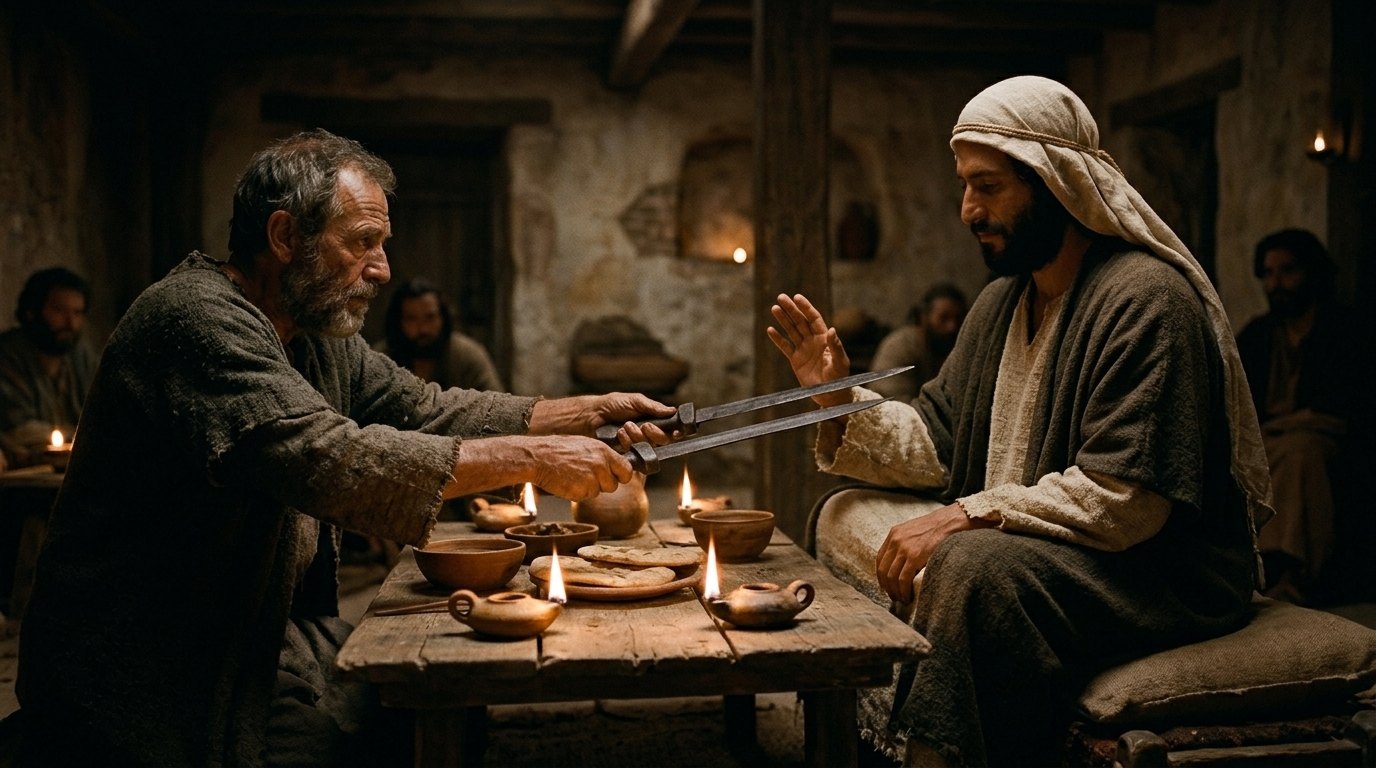
Luke 22:36-38
36 He said to them, “But now if you have a purse, take it, and also a bag; and if you don’t have a sword, sell your cloak and buy one.
37 It is written: ‘And he was numbered with the transgressors’; and I tell you that this must be fulfilled in me. Yes, what is written about me is reaching its fulfillment.”
38 The disciples said, “See, Lord, here are two swords.” “That’s enough!” he replied.
New International Version (NIV)
The answer
Scripture does not treat merely owning a weapon as sin, but it never permits killing from hatred, revenge, greed, or pride. Modern firearms did not exist in Bible times, so no verse names a gun or settles a particular modern firearm regulation. Nevertheless, the Bible directly governs their moral use through its teaching about human life, murder, protection, retaliation, governing authority, and trust in God. It neither commands every Christian to be armed nor gives armed Christians permission to use violence however they choose.
Human life and murder
Romans 13:9 repeats the command, “You shall not murder.” Genesis 9:6 grounds the seriousness of shedding human blood in the fact that God made humanity in His own image. A gun used for murder, intimidation, criminal coercion, or personal vengeance is therefore being used sinfully.
Yet Scripture does not treat every killing as morally identical. In Israel’s law, Exodus 22:2-3 distinguished between a fatal blow when a thief was found breaking in and a killing after sunrise, assigning no guilt of bloodshed in the first case and guilt in the second. That case law is not a modern firearms statute, but it establishes two important distinctions: circumstances and intent matter, and protecting property does not authorize unrestricted killing.
Protection, civil authority, and revenge
- Protecting life matters: Proverbs 24:11 commands, “Rescue those who are being led away to death!” Love of neighbor also refuses to harm others, according to Romans 13:10. Carelessness that needlessly endangers people is therefore a moral concern, not merely a technical one.
- Government bears a particular responsibility: Romans 13:4 describes the governing authority as God’s servant who does not bear the sword in vain when punishing evil. This recognizes legitimate public coercion, but it does not transfer the government’s judicial authority to every private individual.
- Personal revenge is forbidden: Jesus commands His followers to turn the other cheek and to love their enemies in Matthew 5:39 and Matthew 5:44. Romans 12:19 expressly tells believers not to seek revenge, because vengeance belongs to God. A firearm must never become a means of settling scores, answering insults, or nurturing hatred.
Christians have understood the implications for private self-defense differently. The nonresistant reading, especially associated with Anabaptist and Mennonite traditions, understands Jesus’ commands to prohibit His disciples from using lethal violence even defensively. The limited-defensive-force reading, held by many Christians across Catholic, Orthodox, and Protestant traditions, distinguishes revenge from the urgent protection of life and permits defensive force while rejecting hatred, excess, and retaliation. Neither reading permits private vengeance or careless disregard for life.
What Jesus meant about swords
Luke 22:36-38 is the passage most often brought into this discussion. Jesus tells the disciples to take provisions and a sword, and when they produce two swords, He says that is enough. His statement comes as He explains that He is about to be counted with transgressors and fulfil what was written; it is not the founding of an armed Christian movement.
The events immediately afterward prevent a violent interpretation of His mission. When a disciple uses a sword to resist Jesus’ arrest, Jesus orders him to put it back and warns that those who take the sword will die by it, according to Matthew 26:52-54. He heals the injured man in Luke 22:51. Before Pilate, Jesus explains that His kingdom is not of this world and that, if it were, His servants would fight to prevent His arrest, as John 18:36 records.
Consequently, Luke 22 cannot legitimately be used to authorize armed evangelism, political revolution in Christ’s name, or violence to defend Jesus from His appointed suffering. At the same time, the passage does not pronounce the mere possession of the disciples’ two swords sinful.
Practical biblical tests for ownership and use
- Examine the purpose: Lawful possession is different from carrying a weapon to feed aggression, intimidate others, or prepare for revenge.
- Accept responsibility for others: Romans 13:10 makes love of neighbor central, which requires serious attention to safety, training, storage, and self-control.
- Respect lawful authority: Romans 13:1-5 makes submission to governing authorities the ordinary Christian duty, including lawful regulations that do not require disobedience to God.
- Do not make a weapon an idol: Psalm 20:7 contrasts trusting in chariots and horses with trusting in the name of the Lord. Preparation must never become the belief that a firearm, rather than God, is ultimate security.
Answered from Scripture · reviewed November 11, 2026
While modern firearms were invented centuries after the canon closed, Scripture speaks directly and authoritatively to the underlying moral realities of weapons, self-defense, violence, and the heart. God’s Word establishes the sanctity of human life, defines the legitimate use of defensive force, commands subjection to governing authorities who bear the sword, and reserves ultimate vengeance to the Lord. Understanding what Scripture teaches about weapons equips believers to navigate personal protection and public peace with wisdom, vigilance, and Christlike holiness.
Sanctity of Life
God Forbids Murder and Protects Human Life

“Whoever sheds human blood, by humans shall their blood be shed; for in the image of God has God made mankind.
Genesis 9:6 (NIV)
Human life bears God's image, making murder an assault on the Creator Himself.
The entire biblical discussion regarding lethal weapons begins with the absolute sanctity of human life, rooted in the divine decree of Genesis 9:6: 'Whoever sheds the blood of man, by man shall his blood be shed, for God made man in his own image.' Because every human being bears the likeness of the living God, taking an innocent life is not merely a social offense; it is an assault on the Creator Himself. This foundational covenant sets the standard that governs all instruments of force, ancient or modern.
From this primeval decree flows the explicit moral prohibition delivered at Sinai in Exodus 20:13, which commands plainly, 'You shall not murder.' The Hebrew text distinguishes between unauthorized, malicious bloodshed and lawful judicial execution or defense. Scripture never views weapons as morally neutral toys or tools of personal whim; they are objects capable of taking the life God alone created and sustains.
In the New Testament, the Lord Jesus Christ presses the moral gravity of this command directly into the inner life of every person. In Matthew 5:21-22, Jesus explains that the sixth commandment reaches far beyond physical violence: harboring unrighteous anger, nurturing bitter malice, and hurling contemptuous insults place a man in danger of the fires of hell. The apostle John reinforces this absolute standard in 1 John 3:15, stating without compromise that 'everyone who hates his brother is a murderer.' God judges not only the trigger pulled or the blade drawn, but the secret hatred of the heart that drives a man to seek harm against his neighbor.
| Passage | What it says |
|---|---|
| Genesis 9:6 | God establishes that shedding human blood requires an accounting because man is made in His image. |
| Exodus 20:13 | The sixth commandment strictly forbids murder. |
| Matthew 5:21-22 | Jesus warns that unjust anger and contempt in the heart are subject to the same judgment as murder. |
| 1 John 3:15 | John declares that anyone who hates his brother is a murderer. |
Defending the Household
Scripture Recognizes Legitimate Defense of the Vulnerable
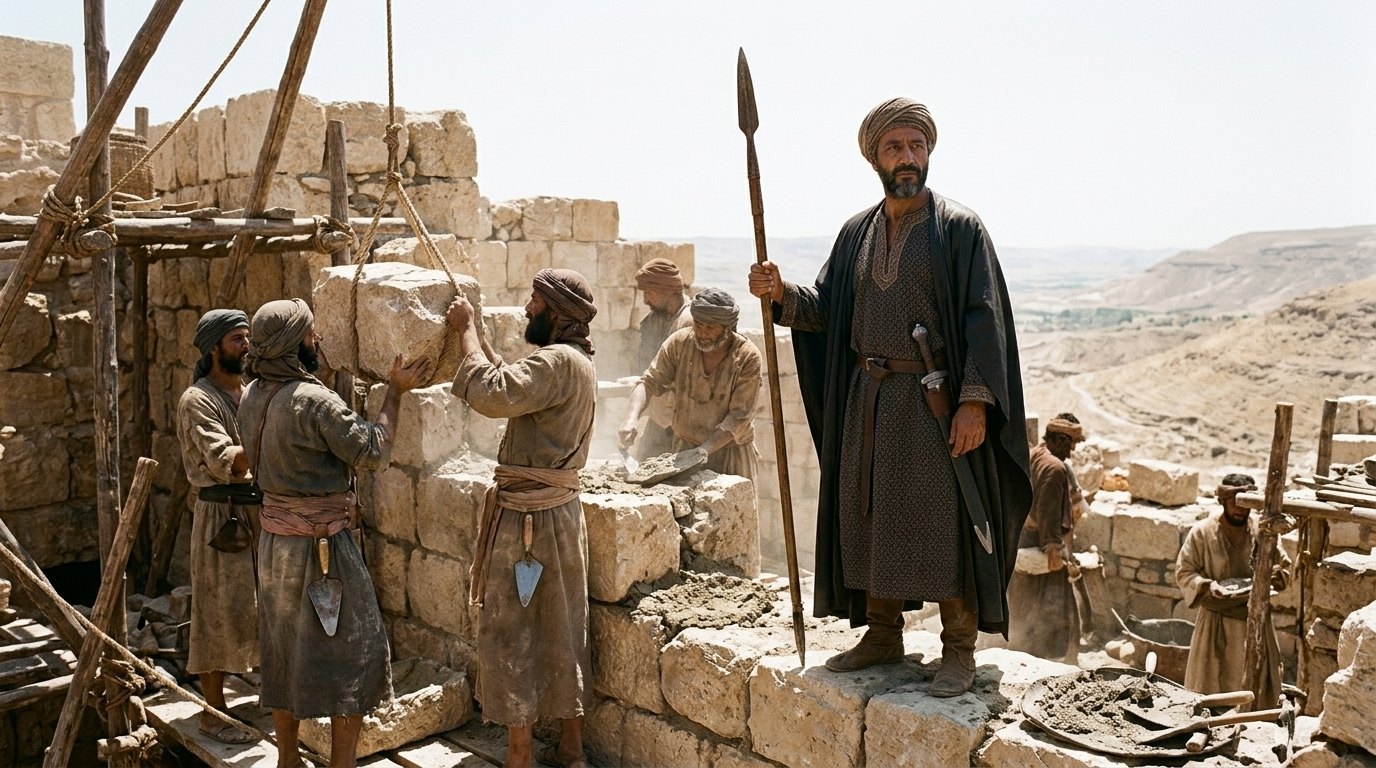
“If a thief is caught breaking in at night and is struck a fatal blow, the defender is not guilty of bloodshed; but if it happens after sunrise, the defender is guilty of bloodshed. “Anyone who steals must certainly make restitution, but if they have nothing, they must be sold to pay for their theft.
Exodus 22:2-3 (NIV)
The Law distinguishes between justifiable nighttime defense against an intruder and deliberate daytime killing.
While God forbids murder, Scripture explicitly affirms the moral duty to shield the innocent and protect one's household from violent evil. In Exodus 22:2-3, the Mosaic Law establishes a critical legal distinction: if a homeowner strikes a thief breaking in under cover of darkness and the thief dies, there is no bloodguilt. In the dead of night, where intent cannot be discerned and life is in immediate peril, lethal defensive force is recognized as justified; only when dawn breaks and alternative intervention is possible does the standard shift to prevent deliberate bloodshed.
This protective vigilance extends to the corporate defense of family and community. When enemies conspired to slaughter the vulnerable builders of Jerusalem's broken wall, Nehemiah 4:14 records the governor's rallying cry: 'Do not be afraid of them. Remember the Lord, who is great and awesome, and fight for your brothers, your sons, your daughters, your wives, and your homes.' Defending one's family is not an act of vengeance, but an expression of faithful love and duty under God.
The Psalms and Wisdom literature repeatedly hold God's people accountable to intervene for the defenseless. Psalm 82:3-4 commands us to 'rescue the weak and the needy; deliver them from the hand of the wicked,' while Proverbs 24:11-12 warns that claiming ignorance will not excuse someone who fails to hold back those stumbling toward slaughter. The New Testament maintains this calling: 1 Timothy 5:8 declares that a man who fails to provide for his relatives and household has denied the faith, an obligation that fundamentally includes their physical security, as recognized when the Lord notes in Luke 11:21 that a fully armed strong man keeps his dwelling in peace.
| Passage | What it says |
|---|---|
| Exodus 22:2-3 | A homeowner striking an intruder breaking in at night incurs no bloodguilt, whereas daylight requires restraint. |
| Nehemiah 4:14 | Nehemiah charges the people to remember the Lord and fight for their families, sons, daughters, and homes. |
| Psalms 82:3-4 | God commands the rescue of the weak and needy from the hand of the wicked. |
| Proverbs 24:11-12 | Believers are instructed to deliver those drawn away toward death and hold back those stumbling to slaughter. |
| 1 Timothy 5:8 | Paul states that failing to provide for and protect one's household denies the faith. |
| Luke 11:21 | Jesus references a strong man armed guarding his palace to illustrate the keeping of his goods in peace. |
The Disciples' Swords
Jesus Prepares His Followers for Perilous Times
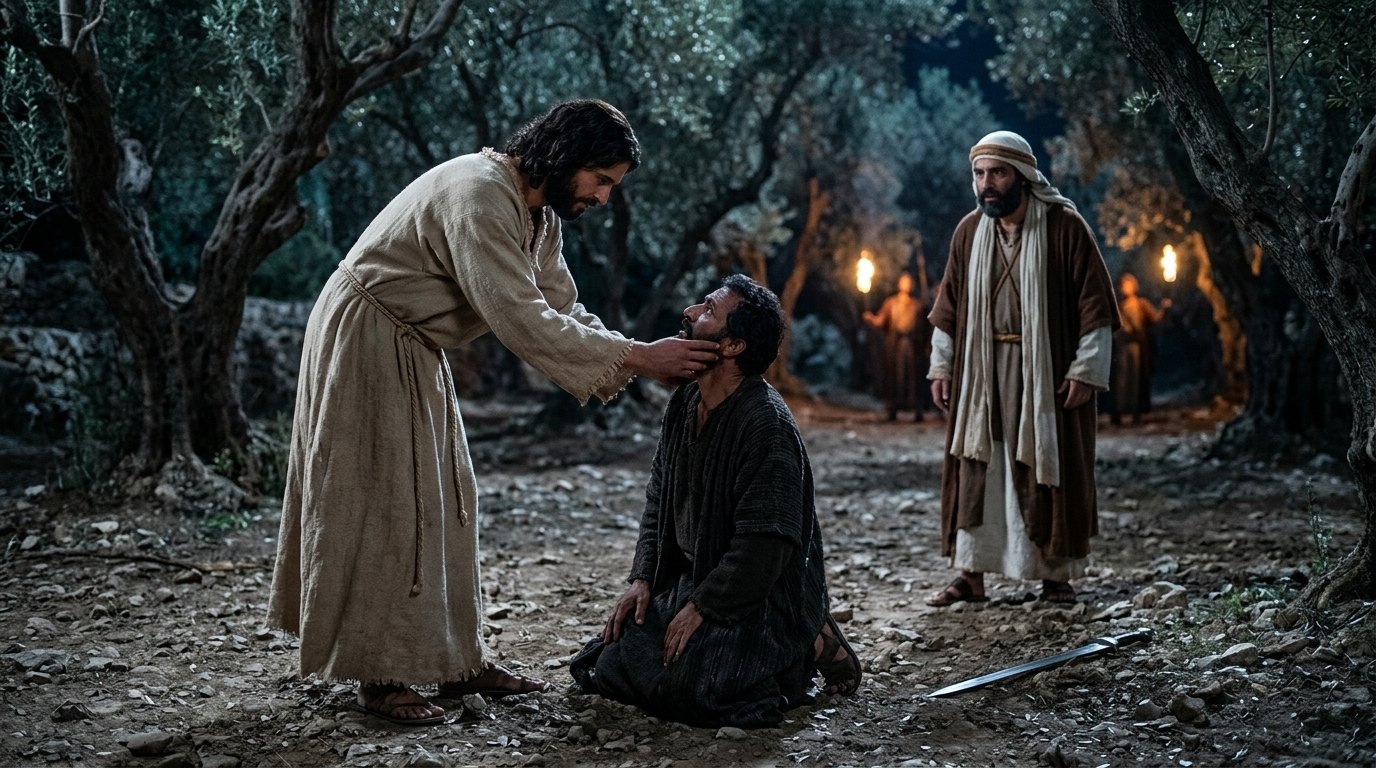
He said to them, “But now if you have a purse, take it, and also a bag; and if you don’t have a sword, sell your cloak and buy one.
Luke 22:36 (NIV)
Jesus explicitly instructs His disciples to obtain a sword in anticipation of increased hostility.
On the night of His betrayal, Jesus gave an instruction that has provoked careful study across church history. In Luke 22:36, as the hour of His arrest approached, He altered His previous missionary directives: 'Let the one who has no sword sell his cloak and buy one.' While previously sent out without provision or defense, the disciples were now entering a hostile world where basic precautions and practical preparation were necessary. When the disciples responded in Luke 22:38 by presenting two physical short swords, Jesus replied, 'It is enough.' Two blades were clearly insufficient for military rebellion against Roman cohorts, demonstrating that Christ never intended an armed insurgency, yet He acknowledged the lawful possession of instruments of travel defense.
The line between lawful possession and sinful reliance, however, was drawn instantly in Gethsemane. When Peter drew his sword to halt Christ's arrest, striking the high priest's servant, Luke 22:49-51 records that the Lord immediately rebuked the violence and miraculously healed the wounded man. John 18:11 reveals the sovereign heart of Jesus' rebuke: 'Put your sword into its sheath; shall I not drink the cup that the Father has given me?' Physical weapons could not establish or protect the kingdom of God, nor could they be used to derail the redemptive sacrifice of the cross.
Furthermore, Jesus delivered an enduring warning to Peter and every future disciple in Matthew 26:52: 'All who take the sword will perish by the sword.' Christ forbids the violent spirit that trusts in earthly steel rather than divine providence. Weapons may have a modest, practical function for physical protection in a fallen world, but the advance of the gospel is accomplished solely through the proclamation of truth, suffering love, and the power of the Holy Spirit.
| Passage | What it says |
|---|---|
| Luke 22:36 | Jesus commands whoever has no sword to sell his cloak and purchase one. |
| Luke 22:38 | The disciples present two swords to Jesus, and He replies that it is enough. |
| Matthew 26:52 | Jesus rebukes Peter for drawing the sword in Gethsemane, warning that those who live by the sword perish by it. |
| John 18:11 | Christ commands Peter to sheath his sword, accepting the cup the Father has given Him. |
| Luke 22:49-51 | The disciples ask whether to strike with the sword before Jesus halts the violence and heals the wounded man. |
Civil Government
God Gives the Sword to Civil Magistrates
For the one in authority is God’s servant for your good. But if you do wrong, be afraid, for rulers do not bear the sword for no reason. They are God’s servants, agents of wrath to bring punishment on the wrongdoer.
Romans 13:4 (NIV)
The civil ruler is God's servant bearing the sword to execute wrath on evildoers.
Scripture makes a vital distinction between personal defense and the formal administration of retributive justice. In Romans 13:4, the apostle Paul reveals that the civil magistrate 'is God's servant for your good. But if you do wrong, be afraid, for he does not bear the sword in vain. For he is the servant of God, an avenger who carries out God's wrath on the wrongdoer.' The 'sword' represents the sovereign, God-ordained monopoly on lawful lethal force given to the state to maintain civil order and punish wickedness.
Because God established governing authorities to curb evil in a fallen world, Romans 13:1-2 commands every soul to be subject to the higher powers. Resisting legitimate civil authority is resisting what God Himself has appointed. Believers are called to respect civil laws regarding public order, weapons, and defense, recognizing that the magistrate is accountable to God for the righteous administration of justice.
This authority is echoed in 1 Peter 2:13-14, where Peter instructs believers to submit to governors as those sent by the Lord 'to punish those who do evil and to praise those who do good.' The state holds a divine commission to wield physical force for public safety. Yet, this power is never absolute. When human rulers overstep their divine boundary and command what God forbids, the apostles laid down the unwavering principle in Acts 5:29: 'We must obey God rather than men.' The sword of civil government is a borrowed instrument of God's common grace, designed to restrain lawlessness until Christ returns to reign in perfect righteousness.
| Passage | What it says |
|---|---|
| Romans 13:1-2 | Every person must be subject to governing authorities, which are ordained by God. |
| Romans 13:3-4 | The magistrate does not bear the sword in vain but executes justice against criminals. |
| 1 Peter 2:13-14 | Governors are sent by God to punish those who do evil and praise those who do good. |
| Acts 5:29 | Peter and the apostles clarify that God must be obeyed rather than human authorities when they command sin. |
Pursuing Peace
Believers Forego Vengeance and Seek True Peace
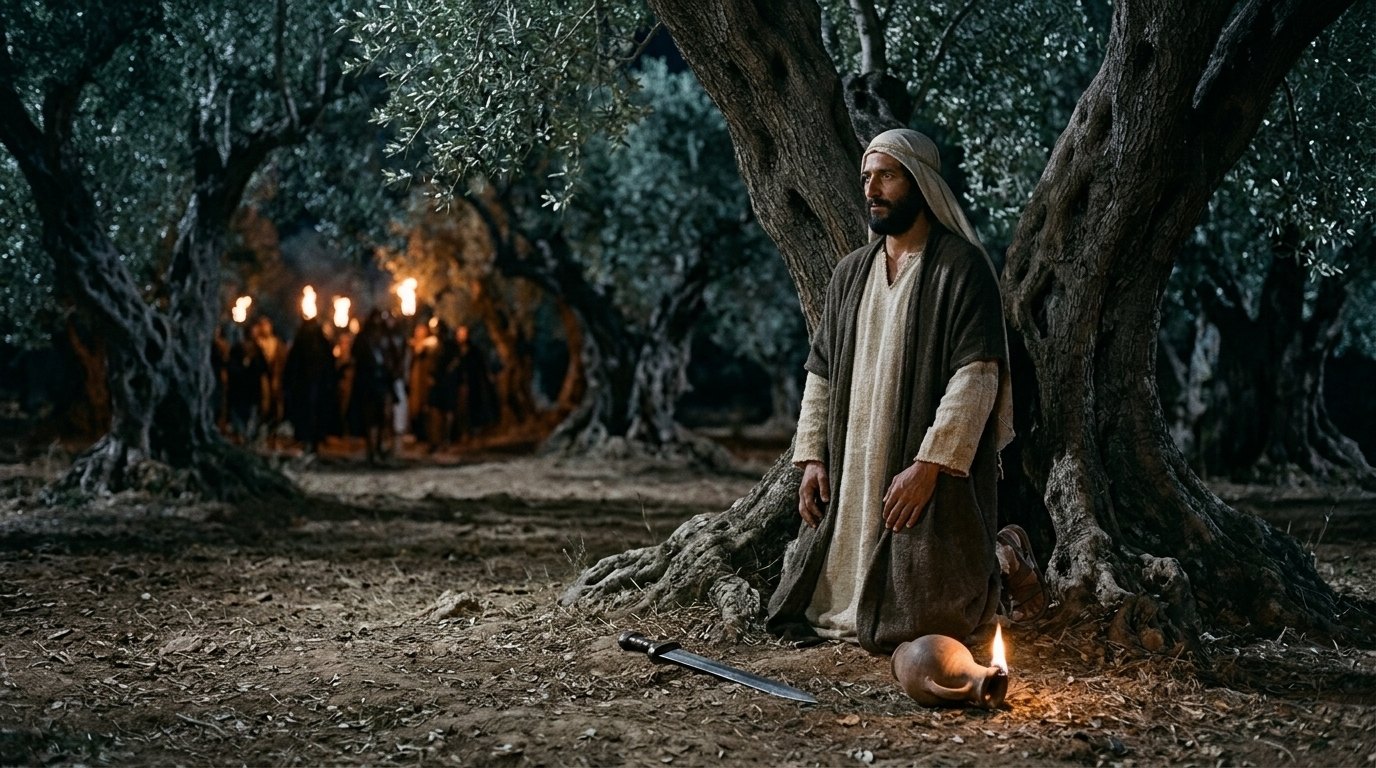
Do not take revenge, my dear friends, but leave room for God’s wrath, for it is written: “It is mine to avenge; I will repay,” says the Lord.
Romans 12:19 (NIV)
Personal retaliation is forbidden because God alone has the right to repay evil.
In Romans 12:19, Paul issues an absolute prohibition against private vengeance: "Beloved, do not avenge yourselves, but rather give place to wrath; for it is written, 'Vengeance is Mine, I will repay,' says the Lord." While civil magistrates bear the sword to punish evildoers, individual believers are never permitted to take justice into their own hands or nurse retaliation. The Christian life is marked by radical patience and forbearance, seeking reconciliation wherever possible. As Paul writes in Romans 12:18, "If it is possible, as much as depends on you, live peaceably with all men."
This peaceable disposition reflects the explicit teaching of Jesus Christ in the Sermon on the Mount. In Matthew 5:39, the Lord commands, "Whoever slaps you on your right cheek, turn the other to him also," exposing the wickedness of retaliatory pride and personal vendettas. A weapon must never become an instrument of personal retribution, anger, or escalated strife. Believers are called to a higher standard of enduring wrong rather than returning blow for blow. The author of Hebrews underscores this requirement in Hebrews 12:14, urging believers to "pursue peace with all people, and holiness, without which no one will see the Lord."
Jesus Himself modeled this ultimate restraint in the Garden of Gethsemane. In Matthew 26:53-54, He reminds Peter that He could instantly pray to His Father for twelve legions of angels, yet He willingly submitted to suffering according to the Scriptures. Following His example, Peter instructs the church in 1 Peter 3:11 to "turn away from evil and do good; let him seek peace and pursue it." True Christian strength is demonstrated not in brandishing force to retaliate, but in resting entirely in God's righteous judgment.
| Passage | What it says |
|---|---|
| Romans 12:18 | Paul exhorts believers, as much as depends on them, to live peaceably with all men. |
| Romans 12:19 | Christians are commanded not to avenge themselves, leaving room for God's wrath. |
| Matthew 5:39 | Jesus warns against retaliating against personal insult or offense, teaching believers to turn the other cheek. |
| Hebrews 12:14 | The author calls believers to pursue peace with all people and holiness without which no one sees the Lord. |
| Matthew 26:53-54 | Jesus states He could appeal for legions of angels, but submits to God's will and the fulfillment of Scripture. |
| 1 Peter 3:11 | Believers are commanded to turn away from evil, do good, and seek peace and pursue it. |
Spiritual Warfare and Trust
God Is the Believer's Ultimate Fortress and Deliverer
The weapons we fight with are not the weapons of the world. On the contrary, they have divine power to demolish strongholds.
2 Corinthians 10:4 (NIV)
It clarifies that the Christian's ultimate warfare and weapons are spiritual rather than physical.
In 2 Corinthians 10:4, Paul declares the true nature of the believer's armament: "For the weapons of our warfare are not carnal but mighty in God for pulling down strongholds." While physical instruments exist in an earthly realm, no firearm, sword, or military defense can deliver the human soul from sin, Satan, or death. The supreme battle facing humanity is spiritual, and placing ultimate confidence in mortal weaponry is an empty idolatry that fails before eternity.
This truth anchors the faith of Old Testament saints across generations. When facing the towering Philistine giant, David boldly proclaimed in 1 Samuel 17:45-47 that the battle belongs to the Lord, announcing that "the Lord does not save with sword and spear." David understood that victory rests solely in the sovereign hand of God. The psalmist echoes this settled conviction in Psalm 20:7, writing, "Some trust in chariots, and some in horses; but we will remember the name of the Lord our God." Likewise, Psalm 44:6-7 confesses, "For I will not trust in my bow, nor shall my sword save me. But You have saved us from our enemies."
Consequently, the believer's daily readiness relies upon heavenly armor. Paul outlines this divine protection in Ephesians 6:10-18, calling Christians to stand strong in the Lord against spiritual hosts of wickedness. The believer puts on the breastplate of righteousness, the shield of faith, and takes up "the sword of the Spirit, which is the word of God." Earthly instruments are limited, temporary, and frail, but God alone remains the rock, high tower, and eternal refuge of His people.
| Passage | What it says |
|---|---|
| 1 Samuel 17:45-47 | David declares the battle belongs to the Lord, who saves not with physical sword or spear. |
| Psalms 20:7 | Trust is placed not in physical chariots or horses, but in the name of the Lord God. |
| Psalms 44:6-7 | The psalmist confesses he does not trust in his bow or sword for victory, but in God. |
| 2 Corinthians 10:3-4 | The weapons of Christian warfare are not carnal but mighty through God to pull down strongholds. |
| Ephesians 6:10-18 | Believers are commanded to put on the whole armor of God, taking the sword of the Spirit. |
Where in the Bible
| Book | Passages |
|---|---|
| Genesis | 1 · Genesis 9:6 |
| Exodus | 2 · Exodus 20:13, Exodus 22:2-3 |
| 1 Samuel | 1 · 1 Samuel 17:45-47 |
| Nehemiah | 1 · Nehemiah 4:14 |
| Psalms | 3 · Psalms 82:3-4, Psalms 20:7, Psalms 44:6-7 |
| Proverbs | 1 · Proverbs 24:11-12 |
| Matthew | 4 · Matthew 5:21-22, Matthew 26:52, Matthew 5:39, Matthew 26:53-54 |
| Luke | 4 · Luke 11:21, Luke 22:36, Luke 22:38, Luke 22:49-51 |
| John | 1 · John 18:11 |
| Acts | 1 · Acts 5:29 |
| Romans | 4 · Romans 13:1-2, Romans 13:3-4, Romans 12:18, Romans 12:19 |
| 2 Corinthians | 1 · 2 Corinthians 10:3-4 |
| Ephesians | 1 · Ephesians 6:10-18 |
| 1 Timothy | 1 · 1 Timothy 5:8 |
| Hebrews | 1 · Hebrews 12:14 |
| 1 Peter | 2 · 1 Peter 2:13-14, 1 Peter 3:11 |
| 1 John | 1 · 1 John 3:15 |
The story in order
- God establishes life's value (c. 2350 BC) · Genesis 9:6 · Human life is sacred, made in God's image, requiring accountability for its shedding.
- The Sixth Commandment (c. 1450 BC) · Exodus 20:13 · Murder is strictly forbidden by God's law.
- Defense of home and family (c. 1450 BC) · Exodus 22:2-3 · Legitimate defense of property and household is recognized under specific conditions.
- Remember and fight for family (c. 445 BC) · Nehemiah 4:14 · Believers are called to defend their families and homes.
- Jesus on anger and murder (c. AD 30) · Matthew 5:21-22 · Inner attitudes like anger are judged as seriously as the outward act of murder.
- Jesus commands disciples to buy swords (c. AD 30) · Luke 22:36 · Jesus instructs His followers to be prepared, even with swords.
- Jesus rebukes sword use (c. AD 30) · Matthew 26:52 · Jesus forbids His followers from using the sword, warning of its consequences.
- Civil authorities bear the sword (c. AD 57) · Romans 13:1-4 · Government is ordained by God to wield the sword for justice.
- Governors punish evil (c. AD 64) · 1 Peter 2:13-14 · God sends authorities to punish wrongdoers and commend good.
- Spiritual weapons (c. AD 56) · 2 Corinthians 10:3-4 · Christian spiritual warfare uses divine, not carnal, weapons.
- Armor of God (c. AD 60) · Ephesians 6:10-18 · Believers are equipped with spiritual armor for their battles.
Key words
- Murder (רָצַח (ratsach))
- The unlawful killing of a human being. · Exodus 20:13
- Sword (מַחֲלָצַיִם (maḵlāṣāyim), μάχαιρα (machaira))
- A weapon used for combat; also metaphorically for civil authority or God's Word.
- Peace (שָׁלוֹם (shalom), εἰρήνη (eirēnē))
- Shalom; wholeness, well-being, tranquility, and right relationships.
- Vengeance (נָקָם (naqam), ἐκδίκησις (ekdikēsis))
- Retribution for a wrong; punishment inflicted in return for an injury.
Scripture never separates the weapon in the hand from the posture of the heart, reminding believers that life is sacred and belongs to God. Whether considering personal protection, the duties of citizenship, or the defense of the vulnerable, our confidence rests not in steel or firepower, but in the sovereign Lord who calls us to pursue peace and practice righteousness.
30 passages, each cited once.
How the major Christian traditions read this
All Christian traditions confess that human life is sacred as God's creation (Genesis 9:6), that murder and personal vengeance are strictly forbidden (Exodus 20:13; Romans 12:19), and that civil rulers legitimately bear the sword to punish evildoers and maintain order (Romans 13:1-4).
Catholic
The Church teaches that legitimate defense is a grave duty for those responsible for the lives of others, as life is a gift from God (Exodus 20:13). While personal vengeance is forbidden (Romans 12:19), preserving one's own life or protecting one's family and the innocent may require rendering an aggressor unable to cause harm, even if lethal force results unintentionally. Christ’s instruction regarding swords (Luke 22:36) acknowledges the reality of perilous conditions. However, the use of arms must always remain proportionate, strictly aimed at preservation of life rather than retaliation, and subordinate to the pursuit of the common good and peace (Matthew 5:9).
Scripture: Exodus 20:13, Romans 12:19, Luke 22:36, Matthew 5:9
Orthodox
We view human life as sacred and look to the peace of Christ as the supreme standard of the Gospel, recalling His rebuke to Peter to put away his sword (Matthew 26:52). While recognizing the fallen reality of this world where the state bears the sword to restrain evil (Romans 13:4), the Church has historically held a deep caution regarding bloodshed. Taking a human life, even in necessary self-defense or defense of the innocent, leaves a spiritual wound and requires pastoral care and repentance. We emphasize prayer, spiritual vigilance, and peacemaking over reliance on lethal weapons (Matthew 5:39).
Scripture: Matthew 26:52, Romans 13:4, Matthew 5:39
Lutheran
Through the doctrine of the two kingdoms, we distinguish between the spiritual realm of the Gospel and the temporal realm governed by law and the sword (Romans 13:1-4). A Christian in his private person is called to turn the other cheek and endure wrong patiently (Matthew 5:39). Yet within his earthly vocation—as a parent, citizen, or magistrate—love for one's neighbor demands defending the weak from harm (Psalm 82:3-4). Owning or using a weapon for lawful defense is permissible under neighbor-love, provided it is governed by justice and never motivated by personal malice or vengeance (Romans 12:19).
Scripture: Romans 13:1-4, Matthew 5:39, Psalms 82:3-4, Romans 12:19
Reformed & Presbyterian
We hold that God's moral law, particularly the Sixth Commandment (Exodus 20:13), requires us to preserve our own lives and the lives of our neighbors by all lawful endeavors. While unlawful violence and private revenge are condemned (Romans 12:19), Scripture permits necessary defense against unjust aggression, as seen in the lawful protection of home and family (Nehemiah 4:14; Exodus 22:2-3). The magistrate bears the sword under God's authority (Romans 13:4), and citizens may responsibly possess weapons to protect the innocent when immediate protection is lacking, always acting within the bounds of civil law and justice.
Scripture: Exodus 20:13, Romans 12:19, Nehemiah 4:14, Exodus 22:2-3, Romans 13:4
Anglican & Episcopal
We hold that the Christian life is fundamentally called to follow the Prince of Peace, seeking reconciliation and the preservation of order (Romans 12:18). Scripture affirms that the civil magistrate is ordained to keep the peace and restrain wickedness by the sword (Romans 13:4). In personal life, while private vendetta is excluded (Romans 12:19), defending one's neighbor and household against violent malice can be an act of charity, as long as it conforms to lawful order. Many among us also urge restraint and communal peace, minding Christ’s warning that those who live by violence perish by it (Matthew 26:52).
Scripture: Romans 12:18, Romans 13:4, Romans 12:19, Matthew 26:52
Baptist
We look directly to the authority of Scripture, which upholds the right and duty of protecting one's family and the defenseless (1 Timothy 5:8; Nehemiah 4:14). Jesus told His disciples to acquire a sword when facing hostile travel (Luke 22:36), demonstrating that possessing a weapon for protection is not inherently sinful. While Scripture strictly forbids murder, malice, and taking personal revenge (Matthew 5:21-22; Romans 12:19), owning a firearm for personal or home defense is an issue of Christian liberty and individual stewardship before God, exercised in submission to lawful civil authority (Romans 13:1).
Scripture: 1 Timothy 5:8, Nehemiah 4:14, Luke 22:36, Matthew 5:21-22, Romans 12:19
Methodist & Wesleyan
We emphasize holy living, neighbor-love, and active peacemaking as central to Christian discipleship (Matthew 5:9; Romans 14:19). While Scripture acknowledges the reality of weapons and the civil state's duty to maintain peace (Romans 13:4), our calling is to overcome evil with good (Romans 12:21). The Wesleyan tradition places strong emphasis on social holiness and reducing violence in our communities. While individuals may seek to protect their families, our corporate witness urges reliance on the Holy Spirit and restorative peace over reliance on firearms, warning against the spiritual peril of harboring fear and lethal anger (1 John 3:15).
Scripture: Matthew 5:9, Romans 14:19, Romans 13:4, Romans 12:21, 1 John 3:15
Pentecostal & Charismatic
We believe our primary warfare is spiritual, fought not with earthly weapons but through prayer, faith, and the power of the Holy Spirit (2 Corinthians 10:4; Ephesians 6:12). While Scripture does not prohibit possessing tools or weapons for practical defense and protection of home (Luke 22:36; Nehemiah 4:14), our ultimate security rests in the Lord's supernatural protection (Psalm 91:1-4). Believers are warned against placing their confidence in earthly arms (Psalm 20:7). Where a believer chooses to keep a weapon, it must be guided by wisdom, a clean conscience, and freedom from fear or anger.
Scripture: 2 Corinthians 10:4, Ephesians 6:12, Luke 22:36, Psalms 91:1-4, Psalms 20:7
Non-denominational & Evangelical
We look to the plain teaching of God's Word: murder is sin (Exodus 20:13), but self-defense and the defense of innocent human life are biblically justified (Exodus 22:2; Proverbs 24:11). Jesus acknowledged the practical necessity of defense when He told the disciples to buy a sword (Luke 22:36). While we must never take personal revenge or act out of hatred (Romans 12:19), owning a firearm for the protection of one's household is a matter of individual conscience and personal responsibility under God (1 Timothy 5:8), always subject to honoring governing authorities (Romans 13:1).
Scripture: Exodus 20:13, Exodus 22:2, Proverbs 24:11, Luke 22:36, Romans 12:19
Where they differ
Moral legitimacy of armed personal self-defense
- Catholic
- Permissible and often a duty when protecting innocent lives from grave harm.
- Orthodox
- Permitted in extremes, though causing death always brings spiritual grief and repentance.
- Lutheran
- Permissible through neighbor-love in one's earthly vocation to protect others.
- Reformed & Presbyterian
- Lawful under the Sixth Commandment to preserve life against violent attack.
- Anglican & Episcopal
- Permitted for defense of the innocent, though personal vengeance is strictly forbidden.
- Baptist
- Fully justified biblically as stewardship and protection of one's home.
- Methodist & Wesleyan
- Strongly cautioned against; discipleship prioritizes nonviolence and de-escalation over armed defense.
- Pentecostal & Charismatic
- Allowed practically, but believers must rely primarily on God's spiritual shield.
- Non-denominational & Evangelical
- Justified by Scripture as a matter of personal responsibility and conscience.
Scripture: Exodus 22:2, Luke 22:36, Matthew 5:39, Romans 12:19
Significance of Christ's command to buy swords
- Catholic
- A practical allowance for lawful protection amid dangerous earthly conditions.
- Orthodox
- Spoken to fulfill prophecy, sharply limited by Christ's rebuke in Gethsemane.
- Lutheran
- Recognition of temporal dangers requiring ordinary means of protection.
- Reformed & Presbyterian
- Scriptural warrant that bearing ordinary means of defense is not sinful.
- Anglican & Episcopal
- A warning of perilous times, quickly tempered by His call to peace.
- Baptist
- Clear biblical evidence that believers may possess weapons for safety.
- Methodist & Wesleyan
- Understood primarily as fulfilling prophecy regarding transgressors, not endorsing weapon ownership.
- Pentecostal & Charismatic
- Highlights worldly danger, though our primary weapons remain spiritual.
- Non-denominational & Evangelical
- A plain biblical endorsement of carrying practical defense against violent threats.
Scripture: Luke 22:36-38, Matthew 26:52
Your pastor can tell you where your church stands.
Scripture cited
- Luke 22:36-38
- Exodus 22:2-3
- Romans 13:1-10
- Matthew 26:47-56
- Luke 22:47-53
- Matthew 5:38-48
- Romans 12:17-21
- Proverbs 24:11-12
- Genesis 9:5-6
- John 18:36-37
- Psalms 20:7-8