What is the meaning of Luke 2:1-20?
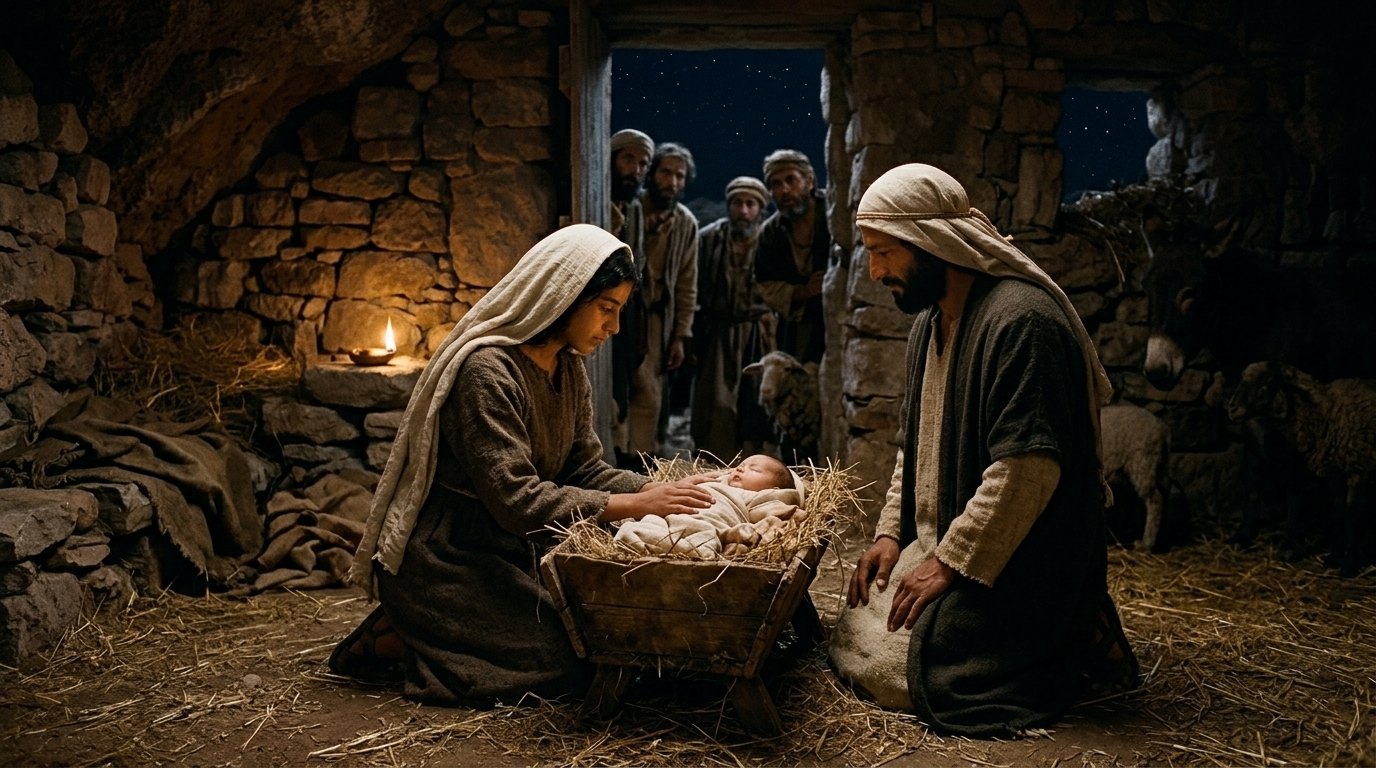
Luke 2:1-20
1 In those days Caesar Augustus issued a decree that a census should be taken of the entire Roman world.
2 (This was the first census that took place while Quirinius was governor of Syria.)
3 And everyone went to their own town to register.
4 So Joseph also went up from the town of Nazareth in Galilee to Judea, to Bethlehem the town of David, because he belonged to the house and line of David.
5 He went there to register with Mary, who was pledged to be married to him and was expecting a child.
6 While they were there, the time came for the baby to be born,
7 and she gave birth to her firstborn, a son. She wrapped him in cloths and placed him in a manger, because there was no guest room available for them.
8 And there were shepherds living out in the fields nearby, keeping watch over their flocks at night.
9 An angel of the Lord appeared to them, and the glory of the Lord shone around them, and they were terrified.
10 But the angel said to them, “Do not be afraid. I bring you good news that will cause great joy for all the people.
11 Today in the town of David a Savior has been born to you; he is the Messiah, the Lord.
12 This will be a sign to you: You will find a baby wrapped in cloths and lying in a manger.”
13 Suddenly a great company of the heavenly host appeared with the angel, praising God and saying,
14 “Glory to God in the highest heaven, and on earth peace to those on whom his favor rests.”
15 When the angels had left them and gone into heaven, the shepherds said to one another, “Let’s go to Bethlehem and see this thing that has happened, which the Lord has told us about.”
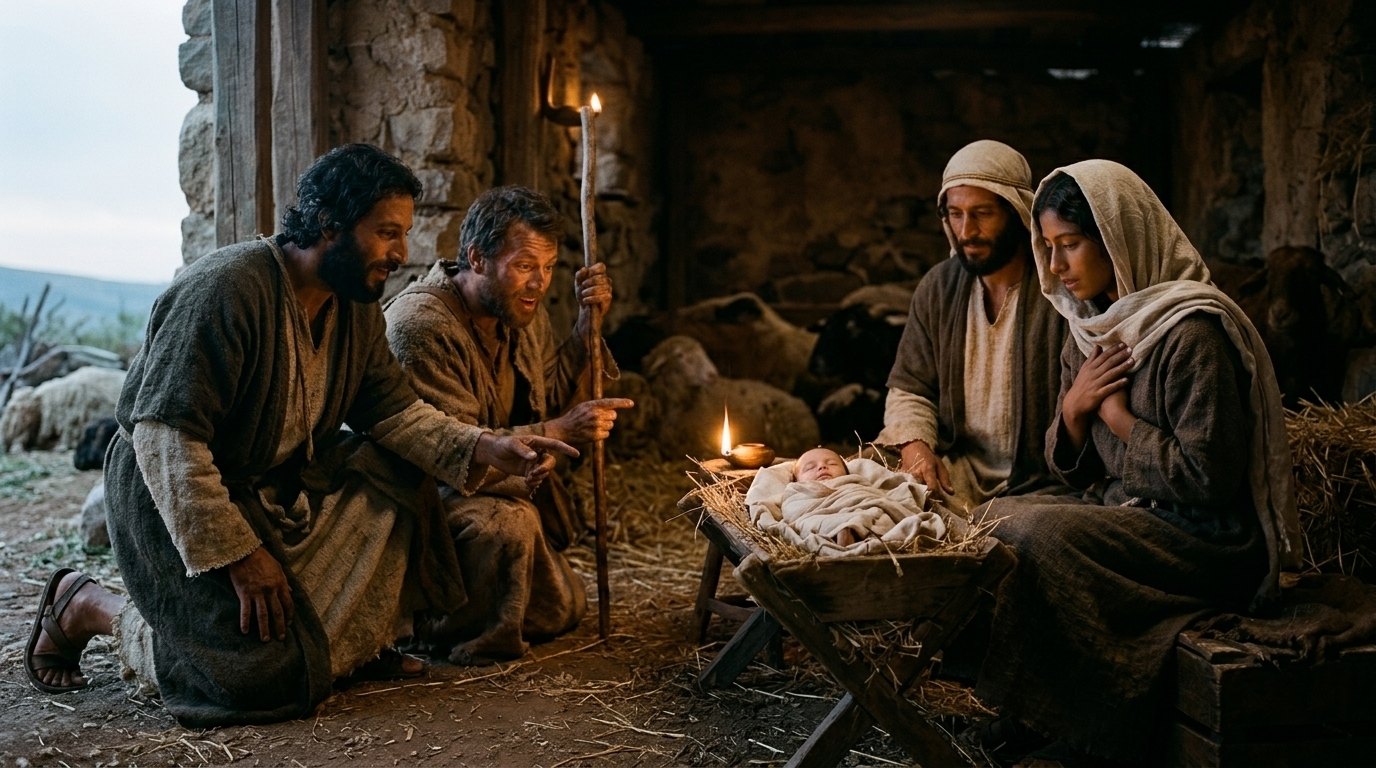
16 So they hurried off and found Mary and Joseph, and the baby, who was lying in the manger.
17 When they had seen him, they spread the word concerning what had been told them about this child,
18 and all who heard it were amazed at what the shepherds said to them.
19 But Mary treasured up all these things and pondered them in her heart.
20 The shepherds returned, glorifying and praising God for all the things they had heard and seen, which were just as they had been told.
New International Version (NIV)
The answer
Luke 2:1–20 shows that God sent His promised Savior into real history and humble circumstances, announced His identity through angels, and moved ordinary people to seek Him, tell others, and worship God. The heart of the passage is the angel’s declaration in Luke 2:11: the baby born in Bethlehem is “a Savior, who is Christ the Lord.”
God is at work through earthly events
Caesar Augustus’s enrollment and Quirinius’s governorship place Jesus’ birth within public history, not legend or imagination (Luke 2:1–2). Joseph travels from Nazareth to Bethlehem because he belongs to David’s house and family (Luke 2:3–5). Although an emperor issues the decree, God’s purpose is unfolding through these events: Jesus is born in David’s city, with His Davidic identity emphasized. Earthly rulers exercise power, but they do not frustrate God’s saving plan.
The Savior comes without royal display
Mary wraps her firstborn son in cloth and lays Him in a feeding trough because there is no room in the inn (Luke 2:6–7). The one announced as Lord is not born with earthly splendor. The feeding trough later becomes part of the sign by which the shepherds identify Him (Luke 2:12). His lowly circumstances therefore belong to the message: God’s salvation arrives not through human prestige, but through this humble child.
The angel explains who Jesus is and why His birth matters
The titles in Luke 2:10–11 carry the meaning:
- Savior: He is the one God sends to rescue His people.
- Christ: He is God’s anointed Messiah, the promised king.
- Lord: He possesses divine authority and is worthy of worship and obedience.
His birth is therefore “good news of great joy,” not merely a touching family event. The heavenly army responds by glorifying God and announcing peace and goodwill on earth (Luke 2:13–14). This peace comes through the Savior whose birth has just been announced; it is not a promise that every earthly conflict will immediately disappear.
The passage ends with several responses to Jesus
The shepherds promptly go to Bethlehem and find everything as the angel said (Luke 2:15–16). They then publicize what they have heard about the child, and their hearers wonder (Luke 2:17–18). Mary responds differently: she keeps these sayings and ponders them in her heart (Luke 2:19). Finally, the shepherds return glorifying and praising God (Luke 2:20).
These responses show that amazement alone is not the endpoint. The good news calls people to seek Christ, speak truthfully about Him, treasure God’s works thoughtfully, and give God glory. The shepherds’ obedience and praise, together with Mary’s attentive pondering, provide enduring examples of how to receive the announcement of Jesus’ birth.
Answered from Scripture · reviewed November 11, 2026
Luke 2:1-20 reveals that Jesus' birth is neither an accident of human history nor a secluded event, but the sovereign fulfillment of God's redemptive promise unfolded across two distinct movements: the providential ordering of time and place, and the glorious angelic proclamation followed by human response. By tracing every verse of this foundational narrative, the reader sees how God orchestrates imperial politics and humble circumstances to present Jesus as Savior, Christ, and Lord to all people.
Sovereign Timing
Caesar's imperial edict serves Christ's promised birth
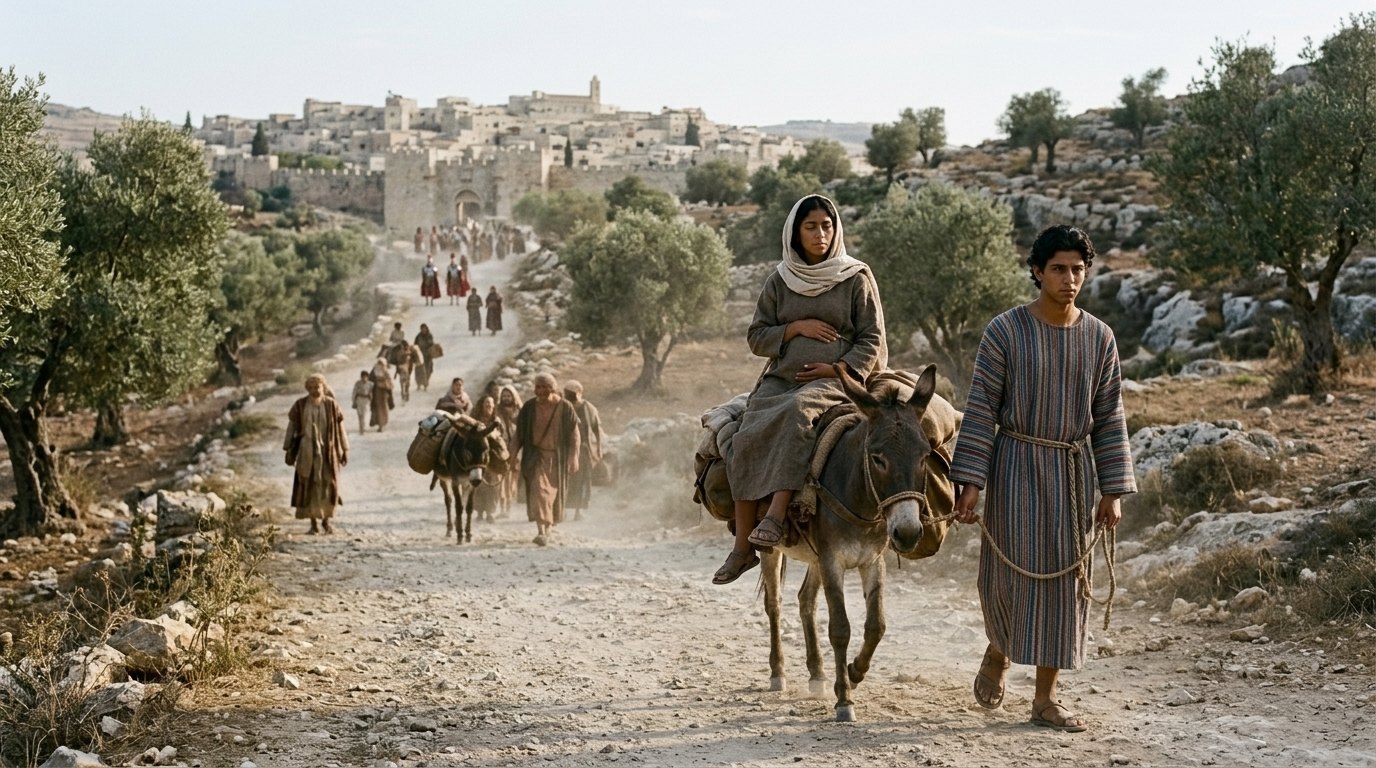
So Joseph also went up from the town of Nazareth in Galilee to Judea, to Bethlehem the town of David, because he belonged to the house and line of David.
Luke 2:4 (NIV)
Joseph's journey from Nazareth to Bethlehem highlights the precise fulfillment of messianic lineage and prophetic geography orchestrated through an imperial decree.
Luke anchors the incarnation not in vague myth, but in concrete history, revealing in Luke 2:4 that even an imperial registry served God's eternal decree to bring David's heir to David's city. Caesar Augustus thought he was merely cataloging his empire when he commanded that all the world should be registered (Luke 2:1). This specific census took place while Quirinius was governing Syria (Luke 2:2), demonstrating that God governs earthly rulers down to the calendar of their political administration. Under this Roman mandate, citizens were compelled to return to their ancestral hometowns (Luke 2:3), driving Joseph southward from Nazareth in Galilee up into Judea, to the small village called Bethlehem (Luke 2:4). He made this grueling journey because he was of the house and lineage of David, bringing Mary, his betrothed wife, who was visibly with child (Luke 2:5). What seemed like inconvenient subjugation to pagan Rome was, in truth, the sovereign hand of God guiding the holy family straight to the ancient seat of messianic prophecy.
| Passage | What it says |
|---|---|
| Luke 2:1 | Caesar Augustus issues a royal decree demanding the registration of the entire inhabited Roman world. |
| Luke 2:2 | Luke anchors the historical timeline of this first census during Quirinius's governorship over Syria. |
| Luke 2:3 | Every subject travels to their ancestral city to comply with the imperial order for registration. |
| Luke 2:4 | Joseph ascends from Nazareth to Bethlehem in Judea because he belongs to the family of David. |
| Luke 2:5 | Joseph registers alongside Mary, his betrothed wife, who is actively carrying the promised child. |
Humble Cradle
The Lord of glory enters in absolute lowliness
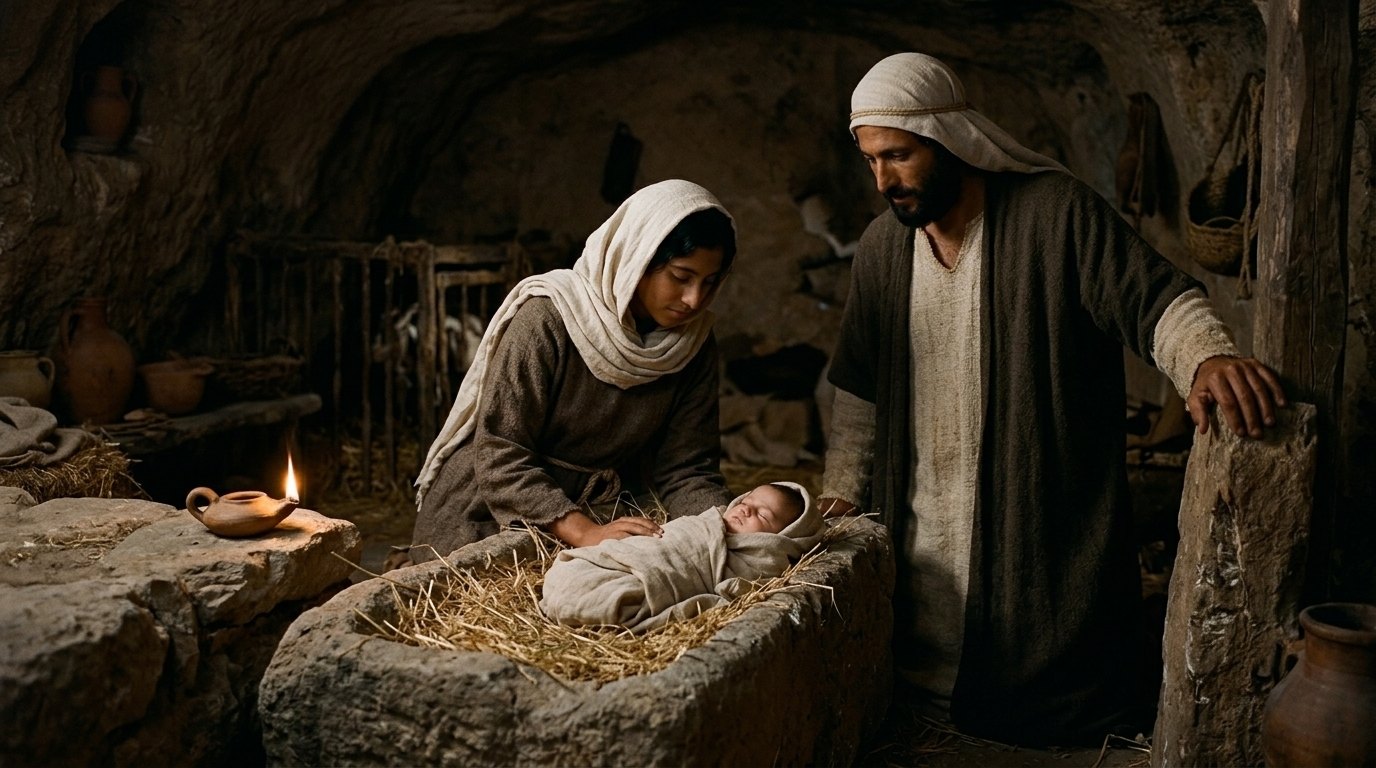
and she gave birth to her firstborn, a son. She wrapped him in cloths and placed him in a manger, because there was no guest room available for them.
Luke 2:7 (NIV)
The contrast between the newborn firstborn son and the feeding trough emphasizes the profound humility of the incarnation.
The arrival of the King of kings unfolds without fanfare or worldly majesty, centered on the stark paradox of Luke 2:7, where the newborn Creator is gently laid to rest in an animal's feeding trough. While they remained in Bethlehem fulfilling their civic duty, the time arrived for Mary to give birth (Luke 2:6). Far from home and separated from royal comfort, she delivered her firstborn son, bound him tightly in swaddling cloths, and placed him in a manger because there was no guest room available for them (Luke 2:7). This detail does not merely lament overcrowded accommodations; it proclaims the voluntary self-emptying of Christ upon entering human weakness. Wrapped in common bands of cloth and cradled in the coarse stone or wood of an animal basin, the Lord of glory chose absolute humility from his earliest breath. By beginning his earthly life among the most unassuming surroundings, he demonstrated that his redemptive reign belongs not to worldly grandeur, but to the meek, the broken, and the lowly.
| Passage | What it says |
|---|---|
| Luke 2:6 | While Mary and Joseph remain in Bethlehem, the full term of her pregnancy is completed. |
| Luke 2:7 | Mary gives birth to her firstborn son, wraps him in cloths, and lays him in a manger. |
Angelic Proclamation
Good news of great joy to the lowly
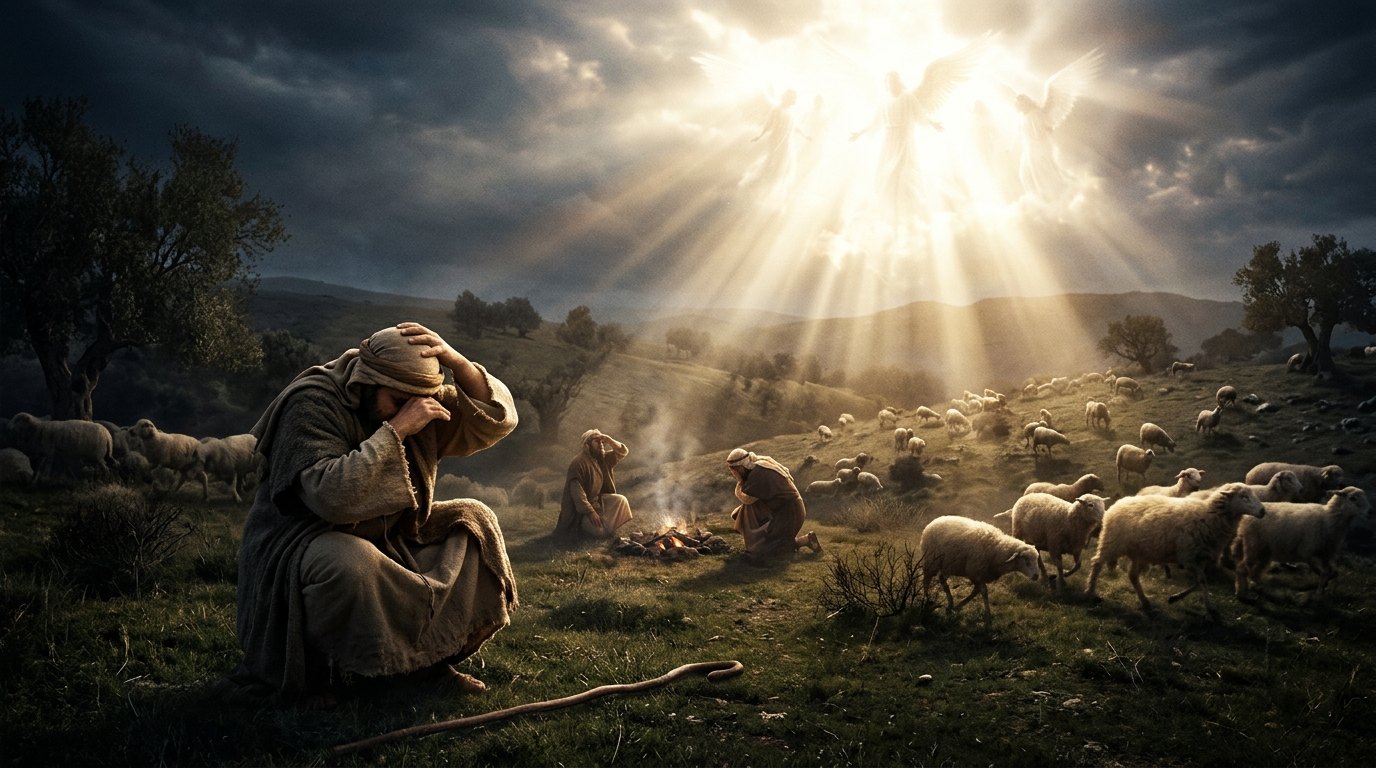
Today in the town of David a Savior has been born to you; he is the Messiah, the Lord.
Luke 2:11 (NIV)
The angel's proclamation identifies the newborn infant with the full titles of Savior, Messiah, and Lord.
The heavenly proclamation in Luke 2:11 reveals the ultimate identity of this humble infant, announcing to rustic outcasts that a Savior, who is Christ the Lord, has arrived in David's city. That night, local shepherds were out in the countryside keeping watch over their flocks in the dark fields (Luke 2:8). Suddenly, an angel of the Lord appeared before them, and the brilliant glory of the Lord shone around them, filling them with great fear (Luke 2:9). The heavenly messenger dispelled their terror by declaring good news of tremendous joy meant for all people (Luke 2:10), identifying the infant with three monumental titles: Savior, Christ, and Lord (Luke 2:11). The divine confirmation was as shocking as it was simple: they would find the child wrapped in cloths and resting in a manger (Luke 2:12). Without warning, an innumerable army of the heavenly host surrounded the angel, filling the night sky with praise to God in the highest and declaring peace on earth among those with whom he is pleased (Luke 2:13-14).
| Passage | What it says |
|---|---|
| Luke 2:8 | Local shepherds keep watch over their flocks in the open fields throughout the night. |
| Luke 2:9 | An angel of the Lord appears, the Lord's glory shines, and the shepherds are overcome with terror. |
| Luke 2:10 | The angel calms their fears and announces good news of great joy intended for all people. |
| Luke 2:11 | The angel declares that in David's city a Savior, who is Christ the Lord, is born. |
| Luke 2:12 | The confirming sign given to the shepherds is an infant swaddled and resting in a manger. |
| Luke 2:13 | A vast multitude of the heavenly host suddenly joins the angel in corporate praise of God. |
| Luke 2:14 | The heavenly host praises God in the highest and declares peace on earth among favored men. |
Human Responses
Seeking, declaring, marveling, and pondering the salvation of God
But Mary treasured up all these things and pondered them in her heart.
Luke 2:19 (NIV)
Mary's quiet treasuring and pondering sets a contemplative model of receptive faith amid the public excitement.
The narrative reaches its crescendo in Luke 2:19, contrasting the vocal celebrations of the shepherds with Mary's quiet, reflective faith as she treasured these profound revelations in her heart. When the angelic multitude departed back into heaven, the shepherds immediately urged one another to hurry to Bethlehem to see this word that the Lord had made known to them (Luke 2:15). Hurrying into the town, they located Mary, Joseph, and the newborn baby lying where the angel had said (Luke 2:16). Witnessing this exact sign, they boldly recounted everything revealed to them concerning the child (Luke 2:17), leaving everyone who heard their eyewitness report in absolute astonishment (Luke 2:18). Meanwhile, Mary meditated deeply on these testimonies, holding them as sacred treasures within her innermost thoughts (Luke 2:19). The shepherds then returned to their pastures, glorifying and praising God for the complete harmony between the divine promise and the reality they had beheld with their own eyes (Luke 2:20).
| Passage | What it says |
|---|---|
| Luke 2:15 | Upon the angels' departure, the shepherds resolve together to hasten to Bethlehem to see God's revealed work. |
| Luke 2:16 | The shepherds hurry into the town and locate Mary, Joseph, and the infant resting in the manger. |
| Luke 2:17 | After seeing the child, the shepherds openly proclaim the message that was spoken concerning him. |
| Luke 2:18 | Everyone who hears the eyewitness testimony of the shepherds is filled with astonished wonder. |
| Luke 2:19 | Mary treasures all these events and words, continually pondering their significance in her heart. |
| Luke 2:20 | The shepherds return to their flocks, glorifying and praising God for the exact reality of what they witnessed. |
Where in the Bible
| Book | Passages |
|---|---|
| Luke | 20 · Luke 2:1, Luke 2:2, Luke 2:3, Luke 2:4, Luke 2:5, Luke 2:6, Luke 2:7, Luke 2:8, Luke 2:9, Luke 2:10, Luke 2:11, Luke 2:12, Luke 2:13, Luke 2:14, Luke 2:15, Luke 2:16, Luke 2:17, Luke 2:18, Luke 2:19, Luke 2:20 |
The story in order
- Caesar decrees a world registration (c. 4 BC) · Luke 2:1 · God orchestrates empire for His purposes.
- First census during Quirinius's governorship (c. 4 BC) · Luke 2:2 · God's timing is precise and historical.
- Joseph travels to Bethlehem (c. 4 BC) · Luke 2:4 · Fulfills prophecy of Messiah's birthplace.
- Jesus is born in Bethlehem (c. 4 BC) · Luke 2:6-7 · The Lord of glory enters in lowliness.
- Shepherds watch their flocks (c. 4 BC) · Luke 2:8 · Humble witnesses to a divine event.
- Angel announces Jesus' birth (c. 4 BC) · Luke 2:10-11 · Good news of salvation for all people.
- Heavenly host praises God (c. 4 BC) · Luke 2:13-14 · Cosmic celebration of God's peace.
- Shepherds seek and see Jesus (c. 4 BC) · Luke 2:15-16 · Prompt obedience to God's revelation.
- Shepherds proclaim Jesus' birth (c. 4 BC) · Luke 2:17 · Sharing the good news with others.
- People marvel at the shepherds' words (c. 4 BC) · Luke 2:18 · Wonder at God's miraculous intervention.
- Mary ponders these events (c. 4 BC) · Luke 2:19 · Treasuring God's word and work.
- Shepherds glorify God (c. 4 BC) · Luke 2:20 · Praise for the reality of God's promises.
Key words
- Savior (sōtēr, σωτήρ)
- One who rescues and delivers from danger or destruction. · Luke 2:11
- Christ (Christos, Χριστός)
- The Anointed One, the Messiah promised in the Old Testament. · Luke 2:11
- Lord (kyrios, κύριος)
- One with supreme authority, power, and dominion. · Luke 2:11
- Manger (phatnē, φάτνη)
- A feeding trough for animals, signifying humility and lowliness.
- Peace (eirēnē, εἰρήνη)
- Well-being, prosperity, and tranquility, especially God's favor. · Luke 2:14
Luke 2:1-20 assures believers that no imperial decree or mundane circumstance sits outside the sovereign orchestration of God's redemptive plan. The child lying in the feeding trough calls forth hasty faith, vocal witness, and quiet, treasuring meditation from all who receive the good news of great joy.
20 passages, each cited once.
Scripture cited
- Luke 2:1-20