What does the Bible say about halloween?

Ephesians 5:8-11
8 For you were once darkness, but now you are light in the Lord. Live as children of light
9 (for the fruit of the light consists in all goodness, righteousness and truth)
10 and find out what pleases the Lord.
11 Have nothing to do with the fruitless deeds of darkness, but rather expose them.
New International Version (NIV)
The answer
Participating in Halloween’s occult or immoral elements is sin; ordinary costumes, candy, and neighborly hospitality are not forbidden, provided they are done in faith and do not lead anyone into sin. Halloween is not named in Scripture, so each activity must be judged by the commands that govern it, rather than simply by its connection with October 31.
What God plainly forbids
- Occult practices: Deuteronomy 18:10-12 names divination, fortune-telling, sorcery, consulting familiar spirits, and necromancy, declaring that “whoever does these things is an abomination to Yahweh.” Séances, spells, attempts to contact the dead, and other genuine occult practices are never harmless entertainment for a Christian.
- Immoral celebration: Galatians 5:19-21 includes idolatry, sorcery, sexual immorality, drunkenness, and orgies among the deeds of the flesh, warning that “those who practice such things will not inherit God’s Kingdom.” Halloween provides no exception to those commands.
- Fellowship with darkness: Ephesians 5:11 says, “Have no fellowship with the unfruitful deeds of darkness, but rather even reprove them.” First Corinthians 10:20-21 likewise rejects participation in idolatrous worship and fellowship with demons.
Where Christians may differ
Costumes, pumpkins, candy, and welcoming neighbors are not themselves occult practices or immoral acts. Romans 14:5 addresses differing convictions about particular days: “One man esteems one day as more important. Another esteems every day alike. Let each man be fully assured in his own mind.” Accordingly, some Christians abstain from Halloween altogether, while others limit their involvement to morally innocent activities. Neither side should condemn the other where no sin is involved (Romans 14:10-13).
Freedom still has limits. Romans 14:23 warns that “whatever is not of faith is sin,” so no one should participate against a troubled conscience. Romans 14:13 and 14:21 also require believers to avoid placing a stumbling block in another Christian’s way.
A practical test
First Thessalonians 5:21-22 gives the governing instruction: “Test all things, and hold firmly that which is good. Abstain from every form of evil.” Before participating, ask:
- Does it involve actual occult practice, idolatry, drunkenness, lust, or another sin? If so, refuse it.
- Can it be done to the Lord with a clear conscience? If not, abstain.
- Could my participation pressure or lead another believer into sin? If so, love requires restraint.
The positive standard is Ephesians 5:8-10: those who are “now light in the Lord” should “walk as children of light,” pursuing “all goodness and righteousness and truth” and proving what pleases the Lord.
Answered from Scripture · reviewed November 11, 2026
While Scripture never mentions Halloween by name, it speaks with unmistakable clarity regarding the themes central to its celebration: the occult, the realm of the dead, fear, and spiritual darkness. God's Word calls believers out of darkness into marvelous light, instructing His people to refuse all fellowship with demonic practices and to test every custom by the standard of His holiness.
The Occult Condemned
God strictly forbids sorcery and consulting the dead

Let no one be found among you who sacrifices their son or daughter in the fire, who practices divination or sorcery, interprets omens, engages in witchcraft, or casts spells, or who is a medium or spiritist or who consults the dead. Anyone who does these things is detestable to the LORD; because of these same detestable practices the LORD your God will drive out those nations before you.
Deuteronomy 18:10-12 (NIV)
This passage establishes God's definitive judgment that witchcraft, divination, and contacting the dead are abominations to Him.
In Deuteronomy 18:10-12, God sets forth His absolute boundary regarding the unseen realm: anyone who practices divination, tells fortunes, interprets omens, or inquires of the dead is an abomination to the Lord. This solemn standard was not an arbitrary cultural restriction, but a vital wall of protection for His covenant people. Deuteronomy 18:9-14 explicitly commands Israel never to learn or imitate the abhorrent rituals of the pagan nations around them. The Mosaic law repeatedly reinforces this boundary: Leviticus 19:26 forbids omens and soothsaying, Leviticus 19:31 commands believers not to turn to mediums or familiar spirits, and Leviticus 20:6 warns that God will set His face against anyone who prostitutes themselves to such spirits. In the theocracy of ancient Israel, the penalty was decisive; Exodus 22:18 and Leviticus 20:27 decreed capital judgment for sorcerers and mediums who defiled the camp.
Scripture records the disastrous consequences whenever God's people compromised this standard. Saul's tragic descent reached its lowest point when he sought out the medium at En-dor in 1 Samuel 28:7-19, an act that sealed his downfall; 1 Chronicles 10:13-14 explicitly records that Saul died for his unfaithfulness in consulting a medium instead of seeking the Lord. Centuries later, King Manasseh provoked God's wrath by practicing witchcraft and consulting spiritists (2 Kings 21:6; 2 Chronicles 33:6), leading Israel into spiritual ruin (2 Kings 17:17). Faithful kings like Josiah understood the necessity of cleansing such abominations completely (2 Kings 23:24). The prophets consistently exposed the folly and guilt of occult dependency: Isaiah 8:19-20 asks why the living should ever seek the dead rather than God's law, while Isaiah 19:3 and Isaiah 47:12-14 demonstrate that sorcery and astrology cannot deliver their practitioners from divine judgment. Jeremiah 27:9-10, Ezekiel 13:18-20, Micah 5:12, and Malachi 3:5 declare that God will swiftly judge every deceitful charm, while Daniel 2:27-28 proves that only the living God reveals mysteries.
| Passage | What it says |
|---|---|
| Deuteronomy 18:9-14 | Israel is forbidden to imitate the abominable nations who practice divination, sorcery, witchcraft, casting spells, mediumship, or necromancy. |
| Leviticus 19:26 | The law forbids eating anything with blood and expressly prohibits practicing augury, fortune-telling, or divination. |
| Leviticus 19:31 | God commands His people not to turn to mediums or familiar spirits, which would defile them. |
| Leviticus 20:6 | The Lord sets His face against anyone who turns to mediums and familiar spirits to prostitute themselves after them. |
| Leviticus 20:27 | A man or woman who acts as a medium or familiar spirit among Israel is judged worthy of physical death. |
| 1 Samuel 28:7-19 | King Saul's desperate consultation of the medium at En-dor results in a reaffirmation of his divine rejection and impending doom. |
| 1 Chronicles 10:13-14 | Saul's death is attributed directly to unfaithfulness to God, including consulting a medium for guidance instead of seeking Yahweh. |
| 2 Kings 21:6 | King Manasseh provokes God's wrath by practicing witchcraft, divination, and establishing mediums and spiritualists in the land. |
| Isaiah 8:19-20 | The prophet challenges Israel why a living people should inquire of the dead rather than turning to God's teaching and testimony. |
| Micah 5:12 | The Lord declares He will cut off sorceries from their hand and eliminate all who practice soothsaying. |
| Exodus 22:18 | Forbids permitting a sorceress to live, demonstrating God's zero-tolerance policy toward witchcraft in the theocratic covenant. |
| 2 Kings 17:17 | Cites Israel's adoption of divination and enchantments as a primary cause for their judgment and exile. |
| 2 Kings 23:24 | Records King Josiah purging mediums, spiritists, household gods, and abominations to uphold God's law. |
| 2 Chronicles 33:6 | Condemns Manasseh for practicing witchcraft, divination, and sorcery, provoking the Lord to anger. |
| Isaiah 19:3 | Prophesies that confused pagans will consult idols, ghosts, mediums, and spiritists in vain. |
| Isaiah 47:12-14 | Declares the utter inability of astrologers, stargazers, and sorcerers to save Babylon from divine judgment. |
| Jeremiah 27:9-10 | Warns the people not to listen to false prophets, diviners, dreamers, soothsayers, or sorcerers. |
| Ezekiel 13:18-20 | Pronounces judgment against occultist women who trap souls through magic charms and veils. |
| Daniel 2:27-28 | Contrasts the impotence of occult magicians and astrologers with the living God in heaven who reveals mysteries. |
| Malachi 3:5 | Promises swift judgment against sorcerers, adulterers, perjurers, and the unjust at God's coming. |
Sorcery in the New Testament
The apostolic church firmly rejected every occult entanglement
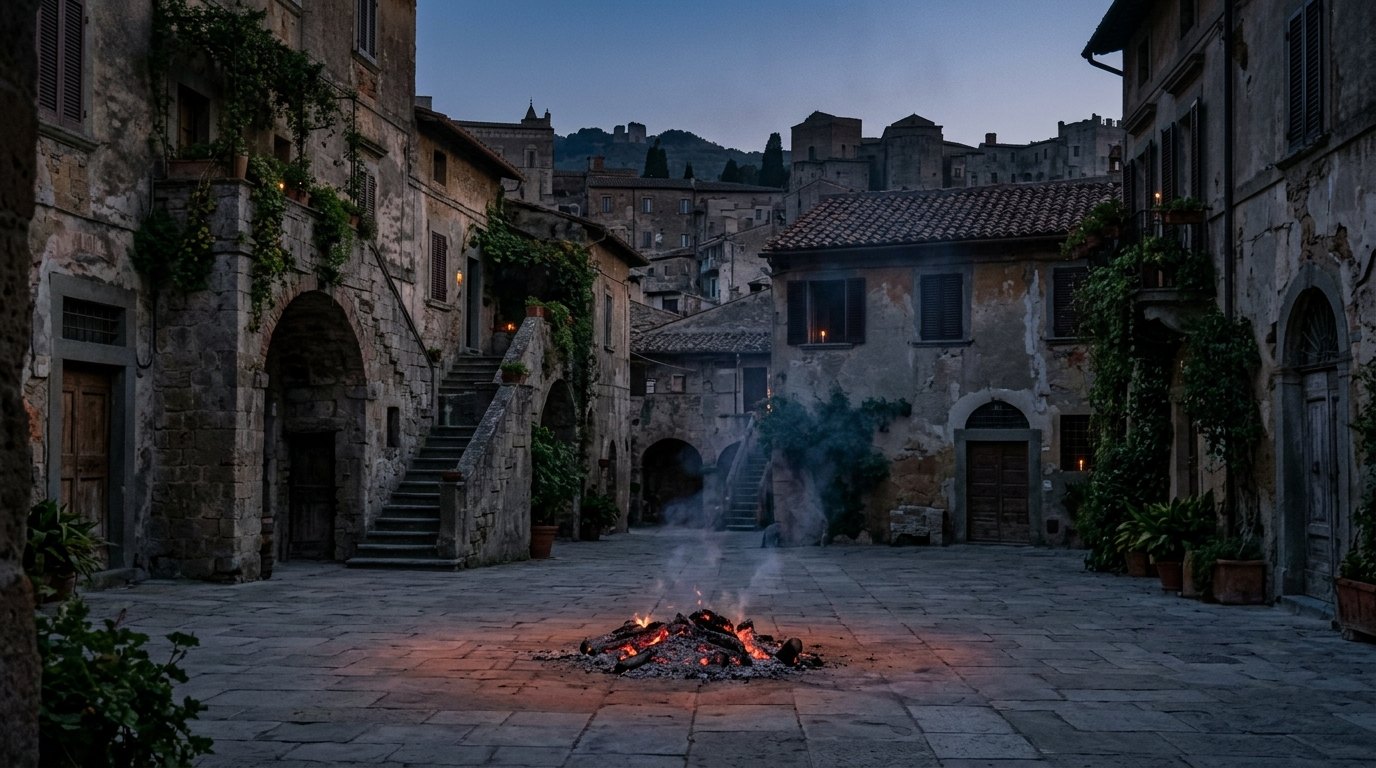
Many of those who believed now came and openly confessed what they had done. A number who had practiced sorcery brought their scrolls together and burned them publicly. When they calculated the value of the scrolls, the total came to fifty thousand drachmas.
Acts 19:18-19 (NIV)
The Ephesian converts demonstrate genuine repentance by publicly burning their costly books of magic arts.
The New Testament carries this uncompromising stance directly into the apostolic era, demonstrated vividly in Acts 19:18-19, where believers who had practiced magic arts brought their books together and burned them publicly. The value of these burned texts totaled fifty thousand pieces of silver, demonstrating that genuine conversion demands a radical, costly, and total break from the occult. The apostles never treated the occult as harmless spectacle or benign folklore. In Acts 8:9-13, the gospel brought by Philip dismantled the deceit of Simon Magus, who had long captivated Samaria through sorcery. When Paul encountered the sorcerer Elymas in Acts 13:6-12, he addressed him as a child of the devil and an enemy of all righteousness, striking him with temporary blindness by the Lord's hand. In Acts 16:16-18, Paul refused to tolerate even truthful proclamations made by a slave girl possessed by a spirit of divination, commanding the demon to come out of her.
The apostolic epistles and the Apocalypse treat sorcery not merely as foolish superstition, but as open rebellion against the Holy Spirit. Galatians 5:19-21 names sorcery (pharmakeia) among the evident works of the flesh, warning plainly that those who practice such things will not inherit the kingdom of God. In Revelation 9:20-21, a rebellious world refuses to repent of its murders and sorceries even under severe divine judgment, while Revelation 18:23 reveals that Babylon deceived all nations through her occult arts. Scripture concludes with an eternal warning regarding God's final judgment: Revelation 21:8 and Revelation 22:15 declare that those who practice sorcery remain outside the holy gates, their portion assigned to the lake of fire. The apostolic church understood that the gospel leaves no room for flirting with darkness.
| Passage | What it says |
|---|---|
| Acts 8:9-13 | Simon the sorcerer amazed Samaria with magical arts until Philip preached the gospel, leading many to repentance and baptism. |
| Acts 13:6-12 | Paul severely rebukes the sorcerer Elymas as an enemy of righteousness full of deceit, blinding him through the Lord's judgment. |
| Acts 16:16-18 | Paul casts out a spirit of divination from a slave girl whose masters profited from her fortune-telling. |
| Galatians 5:19-21 | Sorcery is enumerated among the works of the flesh that disqualify those who practice them from inheriting God's kingdom. |
| Revelation 9:20-21 | Despite severe divine judgments, unrepentant humanity refuses to turn from idolatry, murder, and sorceries. |
| Revelation 18:23 | Fallen Babylon's destruction is sealed because all nations were deceived through her demonic sorceries. |
| Revelation 21:8 | Those who practice sorcery are explicitly named among those whose portion is the lake of fire and brimstone. |
| Revelation 22:15 | Outside the gates of the New Jerusalem remain those who practice sorceries, along with the sexually immoral and idolaters. |
| Acts 19:18-19 | Recounts believers in Ephesus publicly confessing and burning their expensive books of magic arts. |
Darkness and Light
Christians are commanded to renounce the works of darkness

Have nothing to do with the fruitless deeds of darkness, but rather expose them.
Ephesians 5:11 (NIV)
Paul commands believers to actively avoid fellowship with unfruitful deeds of darkness and instead reprove them.
In Ephesians 5:11, the Apostle Paul issues a direct, non-negotiable charge to every Christian: "Take no part in the unfruitful works of darkness, but instead expose them." This command rests upon the foundational transformation described throughout Ephesians 5:8-14, which reminds believers that they were once darkness, but are now light in the Lord. Walking as children of light requires discerning what is pleasing to Christ. In Romans 13:12-14, Scripture commands believers to cast off the works of darkness and put on the armor of light, making no provision for the flesh. Paul warns the Corinthians against spiritual syncretism in 1 Corinthians 10:20-22, explaining that pagan sacrifices are offered to demons, and God's people cannot partake of the Lord's table and the table of demons. He reinforces this in 2 Corinthians 6:14-17 with unmistakable clarity: what fellowship has light with darkness, or what accord has Christ with Belial?
The entire New Testament frames salvation as a definitive transfer between two incompatible kingdoms. Colossians 1:12-14 rejoices that the Father has delivered believers from the domain of darkness and transferred them into the kingdom of His beloved Son. In 1 Thessalonians 5:4-8 and 1 Peter 2:9, Christians are defined as a chosen people called out of darkness into marvelous light, belonging wholly to the day. First John 1:5-7 declares that God is light and in Him is no darkness at all. Though Luke 22:53 acknowledges the temporary hour of darkness and John 3:19-21 notes that unregenerate humanity loves darkness because its deeds are evil, the believer's posture is vigilant opposition. Ephesians 6:11-13 and 1 Peter 5:8-9 summon saints to stand firm in God's armor against demonic forces, anchored in the victory of 1 John 3:8: the Son of God appeared to destroy the works of the devil.
| Passage | What it says |
|---|---|
| Ephesians 5:8-14 | Believers, having been translated from darkness to light, must walk in righteousness and expose fruitless dark deeds. |
| Romans 13:12-14 | Paul urges the saints to cast off the works of darkness, put on the armor of light, and clothe themselves in Christ. |
| 1 Corinthians 10:20-22 | Believers cannot partake of the Lord's table and the table of demons without provoking the Lord to jealousy. |
| 2 Corinthians 6:14-17 | Paul forbids unequal yoking with unbelievers, demanding what fellowship righteousness can have with unrighteousness or light with darkness. |
| Colossians 1:12-14 | The Father has delivered believers from the domain of darkness and transferred them into the kingdom of His beloved Son. |
| 1 Thessalonians 5:4-8 | Christians are children of light and of the day, belonging not to night or darkness, and must remain sober. |
| 1 Peter 2:9 | The church is a chosen people called to proclaim the excellencies of God who brought them out of darkness into light. |
| 1 John 1:5-7 | God is absolute light with no darkness at all, and walking in fellowship with Him requires walking in the light. |
| Luke 22:53 | Identifies the hour of Christ's betrayal and arrest as belonging to the domain of darkness. |
| John 3:19-21 | States that people loved darkness rather than light because their deeds were evil. |
| Ephesians 6:11-13 | Exhorts believers to take up God's armor against spiritual forces of evil in heavenly places. |
| 1 Peter 5:8-9 | Commands believers to remain sober and watchful against the devil, who prowls like a roaring lion. |
| 1 John 3:8 | Declares that the Son of God appeared explicitly to destroy the works of the devil. |
The Believer's Mind
Everything a Christian does must bring honor to God

Finally, brothers and sisters, whatever is true, whatever is noble, whatever is right, whatever is pure, whatever is lovely, whatever is admirable—if anything is excellent or praiseworthy—think about such things.
Philippians 4:8 (NIV)
This verse establishes the divine metric for where believers are called to fix their attention, thoughts, and joy.
Scripture directs the believer's interior life and daily conduct by a higher standard than mere worldly custom. In Philippians 4:8, the Apostle Paul provides the definitive grid for Christian meditation: "Whatever is true, whatever is honorable, whatever is just, whatever is pure, whatever is lovely, whatever is commendable, if there is any excellence, if there is anything worthy of praise, think about these things." This instruction is not mere moral advice, but an urgent spiritual discipline. When evaluated against this metric, celebrations rooted in macabre imagery, fear, witchcraft, and the glorification of death fall utterly short of what honors Christ. First Corinthians 10:31 commands that whether believers eat, drink, or whatever they do, all must be done to the glory of God.
Romans 12:1-2 calls believers to present their bodies as living, holy sacrifices, refusing conformity to the patterns of this world and being transformed by the renewing of their minds. Fear, which often defines occult and horror culture, is completely antithetical to the Christian life; 2 Timothy 1:7 assures believers that God has not given a spirit of fear, but of power, love, and self-control. Through His death and resurrection, Christ rendered powerless the devil in order to deliver those who were all their lives subject to lifelong slavery through the fear of death (Hebrews 2:14-15). Therefore, 1 Thessalonians 5:21-22 commands believers to test everything, hold fast to what is good, and abstain from every form of evil. As James 4:7-8 and 3 John 1:11 urge, Christians are called to submit to God, resist the devil, and imitate only what is good, reflecting Christ's purity in all things.
| Passage | What it says |
|---|---|
| 1 Corinthians 10:31 | The overarching command instructs that whether eating, drinking, or whatever believers do, all must be done to God's glory. |
| Romans 12:1-2 | Believers are urged to present their bodies as holy living sacrifices, resisting conformity to the world through renewed minds. |
| 2 Timothy 1:7 | God has not given His people a spirit of fear, but of power, love, and a sound, self-controlled mind. |
| 1 Thessalonians 5:21-22 | Christians are commanded to test all things, hold fast to what is good, and abstain from every appearance of evil. |
| James 4:7-8 | James instructs believers to submit to God, resist the devil so he will flee, and draw near to the Lord. |
| Philippians 4:8 | Directs the mind to whatever is true, honorable, just, pure, lovely, and commendable. |
| Hebrews 2:14-15 | Shows Christ broke the power of death to deliver those enslaved by the fear of death. |
| 3 John 1:11 | Urges believers not to imitate what is evil, but to imitate what is good. |
Conscience and Liberty
Liberty must never harm a brother's conscience

But whoever has doubts is condemned if they eat, because their eating is not from faith; and everything that does not come from faith is sin.
Romans 14:23 (NIV)
This verse makes conscience and faith the decisive moral boundary when navigating disputed cultural practices.
The governing principle for disputed cultural occasions turns upon faith and personal integrity before the Lord. In Romans 14:23, Scripture establishes that whatever does not proceed from faith is sin, demonstrating that conscience before God is an inescapable boundary. When Christians evaluate how to approach autumn festivities, trivializing personal unease or acting against inward conviction damages spiritual health. The apostle Paul explains in Romans 14:5-6 that one believer may regard one day above another while another regards every day alike, yet each must be fully convinced in his own mind and act solely to honor the Lord.
Christian liberty, however, is never merely private autonomy; it is strictly bounded by love for the body of Christ. In Romans 14:13-15, believers are charged never to put a stumbling block or hindrance in a brother's way, recognizing that pursuing personal freedom at the expense of another’s spiritual walk is a failure to walk in love. Paul reiterates in Romans 14:22-23 that the faith one possesses concerning disputable matters should be held before God without flaunting it to the destruction of others.
This protective ethic is reinforced in 1 Corinthians 8:9-13, which warns that exercising liberty without pastoral restraint can wound the weak conscience of a fellow believer, amounting to a direct sin against Christ. Furthermore, 1 Corinthians 10:23-24 declares that while certain external acts may technically be lawful, not all things build up, and no believer should seek self-gratification over the spiritual welfare of a neighbor. Therefore, whether a household abstains entirely or engages redemption on the calendar, charity and faith must govern every choice.
| Passage | What it says |
|---|---|
| Romans 14:5-6 | Notes that one person esteems one day above another, while each must be fully convinced in mind to the Lord. |
| Romans 14:13-15 | Advises not to put a stumbling block or hindrance in the way of a brother or sister. |
| Romans 14:22-23 | Affirms that whatever action does not proceed from personal faith and conviction is sin. |
| 1 Corinthians 8:9-13 | Warns against letting Christian liberty become a stumbling block to those whose consciences are weak. |
| 1 Corinthians 10:23-24 | Teaches that though all things are lawful, not all things build up or seek the neighbor's good. |
Where in the Bible
| Book | Passages |
|---|---|
| Exodus | 1 · Exodus 22:18 |
| Leviticus | 4 · Leviticus 19:26, Leviticus 19:31, Leviticus 20:6, Leviticus 20:27 |
| Deuteronomy | 1 · Deuteronomy 18:9-14 |
| 1 Samuel | 1 · 1 Samuel 28:7-19 |
| 2 Kings | 3 · 2 Kings 21:6, 2 Kings 17:17, 2 Kings 23:24 |
| 1 Chronicles | 1 · 1 Chronicles 10:13-14 |
| 2 Chronicles | 1 · 2 Chronicles 33:6 |
| Isaiah | 3 · Isaiah 8:19-20, Isaiah 19:3, Isaiah 47:12-14 |
| Jeremiah | 1 · Jeremiah 27:9-10 |
| Ezekiel | 1 · Ezekiel 13:18-20 |
| Daniel | 1 · Daniel 2:27-28 |
| Micah | 1 · Micah 5:12 |
| Malachi | 1 · Malachi 3:5 |
| Luke | 1 · Luke 22:53 |
| John | 1 · John 3:19-21 |
| Acts | 4 · Acts 8:9-13, Acts 13:6-12, Acts 16:16-18, Acts 19:18-19 |
| Romans | 5 · Romans 13:12-14, Romans 12:1-2, Romans 14:5-6, Romans 14:13-15, Romans 14:22-23 |
| 1 Corinthians | 4 · 1 Corinthians 10:20-22, 1 Corinthians 10:31, 1 Corinthians 8:9-13, 1 Corinthians 10:23-24 |
| 2 Corinthians | 1 · 2 Corinthians 6:14-17 |
| Galatians | 1 · Galatians 5:19-21 |
| Ephesians | 2 · Ephesians 5:8-14, Ephesians 6:11-13 |
| Philippians | 1 · Philippians 4:8 |
| Colossians | 1 · Colossians 1:12-14 |
| 1 Thessalonians | 2 · 1 Thessalonians 5:4-8, 1 Thessalonians 5:21-22 |
| 2 Timothy | 1 · 2 Timothy 1:7 |
| Hebrews | 1 · Hebrews 2:14-15 |
| James | 1 · James 4:7-8 |
| 1 Peter | 2 · 1 Peter 2:9, 1 Peter 5:8-9 |
| 1 John | 2 · 1 John 1:5-7, 1 John 3:8 |
| 3 John | 1 · 3 John 1:11 |
| Revelation | 4 · Revelation 9:20-21, Revelation 18:23, Revelation 21:8, Revelation 22:15 |
The story in order
- The Law Given to Israel (c. 1400 BC) · Deuteronomy 18:9-14 · God strictly forbids occult practices like divination and mediumship.
- Saul Consults a Medium (c. 1050 BC) · 1 Samuel 28:7-19 · Saul's disobedience in consulting a medium leads to divine rejection.
- Manasseh's Idolatry and Witchcraft (c. 690 BC) · 2 Kings 21:6 · Manasseh provokes God by practicing witchcraft and divination.
- Josiah's Purge of Occult Practices (c. 620 BC) · 2 Kings 23:24 · Josiah removes mediums and spiritists to uphold God's law.
- Prophecy Against Sorcerers (c. 700 BC) · Isaiah 47:12-14 · The futility of sorcerers and astrologers is declared.
- John the Baptist Prepares the Way (c. AD 28) · Luke 3:7-14 · John calls for repentance and fruit showing repentance, not occult practices.
- Simon the Sorcerer Amazes Samaria (c. AD 34) · Acts 8:9-13 · Sorcery is contrasted with the true power of the gospel.
- Paul Rebuke Elymas the Sorcerer (c. AD 47) · Acts 13:6-12 · Paul exposes and judges a sorcerer who opposed the gospel.
- Casting Out a Spirit of Divination (c. AD 50) · Acts 16:16-18 · A spirit of divination is cast out of a slave girl.
- Believers Burn Magic Books (c. AD 54) · Acts 19:18-19 · New believers renounce magic by burning their expensive books.
- Works of the Flesh Listed (c. AD 55) · Galatians 5:19-21 · Sorcery is listed among the works of the flesh.
- Believers Called Out of Darkness (c. AD 60) · Ephesians 5:8-14 · Believers are to walk in light and expose dark deeds.
- The Final Judgment (c. AD 95) · Revelation 21:8 · Sorcerers are explicitly named as destined for the lake of fire.
Occult Practices and Divine Judgment
| Occult Practice | Consequence | Passage |
|---|---|---|
| Imitating abominable nations (divination, sorcery, mediumship) | Forbidden by God's law | Deuteronomy 18:9-14 |
| Turning to mediums and familiar spirits | God sets His face against them; worthy of death | |
| Consulting a medium | Divine rejection and impending doom | 1 Samuel 28:7-19 |
| Practicing witchcraft, divination, establishing mediums | Provoked God's wrath | 2 Kings 21:6 |
| Sorcery | Disqualifies from inheriting God's kingdom | Galatians 5:19-21 |
| Sorceries of fallen Babylon | Deception leading to destruction | Revelation 18:23 |
| Practicing sorceries | Portion in the lake of fire | Revelation 21:8 |
Light vs. Darkness
| Darkness | Light | Passage |
|---|---|---|
| Deeds of darkness | Fruitful works of light | Ephesians 5:8-14 |
| Works of darkness | Armor of light | Romans 13:12-14 |
| Fellowship with demons | Partaking of the Lord's table | 1 Corinthians 10:20-22 |
| Unrighteousness, darkness | Righteousness, light | 2 Corinthians 6:14-17 |
| Domain of darkness | Kingdom of His beloved Son | Colossians 1:12-14 |
| Night, darkness | Day, light | 1 Thessalonians 5:4-8 |
| Darkness | God's marvelous light | 1 Peter 2:9 |
| Walking in darkness | Walking in the light | 1 John 1:5-7 |
| Domain of darkness | Christ's redemptive work | Luke 22:53 |
| Evil deeds done in darkness | Truth revealed by light | John 3:19-21 |
Key words
- Sorcery (pharmakeia (φαρμακεία))
- The practice of magic, witchcraft, or sorcery, often involving divination and alleged supernatural powers. · Galatians 5:20
- Mediums/Familiar Spirits (yidde'oni (יִדְּעֹנִי))
- Individuals who claim to communicate with the dead or spirits. · Leviticus 19:31
- Divination (qesem (קֶסֶם))
- The practice of seeking knowledge of the future or the unknown by supernatural means. · Deuteronomy 18:10
- Darkness (skotos (σκότος))
- Represents spiritual ignorance, evil, sin, and the realm of Satan. · Ephesians 5:11
- Light (phos (φῶς))
- Represents truth, righteousness, holiness, and God's presence. · 1 John 1:5
- Fear (deilia (δειλία))
- An emotion of distress or alarm, often associated with the unknown or perceived threats, which God's people are not to have. · 2 Timothy 1:7
Believers are called to discern carefully what honors Christ rather than passively adopting the symbols of darkness or fear. As children of light, our lives, homes, and public witness belong entirely to the Lord, seeking in all things to reflect His truth, holiness, and victory over the grave.
55 passages, each cited once.
Scripture cited
- Ephesians 5:8-11
- Deuteronomy 18:9-14
- Galatians 5:19-21
- Romans 14:5-23
- 1 Corinthians 10:19-22
- 1 Thessalonians 5:21-22