What does the Bible say about near-death experiences?

2 Corinthians 12:2-4
2 I know a man in Christ who fourteen years ago was caught up to the third heaven. Whether it was in the body or out of the body I do not know—God knows.
3 And I know that this man—whether in the body or apart from the body I do not know, but God knows—
4 was caught up to paradise and heard inexpressible things, things that no one is permitted to tell.
New International Version (NIV)
The answer
Scripture never describes a "near-death experience" as a category, and no passage endorses looking to such experiences as a way of knowing what lies beyond the grave. Death itself is appointed: "it is appointed for men to die once, and after this, judgment" (Hebrews 9:27). What a person needs to know about death, the gospel and the world to come has already been revealed in Scripture, and Jesus' parable in Luke 16:19-31 addresses this directly — if people will not listen to Moses and the prophets, they will not be persuaded even if someone rises from the dead.
The closest thing in Scripture to an out-of-body heavenly vision is Paul's own account in 2 Corinthians 12:2-4, where he writes of a man in Christ "caught up into the third heaven" and into Paradise, who "heard unspeakable words." This was a revelation given — Paul says — to one man, and remarkably Paul refuses to exploit it: he speaks of it in the third person, confesses he does not know whether it was in the body or out of it, and is careful that no one think more highly of him because of it (2 Corinthians 12:5-6). What the visions produced in Scripture — for Paul, for John on Patmos (Revelation 4:2), for Ezekiel and Isaiah — was not a testimony about the afterlife to satisfy curiosity, but a revelation of God and His purposes that carried His authority, and a humbling of the one who received it. Paul was given a thorn in the flesh precisely so that "by reason of the exceeding greatness of the revelations" he would not be exalted (2 Corinthians 12:7).
Two biblical principles govern how such accounts are to be weighed today.
Test the message against the gospel
Scripture commands: "Don't believe every spirit, but test the spirits, whether they are of God" (1 John 4:1). Whatever a person reports hearing or seeing in such an experience, the test is not the power or sincerity of the experience but the message: every spirit who confesses that Jesus Christ has come in the flesh is of God, and every spirit that does not is not (1 John 4:2-3). Even an angel preaching a different good news than the gospel is cursed (Galatians 1:8-9). A report of meeting Jesus, talking with the dead, receiving a universalist message, learning that all religions lead to God, or any teaching that contradicts Scripture fails the test, no matter how vivid the encounter. Satan masquerades as an angel of light (2 Corinthians 11:14).
Death is once, and the answer is Christ
Anyone who has actually died does not come back until the resurrection: "it is appointed for men to die once" (Hebrews 9:27). Someone who returns to bodily life was not finally dead but at death's threshold, and whatever the mind saw under those conditions — Scripture nowhere grants such glimpses normative authority. What Scripture does hold out is certain: the dead in Christ rise first at the Lord's coming, and all who are alive will meet the Lord in the air, and so be with Him forever (1 Thessalonians 4:16-17). Jesus says plainly: "I am the resurrection and the life. He who believes in me will still live, even if he dies" (John 11:25). He also says: "No one comes to the Father, except through me" (John 14:6).
This is also why Scripture forbids seeking encounters with the dead. Deuteronomy 18:10-12 names consulting the dead among the practices that are an abomination to Yahweh, practices belonging to the nations rather than to His people. An experience of "crossing over" obtained by deliberately seeking the dead is therefore not a gift but the very thing Scripture forbids.
Finally, a believer who has had such an experience does not derive saving truth from it. Assurance, instruction and hope rest on the written Word and the finished work of Christ, not on the memory of a vision. Death for the believer is "absence from the body" and being "at home with the Lord" (2 Corinthians 5:8), and that hope rests on Christ's own death and resurrection, not on any person's glimpse of it.
Answered from Scripture · reviewed November 11, 2026
While modern culture speaks often of near-death experiences, Scripture does not present them as a normal category of revelation or an exploratory glimpse into eternity. The Bible instead records sovereign, God-given visions to chosen prophets and apostles, anchoring our eternal hope firmly in the finished work and bodily resurrection of Jesus Christ.
Caught Up to God
Heavenly visions are given by God for divine purposes

I know a man in Christ who fourteen years ago was caught up to the third heaven. Whether it was in the body or out of the body I do not know—God knows. And I know that this man—whether in the body or apart from the body I do not know, but God knows— was caught up to paradise and heard inexpressible things, things that no one is permitted to tell.
2 Corinthians 12:2-4 (NIV)
Paul recounts being caught up into the third heaven and hearing unutterable words that man is not permitted to repeat.
In 2 Corinthians 12:2-4, the apostle Paul speaks of a man caught up to the third heaven who heard inexpressible words which man is not permitted to speak. This was no clinical crisis or accidental detachment from the body, but a sovereign revelation from the living God. Even when granted such a summit, Paul kept silent about it for fourteen years, boasting only of his weaknesses so that the power of Christ might rest upon him.
Throughout the canon, true glimpses into the heavenly sanctuary are God's sovereign initiative, never human voyages across the threshold of dying. When Paul fell into a trance in Acts 22:17, it was to receive explicit, sovereign instruction from Christ for his apostolic mission. Ezekiel was seized by the Spirit in Ezekiel 8:1-3 and transported in visions of God to witness the hidden abominations polluting the temple. Similarly, when John saw the risen Lord in Revelation 1:10-18, he did not enter a warm tunnel of comforting sensations; he fell at His feet like a dead man before being told to write what he saw. In Revelation 4:2, John was immediately in the Spirit, beholding the throne established in heaven, reflecting the transcendent glory described in Isaiah 57:15, where the One who inhabits eternity revives the contrite.
When Isaiah beheld the Lord seated on a throne high and lifted up in Isaiah 6:1-4, the immediate effect was a devastating conviction of his own uncleanness. And when Stephen gazed into the open heavens in Acts 7:55-56, it was a Spirit-filled confirmation of Christ standing at the right hand of God amidst fierce martyrdom. Scripture never presents celestial visions as subjective human expeditions into death, but as deliberate divine disclosures that magnify God's holiness and commission His servants.
| Passage | What it says |
|---|---|
| 2 Corinthians 12:2-4 | Paul is caught up to Paradise, hearing words that are lawful for no man to utter, coupled with a thorn to prevent pride. |
| Acts 22:17 | Paul falls into a trance while praying in the Jerusalem temple, receiving direct sovereign guidance from the Lord Jesus. |
| Ezekiel 8:1-3 | The hand of the Lord falls on Ezekiel, transporting him in visions of God to Jerusalem to reveal secret idolatry. |
| Revelation 1:10-18 | John sees the glorified, risen Christ on Patmos and falls at His feet as though dead before receiving prophetic commission. |
| Revelation 4:2 | John is immediately in the Spirit, beholding a glorious heavenly throne set in place and the Sovereign sitting upon it. |
| Isaiah 57:15 | The holy God who inhabits eternity dwells in the high place, yet revives the contrite and humble in spirit. |
| Isaiah 6:1-4 | Isaiah sees the Lord high and lifted up in the heavenly temple, surrounded by seraphim crying holy. |
| Acts 7:55-56 | At his martyrdom, Stephen gazes into heaven and sees the glory of God and Jesus standing at God's right hand. |
The Unbroken Boundary
Scripture establishes a fixed gulf and forbids forbidden inquiries

“There was a rich man who was dressed in purple and fine linen and lived in luxury every day. At his gate was laid a beggar named Lazarus, covered with sores and longing to eat what fell from the rich man’s table. Even the dogs came and licked his sores. “The time came when the beggar died and the angels carried him to Abraham’s side. The rich man also died and was buried. In Hades, where he was in torment, he looked up and saw Abraham far away, with Lazarus by his side. So he called to him, ‘Father Abraham, have pity on me and send Lazarus to dip the tip of his finger in water and cool my tongue, because I am in agony in this fire.’ “But Abraham replied, ‘Son, remember that in your…
Luke 16:19-31 (NIV)
Jesus reveals an uncrossable gulf separating the conscious dead and declares that Scripture itself is fully sufficient for faith.
In Luke 16:19-31, our Lord Jesus Christ pulls back the veil on the reality of physical death, teaching that between the righteous and the unrighteous a great chasm is fixed. The rich man cannot cross over to comfort, nor can he return to warn his surviving brothers. When he begs that someone from the dead might visit his family, Abraham's answer is absolute: if they do not hear Moses and the Prophets, neither will they be persuaded though someone rise from the dead. God's written Word is completely sufficient; God does not dispatch travelers back from eternity to supplement Scripture.
This boundary is strictly maintained across the biblical narrative. Hebrews 9:27 declares that it is appointed for man to die once, and after that comes judgment. Physical death is a decisive, unrepeatable threshold. Because of this divine order, God delivered stringent prohibitions in Deuteronomy 18:10-12 against inquiring of the dead, consulting mediums, or seeking spiritist revelations, calling such practices an abomination. Isaiah 8:19-20 echoes this sharp rebuke: should a living people consult the dead on behalf of the living, rather than turning to the law and the testimony?
When a person departs this earthly life, the physical course is done. As Job 7:9-10 observes, he who goes down to the grave does not come up again to his house. Ecclesiastes 12:7 confirms that at death the dust returns to the earth and the spirit returns to God who gave it. When David mourned his infant son in 2 Samuel 12:22-23, he rested in the finality of this boundary: he could go to the child, but the child would not return to him. And when Jesus spoke to the dying thief in Luke 23:43, He promised, 'Today you will be with Me in Paradise.' The threshold of death is guarded by God's decree, not left open for human wandering.
| Passage | What it says |
|---|---|
| Luke 16:19-31 | Jesus describes conscious existence after physical death, a permanent gulf between realms, and the total sufficiency of Moses and prophets. |
| Hebrews 9:27 | God has appointed man to die once, and after that singular event comes the solemn divine judgment. |
| Deuteronomy 18:10-12 | The Lord expressly forbids consulting the dead, mediums, or spiritists, naming all such occult practices an abomination. |
| Luke 23:43 | Jesus promises the repentant criminal that on that very day he would be conscious with Him in Paradise. |
| Job 7:9-10 | Those who go down to Sheol do not return to their house or their place on earth. |
| Ecclesiastes 12:7 | At death the dust returns to the earth as it was, and the spirit returns to God who gave it. |
| Isaiah 8:19-20 | The living are warned against consulting the dead rather than inquiring of God's written teaching. |
| 2 Samuel 12:22-23 | David acknowledges that while he will eventually go to his deceased child, the departed child cannot return to him. |
Resurrection and Hope
Christ alone holds the keys of death and eternal life

Jesus said to her, “I am the resurrection and the life. The one who believes in me will live, even though they die;
John 11:25 (NIV)
Jesus proclaims that He alone is the resurrection and the life, securing eternal life for every believer.
In John 11:25, Jesus declares to Martha, 'I am the resurrection and the life', assuring that whoever believes in Him will live even if he dies. Our assurance concerning what lies beyond the grave does not rest upon near-death testimonies, physiological anomalies, or near-drowning resuscitations. It rests entirely on the historical, physical resurrection of Jesus Christ from the dead, who holds absolute mastery over every realm of existence.
Because Christ triumphed over the grave, the believer's passing is not an ambiguous venture into the unknown. As the apostle Paul writes in 2 Corinthians 5:8, to be absent from the physical body is to be at home with the Lord. There is no intermediate limbo or wandering state; departure from this life yields immediate communion with Christ. Paul reinforces this conviction in Philippians 1:21-23, stating that to depart and be with Christ is far better than earthly lingering, for death has been robbed of its sting.
In Revelation 1:17-18, the risen Savior proclaims, 'I was dead, and behold, I am alive forevermore, and I have the keys of Death and of Hades.' Christ alone possesses the authority to unlock and seal the grave. Believers look forward not to temporary, disembodied experiences, but to the bodily resurrection promised in 1 Thessalonians 4:17, when the living and the dead in Christ will be caught up together in the clouds to meet the Lord in the air. As 1 Corinthians 15:54-57 celebrates, mortality will put on immortality, and death will be swallowed up in victory through our Lord Jesus Christ. He alone is our solid hope.
| Passage | What it says |
|---|---|
| John 11:25 | Jesus declares Himself the resurrection and the life, assuring that whoever believes in Him will live even though dying. |
| 1 Thessalonians 4:17 | Living believers will be caught up together in the clouds to meet the returning Lord and remain with Him forever. |
| 2 Corinthians 5:8 | Paul confirms that for the believer, to be absent from the physical body is to be immediately present with the Lord. |
| Philippians 1:21-23 | Paul explains that to depart this earthly life is to be with Christ, which is far better than earthly lingering. |
| Revelation 1:17-18 | The risen Christ proclaims that He lives forevermore and holds the keys of Death and of Hades. |
| 1 Corinthians 15:54-57 | Death is swallowed up in victory through the resurrection of our Lord Jesus Christ. |
The Silence of the Resuscitated
Those Raised from the Dead in Scripture Remain Entirely Silent
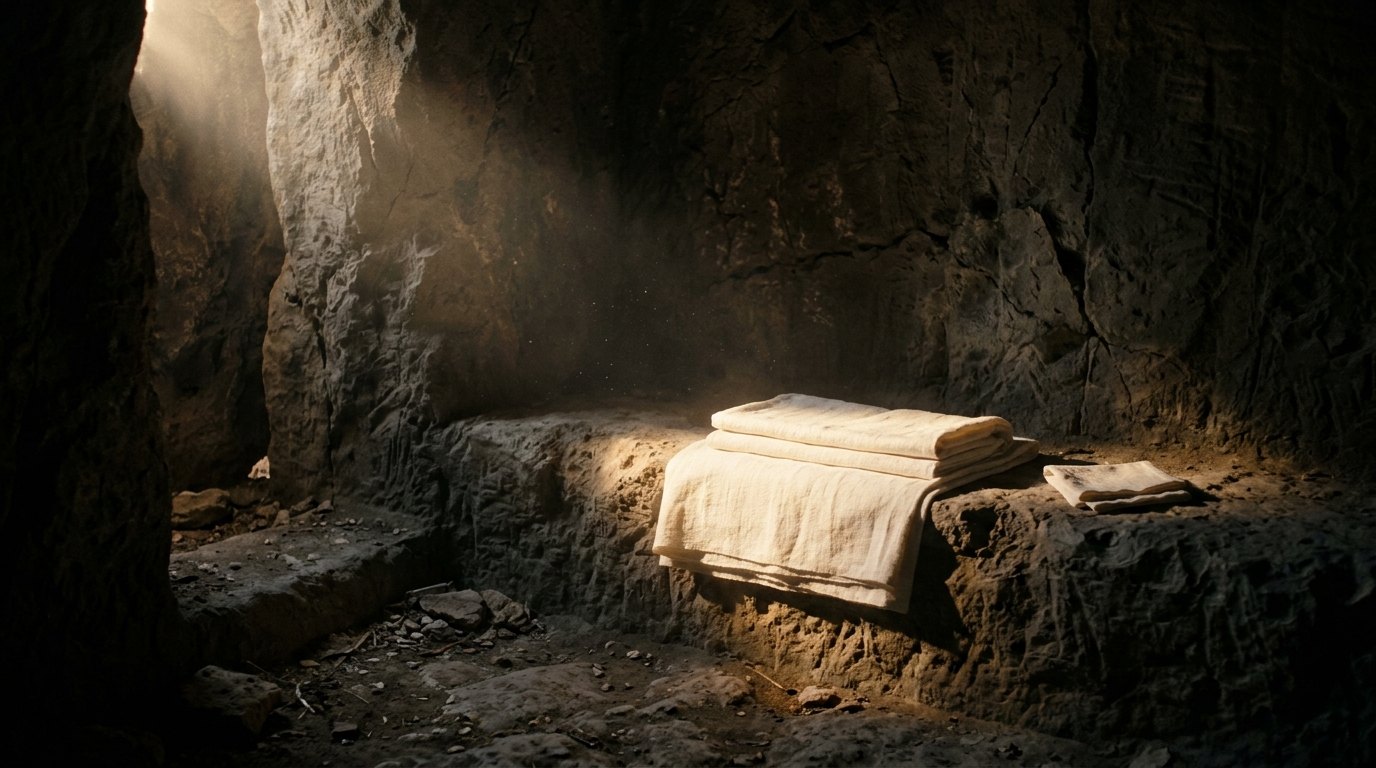
When he had said this, Jesus called in a loud voice, “Lazarus, come out!” The dead man came out, his hands and feet wrapped with strips of linen, and a cloth around his face. Jesus said to them, “Take off the grave clothes and let him go.”
John 11:43-44 (NIV)
Despite spending four days in the tomb, Lazarus delivers no disclosures about the afterlife, directing all faith to Christ alone.
In John 11:43-44, Jesus cries with a loud voice, 'Lazarus, come out!' and the man who had been dead four days walks out bound in linen cloths. Yet across the Gospel record, Lazarus offers not a single word about the afterlife. There is no description of a heavenly realm, no report of conversations with departed ancestors, and no message for the crowds. His restored life was granted to manifest the glory of God and testify to Christ's divine power, not to serve as an eyewitness travelogue of the unseen world.
This profound silence characterizes every resurrection recorded in Scripture. When Elijah cried out to the Lord for the widow's son in 1 Kings 17:21-22, the soul of the child came back into him and he revived, but the boy brought no disclosures from beyond the grave. When Elisha stretched himself over the Shunammite's son in 2 Kings 4:32-35 and the child opened his eyes, the boy offered no commentary on eternity, leaving only thanksgiving and worship in the house.
The same deliberate silence appears in the New Testament church. In Acts 9:40-41, when Peter knelt in prayer and said, 'Tabitha, arise,' she sat up and was presented alive to the saints, completely silent regarding where her spirit had resided. When Paul embraced the young man Eutychus in Acts 20:9-10 after his fatal fall from the third story, life returned, but no post-mortem narrative accompanied the miracle. God consistently restrained those raised from physical death from divulging the secrets of eternity. Scripture thereby directs all human faith, wonder, and scrutiny away from speculative human experiences and fixes our gaze entirely upon the clear, sufficient Word of God.
| Passage | What it says |
|---|---|
| 1 Kings 17:21-22 | Elijah prays for the widow's son, and God revives him, yet no post-mortem journey is recounted. |
| 2 Kings 4:32-35 | Elisha raises the Shunammite's son from the dead, with no message or vision reported from beyond the grave. |
| John 11:43-44 | Jesus calls Lazarus out from the tomb after four days, leaving no record of heavenly travel or revelation. |
| Acts 9:40-41 | Peter prays and raises Tabitha from death, without any recording of after-death experience. |
| Acts 20:9-10 | Paul revives Eutychus after his fatal fall, with silence regarding what occurred while dead. |
Discerning Supernatural Encounters
Scripture Warns Believers to Test Every Spiritual Claim and Vision
And no wonder, for Satan himself masquerades as an angel of light.
2 Corinthians 11:14 (NIV)
Luminous and peaceful supernatural encounters can deceive if they depart from apostolic truth and sound doctrine.
The apostle Paul sounds an urgent alarm in 2 Corinthians 11:14, reminding the church that even Satan disguises himself as an angel of light. Many modern accounts of near-death experiences emphasize an overwhelming sense of warmth, dazzling brightness, and unconditional acceptance, often detached from repentance, holiness, or the cross of Christ. Yet Scripture insists that subjective spiritual beauty cannot serve as the benchmark for divine truth. The brilliance of an apparition or the peaceful emotion of an experience does not guarantee its heavenly origin, because spiritual deception routinely masquerades under the appearance of goodness and light.
For this reason, God’s written word establishes rigorous boundaries for testing any claim of supernatural communication. In Galatians 1:8, Paul warns that even if an angel from heaven should preach a gospel contrary to what the apostles delivered, that messenger must be accursed. Personal testimonies of visiting eternity frequently promote universal salvation or obscure the exclusivity of Christ, directly contradicting apostolic doctrine. John therefore commands the church in 1 John 4:1 not to believe every spirit, but to test the spirits to see whether they are from God, evaluating every claim against the incarnate Christ and the revealed apostolic testimony.
God has not invited humanity into unbridled speculation about the unseen realms. As Moses declares in Deuteronomy 29:29, the secret things belong to the Lord our God, but the things that are revealed belong to us and to our children forever. What God has chosen to reveal in His inerrant word is entirely sufficient for faith, eternal life, and godly living. Believers are called to rest their hope not on unverified personal visions, but on the sure and unchanging foundation of Scripture.
| Passage | What it says |
|---|---|
| 2 Corinthians 11:14 | Satan disguises himself as an angel of light, warning believers not to evaluate truth by subjective visionary brilliance. |
| Galatians 1:8 | Any message contrary to the gospel, even if delivered by an angel from heaven, is accursed. |
| 1 John 4:1 | Believers are commanded to test every spirit against the revealed truth of God rather than believing every encounter. |
| Deuteronomy 29:29 | The secret things belong to the Lord our God, but what He has revealed belongs to us and our children forever. |
Where in the Bible
| Book | Passages |
|---|---|
| Deuteronomy | 2 · Deuteronomy 18:10-12, Deuteronomy 29:29 |
| 2 Samuel | 1 · 2 Samuel 12:22-23 |
| 1 Kings | 1 · 1 Kings 17:21-22 |
| 2 Kings | 1 · 2 Kings 4:32-35 |
| Job | 1 · Job 7:9-10 |
| Ecclesiastes | 1 · Ecclesiastes 12:7 |
| Isaiah | 3 · Isaiah 57:15, Isaiah 6:1-4, Isaiah 8:19-20 |
| Ezekiel | 1 · Ezekiel 8:1-3 |
| Luke | 2 · Luke 16:19-31, Luke 23:43 |
| John | 2 · John 11:25, John 11:43-44 |
| Acts | 4 · Acts 22:17, Acts 7:55-56, Acts 9:40-41, Acts 20:9-10 |
| 1 Corinthians | 1 · 1 Corinthians 15:54-57 |
| 2 Corinthians | 3 · 2 Corinthians 12:2-4, 2 Corinthians 5:8, 2 Corinthians 11:14 |
| Galatians | 1 · Galatians 1:8 |
| Philippians | 1 · Philippians 1:21-23 |
| 1 Thessalonians | 1 · 1 Thessalonians 4:17 |
| Hebrews | 1 · Hebrews 9:27 |
| 1 John | 1 · 1 John 4:1 |
| Revelation | 3 · Revelation 1:10-18, Revelation 4:2, Revelation 1:17-18 |
The story in order
- Isaiah sees the Lord in heaven (c. 700 BC) · Isaiah 6:1-4 · A vision of God's holiness in His heavenly temple.
- Ezekiel transported in vision (c. 590 BC) · Ezekiel 8:1-3 · God gives visions to reveal His will and judgment.
- Jesus speaks of the rich man and Lazarus (c. AD 30) · Luke 16:19-31 · Illustrates a fixed gulf between realms after death.
- Jesus promises Paradise to the criminal (AD 30) · Luke 23:43 · Assures conscious presence with Christ after death.
- Stephen sees heaven opened (c. AD 35) · Acts 7:55-56 · A vision of glory at the moment of martyrdom.
- Paul caught up to Paradise (c. AD 55) · 2 Corinthians 12:2-4 · A divine revelation with a divine restraint.
- Paul falls into a trance (c. AD 58) · Acts 22:17 · Receiving direct guidance from the Lord Jesus.
- Hebrews states death is appointed (c. AD 67) · Hebrews 9:27 · Man dies once, then faces judgment.
- John sees the risen Christ (c. AD 95) · Revelation 1:10-18 · A vision of the glorified Christ and commission.
- John is in the Spirit (c. AD 95) · Revelation 4:2 · Immediately in the Spirit, beholding heaven's throne.
Divine Encounters vs. Forbidden Practices
| Source of Guidance | Biblical Warning | Outcome | Passage |
|---|---|---|---|
| God's sovereign visions | Test every spirit | Truth | 1 John 4:1 |
| God's written teaching | Do not consult the dead | Wisdom | Isaiah 8:19-20 |
| Satanic deception | Satan disguised as angel of light | Deception | 2 Corinthians 11:14 |
| False gospel message | Accursed even if from an angel | Condemnation | Galatians 1:8 |
Key words
- Vision (ḥazon, חָזוֹן)
- A supernatural sight or revelation given by God. · Ezekiel 8:1
- Paradise (paradeisos, παράδεισος)
- A place of divine presence and blessing, associated with God's dwelling. · 2 Corinthians 12:4
- Judgment (krisis, κρίσις)
- The solemn divine assessment of all humanity. · Hebrews 9:27
- Resurrection (anastasis, ἀνάστασις)
- The act of being raised from the dead to new life. · 1 Corinthians 15:54
- Spirit (pneuma, πνεῦμα)
- The immaterial part of humanity, or a supernatural being. · Acts 7:55
Rather than anchoring our understanding of eternity in subjective near-death stories, believers rest upon the inerrant witness of Holy Scripture. In Christ, death has lost its sting, and those who trust in Him possess the unshakable guarantee of everlasting life in the presence of God.
31 passages, each cited once.
Scripture cited
- 2 Corinthians 12:2-4
- Acts 22:17
- Ezekiel 8:1-3
- 1 Thessalonians 4:17
- Revelation 4:2
- Hebrews 9:27-28
- Luke 16:19-31
- 2 Corinthians 5:6-10
- Galatians 1:8-9
- Deuteronomy 18:9-14
- John 11:25-26
- 1 Thessalonians 4:13-18