What does the Bible say about obeying the law?
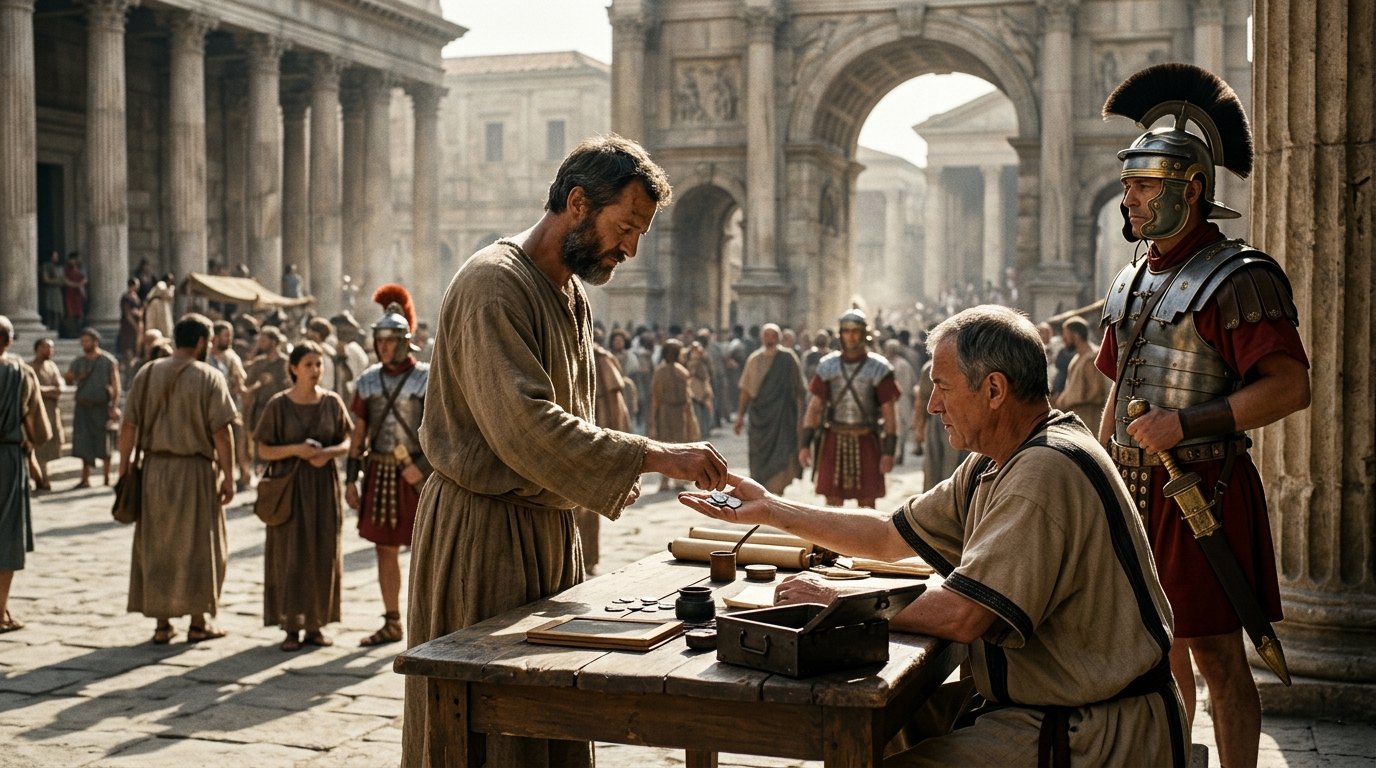
Romans 13:1-7
1 Let everyone be subject to the governing authorities, for there is no authority except that which God has established. The authorities that exist have been established by God.
2 Consequently, whoever rebels against the authority is rebelling against what God has instituted, and those who do so will bring judgment on themselves.
3 For rulers hold no terror for those who do right, but for those who do wrong. Do you want to be free from fear of the one in authority? Then do what is right and you will be commended.
4 For the one in authority is God’s servant for your good. But if you do wrong, be afraid, for rulers do not bear the sword for no reason. They are God’s servants, agents of wrath to bring punishment on the wrongdoer.
5 Therefore, it is necessary to submit to the authorities, not only because of possible punishment but also as a matter of conscience.
6 This is also why you pay taxes, for the authorities are God’s servants, who give their full time to governing.
7 Give to everyone what you owe them: If you owe taxes, pay taxes; if revenue, then revenue; if respect, then respect; if honor, then honor.
New International Version (NIV)
The answer
The Bible tells us to obey the law, not grudgingly but for conscience’ sake, because civil authorities are ordained by God. It also sets a limit: when a human law requires what God forbids, we must obey God rather than men.
Obeying civil law is a Christian duty
Romans 13:1-7 teaches that “there is no authority except from God, and those who exist are ordained by God” (Romans 13:1). Christian submission is therefore not servility to human power; it is obedience to a God-established order.
Paul gives several reasons:
- Conscience matters: “You need to be in subjection, not only because of the wrath, but also for conscience’ sake” (Romans 13:5).
- The ruler serves your good: “He is a servant of God to you for good” (Romans 13:4).
- Doing good deserves respect: “Rulers are not a terror to the good work, but to the evil. Do that which is good, and you will have praise from the authority” (Romans 13:3).
- Duties must be paid: “If you owe taxes, pay taxes; if customs, then customs; if respect, then respect; if honor, then honor” (Romans 13:7).
The same instruction appears elsewhere: “Submit yourselves to every ordinance of man for the Lord’s sake: whether it be to the king, as supreme” (1 Peter 2:13-14), and believers are to “obey magistrates, to be ready to every good work” (Titus 3:1).
When obedience must stop
Acts 5:29 gives the governing limit: “We must obey God rather than men.” When a government requires what God plainly forbids, refusal is required. This is not blanket opposition to government; it is obedience to the higher authority of God.
In daily life
The practical implications are to pay legitimate taxes, respect those in authority, support what is good, and leave punishment and vengeance to the civil authorities (Romans 13:2-4). The believer should obey conscience before God, contribute to a lawful and orderly society, and refuse only what God has clearly forbidden.
Answered from Scripture · reviewed November 11, 2026
Scripture explicitly commands believers to submit to governing authorities, revealing that civil government is an institution ordained by God for human order and justice. Far from granting blind allegiance to tyranny, the Bible teaches that our obedience to civil law is rooted in our reverence for God, setting a clear boundary when human commands directly oppose His divine law.
Divine Sovereignty
All Earthly Authority Originates from God Alone
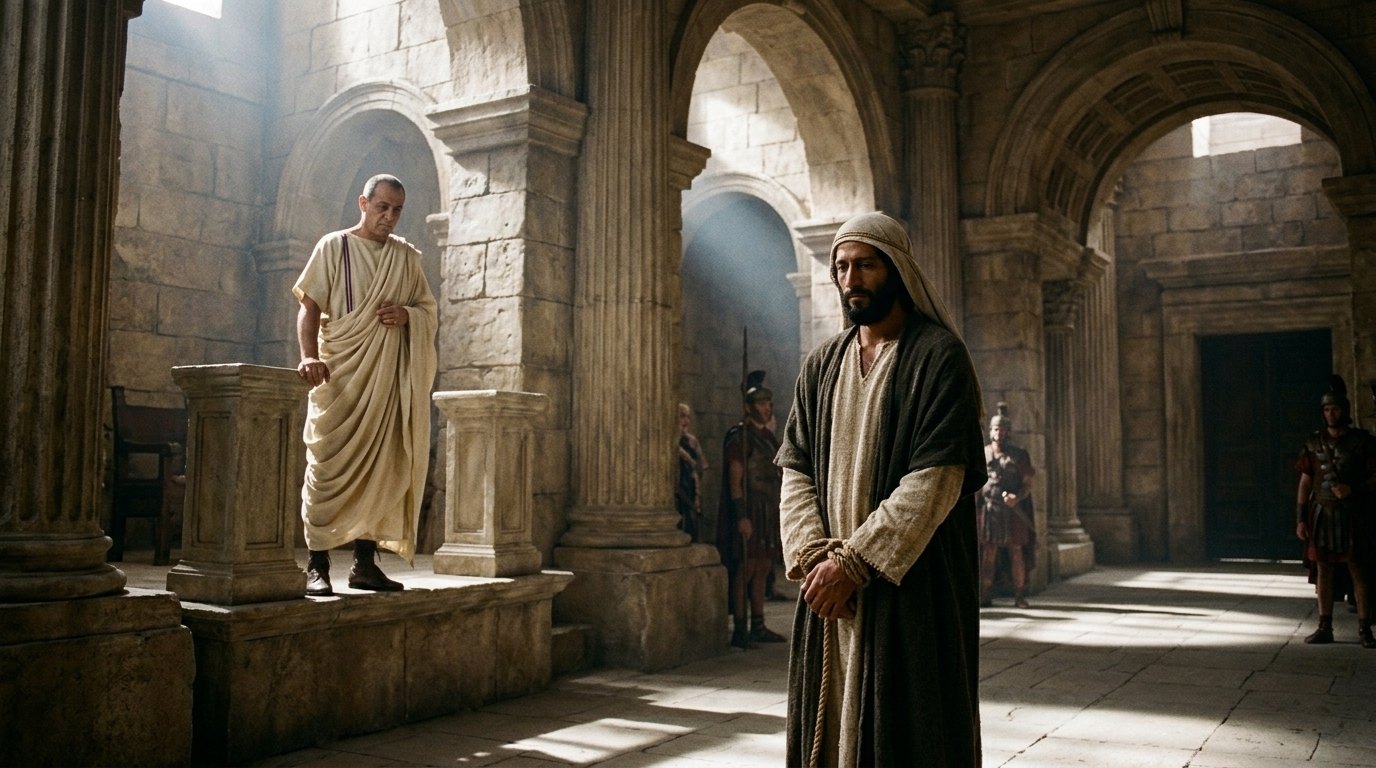
Let everyone be subject to the governing authorities, for there is no authority except that which God has established. The authorities that exist have been established by God.
Romans 13:1 (NIV)
It establishes the foundational theological truth that human government is neither accidental nor autonomous, but instituted directly by God.
Paul lays down the foundational premise of all civil order in Romans 13:1: "Let every soul be subject unto the higher powers. For there is no power but of God: the powers that be are ordained of God." Civil magistrates do not govern in a moral vacuum or by their own autonomous might, but solely under the sovereign delegation of the Creator. Divine wisdom declares in Proverbs 8:15 that "by me kings reign, and princes decree justice," while Proverbs 8:16 reiterates that all righteous earthly judges rule through His eternal prerogative. God's universal lordship means no empire rises outside His hand. Through the prophet in Jeremiah 27:5, God affirms His absolute power as Maker of heaven and earth to bestow sovereign dominion over nations to whomever seems proper in His sight.
This reality humbles the pride of human empires. When Daniel interpreted the dreams of world rulers, he praised the Almighty in Daniel 2:21 as the One who "removeth kings, and setteth up kings," echoing the profound verdict in Daniel 4:17 that "the most High ruleth in the kingdom of men, and giveth it to whomsoever he will." Even when civil rulers imagine themselves unaccountable, their hearts remain like channeled streams directed by heaven, as Proverbs 21:1 confirms that "the king's heart is in the hand of the Lord, as the rivers of water: he turneth it whithersoever he will." Our Lord Jesus Christ drove this home to the Roman governor in John 19:11, stating plainly to Pilate, "Thou couldest have no power at all against me, except it were given thee from above." Recognizing divine sovereignty strips civil power of idolatrous self-exaltation and grounds our obedience in reverence to God Himself.
| Passage | What it says |
|---|---|
| Proverbs 8:15 | Affirms that kings reign and rulers decree justice by divine wisdom. |
| Proverbs 8:16 | Declares that all earthly princes, nobles, and righteous judges govern through God's power. |
| Jeremiah 27:5 | Proclaims God's absolute sovereignty as Creator to give dominion over the earth to whomever He pleases. |
| Daniel 2:21 | States that God changes times and seasons, removing kings and establishing kings according to His will. |
| Daniel 4:17 | Declares that the Most High rules over the kingdom of men and gives it to whom He will. |
| John 19:11 | Jesus reminds Pontius Pilate that earthly authority has no power unless granted directly from above. |
| Romans 13:1 | Commands every soul to be subject to governing authorities because no authority exists apart from God. |
| Proverbs 21:1 | Affirms the king's heart is in the hand of the Lord, directed wherever He wills. |
Civil Duty
Submission to Magistrates Is Commanded for Conscience' Sake
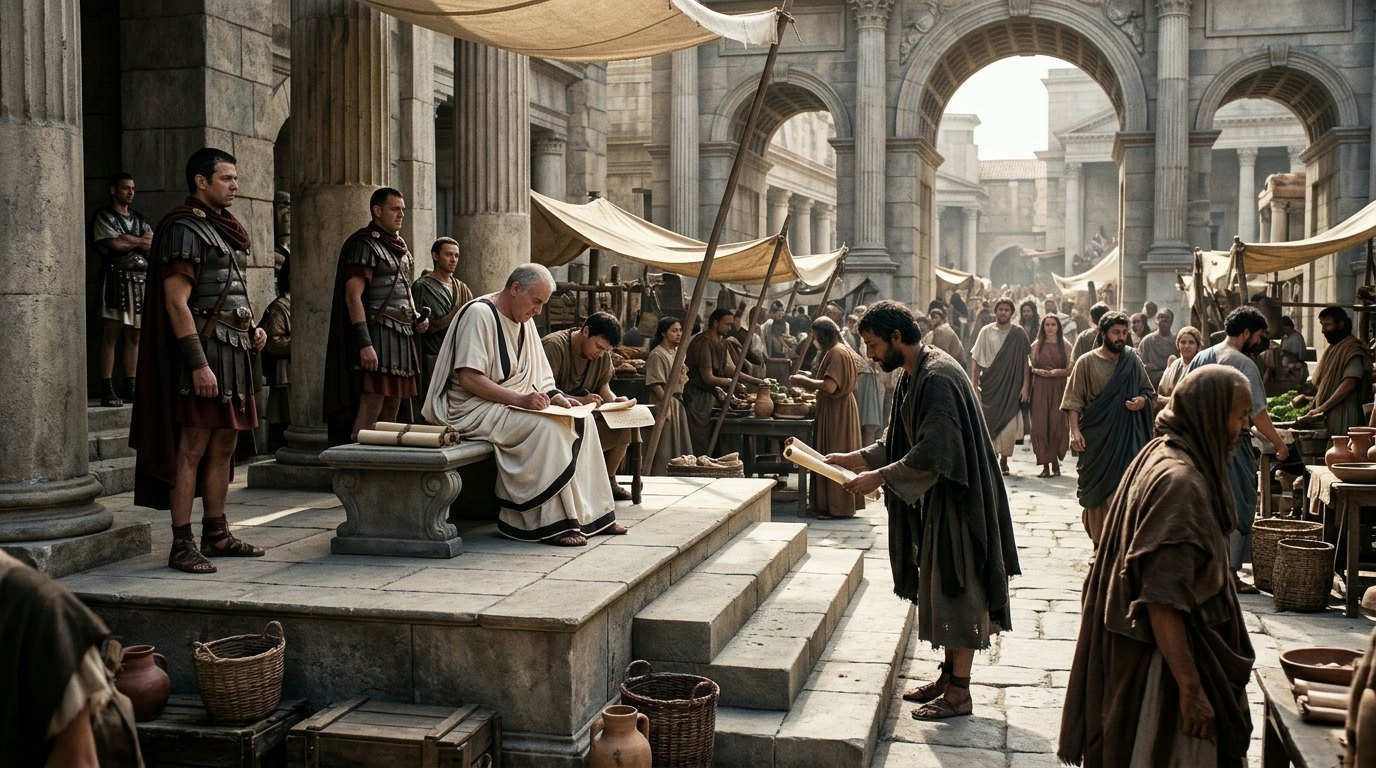
Therefore, it is necessary to submit to the authorities, not only because of possible punishment but also as a matter of conscience.
Romans 13:5 (NIV)
It elevates civic submission from a mere fear of judicial punishment to an inward, spiritual duty before God.
In Romans 13:5, the apostle Paul elevates submission to civil magistrates above simple pragmatism: "Wherefore ye must needs be subject, not only for wrath, but also for conscience sake." Believers submit to earthly laws not out of terror of the magistrate's jail cell, but out of an inward duty to God. Resistance to legitimate public authority brings divine censure, as Romans 13:2 warns that "whosoever therefore resisteth the power, resisteth the ordinance of God." Under ordinary providence, human rulers serve a vital, God-ordained purpose: Romans 13:3 notes they are "not a terror to good works, but to the evil," while Romans 13:4 defines the magistrate as "the minister of God, a revenger to execute wrath upon him that doeth evil," rightfully bearing the sword of justice.
Pastoral counsel throughout the epistles reinforces this civic posture. Paul directs Titus in Titus 3:1 to remind the flock "to be subject to principalities and powers, to obey magistrates, to be ready to every good work." The apostle Peter likewise instructs the scattered church in 1 Peter 2:13 to "submit yourselves to every ordinance of man for the Lord's sake," whether to the supreme king or to subordinate governors sent to punish wrongdoers and praise upright conduct, as laid out in 1 Peter 2:14. This orderly submission silences malicious critics; 1 Peter 2:15 shows that "with well doing ye may put to silence the ignorance of foolish men." Such obedience fulfills the wise counsel of Ecclesiastes 8:2 to observe the king's command because of the oath of God, while avoiding treacherous contempt (Ecclesiastes 10:20). As 1 Peter 2:16 reminds us, genuine Christian liberty is never an excuse for lawlessness, but freedom to live as servants of God.
| Passage | What it says |
|---|---|
| Romans 13:2 | Warns that rebelling against lawful civil authority constitutes rebellion against God's instituted order. |
| Romans 13:3 | Explains that rulers exist as a terror to evil works rather than good conduct. |
| Romans 13:4 | Identifies the governing ruler as God's minister bearing the sword to execute wrath upon evildoers. |
| Romans 13:5 | Urges subjection to authority not only to avoid wrath, but also for the sake of conscience. |
| Titus 3:1 | Instructs believers to be subject to rulers and authorities, to obey, and to be ready for good works. |
| 1 Peter 2:13 | Commands submission to every human institution for the Lord's sake, whether supreme kings or governors. |
| 1 Peter 2:14 | Notes that governors are sent to punish those doing evil and to praise those doing good. |
| 1 Peter 2:15 | Explains that well-doing silences the ignorance of foolish men according to the will of God. |
| Ecclesiastes 8:2 | Counsels keeping the king's command because of an oath made before God. |
| Ecclesiastes 10:20 | Warns against cursing or despising the king, even in secret thoughts. |
| 1 Peter 2:16 | Instructs believers to live as free people without using freedom as a cover-up for evil. |
Honor and Taxes
Rendering Dues, Honor, and Supplications for Leaders
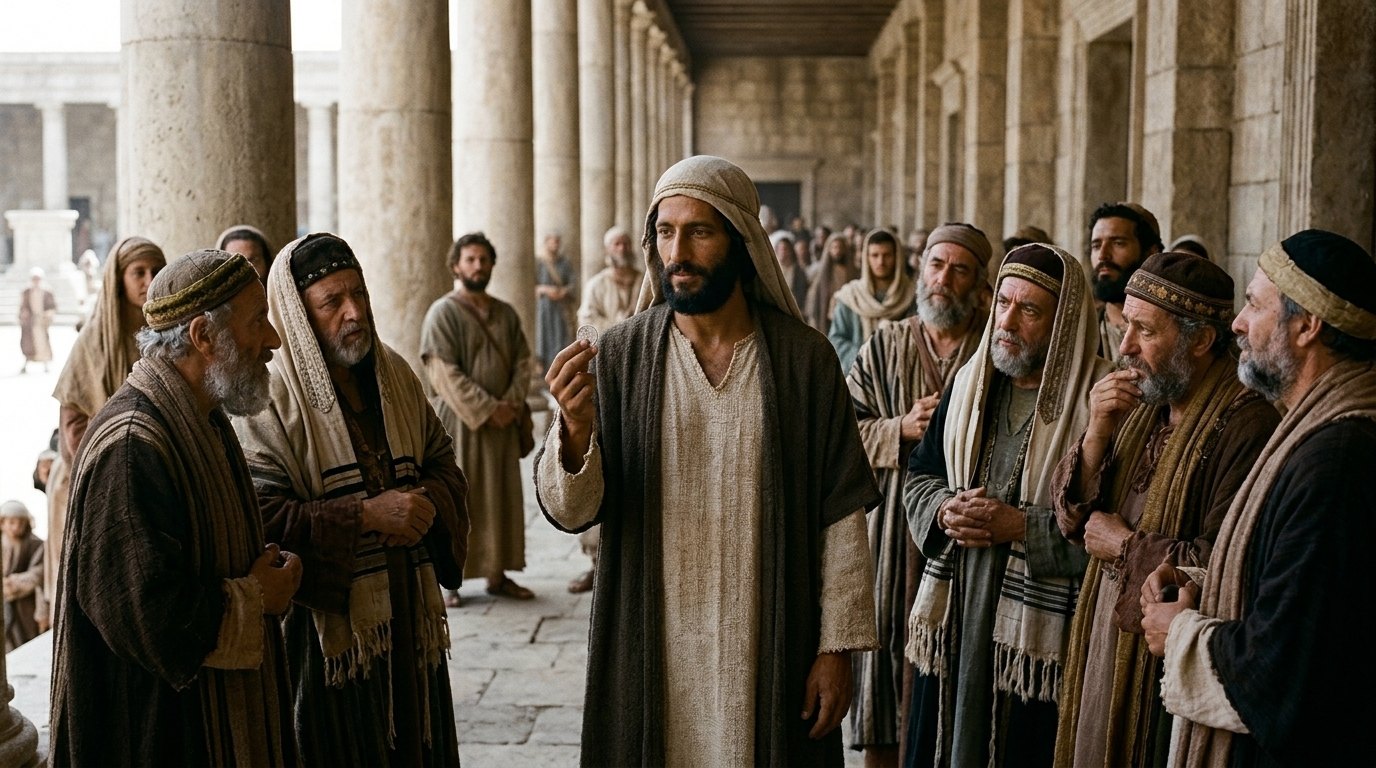
“Caesar’s,” they replied. Then he said to them, “So give back to Caesar what is Caesar’s, and to God what is God’s.”
Matthew 22:21 (NIV)
Jesus distinguishes the rightful, subordinate claims of civil government from the supreme claims of Almighty God.
When interrogated regarding Roman taxation, the Lord Jesus articulated a profound principle in Matthew 22:21: "Render therefore unto Caesar the things which are Caesar's; and unto God the things that are God's." Christians honor the state through practical support while reserving ultimate, total worship for God alone. Jesus reaffirmed this distinction in Luke 20:25, having previously demonstrated civil compliance in Matthew 17:27 by miraculously providing a coin from a fish's mouth to pay the temple tribute, carefully avoiding unnecessary public offense. Even in foreign exile, God commanded His people in Jeremiah 29:7 to seek the peace and welfare of the city where they dwelt and pray for it, matching the decree in Ezra 6:10 to offer prayers for the king and his household, alongside strict civil order under Ezra 7:26.
The apostolic epistles translate this doctrine directly into church practice. Paul explains in Romans 13:6 that paying taxes acknowledges public rulers as "God's ministers, attending continually upon this very thing." Therefore, Romans 13:7 commands: "Render therefore to all their dues: tribute to whom tribute is due; custom to whom custom; fear to whom fear; honour to whom honour." This civic duty is bathed in constant prayer. In 1 Timothy 2:1, the apostle urges supplications and intercessions for all people, explicitly adding in 1 Timothy 2:2 that we pray "for kings, and for all that are in authority; that we may lead a quiet and peaceable life in all godliness and honesty." Peter summarizes our dual obligations with crisp clarity in 1 Peter 2:17: "Honour all men. Love the brotherhood. Fear God. Honour the king."
| Passage | What it says |
|---|---|
| Jeremiah 29:7 | Instructs the exiles in Babylon to seek the peace and welfare of their governing city. |
| Matthew 17:27 | Jesus provides temple tax money miraculously so as not to cause unnecessary offense. |
| Matthew 22:21 | Jesus commands giving to Caesar what belongs to Caesar, and to God what belongs to God. |
| Romans 13:6 | Explains that paying taxes acknowledges civil rulers as servants attending continually to God's service. |
| Romans 13:7 | Commands paying all obligations: taxes to whom taxes, customs to customs, fear to fear, honor to honor. |
| 1 Timothy 2:1 | Exhorts that supplications, prayers, intercessions, and thanksgiving be made for all people. |
| 1 Timothy 2:2 | Specifies prayer for kings and all in authority so believers may lead quiet, peaceable, godly lives. |
| 1 Peter 2:17 | Commands honoring all people, loving the brotherhood, fearing God, and honoring the king. |
| Ezra 6:10 | Calls for offering sacrifices and praying for the life of the king and his sons. |
| Ezra 7:26 | Decrees strict judicial penalty for anyone who disobeys the law of God and the law of the king. |
| Luke 20:25 | Reiterates rendering to Caesar what belongs to Caesar and to God what belongs to God. |
Higher Allegiance
When Civil Law Conflicts with the Commands of God
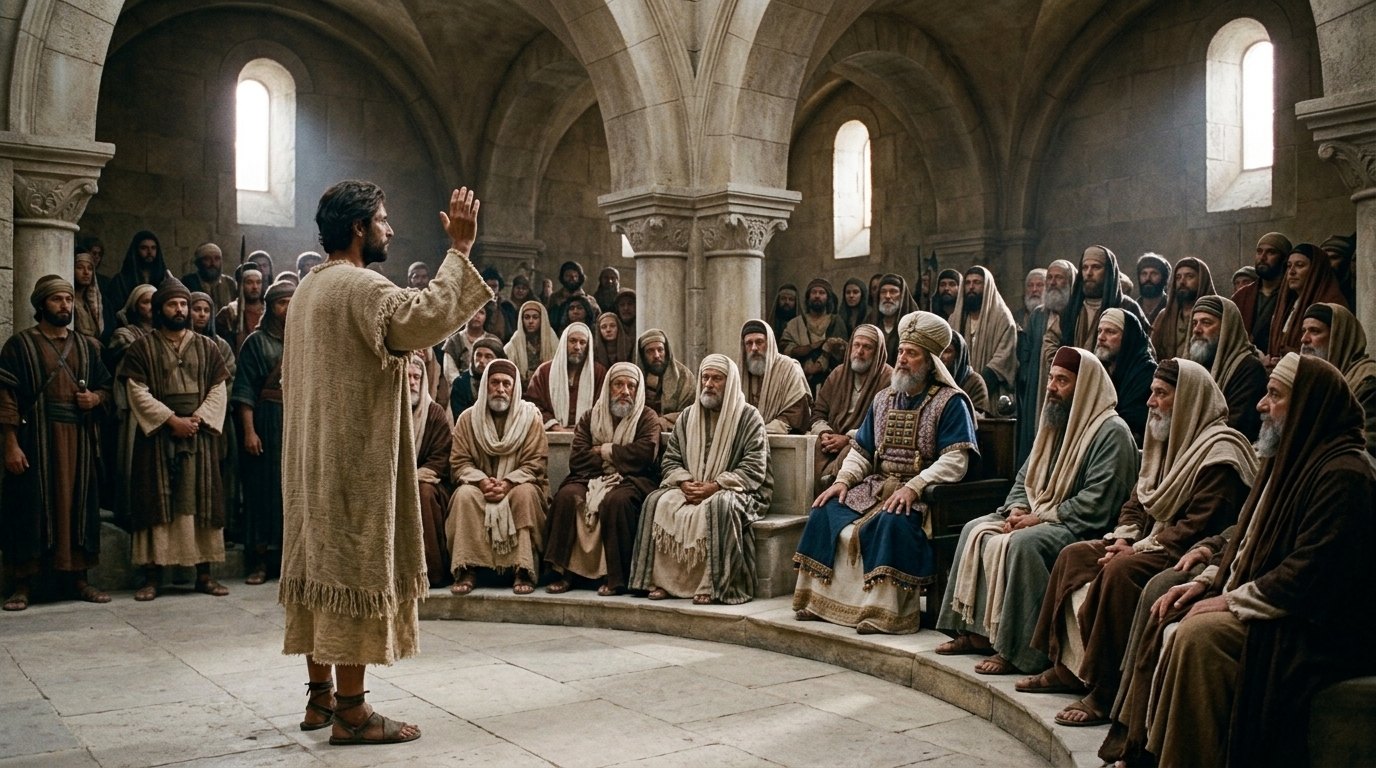
Peter and the other apostles replied: “We must obey God rather than human beings!
Acts 5:29 (NIV)
It defines the non-negotiable boundary of human authority: obedience to God always overrides human dictates.
Whenever human laws demand disobedience to the clear commandments of God, Scripture establishes an absolute limit on state authority, captured in Acts 5:29: "Then Peter and the other apostles answered and said, We ought to obey God rather than men." The state's authority is delegated, never supreme, and it loses its divine mandate the moment it commands what God forbids or forbids what God commands. The apostles had already laid down this boundary in Acts 4:19, asking the Sanhedrin, "Whether it be right in the sight of God to hearken unto you more than unto God, judge ye." Godly disobedience to tyrannical decrees runs throughout biblical history. In Exodus 1:17, the Hebrew midwives Shiphrah and Puah "feared God, and did not as the king of Egypt commanded them, but saved the men children alive," a courageous faith mirrored by Amram and Jochebed, whom Hebrews 11:23 commends for hiding infant Moses "not fearing the king's edict."
In Babylon, three young Hebrew captives confronted king Nebuchadnezzar's idolatrous mandate in Daniel 3:18, boldly refusing to serve his gods or bow to his golden image, even facing a fiery furnace. Decades later, when an imperial statute outlawed prayer, Daniel 6:10 records that Daniel knelt three times a day at his open window to pray toward Jerusalem, maintaining undisturbed fidelity to heaven. Similarly, during Jezebel's slaughter, Obadiah preserved the Lord's servants in secret (1 Kings 18:4), and Queen Esther famously breached royal law to rescue her people, declaring, "If I perish, I perish" (Esther 4:16). In every age, faithful believers cheerfully submit to just civil laws, while standing completely resolute against human dictates that defy the living God.
| Passage | What it says |
|---|---|
| Exodus 1:17 | Hebrew midwives feared God and defied Pharaoh's royal decree by saving male infants alive. |
| Daniel 3:18 | Shadrach, Meshach, and Abednego refuse Nebuchadnezzar's command to commit idolatry, accepting the furnace. |
| Daniel 6:10 | Daniel continues his regular pattern of prayer to God despite the king's binding prohibition. |
| Acts 4:19 | Peter and John challenge the council whether it is right to listen to men rather than God. |
| Acts 5:29 | Peter and the apostles explicitly declare that we must obey God rather than men. |
| Hebrews 11:23 | Moses' parents are commended for hiding him by faith, not fearing the king's unlawful edict. |
| 1 Kings 18:4 | Records Obadiah hiding a hundred of the Lord's prophets from Jezebel's murderous civil decree. |
| Esther 4:16 | Shows Esther resolving to approach the king contrary to the royal law to save her people. |
Where in the Bible
| Book | Passages |
|---|---|
| Exodus | 1 · Exodus 1:17 |
| 1 Kings | 1 · 1 Kings 18:4 |
| Ezra | 2 · Ezra 6:10, Ezra 7:26 |
| Esther | 1 · Esther 4:16 |
| Proverbs | 3 · Proverbs 8:15, Proverbs 8:16, Proverbs 21:1 |
| Ecclesiastes | 2 · Ecclesiastes 8:2, Ecclesiastes 10:20 |
| Jeremiah | 2 · Jeremiah 27:5, Jeremiah 29:7 |
| Daniel | 4 · Daniel 2:21, Daniel 4:17, Daniel 3:18, Daniel 6:10 |
| Matthew | 2 · Matthew 17:27, Matthew 22:21 |
| Luke | 1 · Luke 20:25 |
| John | 1 · John 19:11 |
| Acts | 2 · Acts 4:19, Acts 5:29 |
| Romans | 7 · Romans 13:1, Romans 13:2, Romans 13:3, Romans 13:4, Romans 13:5, Romans 13:6, Romans 13:7 |
| 1 Timothy | 2 · 1 Timothy 2:1, 1 Timothy 2:2 |
| Titus | 1 · Titus 3:1 |
| Hebrews | 1 · Hebrews 11:23 |
| 1 Peter | 5 · 1 Peter 2:13, 1 Peter 2:14, 1 Peter 2:15, 1 Peter 2:16, 1 Peter 2:17 |
The story in order
- God establishes earthly rulers (c. 1000 BC) · Proverbs 8:15 · Divine wisdom grants authority to kings and rulers.
- God's sovereignty over nations (c. 595 BC) · Jeremiah 27:5 · God gives dominion over the earth to whomever He pleases.
- God changes rulers at will (c. 600-530 BC) · Daniel 2:21 · God removes and establishes kings according to His will.
- Authority granted from God (AD 30) · John 19:11 · Jesus tells Pilate that his authority comes from God.
- Submit to governing authorities (AD 55-60) · Romans 13:1 · All authority originates from God; submission is required.
- Rulers as God's ministers (AD 55-60) · Romans 13:4 · Rulers execute God's wrath on evildoers.
- Pay taxes and dues (AD 30-33) · Matthew 22:21 · Render to Caesar what is Caesar's.
- Pray for leaders (AD 60-65) · 1 Timothy 2:1-2 · Pray for rulers for peace and godly living.
- Obey God rather than men (AD 30-33) · Acts 5:29 · When human law conflicts with God's law, obey God.
- Hebrew midwives defy Pharaoh (c. 1450 BC) · Exodus 1:17 · Defied unlawful decree to save lives, fearing God.
- Shadrach, Meshach, Abednego refuse idolatry (c. 600-530 BC) · Daniel 3:18 · Chose God's judgment over obeying an idolatrous command.
- Daniel prays despite prohibition (c. 530 BC) · Daniel 6:10 · Continued prayer to God despite a royal ban.
Submission to Authority
| Civil Duty | Divine Basis | Purpose | Passage |
|---|---|---|---|
| Be subject to governing authorities | No authority exists apart from God | For conscience' sake | Romans 13:1-5 |
| Submit to every human institution | For the Lord's sake | To punish evil and praise good | 1 Peter 2:13-14 |
| Be subject to rulers and authorities | To obey | Be ready for good works | Titus 3:1 |
Rendering Dues
| To Caesar | To God | Passage |
|---|---|---|
| Taxes | What belongs to God | Matthew 22:21 |
| Taxes, customs | Honor | Romans 13:7 |
| Payment for God's service | Supplications, prayers, intercessions, thanksgiving |
When Human Law Opposes God's Law
| Human Command | Divine Law/Principle | Response | Passage |
|---|---|---|---|
| Save male infants | Fear God and preserve life | Defied Pharaoh's decree | Exodus 1:17 |
| Worship the king's image | Worship only the Lord | Accepted fiery furnace | Daniel 3:18 |
| Do not pray to God | Pray to God | Continued regular prayer | Daniel 6:10 |
| Do not speak in Jesus' name | Obey God rather than men | Must obey God |
Key words
- Authority (exousia (Gk. ἐξουσία))
- The power or right to give orders, make decisions, and enforce obedience. · Romans 13:1
- Minister (leitourgos (Gk. λειτουργός))
- An agent or servant, especially of God or a government. · Romans 13:4
- Submit (hypotasso (Gk. ὑποτάσσω))
- Yield to the authority or control of another. · Romans 13:1
- Obey (hypakouo (Gk. ὑπακούω))
- Comply with the command or instruction of. · Acts 5:29
- Honor (timē (Gk. τιμή))
- High respect; due recognition of authority or status. · 1 Peter 2:17
Ultimately, the Christian lives as a faithful citizen of earthly nations while maintaining primary citizenship in the kingdom of heaven. When we pay our taxes, honor magistrates, and live peaceable lives, we bear witness to the righteous rule of Christ, who reigns supreme over every earthly throne.
38 passages, each cited once.
Scripture cited
- Romans 13:1-7
- Titus 3:1
- Acts 5:29