What does the Bible say about paying taxes?
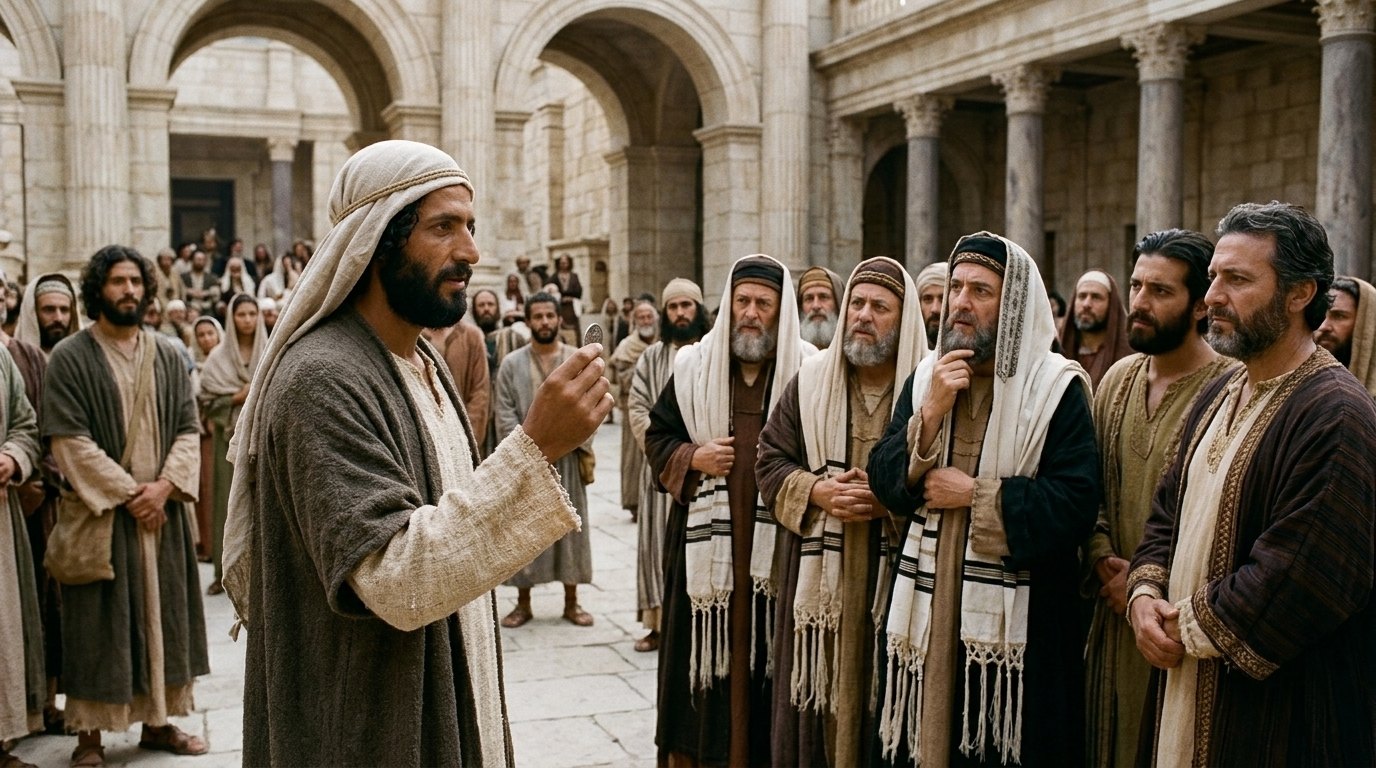
Matthew 22:15-22
15 Then the Pharisees went out and laid plans to trap him in his words.
16 They sent their disciples to him along with the Herodians. “Teacher,” they said, “we know that you are a man of integrity and that you teach the way of God in accordance with the truth. You aren’t swayed by others, because you pay no attention to who they are.
17 Tell us then, what is your opinion? Is it right to pay the imperial tax to Caesar or not?”
18 But Jesus, knowing their evil intent, said, “You hypocrites, why are you trying to trap me?
19 Show me the coin used for paying the tax.” They brought him a denarius,
20 and he asked them, “Whose image is this? And whose inscription?”
21 “Caesar’s,” they replied. Then he said to them, “So give back to Caesar what is Caesar’s, and to God what is God’s.”
22 When they heard this, they were amazed. So they left him and went away.
New International Version (NIV)
The answer
The Bible teaches that paying taxes is ordinarily a duty, not something people may avoid simply because they dislike the government or its policies. Civil authority is not ultimate, however: Caesar may receive what is owed to Caesar, but God retains supreme authority over everything and everyone.
Jesus affirmed the obligation
When opponents tried to trap Jesus over paying taxes to Rome, he asked whose image was on the tax coin. After they answered, “Caesar’s,” he said, “Give therefore to Caesar the things that are Caesar’s, and to God the things that are God’s” (Matthew 22:21). His answer rejects both extremes: refusing legitimate civil obligations and giving government the devotion that belongs to God alone.
Jesus also paid the temple tax. Although he told Peter that “the children are exempt,” he provided the required coin so that they would not needlessly cause others to stumble (Matthew 17:24-27). That was a temple payment rather than a Roman tax, but it further demonstrates his willingness to meet an obligation rather than assert his own exemption.
Payment is also a matter of conscience
Romans 13:1-7 explains that governing authorities exist under God’s ordering and are intended to restrain evil and serve the public good. Payment is therefore not merely a way to avoid punishment: “Therefore you need to be in subjection, not only because of the wrath, but also for conscience’ sake” (Romans 13:5).
The conclusion is explicit: “For this reason you also pay taxes” and “if you owe taxes, pay taxes; if customs, then customs” (Romans 13:6-7). First Peter 2:13-17 likewise commands submission to governing authorities “for the Lord’s sake,” together with honour for everyone, love for fellow believers, fear of God and honour for the king.
Honesty is required on both sides
Taxpayers should not use deception, concealed income or dishonest reporting to escape what they owe. Tax collectors and officials are also bound by righteousness. When collectors asked John the Baptist what repentance required, he answered, “Collect no more than that which is appointed to you” (Luke 3:13). Taxation does not justify extortion, oppression or corruption.
God’s authority sets the limit
Submission to government is not unconditional obedience to every human command. When the authorities ordered the apostles to stop teaching in Jesus’ name, Peter and the apostles replied, “We must obey God rather than men” (Acts 5:29). That establishes God’s supremacy when a command directly conflicts with obedience to him; it is not a general excuse for tax evasion.
In practice, Scripture calls for honest payment of what is owed, integrity in collecting and administering taxes, respectful civil conduct, and unreserved ultimate allegiance to God.
Answered from Scripture · reviewed November 11, 2026
Scripture speaks with unmistakable clarity regarding taxation: believers are commanded to pay what they owe to civil governing authorities. Because civil government is instituted by God for civic order, rendering taxes is an act of basic obedience to Him, while reserving absolute allegiance and ultimate worship for God alone.
The Trap Defeated
Jesus commands rendering to Caesar and to God
“Caesar’s,” they replied. Then he said to them, “So give back to Caesar what is Caesar’s, and to God what is God’s.”
Matthew 22:21 (NIV)
Jesus establishes the distinct duties owed to earthly civil governance and ultimate allegiance owed to God Almighty.
When challenged by an unholy alliance of Pharisees and Herodians seeking to entrap Him, Jesus responded with timeless wisdom in Matthew 22:21: “Render therefore unto Caesar the things which are Caesar’s; and unto God the things that are God’s.” The trap was meticulously devised: if Jesus condemned Roman taxation, He faced immediate arrest as a seditious rebel against Rome; if He explicitly endorsed imperial tribute, He risked forfeiting the loyalty of a populace yearning for national liberation. Asking for the tribute coin, Jesus exposed their own complicity by having them produce a Roman denarius stamped with the emperor's portrait and title, as recorded in Matthew 22:15-22.
The Synoptic Gospels preserve this critical encounter with careful nuance. Both Mark 12:13-17 and Luke 20:20-26 underscore how Christ stripped away their false pretense. By confirming that paying civil dues to Caesar does not usurp the higher duty owed to God, Jesus established that civic responsibility and spiritual devotion are not mutually exclusive. Coins bearing Caesar's likeness belong to civil realm, whereas humanity, bearing the divine image of the Creator, belongs entirely to God.
The profound integrity of Christ's teaching was vindicated even when His adversaries distorted it. In Luke 23:2, when Jesus stood before Pontius Pilate, the religious council unabashedly lied, accusing Him of “forbidding to give tribute to Caesar.” The Roman governor swiftly found no fault in Him, proving that Jesus never fostered civic insurrection or tax evasion, but instead mandated faithful stewardship within the civil sphere.
| Passage | What it says |
|---|---|
| Matthew 22:15-22 | Jesus silences the Pharisees and Herodians by inspecting a denarius and commanding payment to Caesar and to God. |
| Mark 12:13-17 | Christ affirms that paying tax to Caesar does not violate, but sits alongside, duty to God. |
| Luke 20:20-26 | Spies sent by scribes fail to entrap Jesus, who explicitly upholds rendering dues to civil authorities. |
| Luke 23:2 | The religious leaders falsely accuse Jesus before Pilate of forbidding the payment of taxes to Caesar. |
The Lord's Example
Christ pays temple assessment to avoid stumbling
“But so that we may not cause offense, go to the lake and throw out your line. Take the first fish you catch; open its mouth and you will find a four-drachma coin. Take it and give it to them for my tax and yours.”
Matthew 17:27 (NIV)
Though the divine Son is exempt, Christ provides a coin miraculously to honour civic-religious assessments without causing offense.
The personal practice of Jesus Christ directly reinforces the moral duty of compliance, even when exemptions could be legitimately argued. In Capernaum, collectors approached the Apostle Peter to inquire whether their Master paid the two-drachma temple tax, an assessment originally derived from the Mosaic half-shekel for sanctuary upkeep. When Peter affirmed that He did, Jesus engaged his disciple in a pointed dialogue recorded in Matthew 17:24-27, asking whether earthly monarchs extract tribute from their own sons or from strangers.
While Peter rightly concluded that kings collect from strangers and that the sons are logically exempt, Jesus did not use His divine identity to demand immunity. Instead, in Matthew 17:27, the Lord declared, “Notwithstanding, lest we should offend them, go thou to the sea, and cast an hook, and take up the fish that first cometh up; and when thou hast opened his mouth, thou shalt find a piece of money: that take, and give unto them for me and thee.”
Rather than provoking needless controversy or causing spiritual stumbling over a civic-religious levy, Christ miraculously provided the exact stater required for both Himself and Peter. This miracle illustrates that the Lord of heaven and earth chose active compliance over assertion of His sovereign prerogative, providing a lasting model of humility and public responsibility for His followers.
| Passage | What it says |
|---|---|
| Matthew 17:24-27 | Jesus directs Peter to find a coin in a fish's mouth to pay the temple didrachma for both. |
Ministers of God
Apostles affirm rulers as God's servants

This is also why you pay taxes, for the authorities are God’s servants, who give their full time to governing. Give to everyone what you owe them: If you owe taxes, pay taxes; if revenue, then revenue; if respect, then respect; if honor, then honor.
Romans 13:6-7 (NIV)
Paul describes civil authorities as servants of God continually serving, commanding believers to pay taxes, custom, and honour.
Writing under the inspiration of the Holy Spirit to believers living in the very capital of the Roman Empire, Paul articulated the theological bedrock of civil governance. In Romans 13:6-7, the apostle issues an unambiguous command: “Render therefore to all their dues: tribute to whom tribute is due; custom to whom custom; fear to whom fear; honour to whom honour.” Civil officials are explicitly designated as God's servants and ministers attending continually upon public welfare, executing justice and maintaining order in a fallen world, as established in Romans 13:1-5.
This apostolic mandate is neither isolated nor conditional upon the personal righteousness of the ruler. In 1 Peter 2:13-17, the Apostle Peter commands believers to submit themselves to every human ordinance for the Lord's sake, whether to the king as supreme or to governors sent to punish evil and praise good. Living as free men does not permit utilizing freedom as a cloak for malicious rebellion, but calls Christians to honor all men and honor the king.
Paul reiterates this civic duty in Titus 3:1, reminding believers to be subject to principalities and powers, to obey magistrates, and to be prepared for every good work. Furthermore, 1 Timothy 2:1-2 urges that supplications, prayers, and intercessions be offered for kings and all in authority, so that believers may lead quiet and peaceable lives in all godliness. Paying lawful taxes and customs directly honors the divine design behind civil preservation.
| Passage | What it says |
|---|---|
| Romans 13:1-5 | Every soul is commanded to submit to governing authorities because civil authority is instituted and ordained by God. |
| Romans 13:6-7 | Believers must render all lawful dues: taxes to whom taxes are due, customs to whom customs. |
| 1 Peter 2:13-17 | Peter commands submission to every human ordinance for the Lord's sake, honouring the king and fearing God. |
| Titus 3:1 | Paul instructs believers to be subject to rulers and authorities, obedient, and ready for every good work. |
| 1 Timothy 2:1-2 | Paul urges prayers and thanksgivings for kings and all in authority, underpinning peaceful civic cooperation. |
Ancient Precedents
The Old Testament recognizes civic and sacred levies

Then the LORD said to Moses, “When you take a census of the Israelites to count them, each one must pay the LORD a ransom for his life at the time he is counted. Then no plague will come on them when you number them. Each one who crosses over to those already counted is to give a half shekel, according to the sanctuary shekel, which weighs twenty gerahs. This half shekel is an offering to the LORD. All who cross over, those twenty years old or more, are to give an offering to the LORD. The rich are not to give more than a half shekel and the poor are not to give less when you make the offering to the LORD to atone for your lives. Receive the atonement money from the Israelites and use it…
Exodus 30:11-16 (NIV)
The law of Moses mandates a ransom assessment for the tabernacle, showing the antiquity of universal contribution for public service.
The Old Testament records a wide spectrum of civic revenues, tributes, and sacred offerings that established the principle of universal contribution. In Exodus 30:11-16, the Lord mandated the half-shekel ransom offering whenever the people were numbered, explicitly prescribing that the rich shall not give more and the poor shall not give less, establishing that sacred maintenance requires universal participation. Centuriess later, King Joash and Jehoiada revived this statute in 2 Chronicles 24:6-9 to finance the comprehensive repair of the temple, and the post-exilic remnant bound themselves in Nehemiah 10:32-33 to provide an annual third-shekel for ongoing sacrificial service.
Civic and state revenues likewise appear throughout Israel's history and surrounding nations. In Genesis 41:34-36 and Genesis 47:24-26, Joseph prudently established a twenty percent national grain levy that delivered Egypt from catastrophic famine. Under the Israelite monarchy, Samuel warned in 1 Samuel 8:14-17 that royal administration inevitably demands tithes of fields, vineyards, and livestock, which manifested when Solomon appointed regional governors in 1 Kings 4:7 and levied resources for imperial infrastructure in 1 Kings 9:15.
Yet Scripture also addresses the weight of oppressive taxation. Excess prompted Israel's petition to Rehoboam in 1 Kings 12:3-4, confirming the wisdom of Proverbs 29:4 that an exactor of excessive levies ruins a land. Foreign conquest brought harsh tributes, as seen under Menahem in 2 Kings 15:19-20 and Jehoiakim in 2 Kings 23:35. During the Persian period, while Artaxerxes exempted sanctuary ministers from toll, tribute, and custom in Ezra 7:24, impoverished families struggled to meet imperial assessments in Nehemiah 5:4, even as adversaries plotted against Jerusalem in Ezra 4:13. Whether through divine sanctuary assessments, wartime tithes in Numbers 31:28-30, or royal taxes in Daniel 11:20, Scripture acknowledges the perpetual reality of civic levies.
| Passage | What it says |
|---|---|
| Genesis 41:34-36 | Joseph establishes a twenty percent royal reserve tax across Egypt to sustain the realm through impending famine. |
| Genesis 47:24-26 | Joseph institutes an enduring statute making one-fifth of the land's produce payable to Pharaoh as sovereign tax. |
| Exodus 30:11-16 | Every counted Israelite over twenty gives a half-shekel offering to maintain the service of the tabernacle. |
| 1 Samuel 8:14-17 | Samuel warns that human monarchies inevitably levy tithes and tributes on land, grain, and flocks for civil maintenance. |
| 1 Kings 4:7 | Solomon appoints twelve regional deputies who assess and provide royal provisions for the kingdom month by month. |
| 2 Chronicles 24:6-9 | King Joash and Jehoiada collect the ancient tax of Moses from Judah to repair the house of the Lord. |
| Nehemiah 10:32-33 | The restored remnant binds themselves by ordinance to pay a yearly third of a shekel for temple service. |
| Numbers 31:28-30 | The Lord commands Moses to levy a statutory assessment or tribute unto the Lord from wartime plunder. |
| 1 Kings 9:15 | Solomon levies forced labor and state resources to build the house of the Lord and royal fortifications. |
| 1 Kings 12:3-4 | The assembly of Israel appeals to Rehoboam to lighten the heavy yoke and burdens imposed by Solomon. |
| 2 Kings 15:19-20 | Menahem extracts fifty shekels of silver from wealthy Israelites to pay tribute to King Pul of Assyria. |
| 2 Kings 23:35 | Jehoiakim taxes the land of Judah according to each person's assessment to pay Pharaoh Necho's demanded tribute. |
| Ezra 4:13 | Enemies warn Artaxerxes that a rebuilt Jerusalem will withhold tribute, custom, and toll, diminishing royal revenue. |
| Ezra 7:24 | Artaxerxes decrees that no toll, tribute, or custom may be imposed upon priests, Levites, or temple servants. |
| Nehemiah 5:4 | Impecunious Jewish families borrow money on their lands to pay the Persian king's tax during economic hardship. |
| Proverbs 29:4 | A king establishes the land by justice, but an ruler who exacts excessive gifts or levies overthrows it. |
| Daniel 11:20 | A prophesied ruler sends an exactor of royal tribute through the land for imperial glory. |
The Ultimate Boundary
God's supreme authority sets the absolute limit

Peter and the other apostles replied: “We must obey God rather than human beings!
Acts 5:29 (NIV)
Apostolic testimony confirms that while civil dues are rendered, human decrees can never supersede the direct commands of God.
When civil commands directly collide with divine mandates, we must obey God rather than men (Acts 5:29). While the New Testament repeatedly instructs believers to pay taxes and respect civic authorities, it never grants human governments total or unconditional jurisdiction over the human conscience. The believer's civic submission exists under the higher canopy of God's overarching sovereignty. Civil dues, financial revenue, and civic honor belong properly to magistrates, but total allegiance, worship, and ultimate moral authority belong to God alone.
This boundary is forged throughout Scripture whenever worldly powers demand that believers disobey God's explicit commands. When the religious and civic authorities commanded the early apostles to cease preaching in the name of Jesus, Peter and John answered plainly that they could not stop speaking what they had seen and heard (Acts 4:18-20). They willingly accepted imprisonment and civic penalties, yet they refused to surrender their divine mandate to human decrees.
Centuries earlier in Babylon, Shadrach, Meshach, and Abednego modeled this precise standard when King Nebuchadnezzar commanded the worship of his golden image (Daniel 3:16-18). They had faithfully served the king in provincial administration, but they refused to compromise God's exclusive claim on their worship, yielding their bodies to the fiery furnace rather than bowing to a state-sponsored idol. Believers pay what is legally assessed for civic upkeep, yet they never render to Caesar the worship and moral obedience reserved solely for the living God.
| Passage | What it says |
|---|---|
| Acts 4:18-20 | Peter and John refuse civil prohibitions against preaching Christ, declaring they must listen to God above men. |
| Acts 5:29 | The apostles declare before the high council that obedience to God must take precedence whenever human commands conflict. |
| Daniel 3:16-18 | Shadrach, Meshach, and Abednego render civil loyalty but refuse idolatrous state commands, submitting their bodies rather than worshipping Caesar's image. |
Integrity and Grace
Christ Redeems the Despised Collector of Taxes

Even tax collectors came to be baptized. “Teacher,” they asked, “what should we do?” “Don’t collect any more than you are required to,” he told them.
Luke 3:12-13 (NIV)
John validates civic tax collection while strictly condemning predatory greed and extortion.
When tax collectors came to the Jordan River asking what repentance required of their vocations, John the Baptist did not order them to quit their jobs; instead, he told them to collect no more than what was appointed (Luke 3:12-13). John recognized that public revenues and tax gathering are legitimate functions of civil society, but he confronted the predatory fraud and systemic abuse that historically plagued the profession. Righteousness does not demand the abandonment of civic infrastructure, but it demands utter honesty, personal restraint, and integrity in carrying it out.
In Roman Judea, tax collectors were hated outcasts, often viewed as traitors who enriched themselves by extorting their own countrymen on behalf of an occupying empire. Yet Christ extended radical mercy to these despised publicans. Passing a tax booth in Capernaum, Jesus called Matthew to leave his ledger and follow Him (Matthew 9:9), dining openly in Matthew's house alongside many fellow tax collectors to show that sinners were the very focus of His redemptive mission.
Jesus underscored this redemptive truth in the parable of the Pharisee and the tax collector, showing that the despised collector, crying out in broken humility for divine mercy, went down to his house justified rather than the self-righteous religious leader (Luke 18:9-14). That transforming grace became tangible in Jericho, where Zacchaeus, a chief tax collector, welcomed Jesus into his home and brought forth immediate fruits of repentance (Luke 19:1-10). Declaring that salvation had visited his household, Zacchaeus willingly gave half his assets to the poor and offered fourfold restitution to anyone he had cheated, illustrating how the gospel restores personal financial integrity.
| Passage | What it says |
|---|---|
| Matthew 9:9 | Jesus calls Matthew from the tax collector's booth to be His disciple, dining with tax collectors and sinners. |
| Luke 3:12-13 | John the Baptist instructs tax collectors not to collect more revenue than they are legally appointed to take. |
| Luke 18:9-14 | Jesus contrasts a self-righteous Pharisee with a humble, repentant tax collector who goes home justified. |
| Luke 19:1-10 | Zacchaeus the chief tax collector repents, offering half his goods to the poor and fourfold restitution for fraud. |
Where in the Bible
| Book | Passages |
|---|---|
| Genesis | 2 · Genesis 41:34-36, Genesis 47:24-26 |
| Exodus | 1 · Exodus 30:11-16 |
| Numbers | 1 · Numbers 31:28-30 |
| 1 Samuel | 1 · 1 Samuel 8:14-17 |
| 1 Kings | 3 · 1 Kings 4:7, 1 Kings 9:15, 1 Kings 12:3-4 |
| 2 Kings | 2 · 2 Kings 15:19-20, 2 Kings 23:35 |
| 2 Chronicles | 1 · 2 Chronicles 24:6-9 |
| Ezra | 2 · Ezra 4:13, Ezra 7:24 |
| Nehemiah | 2 · Nehemiah 10:32-33, Nehemiah 5:4 |
| Proverbs | 1 · Proverbs 29:4 |
| Daniel | 2 · Daniel 11:20, Daniel 3:16-18 |
| Matthew | 3 · Matthew 22:15-22, Matthew 17:24-27, Matthew 9:9 |
| Mark | 1 · Mark 12:13-17 |
| Luke | 5 · Luke 20:20-26, Luke 23:2, Luke 3:12-13, Luke 18:9-14, Luke 19:1-10 |
| Acts | 2 · Acts 4:18-20, Acts 5:29 |
| Romans | 2 · Romans 13:1-5, Romans 13:6-7 |
| 1 Timothy | 1 · 1 Timothy 2:1-2 |
| Titus | 1 · Titus 3:1 |
| 1 Peter | 1 · 1 Peter 2:13-17 |
The story in order
- Joseph establishes a royal reserve tax (c. 1800 BC) · Genesis 41:34-36 · Joseph institutes a twenty percent tax to manage Egypt's resources during famine.
- Israelites pay temple offering (c. 1450 BC) · Exodus 30:11-16 · A half-shekel offering was mandated for the tabernacle's upkeep.
- Monarchy levies taxes (c. 1000 BC) · 1 Samuel 8:14-17 · Samuel warns of the inevitable tithes and tributes under human kings.
- Solomon levies forced labor (c. 970 BC) · 1 Kings 9:15 · Solomon used labor and resources for state building projects.
- Solomon's heavy burdens (c. 930 BC) · 1 Kings 12:3-4 · Israelites appeal to Rehoboam to lighten Solomon's heavy tax yoke.
- Joash collects tax for temple repair (c. 830 BC) · 2 Chronicles 24:6-9 · The ancient tax was collected to fund the Lord's house.
- Menahem pays tribute to Assyria (c. 770 BC) · 2 Kings 15:19-20 · Menahem extracted silver from Israelites to pay Assyrian tribute.
- Jehoiakim taxes for tribute (c. 609 BC) · 2 Kings 23:35 · Jehoiakim taxed the land to pay tribute to Pharaoh Necho.
- Shadrach, Meshach, Abednego refuse idolatry (c. 600 BC) · Daniel 3:16-18 · They obey God over a state command to worship an image.
- Artaxerxes warns of withheld tribute (c. 450 BC) · Ezra 4:13 · Rebuilt Jerusalem's potential refusal of taxes threatened royal revenue.
- Nehemiah's people pay Persian tax (c. 445 BC) · Nehemiah 5:4 · Jews borrowed money to pay taxes during economic hardship.
- Jesus pays temple tax (c. AD 28) · Matthew 17:24-27 · Jesus provides the temple tax to avoid causing offense.
- Jesus on taxes to Caesar (c. AD 30) · Matthew 22:15-22 · Jesus commands rendering to Caesar what is Caesar's, and to God what is God's.
- Apostles obey God over rulers (c. AD 33) · Acts 4:18-20 · They declare obedience to God supersedes human commands.
Civil Authority as God's Institution
| Civil Authority is instituted by God | Believers' Duty | Passage |
|---|---|---|
| Governing authorities are God's servants. | Submit to them for the Lord's sake. | |
| God ordains them for order and justice. | Render taxes and customs as due. | Romans 13:6-7 |
| Rulers are God's ministers for good. | Be subject to rulers and authorities. | |
| Pray for those in authority. | Ensure peaceful civic cooperation. | 1 Timothy 2:1-2 |
The Limit of Civil Authority
| Civil Command | Divine Command | Believer's Response | Passage |
|---|---|---|---|
| Do not preach in Jesus' name. | Obey God rather than men. | Continue preaching. | Acts 4:18-20 |
| Worship the king's image. | Serve the Lord your God. | Refuse to worship the image. | Daniel 3:16-18 |
| Pay taxes to Caesar. | Give to God what is God's. | Render both as appropriate. | Matthew 22:21 |
Taxation in the Old Testament
| Purpose of Levy | Nature of Levy | Biblical Reference | Passage |
|---|---|---|---|
| State resource management during famine. | Twenty percent royal reserve. | Genesis 41:34-36 | Genesis 41:34-36 |
| Tabernacle service and upkeep. | Half-shekel offering per person. | Exodus 30:11-16 | Exodus 30:11-16 |
| Maintenance of human monarchy. | Tithes and tributes on land and produce. | 1 Samuel 8:14-17 | 1 Samuel 8:14-17 |
| State building projects (temple, fortifications). | Forced labor and resources. | 1 Kings 9:15 | 1 Kings 9:15 |
| Temple repair. | Collection of Moses' ancient tax. | 2 Chronicles 24:6-9 | 2 Chronicles 24:6-9 |
| Payment of foreign tribute. | Extracted silver from wealthy. | 2 Kings 15:19-20 | 2 Kings 15:19-20 |
| Payment of foreign tribute. | Tax on land based on assessment. | 2 Kings 23:35 | 2 Kings 23:35 |
| Temple service. | Yearly third-shekel payment. | Nehemiah 10:32-33 | Nehemiah 10:32-33 |
| War spoils for the Lord. | Statutory assessment from plunder. | Numbers 31:28-30 | Numbers 31:28-30 |
Key words
- Taxes (mas (Hebrew))
- Mandatory contributions levied by a government for public services or state needs. · Genesis 41:34
- Tribute (מַשָּׂא (Hebrew))
- A payment made by one state or ruler to another, especially as an acknowledgment of submission. · 1 Kings 15:19
- Customs (מַס (Hebrew))
- Taxes levied on imported or exported goods, or fees for services. · Romans 13:7
- Dues (ὀφειλή (Greek))
- That which is owed or justly due; a debt or obligation. · Romans 13:7
- Render (ἀποδίδωμι (Greek))
- To give, deliver, or pay something owed or due. · Matthew 22:21
- Authority (ἐξουσία (Greek))
- The power or right to give orders, make decisions, and enforce obedience. · Romans 13:1
Paying taxes is not merely an unavoidable civil regulation, but an ongoing test of Christian integrity and conscientious submission to God's sovereign arrangement. We render coins bearing Caesar's imprint to civil rulers, while gladly giving our entire being—stamped with the divine image—to the Lord our God.
34 passages, each cited once.
Scripture cited
- Matthew 22:15-22
- Romans 13:1-7
- Matthew 17:24-27
- 1 Peter 2:13-17
- Acts 5:27-29
- Luke 3:12-14