What does the Bible say about revenge?
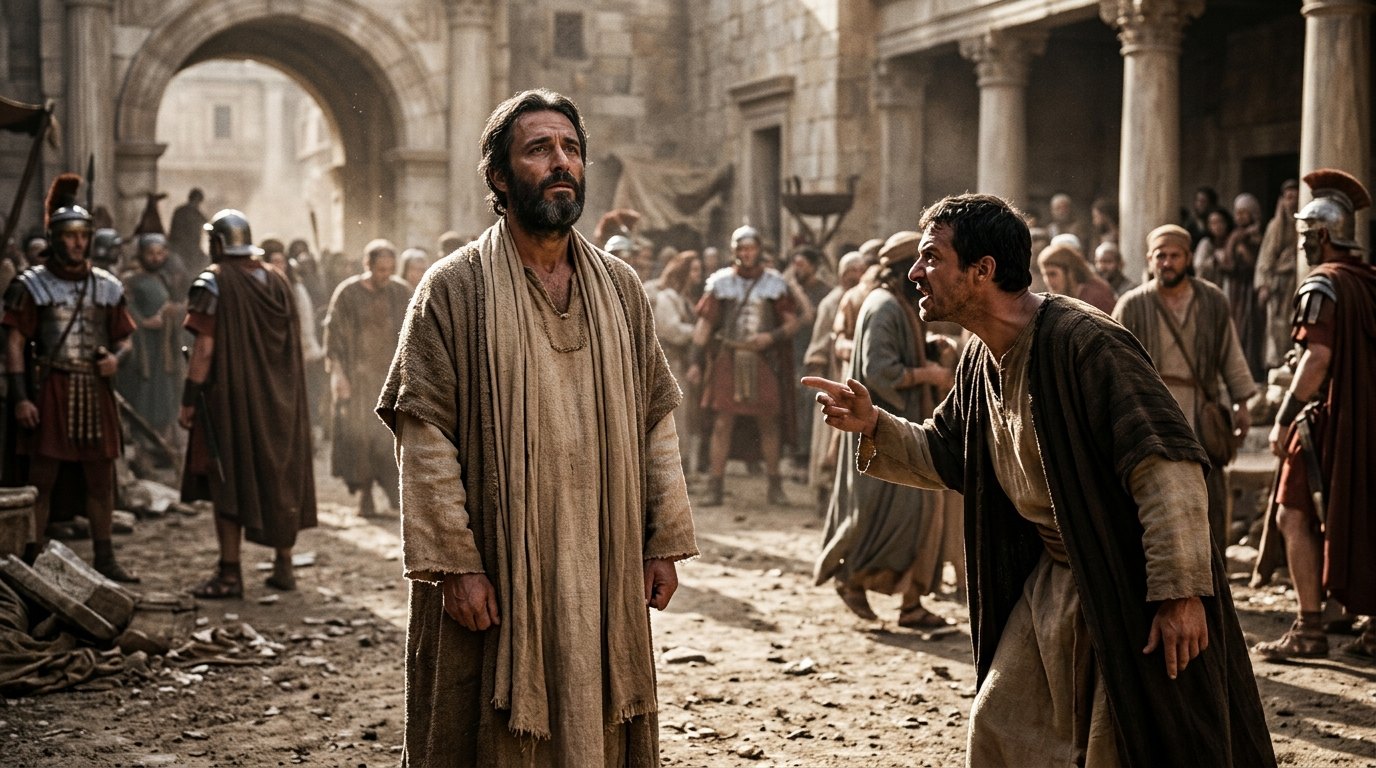
Romans 12:19
19 Do not take revenge, my dear friends, but leave room for God’s wrath, for it is written: “It is mine to avenge; I will repay,” says the Lord.
New International Version (NIV)
The answer
The Bible’s verdict is clear: personal revenge is sin. God forbids repaying evil with evil, reserves vengeance to Himself, and commands His people to love their enemies and overcome evil with good.
Leave vengeance to God
Romans 12:19 commands, “Don’t seek revenge yourselves,” and gives the reason in God’s words: “Vengeance belongs to me; I will repay, says the Lord.” Paul is drawing on Deuteronomy 32:35, where God claims both vengeance and recompense. Romans 12:17 therefore says, “Repay no one evil for evil.” Proverbs 24:29 rejects the resolve to treat someone exactly as he has treated you, and Proverbs 20:22 directs the wronged person to wait on the Lord instead.
This is not indifference to injustice. Wrongdoing remains wrong, and God’s judgment is real. Nor is lawful justice the same as private revenge: Romans 13:4 describes the governing authority as God’s servant and “an avenger for wrath to him who does evil.” Seeking safety, reporting a crime, or appealing to lawful authority is therefore different from personally paying someone back.
Do good instead of retaliating
Jesus goes beyond prohibiting revenge. In Matthew 5:44 He commands His disciples to “love your enemies, bless those who curse you, do good to those who hate you, and pray for those who mistreat you and persecute you.” Romans 12:20-21 applies that by telling believers to feed a hungry enemy and to “overcome evil with good”; 1 Thessalonians 5:15 likewise forbids returning evil for evil. Romans 12:18 also recognizes that peace is not always possible, while requiring each believer to pursue it as far as it depends on them.
Follow Christ and bring vengeful sin to Him
Christ Himself is the pattern. 1 Peter 2:23 says, “When he was cursed, he didn’t curse back. When he suffered, he didn’t threaten, but committed himself to him who judges righteously.”
A vengeful heart should not be excused or indulged; it must be repented of. Christ died to save sinners and free them to live righteously: 1 Peter 2:24 says, “He himself bore our sins in his body on the tree, that we, having died to sins, might live to righteousness.” 1 John 1:9 gives this promise to those who confess: “If we confess our sins, he is faithful and righteous to forgive us the sins and to cleanse us from all unrighteousness.”
Answered from Scripture · reviewed November 11, 2026
Scripture unequivocally forbids personal revenge, commanding believers never to repay evil with evil. Far from ignoring injustice, God claims the exclusive prerogative to execute perfect justice, freeing his people to overcome malice through love and active mercy.
The Universal Command
Personal Retaliation Is Strictly Forbidden

Do not take revenge, my dear friends, but leave room for God’s wrath, for it is written: “It is mine to avenge; I will repay,” says the Lord.
Romans 12:19 (NIV)
This verse directly prohibits taking private revenge and grounds the command in God's sovereign right to judge.
The clearest word Scripture speaks on retaliation is found in Romans 12:19: believers are forbidden from avenging themselves, commanded instead to leave room for the righteous wrath of God. Far from being a novel New Testament ethic, this restraint stretches across the whole canon. In the Law of Moses, Leviticus 19:18 expressly commands Israel not to take vengeance or harbor any grudge against their fellow countrymen, binding that restraint directly to the law of neighbor love. Wisdom literature echoes this warning with steady sobriety. Proverbs 20:22 counsels the wronged person never to say, "I will repay evil," but rather to wait upon the Lord who delivers, while Proverbs 24:29 warns against resolving to do to another what they have done to you. The heart is guarded not only against outward blows, but against internal vindictiveness: Proverbs 24:17 forbids gloating when an adversary falls, and Proverbs 24:18 adds the striking caution that the Lord observes such malice and may turn His displeasure away from the wrongdoer.
When the apostles instructed the early church, they reinforced this universal prohibition as foundational to Christian character. Paul commands in Romans 12:17 that believers repay no one evil for evil, urging them to walk honorably before everyone. In 1 Thessalonians 5:15, he insists that church leaders and members actively see to it that no one retaliates with harm, but always pursues what is good for both the church and the wider world. Peter joins this unified voice in 1 Peter 3:9, declaring that insults must never be met with insults, nor injury with injury, but with blessing. Paul even applies this posture to interpersonal grievances in 1 Corinthians 6:7, asking believers why they do not rather choose to suffer wrong or be defrauded than drag brothers before pagan courts in retaliatory disputes. In every era, personal revenge is stripped from human hands.
| Passage | What it says |
|---|---|
| Leviticus 19:18 | Forbids taking vengeance or bearing a grudge against your people, commanding neighbor love instead. |
| Proverbs 20:22 | Instructs against planning to repay evil, calling the believer to wait on the Lord for deliverance. |
| Proverbs 24:29 | Prohibits resolving to treat another as they treated you or rendering evil for work done. |
| Romans 12:17 | Directly commands that no one repay evil for evil, urging honorable conduct before all. |
| Romans 12:19 | Forbids personal vengeance, instructing believers to give place to wrath because vengeance belongs to God. |
| 1 Thessalonians 5:15 | Warns everyone to ensure that no one repays evil for evil, pursuing what is good. |
| 1 Peter 3:9 | Prohibits repaying evil with evil or insult with insult, commanding blessing instead. |
| Proverbs 24:17 | Prohibits gloating or rejoicing when an enemy falls, guarding the heart against malicious satisfaction in another's suffering. |
| Proverbs 24:18 | Warns that the Lord sees rejoicing over an enemy's calamity and will turn His wrath away from them. |
| 1 Corinthians 6:7 | Exhorts believers to rather suffer wrong and be defrauded than engage in retaliatory lawsuits against brothers. |
Divine Prerogative
God Alone Possesses the Right to Avenge
It is mine to avenge; I will repay. In due time their foot will slip; their day of disaster is near and their doom rushes upon them.”
Deuteronomy 32:35 (NIV)
God explicitly declares that vengeance and recompense belong inherently to him alone.
Personal restraint is not a surrender to injustice; it rests entirely on the foundational truth of Deuteronomy 32:35, where the Almighty proclaims: "Vengeance is Mine, and recompense." Human revenge is flawed, driven by wounded pride and distorted passion, but divine retribution is holy, accurate, and certain. In the Song of Moses, Deuteronomy 32:41 reveals God sharpening His flashing sword and rendering perfect retribution to His adversaries. The psalmists leaned upon this attribute during seasons of acute suffering; Psalms 94:1 calls out directly to the Lord as the God of vengeance, asking Him to shine forth and vindicate the righteous. The prophet Nahum 1:2 likewise portrays the Lord as jealous and avenging, one whose holy indignation falls without compromise upon unrepentant oppressors.
This principle carries directly into the New Testament with sobering weight. In 1 Thessalonians 4:6, believers are cautioned against exploiting or wronging their brothers because the Lord is the resolute avenger of all such acts. The author of Hebrews 10:30 cites Deuteronomy to remind the church that God knows how to judge His own people and will not overlook sin. Furthermore, 2 Thessalonians 1:6 assures afflicted saints that it is a righteous thing for God to repay affliction to their tormentors, looking forward to 2 Thessalonians 1:8, when the Lord Jesus will be revealed in flaming fire, dealing out retribution to those who reject God. Even the martyred souls under the altar in Revelation 6:10 do not scheme for private vengeance; they cry out to the holy and true Sovereign, trusting Him to avenge their blood. That faith is vindicated in Revelation 19:2, where the multitude praises God for His true and righteous judgments.
| Passage | What it says |
|---|---|
| Deuteronomy 32:35 | Declares that vengeance and recompense belong to the Lord, whose judgment will fall swiftly. |
| Psalms 94:1 | Addresses the Lord God as the one to whom vengeance belongs, pleading for him to shine forth. |
| Nahum 1:2 | Describes God as jealous and avenging, executing righteous wrath upon his adversaries. |
| 1 Thessalonians 4:6 | Warns against defrauding a brother, testifying that the Lord is the avenger of all such sins. |
| Hebrews 10:30 | Affirms that God claims vengeance as his own work and will thoroughly judge his people. |
| Deuteronomy 32:41 | Affirms God will render vengeance to His adversaries and repay those who hate Him. |
| 2 Thessalonians 1:6 | Declares it is a righteous thing with God to repay affliction to those who trouble His people. |
| 2 Thessalonians 1:8 | Describes the Lord Jesus executing flaming vengeance on those who do not know God or obey the gospel. |
| Revelation 6:10 | Shows the martyred saints committing vengeance to the sovereign and holy God rather than taking matters into their own hands. |
| Revelation 19:2 | Celebrates God's righteous judgments in avenging the blood of His servants at the final consummation. |
Civil Justice
God Establishes Magistrates to Punish Wrongdoing

For the one in authority is God’s servant for your good. But if you do wrong, be afraid, for rulers do not bear the sword for no reason. They are God’s servants, agents of wrath to bring punishment on the wrongdoer.
Romans 13:4 (NIV)
It defines the governing authority as God's servant to carry out retribution, distinguishing judicial justice from private revenge.
While Scripture forbids vigilante justice and private score-settling, it never promotes lawlessness or indifference to crime; instead, Romans 13:4 establishes that the civil magistrate is God’s appointed servant for retribution, bearing the sword to punish the wrongdoer. God institutes human governance precisely to maintain order and curb the unchecked violence of a fallen world. This mandate originated after the Flood in Genesis 9:6, where God decreed that whoever sheds man's blood, by man his blood shall be shed, because mankind is made in the image of God. In the covenant at Sinai, statutory laws like Exodus 21:24, Leviticus 24:20, and Deuteronomy 19:21 instituted the standard of proportional justice—an eye for an eye and a tooth for a tooth. Far from being a license for personal retaliation, this principle (lex talionis) was a judicial ceiling given to court judges to restrain blood feuds, guaranteeing that the punishment never exceeded the actual crime.
The New Testament upholds this distinction between private non-retaliation and lawful civil accountability. In Romans 13:1, Paul commands every soul to be subject to governing authorities because their power is derived from and ordained by God. The magistrate functions legitimately as an avenger of wrath against those who practice evil. Peter reinforces this in 1 Peter 2:13, instructing believers to submit for the Lord’s sake to every human institution, whether to the supreme ruler or to subordinate governors. As 1 Peter 2:14 clarifies, these authorities are sent specifically by God for the punishment of evildoers and the praise of those who do right. What is sinful when executed by private malice becomes righteous when administered through legitimate judicial order.
| Passage | What it says |
|---|---|
| Genesis 9:6 | Mandates that whoever sheds man's blood, by man his blood shall be shed. |
| Romans 13:1 | Commands every soul to be subject to governing authorities, which are ordained by God. |
| Romans 13:4 | Calls the magistrate God's servant, an avenger who carries the sword against evildoers. |
| 1 Peter 2:13 | Urges submission to human institutions for the Lord's sake, including the supreme king. |
| 1 Peter 2:14 | Explains that governors are sent by God to punish evildoers and praise those who do good. |
| Exodus 21:24 | Establishes legal proportionality (lex talionis) for civil judges to prevent excessive private revenge and blood feuds. |
| Leviticus 24:20 | Prescribes judicial restitution in the public courts, limiting punitive action strictly to the measure of the injury. |
| Deuteronomy 19:21 | Commands judicial authorities to enforce proportional retribution, specifically curbing unchecked personal vengeance. |
The Way of Christ
Overcoming Evil by Actively Doing Good

On the contrary: “If your enemy is hungry, feed him; if he is thirsty, give him something to drink. In doing this, you will heap burning coals on his head.”
Romans 12:20 (NIV)
It commands active, concrete mercy toward enemies, quoting Solomon to show how kindness shames malice.
The summit of biblical teaching on revenge is the radical call of Romans 12:20 to overcome hostility through tangible acts of active kindness. Rather than passively absorbing wrong, the believer is summoned to a higher, conquering warfare. Long before the Incarnation, the Law pointed toward this heart: Exodus 23:4 commanded an Israelite to lead his enemy's stray ox or donkey back home, and Exodus 23:5 required him to loosen the burden of an adversary's fallen animal. Proverbs 25:21 likewise instructed that if your enemy is hungry, you must give him bread, and if thirsty, water to drink. As Proverbs 25:22 explains and Romans 12:20 reiterates, such counter-cultural generosity heaps burning coals of conviction upon the offender's conscience, while Romans 12:21 summarizes the Christian life: do not be overcome by evil, but overcome evil with good.
This ethic was lived in full perfection by the Lord Jesus Christ. In Matthew 5:39 and Luke 6:29, Jesus commanded His followers not to retaliate against personal insults, but to turn the other cheek. In Matthew 5:44 and Luke 6:27-28, He called disciples to love their enemies, bless those who curse them, and pray for those who persecute them. When Paul echoed this in Romans 12:14, urging the Roman believers to bless and not curse their persecutors, he was presenting the mind of Christ. At Calvary, as recorded in 1 Peter 2:23, Christ uttered no threats when He suffered, nor did He revile in return; instead, He entrusted Himself to the One who judges righteously, crying out in Luke 23:34, "Father, forgive them, for they know not what they do." This same supernatural grace filled Stephen in Acts 7:60, when, falling to his knees beneath a barrage of lethal stones, he echoed his Master, praying that God would not hold the sin against his killers.
| Passage | What it says |
|---|---|
| Exodus 23:4 | Directs one who finds an enemy's stray ox or donkey to return it safely. |
| Exodus 23:5 | Commands helping an enemy whose donkey is fallen under its heavy burden. |
| Proverbs 25:21 | Instructs giving food and water to a hungry or thirsty enemy. |
| Proverbs 25:22 | Promises that feeding an enemy heaps burning coals on his head and brings divine reward. |
| Matthew 5:39 | Commands not resisting an evil person by retaliation, turning the other cheek instead. |
| Matthew 5:44 | Instructs disciples to love their enemies, bless their cursers, and pray for their persecutors. |
| Romans 12:14 | Directs believers to bless those who persecute them, blessing instead of cursing. |
| Romans 12:20 | Quotes Proverbs to mandate feeding hungry enemies and giving drink to the thirsty. |
| Romans 12:21 | Exhorts believers not to be overcome by evil, but to overcome evil with good. |
| 1 Peter 2:23 | Shows Christ not reviling or threatening in suffering, but entrusting himself to the righteous Judge. |
| Luke 6:27 | Commands disciples to love their enemies and do good to those who hate them. |
| Luke 6:28 | Directs believers to bless those who curse them and pray for those who mistreat them. |
| Luke 6:29 | Instructs turning the other cheek and offering no violent retaliation when personally insulted or struck. |
| Luke 23:34 | Records Jesus praying for the forgiveness of His executioners rather than summoning vengeance against them. |
| Acts 7:60 | Shows Stephen dying under a hail of stones while crying out that this sin not be held against his killers. |
Narrative Warnings
Historical Warnings and Righteous Restraint in Israel's Story

But Joseph said to them, “Don’t be afraid. Am I in the place of God?
Genesis 50:19 (NIV)
Joseph embodies the biblical antidote to revenge by recognizing that avenging wrong belongs to God alone.
When Joseph’s brothers fell before him fearing retribution, he asked the defining question of biblical ethics: 'Do not fear, for am I in the place of God?' (Genesis 50:19). Joseph understood that seizing personal vengeance is an arrogant attempt to usurp God’s sovereign throne. Human vengeance always escalates wickedness, as seen at the dawn of history when God placed a protective mark on Cain to forestall blood feuds (Genesis 4:15). In stark defiance, Cain's descendant Lamech weaponized that mercy into arrogant savagery, boasting to his wives of slaughtering a young man for merely striking him (Genesis 4:23) and claiming a monstrous seventy-sevenfold retribution (Genesis 4:24).
The historical narratives demonstrate that private revenge consistently destroys those who wield it. When Dinah was violated, Simeon and Levi exploited a sacred covenant to butcher every male in Shechem (Genesis 34:25). Their father Jacob immediately rebuked their reckless malice for endangering the entire family (Genesis 34:30), later pronouncing a dying curse on their fierce anger and cruel wrath (Genesis 49:6). Generations later, Absalom allowed bitter vengeance to fester for two years before orchestrating the cold-blooded murder of his half-brother Amnon, fracturing the royal family (2 Samuel 13:28).
Conversely, righteous men surrender their personal grievances to the Lord. Trapped in a cave with his pursuer, David cut the hem of Saul’s robe but refused to kill him, declaring, 'May the Lord judge between me and you, and may the Lord avenge me on you, but my hand shall not be against you' (1 Samuel 24:12). Even when provoked by the insolent fool Nabal, David yielded to Abigail's wisdom, blessing her for restraining him from bloodguilt and from avenging himself with his own hand (1 Samuel 25:33).
| Passage | What it says |
|---|---|
| Genesis 4:15 | Pronounces sevenfold divine vengeance on anyone who kills Cain, restraining human vigilantism. |
| Genesis 4:23 | Records Lamech boasting of killing a young man for merely striking him, displaying the savagery of unchecked revenge. |
| Genesis 4:24 | Shows Lamech claiming seventy-sevenfold vengeance, illustrating human pride perverting divine protection into monstrous retaliation. |
| Genesis 34:25 | Recounts Simeon and Levi deceitfully massacring the men of Shechem to avenge their sister Dinah. |
| Genesis 34:30 | Shows Jacob rebuking his sons for their violent, disproportionate vengeance that brought trouble upon the entire household. |
| Genesis 49:6 | Condemns the fierce anger and cruel wrath of Simeon and Levi in their retaliatory slaughter. |
| Genesis 50:19 | Demonstrates Joseph refusing personal revenge against his brothers by asking, 'Am I in the place of God?' |
| 1 Samuel 24:12 | Records David refusing to avenge himself on Saul, leaving judgment entirely to the Lord. |
| 1 Samuel 25:33 | Shows David praising Abigail for stopping him from taking vengeance with his own hand against Nabal. |
| 2 Samuel 13:28 | Records Absalom premeditating and executing the murder of Amnon out of private revenge. |
Where in the Bible
| Book | Passages |
|---|---|
| Genesis | 8 · Genesis 9:6, Genesis 4:15, Genesis 4:23, Genesis 4:24, Genesis 34:25, Genesis 34:30, Genesis 49:6, Genesis 50:19 |
| Exodus | 3 · Exodus 21:24, Exodus 23:4, Exodus 23:5 |
| Leviticus | 2 · Leviticus 19:18, Leviticus 24:20 |
| Deuteronomy | 3 · Deuteronomy 32:35, Deuteronomy 32:41, Deuteronomy 19:21 |
| 1 Samuel | 2 · 1 Samuel 24:12, 1 Samuel 25:33 |
| 2 Samuel | 1 · 2 Samuel 13:28 |
| Psalms | 1 · Psalms 94:1 |
| Proverbs | 6 · Proverbs 20:22, Proverbs 24:29, Proverbs 24:17, Proverbs 24:18, Proverbs 25:21, Proverbs 25:22 |
| Nahum | 1 · Nahum 1:2 |
| Matthew | 2 · Matthew 5:39, Matthew 5:44 |
| Luke | 4 · Luke 6:27, Luke 6:28, Luke 6:29, Luke 23:34 |
| Acts | 1 · Acts 7:60 |
| Romans | 7 · Romans 12:17, Romans 12:19, Romans 13:1, Romans 13:4, Romans 12:14, Romans 12:20, Romans 12:21 |
| 1 Corinthians | 1 · 1 Corinthians 6:7 |
| 1 Thessalonians | 2 · 1 Thessalonians 5:15, 1 Thessalonians 4:6 |
| 2 Thessalonians | 2 · 2 Thessalonians 1:6, 2 Thessalonians 1:8 |
| Hebrews | 1 · Hebrews 10:30 |
| 1 Peter | 4 · 1 Peter 3:9, 1 Peter 2:13, 1 Peter 2:14, 1 Peter 2:23 |
| Revelation | 2 · Revelation 6:10, Revelation 19:2 |
The story in order
- God restrains vigilantism (c. 4000 BC) · Genesis 4:15 · God's protection is not a license for human revenge.
- Simeon and Levi's violent revenge (c. 3800 BC) · Genesis 34:25 · Unchecked anger and disproportionate vengeance bring trouble.
- Joseph refuses revenge (c. 3700 BC) · Genesis 50:19 · Joseph recognizes only God can judge and avenge.
- Law of retaliation established (c. 1450 BC) · Exodus 21:24 · Civil justice limits private revenge to prevent feuds.
- Command to help enemies (c. 1450 BC) · Exodus 23:4 · Active mercy is shown even to enemies.
- David spares Saul (c. 1000 BC) · 1 Samuel 24:12 · David trusts God for justice rather than taking revenge.
- God claims vengeance (c. 1450 BC) · Deuteronomy 32:35 · Vengeance and recompense belong to the Lord.
- Jesus teaches love for enemies (c. AD 30) · Matthew 5:44 · Disciples are called to love enemies and pray for them.
- Jesus prays for executioners (AD 30) · Luke 23:34 · Jesus models forgiveness and entrusts vengeance to God.
- Paul on governing authorities (c. AD 57) · Romans 13:1 · Magistrates are God's servants to punish evildoers.
- Believers not to repay evil (c. AD 57) · Romans 12:17 · Believers must not repay evil for evil, but overcome evil with good.
- Martyrs commit vengeance to God (c. AD 95) · Revelation 6:10 · Saints entrust their cause to God's sovereign justice.
- God's righteous judgment · Revelation 19:2 · God's final judgment avenges His servants.
Key words
- Vengeance (ne qamah (נָקָם))
- Punishment inflicted in return for an injury or offense; retribution. · Deuteronomy 32:35
- Recompense (shillum (שִׁלּוּם))
- To repay or reward someone for their services or wrongs. · Deuteronomy 32:35
- Wrath (orgē (ὀργή))
- Strong, vengeful anger; divine displeasure and judgment. · Romans 12:19
- Justice (krima (κρίμα))
- The quality of being fair and reasonable; upholding what is right. · 1 Peter 2:14
- Mercy (eleos (ἔλεος))
- Compassion or forgiveness shown toward someone whom it is within one's power to punish or harm. · Matthew 5:7
- Love (agape (ἀγάπη))
- A deep, sacrificial affection and commitment, especially towards enemies. · Matthew 5:44
Leaving vengeance to God does not mean ignoring injustice; it means entrusting retribution to the only Judge whose verdict is perfectly righteous and infallible. Freed from the exhausting urge to strike back, believers can boldly reflect Christ by responding to malice with unyielding mercy and quiet confidence.
53 passages, each cited once.
Scripture cited
- Romans 12:19
- Deuteronomy 32:35
- Proverbs 24:29
- Proverbs 20:22
- Romans 12:17
- Romans 12:17-21
- Matthew 5:38-44
- Romans 13:1-4
- 1 Peter 2:21-23
- 1 John 1:9
- 1 Peter 2:24
- 1 Thessalonians 5:15