What does the Bible say about tithing?

Malachi 3:10
10 Bring the whole tithe into the storehouse, that there may be food in my house. Test me in this,” says the LORD Almighty, “and see if I will not throw open the floodgates of heaven and pour out so much blessing that there will not be room enough to store it.
New International Version (NIV)
The answer
A tithe is a tenth. In the Old Testament, tithing was part of God’s law for Israel. The New Testament’s instructions for Christian giving do not prescribe a percentage; they call for regular, generous giving according to one’s means, offered willingly—“not grudgingly or under compulsion, for God loves a cheerful giver” (2 Corinthians 9:7). A tenth can be a useful biblical guide, but giving cannot buy prosperity or substitute for justice, mercy and faith.
Tithing before and under the law
- Before the Mosaic law: Abram gave Melchizedek, priest of God Most High, a tenth after God delivered his enemies into his hand (Genesis 14:17-20). Jacob later vowed to give God a tenth of all God gave him (Genesis 28:20-22).
- It belonged to the Lord: Israel’s tithe included produce from the land and every tenth animal from the herds and flocks. It was holy to Yahweh (Leviticus 27:30-33).
- It supported the Levites: God gave Israel’s tithe to the Levites in return for their service at the Tent of Meeting because they received no territorial inheritance like the other tribes (Numbers 18:21-24).
- It accompanied worship and care for others: Deuteronomy describes a tithe eaten before the Lord with rejoicing, without forsaking the Levite. Every third year, the tithe was stored locally for the Levite, foreigner, fatherless and widow (Deuteronomy 14:22-29). Biblical tithing was therefore connected to Israel’s land, worship, ministry and care for vulnerable people.
What Malachi 3:10 means
Malachi charged Israel with robbing God through withheld tithes and offerings and called the nation to return to him (Malachi 3:7-9). God commanded the people to bring the whole tithe so there would be food in his house. He promised to open heaven’s windows, pour out blessing and restrain the devourer that destroyed their crops (Malachi 3:10-11).
That was a real promise to covenant Israel in its agricultural setting. It should not be turned into a guarantee that every donation will produce financial profit. The New Testament likewise speaks of God supplying his people, but the stated purposes are sufficiency, good works, further generosity and thanksgiving to God—not guaranteed personal wealth (2 Corinthians 9:8-11).
What Jesus said
Jesus rebuked the scribes and Pharisees for tithing even small herbs while neglecting “justice, mercy, and faith.” He said they should have practised these weightier matters without leaving tithing undone (Matthew 23:23-24). Careful giving is therefore no cover for hypocrisy, injustice or an unmerciful heart.
Christians differ over whether ten percent remains a binding minimum. One reading carries the Old Testament pattern forward as a continuing baseline; another understands the Mosaic tithing system as belonging to Israel and looks directly to the New Testament’s instructions on willing, proportionate generosity. Those New Testament instructions state no fixed percentage.
How the New Testament directs Christian giving
- Regularly and proportionately: For the collection for needy believers, Paul instructed each person to set something aside on the first day of every week, as God had prospered that person (1 Corinthians 16:1-2).
- Willingly and according to one’s means: Readiness to give is acceptable according to what a person has, not what that person does not have. Giving is to be deliberate, cheerful and free from compulsion (2 Corinthians 8:12; 2 Corinthians 9:7).
- Generously: The Macedonian believers gave beyond their ability even amid affliction and deep poverty, first giving themselves to the Lord (2 Corinthians 8:1-5).
- For ministry and people in need: Those who proclaim the gospel are to receive their living from it, believers are to share with those who teach them, and Christians are to do good especially toward the household of faith (1 Corinthians 9:13-14; Galatians 6:6-10).
The deepest motive is grace: Christ, though rich, became poor for his people’s sake so that through his poverty they might become rich (2 Corinthians 8:9). Christian giving responds to grace received; it does not earn God’s favour.
Answered from Scripture · reviewed November 11, 2026
From the patriarchs before the law to the teachings of Jesus and the apostles, Scripture treats tithing and sacrificial giving as an essential confession that everything belongs to God. A complete survey reveals that ancient Israel practiced multiple tithes totaling far more than ten percent, setting a baseline of covenant faithfulness rather than an absolute ceiling. Across the New Testament, this foundation matures into cheerful, proportionate generosity aimed at supporting gospel ministry and relieving the needy.
Before the Law
Patriarchs Tithed Before Mosaic Law Commanded It

And praise be to God Most High, who delivered your enemies into your hand.” Then Abram gave him a tenth of everything.
Genesis 14:20 (NIV)
Abraham tithed to Melchizedek centuries before Sinai, showing that honoring God's priest with a tenth predates the Levitical priesthood.
Long before Moses ascended Mount Sinai, sacrificial giving existed as an instinctive act of covenant devotion. In Genesis 14:20, Abraham returns from rescuing Lot, meets Melchizedek—king of Salem and priest of God Most High—and gives him a tenth of everything. This historic encounter establishes that giving back to God predates the legal machinery of the Mosaic covenant; it was a spontaneous recognition of divine sovereignty and thanksgiving for victory. Generations later, Jacob encountered God in a vision at Bethel. Awakening with holy fear, he made a solemn vow in Genesis 28:20-22, promising that if the Lord would preserve him on his journey, the stone of remembrance would be God's house and he would surely give a full tenth unto the Lord.
The theological weight of these patriarchal acts reverberates directly into the New Testament. In Hebrews 7:1-4, the author underscores that Abraham did not tithe under civil coercion or ceremonial statute, but in awe of a royal, eternal priesthood. He gave Melchizedek the choicest spoils, demonstrating the majesty of a priesthood that transcends human lineage. Hebrews 7:5-10 drives the point deeper: Levi, whose descendants would one day collect tithes by law from their brethren, effectively paid tithes through Abraham while still in the loins of his forefather. Because Abraham tithed to Melchizedek, Christ's priesthood—arising after the order of Melchizedek rather than Aaron—stands supreme, grounded in an indestructible life that calls forth our ultimate allegiance and highest offerings.
| Passage | What it says |
|---|---|
| Genesis 14:18-20 | Melchizedek blesses Abram, and Abram gives him a tenth of all the spoils of battle. |
| Genesis 28:20-22 | Jacob vows at Bethel that if God keeps him, he will surely give God a tenth of everything. |
| Hebrews 7:1-4 | The author notes that Abraham gave a tenth to Melchizedek, demonstrating the superiority of this royal, eternal priesthood. |
| Hebrews 7:5-10 | Levi himself paid tithes through Abraham to Melchizedek, whose unending order surpasses the mortal Levitical priesthood. |
The Mosaic Ordinances
The Law Required Multiple Distinct Annual Tithes

“ ‘A tithe of everything from the land, whether grain from the soil or fruit from the trees, belongs to the LORD; it is holy to the LORD.
Leviticus 27:30 (NIV)
The foundational statute explicitly defines the tithe of agricultural produce and livestock as belonging wholly to the Lord.
When God established the covenant at Sinai, what was once a patriarchal impulse became a formal national requirement. The fundamental statute is declared in Leviticus 27:30: the tithe of the land is holy unto the Lord, whether of the seed of the ground or the fruit of the tree. Under Leviticus 27:30-34, this property already belongs to God; withholding it was considered theft, and redeeming it required adding a twenty percent penalty. Under the Mosaic economy, this was not a single flat percentage, but a structured system comprising multiple distinct tithes.
First, the Levites received the primary tithe. Because the tribe of Levi held no territorial inheritance among the tribes, Numbers 18:21-24 assigns all the tithes in Israel to them as wages for their sacred service in the tabernacle. In turn, Numbers 18:25-32 required the Levites themselves to offer a tithe of that tithe—the very best portion—to Aaron the high priest. Second, Deuteronomy 12:5-7 and Deuteronomy 12:11-12 instituted a festival tithe, commanding families to bring their produce to the central sanctuary to rejoice before the Lord. Verses like Deuteronomy 12:17-19 and Deuteronomy 14:22-27 explain that worshippers were forbidden from eating this festival tithe in their hometowns; they were to carry it to the place God chose, converting heavy produce into silver if necessary, to feast joyfully alongside their households and the local Levite. Finally, Deuteronomy 14:28-29 and Deuteronomy 26:12-15 ordained a third-year charity tithe, stored in local towns so that the alien, fatherless, and widow could eat and be satisfied, culminating in a public confession of covenant integrity.
| Passage | What it says |
|---|---|
| Leviticus 27:30-34 | The tenth of seed, fruit, and herd is holy to the Lord and can only be redeemed with an added fifth. |
| Numbers 18:21-24 | God gives every tithe in Israel to the Levites as an inheritance for their service in the Tent of Meeting. |
| Numbers 18:25-32 | The Levites must offer a tithe of the tithes received to the high priest Aaron as God's contribution. |
| Deuteronomy 12:5-7 | Israelites must bring their tithes, offerings, and firstborn to the central sanctuary to eat and rejoice before God. |
| Deuteronomy 12:11-12 | All tithes and vowed gifts must be brought to God's chosen place, shared with Levites, servants, and families. |
| Deuteronomy 12:17-19 | Worshippers are forbidden from consuming festival tithes at home, guarding communal rejoicing and provision for Levites. |
| Deuteronomy 14:22-27 | The annual feast tithe is consumed at the sanctuary or converted to silver to celebrate God's blessing. |
| Deuteronomy 14:28-29 | Every third year, the tithe is deposited locally to sustain the Levite, foreigner, fatherless, and widow. |
| Deuteronomy 26:12-15 | After distributing the third-year tithe, the worshipper declares covenant obedience and prays for God's blessing. |
Firstfruits and Wisdom
Honoring God With the Increase of Wealth

Honor the LORD with your wealth, with the firstfruits of all your crops; then your barns will be filled to overflowing, and your vats will brim over with new wine.
Proverbs 3:9-10 (NIV)
Solomon connects spiritual honor directly to personal substance, promising overflowing barns and vats to those who offer their firstfruits.
Alongside the tithes of the land, Israel was commanded to honor God with the earliest portion of every harvest. Proverbs 3:9-10 crystallizes this wisdom principle: honor the Lord with your substance and with the firstfruits of all your produce, promising that your barns will be filled with plenty and your vats will burst with new wine. True worship did not wait until expenses were settled to see what remained; it consecrated the initial cutting of the field directly to the Creator, acknowledging Him as the rightful source of all fertility and provision.
This wisdom reflects ancient legal foundations found throughout the Pentateuch. In Exodus 22:29-30, God strictly instructed Israel not to delay in offering the fullness of their harvest vats and the firstborn of their sons and cattle. The command is repeated verbatim in Exodus 23:19 and Exodus 34:26, insisting that the choicest firstfruits of the ground must be brought immediately into the house of the Lord. Handing over the first cutting required active trust that the rest of the harvest would safely follow. This posture unlocked the expansive blessings cataloged in Deuteronomy 28:1-12, where God promised that faithful obedience would open the heavens, bless the storehouses, and cause His people to lend without ever needing to borrow. As Psalms 37:3 counsels, resting in God's faithfulness begins with practical righteousness, resting securely in the knowledge that those who yield their firstfruits to Him will never be abandoned to lack.
| Passage | What it says |
|---|---|
| Exodus 22:29-30 | Israel is commanded not to delay giving the first of ripe crops, vats, and firstborn sons and livestock. |
| Exodus 23:19 | The choicest firstfruits of the ground must be brought into the house of the Lord. |
| Exodus 34:26 | Moses reiterates bringing the firstfruits of the soil into the house of the Lord God. |
| Proverbs 3:9-10 | Honor the Lord with your wealth and firstfruits; your barns will be filled with plenty. |
| Deuteronomy 28:1-12 | Covenant faithfulness brings divine blessing upon crops, herds, storehouses, and seasonal rains without borrowing. |
| Psalms 37:3 | Trust in the Lord and do good, dwelling securely in the land and enjoying faithful sustenance. |
National Reforms
Tithing Revived During Israel's Spiritual Awakenings

As soon as the order went out, the Israelites generously gave the firstfruits of their grain, new wine, olive oil and honey and all that the fields produced. They brought a great amount, a tithe of everything. The people of Israel and Judah who lived in the towns of Judah also brought a tithe of their herds and flocks and a tithe of the holy things dedicated to the LORD their God, and they piled them in heaps.
2 Chronicles 31:5-6 (NIV)
Hezekiah's revival sparked an overwhelming response where Israel brought abundance of tithes, demonstrating repentance through tangible obedience.
Whenever Israel drifted into spiritual decay, tangible giving was among the first duties abandoned; conversely, genuine national revival always restored faithful stewardship. Early in Israel's monarchy, 1 Samuel 8:14-17 gave a solemn warning: an earthly king would inevitably conscript their sons and exact a tenth of their seed and flocks for his court. Tragically, the nation often surrendered to tyranny while withholding from God. Yet during great spiritual awakenings, sacrificial generosity returned with vigor. In 2 Chronicles 31:4-12, when King Hezekiah cleansed the temple and reordered worship, the people responded instantaneously: heaps of tithes and firstfruits accumulated in the streets until the priests proclaimed that the Lord had blessed His people with vast abundance.
Following the Babylonian exile, a chastened remnant renewed this exact commitment. In Nehemiah 10:35-39, the leaders entered into an oath to supply the firstfruits of their soil and provide tithes for the Levites so that the house of God would never be neglected. Nehemiah 12:44 shows dedicated men appointed over the storerooms to receive these designated portions. However, when Nehemiah briefly departed, Nehemiah 13:10-13 records that the people stopped giving, forcing the Levites to abandon temple service and return to farming; Nehemiah acted decisively, cleansing the storerooms and installing faithful treasurers to restore order. External ritual without inward righteousness, however, remained abhorrent to God. As Amos 4:4-5 thundered in prophetic sarcasm, bringing three-year tithes while pursuing self-absorbed idolatry is nothing more than empty performance that compounds guilt before a holy God.
| Passage | What it says |
|---|---|
| 1 Samuel 8:14-17 | Samuel warns that an earthly king will demand a tithe of seed, vineyards, and flocks. |
| 2 Chronicles 31:4-12 | Hezekiah reestablishes temple portions, and the people bring heaps of tithes and firstfruits in abundance. |
| Nehemiah 10:35-39 | The post-exilic community enters a firm covenant to supply firstfruits and tithes to the temple storehouses. |
| Nehemiah 12:44 | Men are appointed over storerooms to collect tithes specified by the Law for priests and Levites. |
| Nehemiah 13:10-13 | Nehemiah discovers the Levites were neglected, restores their tithes, and appoints reliable storehouse treasurers. |
| Amos 4:4-5 | Amos sarcastically rebukes empty, self-glorifying religion that brings three-year tithes while pursuing persistent idolatry. |
The Prophetic Test
God Commands the Whole Tithe in Malachi
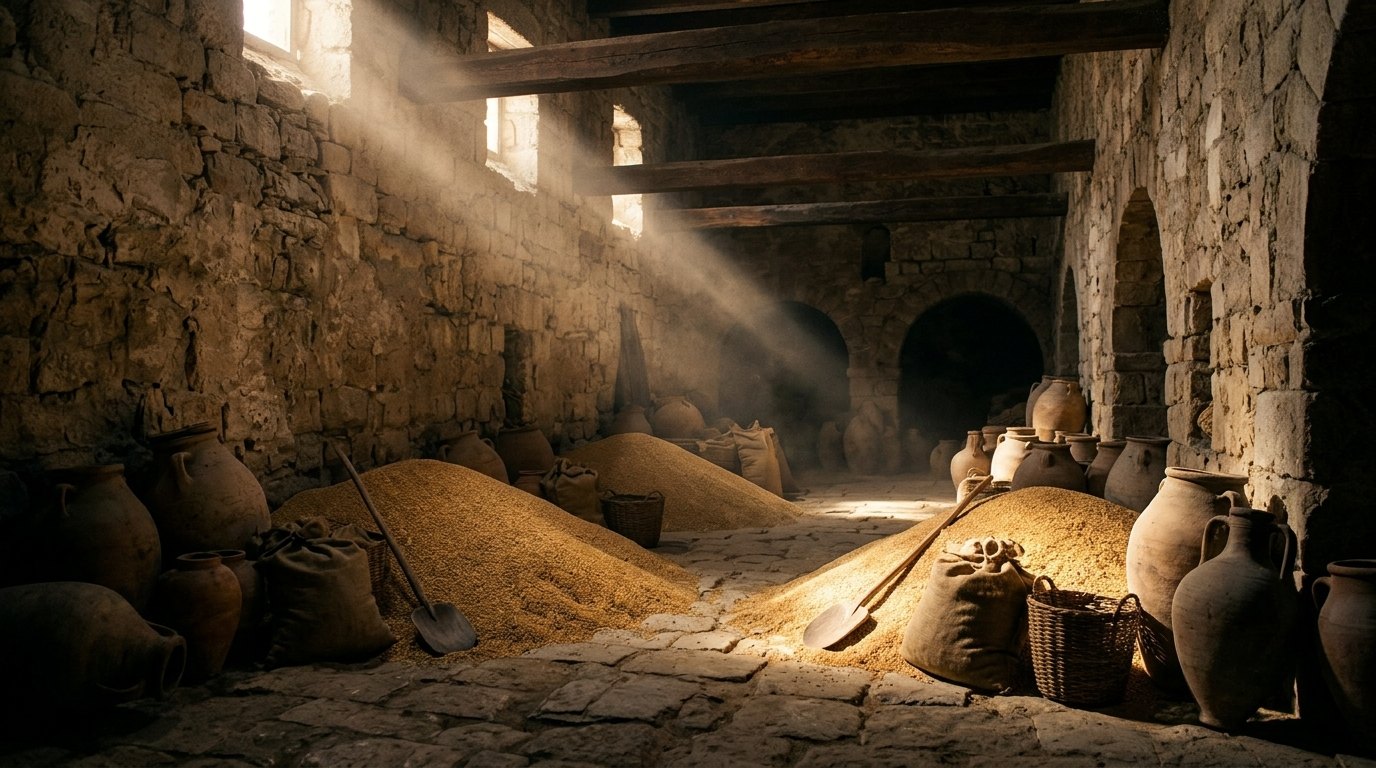
Bring the whole tithe into the storehouse, that there may be food in my house. Test me in this,” says the LORD Almighty, “and see if I will not throw open the floodgates of heaven and pour out so much blessing that there will not be room enough to store it.
Malachi 3:10 (NIV)
This famous invitation is the solitary biblical text where God summons His people to test His financial provision through unreserved obedience.
In Malachi 3:10, God extends an extraordinary invitation found nowhere else in Scripture: He invites His covenant people to test Him directly by bringing the full tithe into the temple storehouse. The prophet confronts a demoralized, post-exilic community that had begun withholding their required offerings out of spiritual lethargy and financial anxiety. In Malachi 3:7-9, God speaks with unsparing clarity, declaring that when Israel retained their tithes and contributions, they were not merely shortchanging the priests—they were actively robbing God Almighty and inviting divine judgment upon their fields.
Yet the rebuke immediately yields to sovereign promise. In Malachi 3:10, the Lord challenges the people to prove His faithfulness, pledging to open the floodgates of heaven and pour out blessings so vast that there will not be room enough to receive them. In Malachi 3:11-12, God seals this promise by assuring them that He will personally rebuke the devourer, safeguarding their vines and crops from ruin until surrounding nations behold Israel as a delight. For ancient Israel, the storehouse tithe was never a cold legal tax but an essential act of worship that confessed God alone as the provider, protector, and sovereign Lord over every harvest.
| Passage | What it says |
|---|---|
| Malachi 3:7-9 | God charges Israel with robbing Him in tithes and contributions, bringing a curse upon the nation. |
| Malachi 3:10 | God challenges the people to bring the whole tithe into the storehouse and test His torrential blessing. |
| Malachi 3:11-12 | God promises to rebuke the devourer, protect their crops, and make the land a delight to all nations. |
Christ and the Pharisees
Jesus Addresses Tithing and Heart Righteousness
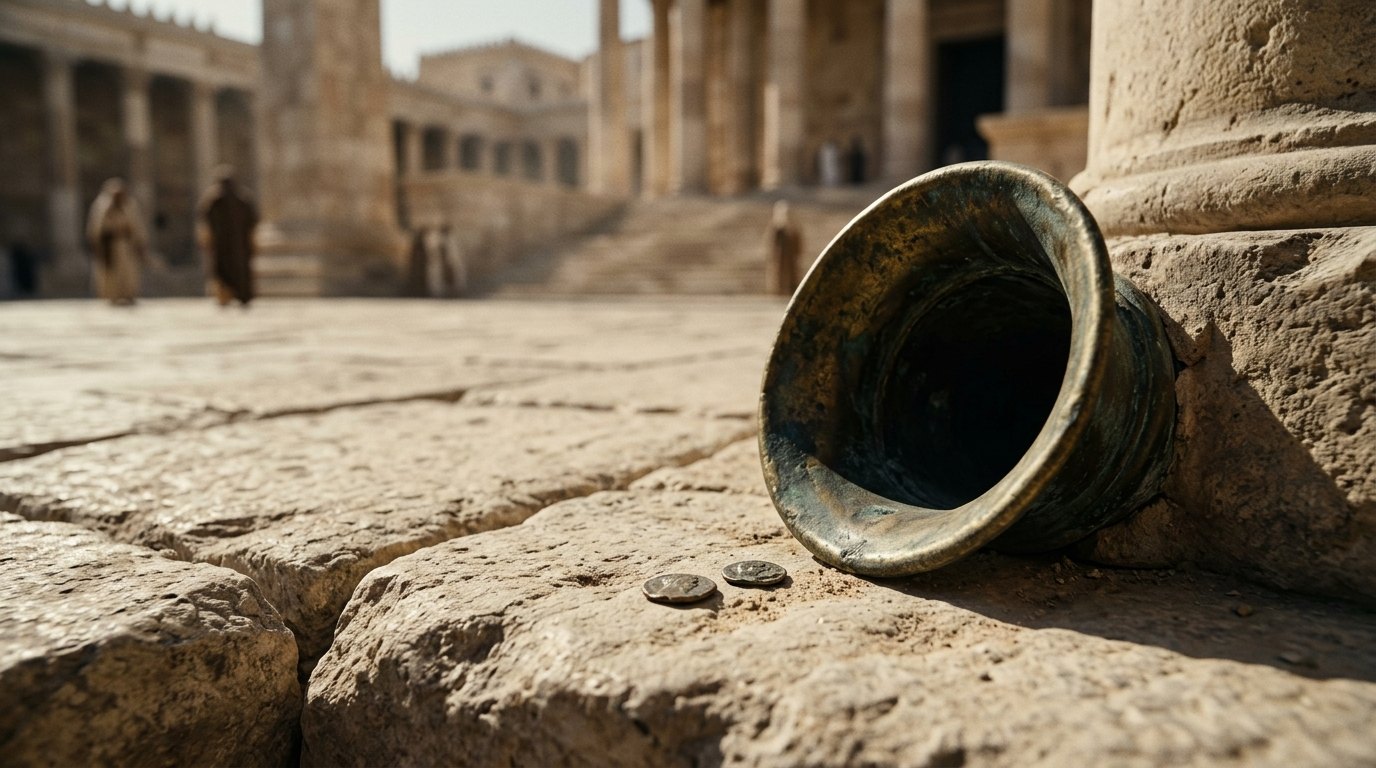
“Woe to you, teachers of the law and Pharisees, you hypocrites! You give a tenth of your spices—mint, dill and cumin. But you have neglected the more important matters of the law—justice, mercy and faithfulness. You should have practiced the latter, without neglecting the former.
Matthew 23:23 (NIV)
Jesus affirms meticulous tithing of garden herbs while rebuking the fatal omission of justice, mercy, and faithfulness.
When Jesus addresses tithing in Matthew 23:23, He cuts straight through ritual scrupulosity to expose the heart of true devotion. Rebuking the religious leaders, Christ affirms meticulous tithing while condemning the omission of justice, mercy, and faithfulness—explicitly stating that they ought to practice the inward weightier virtues without neglecting the outward giving of their tithes. Luke 11:42 underscores this exact indictment, warning that scrupulous devotion to garden herbs like mint and rue is worthless if it bypasses the love of God. External conformity can easily become a cloak for spiritual pride, as shown in Luke 18:9-14, where a Pharisee boasts in prayer that he fasts twice a week and tithes all he gets, only to be condemned while a repentant tax collector goes home justified.
True biblical stewardship therefore reorients all human priorities around God's sovereign rule. In Matthew 6:33, Jesus commands His followers to seek first the kingdom of God and His righteousness, assuring them that every earthly necessity will be added to them. The ultimate posture of kingdom giving appears in the temple courtyard in Mark 12:41-44 and Luke 21:1-4. Watching crowds deposit large sums into the treasury, Jesus singles out an impoverished widow who dropped in two small copper coins. While the wealthy gave casually out of their abundance, she surrendered her whole livelihood, embodying the total, trust-filled surrender that God values above all worldly wealth.
| Passage | What it says |
|---|---|
| Matthew 23:23 | Jesus warns hypocritical scribes who tithe mint, anise, and cumin while ignoring justice, mercy, and faith. |
| Luke 11:42 | Jesus pronounces woe on Pharisees who tithe garden herbs but bypass justice and the love of God. |
| Luke 18:9-14 | A Pharisee boasts in self-righteous prayer that he fasts twice a week and tithes all he gets. |
| Matthew 6:33 | Jesus commands disciples to seek first the kingdom of God, promising earthly necessities will be provided. |
| Mark 12:41-44 | Jesus praises the poor widow who cast her last two copper coins into the treasury. |
| Luke 21:1-4 | Jesus observes the widow contributing all her livelihood, outgiving the wealthy who gave from abundance. |
Apostolic Giving
Generosity, Cheerful Sacrifices, and Ministry Support

Remember this: Whoever sows sparingly will also reap sparingly, and whoever sows generously will also reap generously. Each of you should give what you have decided in your heart to give, not reluctantly or under compulsion, for God loves a cheerful giver.
2 Corinthians 9:6-7 (NIV)
Paul defines New Testament financial stewardship as voluntary, bountiful, purposeful, and cheerful rather than grudgingly coerced.
In 2 Corinthians 9:6-7, the apostle Paul articulates the governing principle of New Testament financial stewardship: giving is to be purposeful, voluntary, bountiful, and cheerful, never extracted under compulsion or given out of bitter reluctance. Writing to the Corinthian church, Paul explains how Christian generosity flows from the gospel itself. Just as the Old Testament priesthood was sustained by the altar, the Lord ordained that gospel ministers should earn their living from preaching the gospel, as set forth in 1 Corinthians 9:13-14. In 1 Corinthians 16:1-2, Paul instructs believers to set aside funds regularly on the first day of the week in direct proportion to how God has prospered them, instituting intentional, planned generosity.
This standard is demonstrated by the Macedonian believers in 2 Corinthians 8:1-5, who, despite severe affliction and extreme poverty, begged for the privilege of giving beyond their means because they had first dedicated their lives entirely to the Lord. In 2 Corinthians 8:7-9, Paul holds up Jesus Christ as the supreme pattern of generosity, who became poor on our behalf so that we through His poverty might become rich. Such giving aims for practical equity among the saints according to their means, as outlined in 2 Corinthians 8:12-15. Paul repeats in 2 Corinthians 9:8 that God abundantly supplies every grace to those who sow bountifully. This cheerful provision extends directly to church leadership: Galatians 6:6 and 1 Timothy 5:17-18 command congregations to provide financial honor and material support to those who teach and preach God's Word faithfully. Finally, in 1 Timothy 6:17-19, wealthy believers are commanded not to trust in uncertain riches, but to be rich in good works, storing up treasures for the age to come.
| Passage | What it says |
|---|---|
| 1 Corinthians 9:13-14 | Just as temple workers ate from the altar, the Lord ordained that gospel preachers live by the gospel. |
| 1 Corinthians 16:1-2 | Believers are told to set aside money on the first day of the week in proportion to prosperity. |
| 2 Corinthians 8:1-5 | Macedonian churches gave beyond their means out of deep poverty, having first given themselves to God. |
| 2 Corinthians 8:7-9 | Paul exhorts Corinthians to excel in generosity, remembering Christ who became poor that we might become rich. |
| 2 Corinthians 8:12-15 | Giving is acceptable according to what one has, aiming for fair balance among God's people. |
| 2 Corinthians 9:6-8 | Whoever sows bountifully reaps bountifully; God loves a cheerful giver and supplies all sufficient grace. |
| Galatians 6:6 | Anyone receiving instruction in the Word must share all good things with their spiritual teacher. |
| 1 Timothy 5:17-18 | Elders who rule well and preach the Word are worthy of double honor and physical compensation. |
| 1 Timothy 6:17-19 | The rich are charged to be rich in good works, ready to share and storing eternal treasures. |
Where in the Bible
| Book | Passages |
|---|---|
| Genesis | 2 · Genesis 14:18-20, Genesis 28:20-22 |
| Exodus | 3 · Exodus 22:29-30, Exodus 23:19, Exodus 34:26 |
| Leviticus | 1 · Leviticus 27:30-34 |
| Numbers | 2 · Numbers 18:21-24, Numbers 18:25-32 |
| Deuteronomy | 7 · Deuteronomy 12:5-7, Deuteronomy 12:11-12, Deuteronomy 12:17-19, Deuteronomy 14:22-27, Deuteronomy 14:28-29, Deuteronomy 26:12-15, Deuteronomy 28:1-12 |
| 1 Samuel | 1 · 1 Samuel 8:14-17 |
| 2 Chronicles | 1 · 2 Chronicles 31:4-12 |
| Nehemiah | 3 · Nehemiah 10:35-39, Nehemiah 12:44, Nehemiah 13:10-13 |
| Psalms | 1 · Psalms 37:3 |
| Proverbs | 1 · Proverbs 3:9-10 |
| Amos | 1 · Amos 4:4-5 |
| Malachi | 3 · Malachi 3:7-9, Malachi 3:10, Malachi 3:11-12 |
| Matthew | 2 · Matthew 23:23, Matthew 6:33 |
| Mark | 1 · Mark 12:41-44 |
| Luke | 3 · Luke 11:42, Luke 18:9-14, Luke 21:1-4 |
| 1 Corinthians | 2 · 1 Corinthians 9:13-14, 1 Corinthians 16:1-2 |
| 2 Corinthians | 4 · 2 Corinthians 8:1-5, 2 Corinthians 8:7-9, 2 Corinthians 8:12-15, 2 Corinthians 9:6-8 |
| Galatians | 1 · Galatians 6:6 |
| 1 Timothy | 2 · 1 Timothy 5:17-18, 1 Timothy 6:17-19 |
| Hebrews | 2 · Hebrews 7:1-4, Hebrews 7:5-10 |
The story in order
- Abram tithes to Melchizedek (c. 2000 BC) · Genesis 14:18-20 · Giving a tenth precedes Mosaic Law.
- Jacob vows to tithe (c. 1900 BC) · Genesis 28:20-22 · Patriarchal giving as a response to God's promise.
- Mosaic Law institutes tithes (c. 1450 BC) · Leviticus 27:30-34 · Multiple tithes mandated for Levites and sanctuary.
- Firstfruits commanded (c. 1450 BC) · Exodus 22:29-30 · Honoring God with the first and best of produce.
- Third-year tithe for the needy (c. 1450 BC) · Deuteronomy 14:28-29 · Covenant faithfulness includes caring for the vulnerable.
- King demands tithes (c. 1000 BC) · 1 Samuel 8:14-17 · Future kings will exploit the people's resources.
- Hezekiah restores tithing (c. 700 BC) · 2 Chronicles 31:4-12 · Spiritual revival leads to abundant giving.
- Amos rebukes false tithing (c. 750 BC) · Amos 4:4-5 · Empty religious acts without true devotion.
- Malachi: Robbing God in tithes (c. 450 BC) · Malachi 3:7-9 · God challenges His people to wholehearted giving.
- Jesus condemns hypocritical tithing (AD 30) · Matthew 23:23 · Tithing must be accompanied by justice and love.
- Widow's sacrificial gift (AD 30) · Mark 12:41-44 · True generosity is proportionate and sacrificial.
- Apostolic instruction on giving (AD 55) · 1 Corinthians 16:1-2 · Generosity is proportionate and regular.
- Macedonian generosity (AD 56) · 2 Corinthians 8:1-5 · Giving beyond means, rooted in self-giving to God.
Key words
- Tithe (Hebrew: ma'aser (מַעֲשֵׂר))
- A tenth part of agricultural produce or livestock, given to God. · Leviticus 27:30-34
- Firstfruits (Hebrew: reshith (רֵאשִׁית))
- The first and best of the harvest, dedicated to God. · Exodus 23:19
- Generosity (Greek: charis (χάρις))
- Willingness to give freely and abundantly. · 2 Corinthians 8:7
- Cheerful Giving (Greek: hilaros (ἱλαρός))
- Giving with joy and willingness, not out of obligation or compulsion. · 2 Corinthians 9:7
- Justice (Greek: krisis (κρίσις))
- Fairness and righteousness in dealings with others. · Matthew 23:23
- Love (Greek: agape (ἀγάπη))
- Self-sacrificial devotion and care for God and others. · Luke 11:42
Scripture consistently calls God's people to honor Him first with their wealth, anchoring physical resources to eternal worship. Whether under patriarchal promise, the Mosaic covenant, or the new covenant in Christ, faithful giving proves where our ultimate trust rests. By giving cheerfully, generously, and systematically, believers reflect the boundless grace of the God who withheld nothing for our salvation.
43 passages, each cited once.
How the major Christian traditions read this
All Christian traditions agree that believers are called to give faithfully, sacrificially, and joyfully to support the ministry of the church and care for those in need, honoring God with their substance (Proverbs 3:9; 2 Corinthians 9:6-8).
Catholic
In Catholic teaching, the Old Testament precept of giving a strict tenth was tied to the Levitical priesthood and civil laws of Israel (Leviticus 27:30; Numbers 18:21). Under the New Covenant, the Church commands the faithful to provide for the material needs of the Church and the poor according to their ability, rather than imposing a mandatory ten percent figure (1 Corinthians 16:2; 2 Corinthians 9:7). The tithe remains a venerable guide for generosity, but the moral duty is governed by charity, prudence, and one's actual means.
Scripture: Leviticus 27:30, Numbers 18:21, 1 Corinthians 16:2, 2 Corinthians 9:7
Orthodox
The Orthodox Church views tithing as an ancient, holy standard that points to God's ownership of all creation (Psalm 24:1). While the strict Mosaic tithe belonged to the old covenant order, the spirit of offering our firstfruits remains vital (Proverbs 3:9). Christ affirmed the righteousness of honoring God with material goods without neglecting mercy and faith (Matthew 23:23). We are summoned to practice generous, uncoerced almsgiving and support for the parish, seeing our entire life and wealth as consecrated to God (2 Corinthians 9:7).
Scripture: Psalms 24:1, Proverbs 3:9, Matthew 23:23, 2 Corinthians 9:7
Lutheran
In Lutheran theology, the Mosaic ceremonial and civil laws—including the mandatory ten percent tithe—came to an end with Christ (Romans 10:4; Galatians 3:24-25). Imposing a mandatory tithe on Christians binds consciences under the law where the gospel brings liberty. Instead, the New Testament teaches cheerful, voluntary giving according to one's prosperity to support the preaching of the Word and the relief of the needy (Galatians 6:6; 2 Corinthians 9:7). Ten percent may serve as a voluntary benchmark, but it cannot be commanded as a divine law for salvation or standing before God.
Scripture: Romans 10:4, Galatians 3:24-25, Galatians 6:6, 2 Corinthians 9:7
Reformed & Presbyterian
The Reformed tradition distinguishes the moral law from the ceremonial and judicial laws of Israel. The strict judicial requirement of the Levitical tithe has expired (Numbers 18:21), but the moral equity remains: God’s people owe Him regular, proportionate, and sacrificial support for the ministry of the Word and works of mercy (1 Corinthians 9:13-14; 1 Timothy 5:17-18). Tithing before the law by Abraham illustrates this perpetual principle (Genesis 14:20; Hebrews 7:4). While ten percent is not a legalistic requirement, it stands as an enduring, biblical baseline for proportionate giving (1 Corinthians 16:2).
Scripture: Genesis 14:20, Numbers 18:21, 1 Corinthians 9:13-14, 1 Corinthians 16:2, 1 Timothy 5:17-18
Anglican & Episcopal
Anglican practice maintains that Christians are called to sustain the ministry of the Church, support missions, and relieve the poor through systematic, proportionate giving (1 Corinthians 16:2; 2 Corinthians 8:12-14). Historically connected to parish tithes in civic law, the Church of England recognizes the theological distinction between Old Testament civil tithes and Christian stewardship. Tithing ten percent is commended as a godly, biblical pattern and an admirable standard of personal discipline, but giving must be offered freely and willingly without legalism (2 Corinthians 9:7).
Scripture: 1 Corinthians 16:2, 2 Corinthians 8:12-14, 2 Corinthians 9:7
Baptist
Many Baptists uphold the tithe as an abiding biblical standard that precedes the Mosaic law, pointing to Abraham offering a tenth to Melchizedek (Genesis 14:20; Hebrews 7:1-4). While Christ frees believers from the condemnation of the law, He commended giving without neglecting justice (Matthew 23:23). Therefore, we teach storehouse tithing based on Malachi 3:10, bringing the first ten percent of one's increase into the local church as the starting point of obedience, with offerings given cheerfully above the tithe (Proverbs 3:9; 2 Corinthians 9:6-7).
Scripture: Genesis 14:20, Malachi 3:10, Matthew 23:23, 2 Corinthians 9:6-7, Hebrews 7:1-4
Methodist & Wesleyan
Methodist teaching emphasizes total stewardship: everything we possess belongs entirely to God, and we are accountable stewards of every penny (Psalm 24:1; Luke 16:10-12). John Wesley urged believers to earn all they can, save all they can, and give all they can. The Old Testament tenth represents a helpful, historical benchmark (Leviticus 27:30), but Christian stewardship often asks for much more than ten percent as God prospers us (Luke 12:48; 2 Corinthians 8:2-3). Giving must flow from holiness of heart and love for the needy.
Scripture: Psalms 24:1, Leviticus 27:30, Luke 12:48, 2 Corinthians 8:2-3, Luke 16:10-12
Pentecostal & Charismatic
Pentecostal and charismatic churches strongly emphasize the tithe as an active covenant principle carrying divine blessing. Drawing from Malachi 3:10, bringing the first tenth into the storehouse opens the windows of heaven and rebukes the devourer over one's finances. Because Abraham tithed before the law (Genesis 14:20) and Jesus affirmed it (Matthew 23:23), tithing is regarded as a foundational act of faith and obedience. Giving the tithe to the local church, alongside sacrificial offerings, releases the financial and spiritual blessings promised in Scripture (Luke 6:38; 2 Corinthians 9:6).
Scripture: Genesis 14:20, Malachi 3:10, Matthew 23:23, Luke 6:38, 2 Corinthians 9:6
Non-denominational & Evangelical
Non-denominational and independent evangelical churches hold varying emphases, though most teach that grace-giving supersedes Mosaic legislation. While the ten percent tithe in the Old Testament provided for Israel's temple and Levites (Numbers 18:21), the New Testament covenant pattern calls for deliberate, cheerful, and proportional generosity according to one's income (1 Corinthians 16:2; 2 Corinthians 9:7). Many view the tithe as an excellent personal goal or baseline, while emphasizing that true New Testament stewardship involves yielding all our resources to the lordship of Christ (Romans 12:1; 2 Corinthians 8:7-9).
Scripture: Numbers 18:21, 1 Corinthians 16:2, 2 Corinthians 8:7-9, 2 Corinthians 9:7, Romans 12:1
Where they differ
Obligation of giving a tenth
- Catholic
- Not a mandatory percentage; give according to ability and church needs.
- Orthodox
- A traditional, holy guide, but not legally enforced under grace.
- Lutheran
- Old Testament law ended; mandatory ten percent burdens Christian liberty.
- Reformed & Presbyterian
- Civil tithe expired; moral equity commends proportionate baseline giving.
- Anglican & Episcopal
- Commended spiritual discipline and guide, not a strict legal mandate.
- Baptist
- Abiding standard starting before the law; ten percent belongs to God.
- Methodist & Wesleyan
- Helpful benchmark, but stewardship demands giving all one can spare.
- Pentecostal & Charismatic
- Abiding covenant requirement bringing promised divine blessing and protection.
- Non-denominational & Evangelical
- Grace-based proportional giving replaces strict Old Testament legal requirement.
Scripture: Genesis 14:20, Malachi 3:10, 2 Corinthians 9:7
Application of Malachi 3:10
- Catholic
- Addressed ancient Israel's temple; applies generally to spiritual generosity.
- Orthodox
- Historic prophetic warning; points to generous support of holy things.
- Lutheran
- Old covenant promise to Israel; not a formula for Christian prosperity.
- Reformed & Presbyterian
- Illustrates moral duty of funding God's worship and promised provision.
- Anglican & Episcopal
- Prophetic call for faithfulness, not a contractual financial transaction.
- Baptist
- Direct command to bring ten percent to the local church storehouse.
- Methodist & Wesleyan
- Reminder to honor God, directing resources to the poor and ministry.
- Pentecostal & Charismatic
- Direct, present promise unlocking financial breakthrough and protection from loss.
- Non-denominational & Evangelical
- Covenant promise to Israel illustrating God's faithfulness to cheerful givers.
Scripture: Malachi 3:10, 2 Corinthians 9:6
Your pastor can tell you where your church stands.
Scripture cited
- Malachi 3:10
- Leviticus 27:30-33
- Numbers 18:21-24
- Deuteronomy 14:22-29
- Malachi 3:7-12
- Matthew 23:23-24
- 2 Corinthians 9:6-11
- 1 Corinthians 16:1-2
- 1 Corinthians 9:13-14
- Genesis 14:17-20
- Genesis 28:20-22
- 2 Corinthians 8:1-15