Why don't Christians keep the Old Testament laws?
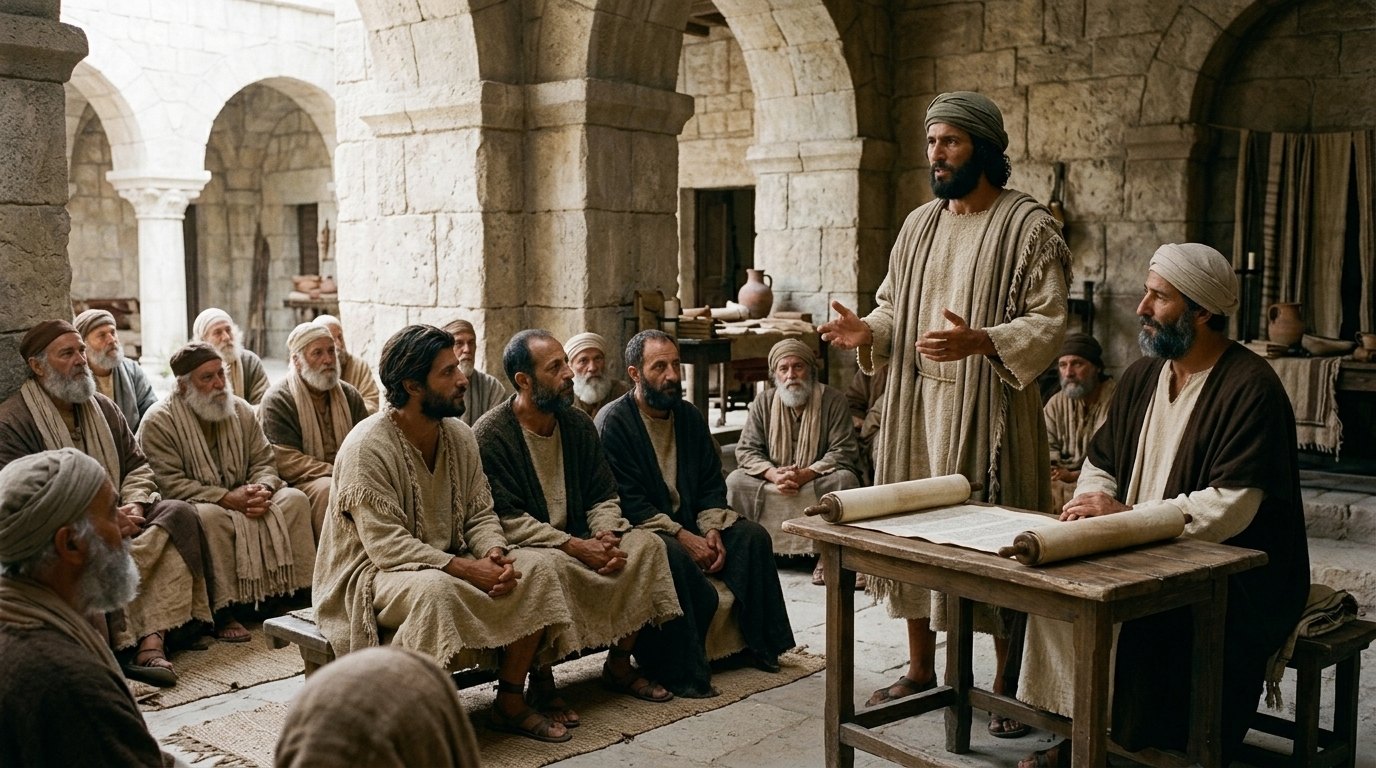
Acts 15:28-29
28 It seemed good to the Holy Spirit and to us not to burden you with anything beyond the following requirements:
29 You are to abstain from food sacrificed to idols, from blood, from the meat of strangled animals and from sexual immorality. You will do well to avoid these things. Farewell.
New International Version (NIV)
The answer
Christians are not under the Mosaic law as a complete covenant because Jesus fulfilled the Law and the Prophets and established the new covenant. This does not mean the Old Testament is discarded or that God’s standards of right and wrong have disappeared. Its sacrifices and ceremonies pointed forward to Christ, its covenant regulations governed Israel’s national life, and God’s moral will continues in the commands of Christ.
The Mosaic law belonged to God’s covenant with Israel
At Sinai, God addressed “the children of Israel” and called them to keep His covenant as His holy nation (Exodus 19:3-6). The law governed Israel’s worship, priesthood, sacrifices, purity, calendar and life in the land. Asking which commands bind Christians is therefore not treating Scripture as unimportant; it is recognizing which covenant God established and to whom He addressed it.
Jesus fulfilled what the law anticipated
Jesus said, “I didn’t come to destroy, but to fulfill” (Matthew 5:17). Fulfillment does not mean that the law was false or useless. It means that its purpose reaches its goal in Him.
For example, the animal sacrifices were “a shadow of the good to come,” and their repetition showed that they could not finally remove sin (Hebrews 10:1-4). Christ then offered Himself “once for all,” perfecting forever those who are being sanctified (Hebrews 10:10-14). Christians therefore do not need to resume the temple sacrifices: Christ’s sacrifice is complete and final.
Likewise, food regulations, feast days, new moons and Sabbaths belonged to shadows whose substance is Christ (Colossians 2:16-17). Hebrews 8:6-13 explains that Jesus mediates a better covenant and that, with the arrival of the new covenant, “he has made the first obsolete.” It is the old covenant arrangement that has become obsolete—not the truth, inspiration or value of the Old Testament Scriptures.
The apostles refused to impose the Mosaic covenant on Gentiles
Acts 15 records some believers teaching that Gentiles had to be circumcised and keep the law of Moses to be saved (Acts 15:1-5). Peter answered that salvation comes “through the grace of the Lord Jesus,” not through bearing that yoke (Acts 15:10-11).
Guided by the Holy Spirit, the Jerusalem council laid no further burden on the Gentile believers beyond the necessary instructions concerning idol sacrifices, blood, strangled animals and sexual immorality (Acts 15:28-29). Paul likewise warned that seeking justification through circumcision and the law means seeking it apart from grace (Galatians 5:2-4). Christians therefore obey God from faith and grace, not to earn salvation through the Mosaic covenant.
God’s moral will still binds
Freedom from the Mosaic covenant is not freedom to sin. Romans 13:8-10 explicitly repeats the commandments against adultery, murder, stealing and coveting, and teaches that love for one’s neighbour fulfils them. Paul could say that he was not under the Mosaic law while still being “under law toward Christ” (1 Corinthians 9:21).
So the distinction is not between arbitrary commands that Christians happen to like and those they dislike. Commands reaffirmed as God’s will under Christ still bind; sacrifices, ceremonies and covenant regulations must be received in light of their fulfillment in Him.
The Old Testament itself remains essential Christian Scripture. “Every Scripture is God-breathed” and profitable for teaching, correction and training in righteousness (2 Timothy 3:16). Christians read it to learn God’s holiness, promises, wisdom and saving work, while understanding its laws according to the covenant in which God gave them and their fulfillment in Christ.
Answered from Scripture · reviewed November 12, 2026
Christians are not under the Sinai covenant because Jesus Christ fulfilled the Law and the Prophets and inaugurated the new covenant in His blood. This does not discard the Old Testament as God's inspired Word, but recognizes how its shadows find substance in Christ, its civil regulations governed Israel's national life, and its moral core endures in the law of Christ. Understanding how the covenants relate reveals that Christian freedom is never license to sin, but a calling to holy obedience through the Holy Spirit.
The Sinai Covenant
God Gave the Law to Israel as a Covenant
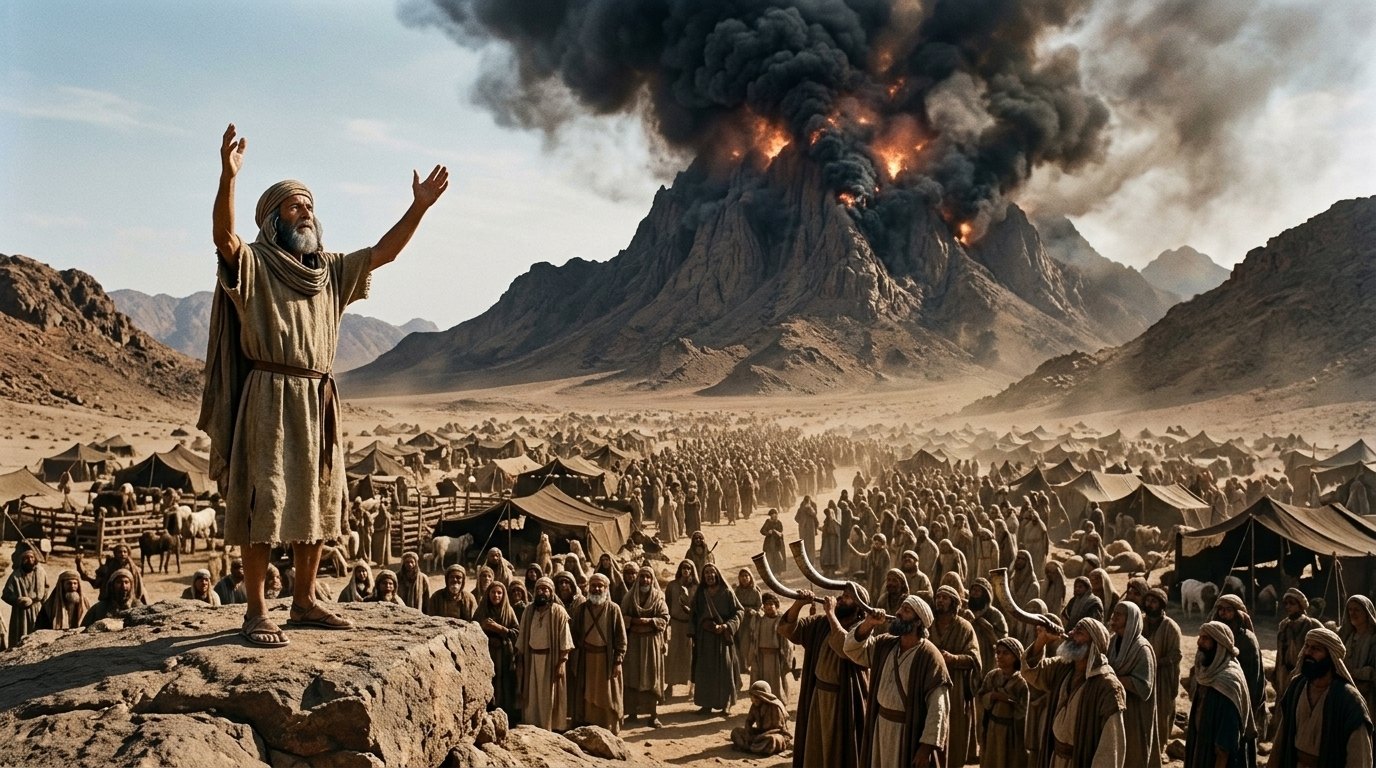
Now if you obey me fully and keep my covenant, then out of all nations you will be my treasured possession. Although the whole earth is mine, you will be for me a kingdom of priests and a holy nation.’ These are the words you are to speak to the Israelites.”
Exodus 19:5-6 (NIV)
It defines the Sinai law as a specific covenant relationship delivered directly to the nation of Israel as God's treasured possession.
In Exodus 19:5-6, the Lord addresses the assembly at the foot of the burning mountain, stating that the Sinai covenant was delivered specifically to the historic nation of Israel. Moses reminds the descendants of Jacob in Exodus 19:3-6 that their status as a treasured possession, a kingdom of priests, and a holy nation was conditioned directly upon obedience to this particular covenant agreement. Moses underscores this unique historical setting in Deuteronomy 4:7-8, asking what great nation ever had statutes and righteous judgments so near to them as Israel received from God at Horeb. He reinforces this specific national scope in Deuteronomy 5:1-3, declaring that the Lord made this covenant not with their distant forefathers, but directly with the generation gathered alive before him that day. Leviticus 26:46 similarly records that these statutes, ordinances, and laws were established expressly between the Lord and the people of Israel through Moses on Mount Sinai. The Psalms reflect this singular historical arrangement; Psalm 147:19-20 praises God because He declared His word to Jacob and His statutes and judgments to Israel, having dealt with no other earthly nation in this manner. The apostle Paul confirms this biblical record in Romans 9:4, naming the covenants, the giving of the law, the worship, and the promises as distinct privileges entrusted to his kinsmen according to the flesh. Even the closing words of the Old Testament canon in Malachi 4:4 instruct Israel to remember the law of Moses delivered at Horeb with statutes and rules for all Israel. The Sinai legislation formed a distinct historical covenant governing Israel's life as God's separated people in the land.
| Passage | What it says |
|---|---|
| Exodus 19:3-6 | God addresses the house of Jacob, conditioning Israel's status as a holy nation on keeping His covenant. |
| Deuteronomy 4:7-8 | Moses highlights that no other nation received such righteous statutes and judgments as Israel at Horeb. |
| Deuteronomy 5:1-3 | The covenant made at Horeb was explicitly made with Israel living that day, not with their distant forefathers. |
| Psalms 147:19-20 | The Lord declared His statutes to Jacob, having dealt with no other nation in this way. |
| Romans 9:4 | Paul affirms that the covenants, the giving of the law, and the temple service pertained historically to the Israelites. |
| Leviticus 26:46 | Affirms that these statutes, ordinances, and laws were specifically established between the Lord and Israel at Mount Sinai. |
| Malachi 4:4 | Commands remembrance of the law delivered to Moses at Horeb with statutes and rules for all Israel. |
Shadows and Fulfilment
Christ Fulfilled the Law's Sacrifices and Ceremonies
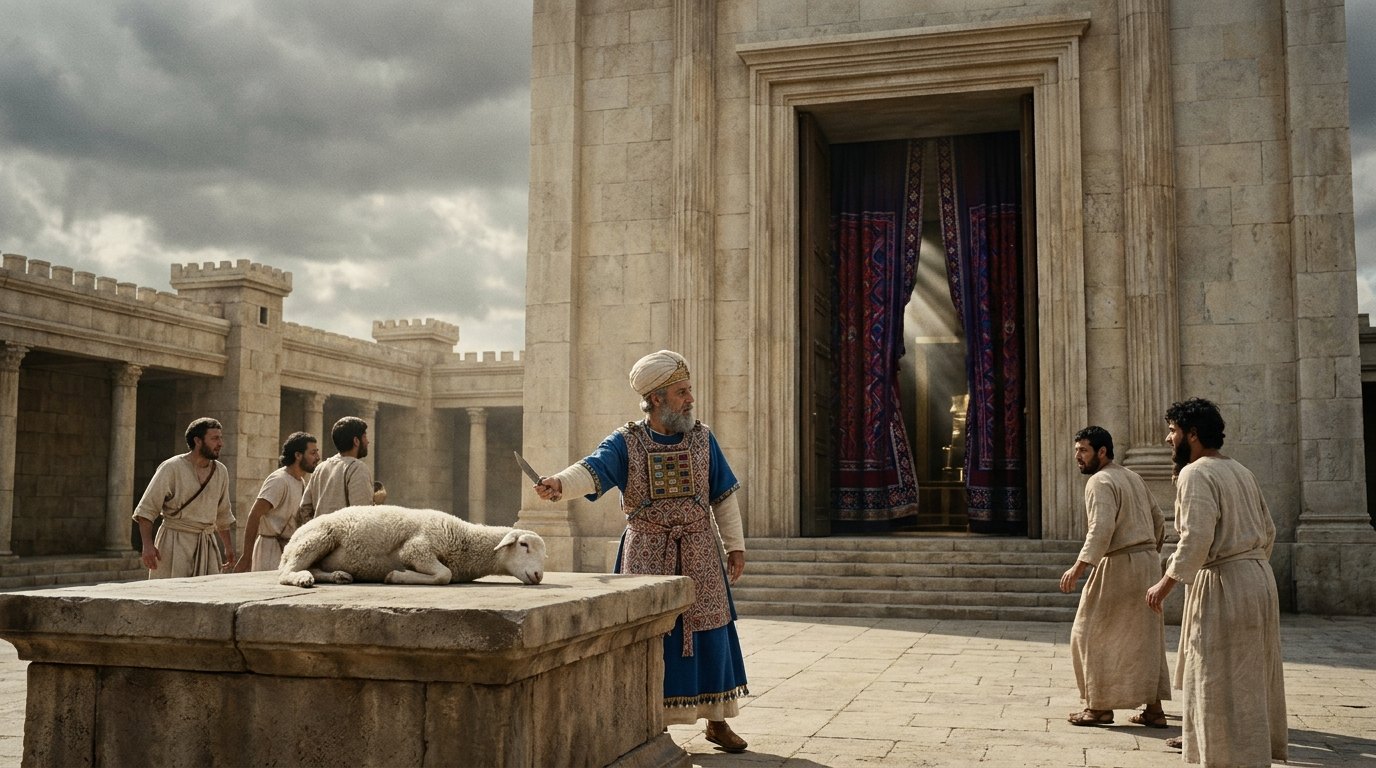
“Do not think that I have come to abolish the Law or the Prophets; I have not come to abolish them but to fulfill them.
Matthew 5:17 (NIV)
Jesus declares that His coming does not destroy the Law and Prophets but brings them to complete fulfilment.
In Matthew 5:17, Jesus announces that He came not to abolish the Law or the Prophets but to bring them to complete fulfilment. He explains in Matthew 5:17-18 that not an iota or a dot will pass from the law until all is accomplished, a reality achieved when Christ became the end of the law for righteousness to all who believe, as recorded in Romans 10:4. The ceremonial institutions, tabernacle furnishings, and animal offerings were never permanent remedies for guilt. Hebrews 10:1-4 explains that the law was only a shadow of the good things to come, unable to perfect the worshipers through repetitive animal blood, until Christ offered Himself once for all in Hebrews 10:10-14, wiping away sins forever. In Hebrews 8:6-13, the author reveals that Christ mediates a more excellent covenant based on better promises, rendering the Sinai arrangement obsolete, matching Jesus' declaration of the new covenant in His blood in Luke 22:20. The apostle Paul explains in Colossians 2:16-17 that dietary regulations, sacred festivals, new moons, and ceremonial Sabbath days were shadows pointing forward to Christ, whose substance secures true rest as described in Hebrews 4:9-10. Jesus laid the foundation for this shift during His earthly ministry; in Mark 7:18-19 He declared all foods clean, which the Lord confirmed to Peter in Acts 10:13-15. Hebrews 7:11-12 establishes that when the Levitical priesthood was superseded by Christ's eternal priesthood, a necessary change in the law occurred as well. Old Testament gifts, washings, and external regulations were carnal ordinances imposed only until the time of reformation (Hebrews 9:9-10). By dying on the cross, Christ abolished in His flesh the dividing wall of commandments contained in ordinances (Ephesians 2:14-16), fulfilling the Passover sacrifice as the true Lamb slain for us (1 Corinthians 5:7).
| Passage | What it says | Fulfilled |
|---|---|---|
| Matthew 5:17-18 | Jesus affirms that not a jot or tittle passes from the law until all is accomplished in Him. | Romans 10:4 |
| Hebrews 10:1-4 | Repeated animal sacrifices were merely a shadow and could never permanently remove sins or cleanse consciences. | Hebrews 10:10-14 |
| Hebrews 8:6-13 | Jesus mediates a better covenant, making the first covenant obsolete as promised through Jeremiah. | Luke 22:20 |
| Colossians 2:16-17 | Food, drinks, festivals, new moons, and Sabbaths are shadows whose substance and reality belong to Christ. | Hebrews 4:9-10 |
| Mark 7:18-19 | Jesus declared all foods clean, demonstrating that defilement proceeds from the human heart, not diet. | Acts 10:13-15 |
| Hebrews 7:11-12 | Declares that when the Levitical priesthood changed in Christ, a necessary change in the law took place as well. | |
| Hebrews 9:9-10 | Explains that Old Testament gifts, sacrifices, and ceremonial washings were carnal ordinances imposed until a time of reformation. | |
| Ephesians 2:14-16 | States Christ abolished in His flesh the hostility, namely the law of commandments expressed in ordinances, uniting Jew and Gentile. | |
| 1 Corinthians 5:7 | Identifies Christ as our Passover lamb sacrificed for us, fulfilling the annual ceremonial feast. |
The Apostolic Verdict
The Apostles Refused to Impose the Law on Gentiles
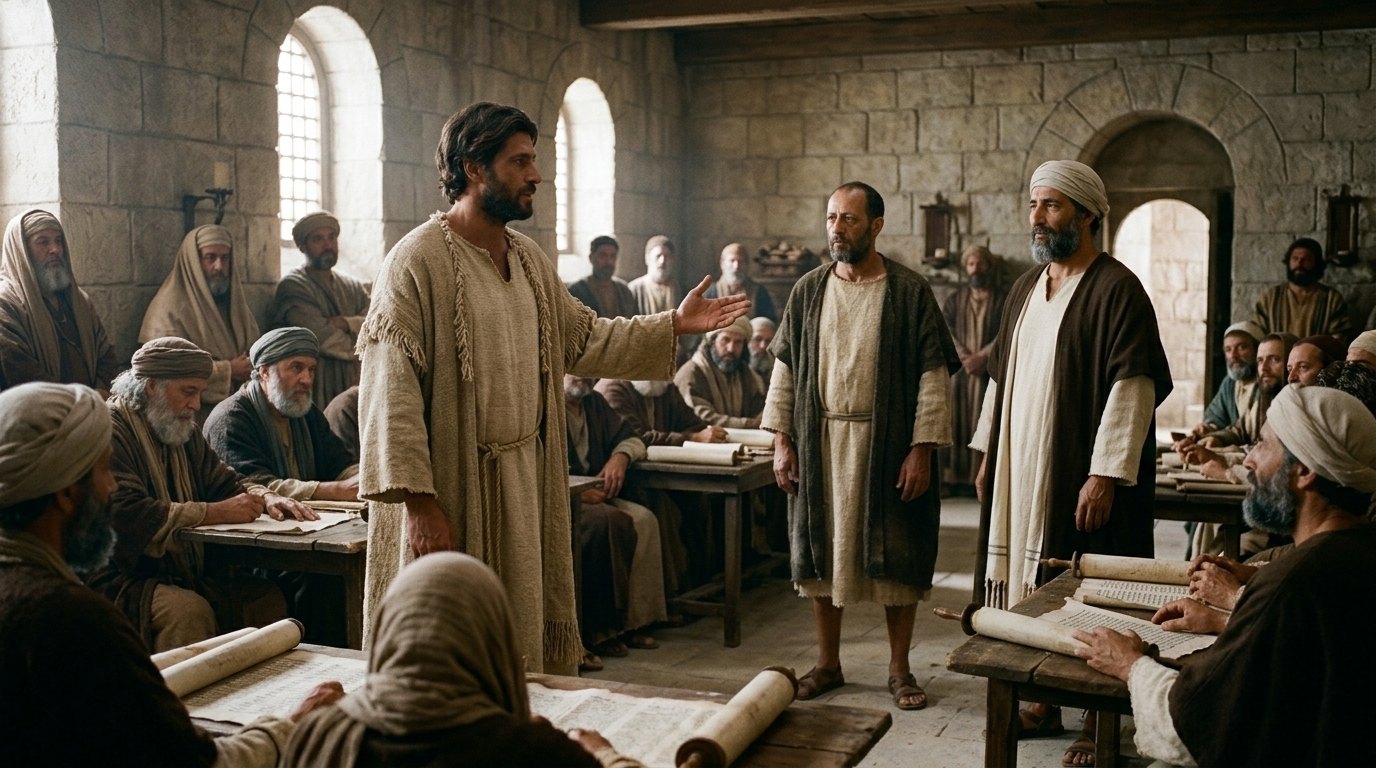
Now then, why do you try to test God by putting on the necks of Gentiles a yoke that neither we nor our ancestors have been able to bear? No! We believe it is through the grace of our Lord Jesus that we are saved, just as they are.”
Acts 15:10-11 (NIV)
Peter rejects placing the yoke of the Mosaic law on Gentile believers, grounding salvation solely in the grace of Jesus.
In Acts 15:10-11, the apostle Peter addresses the Jerusalem Council, declaring that the Mosaic law was an unbearable yoke and that salvation is through the grace of the Lord Jesus alone. When legalistic teachers insisted in Acts 15:1-5 that Gentile converts must undergo circumcision and keep the law of Moses to be saved, the apostles gathered to settle the issue authoritatively. Guided by the Holy Spirit, the council concluded in Acts 15:28-29 to lay upon Gentile believers no greater burden than necessary matters: abstaining from things sacrificed to idols, from blood, from what is strangled, and from sexual immorality. Peter had already learned this principle through divine revelation in Acts 10:11-15, where a heavenly sheet of animals demonstrated that God had cleansed what the Levitical code previously barred. Writing to the churches in Galatia, Paul vigorously defends this truth, declaring in Galatians 2:15-16 that a person is justified not by the works of the law but by faith in Jesus Christ. In Galatians 3:23-25, Paul describes the law as a guardian or tutor that held Israel in custody until the coming of faith, but once Christ came, believers are no longer under that guardian. Seeking justification through legal observance is disastrous; Galatians 5:1-4 warns that anyone accepting circumcision to keep the law becomes obligated to the entire code and is severed from Christ. Romans 10:4 confirms that Christ is the end of the law for righteousness to everyone who believes. Paul therefore rebukes the Galatians in Galatians 4:8-11 for turning back to weak, elementary principles by observing prescribed ritual days, months, seasons, and years, standing fast instead in the freedom won by the Son.
| Passage | What it says |
|---|---|
| Acts 15:1-5 | Judaizers insist that Gentiles must be circumcised and observe the law of Moses to be saved. |
| Acts 15:10-11 | Peter calls the law an unbearable yoke and confesses salvation by the grace of the Lord Jesus. |
| Acts 15:28-29 | The Holy Spirit and the apostles lay no burden beyond abstaining from idol foods, blood, strangled meat, and sexual immorality. |
| Galatians 2:15-16 | Paul insists that no person is justified by the works of the law, but through faith in Jesus Christ. |
| Galatians 3:23-25 | The law served as a guardian until Christ came, but believers are no longer under that guardian. |
| Galatians 5:1-4 | Receiving circumcision to keep the law obligates one to the whole law and severs one from grace. |
| Acts 10:11-15 | Peter receives a divine vision demonstrating that ceremonial dietary laws are cleansed and obsolete in the gospel era. |
| Romans 10:4 | Proclaims that Christ is the end of the law for righteousness to everyone who believes. |
| Galatians 4:8-11 | Rebukes returning to weak and worthless elementary principles by observing prescribed days, months, seasons, and years. |
The Law of Christ
God's Moral Will Remains Written on Believing Hearts

Let no debt remain outstanding, except the continuing debt to love one another, for whoever loves others has fulfilled the law. The commandments, “You shall not commit adultery,” “You shall not murder,” “You shall not steal,” “You shall not covet,” and whatever other command there may be, are summed up in this one command: “Love your neighbor as yourself.” Love does no harm to a neighbor. Therefore love is the fulfillment of the law.
Romans 13:8-10 (NIV)
Paul demonstrates that God's enduring moral commandments are fulfilled through love for one's neighbor.
In Romans 13:8-10, Paul explains that the enduring moral will of God is fulfilled in loving one's neighbor as oneself. The commandments against adultery, murder, theft, and coveting reflect God's immutable holiness, and love fulfills what the law demanded. While believers are released from the Sinai administration, they are never released into lawlessness. In 1 Corinthians 9:20-21, Paul clarifies that while he is not under the Mosaic law, he is not outside the law of God, but under the law of Christ. This law is actively lived out in Christian fellowship; Galatians 6:2 commands believers to bear one another's burdens and so fulfill the law of Christ. True freedom is moral transformation; Romans 6:14-18 proclaims that believers are not under law but under grace, freed from sin to become joyful slaves of righteousness. Through the cross, God condemned sin in the flesh so that the righteous requirement of the law might be fully met in those who walk not according to the flesh but according to the Spirit (Romans 8:3-4). This matches the promise of Jeremiah 31:31-34, where the Lord foretold a new covenant in which He puts His law within His people, writing it on their hearts. As Romans 7:4-6 teaches, believers died to the law through the body of Christ so that they might belong to another and serve in the new way of the Spirit, not in the old letter. In 1 John 5:2-3, the apostle John notes that loving God means keeping His commandments, which are not burdensome to the regenerate heart. James 2:8-12 calls this the royal law and the law of liberty, commanding believers to live as those who will be judged by its righteous standard.
| Passage | What it says |
|---|---|
| Romans 13:8-10 | Commandments against adultery, murder, theft, and coveting are summarized and fulfilled in loving one's neighbor as oneself. |
| 1 Corinthians 9:20-21 | Paul is not under the Mosaic law, yet is not lawless toward God because he is under the law of Christ. |
| Galatians 6:2 | Believers fulfill the law of Christ by bearing one another's burdens in love. |
| Romans 6:14-18 | Believers are not under law but under grace, freed from sin to become obedient servants of righteousness. |
| Romans 8:3-4 | God sent His Son to condemn sin so that the righteous requirement of the law might be fulfilled in Spirit-led believers. |
| 1 John 5:2-3 | Loving God means keeping His commandments, which are not burdensome to those born of God. |
| Jeremiah 31:31-34 | Prophesies the New Covenant wherein God writes His law directly onto the hearts and minds of His people. |
| Romans 7:4-6 | Affirms believers died to the law through the body of Christ to serve in the new way of the Spirit. |
| James 2:8-12 | Exhorts believers to keep the royal law of love as those who will be judged by the law of liberty. |
Where in the Bible
| Book | Passages |
|---|---|
| Exodus | 1 · Exodus 19:3-6 |
| Leviticus | 1 · Leviticus 26:46 |
| Deuteronomy | 2 · Deuteronomy 4:7-8, Deuteronomy 5:1-3 |
| Psalms | 1 · Psalms 147:19-20 |
| Jeremiah | 1 · Jeremiah 31:31-34 |
| Malachi | 1 · Malachi 4:4 |
| Matthew | 1 · Matthew 5:17-18 |
| Mark | 1 · Mark 7:18-19 |
| Acts | 4 · Acts 15:1-5, Acts 15:10-11, Acts 15:28-29, Acts 10:11-15 |
| Romans | 6 · Romans 9:4, Romans 10:4, Romans 13:8-10, Romans 6:14-18, Romans 8:3-4, Romans 7:4-6 |
| 1 Corinthians | 2 · 1 Corinthians 5:7, 1 Corinthians 9:20-21 |
| Galatians | 5 · Galatians 2:15-16, Galatians 3:23-25, Galatians 5:1-4, Galatians 4:8-11, Galatians 6:2 |
| Ephesians | 1 · Ephesians 2:14-16 |
| Colossians | 1 · Colossians 2:16-17 |
| Hebrews | 4 · Hebrews 10:1-4, Hebrews 8:6-13, Hebrews 7:11-12, Hebrews 9:9-10 |
| James | 1 · James 2:8-12 |
| 1 John | 1 · 1 John 5:2-3 |
The story in order
- God establishes covenant with Israel (c. 1450 BC) · Exodus 19:3-6 · God gives Israel His law as a covenant.
- Law given at Horeb (c. 1450 BC) · Deuteronomy 5:1-3 · The covenant and law were given to Israel.
- Sacrifices could not perfect (c. AD 30) · Hebrews 10:1-4 · Old Testament sacrifices were shadows, not substance.
- Jesus fulfills the law (c. AD 30) · Matthew 5:17-18 · Jesus accomplished all the law's requirements.
- New covenant promised (c. 600 BC) · Jeremiah 31:31-34 · God promises to write His law on hearts.
- Jesus mediates new covenant (c. AD 30) · Hebrews 8:6-13 · Jesus' covenant makes the first obsolete.
- Apostles decide Gentile law (c. AD 50) · Acts 15:28-29 · Gentiles are not burdened with Mosaic law.
- Law as guardian (c. AD 55) · Galatians 3:23-25 · The law guarded us until Christ came.
- Christ is end of law (c. AD 57) · Romans 10:4 · Christ is the goal of the law for righteousness.
- Law of Christ (c. AD 57) · 1 Corinthians 9:20-21 · Believers are under the law of Christ.
- Law written on hearts (c. AD 90) · 1 John 5:2-3 · Loving God means keeping His commandments.
Key words
- Covenant (berit, בְּרִית)
- A solemn agreement or bond between God and His people. · Exodus 19:3-6
- Law (torah, תּוֹרָה)
- God's revealed will, including moral, ceremonial, and civil statutes. · Deuteronomy 4:7-8
- Shadows (skia, σκιά)
- Ceremonial elements of the Old Testament that pointed to Christ. · Colossians 2:16-17
- Fulfilled (plēroō, πληρόω)
- To complete, accomplish, or bring to its intended end. · Matthew 5:17-18
- Obsolete (parētailetai, παρετάληται)
- No longer in effect or use; outmoded. · Hebrews 8:13
- Yoke (zygos, ζυγός)
- A burden or oppressive requirement. · Acts 15:10
- Law of Christ (nomos Christou, νόμος Χριστοῦ)
- The moral will of God summarized in love, binding on believers. · 1 Corinthians 9:20-21
- Royal Law (basilikos nomos, βασιλικὸς νόμος)
- The law of love, supreme over all other commands. · James 2:8
Believers look back on the Old Testament law not as an abolished relic or an impossible checklist, but as God's holy revelation fulfilled and transformed in Jesus Christ. Because Christ bore our curse and satisfied the law's demands, we walk in the power of His Spirit, bearing fruit that honors God from the heart. True Christian freedom is never liberty to disobey God's moral will, but the joyous freedom from sin's power and condemnation.
34 passages, each cited once.
How the major Christian traditions read this
All major Christian traditions confess that Jesus Christ fulfilled the Old Testament law through His life, death, and resurrection, delivering believers from the Sinai covenant's ceremonial and civil regulations (Matthew 5:17; Colossians 2:16–17). They unanimously affirm that God's eternal moral law, summarized in love for God and neighbor and expressed in the Decalogue, remains binding for all people (Romans 13:8–10).
Catholic
The Church teaches that the Old Law prepared God's people for the Gospel. In Christ, the ceremonial and judicial precepts of the Mosaic covenant reached their fulfillment and gave way to the New Covenant instituted by our Lord (Hebrews 10:1). The moral precepts, however, especially the Ten Commandments, remain permanently binding because they reflect natural law and God's unchangeable character (Matthew 19:17–19). Christ does not abolish this moral law; He deepens and perfects it in the Sermon on the Mount, giving grace through the sacraments so believers can fulfill it through charity.
Scripture: Matthew 5:17, Matthew 19:17-19, Hebrews 10:1
Orthodox
In Holy Orthodoxy, we view the Mosaic law as a tutor leading to Christ (Galatians 3:24). The ritual, dietary, and sacrificial aspects were types and shadows fulfilled in the divine liturgy and the one perfect sacrifice of Christ on the cross (Colossians 2:16–17). The Apostles explicitly decreed at Jerusalem that Gentile converts are not burdened with the Mosaic legal code (Acts 15:28–29). Yet God's moral commandments are not discarded; rather, they are transfigured and fulfilled in the life of the Church, where believers participate in the divine nature and walk in active holiness.
Scripture: Galatians 3:24, Colossians 2:16-17, Acts 15:28-29
Lutheran
We distinguish carefully between the Law and the Gospel. The Mosaic covenant was given to Israel and cannot justify any sinner before God (Romans 3:20). Its ceremonial rites and civil statues ended with Christ, who is the end of the law for righteousness to everyone who believes (Romans 10:4). The moral law remains as God’s holy standard. It has three uses: a curb to restrain outward sin, a mirror to convict sinners and drive them to Christ, and a guide for the regenerate to show what works please our Father (1 Timothy 1:8–10).
Scripture: Romans 3:20, Romans 10:4, 1 Timothy 1:8-10
Reformed & Presbyterian
We understand God's law given through Moses under a threefold distinction: ceremonial, civil, and moral. As the Westminster Confession (19.3) notes, the ceremonial ordinances prefigured Christ and are abrogated under the New Testament (Hebrews 9:9–10). The civil laws expired with the state of Israel, retaining only their general equity. The moral law, summarize in the Ten Commandments, binds all believers perpetually to obedience (Romans 13:8–10; James 2:10–11). It serves as a rule of life for believers, showing us how to walk in holiness and gratitude for our redemption.
Scripture: Hebrews 9:9-10, Romans 13:8-10, James 2:10-11
Anglican & Episcopal
Our Thirty-Nine Articles (Article 7) clearly confess that the Old Testament is not contrary to the New, for everlasting life is offered to mankind through Christ in both. Although the rites and ceremonies given through Moses do not bind Christians, nor ought Israel's civil precepts to be received into any commonwealth, no Christian man is free from obedience to the moral commandments (Romans 7:12). We embrace the moral law as fulfilled in Christ’s two great commands, guiding our common life and liturgy in faithful response to His grace.
Scripture: Romans 7:12, Matthew 22:37-40, Acts 15:28-29
Baptist
We confess with the Second London Baptist Confession (19.3) that the ceremonial and typical laws appointed for Israel are dissolved by Jesus Christ, the true Messiah (Ephesians 2:14–15). Israel's civil laws have expired alongside that theocratic nation. Yet the moral law, imprinted upon man's heart and revealed in the Ten Commandments, forever binds every believer to personal obedience (Romans 3:31). Christians obey these commands not to earn salvation, but out of a regenerate heart transformed by grace, walking in the good works prepared for us.
Scripture: Ephesians 2:14-15, Romans 3:31, Galatians 5:14
Methodist & Wesleyan
With our Methodist Articles of Religion (Article 6), we believe that while the ceremonies and rites of Moses do not bind us, no Christian is exempt from the moral law. Christ did not abolish God's holy requirements; rather, by the Holy Spirit He writes His law upon our hearts (Hebrews 8:10). The law serves to awaken the conscience and lead us to entire sanctification. Enabled by preventing and sanctifying grace, believers are called to fulfill the moral law through perfect love for God and neighbor (Romans 13:9–10).
Scripture: Hebrews 8:10, Romans 13:9-10, 1 John 5:3
Pentecostal & Charismatic
We proclaim that Christ redeemed us from the curse and yoke of the law by bearing it on the cross (Galatians 3:13). The dietary codes, temple sacrifices, and external rituals belonged to the old dispensation and are completed in Christ. Under the New Covenant, the Holy Spirit empowers believers from within to live holy lives that fulfill the righteous requirements of God’s moral law (Romans 8:3–4). Our obedience is not dead legalism but Spirit-led devotion, bearing the fruit of holiness in everyday life.
Scripture: Galatians 3:13, Romans 8:3-4, Ezekiel 36:27
Non-denominational & Evangelical
We believe believers are not under the Mosaic covenant, as the law was a shadow pointing to Jesus (Colossians 2:16–17; Hebrews 8:13). Salvation is entirely by grace through faith, apart from keeping the law (Ephesians 2:8–9). While the civil and ceremonial commands of Moses applied strictly to ancient Israel, God's moral nature never changes. Many of us understand that believers are now under the 'law of Christ' (Galatians 6:2), following the direct commands of the New Testament while honoring the moral principles revealed across all of Scripture.
Scripture: Colossians 2:16-17, Hebrews 8:13, Galatians 6:2, Ephesians 2:8-9
Where they differ
The primary role of the moral law
- Catholic
- A sacramental path to growing in merit and actual righteousness.
- Orthodox
- A guide for theosis and spiritual transformation in the Church.
- Lutheran
- Primarily a mirror exposing sin, while guiding Christian conduct.
- Reformed & Presbyterian
- Primarily the third use: a rule of gratitude for believers.
- Anglican & Episcopal
- A rule of life shaping communal holiness and worship.
- Baptist
- A perpetual rule of conduct obeyed from a regenerate heart.
- Methodist & Wesleyan
- An instrument of grace leading toward entire sanctification in love.
- Pentecostal & Charismatic
- A standard dynamically empowered and fulfilled by the Holy Spirit.
- Non-denominational & Evangelical
- A practical standard obeyed under the direct rule of Christ.
Scripture: Romans 3:20, Romans 8:4, James 1:25
The continuity of the Sabbath command
- Catholic
- Transferred to the Lord's Day as an ecclesiastical and moral obligation.
- Orthodox
- Celebrated on Saturday as creation rest and fulfilled on Sunday.
- Lutheran
- Regarded as external; the day matters less than hearing God's Word.
- Reformed & Presbyterian
- Perpetual moral duty observed strictly on the Lord's Day Sabbath.
- Anglican & Episcopal
- Observed on Sunday for common worship and rest from labor.
- Baptist
- Observed by most as the Lord's Day, though applications vary.
- Methodist & Wesleyan
- Kept holy on Sunday as a means of grace and rest.
- Pentecostal & Charismatic
- Focused on Sunday worship rather than strict Sabbath legal restrictions.
- Non-denominational & Evangelical
- Often viewed as fulfilled in Christ, leaving Sunday observance free.
Scripture: Exodus 20:8-11, Colossians 2:16-17, Romans 14:5
Your pastor can tell you where your church stands.
Scripture cited
- Acts 15:28-29
- Acts 15:1-29
- Matthew 5:17-20
- Hebrews 8:6-13
- Romans 13:8-10
- Colossians 2:16-17
- Exodus 19:3-6
- Galatians 5:1-6
- Hebrews 10:1-14
- 1 Corinthians 9:19-23
- 2 Timothy 3:14-17