Why did God kill Ananias and Sapphira?
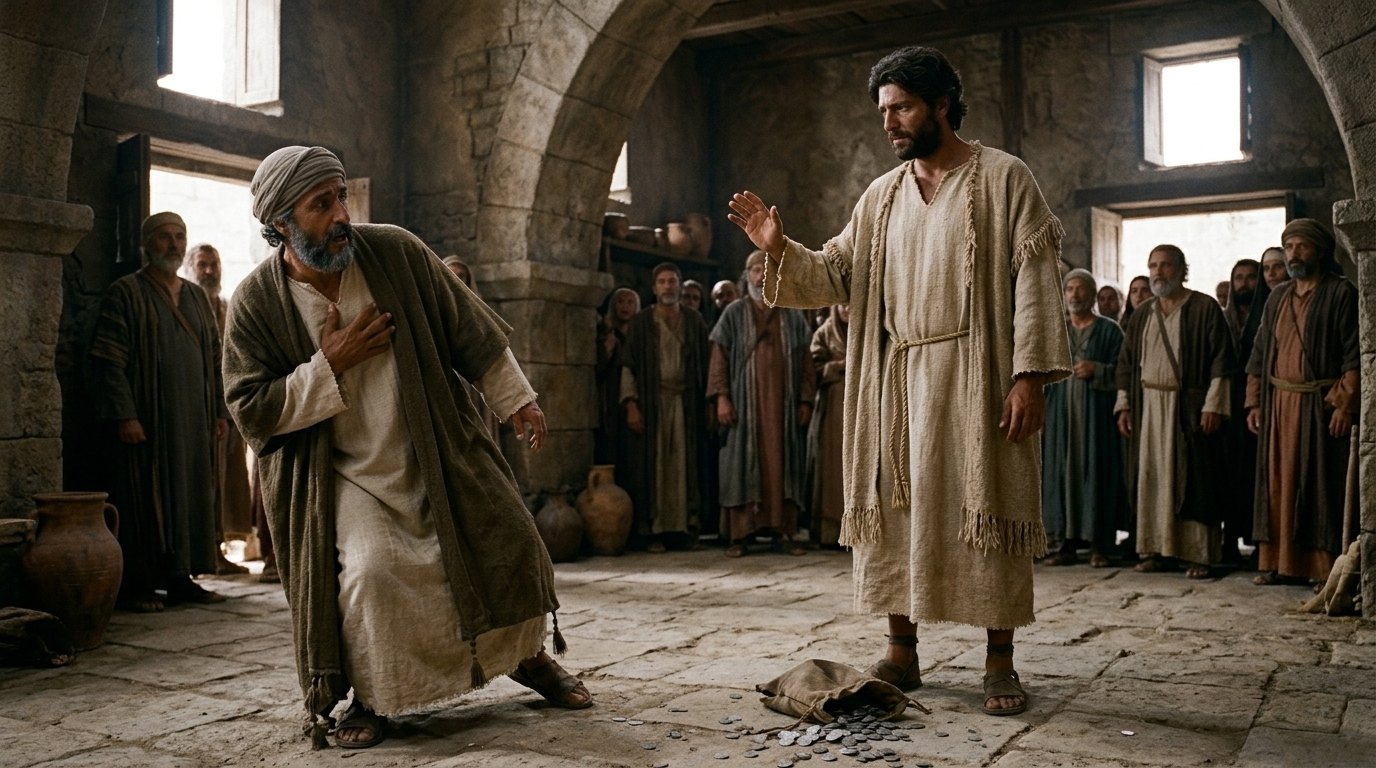
Acts 5:1-11
1 Now a man named Ananias, together with his wife Sapphira, also sold a piece of property.
2 With his wife’s full knowledge he kept back part of the money for himself, but brought the rest and put it at the apostles’ feet.
3 Then Peter said, “Ananias, how is it that Satan has so filled your heart that you have lied to the Holy Spirit and have kept for yourself some of the money you received for the land?
4 Didn’t it belong to you before it was sold? And after it was sold, wasn’t the money at your disposal? What made you think of doing such a thing? You have not lied just to human beings but to God.”
5 When Ananias heard this, he fell down and died. And great fear seized all who heard what had happened.
6 Then some young men came forward, wrapped up his body, and carried him out and buried him.
7 About three hours later his wife came in, not knowing what had happened.
8 Peter asked her, “Tell me, is this the price you and Ananias got for the land?” “Yes,” she said, “that is the price.”
9 Peter said to her, “How could you conspire to test the Spirit of the Lord? Listen! The feet of the men who buried your husband are at the door, and they will carry you out also.”
10 At that moment she fell down at his feet and died. Then the young men came in and, finding her dead, carried her out and buried her beside her husband.
11 Great fear seized the whole church and all who heard about these events.
New International Version (NIV)
The answer
God killed Ananias and Sapphira in judgment for deliberate, shared deceit against the Holy Spirit—not because they kept some of their money. Ananias withheld part of the price with his wife’s knowledge, and Sapphira later confirmed the false amount (Acts 5:2, Acts 5:8). Peter exposed the real offence: they had lied “to the Holy Spirit” (Acts 5:3).
Peter explicitly ruled out compulsory giving as the issue. He asked Ananias, “While you kept it, didn’t it remain your own? After it was sold, wasn’t it in your power?” (Acts 5:4). The land and its proceeds had been under their control. Their sin was using an appearance of generosity to conceal falsehood before God. As Peter told Ananias, “You haven’t lied to men, but to God” (Acts 5:4). Their lie was therefore not merely an offence against the apostles or the church; lying to the Holy Spirit was lying to God Himself.
Sapphira was not judged simply because of her husband’s actions. She knowingly maintained the deception when questioned. Peter said that they had “agreed together to tempt the Spirit of the Lord” (Acts 5:9). Both therefore bore responsibility for a calculated attempt to deceive God while preserving a religious reputation.
The severity of the judgment made God’s holiness unmistakable. Ananias died when his deceit was exposed (Acts 5:5), and Sapphira died after her own confirmation of it (Acts 5:10). The result was that “great fear came on the whole assembly, and on all who heard these things” (Acts 5:11). God cannot be fooled by outward religious performance, and hypocrisy within His people is not harmless.
This account does not teach that every lie will be punished by immediate physical death, nor does it state Ananias and Sapphira’s eternal destiny. It records a particular and fearful judgment. Its warning is against concealed pretence, not against coming honestly to God with sin. Jesus promised, “him that cometh to me I will in no wise cast out” (John 6:37). The fitting response is to abandon pretence, repent, and turn to Christ crucified, who receives sinners and gives forgiveness and new life rather than leaving them to hide behind a spiritual image.
Answered from Scripture · reviewed November 12, 2026
God judged Ananias and Sapphira with immediate physical death because they conspired to deceive the Holy Spirit through calculated religious hypocrisy. Their offense was not withholding their own property, but seeking an unearned reputation for total sacrifice while deliberately lying to God Himself. This severe judgment at the birth of the early church vindicated God's holiness and warned the assembly against trivializing the Spirit's presence.
The True Offense
Deceiving God Under a Pretense of Complete Generosity
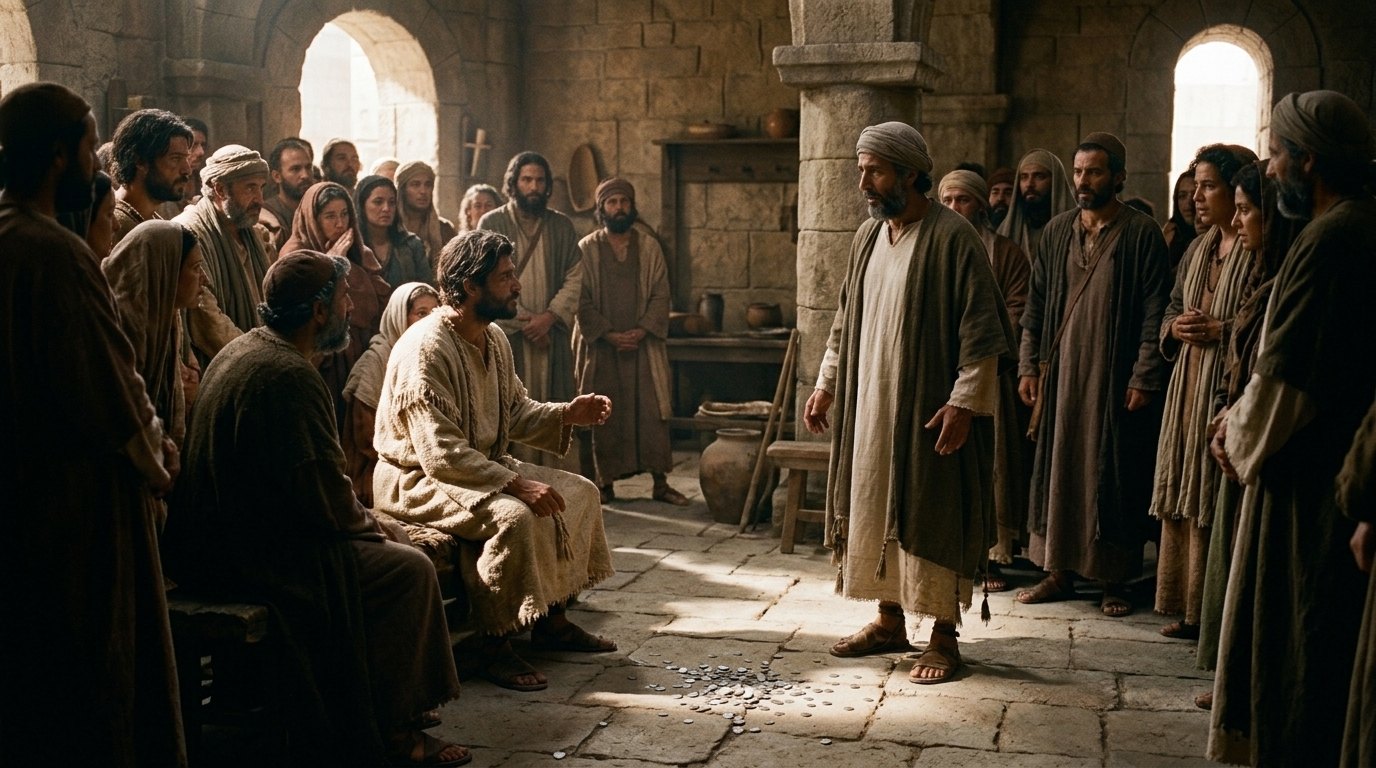
Didn’t it belong to you before it was sold? And after it was sold, wasn’t the money at your disposal? What made you think of doing such a thing? You have not lied just to human beings but to God.”
Acts 5:4 (NIV)
Peter establishes that the money was fully theirs to keep, proving the sin was deliberate deceit rather than compulsory giving.
In Acts 5:4, the apostle Peter exposes the true root of the transgression: the money was entirely within their own control, meaning God never demanded the property or mandated the sale. The sin of Ananias was not stinginess, but a calculated decision to deceive God and manufacture an unearned spiritual standing among the disciples. As recorded in Acts 4:34-37, believers like Barnabas had been willingly selling their possessions, laying the entire sum at the apostles' feet to care for the needy within the fellowship. Seeing the honor attached to such complete self-denial, Ananias sought that same reputation without paying the cost. According to Acts 5:1-2, he sold a piece of land and secretly held back part of the purchase price with his wife's full knowledge, bringing only a portion to deposit at the apostles' feet while pretending it was the whole sum. Acts 5:3-4 shows Peter, discerning the deception by the Spirit, confronting Ananias directly for allowing Satan to fill his heart. Peter reminds him that before it was sold, the field belonged to him, and after it was sold, the proceeds were at his disposal; he was under no compulsion to give. By masquerading a partial contribution as an absolute sacrifice, Ananias lied not merely to human leaders, but directly to the Holy Spirit and to God. This act treated the living God as if He were blind to the hidden thoughts of the heart.
| Passage | What it says |
|---|---|
| Acts 4:34-37 | Believers voluntarily sold property to distribute to the needy, establishing the context of sacrificial integrity exemplified by Barnabas. |
| Acts 5:1-2 | Ananias sells property and keeps back part of the money with his wife's full knowledge while presenting only a fraction. |
| Acts 5:3-4 | Peter exposes that Ananias lied directly to the Holy Spirit and to God regarding the price of the sold land. |
Shared Conspiracy
Sapphira's Willful Complicity in Testing the Spirit
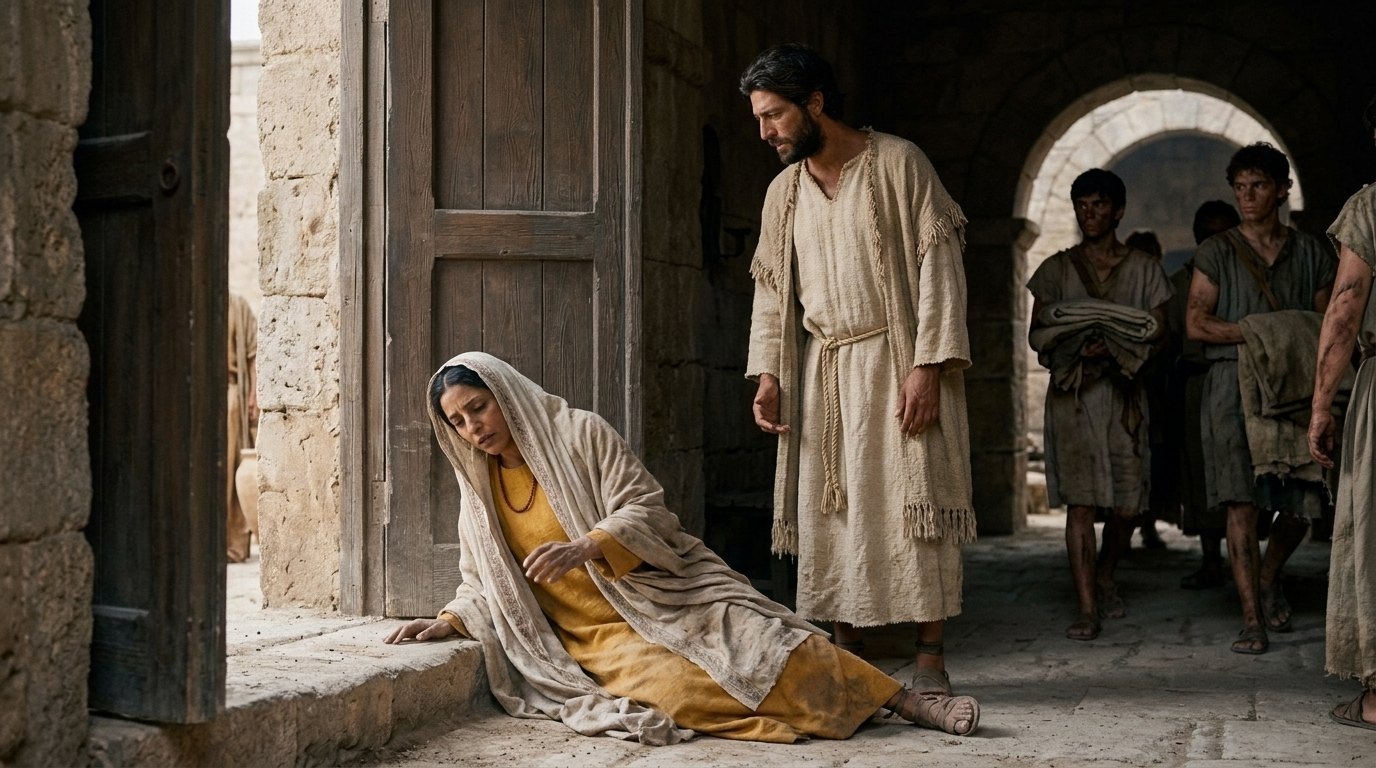
Peter said to her, “How could you conspire to test the Spirit of the Lord? Listen! The feet of the men who buried your husband are at the door, and they will carry you out also.”
Acts 5:9 (NIV)
Peter highlights that the couple colluded together to test the Spirit of the Lord, making Sapphira fully accountable.
The judgment was not confined to Ananias alone, for in Acts 5:9, Peter underscores their deliberate agreement to test the Spirit of the Lord, proving that Sapphira acted out of personal malice rather than innocent ignorance. About three hours after her husband's collapse, Sapphira entered the gathering, unaware of what had just transpired, as recounted in Acts 5:7-8. Peter offered her an immediate and gracious opportunity to tell the truth, asking plainly whether the land had been sold for the specific amount Ananias had handed over. Rather than confessing the truth or breaking fellowship with the lie, Sapphira explicitly reaffirmed the fabricated sum, showing that her heart was fully aligned with the counterfeit. In Acts 5:9-10, Peter announced the solemn verdict: the feet of the young men who had carried out and buried her husband were at the door, ready to carry her out as well. Instantly, she fell dead at his feet. Her swift death demonstrated individual moral accountability before the Almighty, showing that neither marital loyalty nor peer pressure can justify complicity in deceit against God. Her judgment confirmed that both husband and wife had presumed God would not uncover their conspiracy, daring the Holy Spirit to see their hypocrisy.
| Passage | What it says |
|---|---|
| Acts 5:7-8 | Sapphira arrives three hours later and explicitly confirms the fabricated sale amount when directly questioned by Peter. |
| Acts 5:9-10 | Peter announces judgment upon her for their shared conspiracy, and she immediately falls dead at his feet. |
Sobering Purpose
Purifying the Church and Declaring God's Absolute Holiness
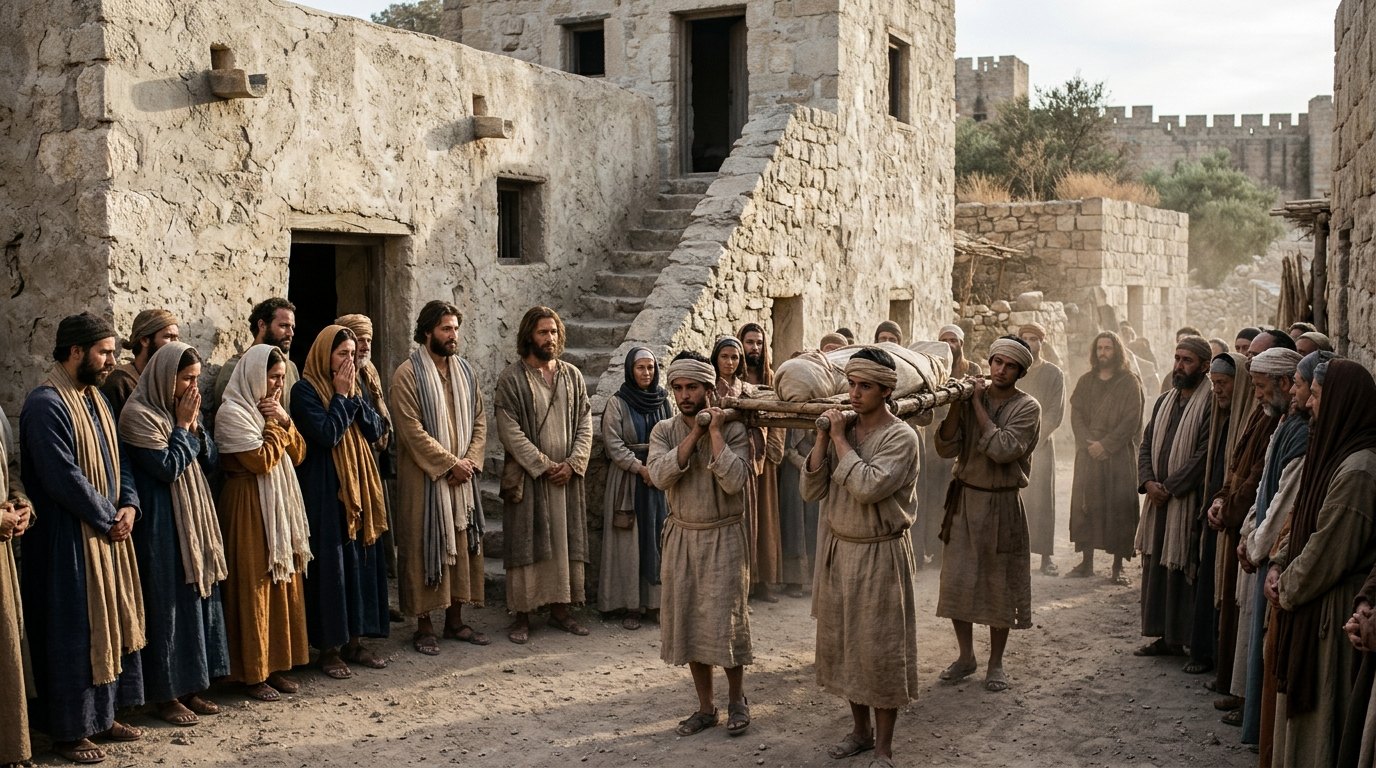
Great fear seized the whole church and all who heard about these events.
Acts 5:11 (NIV)
The narrative records that great reverence and fear fell upon the entire church and all who heard what occurred.
The immediate outcome of this divine judgment is captured in Acts 5:11, where great fear gripped the whole church and all who heard these things. This holy dread was not the terror of an erratic tyrant, but a profound awe of God's unbending holiness at a foundational moment in redemptive history. In Acts 5:5-6, Ananias fell down and breathed his last the moment his hypocrisy was named, and the young men immediately wrapped his body and carried him out for burial. This severity at the birth of the New Testament church reflects a well-established pattern across Scripture. When the tabernacle was first consecrated, Nadab and Abihu were struck down by divine fire for offering unauthorized incense (Leviticus 10:1-3), demonstrating that God will be sanctified by those who draw near to Him. Similarly, as Israel entered the Promised Land, Achan's concealed plunder brought devastating consequences upon the whole congregation (Joshua 7:1). When the ark was brought to Jerusalem, Uzzah died when he placed his unhallowed hand upon the sacred vessel (2 Samuel 6:6-7). The New Testament continues this warning: Paul cautions in 1 Corinthians 11:29-30 that despising the Lord's table results in physical illness and premature death, while 1 Peter 4:17 affirms that judgment must begin at the household of God. Through this severe act, God purged corruption at its inception to preserve the purity of the infant church.
| Passage | What it says |
|---|---|
| Acts 5:5-6 | Ananias dies instantly upon hearing Peter's exposure of his sin, causing great fear before he is buried. |
| Acts 5:11 | A profound holy fear fills the whole assembly and reaches the wider community who hear of God's swift judgment. |
| Leviticus 10:1-3 | God previously sent swift judgment upon Nadab and Abihu when unholy worship compromised the tabernacle's opening days. |
| Joshua 7:1 | Achan's hidden theft and deceit brought severe divine judgment upon Israel at the start of entering the Promised Land. |
| 2 Samuel 6:6-7 | Uzzah is struck down for touching the ark, displaying the lethal severity of God's holy requirements at a new covenant threshold. |
| 1 Corinthians 11:29-30 | Paul notes that profaning the Lord's table leads to weakness, illness, and physical death under God's severe chastisement. |
| 1 Peter 4:17 | Judgment begins at the household of God, demonstrating that proximity to divine revelation demands pure reverence and sincere holiness. |
Call to Sincerity
Abandoning Pretense for Genuine Grace in Christ

All those the Father gives me will come to me, and whoever comes to me I will never drive away.
John 6:37 (NIV)
Jesus assures that anyone who comes to Him in truthful repentance will never be cast out.
The dreadful judgment visited upon Ananias and Sapphira stands as an enduring summons to abandon religious posturing, resting instead on the promise of John 6:37, where Jesus declares that whoever comes to Him He will never cast out. Divine wrath falls upon unrepentant hypocrisy, yet divine mercy welcomes every person who approaches God with transparent humility. In 1 John 1:8-9, the Word of God warns that denying our sin is self-deception, while confessing our sins brings the sure guarantee of His faithfulness to forgive and cleanse us from all unrighteousness. Ananias and Sapphira perished because they attempted to use religious devotion as a cloak for personal pride, forgetting the eternal truth of Galatians 6:7 that God is not mocked, and whatever a person sows, that he will also reap. Jesus warned His disciples in Luke 12:1-3 to beware of the leaven of the Pharisees, which is hypocrisy, because nothing is concealed that will not be revealed, and nothing hidden that will not become known. God does not demand perfection before we can approach Him, but He demands absolute truth in the inward being. When we bring our authentic brokenness to Christ crucified, His atoning blood covers all guilt, freeing us from the exhausting prison of religious facade.
| Passage | What it says |
|---|---|
| 1 John 1:8-9 | Scripture promises that honest confession of sin leads to cleansing and forgiveness rather than concealment and ruin. |
| John 6:37 | Christ promises full acceptance to every sincere sinner who turns to Him without religious pretense. |
| Galatians 6:7 | God is not mocked, for whatever a man sows, that he will also reap, warning against hypocritical posturing before the Almighty. |
| Luke 12:1-3 | Jesus warns the disciples to beware of the leaven of the Pharisees, which is hypocrisy, because all hidden pretense will be disclosed. |
Where in the Bible
| Book | Passages |
|---|---|
| Leviticus | 1 · Leviticus 10:1-3 |
| Joshua | 1 · Joshua 7:1 |
| 2 Samuel | 1 · 2 Samuel 6:6-7 |
| Luke | 1 · Luke 12:1-3 |
| John | 1 · John 6:37 |
| Acts | 7 · Acts 4:34-37, Acts 5:1-2, Acts 5:3-4, Acts 5:7-8, Acts 5:9-10, Acts 5:5-6, Acts 5:11 |
| 1 Corinthians | 1 · 1 Corinthians 11:29-30 |
| Galatians | 1 · Galatians 6:7 |
| 1 Peter | 1 · 1 Peter 4:17 |
| 1 John | 1 · 1 John 1:8-9 |
The story in order
- Nadab and Abihu's unholy worship (c. 1450 BC) · Leviticus 10:1-3 · Demonstrates God's swift judgment on unholy worship at a covenant threshold.
- Achan's deceit brings judgment (c. 1400 BC) · Joshua 7:1 · Shows divine wrath on hidden sin affecting the community.
- Uzzah struck for touching the Ark (c. 1000 BC) · 2 Samuel 6:6-7 · Highlights the lethal severity of God's holy requirements.
- Jesus warns against hypocrisy (c. AD 30) · Luke 12:1-3 · Jesus cautions disciples about the leaven of the Pharisees.
- Ananias and Sapphira's deception (AD 30) · Acts 5:1-10 · Hypocrisy and lying to the Holy Spirit brings immediate death.
- Fear fills the early church (AD 30) · Acts 5:11 · God's judgment purifies the church and instills reverence.
- Paul on profaning the Lord's Table (c. AD 55) · 1 Corinthians 11:29-30 · Profaning worship leads to weakness, illness, and death.
- Judgment begins with God's household (c. AD 65) · 1 Peter 4:17 · Proximity to God demands purity and sincere holiness.
Judgment on Hypocrisy and Unholiness
| Offense | Judgment | Context | Passage |
|---|---|---|---|
| Unholy worship | Instant death | Tabernacle's opening days | Leviticus 10:1-3 |
| Hidden theft and deceit | Divine judgment on Israel | Entering the Promised Land | Joshua 7:1 |
| Touching the Ark improperly | Struck down | New covenant threshold | 2 Samuel 6:6-7 |
| Deceiving the Holy Spirit | Instant death | Birth of the early church | Acts 5:1-10 |
| Profaning the Lord's Table | Weakness, illness, death | Lord's Supper observance | 1 Corinthians 11:29-30 |
Sincerity vs. Hypocrisy
| Sincere Path | Hypocritical Path | Outcome | Passage |
|---|---|---|---|
| Voluntary giving | Withholding and lying | Divine vindication and life | Acts 4:34-37 |
| Honest confession | Concealment and pretense | Cleansing and forgiveness | 1 John 1:8-9 |
| Turning to Christ | Religious pretense | Full acceptance | John 6:37 |
| Genuine grace | Leaven of the Pharisees | Disclosure and judgment | Luke 12:1-3 |
| Sowing to the Spirit | Sowing to the flesh | Reaping eternal life | Galatians 6:7 |
Key words
- Holy Spirit (pneuma hagion, πνεῦμα ἅγιον)
- The third person of the Trinity, God's active presence and power. · Acts 5:3
- Hypocrisy (hypokrisis, ὑπόκρισις)
- Pretense of virtue or religious devotion; acting a part. · Luke 12:1
- Lie (pseudos, ψεῦδος)
- To speak falsely; to deceive. · Acts 5:3
- Judgment (krisis, κρίσις)
- Divine sentence or condemnation; the act of judging. · 1 Peter 4:17
- Holiness (hagiasmos, ἁγιασμός)
- Separation unto God; purity and sanctity. · 1 Peter 4:17
The deaths of Ananias and Sapphira stand as a sobering reminder that God sees the motives of the heart and refuses to be mocked by outward show. True security is never found in religious posturing, but in turning honestly from sin to Christ, who forgives all who come to Him in genuine faith.
16 passages, each cited once.
Scripture cited
- John 6:37
- Acts 5:12-14