What does 'the Lord will fight for you' mean?

Exodus 14:14
14 The LORD will fight for you; you need only to be still.”
New International Version (NIV)
The answer
“The Lord will fight for you” means that God himself takes up his people’s cause and brings the deliverance they cannot achieve by their own strength. At the Red Sea, Israel was trapped between Pharaoh’s army and the water, terrified and complaining (Exodus 14:9-12). Moses answered, “Yahweh will fight for you, and you shall be still” (Exodus 14:14).
What God did
God did not merely give Israel courage or better military strategy. He himself saved them. He divided the sea, brought Israel through on dry ground, threw the Egyptian army into confusion, and overthrew their pursuers in the returning waters (Exodus 14:21-28). Even the Egyptians recognized what was happening: “Yahweh fights for them against the Egyptians!” (Exodus 14:25). Deuteronomy 20:4 expresses the same truth: God goes with his people “to fight for you against your enemies, to save you.”
What “be still” meant
Being still meant ending the panic, despair, and faithless complaining, and trusting God to save. Moses had just told Israel, “Stand still, and see the salvation of Yahweh” (Exodus 14:13).
It did not mean doing nothing in every sense. God immediately told Israel to go forward and commanded Moses to stretch out his hand over the sea (Exodus 14:15-16). Israel still had to walk through the opened waters. The pattern is quiet confidence in God joined to obedient action, not passivity. Second Chronicles 20:17 shows the same balance: Judah was to stand still and watch God’s salvation, yet also go out to meet the enemy as God directed.
What it means for believers now
This was a specific promise of rescue to Israel, not a guarantee that every earthly difficulty will end according to a believer’s preferences. Its enduring lesson is that God’s people need not rely on panic, self-sufficiency, or worldly strength. They can be still before God, refuse fear, obey what he has commanded, and entrust the outcome to him. As Isaiah 30:15 says, “in quietness and in confidence shall be your strength.”
Answered from Scripture · reviewed November 11, 2026
"The Lord will fight for you" is God's direct covenant pledge to take up the battles His people cannot win and accomplish deliverance by His own sovereign hand. Spoken first when Israel was trapped between Pharaoh's army and the Red Sea, the phrase commands reverent stillness instead of panic, revealing that salvation belongs entirely to Yahweh. Across the whole counsel of Scripture, this promise anchors the believer's trust whenever human strength reaches its absolute end.
The Red Sea Deliverance
God rescues His trapped people by His sovereign hand
The LORD will fight for you; you need only to be still.”
Exodus 14:14 (NIV)
Moses declares that Yahweh will fight the battle while the helpless people cease their panicked striving and remain still.
When Moses proclaims in Exodus 14:14 that the Lord will fight for you, and you have only to be silent, he defines the heart of biblical deliverance. Trapped against the waters of the Red Sea with Pharaoh's chariots bearing down, Israel had exhausted every human option. Moments earlier, in Exodus 14:13, Moses told the terrified multitude not to fear, but to stand firm and see the salvation Yahweh would work that day, promising that the Egyptians they saw would never be seen again. Deliverance required no tactical genius or martial power from the fugitives; God demanded their stillness so His glory alone would shine.
The miraculous intervention that followed made Yahweh's warfare evident even to the enemy. In Exodus 14:25, as their chariot wheels clogged and the waters threatened to return, the Egyptians cried out in terror that the Lord was fighting for Israel against them. Exodus 14:30 records the definitive result: the Lord saved Israel that day out of the hand of the Egyptians, and Israel saw their oppressors dead upon the seashore. Standing safely on dry ground on the far bank, the redeemed community erupted into praise in Exodus 15:3, exclaiming, The Lord is a man of war; the Lord is his name. God revealed Himself not as a passive observer, but as a warrior-king who shatters tyranny to rescue His covenant people.
| Passage | What it says |
|---|---|
| Exodus 14:13 | Moses commands the terrified people not to fear, but to stand firm and witness the salvation Yahweh accomplishes today. |
| Exodus 14:14 | The Lord pledges to wage active war on Israel's behalf while commanding them to hold their peace and be silent. |
| Exodus 14:25 | The panic-stricken Egyptian army confesses that Yahweh Himself is fighting against them on behalf of the Israelites. |
| Exodus 14:30 | The Lord saves Israel that day from the Egyptians, who lie dead along the seashore. |
| Exodus 15:3 | Moses and Israel sing in praise that Yahweh is a man of war, glorious in holiness and power. |
The Wilderness and Conquest
Covenant assurance guarantees victory over fortified nations

For the LORD your God is the one who goes with you to fight for you against your enemies to give you victory.”
Deuteronomy 20:4 (NIV)
Israel's officers remind the army before battle that God Himself marches with them to fight their enemies and save them.
As Israel prepared to enter the Promised Land, Moses set the foundation for all future holy warfare in Deuteronomy 20:4, declaring that the Lord your God is he that goes with you to fight for you against your enemies, to save you. This principle was not new; Moses reminded the congregation in Deuteronomy 1:30 that Yahweh marched before them to fight just as He had done before their eyes in Egypt. In Deuteronomy 3:22 and again in Deuteronomy 31:6, Joshua was charged to abandon fear because the Lord personally walked with him, a truth reinforced in Deuteronomy 31:8 with the steadfast promise that God would never fail or forsake them. In Deuteronomy 33:29, Moses pronounced Israel blessed as a people saved by Yahweh, the shield of their help and the sword of their triumph, while Deuteronomy 28:7 pledged that foes rising against them would flee seven different ways.
During the conquest, the historical narrative confirms God’s active intervention. In Joshua 10:14, the sun stood still in Gibeon, marking a day without equal when the Lord fought for Israel. Joshua 10:42 records that Joshua took all the southern kings and their land at once because the Lord, the God of Israel, fought the battle. At the end of his life, Joshua reaffirmed this divine pattern in Joshua 23:3 and Joshua 23:10, reminding the elders that one man put a thousand to flight because God fought for them. Deborah sang of this cosmic reality in Judges 5:20, recalling how the stars from their courses fought against Sisera, and centuries later, Nehemiah 4:20 rallied builders facing armed hostility with the identical assurance: our God will fight for us.
| Passage | What it says |
|---|---|
| Deuteronomy 1:30 | Moses reminds Israel that the Lord goes before them to fight just as He visibly did in Egypt. |
| Deuteronomy 3:22 | Joshua is told not to fear the hostile kingdoms because the Lord God will fight for them. |
| Deuteronomy 20:4 | God promises to march into combat alongside His people against formidable foes to secure their deliverance. |
| Joshua 10:14 | Scripture records that the Lord fought for Israel on the unprecedented day the sun stood still. |
| Joshua 10:42 | Joshua conquered all southern kings and their lands at once because Yahweh, the God of Israel, fought for Israel. |
| Joshua 23:3 | At the close of his life, Joshua reminds Israel that God fought every nation on their behalf. |
| Joshua 23:10 | One man puts a thousand to flight because the Lord God fights for His people as promised. |
| Nehemiah 4:20 | Nehemiah rallies the wall builders in Jerusalem with the confidence that our God will fight for us. |
| Deuteronomy 28:7 | The Lord pledges that enemies rising up will be defeated before Israel, fleeing in seven directions. |
| Deuteronomy 31:6 | Moses urges Israel to be strong and courageous because the Lord personally goes with them into battle. |
| Deuteronomy 31:8 | The Lord Himself goes before His people, promising never to leave them nor forsake them in conflict. |
| Deuteronomy 33:29 | Moses blesses Israel as a people saved by the Lord, their protecting shield and glorious sword. |
| Judges 5:20 | Deborah sings of the cosmic battle where the stars fought from heaven against Sisera's army. |
The Posture of Faith
Believers conquer by standing still in quiet confidence
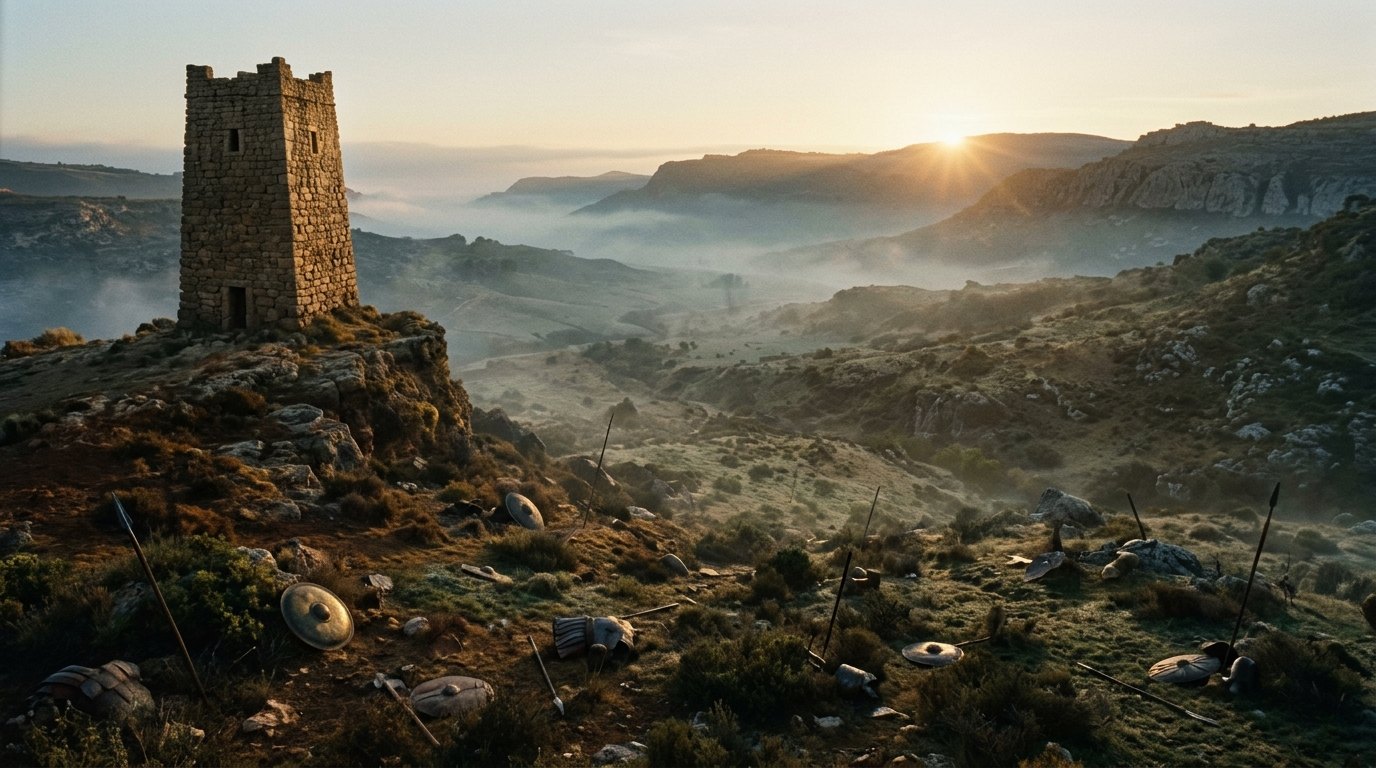
You will not have to fight this battle. Take up your positions; stand firm and see the deliverance the LORD will give you, Judah and Jerusalem. Do not be afraid; do not be discouraged. Go out to face them tomorrow, and the LORD will be with you.’ ”
2 Chronicles 20:17 (NIV)
The prophet Jahaziel tells Judah they will not need to strike a blow, but only stand still to see God's deliverance.
Facing an overwhelming confederation of invading armies, King Jehoshaphat received a prophetic command in 2 Chronicles 20:17: You will not need to fight in this battle. Stand firm, hold your position, and see the salvation of the Lord on your behalf. This instruction echoed Jahaziel’s declaration in 2 Chronicles 20:15 that the battle was not theirs, but God's. Centering their faith entirely upon this word, Judah sent worshipers ahead of the army, singing praises as the Lord ambushed and destroyed the hostile forces. Centuries later, King Hezekiah steeled Jerusalem against Sennacherib in 2 Chronicles 32:8 by contrasting Assyria’s arm of flesh with the Lord who fights Judah's battles.
This same posture defined David's confrontation with Goliath in 1 Samuel 17:47, where he announced that the battle is the Lord's, who delivers without sword or spear. David understood what Psalm 44:3 later celebrated: Israel did not win the land by its own sword, but by God’s right hand and the light of His face. Thus the psalmist prays in Psalm 35:1 for the Lord to contend with those who contend with him. Proverbs 21:31 reminds the wise that while a war horse is prepared for conflict, victory belongs exclusively to the Lord. In Isaiah 30:15, God declares that salvation lies in returning and rest, and quietness and trust constitute true strength. Zechariah 4:6 seals this posture, proclaiming that divine triumph comes not by might, nor by human power, but by the Holy Spirit. Finally, Psalm 46:10 commands all striving to cease, bidding believers to be still and know that Yahweh is God over every earth-bound tumult.
| Passage | What it says |
|---|---|
| 1 Samuel 17:47 | David proclaims before Goliath that the battle belongs to the Lord, who saves without sword or spear. |
| 2 Chronicles 20:15 | The Spirit of God assures King Jehoshaphat that the impending battle is not his, but God's. |
| 2 Chronicles 20:17 | Judah is commanded to position themselves, stand firm, and watch the Lord bring salvation without their fighting. |
| 2 Chronicles 32:8 | Hezekiah strengthens Jerusalem against Sennacherib by contrasting Assyria's arm of flesh with the Lord who fights for Judah. |
| Psalms 46:10 | God commands the nations to cease striving and know that He alone is God, exalted in all the earth. |
| Isaiah 30:15 | The Holy One of Israel declares that true strength is found in quietness and confidence rather than human alliances. |
| Psalms 35:1 | David pleads with the Lord to contend with those who contend with him and fight his oppressors. |
| Psalms 44:3 | Israel remembers that neither their sword nor arm won the land, but God's right hand and countenance. |
| Proverbs 21:31 | The horse is made ready for the day of battle, but victory belongs entirely to the Lord. |
| Zechariah 4:6 | The Lord declares victory comes not by human might nor by power, but by His Spirit. |
Ultimate Spiritual Victory
Christ disarms spiritual darkness and secures eternal triumph

What, then, shall we say in response to these things? If God is for us, who can be against us?
Romans 8:31 (NIV)
Paul draws the overarching conclusion of the gospel: if the Almighty God is for us, no adversary can prevail.
The physical battles of the Old Testament foreshadowed the definitive spiritual victory achieved in the New Covenant. Paul writes in Romans 8:31, If God is for us, who can be against us? This truth flows directly from the cross, where the warfare of God reached its climax. In Colossians 2:15, Jesus disarmed the demonic rulers and authorities, putting them to open shame and triumphing over them through His sacrifice, fulfilling every ancient shadow of God routing Israel's oppressors. Because this ultimate battle is already won, Paul proclaims in Romans 8:37 that believers are more than conquerors through Him who loved them, while 1 Corinthians 15:57 gives thanks to God, who grants us the ultimate victory over sin and death through our Lord Jesus Christ.
Believers now walk in the reality of Christ’s finished conquest. In John 16:33, the Lord commands His disciples to take heart because He has overcome the world. The church engages in warfare not with earthly arms, but as 2 Corinthians 10:4 explains, with weapons of divine power capable of pulling down spiritual strongholds. Ephesians 6:10 urges believers to be strong in the Lord and the power of His might, putting on the whole armor of God. We maintain confidence because 1 John 4:4 reminds us that He who is in us is greater than he who is in the world. This cosmic drama concludes in Revelation 17:14 and Revelation 19:11, where the Lamb, who is King of kings, rides forth upon a white horse, judged Faithful and True, to wage righteous war and bring final judgment against every hostile power.
| Passage | What it says | Fulfilled |
|---|---|---|
| Colossians 2:15 | Christ disarmed the demonic rulers and authorities, triumphing over them openly at the cross. | Colossians 2:15 |
| Romans 8:31 | Paul asks the definitive covenant question: since God is for us, who can successfully oppose us? | Romans 8:31 |
| Romans 8:37 | In every affliction and peril, believers are overwhelmingly victorious through Christ who loved them. | Romans 8:37 |
| 1 Corinthians 15:57 | Thanksgiving is offered to God, who gives believers ultimate victory over sin and death through Jesus Christ. | 1 Corinthians 15:57 |
| Revelation 19:11 | Christ appears on a white horse, named Faithful and True, judging and waging righteous war against every enemy. | Revelation 19:11 |
| John 16:33 | Jesus commands believers to take heart because He has decisively overcome the world. | |
| 2 Corinthians 10:4 | The weapons of our warfare are not carnal but divinely powerful to pull down strongholds. | |
| Ephesians 6:10 | Believers are commanded to be strong in the Lord and in the strength of His personal might. | |
| 1 John 4:4 | Believers have overcome demonic spirits because He who is in them is greater than he in the world. | |
| Revelation 17:14 | The Lamb overcomes the allied kings of the earth because He is Lord of lords and King of kings. |
Where in the Bible
| Book | Passages |
|---|---|
| Exodus | 5 · Exodus 14:13, Exodus 14:14, Exodus 14:25, Exodus 14:30, Exodus 15:3 |
| Deuteronomy | 7 · Deuteronomy 1:30, Deuteronomy 3:22, Deuteronomy 20:4, Deuteronomy 28:7, Deuteronomy 31:6, Deuteronomy 31:8, Deuteronomy 33:29 |
| Joshua | 4 · Joshua 10:14, Joshua 10:42, Joshua 23:3, Joshua 23:10 |
| Judges | 1 · Judges 5:20 |
| 1 Samuel | 1 · 1 Samuel 17:47 |
| 2 Chronicles | 3 · 2 Chronicles 20:15, 2 Chronicles 20:17, 2 Chronicles 32:8 |
| Nehemiah | 1 · Nehemiah 4:20 |
| Psalms | 3 · Psalms 46:10, Psalms 35:1, Psalms 44:3 |
| Proverbs | 1 · Proverbs 21:31 |
| Isaiah | 1 · Isaiah 30:15 |
| Zechariah | 1 · Zechariah 4:6 |
| John | 1 · John 16:33 |
| Romans | 2 · Romans 8:31, Romans 8:37 |
| 1 Corinthians | 1 · 1 Corinthians 15:57 |
| 2 Corinthians | 1 · 2 Corinthians 10:4 |
| Ephesians | 1 · Ephesians 6:10 |
| Colossians | 1 · Colossians 2:15 |
| 1 John | 1 · 1 John 4:4 |
| Revelation | 2 · Revelation 19:11, Revelation 17:14 |
The story in order
- Israel trapped at the Red Sea (c. 1446 BC) · Exodus 14:13 · God's pledge to fight for His people is first spoken.
- Egyptians confess Yahweh fights (c. 1446 BC) · Exodus 14:25 · The enemy acknowledges God's direct intervention in battle.
- Israel's song of deliverance (c. 1446 BC) · Exodus 15:3 · They praise God as a warrior, glorious in power.
- Wilderness journey and conquest (c. 1406 BC) · Deuteronomy 3:22 · God assures Joshua He will fight for them against nations.
- Sun stands still in battle (c. 1399 BC) · Joshua 10:14 · An unprecedented day where the Lord fought for Israel.
- Deborah's song of cosmic battle (c. 1125 BC) · Judges 5:20 · Even the stars in their courses fought against the enemy.
- David and Goliath (c. 1012 BC) · 1 Samuel 17:47 · David declares the battle belongs to the Lord.
- Jehoshaphat faces invasion (c. 875 BC) · 2 Chronicles 20:15 · God assures the king the battle is His.
- Hezekiah faces Assyria (c. 701 BC) · 2 Chronicles 32:8 · Hezekiah contrasts human strength with God's power.
- Isaiah's counsel of stillness (c. 700 BC) · Isaiah 30:15 · True strength is found in quiet confidence in God.
- Zechariah's vision of victory (c. 519 BC) · Zechariah 4:6 · Victory comes by God's Spirit, not human might.
- Christ disarms spiritual rulers (AD 62) · Colossians 2:15 · Christ's victory on the cross over demonic powers.
- Paul's triumphant question (AD 57) · Romans 8:31 · If God is for us, no one can oppose us.
- Christ returns in judgment (c. AD 95) · Revelation 19:11 · Christ wages righteous war against His enemies.
God Fights for His People
| Situation | God's Action | Israel's Response | Passage |
|---|---|---|---|
| Trapped at Red Sea | Fights Egyptians | Stand still and see salvation | Exodus 14:13-14 |
| Facing hostile nations | Goes before them, fights for them | Be strong and courageous | Deuteronomy 31:6-8 |
| Facing Goliath | Battle belongs to Him | Stand firm | 1 Samuel 17:47 |
| Facing invasion | The battle is the Lord's | Stand firm and watch | 2 Chronicles 20:15-17 |
| Facing spiritual darkness | Disarms rulers, triumphs | Overcome through Christ |
The Source of Victory
| Human Effort | Divine Power | Passage |
|---|---|---|
| Human strength | Lord fights for you | Exodus 14:14 |
| Sword or arm | God's right hand and countenance | Psalms 44:3 |
| Human might or power | His Spirit | Zechariah 4:6 |
| Arm of flesh | The Lord who fights for Judah | 2 Chronicles 32:8 |
| Carnal weapons | Divinely powerful weapons | 2 Corinthians 10:4 |
Key words
- Yahweh (YHWH, יהוה)
- The personal name of God, emphasizing His covenant faithfulness and redemptive power. · Exodus 14:14
- Salvation (yeshu'ah, יְשׁוּעָה)
- Deliverance from danger, oppression, or sin; rescue and preservation by God's intervention. · Exodus 14:13
- Fight (lāḥam, לָחַם)
- To contend in battle, to wage war, often used for God's active intervention on behalf of His people. · Exodus 14:14
- Stand firm (ḥāzaq, חָזַק)
- To remain steady and resolute, not panicking, trusting in God's promised deliverance. · Exodus 14:13
- Spirit (ruach, רוּחַ)
- God's invisible power and presence, the agent through whom He accomplishes His will and grants victory. · Zechariah 4:6
- Overcome (nikáō, νικάω)
- To conquer, to defeat decisively, to gain victory over enemies or opposing forces. · John 16:33
When the Lord promises to fight for you, He calls you to lay down your frantic self-reliance, quiet your soul, and watch Him work. Whether facing impossible earthly trials or the weight of sin and death, the believer stands secure because the Almighty has already undertaken the conflict and won the victory in Christ.
38 passages, each cited once.
Scripture cited
- Exodus 14:14
- Deuteronomy 20:4
- 2 Chronicles 20:17
- Isaiah 30:15
- Exodus 14