What does the number 12 mean in the Bible?
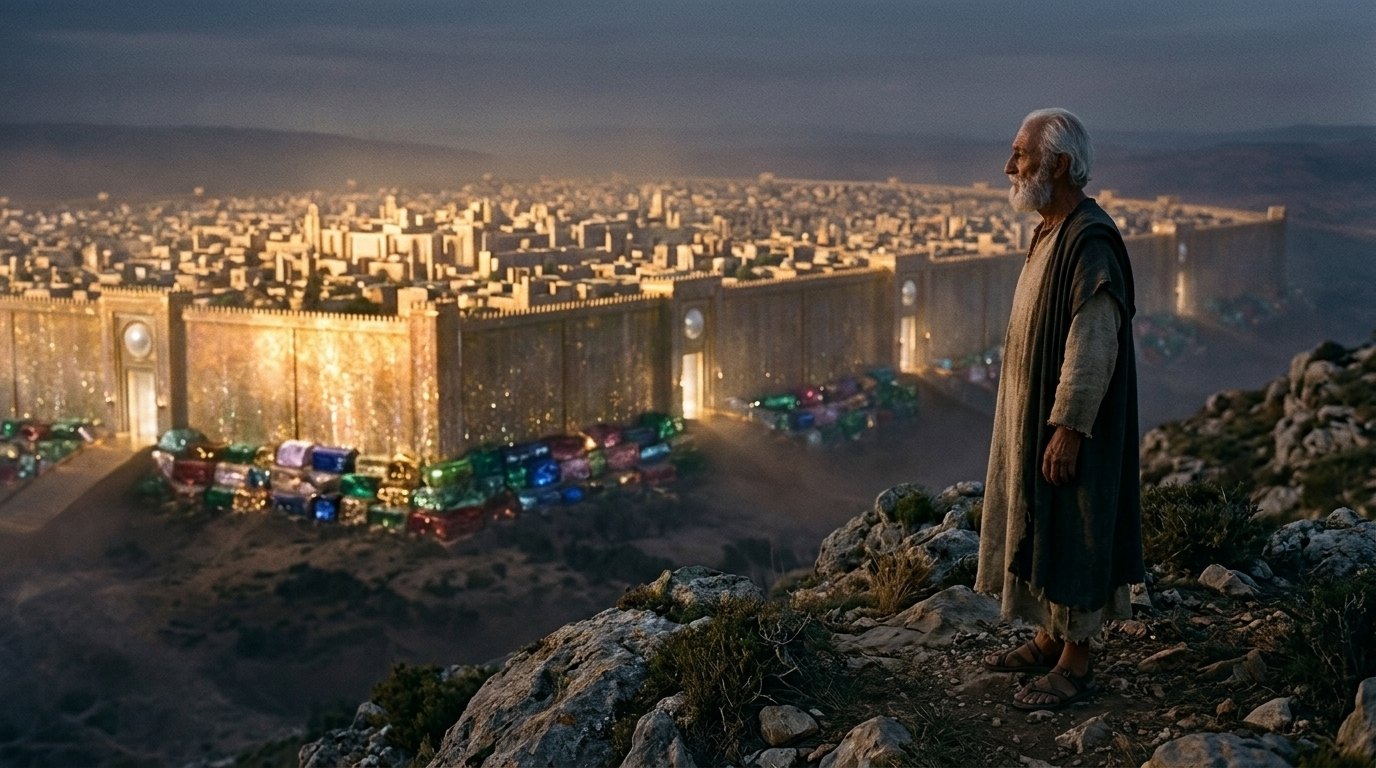
Revelation 21:12-14
12 It had a great, high wall with twelve gates, and with twelve angels at the gates. On the gates were written the names of the twelve tribes of Israel.
13 There were three gates on the east, three on the north, three on the south and three on the west.
14 The wall of the city had twelve foundations, and on them were the names of the twelve apostles of the Lamb.
New International Version (NIV)
The answer
In Scripture, twelve most often points to the fullness and ordered unity of God’s covenant people. This association comes from Israel’s twelve tribes and is carried forward through Jesus’ twelve apostles. It is not a magical number or a secret code; in some passages, twelve is simply a literal count, and the context determines whether a broader significance is present.
Twelve and Israel
- The twelve tribes: Genesis 49:28 calls them “the twelve tribes of Israel.” The number therefore encompasses the whole tribal people.
- Israel’s worship: At Sinai, Moses built an altar with “twelve pillars for the twelve tribes of Israel,” according to Exodus 24:4. The high priest’s breastpiece likewise carried twelve stones, one for each tribe, as Exodus 28:21 explains.
- The nation called back to God: When Elijah repaired the altar on Carmel, he used twelve stones “according to the number of the tribes of the sons of Jacob,” as recorded in 1 Kings 18:31-32. Even in a divided kingdom, the number represented the whole people whom God had called.
Twelve and the apostles
Jesus’ choice was deliberate. Luke 6:13 says that “he chose twelve, whom he also named apostles.” Jesus himself connected their number with Israel when he promised them twelve thrones for judging the twelve tribes, in Matthew 19:28. The apostles therefore stand as his appointed witnesses and leaders in continuity with God’s dealings with Israel, not as an arbitrarily sized group.
Twelve in the new Jerusalem
Revelation brings these associations together. Revelation 21:12-14 describes twelve gates bearing the names of the twelve tribes and twelve foundations bearing the names of the twelve apostles, with three gates on each side of the city. The tribes and apostles belong to one ordered city, displaying the unity of God’s saving purpose.
Multiples of twelve reinforce the pattern. The wall measures 144 cubits—twelve times twelve—in Revelation 21:17, while Revelation 7:4-8 numbers the sealed as 144,000, with 12,000 from each tribe.
The focus remains on Christ, not numbers themselves: Revelation 21:9-10 identifies the city as the bride, the Lamb’s wife. Biblical interpretation should follow these connections that Scripture actually makes, rather than using twelve to decode dates, names, or private events.
Answered from Scripture · reviewed November 11, 2026
Across the whole canon of Scripture, the number twelve consistently signifies God's divine order, governmental rule, and covenant completeness. From the patriarchs and tribal princes of Israel to the twelve apostles and the architectural perfection of the New Jerusalem, God repeatedly uses twelve to mark the ordered totality of His redeemed people.
Patriarchal Origins
Twelve sons form the foundation of God's covenant nation
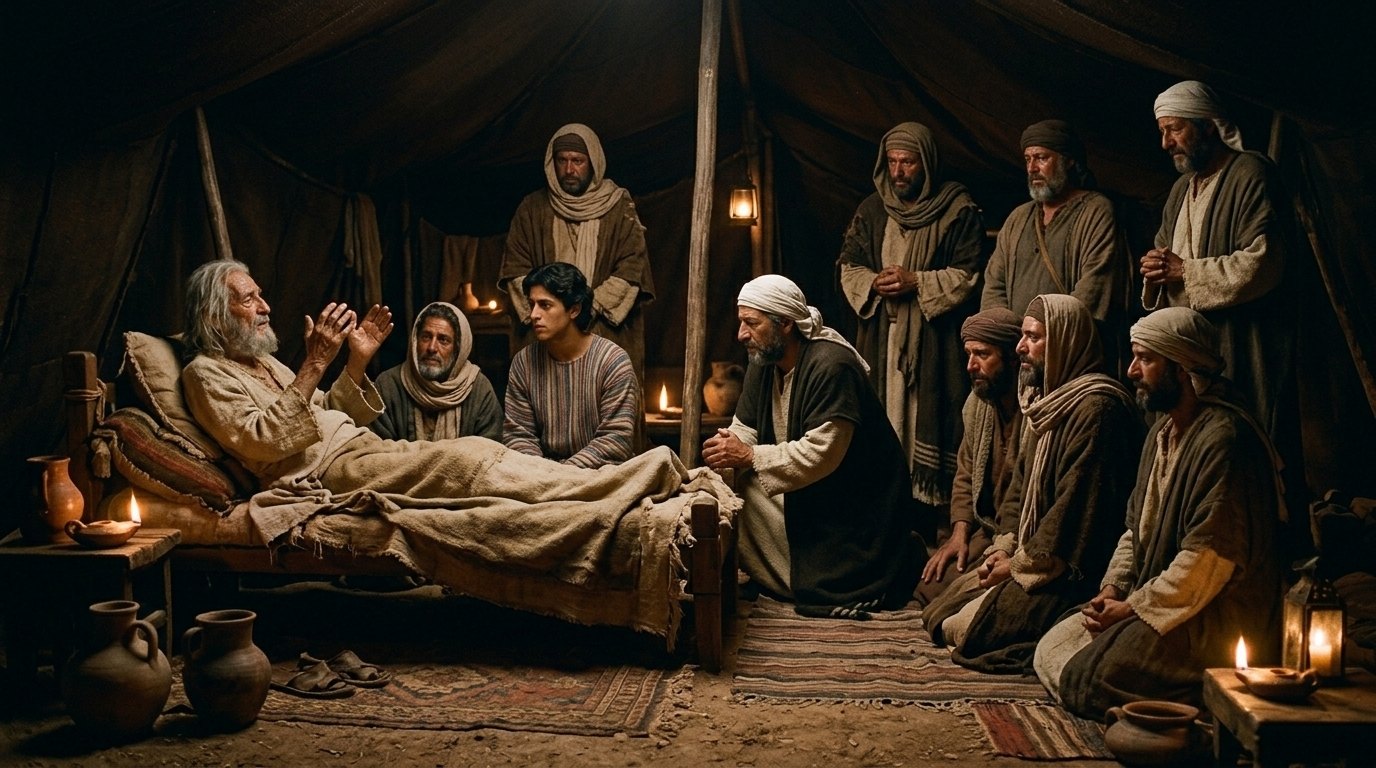
All these are the twelve tribes of Israel, and this is what their father said to them when he blessed them, giving each the blessing appropriate to him.
Genesis 49:28 (NIV)
Moses explicitly identifies the twelve sons of Jacob as the foundational twelve tribes of Israel blessed by their father.
In Genesis 49:28, the narrative gathers its generational weight as Jacob pronounces blessings over his sons, explicitly establishing them as the foundational twelve tribes of Israel. Scripture reveals that God organizes covenant life through structural order, never leaving His redemptive purposes to random chance. Long before Jacob's final words, Genesis 35:22 lists the sons by name, verifying that the sons of Jacob were precisely twelve in number. Even outside the central covenant line, divine governmental order is established; in Genesis 17:20, God assures Abraham that Ishmael will father twelve princes, a historical reality documented in Genesis 25:16 where twelve chiefs govern their settlements according to their clans. In times of famine and testing, the brothers themselves acknowledge this God-given structure, confessing in Genesis 42:13 before an unrecognized Joseph that they are twelve brothers, sons of one man in the land of Canaan. Through these historical lines, the twelve sons of Jacob become the living framework through which God reveals His electing grace, anchoring the identity of His chosen nation down through the centuries.
| Passage | What it says |
|---|---|
| Genesis 35:22 | Moses records the formal genealogy confirming that the sons of Jacob were twelve in number. |
| Genesis 49:28 | Jacob blesses each of his twelve sons, establishing the twelve tribes of Israel as covenant entities. |
| Genesis 17:20 | God promises Abraham that Ishmael will father twelve princes, demonstrating divine governmental order even in physical lineage. |
| Genesis 25:16 | Ishmael's twelve sons are formally enumerated as twelve princes according to their settlements and encampments. |
| Genesis 42:13 | Joseph's brothers describe their family to him as twelve sons of one father. |
Wilderness Order
Israel's governance and sanctuary mirror the twelve tribes
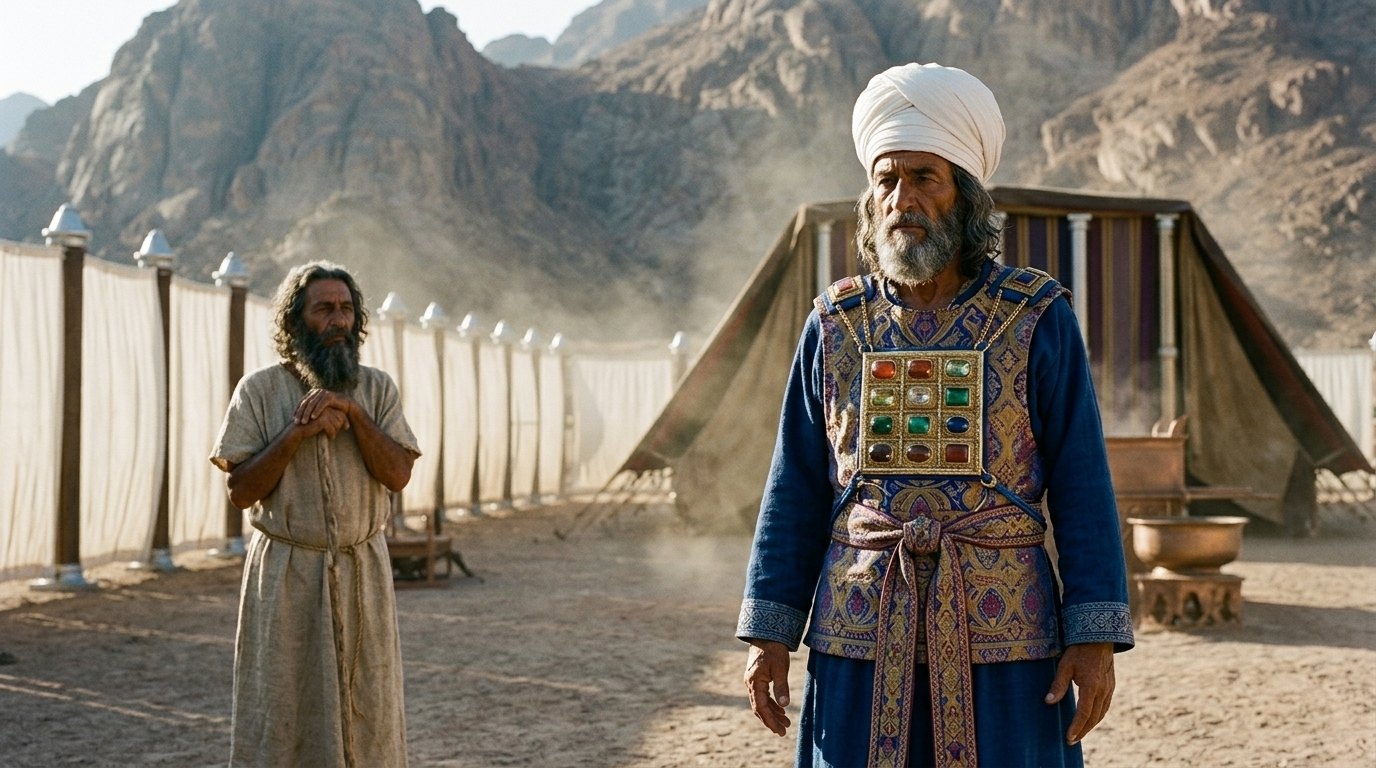
There are to be twelve stones, one for each of the names of the sons of Israel, each engraved like a seal with the name of one of the twelve tribes.
Exodus 28:21 (NIV)
The high priest bears the twelve names of Israel's tribes engraved upon twelve stones over his heart before the Lord.
At the heart of tabernacle worship, Exodus 28:21 specifies that the high priest's breastplate must carry twelve precious stones, each engraved like a seal with the name of one of the twelve tribes of Israel. This arrangement guaranteed that the priest carried the totality of God's covenant people over his heart whenever he entered the holy place, a pattern reiterated in Exodus 39:14. Divine order governed Israel's entire wilderness journey. In Exodus 15:27, the Lord refreshed His exhausted nation at Elim, a desert oasis furnished with twelve springs of water. When ratification occurred at Sinai, Moses built an altar and erected twelve pillars for the tribes in Exodus 24:4. Inside the Holy Place, Leviticus 24:5 commanded twelve loaves of fine flour arranged continuously upon the pure table. The administrative census in Numbers 1:44 functioned through twelve tribal heads, and Numbers 7:84 records twelve silver chargers and gold spoons presented at the altar's dedication. When sending scouts into Canaan, Numbers 13:1 enlisted twelve tribal leaders, and God settled the Aaronic priesthood in Numbers 17:2 through twelve rods placed before the testimony, where one budded.
| Passage | What it says |
|---|---|
| Exodus 24:4 | Moses builds an altar at Sinai and erects twelve pillars representing the twelve tribes of Israel. |
| Exodus 28:21 | The breastplate of judgment contains twelve precious stones engraved with the names of the twelve tribes. |
| Leviticus 24:5 | Twelve loaves of fine flour are arranged in two rows upon the pure table before the Lord continually. |
| Numbers 1:44 | Twelve leaders, one from each ancestral tribe, are designated to number and oversee the host of Israel. |
| Numbers 7:84 | The tribal princes offer twelve silver chargers, bowls, and gold spoons at the dedication of the tabernacle altar. |
| Numbers 13:1 | Moses selects twelve men, one leader from each tribe, to explore and report on the Promised Land. |
| Numbers 17:2 | Twelve staffs representing the twelve tribal leaders are placed before the testimony, where Aaron's rod blossoms. |
| Exodus 15:27 | Israel camps at Elim where there were twelve springs of water and seventy palms. |
| Exodus 39:14 | The stones of the breastplate are twelve, engraved with the names of Israel's sons. |
Memorials and Monarchy
Twelve marks memorial stones, kingdoms, and temple worship
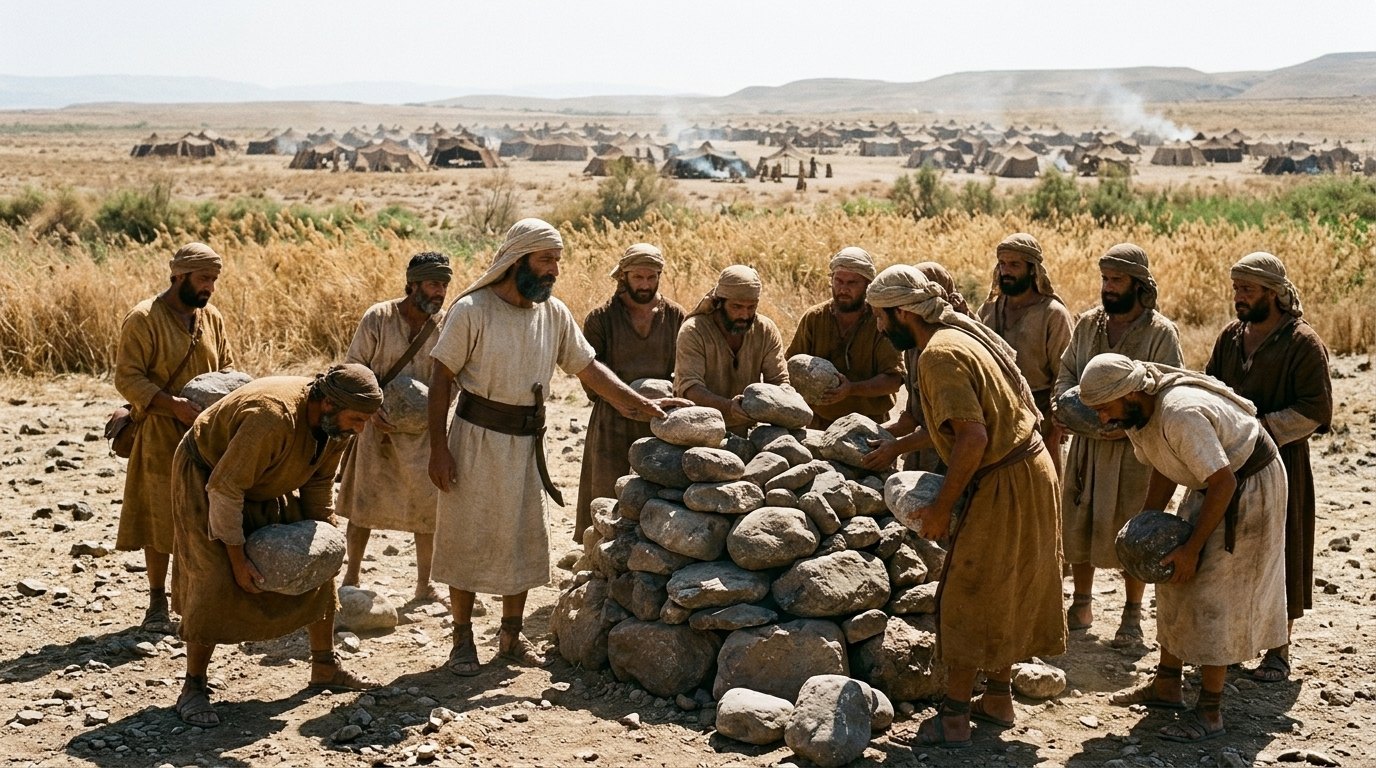
So the Israelites did as Joshua commanded them. They took twelve stones from the middle of the Jordan, according to the number of the tribes of the Israelites, as the LORD had told Joshua; and they carried them over with them to their camp, where they put them down.
Joshua 4:8 (NIV)
Joshua erects twelve stones taken from the Jordan riverbed as an enduring memorial of God's covenant deliverance.
In Joshua 4:8, the children of Israel take twelve stones from the dry riverbed of the Jordan, setting them up at Gilgal as an enduring memorial of God's miraculous deliverance. Before crossing, Joshua had summoned twelve chosen men in Joshua 3:12, and in Joshua 4:9 he erected a matching monument of twelve stones in the midst of Jordan where the priests' feet stood firm. The monarchical era consistently mirrored this numerical structure. Solomon appointed twelve royal governors across the realm in 1 Kings 4:7, each provisioning the palace for one month per year. Steps leading to Solomon's throne were flanked by twelve carved lions in 1 Kings 10:20, and the great molten Sea rested upon twelve bronze oxen facing the four winds in 1 Kings 7:25. When civil catastrophe loomed, the prophet Ahijah in 1 Kings 11:30 ripped his garment into twelve pieces. Yet covenant unity endured: Elijah rebuilt the ruined altar on Carmel using twelve stones in 1 Kings 18:31, David organized twenty-four divisions of priests and musicians in 1 Chronicles 24:18 and 1 Chronicles 25:31, and the returning exiles offered twelve bulls for all Israel in Ezra 8:35.
| Passage | What it says |
|---|---|
| Joshua 4:8 | The Israelites take twelve stones from the Jordan riverbed to establish a perpetual memorial of God's dry passage. |
| Joshua 4:9 | Joshua sets up a second monument of twelve stones in the middle of the riverbed where the priests stood. |
| 1 Kings 4:7 | Solomon appoints twelve governors over all Israel, each responsible for provisioning the royal household for one month. |
| 1 Kings 7:25 | The bronze Sea in Solomon's temple rests upon twelve oxen facing outward toward the four compass directions. |
| 1 Kings 18:31 | Elijah rebuilds the altar of the Lord on Mount Carmel using twelve stones for the twelve tribes. |
| 1 Chronicles 24:18 | David organizes the Levitical priesthood into twenty-four courses, a doubling of twelve, for continual sanctuary service. |
| 1 Chronicles 25:31 | The sanctuary musicians are organized into twenty-four courses of twelve skilled singers under the instruction of the Lord. |
| Ezra 8:35 | The returned exiles sacrifice twelve bulls for all Israel, confessing covenant unity despite national dispersion. |
| Joshua 3:12 | Joshua commands Israel to choose twelve men, one from every tribe, for Jordan's crossing. |
| 1 Kings 11:30 | Ahijah tears his new cloak into twelve pieces, representing the kingdom's divisions. |
| 1 Kings 10:20 | Twelve lions stand on the six steps leading to Solomon's ivory throne. |
Apostolic Foundation
Christ chooses twelve apostles to govern His kingdom
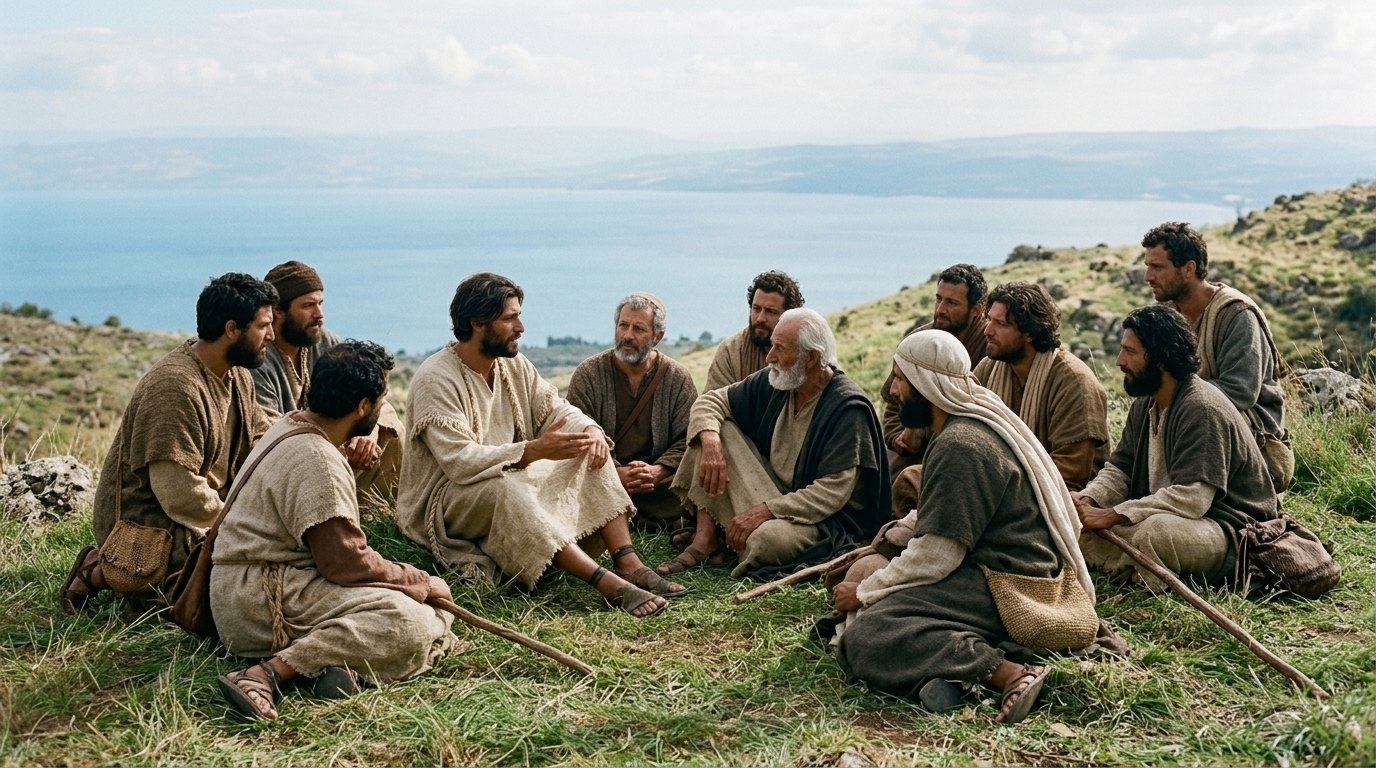
Jesus called his twelve disciples to him and gave them authority to drive out impure spirits and to heal every disease and sickness.
Matthew 10:1 (NIV)
Jesus explicitly calls and ordains twelve disciples to preach the kingdom and wield divine authority over sickness and spirits.
When the Lord Jesus inaugurates the new covenant, Matthew 10:1 records that He summons twelve disciples, granting them divine authority to cast out unclean spirits and heal every affliction. In fulfilling this role, Mark 3:14 notes that He appointed twelve to be with Him and to preach, a commissioning brought to glorious fruition when Peter and the apostles preach with power at Pentecost in Acts 2:14. The number twelve constantly punctuates the Lord's earthly ministry: at twelve years old in Luke 2:42, He sits in the temple astonishing the teachers; in Luke 8:42, He raises Jairus's twelve-year-old daughter; and in Luke 8:43, He stops to heal the woman afflicted with an issue of blood for twelve years. When He feeds the five thousand, Matthew 14:20 records that the disciples gather twelve full baskets of leftovers, proving the abundance of the King (Matthew 16:9). In Matthew 19:28, Christ promises the twelve that they will sit on twelve thrones judging the twelve tribes, verified in Luke 22:30. Even facing the cross, Jesus affirms in Matthew 26:53 that twelve legions of angels awaited His call. After His resurrection, He appears to the twelve in 1 Corinthians 15:5, and the church maintains this governmental completeness in Acts 1:26 by casting lots to number Matthias with the eleven, sustaining apostolic authority in Acts 2:42.
| Passage | What it says | Fulfilled |
|---|---|---|
| Matthew 10:1 | Jesus summons His twelve disciples and gives them authority over unclean spirits and diseases. | Acts 1:26 |
| Matthew 14:20 | After feeding the five thousand, the disciples gather twelve baskets full of leftover fragments. | Matthew 16:9 |
| Matthew 19:28 | Jesus promises that the twelve apostles will sit on twelve thrones judging the twelve tribes of Israel. | Luke 22:30 |
| Mark 3:14 | Jesus appoints twelve so that they might be with Him and that He might send them out. | Acts 2:14 |
| Acts 1:26 | The infant church casts lots to number Matthias with the eleven apostles, restoring the fullness of the twelve. | Acts 2:42 |
| Luke 2:42 | Jesus goes to Jerusalem for Passover at twelve years old to discuss Scripture in the temple. | |
| Luke 8:43 | A woman suffering with a discharge of blood for twelve years touches Christ's robe. | |
| Luke 8:42 | Jairus's only daughter is twelve years of age when Christ raises her from the dead. | |
| Matthew 26:53 | Jesus notes his Father could immediately provide more than twelve legions of angels. | |
| 1 Corinthians 15:5 | Paul records that the risen Christ appeared to Cephas, then to the twelve. |
Heavenly Fulfillment
The New Jerusalem embodies eternal covenant completeness
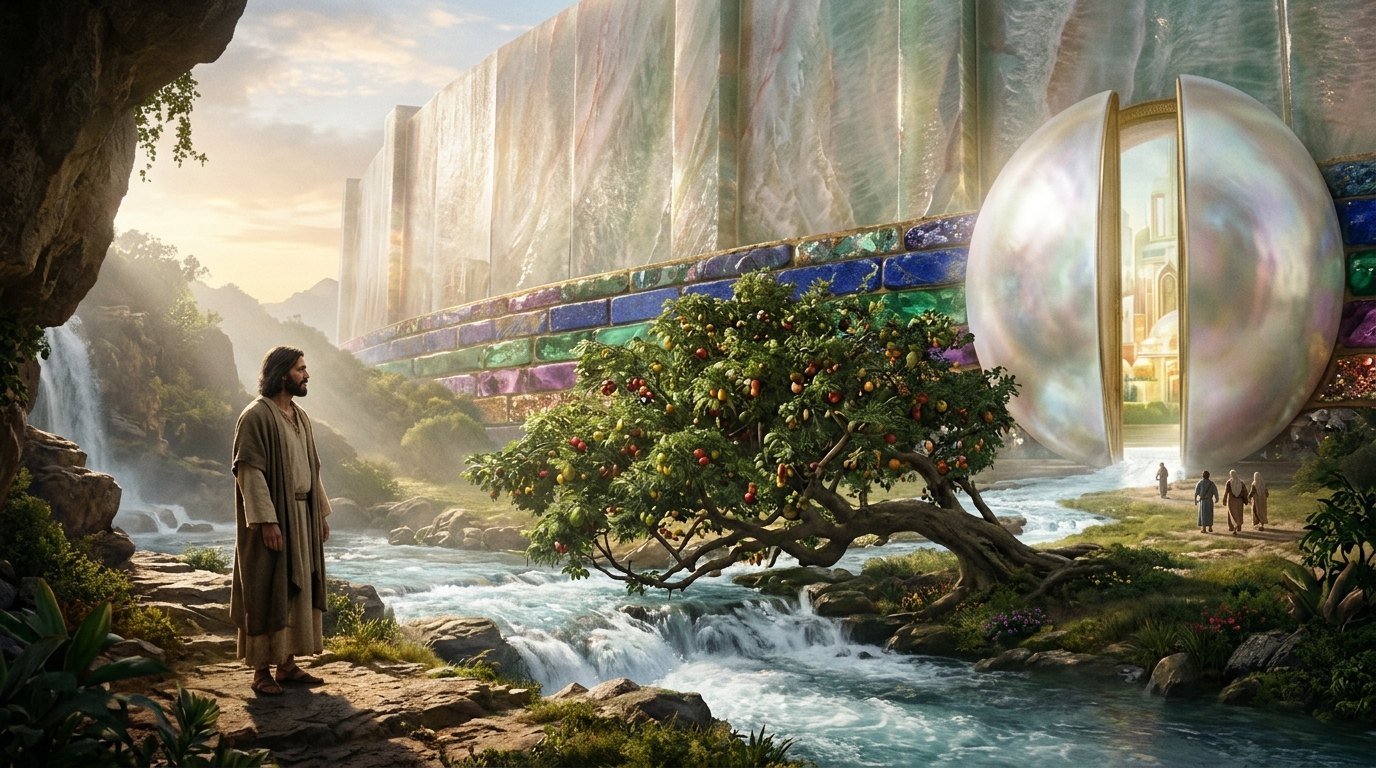
The wall of the city had twelve foundations, and on them were the names of the twelve apostles of the Lamb.
Revelation 21:14 (NIV)
The wall of the New Jerusalem unites the covenant people through twelve foundation stones bearing the names of the twelve apostles.
In Revelation 21:14, the apostle John beholds the city wall resting on twelve foundation stones, inscribed with the names of the twelve apostles of the Lamb. This heavenly architecture reveals how God brings His covenant purpose to ultimate, unbroken fruition: Old and New Testament saints are united forever under divine rule. What the prophets anticipated in shadow here stands in dazzling, solid reality.
Centuries before the vision on Patmos, Ezekiel 48:31 described the holy city in the land of restoration, marked by twelve gates named after the twelve tribes of Israel. This prophetic blueprint finds its consummation in Revelation 21:12, where the New Jerusalem possesses a high wall with twelve gates guarded by twelve angels, bearing the names of those same twelve ancestral tribes. To pass into the city is to witness how faithfully God preserved the covenant line He inaugurated through Jacob’s sons.
This same governmental completeness governs God's protective seal upon His servants. In Revelation 7:4, John hears the census of the redeemed: one hundred forty-four thousand, exactly twelve thousand sealed from each of the twelve tribes of Israel, mirrored in Revelation 14:1 as the undefiled host standing with the Lamb on Mount Zion. In Revelation 12:1, the faithful covenant community appears personified as a woman clothed with the sun, crowned with twelve radiant stars.
Every dimension of the eternal city proclaims this arithmetic of grace. In Revelation 21:16, the angel measures the city at twelve thousand stadia on every side, forming a perfect cube that matches the Holy of Holies. According to Revelation 21:21, the twelve gates are fashioned from twelve massive pearls. Finally, Revelation 22:2 shows the river of life watering the tree of life, which yields its twelve crops of fruit in unbroken monthly rhythm, ensuring eternal vitality for all who enter.
| Passage | What it says | Fulfilled |
|---|---|---|
| Ezekiel 48:31 | Ezekiel foresees the restored city with twelve gates named after the twelve tribes of Israel. | Revelation 21:12 |
| Revelation 7:4 | John hears the total number of the sealed: 144,000, being twelve thousand from each of the twelve tribes. | Revelation 14:1 |
| Revelation 21:12 | The New Jerusalem has twelve gates guarded by twelve angels with the names of the twelve tribes inscribed. | Revelation 22:14 |
| Revelation 21:14 | The city wall rests on twelve foundations bearing the names of the twelve apostles of the Lamb. | Ephesians 2:20 |
| Revelation 21:16 | The celestial city is measured at twelve thousand stadia in length, breadth, and height. | Revelation 21:17 |
| Revelation 22:2 | The tree of life bears twelve crops of fruit, yielding its harvest every single month. | Revelation 22:14 |
| Revelation 12:1 | A woman clothed with the sun wears a crown of twelve stars on her head. | |
| Revelation 21:21 | The twelve gates of the New Jerusalem are twelve individual pearls. |
Where in the Bible
| Book | Passages |
|---|---|
| Genesis | 5 · Genesis 35:22, Genesis 49:28, Genesis 17:20, Genesis 25:16, Genesis 42:13 |
| Exodus | 4 · Exodus 24:4, Exodus 28:21, Exodus 15:27, Exodus 39:14 |
| Leviticus | 1 · Leviticus 24:5 |
| Numbers | 4 · Numbers 1:44, Numbers 7:84, Numbers 13:1, Numbers 17:2 |
| Joshua | 3 · Joshua 4:8, Joshua 4:9, Joshua 3:12 |
| 1 Kings | 5 · 1 Kings 4:7, 1 Kings 7:25, 1 Kings 18:31, 1 Kings 11:30, 1 Kings 10:20 |
| 1 Chronicles | 2 · 1 Chronicles 24:18, 1 Chronicles 25:31 |
| Ezra | 1 · Ezra 8:35 |
| Ezekiel | 1 · Ezekiel 48:31 |
| Matthew | 4 · Matthew 10:1, Matthew 14:20, Matthew 19:28, Matthew 26:53 |
| Mark | 1 · Mark 3:14 |
| Luke | 3 · Luke 2:42, Luke 8:43, Luke 8:42 |
| Acts | 1 · Acts 1:26 |
| 1 Corinthians | 1 · 1 Corinthians 15:5 |
| Revelation | 7 · Revelation 7:4, Revelation 21:12, Revelation 21:14, Revelation 21:16, Revelation 22:2, Revelation 12:1, Revelation 21:21 |
The story in order
- Abraham's descendants promised twelve princes (c. 2000 BC) · Genesis 17:20 · God establishes governmental order in lineage.
- Jacob's twelve sons form Israel's tribes (c. 1800 BC) · Genesis 49:28 · Covenant nation's foundation marked by twelve.
- Twelve pillars at Sinai (c. 1450 BC) · Exodus 24:4 · Representing the twelve tribes of Israel.
- Twelve loaves on the table (c. 1450 BC) · Leviticus 24:5 · Continual presence before the Lord.
- Twelve spies sent to Canaan (c. 1450 BC) · Numbers 13:1 · Leaders chosen from each tribe.
- Twelve stones from Jordan (c. 1400 BC) · Joshua 4:8 · Memorial of God's deliverance.
- Solomon's twelve governors (c. 950 BC) · 1 Kings 4:7 · Marking administrative and provision cycles.
- Twelve oxen under the Sea (c. 950 BC) · 1 Kings 7:25 · Temple's structure reflects divine order.
- Elijah rebuilds altar with twelve stones (c. 850 BC) · 1 Kings 18:31 · Restoring covenant representation.
- Jesus chooses twelve apostles (AD 27-30) · Mark 3:14 · Foundation for Christ's kingdom.
- Twelve baskets of leftovers (AD 27-30) · Matthew 14:20 · Abundance and sufficiency from Christ.
- Matthias added to the eleven (AD 33) · Acts 1:26 · Restoring the apostolic number twelve.
- New Jerusalem's twelve gates (c. 570 BC) · Ezekiel 48:31 · Eternal city's structure signifies covenant completeness.
- New Jerusalem's twelve foundations (c. AD 95) · Revelation 21:14 · Bearing the apostles' names.
Key words
- Twelve (dōdeka (Gk))
- Signifies divine order, governmental rule, and covenant completeness. · Genesis 17:20
- Tribes of Israel (shevet (Heb))
- The twelve distinct family groups descended from Jacob, forming God's covenant people. · Genesis 49:28
- Apostles (apostolos (Gk))
- The twelve chosen by Christ to be His closest followers and foundational leaders of the church. · Mark 3:14
- New Jerusalem (hierosolema (Gk))
- The heavenly city representing the ultimate dwelling place of God with His redeemed people. · Revelation 21:12
Rather than serving as a code for speculation, the number twelve demonstrates the unwavering order and purposeful design of God's covenant from Genesis to Revelation. Believers can rest with great assurance knowing that the same Lord who ordered the patriarchs and apostles has perfectly numbered and established every citizen of His eternal city.
43 passages, each cited once.
Scripture cited
- Revelation 21:12-14
- Revelation 7:4-8
- Genesis 49:28
- Exodus 24:4
- Matthew 19:28
- Luke 6:12-16
- Revelation 21:9-17
- Exodus 28:15-21
- 1 Kings 18:30-32