What does the number 3 mean in the Bible?
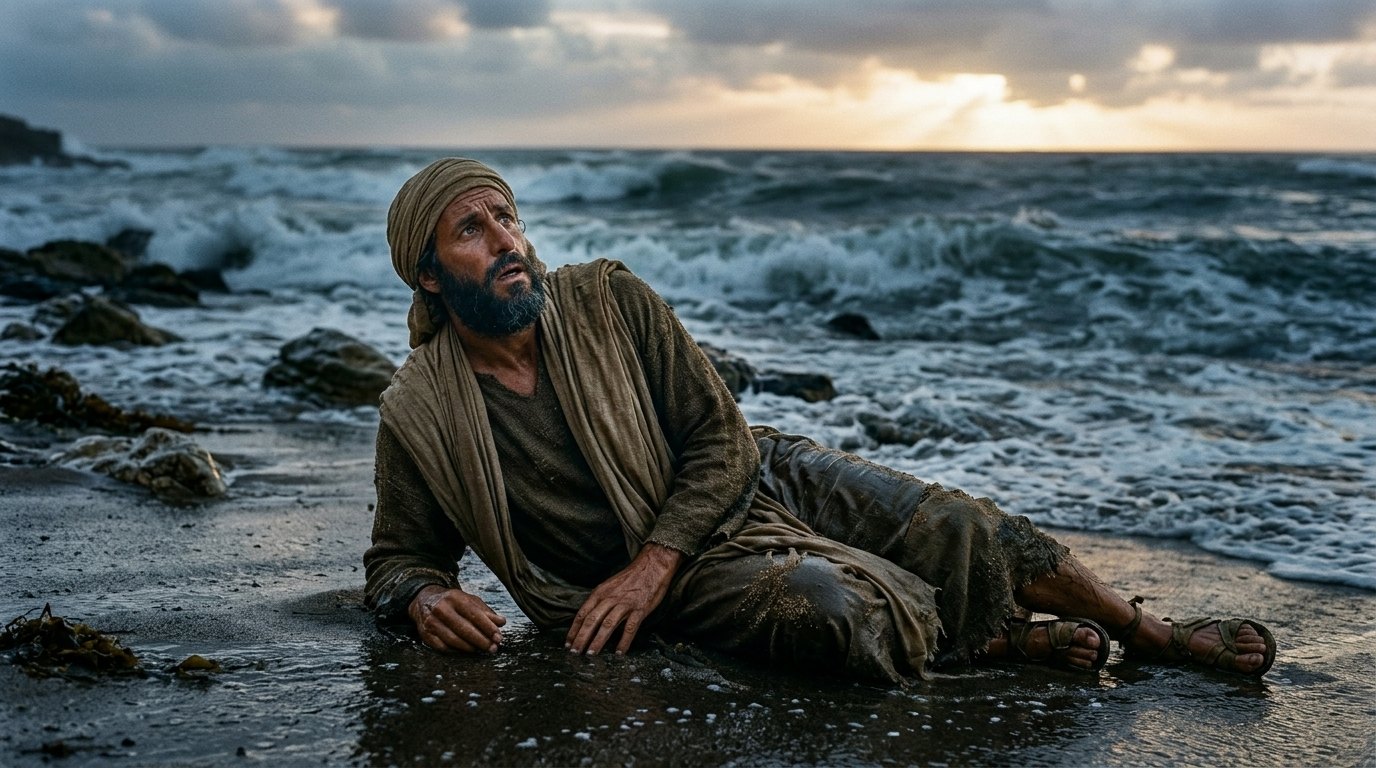
Matthew 12:40
40 For as Jonah was three days and three nights in the belly of a huge fish, so the Son of Man will be three days and three nights in the heart of the earth.
New International Version (NIV)
The answer
The Bible does not give the number three one fixed, hidden meaning. Sometimes it is simply an ordinary count. Where it carries emphasis, the passage’s context determines that emphasis. Its most important association is God’s saving work, especially Jesus’ resurrection on the third day.
The third day: Christ’s resurrection
Jonah spent three days and three nights inside the great fish (Jonah 1:17). Jesus applied that event to Himself: just as Jonah was in the fish, the Son of Man would be three days and three nights in the heart of the earth (Matthew 12:40).
This points to Jesus’ death, burial and resurrection. The gospel is that Christ died for our sins, was buried, and “he was raised on the third day according to the Scriptures” (1 Corinthians 15:3-4). The power lies in God’s act of raising Christ, not in the number itself.
Threefold emphasis in Scripture
- God’s perfect holiness: The seraphim cry, “Holy, holy, holy, is Yahweh of Armies!” (Isaiah 6:3). The threefold repetition gives overwhelming emphasis to God’s holiness.
- Established testimony: Under the law given to Israel, “At the mouth of two witnesses, or at the mouth of three witnesses, shall a matter be established” (Deuteronomy 19:15). The concern is sufficient, reliable testimony—not mystical power in a numeral.
- Father, Son and Holy Spirit: Jesus commands baptism “in the name of the Father and of the Son and of the Holy Spirit” (Matthew 28:19). The church’s confession of one God in three persons rests on God’s revelation of Himself throughout Scripture, not on a secret numerical code.
What three does not mean
Three is not a lucky number, a charm or a tool for predicting the future. Scripture condemns divination and fortune-telling (Deuteronomy 18:10-12). Nor does every occurrence of three symbolize the Trinity, resurrection or completeness. Where Scripture explains a number’s significance, that explanation should be followed; where it does not, a hidden meaning should not be invented.
Answered from Scripture · reviewed November 11, 2026
Across the pages of Scripture, the number three stands as a signature of divine completeness, firm testimony, and sovereign deliverance. Rather than operating as an esoteric cipher, it marks the definitive moments where God brings life out of death and establishes His sovereign decrees beyond human reversal. From the three Persons of the Godhead to Christ rising on the third day, the number repeatedly frames God's decisive work in history.
The Triune God
The Threefold Reality of the Divine Nature
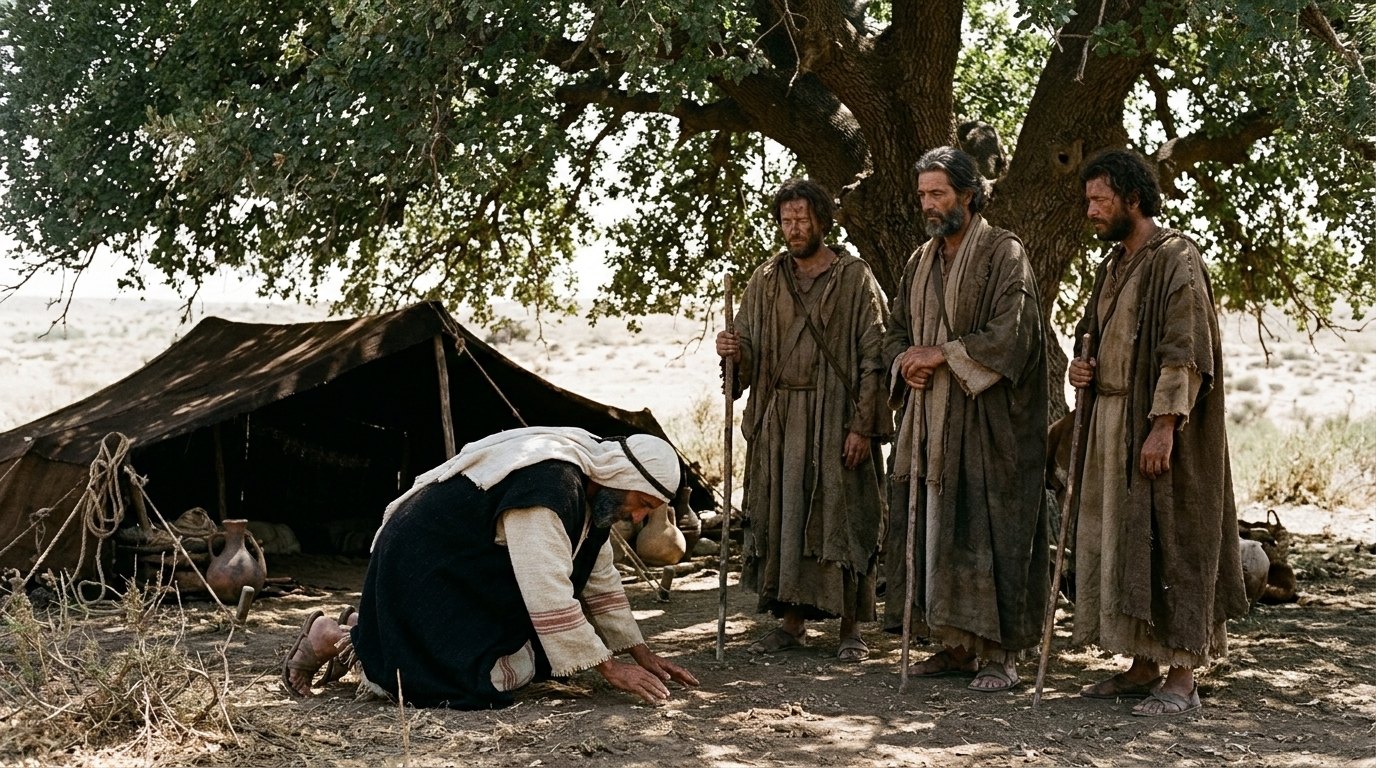
Therefore go and make disciples of all nations, baptizing them in the name of the Father and of the Son and of the Holy Spirit,
Matthew 28:19 (NIV)
Jesus commands baptism into the singular name shared eternally by three distinct Persons: Father, Son, and Holy Spirit.
In Matthew 28:19, Jesus commands His disciples to baptize all nations into the singular name of the Father, and of the Son, and of the Holy Spirit. This foundational commission unveils the cornerstone of biblical truth: God is one in essence yet eternally exists as three distinct Persons. The number three functions throughout Scripture as the divine signature of this Triune majesty. Long before the Incarnation, Isaiah witnessed the seraphim surrounding the heavenly throne crying out in Isaiah 6:3, exalting the superlative holiness of God three times over. This threefold cadence also anchors the priestly blessing of Numbers 6:24-26, where Aaron invokes the Lord three times to bless, keep, enlighten, and bestow peace upon His covenant people.
The New Testament repeatedly reflects this Trinitarian structure as the ground of redemption. Paul closes his pastoral appeal in 2 Corinthians 13:14 by invoking the grace of the Lord Jesus Christ, the love of God, and the communion of the Holy Spirit. At the Jordan River in Matthew 3:16-17, the Triune reality is made manifest to human senses as the Son ascends from the water, the Spirit descends like a dove, and the Father's voice speaks approval from heaven. John beholds this eternal nature reaffirmed in Revelation 4:8, where the living creatures never rest as they proclaim the Lord God Almighty who was, is, and is to come. Even in early redemptive encounters, such as Genesis 18:1-2 where three messengers appear before Abraham at Mamre, the divine presence casts its threefold shadow. Peter brings this full circle in 1 Peter 1:2, anchoring our salvation in the foreknowledge of the Father, the sanctifying work of the Spirit, and obedience to the blood of Jesus.
| Passage | What it says |
|---|---|
| Matthew 28:19 | Jesus commissions His disciples to baptize nations into the single name of the Father, Son, and Holy Spirit. |
| Isaiah 6:3 | The seraphim cry holy three times, exalting the superlative purity and majesty of the Lord of hosts. |
| Numbers 6:24-26 | The Aaronic blessing invokes the Lord three times to bless, keep, shine upon, and grant peace to Israel. |
| 2 Corinthians 13:14 | Paul concludes his letter invoking the grace of Christ, the love of God, and the fellowship of the Spirit. |
| Matthew 3:16-17 | At Jesus' baptism, the Son emerges from water, the Spirit descends as a dove, and the Father speaks. |
| Revelation 4:8 | Living creatures unceasingly proclaim the holiness of the Lord God Almighty who was, is, and is to come. |
| Genesis 18:1-2 | Three men appear to Abraham at Mamre, through whom the Lord speaks and promises a son. |
| 1 Peter 1:2 | Salvation is attributed to the foreknowledge of God the Father, sanctification of the Spirit, and obedience to Jesus Christ. |
The Third Day
Resurrection and Deliverance Beyond Human Hope
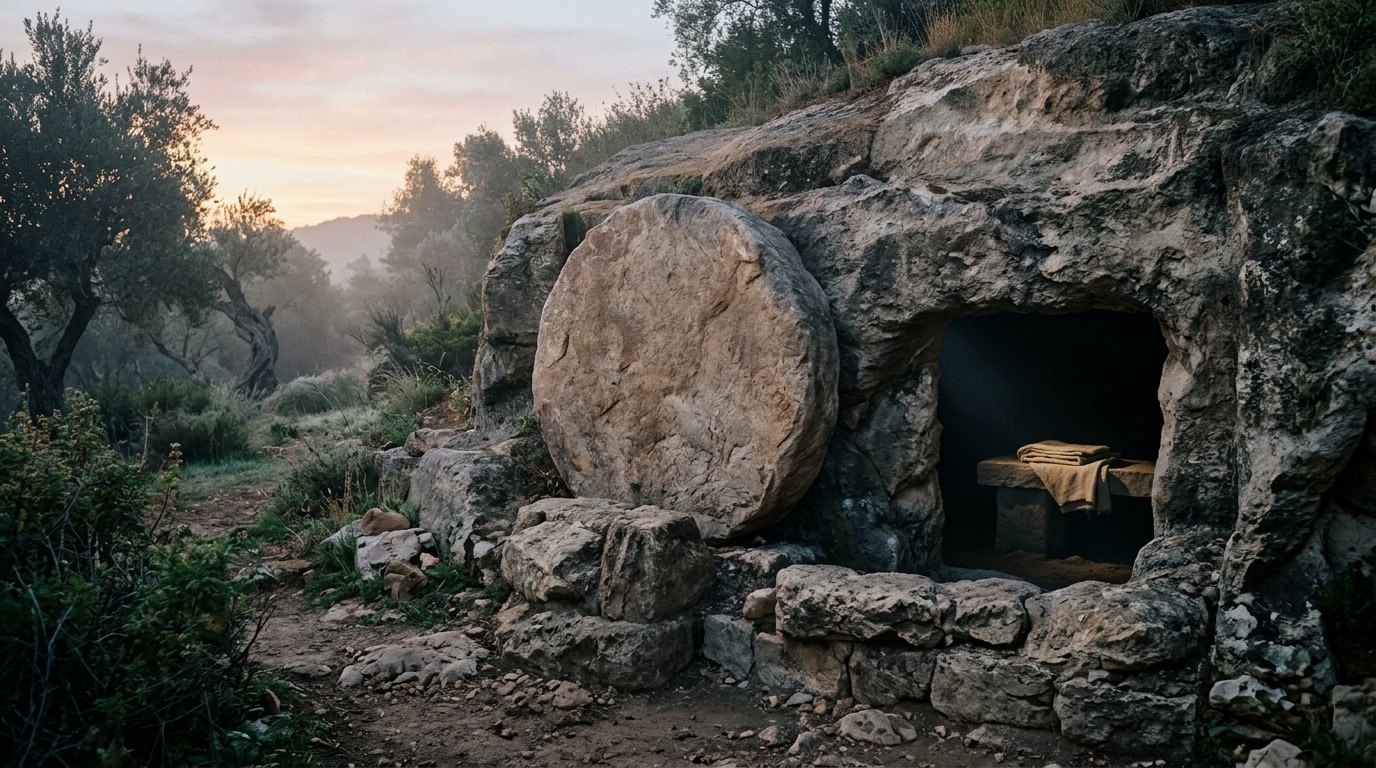
For as Jonah was three days and three nights in the belly of a huge fish, so the Son of Man will be three days and three nights in the heart of the earth.
Matthew 12:40 (NIV)
Jesus directly ties Jonah's three days in the deep to His own climactic burial and resurrection.
In Matthew 12:40, Jesus points directly to Jonah's ordeal to declare that the Son of Man would be three days and three nights in the heart of the earth. This was not an incidental timeframe; across biblical history, the third day marks the boundary where human hope expires and sovereign deliverance intervenes, fully realized when Christ broke death's grip in Matthew 28:1-6 and Luke 24:1-7. Jonah 1:17 records the prophet enclosed within the great fish for three days before being restored alive on dry land, an intentional type fulfilled in the resurrection of Christ recorded in 1 Corinthians 15:4. Centuries earlier in Genesis 22:4, Abraham lifted his eyes on the third day of travel to see Mount Moriah, where he received Isaac back figuratively from the dead as Hebrews 11:19 affirms. At Mount Sinai in Exodus 19:11, the Lord instructed Israel to wash and consecrate themselves, for on the third day He would descend in fire before their eyes, a divine gathering ultimately realized in the new covenant assembly of Hebrews 12:18-24. Hosea 6:2 prophesied that after two days the Lord would revive His people and raise them up on the third, pointing forward to the resurrected Lord of Luke 24:46.
Jesus repeatedly affirmed this pattern during His earthly ministry. In John 2:19, He challenged the temple authorities, stating that if they destroyed this temple, He would raise it in three days, speaking of His bodily resurrection (John 2:21-22). He warned His disciples in Matthew 16:21 and Matthew 17:23 of His impending execution and His promise to rise on the third day, leading His terrified enemies in Matthew 27:63-64 to post guards at His tomb. Paul summarizes this gospel core in 1 Corinthians 15:4, proclaiming that Christ rose on the third day according to the Scriptures. This rhythmic cadence echoes throughout the Old and New Testaments alike: Pharaoh restored the chief cupbearer after three days in Genesis 40:12-13; three days of terrifying darkness blanketed Egypt in Exodus 10:22-23; Joshua gave the people three days to prepare before crossing the Jordan in Joshua 1:11; Rahab hid the Hebrew spies for three days in Joshua 2:16; Hezekiah was promised healing to enter the temple on the third day in 2 Kings 20:5; Esther called a three-day fast before risking her life for her people in Esther 4:16; Mary and Joseph found young Jesus in the temple after three agonizing days of searching in Luke 2:46; and Saul endured three days of blindness and fasting in Acts 9:9 before receiving his sight and the Holy Spirit.
| Passage | What it says | Fulfilled |
|---|---|---|
| Matthew 12:40 | Jonah's three days in the fish foreshadow the Son of Man's three days in the heart of the earth. | Matthew 28:1-6, Luke 24:1-7 |
| Jonah 1:17 | The Lord appoints a great fish to swallow Jonah for three days and nights before spitting him out alive. | Matthew 12:40, 1 Corinthians 15:4 |
| Genesis 22:4 | On the third day of their journey, Abraham sees the place to offer Isaac and receives him back alive. | Hebrews 11:19 |
| Exodus 19:11 | The Lord instructs Israel to consecrate themselves to meet Him upon Mount Sinai on the third day. | Hebrews 12:18-24 |
| Hosea 6:2 | Prophecy declaring that after two days the Lord will revive His people and raise them up on the third. | 1 Corinthians 15:4, Luke 24:46 |
| John 2:19 | Jesus promises that if the temple of His body is destroyed, He will raise it in three days. | John 2:21-22 |
| Matthew 16:21 | Jesus foretells His suffering, execution in Jerusalem, and being raised to life on the third day. | Matthew 28:6 |
| Matthew 17:23 | Jesus reminds His disciples that after being killed, He will be raised on the third day. | Luke 24:6-7 |
| Matthew 27:63-64 | Chief priests demand a tomb guard because Jesus stated He would rise again after three days. | Matthew 28:2-4 |
| 1 Corinthians 15:4 | Paul summarizes the gospel testimony that Christ rose on the third day according to the Scriptures. | Luke 24:45-47 |
| Genesis 40:12-13 | Joseph interprets the three branches as three days before Pharaoh restores the cupbearer to his office. | |
| Exodus 10:22-23 | A thick darkness covers the land of Egypt for three days, prefiguring judgment before deliverance. | |
| Joshua 1:11 | Joshua commands the officers that within three days Israel will cross the Jordan to possess the land. | |
| Joshua 2:16 | Rahab directs the Israelite spies to hide in the hills three days until pursuers return. | |
| 2 Kings 20:5 | The Lord promises to heal Hezekiah, declaring that on the third day he will go up to the temple. | |
| Esther 4:16 | Esther instructs the Jews to fast three days before she appears unsummoned before the king. | |
| Luke 2:46 | After three days of searching, Joseph and Mary find young Jesus in the temple courts. | |
| Acts 9:9 | Saul remains blind for three days after encountering the risen Lord, neither eating nor drinking. |
Divine Certainty
Threefold Confirmation and Valid Testimony
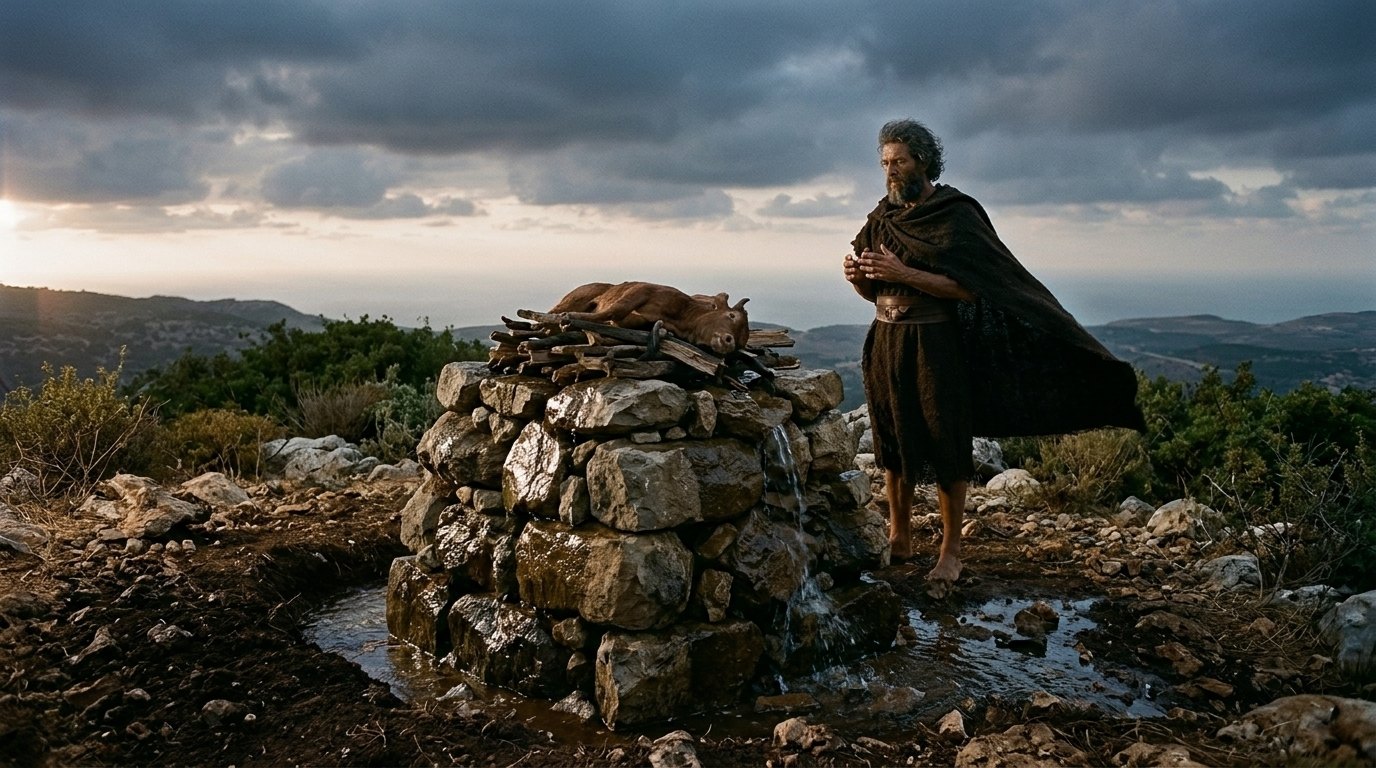
One witness is not enough to convict anyone accused of any crime or offense they may have committed. A matter must be established by the testimony of two or three witnesses.
Deuteronomy 19:15 (NIV)
God establishes that multiple witnesses are strictly required to seal any legal truth or judicial verdict.
In Deuteronomy 19:15, the Law of God establishes an uncompromising judicial standard: a matter must be confirmed by the testimony of two or three witnesses. The number three represents the threshold of absolute legal certainty, removing any accusation from the realm of human prejudice and sealing it with divine authority. Jesus directly incorporates this principle into church governance and pastoral gathering in Matthew 18:20, assuring His followers that where two or three gather in His name, His presence resides among them. The wisdom literature reflects this unyielding strength; Ecclesiastes 4:12 observes that while a solitary cord can be torn apart, a threefold cord is not quickly severed, picturing covenantal resilience under divine blessing.
Throughout redemption history, God repeats actions and calls three times whenever He is establishing an irrevocable truth. In Acts 10:16, the rooftop vision of the great sheet descending with all kinds of creatures was repeated three times before being drawn up into heaven, shattering Peter's hesitation and establishing the inclusion of the Gentiles beyond dispute. When Paul wrestled with demonic affliction in 2 Corinthians 12:8, he pleaded three times with the Lord to remove the thorn, receiving the definitive decree that divine grace is sufficient in human weakness. John summarizes the ground of our faith in 1 John 5:7-8 by listing three witnesses that testify on earth: the Spirit, the water, and the blood, standing together in absolute agreement. This certainty echoes when the Lord called young Samuel three times in the tabernacle in 1 Samuel 3:8 until Eli perceived the divine voice; when Elijah commanded water to be poured over the sacrifice three times in 1 Kings 18:34 to eliminate any human explanation for fire falling from heaven; when Daniel knelt in prayer three times daily toward Jerusalem in Daniel 6:10 as an uncompromising witness against pagan tyranny; and when Paul warned the Corinthian congregation in 2 Corinthians 13:1 that his upcoming third visit would establish every charge under the rule of two or three witnesses.
| Passage | What it says |
|---|---|
| Deuteronomy 19:15 | A charge is firmly established only on the evidence of two or three witnesses. |
| Matthew 18:20 | Where two or three gather in Jesus' name, He is present in their midst. |
| Ecclesiastes 4:12 | A threefold cord is not quickly broken, demonstrating the strength of divine and communal solidarity. |
| Acts 10:16 | The vision of the sheet containing clean and unclean beasts is repeated three times to Peter. |
| 2 Corinthians 12:8 | Paul pleads three times with the Lord to remove the thorn tormenting his flesh. |
| 1 John 5:7-8 | The Spirit, the water, and the blood agree as three witnesses testifying to Christ on earth. |
| 1 Samuel 3:8 | The Lord calls Samuel a third time before Eli perceives that the Lord is speaking to the boy. |
| 1 Kings 18:34 | Elijah commands water to be poured over the sacrifice on Mount Carmel a third time for decisive proof. |
| Daniel 6:10 | Daniel kneels in prayer toward Jerusalem three times a day as an unbroken witness to God. |
| 2 Corinthians 13:1 | Paul confirms his third visit by quoting the rule that every matter is established by two or three witnesses. |
Testing and Restoration
Trials, Denials, and the Call to Shepherd
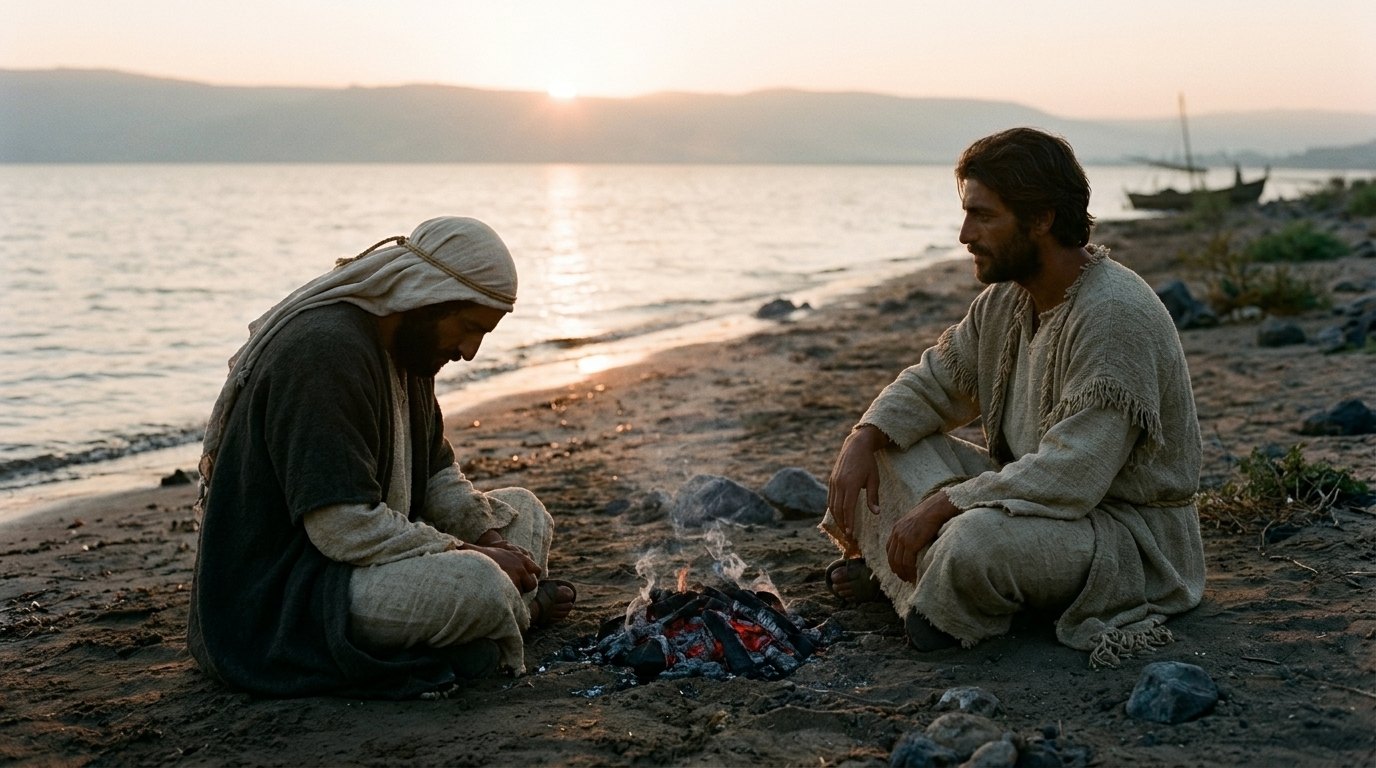
The third time he said to him, “Simon son of John, do you love me?” Peter was hurt because Jesus asked him the third time, “Do you love me?” He said, “Lord, you know all things; you know that I love you.” Jesus said, “Feed my sheep.
John 21:17 (NIV)
Jesus asks Peter if he loves Him three times, perfectly undoing Peter's three denials by the fire.
On the misty shores of the Sea of Galilee, Jesus asked Peter a third time, 'Do you love me?' (John 21:17). This deliberate threefold inquiry was not meant to crush the disciple, but to fully redeem and recommission him. Over a charcoal fire, Jesus matched Peter's previous threefold collapse with a threefold restoration, replacing guilt with the solemn charge to shepherd the flock of God. The number three frequently frames these profound junctions of spiritual trial, human failure, and total surrender to the will of God.
This pattern began at the outset of Christ's public ministry in Matthew 4:1-11, where Jesus was led into the barren desert to face three specific temptations from the adversary. Meeting each onslaught with the sword of Scripture, the spotless Son triumphed where Israel had stumbled in the wilderness. Conversely, human frailty came into sharp focus on the night of the Passion. In Matthew 26:34, Jesus foretold that before the rooster crowed, Peter would deny Him three times. The tragedy unfolded precisely as warned in Matthew 26:69-75, where Peter successively denied any connection to his Master before breaking down into bitter tears at the sound of the dawn rooster. Nearby in the darkness of Gethsemane, Matthew 26:39-44 records Jesus falling on His face to pray three separate times, agonizing over the cup of wrath yet yielding completely with the words, 'Your will be done.' Through these three prayers of total submission, the Savior marched resolutely toward the cross to rescue sinners broken by their own failures.
| Passage | What it says |
|---|---|
| John 21:17 | Jesus asks Peter a third time regarding his love, reinstating him to feed His sheep. |
| Matthew 4:1-11 | Jesus endures three specific temptations from the devil in the wilderness and refutes each with Scripture. |
| Matthew 26:34 | Jesus predicts that before the rooster crows, Peter will deny Him three distinct times. |
| Matthew 26:69-75 | Peter denies knowing Jesus three successive times in the courtyard before weeping bitterly at dawn. |
| Matthew 26:39-44 | Jesus prays three times in the Garden of Gethsemane, submitting entirely to the Father's will. |
Offices and Covenant Devotion
Triads of Sacred Identity and Total Worship
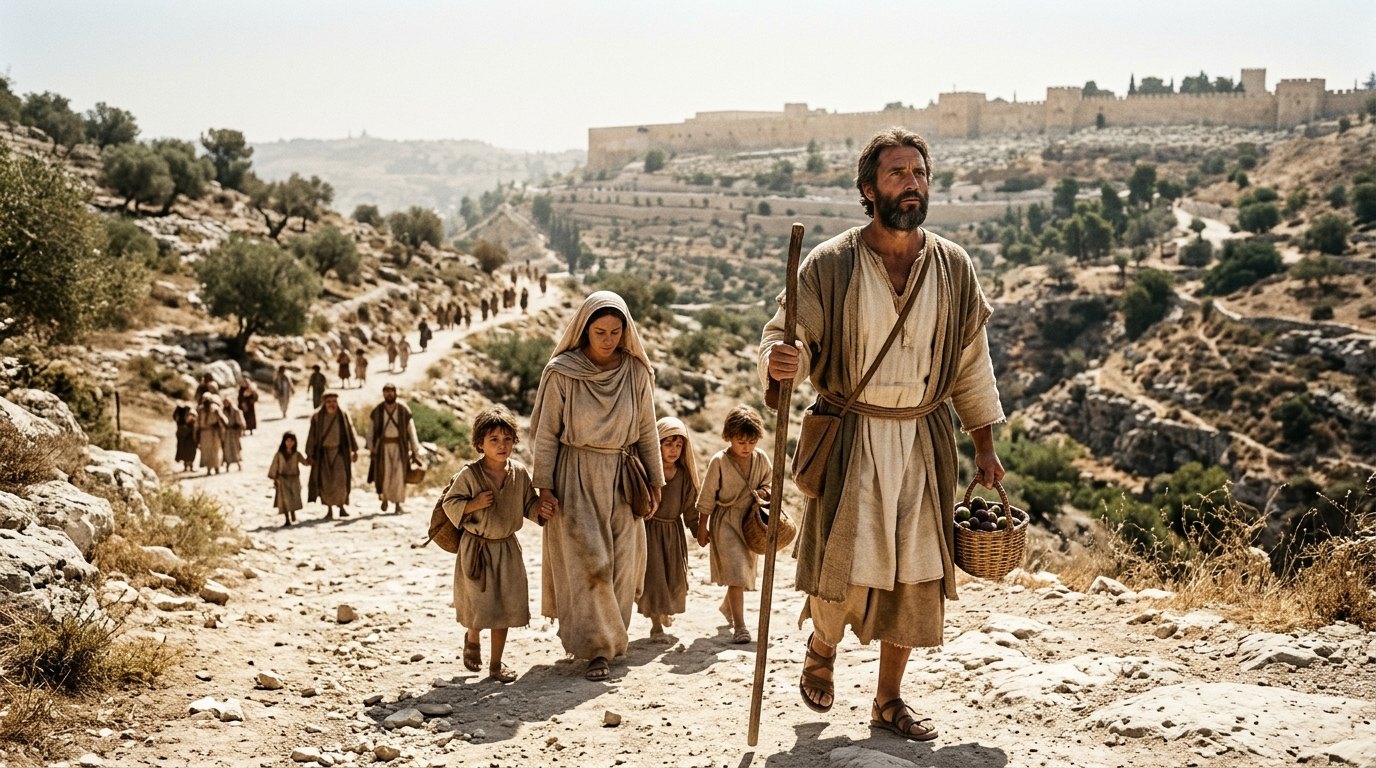
Love the LORD your God with all your heart and with all your soul and with all your strength.
Deuteronomy 6:5 (NIV)
The central confession of Israel demands wholehearted love expressed through every faculty of human life.
In Deuteronomy 6:5, Moses articulates the foundational heartbeat of biblical worship: "You shall love the LORD your God with all your heart and with all your soul and with all your might." This three-part demand covers every dimension of human life, calling for inward affection, vital life-breath, and practical strength to be surrendered to God. When Jesus identifies the greatest commandment in Matthew 22:37, He reaffirms this covenant triad—heart, soul, and mind—showing that true obedience requires the total devotion of the whole person.
This threefold pattern governs how God structures covenant life and leadership. Across the Old Testament, God establishes three distinct anointed offices—prophet, priest, and king—to mediate His covenant to Israel. Hebrews 1:1-3 reveals that Jesus Christ brings all three offices into their supreme and eternal fulfillment: He is the final Prophet who speaks God's definitive word, the spotless Priest who purges our sins, and the exalted King seated at the right hand of the Majesty on high.
Covenant time was likewise framed in threes. In Exodus 23:14-17, the Lord requires every male in Israel to journey to His sanctuary three times a year for the great pilgrimage feasts of Unleavened Bread, Harvest, and Ingathering, grounding the sacred year in an unshakeable rhythm of worship. In the New Covenant community, this spiritual symmetry matures into enduring inward reality. Paul concludes his soaring hymn in 1 Corinthians 13:13 by identifying the triune virtues that outlast all temporal gifts: faith, hope, and love. As he commends the Thessalonians in 1 Thessalonians 1:3, these three graces produce active fruit—work prompted by faith, labor driven by love, and steadfastness anchored in hope.
| Passage | What it says |
|---|---|
| Deuteronomy 6:5 | The Shema commands love for the Lord with all heart, all soul, and all might. |
| Matthew 22:37 | Jesus cites the greatest commandment to love God with all heart, soul, and mind. |
| Hebrews 1:1-3 | Christ embodies the climactic fulfillment of the threefold anointing as ultimate Prophet, Priest, and King. |
| Exodus 23:14-17 | All Israelite males are commanded to appear before the Lord three times a year for pilgrimage feasts. |
| 1 Corinthians 13:13 | Paul names the three enduring Christian virtues: faith, hope, and love. |
| 1 Thessalonians 1:3 | Paul remembers the Thessalonians' work of faith, labor of love, and steadfastness of hope. |
Pattern of Holiness
The Threefold Sanctuary and Sacred Furnishings

Behind the second curtain was a room called the Most Holy Place, which had the golden altar of incense and the gold-covered ark of the covenant. This ark contained the gold jar of manna, Aaron’s staff that had budded, and the stone tablets of the covenant.
Hebrews 9:3-4 (NIV)
It shows that God ordered the inner sanctuary around a threefold witness of his covenant presence and provision.
Behind the second veil of the earthly sanctuary rested the supreme witness of God's presence, described in Hebrews 9:3-4: "behind the second curtain was a second tent called the Most Holy Place, having the golden altar of incense and the ark of the covenant covered on all sides with gold, in which was a golden urn holding the manna, and Aaron's staff that budded, and the tablets of the covenant." These three distinct relics bore silent witness to God's miraculous provision, His chosen priesthood, and His righteous law.
From its floor plan to its furnishings, the dwelling place of God was designed with three-part architectural symmetry. Just as the sanctuary itself comprised three concentric zones of escalating holiness—the outer court, the Holy Place, and the Most Holy Place—its sacred objects mirrored this triadic order. In Exodus 25:31-33, Moses receives the pattern for the pure gold menorah, designed with three branches stretching out from each side of its central shaft, bearing blossom-shaped cups to cast light before the Lord.
Centuries later, when Solomon erected the permanent temple in Jerusalem, the same sacred structure endured. In 1 Kings 6:6, the chronicler notes that the surrounding storage annex was built in three tiered stories, ascending inward along the temple's outer walls. Every boundary and every sacred vessel reminded the worshiper that holiness possesses depth and gradation, drawing the redeemed step by step into the immediate presence of the Holy One.
| Passage | What it says |
|---|---|
| Exodus 25:31-33 | The golden lampstand features three branches emerging from each side to illuminate the Holy Place. |
| 1 Kings 6:6 | Solomon constructs three tiered side chambers surrounding the temple structure. |
| Hebrews 9:3-4 | The Ark of the Covenant houses three sacred tokens: the golden pot of manna, Aaron's rod, and the stone tablets. |
Where in the Bible
| Book | Passages |
|---|---|
| Genesis | 3 · Genesis 18:1-2, Genesis 22:4, Genesis 40:12-13 |
| Exodus | 4 · Exodus 19:11, Exodus 10:22-23, Exodus 23:14-17, Exodus 25:31-33 |
| Numbers | 1 · Numbers 6:24-26 |
| Deuteronomy | 2 · Deuteronomy 19:15, Deuteronomy 6:5 |
| Joshua | 2 · Joshua 1:11, Joshua 2:16 |
| 1 Samuel | 1 · 1 Samuel 3:8 |
| 1 Kings | 2 · 1 Kings 18:34, 1 Kings 6:6 |
| 2 Kings | 1 · 2 Kings 20:5 |
| Esther | 1 · Esther 4:16 |
| Ecclesiastes | 1 · Ecclesiastes 4:12 |
| Isaiah | 1 · Isaiah 6:3 |
| Daniel | 1 · Daniel 6:10 |
| Hosea | 1 · Hosea 6:2 |
| Jonah | 1 · Jonah 1:17 |
| Matthew | 12 · Matthew 28:19, Matthew 3:16-17, Matthew 12:40, Matthew 16:21, Matthew 17:23, Matthew 27:63-64, Matthew 18:20, Matthew 4:1-11, Matthew 26:34, Matthew 26:69-75, Matthew 26:39-44, Matthew 22:37 |
| Luke | 1 · Luke 2:46 |
| John | 2 · John 2:19, John 21:17 |
| Acts | 2 · Acts 9:9, Acts 10:16 |
| 1 Corinthians | 2 · 1 Corinthians 15:4, 1 Corinthians 13:13 |
| 2 Corinthians | 3 · 2 Corinthians 13:14, 2 Corinthians 12:8, 2 Corinthians 13:1 |
| 1 Thessalonians | 1 · 1 Thessalonians 1:3 |
| Hebrews | 2 · Hebrews 1:1-3, Hebrews 9:3-4 |
| 1 Peter | 1 · 1 Peter 1:2 |
| 1 John | 1 · 1 John 5:7-8 |
| Revelation | 1 · Revelation 4:8 |
The story in order
- Abraham meets three visitors (c. 2000 BC) · Genesis 18:1-2 · God appears in threefold form, promising a son.
- Israel consecrated for Sinai (c. 1446 BC) · Exodus 19:11 · Preparation for God's covenant on the third day.
- Aaronic blessing invoked (c. 1446 BC) · Numbers 6:24-26 · Threefold invocation for God's blessing and peace.
- Pilgrimage feasts commanded (c. 1446 BC) · Exodus 23:14-17 · Males appear before God three times annually.
- Elijah's decisive sacrifice (c. 874 BC) · 1 Kings 18:34 · Water poured three times proves God's power.
- Jonah swallowed and restored (c. 780 BC) · Jonah 1:17 · Three days in the fish foreshadows resurrection.
- Hezekiah healed (c. 715 BC) · 2 Kings 20:5 · Promise of healing and restoration on the third day.
- Daniel prays three times daily (c. 530 BC) · Daniel 6:10 · Consistent devotion as a witness to God.
- Esther's fast for audience (c. 478 BC) · Esther 4:16 · Three days of fasting precede bold action.
- Jesus' baptism (AD 27) · Matthew 3:16-17 · Son, Spirit, and Father manifest at the same time.
- Jesus tempted in wilderness (AD 27) · Matthew 4:1-11 · Jesus endures three temptations, refuting each.
- Jesus predicts Peter's denial (AD 30) · Matthew 26:34 · Foretelling Peter's threefold denial.
- Jesus prays in Gethsemane (AD 30) · Matthew 26:39-44 · Jesus prays three times, submitting to the Father.
- Jesus is raised from the dead (AD 30) · 1 Corinthians 15:4 · Christ's resurrection on the third day is central.
The Third Day: Resurrection and Deliverance
| Event | Significance | Passage |
|---|---|---|
| Jonah in the fish | Foreshadows Christ's burial and resurrection | Matthew 12:40 |
| Abraham sees the place to sacrifice Isaac | Receives Isaac back alive on the third day | Genesis 22:4 |
| Israel to meet God at Sinai | Consecration and divine encounter on the third day | Exodus 19:11 |
| Christ's resurrection | The definitive act of deliverance and new life | 1 Corinthians 15:4 |
| Hezekiah's healing | Restoration and life granted on the third day | 2 Kings 20:5 |
| Jesus found in the temple | Discovered after three days of searching | Luke 2:46 |
Threefold Confirmation for Divine Certainty
| Context | Principle | Example | Passage |
|---|---|---|---|
| Legal testimony | A charge is established by two or three witnesses | Deuteronomy 19:15 | Deuteronomy 19:15 |
| Community in Christ's name | Jesus is present where two or three gather | Matthew 18:20 | Matthew 18:20 |
| Divine communication | God calls Samuel a third time | 1 Samuel 3:8 | 1 Samuel 3:8 |
| Apostolic testimony | The Spirit, water, and blood agree | 1 John 5:7-8 | 1 John 5:7-8 |
| Paul's apostolic authority | Confirmed by two or three witnesses | 2 Corinthians 13:1 | 2 Corinthians 13:1 |
Triads of Essential Christian Life
| Category | Elements | Biblical Basis | Passage |
|---|---|---|---|
| Love for God | Heart, soul, and might/mind | Deuteronomy 6:5; Matthew 22:37 | Deuteronomy 6:5 |
| Enduring Virtues | Faith, hope, and love | 1 Corinthians 13:13 | 1 Corinthians 13:13 |
| Christian Work | Work of faith, labor of love, steadfastness of hope | 1 Thessalonians 1:3 | 1 Thessalonians 1:3 |
| Christ's Offices | Prophet, Priest, and King | Hebrews 1:1-3 | Hebrews 1:1-3 |
Key words
- Triune God (Matthew 28:19)
- The one God eternally existing in three co-equal Persons: Father, Son, and Holy Spirit. · Matthew 28:19
- Third Day (Hosea 6:2)
- A recurring motif signifying divine intervention, resurrection, and decisive deliverance. · Hosea 6:2
- Witnesses (Deuteronomy 19:15)
- Testimony or evidence, often requiring two or three to establish a matter's truth. · Deuteronomy 19:15
- Threefold Cord (Ecclesiastes 4:12)
- Symbolizes strength and unbreakable solidarity, particularly in communal or divine relationships. · Ecclesiastes 4:12
- Faith, Hope, Love (1 Corinthians 13:13)
- The three enduring virtues central to the Christian life and walk. · 1 Corinthians 13:13
- Prophet, Priest, King (Hebrews 1:1-3)
- The threefold anointing and offices fulfilled supremely in Jesus Christ. · Hebrews 1:1-3
Recognizing the biblical weight of the number three guards the believer against superstition while anchoring the soul in God's proven pattern of salvation. The third day reminds us that when human resources are utterly exhausted and hope seems dead, the Lord steps in to redeem. We rest in the complete and enduring victory of the Triune God, who transforms total despair into everlasting life.
50 passages, each cited once.
Scripture cited
- Matthew 12:40
- Jonah 1:17
- Isaiah 6:1-3
- Matthew 28:18-20
- 1 Corinthians 15:1-4
- Deuteronomy 19:15
- Deuteronomy 18:10-12