What does the number 40 mean in the Bible?
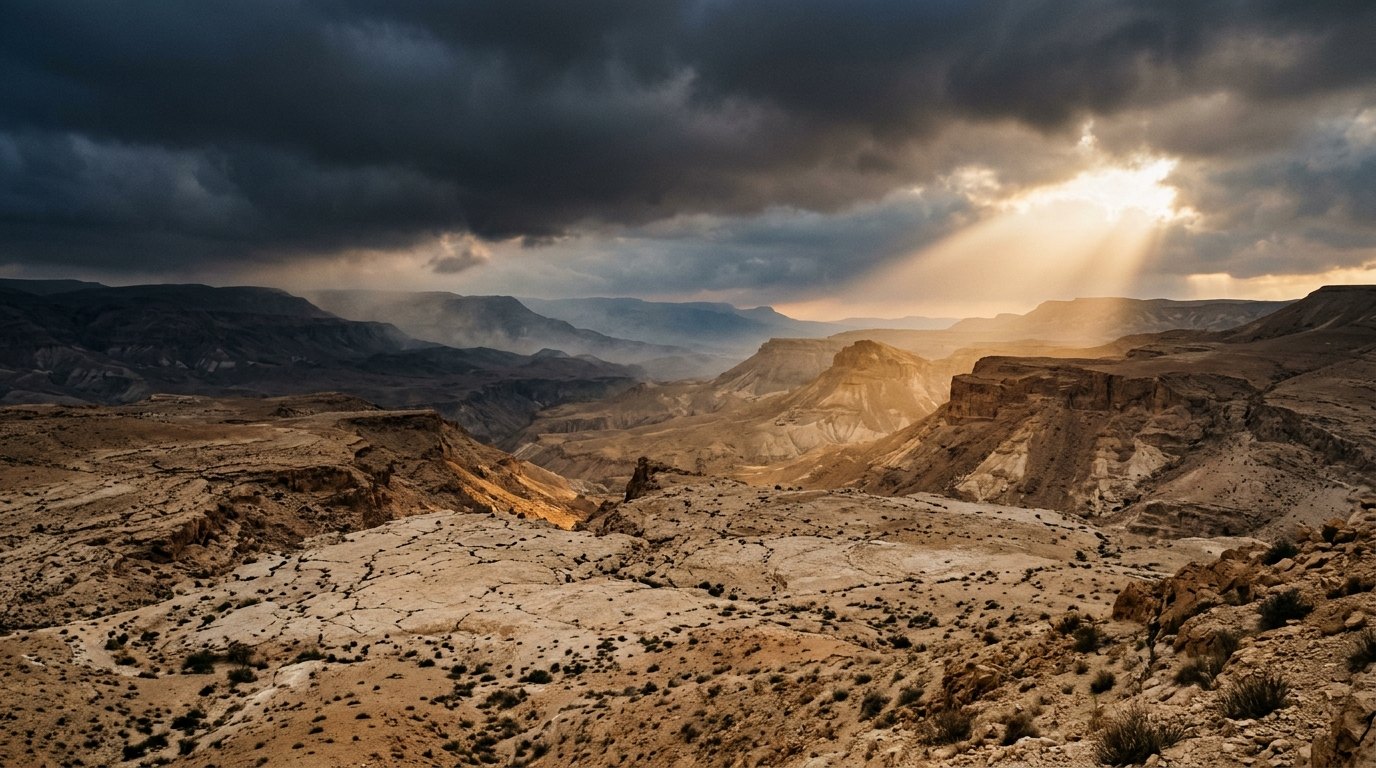
Matthew 4:1-2
1 Then Jesus was led by the Spirit into the wilderness to be tempted by the devil.
2 After fasting forty days and forty nights, he was hungry.
New International Version (NIV)
The answer
Forty often marks a complete, God-appointed period of testing, judgment, preparation, or transition. It is not a secret numerical code, however; sometimes it simply records the actual length of an event or reign.
The meaning comes from how each passage uses it:
- Judgment and testing: The flood lasted forty days in Genesis 7:17. Israel later wandered for forty years as discipline for its unbelief, corresponding to the forty days the spies explored the land (Numbers 14:33-34).
- Fasting and preparation: Moses remained with Yahweh on Sinai for forty days and nights without eating or drinking while the covenant commandments were written (Exodus 34:27-28). Jesus was led by the Spirit into the wilderness, where he fasted forty days and nights and was tempted by the devil (Matthew 4:1-2).
- An opportunity for repentance: Jonah announced that Nineveh would be overthrown in forty days. The warning led the people to believe God, fast, and humble themselves (Jonah 3:4-5).
- Resurrection witness and preparation: After his resurrection, Jesus appeared to his apostles over forty days, providing many proofs that he was alive and teaching them about God’s kingdom (Acts 1:3).
- An ordinary historical duration: David reigned over Israel for forty years—seven in Hebron and thirty-three in Jerusalem (1 Kings 2:10-11). The text gives no indication that this total is a riddle to decode.
The recurring pattern is therefore a full and significant season, frequently involving trial or preparation, rather than one definition that fits every occurrence. Forty should not be treated as magical or used to invent hidden predictions. The literal event comes first, and any wider significance must be established from the passage itself and the rest of Scripture.
Answered from Scripture · reviewed November 11, 2026
Across the span of Scripture, the number forty consistently marks a full, divinely appointed period of probation, judgment, testing, or preparation. Far from a random quantity, forty defines a complete season of transition where God refines His servants, judges rebellion, and establishes a renewed order. Tracing this number from Genesis to Acts reveals the blueprint of God's patient discipline and the ultimate triumph of Christ.
Judgment and Cleansing
Waters of Cleansing and Warning of Ruin

And rain fell on the earth forty days and forty nights.
Genesis 7:12 (NIV)
The rain fell forty days and nights to enact God's righteous judgment and cleanse the earth for a new beginning.
When judgment descends upon an unrepentant world, God measures out the hour with exact precision. In Genesis 7:12, the skies break open and the rain falls upon the earth for forty days and forty nights, inaugurating a complete, purifying catastrophe that washes away universal wickedness. This span was neither accidental nor indeterminate. God had already declared in Genesis 7:4 that after seven days He would cause it to rain for forty days and nights to blot out every living thing He had made. As the deluge surged, Genesis 7:17 records that the waters increased for forty days, bearing the ark upward until it rested secure above the drowned hills. Even as judgment gave way to mercy, the same measured waiting remained: Genesis 8:6 recounts how Noah waited another forty days after the mountain peaks broke the surface before unlatching the window to send out the raven and the dove. The forty-day span stands as the full threshold between an old, ruined order and the cleansed world emerging under God's covenant rainbow.
The same divine clock marks prophetic warning and chastisement across the centuries. In Jonah 3:4, the reluctant prophet walks through the pagan capital of Assyria with a single, unadorned sentence: Yet forty days, and Nineveh shall be overthrown. God granted that brutal empire a defined window of forty days—a full term of probation—wherein real repentance could avert total destruction. In a different theater of judgment, the prophet in Ezekiel 4:6 is commanded to lie on his right side for forty days, explicitly bearing the iniquity of the house of Judah, God assigning him a day for each appointed year of their covenant guilt. So too with the great proud empire of the Nile: across Ezekiel 29:11-13, God pronounces that Egypt's soil will lie uncrossed by foot of man or beast for forty years, its cities desolate and its people scattered (Ezekiel 29:11, Ezekiel 29:12), until the full term of forty years expires and the Lord restores their captivity (Ezekiel 29:13). In flood, prophecy, and exile, forty marks the unyielding boundary where holy justice purges rebellion before renewal can begin.
| Passage | What it says |
|---|---|
| Genesis 7:4 | God gives Noah seven days before bringing rain for forty days and forty nights to blot out every living thing. |
| Genesis 7:12 | The rain falls upon the earth for forty days and forty nights during the great deluge. |
| Genesis 7:17 | The flood remains upon the earth forty days as the waters increase and lift the ark above the ground. |
| Genesis 8:6 | Noah waits forty days after the mountain peaks appear before opening the ark's window to send out birds. |
| Jonah 3:4 | Jonah proclaims to Nineveh that forty days remain before the city will be overthrown. |
| Ezekiel 4:6 | Ezekiel lies on his right side forty days, bearing Judah's iniquity for a day for each year appointed. |
| Ezekiel 29:11-13 | Egypt is judged to lie desolate for forty years before God gathers her people from the nations. |
| Ezekiel 29:11 | God decrees that the land of Egypt will remain uninhabited and desolate for forty years. |
| Ezekiel 29:12 | Egypt's cities are appointed to be desolate forty years while its people are scattered among nations. |
| Ezekiel 29:13 | At the end of forty years the Lord promises to gather the dispersed Egyptians from among the peoples. |
Probation and Discipline
Forty Years in the Wilderness

For forty years—one year for each of the forty days you explored the land—you will suffer for your sins and know what it is like to have me against you.’
Numbers 14:34 (NIV)
God explicitly establishes forty years of wilderness wandering as the exact penalty corresponding to the forty days of spying the land.
No historical episode sets forth the sobering weight of divine probation more vividly than the wilderness wanderings. In Numbers 14:34, God pronounces the foundational sentence upon a rebellious nation: according to the number of the forty days in which they spied out the land, Israel would bear their iniquity forty years—a year for each day. The crisis had ignited in Numbers 13:25, when the reconnaissance party returned after forty days of exploring Canaan, bringing back fruit alongside an evil report of unbelief. Because the people wept and refused to trust Yahweh, God decreed in Numbers 14:33-34 that their children would wander as shepherds until the carcasses of the faithless fell in the desert, a pattern Paul later highlights as an enduring warning (1 Corinthians 10:5-11; Hebrews 3:16-19). God’s holy wrath against that generation endured until every man of war died out (Numbers 32:13; Joshua 5:6; Hebrews 3:17).
Yet this prolonged season was equally a furnace of divine preservation and fatherly instruction. Moses reminds the new generation in Deuteronomy 2:7 that throughout these forty years in the vast wasteland, the Lord God walked with them and they lacked nothing. According to Deuteronomy 8:2-4, God led them forty years to humble and test their hearts, feeding them with daily manna so they might learn that man does not live by bread alone—a scripture Christ Himself wielded to defeat the tempter (Matthew 4:4). Day after day, their garments never wore out and their feet never swelled (Deuteronomy 29:5; Nehemiah 9:21), while the daily bread of heaven sustained them for four full decades (Exodus 16:35). Even when Israel wavered into idolatry, as the prophets and apostles later lamented (Amos 2:10; Amos 5:25; Acts 7:42-43; Acts 13:18), and grieved God's Spirit for forty years (Psalms 95:10; Hebrews 3:9-10), the wilderness remained the crucible where God forged a covenant people, delivering them by the hand of Moses through forty years of wonder and discipline (Acts 7:36).
| Passage | What it says | Fulfilled |
|---|---|---|
| Numbers 13:25 | The twelve leaders return from spying out the Promised Land after a search of forty days. | |
| Numbers 14:33-34 | Israel is sentenced to wander forty years, a year for each day of unbelief following the spies' mission. | 1 Corinthians 10:5-11, Hebrews 3:16-19 |
| Numbers 32:13 | The Lord makes Israel wander forty years until the entire generation that did evil has perished. | Hebrews 3:17 |
| Deuteronomy 2:7 | Moses reminds the people that God has been with them through the great wilderness these forty years lacking nothing. | |
| Deuteronomy 8:2-4 | God led Israel forty years to humble and test them, providing manna and preserving their clothing and feet. | Matthew 4:4 |
| Deuteronomy 29:5 | Moses testifies that during forty years in the wilderness their clothes did not wear out nor their sandals decay. | |
| Joshua 5:6 | Israel walked forty years until all the men of war died because they did not obey the voice of the Lord. | |
| Psalms 95:10 | The Lord grieved with that generation forty years, describing them as a people whose hearts err continually. | Hebrews 3:9-10 |
| Amos 2:10 | The Lord recounts leading Israel forty years in the wilderness to possess the land of the Amorite. | |
| Amos 5:25 | The prophet challenges whether Israel brought true sacrifices to God during their forty wilderness years. | Acts 7:42-43 |
| Acts 7:36 | Stephen testifies that Moses led the people out, working wonders in Egypt, the Red Sea, and forty years in the wilderness. | |
| Acts 13:18 | Paul proclaims that God put up with Israel's ways in the wilderness for a period of about forty years. | |
| Exodus 16:35 | Israel ate manna forty years until they reached the border of the land of Canaan. | |
| Nehemiah 9:21 | Forty years God sustained Israel in the wilderness so that they lacked nothing and their clothes did not wear out. | |
| Hebrews 3:9 | God recalls how the wilderness generation saw His works forty years yet rebelled. | |
| Hebrews 3:17 | The writer asks with whom God was provoked for forty years, answering it was those who sinned. |
Communion and Revelation
Moses and Elijah on the Holy Mountain

Then Moses entered the cloud as he went on up the mountain. And he stayed on the mountain forty days and forty nights.
Exodus 24:18 (NIV)
Moses enters the thick cloud on Mount Sinai for forty days and forty nights to receive the divine testimony.
Before God manifests His glory or establishes His holy covenant, He calls His chosen mediators into solitary consecration. In Exodus 24:18, Moses ascends Mount Sinai, enters the thick darkness of the fiery cloud, and remains there forty days and forty nights. On that summit, suspended between heaven and earth, Moses neither ate bread nor drank water, sustained solely by the presence of Yahweh while receiving the stone tablets inscribed by the finger of God (Exodus 34:28; Deuteronomy 9:9). This forty-day fast was not a mere feat of endurance, but an entrance into intimate fellowship with the living God, prefiguring the total consecration of Christ prior to His public ministry (Matthew 4:2).
When Israel broke the covenant below by worshiping the golden calf, the forty-day pattern immediately shifted from communion to intense, sacrificial intercession. In Deuteronomy 9:18, Moses casts himself down before the Lord for another forty days and nights without food or drink, pleading that God would not destroy the stubborn nation. Again in Deuteronomy 9:25 and Deuteronomy 10:10, Moses recounts how he prostrated himself before the Lord during that second forty-day ascent, and how the Lord heard his cry, averted His wrath, and renewed the shattered tablets of the Law. Centuries later, when the prophet Elijah fled into the wilderness exhausted and despairing, God sustained him with bread baked on coals and a jar of water. In the strength of that miraculous nourishment, Elijah traveled forty days and forty nights across the harsh desert until he reached Horeb, the very mount of God (1 Kings 19:8). On that sacred ground, Elijah heard the still, small voice, discovering that forty days of trial invariably culminate in fresh divine revelation and renewed kingdom purpose.
| Passage | What it says | Fulfilled |
|---|---|---|
| Exodus 24:18 | Moses goes up the mountain into the cloud and remains there forty days and forty nights. | |
| Exodus 34:28 | Moses stays with the Lord forty days and forty nights without bread or water, writing the words of the covenant. | Matthew 4:2 |
| Deuteronomy 9:9 | Moses recalls remaining on the mountain forty days and nights without food or drink to receive the stone tablets. | |
| Deuteronomy 9:18 | Moses falls down before the Lord forty days and nights in intercession after the sin of the golden calf. | |
| Deuteronomy 9:25 | Moses reiterates his forty days and nights of prostration before God on behalf of Israel. | |
| Deuteronomy 10:10 | Moses stays on the mountain forty days and nights the second time, and the Lord listens to his plea. | |
| 1 Kings 19:8 | Elijah journeys forty days and forty nights in the strength of angelic food until reaching Horeb, the mount of God. | Matthew 4:2 |
Rulers and Generations
Lifespans, Reigned Decades, and Oppressions
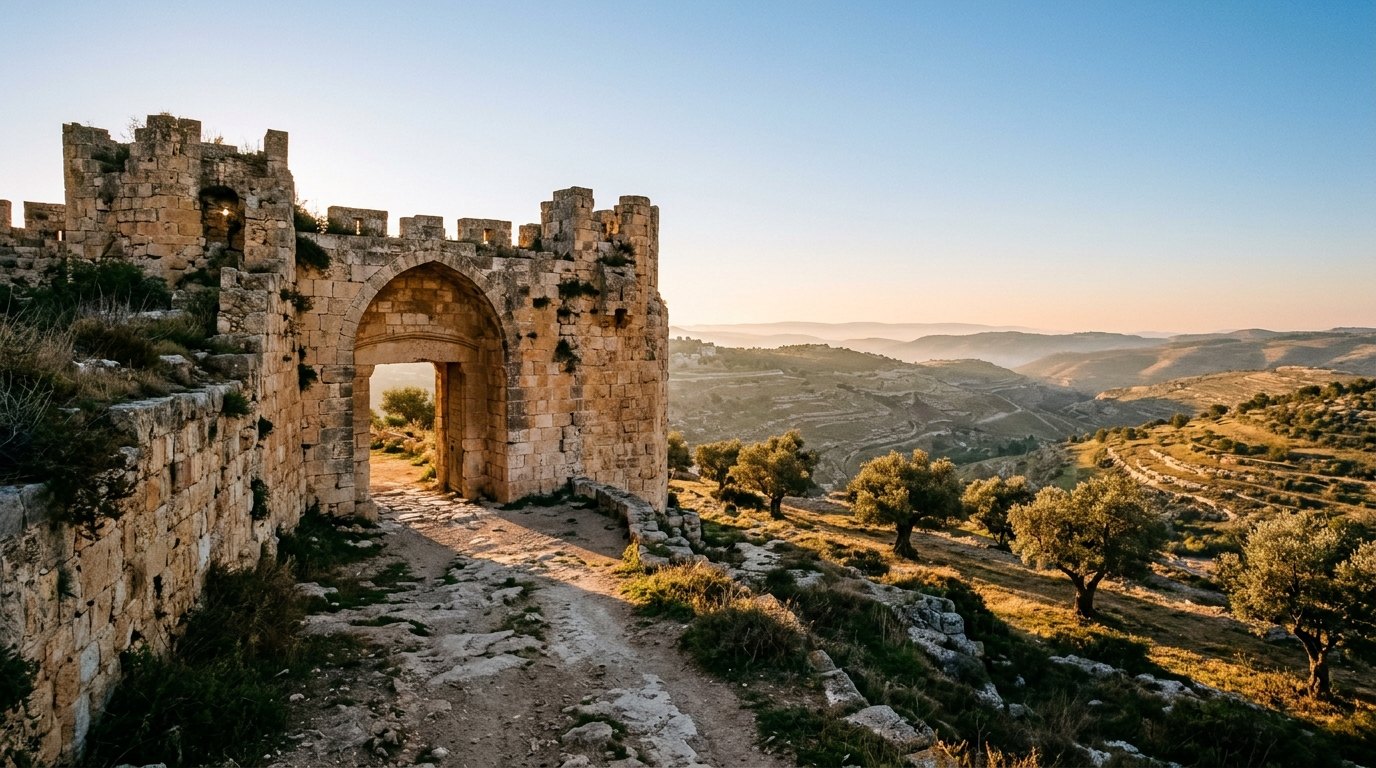
David was thirty years old when he became king, and he reigned forty years.
2 Samuel 5:4 (NIV)
David's forty-year reign marks the full standard era of God's covenantal kingdom in Israel.
Across the historical books of Scripture, forty years designates the standard measure of a mature lifespan, a generation of testing, or a complete era of rule. Personal transitions frequently pivot upon this milestone. Both Isaac (Genesis 25:20) and Esau (Genesis 26:34) were forty years old when they married, marking the threshold of family headship and covenant responsibility. When Jacob died in Egypt, Genesis 50:3 records that forty full days were required for his embalming, according to the formal Egyptian period of mourning. Decades later, Caleb could boldly testify that he was forty years old when Moses sent him to spy out the land (Joshua 14:7), retaining that same fierce, God-given vigor until his old age. Even the life of Moses is architecturally framed by forty-year segments: Stephen recounts that Moses was forty when he visited his brethren in Egypt (Acts 7:23), spent another forty years in exile in Midian (Acts 7:30), and then led the nation for forty years in the wilderness.
In the public governance of Israel, forty years defined either the full endurance of an oppression or the complete tenure of a godly leader. In the era of the judges, the land rested forty years under Othniel (Judges 3:11), forty years under Deborah and Barak (Judges 5:31), and forty years under Gideon (Judges 8:28); conversely, when the people forsook Yahweh, He delivered them into the hand of the Philistines for a full forty-year chastisement (Judges 13:1). Eli judged Israel for forty years before his tragic demise (1 Samuel 4:18), and Goliath menaced the armies of the living God for forty consecutive days morning and evening before David struck him down (1 Samuel 17:16). When the monarchy was inaugurated, God gave them Saul for forty years (Acts 13:21), while Ish-bosheth was forty when he seized power (2 Samuel 2:10). Above all, 2 Samuel 5:4 establishes the golden standard of the united kingdom: David reigned forty years—reiterated in 1 Kings 2:11 and 1 Chronicles 29:27—a timespan matched exactly by his son Solomon (1 Kings 11:42; 2 Chronicles 9:30) and later mirrored in the forty-year reign of Joash (2 Kings 12:1; 2 Chronicles 24:1). God sets the times and the boundaries, granting each ruler and generation a full, unshortened season to fulfill His sovereign counsel.
| Passage | What it says |
|---|---|
| Genesis 25:20 | Isaac is forty years old when he takes Rebekah to be his wife. |
| Genesis 26:34 | Esau is forty years old when he marries Judith and Basemath, grieving his parents. |
| Genesis 50:3 | Forty days are fulfilled for the embalming of Jacob according to the customary burial process. |
| Joshua 14:7 | Caleb recalls being forty years old when Moses sent him from Kadesh-barnea to spy out the land. |
| Judges 3:11 | The land has rest for forty years following the deliverance wrought by Othniel. |
| Judges 5:31 | The land enjoys rest for forty years after the victory of Deborah and Barak over Sisera. |
| Judges 8:28 | The land enjoys quietness forty years in the days of Gideon after Midian's defeat. |
| Judges 13:1 | The Lord delivers Israel into the hand of the Philistines forty years because of their renewed evil. |
| 1 Samuel 4:18 | Eli dies after judging Israel for forty years when he hears that the ark of God has been taken. |
| 1 Samuel 17:16 | Goliath the Philistine presents himself morning and evening for forty days to defy Israel's army. |
| 2 Samuel 2:10 | Ish-bosheth is forty years old when he begins to reign over Israel following Saul's death. |
| 2 Samuel 5:4 | David reigns forty years over Israel, seven years in Hebron and thirty-three in Jerusalem. |
| 1 Kings 2:11 | The days that David reigned over Israel total forty years before his death. |
| 1 Kings 11:42 | Solomon reigns in Jerusalem over all Israel for forty years. |
| 2 Kings 12:1 | Joash begins to reign in the seventh year of Jehu and reigns forty years in Jerusalem. |
| Acts 7:23 | Stephen explains that it entered Moses' heart to visit his brethren when he was forty years old. |
| Acts 7:30 | Stephen notes that forty years elapsed in Midian before the Angel appeared to Moses in the burning bush. |
| Acts 13:21 | Paul records that God gave Israel Saul the son of Kish as king for forty years. |
| 1 Chronicles 29:27 | David's entire reign over Israel lasted forty years, seven in Hebron and thirty-three in Jerusalem. |
| 2 Chronicles 9:30 | Solomon reigned in Jerusalem over all Israel forty years before resting with his fathers. |
| 2 Chronicles 24:1 | Joash was seven years old when he became king, and he reigned forty years in Jerusalem. |
The True Israel
Christ's Wilderness Victory and Resurrection Commission
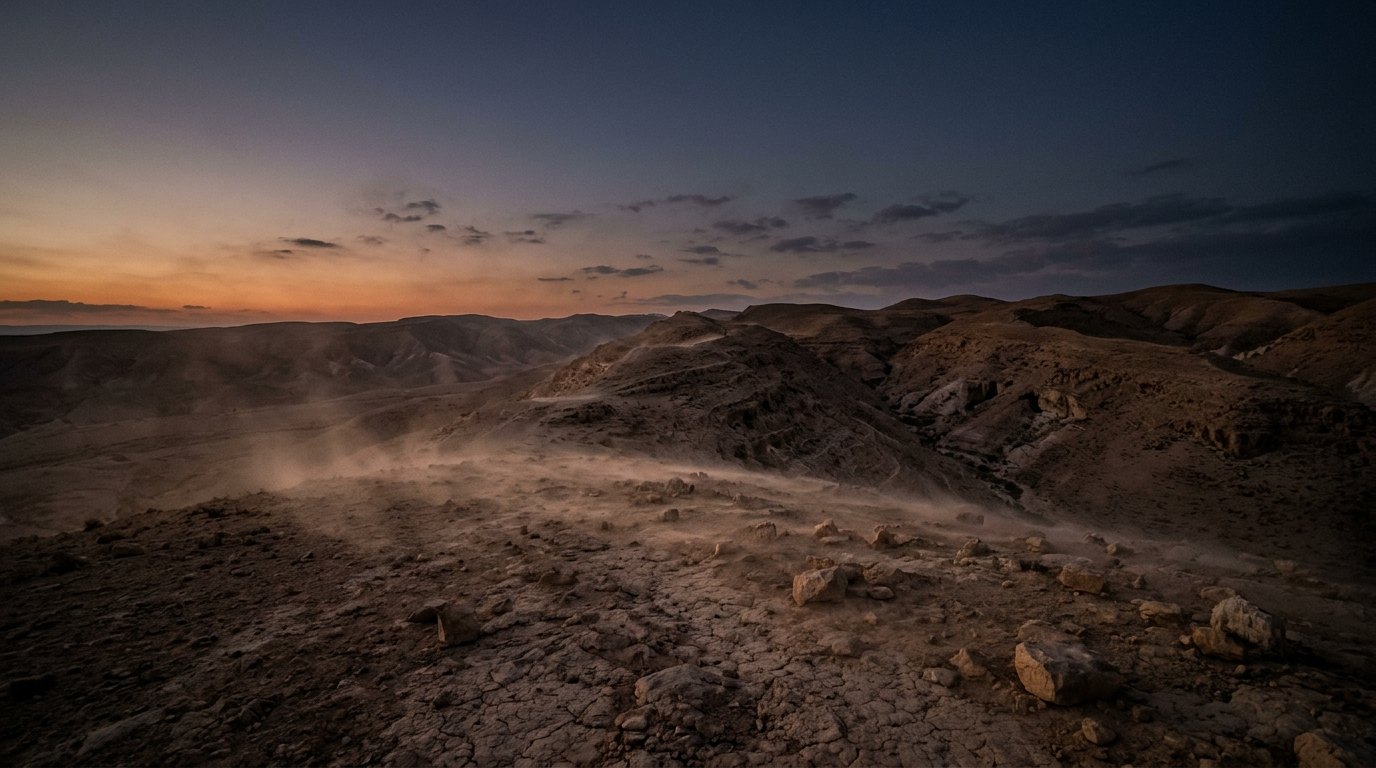
Then Jesus was led by the Spirit into the wilderness to be tempted by the devil. After fasting forty days and forty nights, he was hungry.
Matthew 4:1-2 (NIV)
Jesus fasts forty days and nights in the wilderness, triumphing where Israel failed and fulfilling the type of Moses.
In Matthew 4:1-2, the Lord Jesus is led by the Spirit into the Judean wilderness, fasting forty days and forty nights to endure the assault of the devil. Where ancient Israel faltered during forty years in the desert, and where Moses fasted atop Sinai receiving the Law, the Son of God stands as the true Israel and the greater Prophet. He faces hunger and the adversary's cunning without compromise, finding his perfect vindication as our compassionate High Priest who was tempted in all things yet remained without sin (Hebrews 2:18; Hebrews 4:15).
The Gospel of Mark 1:12-13 records that the Holy Spirit drove Jesus into the barren wild, dwelling among savage beasts while angels ministered to Him across forty days of testing (Hebrews 4:15). Likewise, Luke 4:1-2 stresses that Jesus, filled with the Holy Spirit, consumed nothing during those forty decisive days, overcoming every enticement of pride and flesh through the written Word of God (Romans 5:19). Christ's unyielding obedience reversed Adam's catastrophic failure in the garden and Israel's unbelief in the sands.
Following His victorious resurrection, the number forty returns to mark the final preparatory era of Christ's earthly presence. In Acts 1:3, the risen Christ presents Himself alive by many infallible proofs, appearing to His disciples throughout forty days and instructing them concerning the kingdom of God before His glorious ascension (Acts 1:9-11; 1 Corinthians 15:4-8). This final forty-day span transitions the apostles from mourning pupils into empowered witnesses, equipped to take the gospel to the ends of the earth.
| Passage | What it says | Fulfilled |
|---|---|---|
| Matthew 4:1-2 | Jesus is led by the Spirit into the wilderness and fasts forty days and forty nights before facing temptation. | Hebrews 2:18, Hebrews 4:15 |
| Mark 1:12-13 | The Spirit drives Jesus into the wilderness where He is tempted by Satan for forty days among wild beasts. | Hebrews 4:15 |
| Luke 4:1-2 | Jesus, full of the Holy Spirit, is led into the wilderness and tempted forty days without eating. | Hebrews 2:18, Romans 5:19 |
| Acts 1:3 | The risen Christ presents Himself alive by many infallible proofs, appearing over forty days speaking of God's kingdom. | Acts 1:9-11, 1 Corinthians 15:4-8 |
Law and Sanctuary
Sanctuary Measurements, Rites, and Limits of Law
but the judge must not impose more than forty lashes. If the guilty party is flogged more than that, your fellow Israelite will be degraded in your eyes.
Deuteronomy 25:3 (NIV)
It establishes forty stripes as the exact boundary of judicial restraint so a brother is not publicly degraded.
The statute in Deuteronomy 25:3 fixes forty stripes as the absolute boundary of judicial punishment, ensuring that an offending brother is not degraded beyond measure. God's righteous law balanced discipline with mercy, bounding human retribution so that judgment never degenerated into dehumanizing cruelty. Centuries later, the apostle Paul recalled this exact legal ceiling in 2 Corinthians 11:24, noting that five times he received forty lashes minus one from Jewish authorities, who routinely stopped at thirty-nine to avoid exceeding the divine limit.
This structural precision extends directly into the architecture of worship. In the wilderness tabernacle, God prescribed forty silver bases to anchor the twenty upright wooden frames along its sides (Exodus 26:19). The master craftsman Bezalel forged these forty solid foundations from the redeemed silver of the congregation (Exodus 36:24; Exodus 36:26), establishing the dwelling place of God upon bases weighed and set according to divine decree. The number forty also shaped the ritual calendar of purification in Leviticus 12:2-4, where a mother observed forty total days of separation and cleansing following the birth of a male child before presenting her offering at the sanctuary.
When Solomon constructed the permanent temple in Jerusalem, the same sacred measure defined the house. The nave, or outer sanctuary before the Holy of Holies, measured forty cubits in length (1 Kings 6:17). Outside in the court, Hiram fashioned ten massive bronze wheeled stands, setting upon each a basin that held exactly forty baths of water for sacrificial cleansing (1 Kings 7:38). In structure, cleansing, and legal restraint, forty marks God's ordained standard.
| Passage | What it says |
|---|---|
| Exodus 26:19 | Forty silver bases were cast to support the twenty upright frames of the tabernacle. |
| Exodus 36:24 | Bezalel crafted forty silver bases beneath the twenty frames of the tabernacle sanctuary. |
| Exodus 36:26 | Forty silver bases were made for the twenty frames along the opposite side of the tabernacle. |
| Leviticus 12:2-4 | A woman purifying after giving birth to a male child observed forty total days of cleansing. |
| Deuteronomy 25:3 | Forty stripes was the maximum judicial beating allowed so an Israelite brother would not be degraded. |
| 1 Kings 6:17 | The main hall of Solomon's temple before the inner sanctuary measured forty cubits long. |
| 1 Kings 7:38 | Each of the ten bronze basins for the temple held forty baths of water. |
| 2 Corinthians 11:24 | Paul received forty lashes minus one from the Jews on five distinct occasions. |
Where in the Bible
| Book | Passages |
|---|---|
| Genesis | 7 · Genesis 7:4, Genesis 7:12, Genesis 7:17, Genesis 8:6, Genesis 25:20, Genesis 26:34, Genesis 50:3 |
| Exodus | 6 · Exodus 16:35, Exodus 24:18, Exodus 34:28, Exodus 26:19, Exodus 36:24, Exodus 36:26 |
| Leviticus | 1 · Leviticus 12:2-4 |
| Numbers | 3 · Numbers 13:25, Numbers 14:33-34, Numbers 32:13 |
| Deuteronomy | 8 · Deuteronomy 2:7, Deuteronomy 8:2-4, Deuteronomy 29:5, Deuteronomy 9:9, Deuteronomy 9:18, Deuteronomy 9:25, Deuteronomy 10:10, Deuteronomy 25:3 |
| Joshua | 2 · Joshua 5:6, Joshua 14:7 |
| Judges | 4 · Judges 3:11, Judges 5:31, Judges 8:28, Judges 13:1 |
| 1 Samuel | 2 · 1 Samuel 4:18, 1 Samuel 17:16 |
| 2 Samuel | 2 · 2 Samuel 2:10, 2 Samuel 5:4 |
| 1 Kings | 5 · 1 Kings 19:8, 1 Kings 2:11, 1 Kings 11:42, 1 Kings 6:17, 1 Kings 7:38 |
| 2 Kings | 1 · 2 Kings 12:1 |
| 1 Chronicles | 1 · 1 Chronicles 29:27 |
| 2 Chronicles | 2 · 2 Chronicles 9:30, 2 Chronicles 24:1 |
| Nehemiah | 1 · Nehemiah 9:21 |
| Psalms | 1 · Psalms 95:10 |
| Ezekiel | 5 · Ezekiel 4:6, Ezekiel 29:11-13, Ezekiel 29:11, Ezekiel 29:12, Ezekiel 29:13 |
| Amos | 2 · Amos 2:10, Amos 5:25 |
| Jonah | 1 · Jonah 3:4 |
| Matthew | 1 · Matthew 4:1-2 |
| Mark | 1 · Mark 1:12-13 |
| Luke | 1 · Luke 4:1-2 |
| Acts | 6 · Acts 7:36, Acts 13:18, Acts 7:23, Acts 7:30, Acts 13:21, Acts 1:3 |
| 2 Corinthians | 1 · 2 Corinthians 11:24 |
| Hebrews | 2 · Hebrews 3:9, Hebrews 3:17 |
The story in order
- Noah's Flood (c. 2350 BC) · Genesis 7:4 · Forty days and nights of rain signify divine judgment and cleansing.
- Israel's Wilderness Wandering (c. 1450-1410 BC) · Numbers 14:33-34 · Forty years represent a generation's probation and discipline for unbelief.
- Moses on Sinai (c. 1446 BC) · Exodus 24:18 · Forty days and nights signify communion and reception of God's law.
- Elijah's Journey (c. 874 BC) · 1 Kings 19:8 · Forty days and nights represent preparation and divine sustenance for a mission.
- Goliath's Defiance (c. 1010 BC) · 1 Samuel 17:16 · Forty days mark a period of testing and challenge before deliverance.
- David's Reign (c. 1010-970 BC) · 2 Samuel 5:4 · Forty years signify a full period of righteous kingship and established order.
- Solomon's Reign (c. 970-931 BC) · 1 Kings 11:42 · Forty years represent a complete reign, a golden age of the kingdom.
- Joash's Reign (c. 835-796 BC) · 2 Kings 12:1 · Forty years indicate a significant period of rule and restoration.
- Egypt's Desolation (c. 587 BC) · Ezekiel 29:11 · Forty years signify a complete period of divine judgment and desolation.
- Jonah's Warning (c. 785 BC) · Jonah 3:4 · Forty days represent a period of grace and opportunity for repentance.
- Jesus' Temptation (AD 27) · Matthew 4:2 · Forty days signify a complete period of testing and preparation for ministry.
- Christ's Post-Resurrection Appearances (AD 30) · Acts 1:3 · Forty days signify a complete period of confirmation and commission before ascension.
Key words
- Forty (Hebrew: 'arba'im (אַרְבָּעִים))
- A number signifying a complete period of divine action, testing, judgment, or preparation. · Genesis 7:4
- Wilderness (Hebrew: midbar (מִדְבָּר))
- A place of testing, discipline, and divine provision for Israel. · Numbers 14:33
- Judgment (Hebrew: mishpat (מִשְׁפָּט))
- Divine sentence and action against sin and rebellion. · Ezekiel 29:11
- Testing (Hebrew: nissa (נִסָּה))
- A period of trial to prove faith and character, often divinely appointed. · Deuteronomy 8:2
- Preparation (Greek: paraskeuē (παρασκευή))
- The process of getting ready for a specific divine purpose or mission. · Matthew 4:1
Understanding the biblical seasons of forty assures us that our periods of wilderness, waiting, and testing are measured and bounded by God's sovereign hand. No season of trial lasts indefinitely; each is ordained to refine faith and prepare the heart for His next divine work. In Christ, who endured and overcame forty days of wilderness testing, we have a faithful High Priest who guides us through every trial toward renewed life.
66 passages, each cited once.
Scripture cited
- Matthew 4:1-2
- Genesis 7:17
- Exodus 34:27-28
- Numbers 14:33-34
- Jonah 3:4-5
- Acts 1:3
- 1 Kings 2:10-11