What does the parable of the sower mean?

Matthew 13:1-23
1 That same day Jesus went out of the house and sat by the lake.
2 Such large crowds gathered around him that he got into a boat and sat in it, while all the people stood on the shore.
3 Then he told them many things in parables, saying: “A farmer went out to sow his seed.
4 As he was scattering the seed, some fell along the path, and the birds came and ate it up.
5 Some fell on rocky places, where it did not have much soil. It sprang up quickly, because the soil was shallow.
6 But when the sun came up, the plants were scorched, and they withered because they had no root.
7 Other seed fell among thorns, which grew up and choked the plants.
8 Still other seed fell on good soil, where it produced a crop—a hundred, sixty or thirty times what was sown.
9 Whoever has ears, let them hear.”
10 The disciples came to him and asked, “Why do you speak to the people in parables?”
11 He replied, “Because the knowledge of the secrets of the kingdom of heaven has been given to you, but not to them.
12 Whoever has will be given more, and they will have an abundance. Whoever does not have, even what they have will be taken from them.
13 This is why I speak to them in parables: “Though seeing, they do not see; though hearing, they do not hear or understand.
14 In them is fulfilled the prophecy of Isaiah: “ ‘You will be ever hearing but never understanding; you will be ever seeing but never perceiving.
15 For this people’s heart has become calloused; they hardly hear with their ears, and they have closed their eyes. Otherwise they might see with their eyes, hear with their ears, understand with their hearts and turn, and I would heal them.’
16 But blessed are your eyes because they see, and your ears because they hear.
17 For truly I tell you, many prophets and righteous people longed to see what you see but did not see it, and to hear what you hear but did not hear it.
18 “Listen then to what the parable of the sower means:
19 When anyone hears the message about the kingdom and does not understand it, the evil one comes and snatches away what was sown in their heart. This is the seed sown along the path.
20 The seed falling on rocky ground refers to someone who hears the word and at once receives it with joy.
New International Version (NIV)
The answer
The parable of the sower explains why people respond differently to God’s word and what kind of response produces lasting fruit. The seed is “the word of the Kingdom” (Matthew 13:19), while the different soils picture different conditions of the human heart. Jesus supplies the interpretation himself in Matthew 13:18-23.
- Soil — Response to the word — Result
- Roadside — The word is heard but not understood, and the evil one snatches it away (Matthew 13:19). — It never takes root.
- Rocky ground — The word is received immediately and joyfully, but there is no deep root. When oppression or persecution comes because of the word, the person quickly stumbles (Matthew 13:20-21). — An enthusiastic beginning does not endure.
- Among thorns — The word is heard, but “the cares of this age and the deceitfulness of riches” choke it (Matthew 13:22). — The person becomes unfruitful.
- Good soil — The person hears and understands the word, then bears fruit—some a hundredfold, some sixty, some thirty (Matthew 13:23). — The word produces an abundant, though varying, harvest.
The emphasis falls less on the farmer than on the seed and the soils. The same word is sown, but it meets incomprehension, shallowness, worldly distraction and receptive understanding.
Several lessons follow:
- An immediate or emotional response is not enough. The rocky hearer begins with joy but lacks the root needed to endure hardship for the word’s sake (Matthew 13:20-21).
- Worldly concerns can strangle spiritual life. Anxiety about this age and the false promises of wealth compete with the word until nothing fruitful comes of it (Matthew 13:22).
- Fruit distinguishes fruitful hearing from mere exposure. The good-soil hearer does not simply listen; the word is understood and works out in a fruitful life (Matthew 13:23). The differing yields show that fruitfulness need not look identical in every believer.
- Rejection does not mean the word has failed. Although much seed comes to nothing, the good soil still produces an extraordinary harvest.
Jesus’ call, “He who has ears to hear, let him hear” (Matthew 13:9), presses every hearer to consider what becomes of the word after it is heard: whether it is quickly lost, abandoned under pressure, choked by competing desires, or received with understanding and persevering fruitfulness.
Answered from Scripture · reviewed November 11, 2026
The Parable of the Sower reveals that while the seed of God's Word is constant and powerful, the condition of the human heart determines its outcome. Across Matthew, Mark, and Luke, Jesus identifies four distinct responses to divine truth, demonstrating why hearing alone is never enough. Understanding this parable is essential because it serves as the key to all of Christ's teaching, exposing whether our hearing leads to genuine life or tragic loss.
The Setting and Proclamation
Jesus Teaches the Sower from the Boat

Then he told them many things in parables, saying: “A farmer went out to sow his seed.
Matthew 13:3 (NIV)
It initiates Jesus' hallmark kingdom parable where a farmer casts seed across various soils before a massive crowd.
In Matthew 13:3, Jesus opens His public parabolic instruction with an everyday rural image: 'Behold, a sower went out to sow.' The setting underscores the urgency of divine proclamation. Earlier in Matthew 13:1-3, the press of the massive multitude on the Galilean shore compels Jesus to push out onto the water, using a wooden fishing boat as His pulpit while the crowd lines the natural amphitheater of the hillside. His posture is intentional; He commands the attention of an expectant nation by framing the mysteries of the kingdom of heaven through ordinary field labor. Mark 4:1-3 records the identical setting, adding Jesus' sovereign command: 'Listen!' Mark highlights that divine revelation requires active, reverent attention from the very first breath of the speaker. Luke 8:4-5 notes that people were actively traveling from city after city to reach Him, establishing that this message was not intended merely for local spectators, but for all who claimed to seek God. In every account, the sower casts his seed freely and indiscriminately across the open countryside. The farmer does not alter the grain to fit the soil, nor does he withhold the scattering; he disperses it broadcast, ensuring every corner of the landscape receives the royal proclamation.
| Passage | What it says |
|---|---|
| Matthew 13:1-3 | Jesus sits in a boat by the seaside to address the great multitude gathered on the shore using parables. |
| Mark 4:1-3 | Mark records Jesus teaching the multitude by the sea and commanding them to listen to the farmer who went out to sow. |
| Luke 8:4-5 | Luke records crowds from every city coming together as Jesus begins the parable of the sower casting his seed. |
The Four Soils Described
The Seed Encounters Four Different Grounds

Still other seed fell on good soil, where it produced a crop—a hundred, sixty or thirty times what was sown.
Matthew 13:8 (NIV)
It shows the bountiful culmination of the good ground yielding fruit up to a hundredfold.
The entire movement of Christ's narrative resolves in Matthew 13:8, where the seed finally meets its intended home: 'Other seeds fell on good soil and produced grain, some a hundredfold, some sixty, some thirty.' Until that triumphant note, the landscape presents a picture of devastating spiritual waste. As Matthew 13:4-7 recounts, the scattered grain strikes four distinct terrains. The hardened wayside path allows no penetration whatever, leaving the grains exposed to foraging birds. The shallow soil over subterranean bedrock permits rapid sprouting, but withers into scorched dust the moment the fierce sun climbs high. The thorn-infested patch permits growth, yet weeds rapidly outpace and choke the tender stalk, starving it of light and nourishment. In Matthew 13:8-9, Jesus seals the contrasting harvest with a solemn formula: 'He who has ears, let him hear.' Mark 4:4-9 catalogs these identical hazards with vivid precision, demonstrating that superficial germination is not true fruitfulness. Luke 8:5-8 adds the sobering detail that the roadside seed is not only eaten by birds but first trampled underfoot by careless travelers, before emphasizing that the good soil yields an extraordinary, life-giving hundredfold return that repays every loss.
| Passage | What it says |
|---|---|
| Matthew 13:4-7 | Seeds fall successively beside the road, upon rocky places without depth, and among thorns that spring up and choke them. |
| Matthew 13:8-9 | Other seeds fall into good soil and yield an abundant harvest, concluding with Christ's solemn call to hear. |
| Mark 4:4-9 | Mark details the seed devoured by birds, scorched by the sun, choked by thorns, and producing varying yields. |
| Luke 8:5-8 | Luke emphasizes the roadside seed being trodden down and devoured, with the good soil producing a hundredfold return. |
The Purpose of Parables
Revealing Mysteries While Concealing from Hardened Hearts

He replied, “Because the knowledge of the secrets of the kingdom of heaven has been given to you, but not to them.
Matthew 13:11 (NIV)
Jesus clarifies that spiritual perception is sovereignly granted to His disciples while hidden from the hardened.
When His disciples ask why He teaches the multitudes in parables, Jesus answers plainly in Matthew 13:11: to you it has been given to know the secrets of the kingdom of heaven, but to them it has not been given. Divine truth is not neutral; it either softens the humble or hardens the rebellious. Centuries prior, Isaiah 6:9-10 recorded the Lord's judicial commission to Isaiah, warning that persistent unbelief results in dulled ears, shut eyes, and heavy hearts that refuse to repent and be healed. Jesus explicitly cites this in Matthew 13:14-17, declaring that Isaiah's prophecy is fulfilled before their very eyes in those who reject His messianic authority. Parables function simultaneously as light and judgment: they uncover deep kingdom truth to genuine disciples while veiling it from proud spectators who harbor no love for God. Matthew 13:10-13 makes clear that spiritual perception is a gift of sovereign grace, prompting Jesus to pronounce His disciples blessed because their eyes truly see. Mark 4:10-12 emphasizes the stark divide between those inside with Christ and those 'outside' who treat holy mysteries with flippant disregard. Luke 8:9-10 reiterates this judicial dynamic, underscoring that God conceals His precious wisdom from those who demand proof while clinging obstinately to their sin.
| Passage | What it says | Fulfilled |
|---|---|---|
| Isaiah 6:9-10 | Isaiah is commissioned to preach to a people whose hearts are callous, ears dull, and eyes closed against repentance. | Matthew 13:14-15, Mark 4:12 |
| Matthew 13:10-13 | Jesus explains that parables impart kingdom mysteries to disciples but veil truth from those who refuse to perceive. | |
| Matthew 13:14-17 | Isaiah's prophecy is fulfilled in the callous crowds, while Christ pronounces the disciples blessed because their eyes see. | |
| Mark 4:10-12 | Jesus tells the Twelve that parables leave outsiders seeing without perceiving so they do not turn and find forgiveness. | |
| Luke 8:9-10 | Jesus informs His questioning disciples that parables conceal kingdom mysteries from others that seeing they might not see. |
The Path and Satan
The Hard Ground Where Truth Is Snapped Away

When anyone hears the message about the kingdom and does not understand it, the evil one comes and snatches away what was sown in their heart. This is the seed sown along the path.
Matthew 13:19 (NIV)
It defines the roadside hearer as one lacking understanding whose sown seed is stolen by the evil one.
Explaining the first terrain, Jesus diagnoses an immediate spiritual tragedy in Matthew 13:19: when anyone hears the word of the kingdom and does not understand it, the evil one comes and snatches away what has been sown in his heart. The roadside represents a heart compacted by years of willful disregard, secular traffic, and indifference to divine holiness. In Matthew 13:18-19, Christ shows that such a hearer is entirely passive; because the heart is as hard as beaten earth, the truth cannot take even superficial root. The lack of understanding is moral rather than intellectual; it is an unwillingness to receive what God has spoken. In Mark 4:14-15, Jesus identifies the seed directly: 'The sower sows the word.' Immediately upon the hearing of that sacred Word, Satan swoops in like a bird of prey to steal the message before conviction can stir. In Luke 8:11-12, Luke reveals the demonic adversary's explicit objective: the devil takes away the word out of their hearts 'so that they may not believe and be saved.' Hard ground offers no resistance to the thief. The hearer walks away completely untouched, unaware that eternal life was offered and instantly plundered.
| Passage | What it says |
|---|---|
| Matthew 13:18-19 | Jesus explains that the roadside represents someone hearing kingdom truth without understanding, enabling Satan to snatch it away. |
| Mark 4:14-15 | Mark defines the sower sowing the word, followed by Satan immediately taking away the word sown in their hearts. |
| Luke 8:11-12 | Luke identifies the seed as God's word and the devil snatching it so hearers may not believe and be saved. |
Rocky Ground and Persecution
Shallow Emotional Joy Withers in Affliction
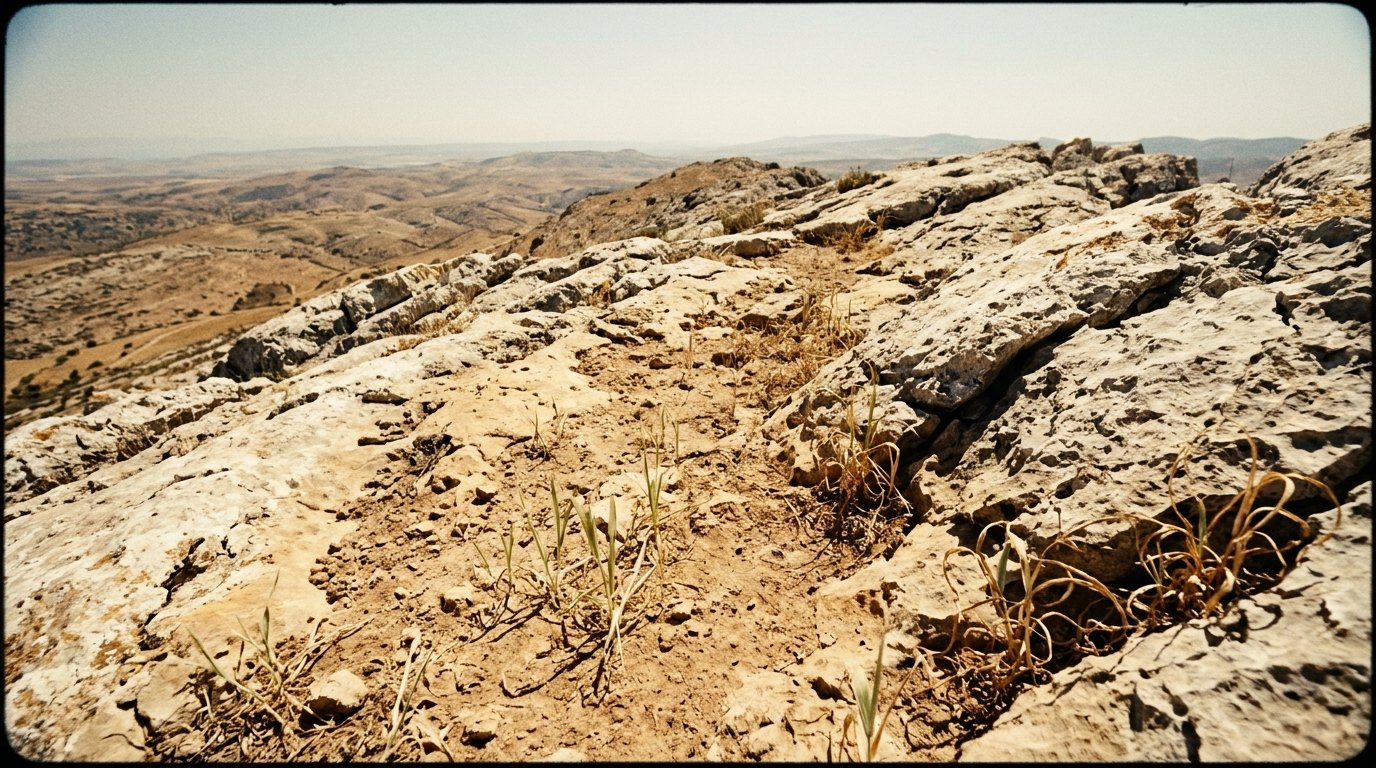
But since they have no root, they last only a short time. When trouble or persecution comes because of the word, they quickly fall away.
Matthew 13:21 (NIV)
It demonstrates that lack of root causes immediate stumbling when tribulation or persecution strikes on account of the word.
In Matthew 13:21, Jesus warns that a lack of spiritual root ensures collapse when trial strikes, showing that an emotional reception of truth can mask an unyielding heart beneath. This second hearer responds instantly with outward enthusiasm, yet their faith possesses no real depth. As Matthew 13:20–21 explains, the seed strikes rocky terrain where a thin layer of topsoil permits swift green shoots, but the impenetrable stone underneath prevents roots from reaching moisture. Consequently, the moment affliction, tribulation, or overt opposition arises precisely because of the word, this shallow hearer immediately stumbles and falls away.
Mark 4:16–17 sharpens this solemn diagnostic, emphasizing that such individuals endure only for a temporary season. Because they have established no subterranean foundation in Christ, they cannot withstand the scorching heat of hardship. What appeared to be rapid spiritual progress proves to be merely an ungrounded impulse, easily withered under pressure. Luke 8:13 adds that while these listeners receive the gospel with exuberance and believe for a transient span, they promptly retreat in the hour of testing and temptation. True faith must burrow deep into genuine repentance and abiding conviction; otherwise, the scorching realities of life in a fallen world will burn away every superficial profession.
| Passage | What it says |
|---|---|
| Matthew 13:20-21 | The rocky ground represents one receiving the word with joy but lacking root, stumbling when tribulation or persecution arises. |
| Mark 4:16-17 | Mark highlights those with no root who endure only temporarily and quickly fall away when affliction or persecution arrives. |
| Luke 8:13 | Luke observes that those on the rock receive joyfully and believe for a while, but fall away during temptation. |
Thorny Ground and Worldliness
Earthly Anxieties and Riches Choke Fruitfulness

The seed falling among the thorns refers to someone who hears the word, but the worries of this life and the deceitfulness of wealth choke the word, making it unfruitful.
Matthew 13:22 (NIV)
It warns that the worries of the world and deceitfulness of wealth stifle spiritual fruit.
The urgent warning of Matthew 13:22 is that unrestrained worldly cares quietly suffocate the living power of truth, leaving an otherwise receptive life barren and unfruitful. Unlike the rocky ground, the thorny terrain has adequate soil depth and nutrients, but its vitality is hijacked by competing allegiances. In Matthew 13:22, Jesus identifies two distinct strangleholds: the anxious fretting of this present age and the seductive illusion of wealth. These persistent weeds do not openly reject the seed; instead, they grow alongside it, intercepting the sunlight and sapping the soil's strength until the word is entirely smothered.
Mark 4:18–19 expands this catalogue of spiritual hazards to include 'the desires for other things.' Even legitimate earthly pursuits become lethal when they crowd out the preeminence of God's kingdom, turning hearing into perpetual distraction. Luke 8:14 deepens the diagnosis, observing that those walking among thorns are dragged down by life's worries, material riches, and fleeting pleasures, ultimately bringing no fruit to maturity. The tragedy of the thorny ground is not sudden apostasy under persecution, but the slow, quiet erosion of fruitfulness by competing affections that rob God of His rightful harvest.
| Passage | What it says |
|---|---|
| Matthew 13:22 | The thorny ground represents hearing the word while worldly cares and deceptive wealth strangle it, rendering the person unfruitful. |
| Mark 4:18-19 | Mark records that the cares of life, deceit of riches, and desires for other things choke the word unfruitfully. |
| Luke 8:14 | Luke notes that hearers choked by worries, riches, and pleasures of this life bring no fruit to mature perfection. |
Good Ground and Fruitfulness
Understanding and Holding Fast to Produce Fruit

But the seed on good soil stands for those with a noble and good heart, who hear the word, retain it, and by persevering produce a crop.
Luke 8:15 (NIV)
It identifies the good ground as an honest, noble heart holding fast the word and patiently bearing fruit.
Luke 8:15 reveals that true spiritual fruitfulness requires a receptive heart that holds fast through patient endurance, unveiling the supernatural destiny of the seed when it encounters well-prepared soil. Here the word is not merely heard; it is cherished, guarded, and obeyed. As Matthew 13:23 demonstrates, this hearer genuinely grasps the message of the kingdom, leading to an undeniable and outward harvest that yields varying measures of thirtyfold, sixtyfold, or a staggering hundredfold increase, each proportion magnifying the sovereign grace of the Sower.
Mark 4:20 highlights the decisive actions of hearing and welcoming the word, contrasting this active embrace with the passive, superficial listening of the previous soils. In Luke 8:15, Jesus defines this fertile soil as an honest and noble heart—one stripped of self-deception and softened by grace—that clings tenaciously to the gospel amidst life's storms. Real saving faith is demonstrated not by transient emotion or worldly coexistence, but by perseverance that bears enduring, visible fruit to the glory of God.
| Passage | What it says |
|---|---|
| Matthew 13:23 | The good ground represents hearing and understanding the word, yielding fruit in varying measures of hundredfold, sixtyfold, or thirtyfold. |
| Mark 4:20 | Mark describes those sown on good ground as hearing the word, accepting it, and bearing thirty, sixty, and a hundredfold. |
| Luke 8:15 | Luke describes the good soil as those who hear in an honest and good heart, hold fast, and bear fruit patiently. |
Where in the Bible
| Book | Passages |
|---|---|
| Isaiah | 1 · Isaiah 6:9-10 |
| Matthew | 9 · Matthew 13:1-3, Matthew 13:4-7, Matthew 13:8-9, Matthew 13:10-13, Matthew 13:14-17, Matthew 13:18-19, Matthew 13:20-21, Matthew 13:22, Matthew 13:23 |
| Mark | 7 · Mark 4:1-3, Mark 4:4-9, Mark 4:10-12, Mark 4:14-15, Mark 4:16-17, Mark 4:18-19, Mark 4:20 |
| Luke | 7 · Luke 8:4-5, Luke 8:5-8, Luke 8:9-10, Luke 8:11-12, Luke 8:13, Luke 8:14, Luke 8:15 |
The story in order
- Isaiah's Commission (c. 700 BC) · Isaiah 6:9-10 · Foretells hardened hearts unable to perceive God's truth.
- Jesus Teaches by Parables (c. AD 30) · Matthew 13:1-3 · Jesus uses parables to teach the crowds by the sea.
- The Sower and the Seed (c. AD 30) · Matthew 13:4-8 · Jesus describes seed falling on different types of ground.
- Purpose of Parables Explained (c. AD 30) · Matthew 13:10-13 · Jesus explains parables reveal mysteries to disciples, conceal from others.
- The Path and Satan (c. AD 30) · Matthew 13:18-19 · The word snatched away by Satan on the hard path.
- Rocky Ground and Persecution (c. AD 30) · Matthew 13:20-21 · Shallow reception withers under trial.
- Thorny Ground and Worldliness (c. AD 30) · Matthew 13:22 · Worldly cares and riches choke the word.
- Good Ground and Fruitfulness (c. AD 30) · Matthew 13:23 · Understanding and holding fast produces abundant fruit.
Four Responses to the Word
| Ground Type | Response to the Word | Outcome | Passage |
|---|---|---|---|
| Path | Heard but not understood | Snatched away by Satan | Matthew 13:18-19 |
| Rocky ground | Received with joy, but no root | Fall away when tested | Matthew 13:20-21 |
| Thorny ground | Hearing the word, but choked | Unfruitful | Matthew 13:22 |
| Good ground | Hear, understand, hold fast | Bear fruit (30, 60, 100 fold) | Matthew 13:23 |
Progression of Understanding
| Stage | Description | Result | Passage |
|---|---|---|---|
| Hearing without understanding | Satan snatches it away | No belief or salvation | Matthew 13:18-19 |
| Receiving with joy but no root | Fall away during tribulation | Temporary belief | Matthew 13:20-21 |
| Hearing but choked | Worldly cares and riches strangle it | Unfruitful | Matthew 13:22 |
| Hearing and understanding | Hold fast to the word | Bear fruit | Matthew 13:23 |
Key words
- Seed
- The Word of God, the message of the Kingdom. · Luke 8:11
- Sower
- Jesus, who sows the Word of God. · Matthew 13:37
- Ground
- The human heart, which receives or rejects the Word. · Matthew 13:19
- Fruit
- The result of the Word taking root and growing in a believer's life. · Matthew 13:23
- Understanding
- Comprehending the truth of the Word, leading to genuine reception. · Matthew 13:23
Jesus does not tell this parable merely to categorize different kinds of listeners, but to summon every reader to examine their own heart. The living Word of God has been generously scattered across your life, demanding more than superficial joy or divided devotion. By receiving Christ in faith, holding fast to His truth through trial, and cultivating an obedient heart, you will bear fruit that endures into eternal life.
24 passages, each cited once.
Scripture cited
- Matthew 13:9
- Matthew 13:18-23
- Matthew 13:19
- Matthew 13:20-21
- Matthew 13:22
- Matthew 13:23