What happened at the burning bush?

Exodus 3:1-6
1 Now Moses was tending the flock of Jethro his father-in-law, the priest of Midian, and he led the flock to the far side of the wilderness and came to Horeb, the mountain of God.
2 There the angel of the LORD appeared to him in flames of fire from within a bush. Moses saw that though the bush was on fire it did not burn up.
3 So Moses thought, “I will go over and see this strange sight—why the bush does not burn up.”
4 When the LORD saw that he had gone over to look, God called to him from within the bush, “Moses! Moses!” And Moses said, “Here I am.”
5 “Do not come any closer,” God said. “Take off your sandals, for the place where you are standing is holy ground.”
6 Then he said, “I am the God of your father, the God of Abraham, the God of Isaac and the God of Jacob.” At this, Moses hid his face, because he was afraid to look at God.
New International Version (NIV)
The answer
At Horeb, the God of Abraham, Isaac, and Jacob appeared to Moses in a bush that burned but was not consumed, called him by name, and sent him to bring Israel out of Egypt (Exodus 3:1-6).
The setting (Exodus 3:1)
- Moses was shepherding at Horeb. He was keeping the flock of Jethro, his father-in-law, the priest of Midian, and led the flock to the back of the wilderness, to "God's mountain," Horeb — the same Sinai where the Law would later be given (1 Kings 19:8).
- The mountain already felt set apart. Shepherds had avoided climbing it out of reverence, as Josephus notes in Antiquities 2.12.1.
The sight that stopped him (Exodus 3:2-3)
- A bush blazed with fire that did not consume it. "Yahweh's angel appeared to him in a flame of fire out of the middle of a bush. He looked, and behold, the bush burned with fire, and the bush was not consumed" (Exodus 3:2).
- Curiosity became worship. Moses said, "I will go now, and see this great sight, why the bush is not burned" (Exodus 3:3). God's presence often begins with something so strange that a man's feet turn him toward the One speaking.
The voice from the fire (Exodus 3:4-5)
- God called him by name. "Moses! Moses!" and he answered, "Here I am" (Exodus 3:4). This is the start of a personal relationship, not just a vision.
- Take off your sandals. "Don't come close. Take off your sandals, for the place you are standing on is holy ground" (Exodus 3:5). Where God speaks, ordinary ground becomes holy.
The name above every name (Exodus 3:6)
- "I am the God of your father, the God of Abraham, the God of Isaac, and the God of Jacob." This is the climax of the moment — the rescue of Israel flows out of God's covenant with the patriarchs. Jesus later turns this verse into proof that the patriarchs are alive, because He is "not the God of the dead, but of the living" (Matthew 22:32; Mark 12:26; Luke 20:37).
- Moses hid his face. "He was afraid to look at God" (Exodus 3:6). Even Moses, who would speak with God face to face, trembled at this first encounter (Acts 7:32).
Why it matters
- God's presence refines rather than destroys. A bush on fire but unburned is a picture of how the holy God sanctifies what He fills without consuming it.
- It is the foundation of the exodus. What began with sandals off at a bush ended with a nation redeemed and the Law given on the very same mountain (Exodus 19; 1 Kings 19:8).
- It is a model for every believer. When God draws near, He still calls by name, still asks for reverence, and still sends. The right answer, then and now, is still "Here I am" (Exodus 3:4).
Answered from Scripture · reviewed November 7, 2026
At Mount Horeb, God intersected ordinary human labor to inaugurate the redemption of His covenant people. In a desert thornbush ablaze with unconsuming fire, the eternal God revealed His holiness, declared His ancestral faithfulness, and commissioned Moses to lead Israel out of Egyptian bondage.
The Solitary Shepherd
Moses Led His Flock to God's Mountain
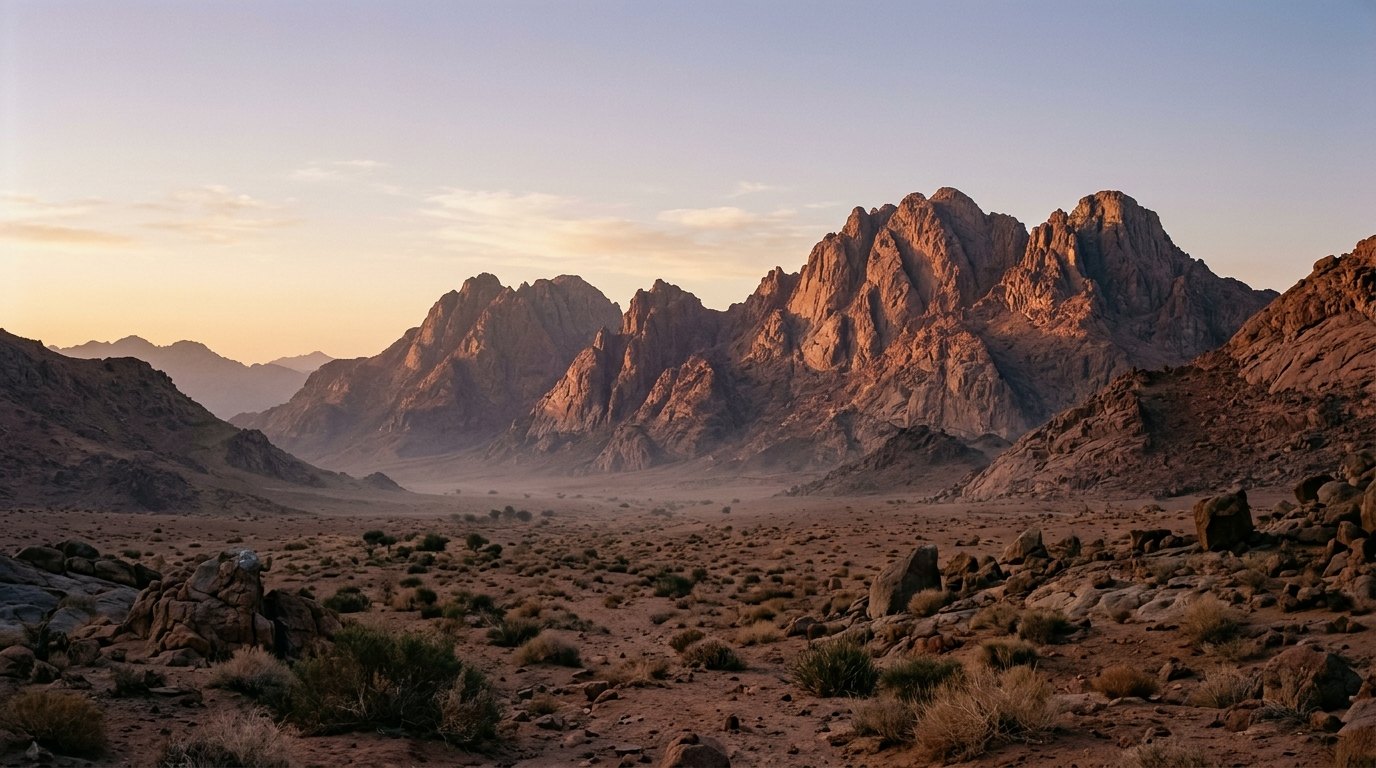
Now Moses was tending the flock of Jethro his father-in-law, the priest of Midian, and he led the flock to the far side of the wilderness and came to Horeb, the mountain of God.
Exodus 3:1 (NIV)
It situates Moses in the quiet posture of a shepherd at Horeb, where God's quiet preparation of eighty years yields to divine revelation.
In Exodus 3:1, the narrative opens on a quiet day of humble pasture work: Moses was keeping the flock of Jethro his father-in-law, leading sheep through the remote backside of the desert until he came to Horeb, the mountain of God. Nothing in the shepherd's morning signaled that four decades of exile were drawing to a close. As Acts 7:30 confirms in Stephen's inspired defense, forty silent years had elapsed since Moses fled the palaces and power of Egypt, trading the status of a prince for the rugged solitude of a keeper of sheep. God had spent those decades stripping away self-reliance, forming Moses into the meekest man on the face of the earth. Horeb was not a destination Moses chose for a theological summit; it was simply a place of scrub grass and quiet crags where a shepherd might feed a flock. Yet God had marked this exact rock for covenant history. Centuries later, in 1 Kings 19:8, the prophet Elijah would flee into the same southern desolation, traveling forty days and forty nights across the sands to reach this very mountain of God at Horeb to hear the still, small voice. Divine purpose sanctifies the wilderness. The quiet fidelity of daily labor becomes the setting where God breaks into human life, turning an ordinary pasture path into the threshold of Israel's national redemption.
| Passage | What it says |
|---|---|
| Exodus 3:1 | Moses kept the flock of his father-in-law Jethro and led them to the wilderness near Horeb, the mountain of God. |
| Acts 7:30 | Stephen recounts that forty years in the wilderness of Mount Sinai passed before the angel of the Lord appeared to Moses. |
| 1 Kings 19:8 | Elijah later journeyed forty days and nights to the same mountain of God at Horeb. |
The Unconsumed Flame
Fire Blazed in a Bush Without Consuming It
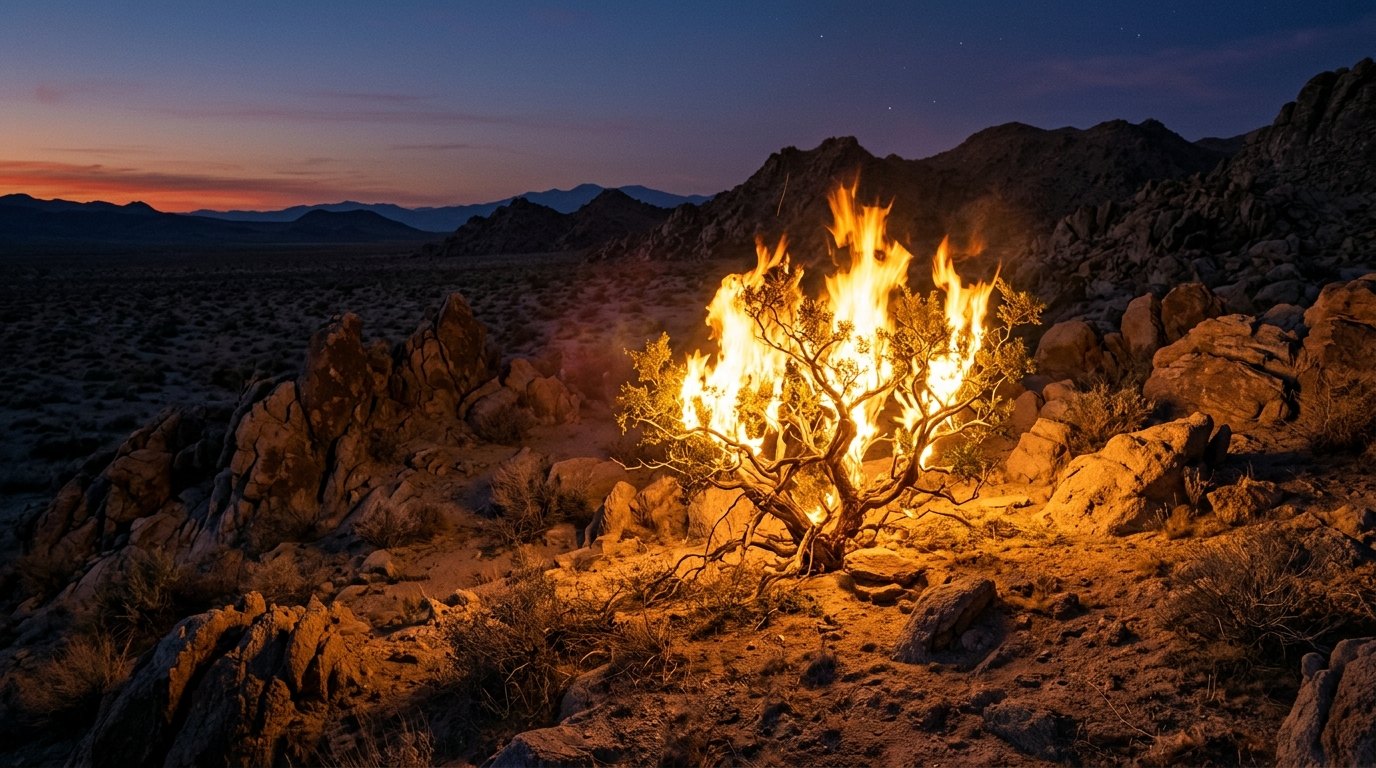
There the angel of the LORD appeared to him in flames of fire from within a bush. Moses saw that though the bush was on fire it did not burn up.
Exodus 3:2 (NIV)
The miraculous sight of an unconsumed bush reveals the holy, self-sustaining nature of God appearing in creaturely midst.
The wonder of Horeb arrests the senses in Exodus 3:2, where the Angel of the Lord appeared to Moses in a flame of fire out of the midst of a bush. Looking up, Moses beheld an astonishing sight: the bush burned with fire, yet the bush was not consumed. Fire in the desert was nothing unusual, for dry scrub often ignited under the scorching sun and vanished into ash in seconds. Here, however, was a self-sustaining flame that needed no fuel, feeding neither on wood nor leaves, burning with transcendent, inexhaustible glory. In Exodus 3:3, Moses resolved to step off his path to examine the great sight, wondering why the fragile branches did not disintegrate. This miraculous sign foreshadowed the ultimate wonder of the incarnation: just as divine fire dwelt within a common thornbush without destroying it, so in John 1:14 the eternal Word became flesh and dwelt among us, tabernacling in human frailty without consuming it, revealing grace and truth in full measure. The memory of this dwelling remained indelible in Israel's heart. At the end of his life, in Deuteronomy 33:16, Moses pronounced his final patriarchal benediction over Joseph, praying for the favor of Him who dwelt in the bush. The transcendent God can inhabit the lowliest creaturely vessels, bathing them in His radiant holiness without destroying them in His wrath.
| Passage | What it says | Fulfilled |
|---|---|---|
| Exodus 3:2 | The Angel of the Lord appeared in a flame within a bush that burned without being consumed. | John 1:14 |
| Exodus 3:3 | Moses turned aside to examine why the bush was not consumed by the flame. | |
| Deuteronomy 33:16 | Moses invokes the favor of Him who dwelt in the bush as a blessing upon Joseph. |
The Voice and Holy Ground
God Called Moses and Commanded Solemn Reverence
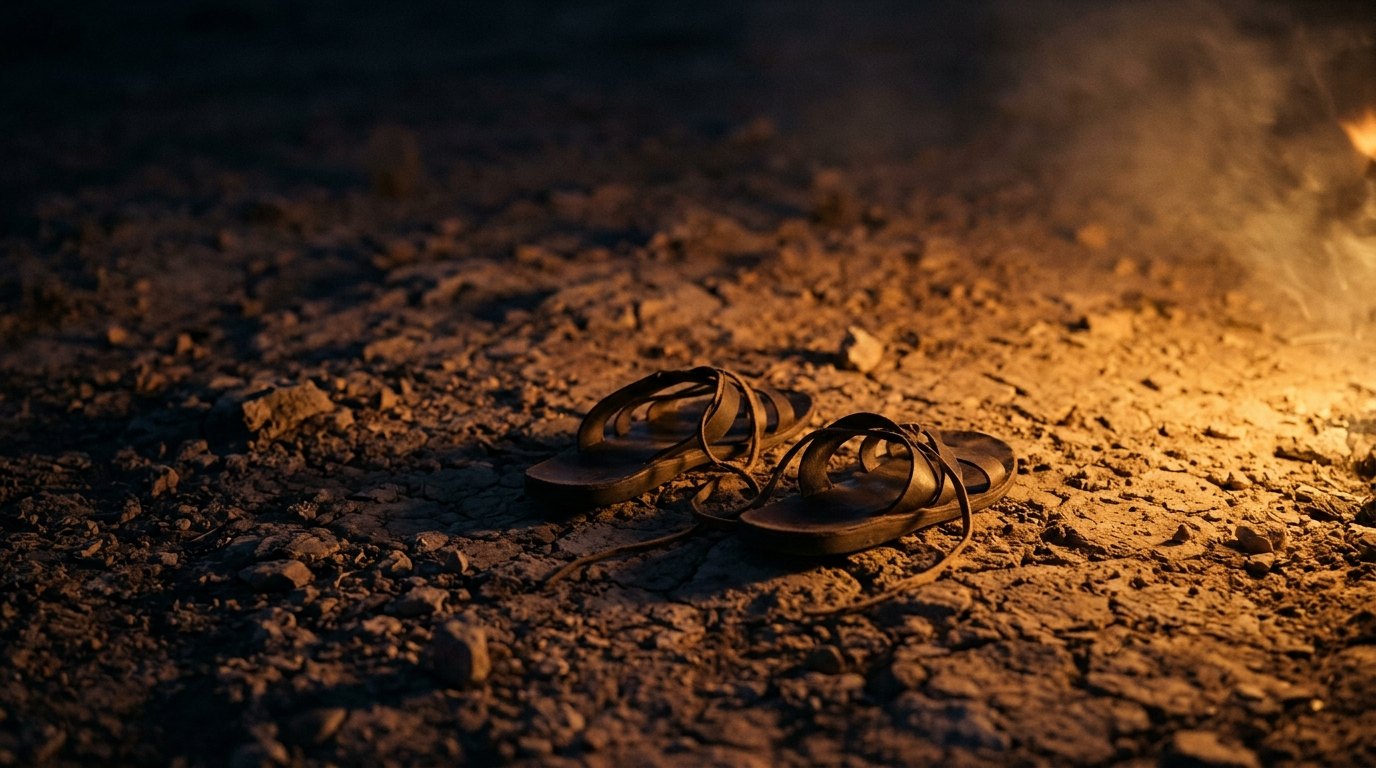
“Do not come any closer,” God said. “Take off your sandals, for the place where you are standing is holy ground.”
Exodus 3:5 (NIV)
It marks the absolute boundary between creaturely frailty and divine holiness, demanding the removal of sandals on holy ground.
As Moses turned aside to look, divine speech shattered the silence: Exodus 3:5 records God commanding him, 'Do not come near; take your sandals off your feet, for the place on which you are standing is holy ground.' In Exodus 3:4, the Lord had called him out of the bush by name—'Moses, Moses!'—and the shepherd had answered with simple obedience, 'Here I am.' Yet before any dialogue could unfold, God established an absolute boundary between creaturely dust and divine majesty. Earth itself is not inherently sacred, but the unmediated presence of the holy God transforms ordinary soil into a sanctuary. Stripping the sandals from his feet forced Moses to touch the bare earth in humility, removing the dirt of worldly travels and recognizing that he stood before the King of creation. This requirement was not an isolated ritual: in Joshua 5:15, the commander of the Lord's army issued the exact same demand to Joshua before Jericho, declaring that the presence of the Lord sanctifies the place of His revealing. Centuries later, Stephen rehearses this foundational moment before the Sanhedrin in Acts 7:33, affirming that God's presence cannot be domesticated or approached casually. True worship begins with holy fear, drawing near only on God's terms and in reverence of His absolute purity.
| Passage | What it says |
|---|---|
| Exodus 3:4 | God called Moses twice by name out of the bush, and Moses replied, 'Here I am.' |
| Exodus 3:5 | God instructed Moses not to draw near and to remove his sandals because the ground was holy. |
| Joshua 5:15 | The commander of the Lord's army commanded Joshua to take off his sandal because the ground was holy. |
| Acts 7:33 | Stephen cites the Lord's command to Moses to remove his sandals on the holy ground of Sinai. |
The Covenant Name
The Living God Affirmed His Ancient Promises
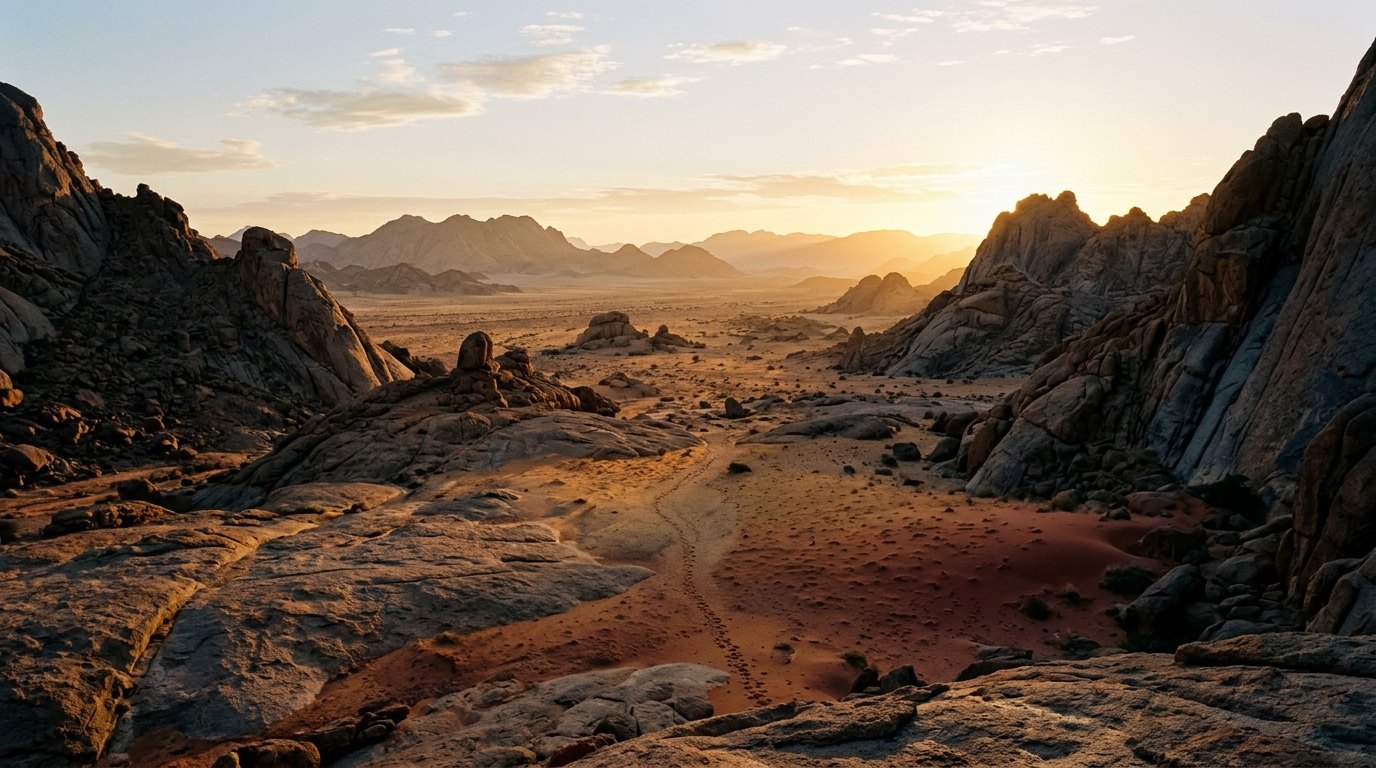
Then he said, “I am the God of your father, the God of Abraham, the God of Isaac and the God of Jacob.” At this, Moses hid his face, because he was afraid to look at God.
Exodus 3:6 (NIV)
God binds His presence to His covenant with Abraham, Isaac, and Jacob, prompting Moses to hide his face in reverence.
Out of the blaze, God declared the covenant basis of His intervention: in Exodus 3:6, He identified Himself as the God of Abraham, the God of Isaac, and the God of Jacob, causing Moses to hide his face in dread. As Acts 7:32 records, Moses trembled and dared not look, overcome by the majestic reality of the living God. In Exodus 3:7-10, the Lord revealed His heart: He had seen the affliction of His people, heard their cry under harsh taskmasters, and came down to deliver them and bring them into a broad land flowing with milk and honey, commissioning Moses to stand before Pharaoh. When Christ silenced the Sadducees regarding the resurrection, He pointed directly to this passage: in Matthew 22:31-32, Mark 12:26, and Luke 20:37-38, Jesus argued from the bush that God is not the God of the dead, but of the living, for Abraham, Isaac, and Jacob remain alive unto Him. The covenant God does not make promises that perish at the grave. Furthermore, as Stephen proclaimed in Acts 7:34-35, this same Moses whom Israel initially rejected became their ruler and deliverer through the hand of the Angel who appeared to him in the bush, serving as the prophetic type of the Lord Jesus Christ who delivers His redeemed people from eternal bondage.
| Passage | What it says | Fulfilled |
|---|---|---|
| Exodus 3:6 | God identified Himself as the God of Moses' father, Abraham, Isaac, and Jacob, causing Moses to hide his face. | Matthew 22:31-32, Mark 12:26-27, Luke 20:37-38 |
| Acts 7:32 | Stephen details that Moses trembled and dared not look when God identified Himself by the patriarchs. | |
| Exodus 3:7-10 | The Lord declared He had seen His people's affliction and was sending Moses to Pharaoh to deliver them. | Acts 7:34-35 |
| Matthew 22:31-32 | Jesus cites God's words from the bush to demonstrate the reality of the resurrection of the dead. | |
| Mark 12:26 | Jesus refers directly to the book of Moses and the bush narrative regarding God as God of the living. | |
| Luke 20:37-38 | Luke records Jesus showing that Moses proved the resurrection at the burning bush. | |
| Acts 7:34 | Stephen recounts God seeing His people's affliction and coming down to deliver them through Moses. |
The Divine Name
God Reveals His Self-Existent Memorial Name
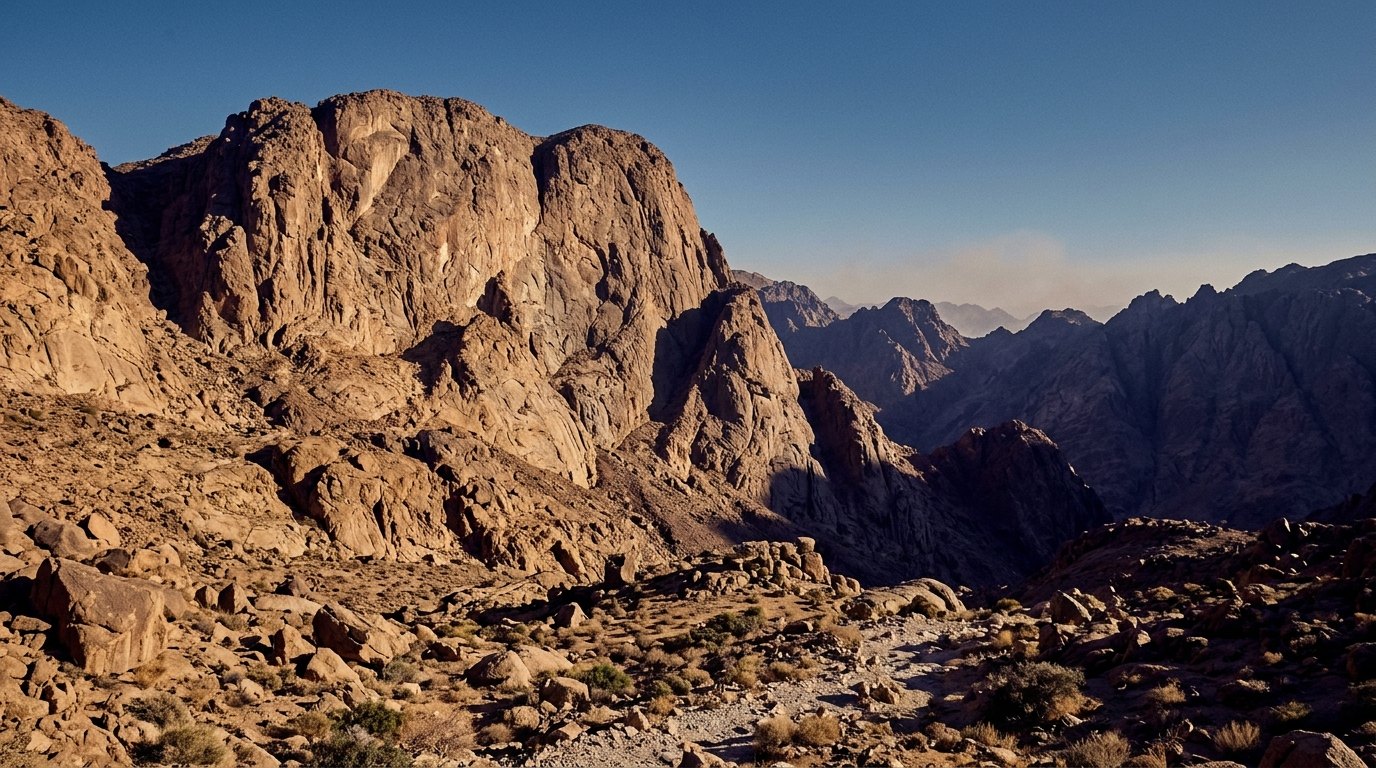
God said to Moses, “I AM WHO I AM. This is what you are to say to the Israelites: ‘I AM has sent me to you.’ ”
Exodus 3:14 (NIV)
God declares His absolute self-existence and unchangeable faithfulness in the name I AM WHO I AM.
When Moses shrank back from the staggering assignment to confront Pharaoh and lead an enslaved nation to freedom, God answered his cry of inadequacy with the ultimate ground of assurance: His own sovereign presence. In Exodus 3:11, Moses questioned his personal qualifications: "Who am I that I should go to Pharaoh?" The Lord did not indulge Moses' self-doubt or offer flattery; instead, in Exodus 3:12, He pledged, "Certainly I will be with you," sealing the promise with a prophetic sign that Israel would one day return to worship God on that exact mountain. Yet Moses pressed further, anticipating the skeptical inquiries of an oppressed people whose memory of ancestral covenants had grown dim through centuries of bitter servitude. In Exodus 3:13, he asked for the specific name he should announce when the sons of Israel asked who sent him. God answered Moses by revealing His self-existent majesty: "I AM WHO I AM" (Exodus 3:14). Here the Lord unveiled the uncreated, independent, and utterly sovereign character of His being. He is not defined by any external force, nor is He subject to change or decay. In Exodus 3:15, God commanded Moses to say that Yahweh, the God of their fathers—Abraham, Isaac, and Jacob—had sent him, establishing this memorial name throughout all generations. This eternal revelation reaches its ultimate climax in John 8:58, where Jesus Christ boldly proclaimed to the stunned religious leaders of Jerusalem, "Before Abraham was born, I AM," appropriating the very name revealed at the unconsumed bush to assert His own eternal deity.
| Passage | What it says |
|---|---|
| Exodus 3:11 | Moses questions his own worthiness and adequacy to stand before Pharaoh and lead Israel. |
| Exodus 3:12 | God promises His personal presence and gives the sign that Israel will worship Him at this mountain. |
| Exodus 3:13 | Moses asks what name he should declare when the Israelites inquire who sent him. |
| Exodus 3:14 | God reveals His eternal, self-existent memorial name: 'I AM WHO I AM.' |
| Exodus 3:15 | The Lord declares His covenant name Yahweh as His memorial to all generations. |
| John 8:58 | Jesus appropriates the divine name revealed at the bush, declaring His eternal self-existence. |
The Plan of Redemption
The Lord Foretells Israel's Deliverance and Exodus Plunder
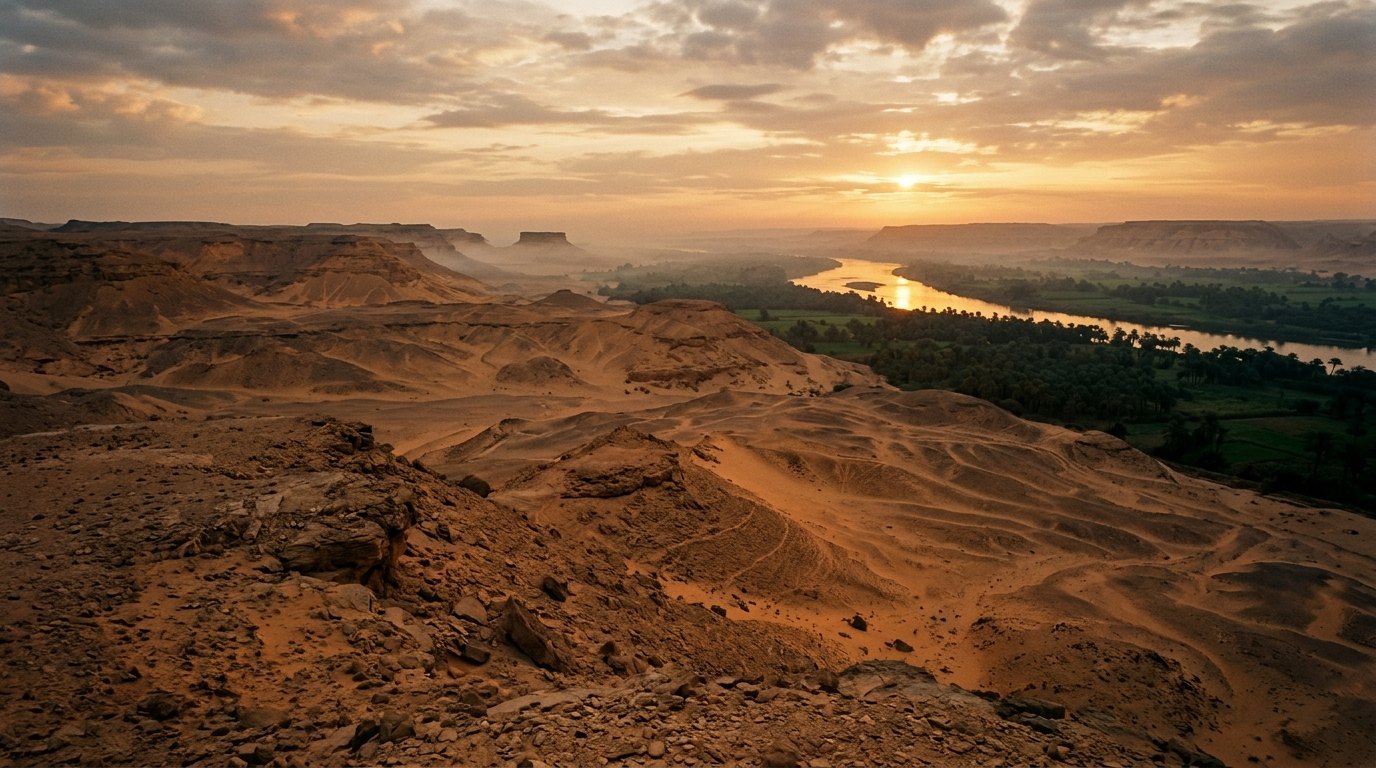
So I will stretch out my hand and strike the Egyptians with all the wonders that I will perform among them. After that, he will let you go.
Exodus 3:20 (NIV)
The Lord promises to stretch out His hand and strike Egypt with miraculous wonders before Pharaoh lets them go.
Having revealed His eternal name, the Lord laid out the exact architecture of the coming deliverance, assuring Moses that Israel's emancipation rested entirely upon divine strength rather than human negotiation. In Exodus 3:16-17, the Lord commanded Moses to assemble the elders of Israel and declare that He had visited them, observed their suffering, and purposed to bring them up out of Egypt into a rich land flowing with milk and honey. God assured His servant in Exodus 3:18 that the elders would listen to his voice, instructing them to approach Pharaoh together with the humble request for a three days' journey into the wilderness to offer sacrifices. Yet the Lord did not conceal the severe trials ahead. God forewarned Moses that Pharaoh would stubbornly refuse except under the compelling weight of a mighty hand (Exodus 3:19). Therefore, the Lord declared His sovereign resolve in Exodus 3:20: "So I will stretch out My hand and strike Egypt with all My miracles which I shall do in the midst of it; and after that he will let you go." The deliverance would not be a furtive escape by desperate fugitives, but a glorious triumph orchestrated by heaven. In Exodus 3:21-22, God promised to give the people such favor in the eyes of their oppressors that every woman would ask for silver, gold, and fine garments from her neighbors, fulfilling centuries-old covenant promises by plundering the proud empire of Egypt without drawing a sword.
| Passage | What it says |
|---|---|
| Exodus 3:16-17 | God instructs Moses to gather Israel's elders and promise deliverance into a land flowing with milk and honey. |
| Exodus 3:18 | God foretells that the elders will listen, and directs them to request a three days' journey to sacrifice. |
| Exodus 3:19-20 | God forewarns that Pharaoh will resist until struck by all the Lord's wonders. |
| Exodus 3:21-22 | God promises favor so that the departing Israelites will plunder the Egyptians of silver, gold, and clothing. |
Signs and Wonders
God Equips Moses with Miraculous Signs
Then the LORD said to him, “What is that in your hand?” “A staff,” he replied. The LORD said, “Throw it on the ground.” Moses threw it on the ground and it became a snake, and he ran from it. Then the LORD said to him, “Reach out your hand and take it by the tail.” So Moses reached out and took hold of the snake and it turned back into a staff in his hand. “This,” said the LORD, “is so that they may believe that the LORD, the God of their fathers—the God of Abraham, the God of Isaac and the God of Jacob—has appeared to you.”
Exodus 4:2-5 (NIV)
The transformation of the shepherd's rod into a serpent establishes divine authority before Israel's eyes.
Even after receiving the divine name and the detailed blueprint of redemption, Moses continued to battle deep-seated apprehension. In Exodus 4:1, he objected that the sons of Israel would dismiss his report, protest that the Lord had never appeared to him, and refuse to heed his voice. God graciously responded by furnishing His servant with tangible credentials of supernatural authority. The shepherd's humble wooden staff was cast to the ground and instantly transformed into a venomous serpent (Exodus 4:2-4), from which Moses fled in terror until God commanded him to take it by the tail, causing it to return to an ordinary rod. This miracle demonstrated that God held supreme mastery over the serpent, the very symbol of Egyptian sovereignty and royal protection, proving to Israel that the God of Abraham, Isaac, and Jacob had indeed appeared (Exodus 4:5). To reinforce this authority, God commanded Moses to place his hand into his bosom in Exodus 4:6-8; when he withdrew it, his flesh was stricken with incurable, snowy leprosy, and upon repeating the act, his hand was completely restored. Should the people remain obstinate after two witnesses, God supplied a third inescapable sign in Exodus 4:9: water scooped from the sacred Nile would turn into dried blood upon the dust. Centuries later, Stephen bore witness in Acts 7:35-36 that God used these miraculous wonders to establish this once-rejected shepherd as the chosen ruler and deliverer.
| Passage | What it says |
|---|---|
| Exodus 4:1 | Moses objects that the people will not believe him or listen to his voice. |
| Exodus 4:2-5 | God turns Moses' staff into a serpent and back to demonstrate divine power. |
| Exodus 4:6-8 | God turns Moses' hand leprous and restores it as a second confirming sign. |
| Exodus 4:9 | God grants a third sign: Nile water poured onto dry ground turning into blood. |
| Acts 7:35-36 | Stephen summarizes how God sent Moses as ruler and deliverer through wonders and signs. |
The Hesitant Prophet
God Overcomes Human Weakness and Appoints Aaron
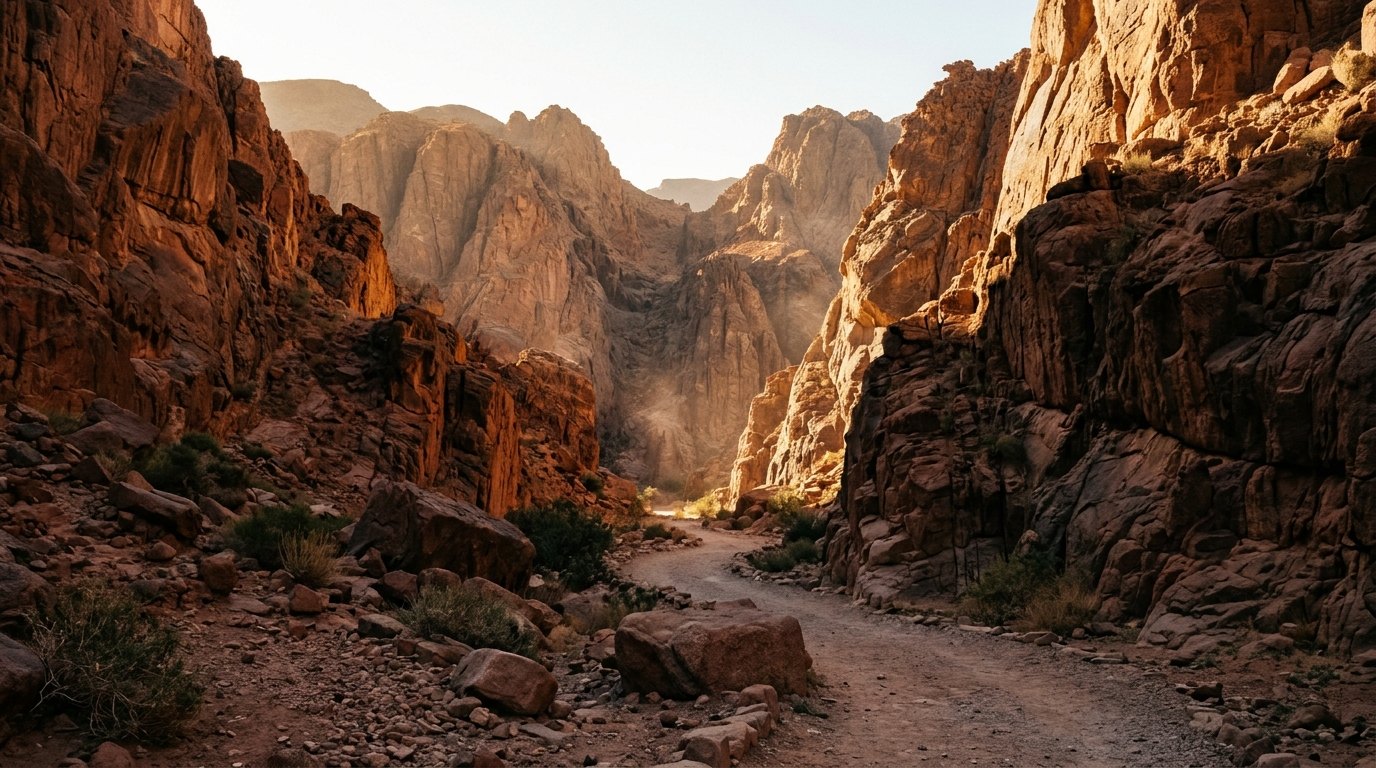
The LORD said to him, “Who gave human beings their mouths? Who makes them deaf or mute? Who gives them sight or makes them blind? Is it not I, the LORD? Now go; I will help you speak and will teach you what to say.”
Exodus 4:11-12 (NIV)
God grounds Moses' calling in His own sovereign prerogative as Creator of human speech and hearing.
Confronted by undeniable manifestations of miraculous power, Moses still retreated into personal weakness, pleading his lack of natural eloquence. In Exodus 4:10, he insisted that he was slow of speech and tongue, having never been an orator in the past nor even now after God had spoken to him. The Lord answered this excuse by redirecting the prophet's gaze from human frailty to divine omnipotence. God rebuked Moses' hesitation by declaring His sovereign prerogatives as Creator: "Who has made man's mouth? Or who makes him mute or deaf, or seeing or blind? Is it not I, the Lord?" (Exodus 4:11). God pledged to be with Moses' mouth and instruct him directly in what he should say (Exodus 4:12). When Moses stubbornly resisted in Exodus 4:13, begging God to dispatch anyone else, the anger of the Lord burned against him. Yet even in righteous anger, God exercised tender covenant mercy by providing Aaron the Levite as an articulate companion who was already journeying into the wilderness to meet him (Exodus 4:14). God established the divine order of revelation in Exodus 4:15-16, declaring that Moses would stand in the place of God to Aaron, while Aaron would serve as the prophet's mouth before the people. God concluded the holy encounter at the bush with a decisive charge in Exodus 4:17, commanding Moses to grasp the staff of God in his hand, ready to confront the empire of Pharaoh.
| Passage | What it says |
|---|---|
| Exodus 4:10 | Moses pleads his lack of eloquence and slow speech. |
| Exodus 4:11-12 | The Lord declares He made man's mouth and promises to teach Moses what to speak. |
| Exodus 4:13 | Moses asks God to send someone else instead. |
| Exodus 4:14-16 | The Lord's anger burns, yet He appoints Aaron the Levite as Moses' spokesman. |
| Exodus 4:17 | God commands Moses to take the staff in his hand to perform the signs. |
Where in the Bible
| Book | Passages |
|---|---|
| Exodus | 25 · Exodus 3:1, Exodus 3:2, Exodus 3:3, Exodus 3:4, Exodus 3:5, Exodus 3:6, Exodus 3:7-10, Exodus 3:11, Exodus 3:12, Exodus 3:13, Exodus 3:14, Exodus 3:15, Exodus 3:16-17, Exodus 3:18, Exodus 3:19-20, Exodus 3:21-22, Exodus 4:1, Exodus 4:2-5, Exodus 4:6-8, Exodus 4:9, Exodus 4:10, Exodus 4:11-12, Exodus 4:13, Exodus 4:14-16, Exodus 4:17 |
| Deuteronomy | 1 · Deuteronomy 33:16 |
| Joshua | 1 · Joshua 5:15 |
| 1 Kings | 1 · 1 Kings 19:8 |
| Matthew | 1 · Matthew 22:31-32 |
| Mark | 1 · Mark 12:26 |
| Luke | 1 · Luke 20:37-38 |
| John | 1 · John 8:58 |
| Acts | 5 · Acts 7:30, Acts 7:33, Acts 7:32, Acts 7:34, Acts 7:35-36 |
The story in order
- Creation (c. 4000 BC) · Genesis 1:1 · God created the heavens and the earth.
- The Fall (c. 4000 BC) · Genesis 3:1-7 · Humanity fell into sin, bringing curse and death.
- Abrahamic Covenant (c. 2000 BC) · Genesis 12:1-3 · God promised Abraham descendants, land, and blessing.
- Moses' Birth (c. 1450 BC) · Exodus 2:1-10 · God preserved Moses to deliver His people.
- The Burning Bush (c. 1450 BC) · Exodus 3:1-12 · God revealed His name and called Moses to lead.
- Exodus from Egypt (c. 1450 BC) · Exodus 12:1-14 · God redeemed Israel from slavery through judgment.
- Elijah at Horeb (c. 875 BC) · 1 Kings 19:8 · Elijah found God's presence at Horeb.
- Jesus' Ministry (AD 27-30) · Matthew 4:1-11 · Jesus faced temptation in the wilderness.
- Jesus' Resurrection Teaching (AD 30-33) · Luke 20:37-38 · Jesus used the bush to teach resurrection.
- Stephen's Testimony (c. AD 34) · Acts 7:30-36 · Stephen recounted God's call to Moses at the bush.
- Jesus' Second Coming (Future) · Revelation 22:12 · Christ returns to bring final redemption.
God's Presence at Horeb
| Event | Significance | Passage |
|---|---|---|
| The Burning Bush | God revealed His holiness and called Moses. | Exodus 3:1-12 |
| Elijah's Journey | Elijah found strength and God's word at Horeb. | 1 Kings 19:8 |
God as the God of the Living
| Speaker | Context | Point | Passage |
|---|---|---|---|
| God to Moses | At the burning bush | I am the God of Abraham, Isaac, and Jacob. | Exodus 3:6 |
| Jesus | Debating the Sadducees | God is not the God of the dead, but of the living. | Matthew 22:32 |
| Stephen | Before the Sanhedrin | God identified Himself by the patriarchs. | Acts 7:32 |
Key words
- Angel of the Lord (mal'ak YHWH (מַלְאָךְ יְהוָה))
- A divine messenger, often representing God Himself. · Exodus 3:2
- Holy Ground (adamah kadosh (אַדְמָה קָדוֹשׁ))
- Ground consecrated by God's presence. · Exodus 3:5
- I AM WHO I AM (ehyeh asher ehyeh (אֶהְיֶה אֲשֶׁר אֶהְיֶה))
- God's self-existent, eternal, and unchanging name. · Exodus 3:14
- Yahweh (YHWH (יהוה))
- The memorial name of the eternal God. · Exodus 3:15
- Signs and Wonders ('otot u'mefetim ('וֹת וּמְפַתִּים))
- Miraculous events demonstrating God's power and authority. · Exodus 4:8
The burning bush remains the enduring pattern of divine encounter, revealing that God enters human weakness without destroying it. In Christ, the same holy presence draws near to purify and dwell with His people, calling each believer by name into His saving work.
37 passages, each cited once.
Scripture cited
- Exodus 3:1-6
- 1 Kings 19:8
- Luke 20:37
- Matthew 22:32
- Mark 12:26
- Acts 7:32